
#poc

posts tagged #poc

0

In LA, Some Black Residents May Soon Receive Environmental Reparations

Capital B News In LA, Some Black Residents May Soon Receive Environmental Reparations capitalbnews.org
preview

For over a century in Los Angeles and across the nation, Black people have been disproportionately likely to live near oil wells, the machinery that draws oil from deep underground. The pollution from these drilling sites are connected to birth complications, child development issues, respiratory illnesses, and cancer.

Now, a new California state law moves to turn that lived experience into a broader public-policy question: What does a state owe communities exposed to pollution for generations? And what happens when you can’t offer support to every family that has struggled through the harm?

California lawmakers have passed AB 1661, which would steer $5 million collected from penalized oil wells in Inglewood into direct cash aid for 1,000 nearby households with qualifying respiratory or reproductive health impacts. Some of LA’s Blackest suburbs and city neighborhoods, including Inglewood, Ladera Heights, and Baldwin Hills, surround the oil field.

The legislation, introduced by Assemblymember Isaac G. Bryan, is expected to be signed into law by Gov. Gavin Newsom by October. It sets aside enough money for payments of up to $5,000 for 1,000 impacted households under its initial structure. The money would come from the state’s community repair and reinvestment fund for people living nearest the oil field.

0

California Legislature Passes Law to Make California the First State to Require Corporations to Disclose Slavery Profits

ARRT California Legislature Passes Law to Make California the First State to Require Corporations to Disclose Slavery Profits - ARRT alliancefor.org
preview

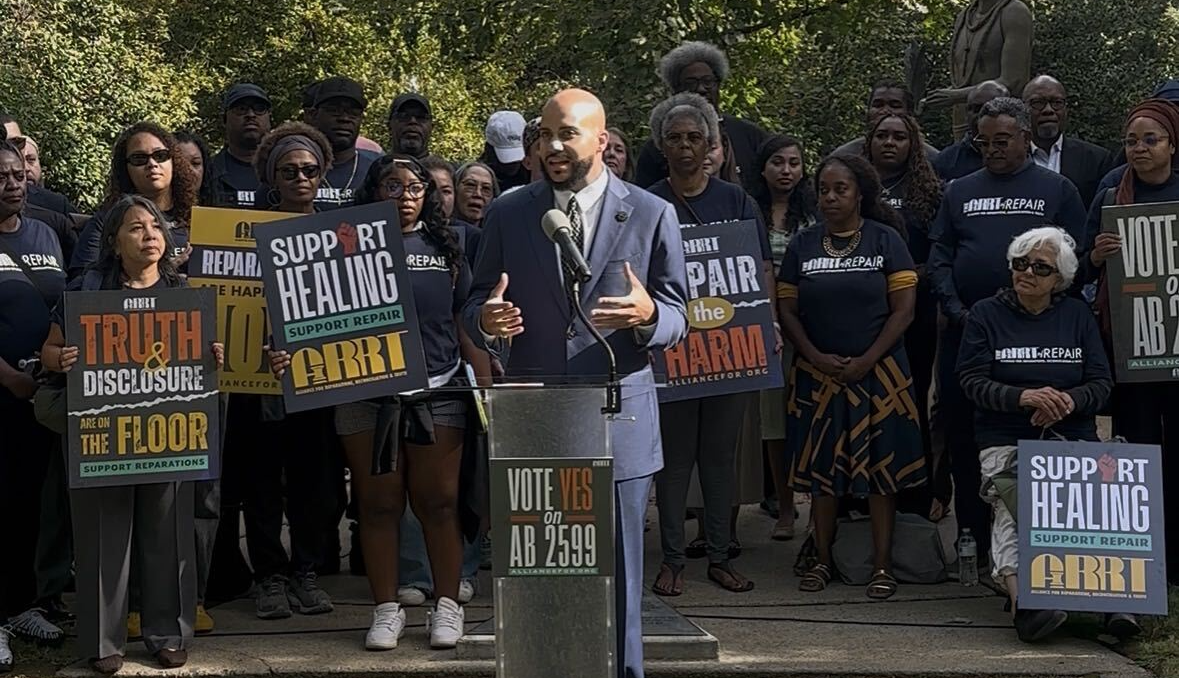
SACRAMENTO, Calif., August 25, 2026 – California is on the brink of becoming the first state in the nation to require corporations to declare under oath whether they or their predecessors profited from slavery.

With its passage in the full Senate today, the California State Legislature adopted AB 2599, The Truth in Disclosure Act, authored by Assemblymember Isaac Bryan and a top priority for the California Legislative Black Caucus. The bill will now be sent to Governor Gavin Newsom for his signature.

The bill requires corporations doing business in California with annual revenue of $100 million in gross receipts or more to submit sworn affidavits — subject to perjury penalties — disclosing whether they or predecessor entities engaged in or profited from slavery-era transactions, with all filings posted to a publicly searchable state database.

0

Maryland to consider slavery reparations after Gov. Wes Moore's veto is overridden

preview

ANNAPOLIS, Md. (AP) — Maryland will create a commission to study potential reparations for slavery after lawmakers voted Tuesday to override a veto by Gov. Wes Moore — currently the nation’s only Black governor — that disappointed many fellow Democrats.

Moore said in his veto letter in May that it was a difficult decision to veto the bill, which was a priority of the Legislative Black Caucus of Maryland. But he wrote there has been enough study of the legacy of slavery, and it was now time to “focus on the work itself” to address it.

But Democrats who control both chambers of the Maryland General Assembly decided the commission was needed to better examine how to do that.

“This topic isn’t easy, but, again, without formal study, reparations risk being dismissed as symbolic or unconstitutional, regardless of moral merit,” said Sen. Charles Sydnor, a Democrat.

0

Creek Freedmen file for Muscogee Supreme Court to enforce citizenship ruling

Tulsa Flyer Creek Freedmen file for Muscogee Supreme Court to enforce citizenship ruling - Tulsa Flyer tulsaflyer.org
preview

Muscogee (Creek) Freedmen this week asked the tribal nation’s Supreme Court to enforce its ruling granting them citizenship after the nation’s executive orders have prevented the issuing of new citizenship cards.

“In issuing (the executive order), Chief (David) Hill has overstepped, encroaching on the Citizenship Board’s independence, violating his duty to uphold the law, and usurping the court’s authority,” the filing reads.

It comes nearly three months after a July 23 ruling granted full citizenship to the descendants of people who were enslaved by the tribe. The July ruling also overturned the nation’s “by-blood” requirement, which served as a basis to deny Freedmen citizenship applications.

0

The Black Women Driving a Food Revolution in Rural Mississippi

Capital B News The Black Women Driving a Food Revolution in Rural Mississippi capitalbnews.org
preview

OAKLAND, Miss. — Grocery store owner Marquitrice Mangham hurries out of the sweltering August heat of the Mississippi Delta and enters her newly opened Farmacy Marketplace.

She arrives about an hour before the doors open at 10 a.m.

It’s a quiet Friday morning in Oakland, Mississippi, except for the occasional screech of tires from semitrucks passing by on Highway 51. Oakland, fewer than 30 miles from her hometown of Webb, is home to about 400 residents, more than half of whom are Black.

Inside the store, Mangham greets and praises her assistant manager, Kini Bradford-Jefferson. She emphasizes that without her, the store couldn’t operate. They laugh, ask each other how they are doing and tidy up the 3,000-square-foot space.

Until April, Oakland had been without a grocery store.

In rural areas, particularly in the Delta, residents face some of the highest rates of food insecurity and unemployment in the state, resulting in poor health outcomes such as obesity, hypertension, and diabetes. These communities have high populations of Black people. They often struggle to attract grocery stores and are overwhelmed by a striking growth of dollar stores.

Around 14% of Americans — more than 47 million people — were food insecure at some point during 2023, according to an Associated Press analysis of U.S. Census Bureau and Feeding America data.

​​Mississippi had a food insecurity rate of 18%, higher than the national rate.

0

'Native Playwrights PDX' Reimagines Representation in Theater

Underscore Native News 'Native Playwrights PDX' Reimagines Representation in Theater - Underscore Native News www.underscore.news
preview

The newly established Native Playwrights PDX, co-organized by director Amber Kay Ball, Confederated Tribes of Siletz Indians, is providing Native theater makers a platform to accurately and respectfully tell the stories of modern Indigenous people. Support from this community funded arts project will combat the lack of Indigenous representation in media while amplifying the work of up-and-coming playwrights and directors.

Native Playwrights PDX was co-organized by Ball in 2024. After hosting a staged reading for their self-written play “Finding Bigfoot” in collaboration with the Fertile Ground Festival at Barbie’s Village last year, Ball, who uses the pronouns she/they, felt that it was more impactful and accessible to showcase work in a community space rather than a major theater.

“It felt more significant than presenting it in a theater to me at the moment when I could just showcase it with community,” Ball recalled.

Since that first staged reading, the idea has only grown.

0

Momodou Taal, a Persecuted Pro-Palestine Activist at Cornell, on Black and Palestinian Solidarity

Hammer & Hope Momodou Taal, a Persecuted Pro-Palestine Activist at Cornell, on Black and Palestinian Solidarity hammerandhope.org
preview

The U.S. student movement in solidarity with Palestine is facing ferocious repression as the Trump administration revokes student visas en masse. Masked federal agents roam around looking to snatch students and faculty off the streets and send them to jail for their activism, including their mere beliefs. One of the students targeted is Momodou Taal, a graduate student at Cornell University who led pro-Palestine activism there and was suspended twice by the university. A dual citizen of the United Kingdom and the Gambia, he joined another graduate student and a faculty member in suing the Trump administration for allegedly violating their First and Fifth Amendment rights by punishing speech and quashing political dissent. On March 21, Taal’s lawyers were notified that the State Department had revoked Taal’s student visa after Immigration and Customs Enforcement condemned his “disruptive action” and ICE requested that he turn himself in. Instead, Taal left the country on his own terms, “free” and with his “head held high,” and continues his struggle on behalf of a free Palestine, upholding the Pan-Africanist tradition.

Taal and Hammer & Hope editor Olúfẹ́mi O. Táíwò spoke in April 2025.

0

Wildfire destroyed a historically Black town. These artists won’t let its legacy disappear

the Guardian Wildfire destroyed a historically Black town. These artists won’t let its legacy disappear www.theguardian.com
preview

On the walls of the gallery, Keni “Arts” Davis’s watercolors show Altadena before and after the fires. There is a local hardware store, a beloved diner, the quirky local Bunny Museum, which held tens of thousands of rabbit-related items.

Then, in gentle strokes of paint, there is the wreckage of each place: rubble, charred beams, burnt-out cars. Davis labels each of these images “BFA”, beauty from ashes.

Those post-fire ruins are gone now, too: Altadena, a historic Black community in Los Angeles that lost nearly 10,000 structures, including more than 6,000 homes, in January’s Eaton fire, is slowly being prepared for rebuilding.

“Now all the rubble is gone, and it’s just flattened out,” said Dominique Clayton, the curator of Ode to ’Dena: Black Artistic Legacies of Altadena, a long-running exhibit at the California African American Museum. “I’m so glad he painted the before and after. Now those buildings have been demolished.”

Ode to ’Dena aims to capture the rich creative legacy of Altadena, a community that for decades nourished Black artists, performers, writers and activists, from Eldridge Cleaver and Sidney Poitier to Octavia Butler. The small town, nestled in the hills to the north of Los Angeles, offered Black families an early chance at home ownership in a region long defined by racial segregation and redlining.


Locals immediately feared that the gentrification of Altadena would be accelerated by the destruction, and that the pre-fire community would be pushed out and longtime Black residents scattered, while the town was rebuilt for wealthier newcomers.

But Altadena’s close-knit community immediately rallied to prevent this double destruction, drawing on a wide range of allies and supporters. While Donald Trump chose not to visit fire survivors in Altadena, limiting his presidential tour to the destruction in the wealthier Pacific Palisades, organizations such as the NAACP and BET Media raised funds, and multiple arts institutions, including Frieze LA, stepped up to document the effects of the fires and highlight the work of artists who had lost their homes and studios.

The California African American Museum exhibit, which runs through October, is part of this broader effort. The show highlights not only the prominent Black visual artists with connections to Altadena, but also the deep connections among them. Several of the artists have multiple generations of their family in the show, including textile, performance and portraiture artist Kenturah Davis, whose father’s watercolors and mother Mildred “Peggy” Davis’s quilt work are both included. The oldest artist on display, the assemblage artist and printmaker Betye Saar, is 98 years old. The youngest, Kenturah Davis’s son Micah Zuri, is two years old.

0

Tulsa’s first Black mayor announces $105M reparations plan for descendants of 1921 Race Massacre

Tulsa’s first Black mayor announces $105M reparations plan for descendants of 1921 Race Massacre www.whatimreading.net
preview

Mayor Monroe Nichols said the Greenwood Trust will consist of three components: a $24 million fund aimed at securing housing and homeownership for descendants, a $60 million fund for cultural preservation that will consist of fixing up buildings, revitalization and clearing blight, and a $21 million “legacy” fund for small business grants, scholarships and land acquisition.

Nichols said the goal is to obtain $105 million in assets by June 1 of next year. Over the next 12 months, the trust will be focused on raising private capital, setting up the programs and appointing a Board of Trustees.

0

Reading Octavia Butler in a time of change

AfroLA Octavia Butler’s Parable books after the L.A. fires afrolanews.org
preview

Octavia’s Bookshelf is an independent bookstore in Pasadena focused on authors of color. The store is named after Butler, whom High said has been a consistent source of inspiration for her.

When the Palisades and Eaton Fires hit Los Angeles, many people found themselves grieving the loss of their homes and communities, just as the characters do in Parable of the Sower. The descriptions of fire-ravaged landscapes became more real to readers who had now seen them firsthand.

Octavia’s Bookshelf was just blocks from the fireline. Overnight, it, like so many other places, transformed into a community relief hub. High, other employees and volunteers took all of the books off the shelves and replaced them with stacks of donated blankets, diapers, clothing and household goods for survivors of the fire.

Emergency supplies were piled high where copies of Parable of the Sower once stood.

“Many of the ways that we’ve come to support each other are based in that book for me,” said High. “I’m constantly referring to those texts and I’m always thinking about Earthseed and how I can be a better steward of our community. And a lot of that has to do with Octavia Butler.”

0

Plantations Burning Down To The Ground Is A Good Thing

preview

For most of these Black people, the only thing better than getting a ticket to see Sinners in IMAX these last few weeks, was seeing a place where their ancestors were held captive, beaten, humiliated, sexually assaulted, and murdered be reduced to ashes, and without the culprit getting caught (if there even is a culprit to catch).

[…]there are people who are convinced that one of the best places to have a perfect wedding on their perfect day is at a plantation house, a decision that rarely if ever takes the history of slavery into consideration, but instead focuses on how plantation houses are a beautiful example of Southern heritage on display for all to see and appreciate.

If you were engaged to be married, and you announced to family, friends, and strangers that your wedding will be held at Auschwitz or Dachau, they would hopefully and rightfully judge the absolute f-ck out of you for making such a horrible and inappropriate decision. They would take turns calling you out and knocking some sense into you for thinking that partying and getting married at a concentration camp where pain, suffering, and death were inflicted on millions of Jewish people is anything resembling a good idea. So why is it that this same approach isn’t usually taken when someone decides that a plantation is the ideal place for their wedding, besides the fact that absolutely nothing about a concentration camp can be seen as romantic or beautiful or welcoming?

Because when it comes to anything regarding Black people, especially their pain and suffering, it’s easier and preferable for a lot of white people to whitewash and sweep it all under the rug for their personal gain and satisfaction, and because it ensures that they keep feeling good about themselves, and not have to worry about their feelings getting hurt by being reminded of their very own history. (Remember when we couldn’t stop seeing headlines and news stories about Critical Race Theory, and how most of the people who were furious about its existence were as articulate and thoughtful in explaining what it is, as they are about defining “woke” as a slang term? Same thing.)

0

‘Sinners’ Is Set in Clarksdale, Where There’s No Theater. Locals Are Asking for a Screening.

Capital B News ‘Sinners’ Is Set in Clarksdale, Where There’s No Theater. Locals Are Asking for a Screening. capitalbnews.org
preview

Tyler Yarbrough didn’t see Sinners once, but twice.

The film, which has made more than $200 million at the box office, is authentically Mississippi Delta through and through, he said. From the Chinese Delta history to the Black businesses, residents say director and filmmaker Ryan Coogler, who has Mississippi roots, did his homework.

On both visits to the movies, Yarbrough, who is from Clarksdale, Mississippi, had to drive nearly 80 miles to see the film, a luxury not afforded to many. There’s limited public transportation in the area and many lack the financial resources to afford a car in the majority Black town of 14,000 where the median income is $35,000.

There’s no active movie theater in the small town.

The 26-year-old community activist jumped into action.

He started a petition in hopes of hosting a public screening and extending an invitation to Coogler, the cast, and the creative team “to walk the streets your vision reimagined, to meet the people whose real stories echo through every frame, and to experience firsthand the living, breathing legacy that inspired your work and the people who are sustaining and reimagining its future.”

In the week since Yarbrough started the petition, more than 5,500 people have signed it.

0

America Is Demolishing Antiracism Five Years After the George Floyd Uprisings

Hammer & Hope Black Politics and Beyond | Hammer & Hope hammerandhope.org
preview

Hammer & Hope asked Black organizers, academics, and writers to consider the state of Black politics five years after the 2020 uprisings and with the re-election of Donald Trump. Their responses, some written before Trump’s inauguration, offer ideas for where we go from here.

Hammer & Hope asked Black organizers, academics, and writers to consider the state of Black politics five years after the 2020 uprisings and with the re-election of Donald Trump. Their responses, some written before Trump’s inauguration, offer ideas for where we go from here.

0

The tribal-led push to build clean energy projects in Indian Country

Quitting Carbon The tribal-led push to build clean energy projects in Indian Country www.quittingcarbonmedia.com
preview

A knotted tangle of bureaucracy, infrastructure, and tax impediments have held back tribes’ ability to harness the bountiful renewable energy potential on their lands.

Among the non-governmental organizations that have worked to empower tribes to build their own clean energy projects is the Oakland, California-based non-profit GRID Alternatives. GRID’s National Tribal Program dates to 2010, with the installation of its first tribal project in California.

Earlier this month, GRID announced it had spun off its tribal program as an independent entity called Tribal Energy Alternatives (TEA). The new organization is GRID’s first Native-led affiliate.

I recently spoke with Tanksi Clairmont, TEA’s co-executive director, about the launch of the new organization and its plans for the coming months.

0

Bill to protect manoomin incorporates Indigenous lifeways into Western legal framework

Prism Reports Bill to protect manoomin incorporates Indigenous lifeways into Western legal framework prismreports.org
preview

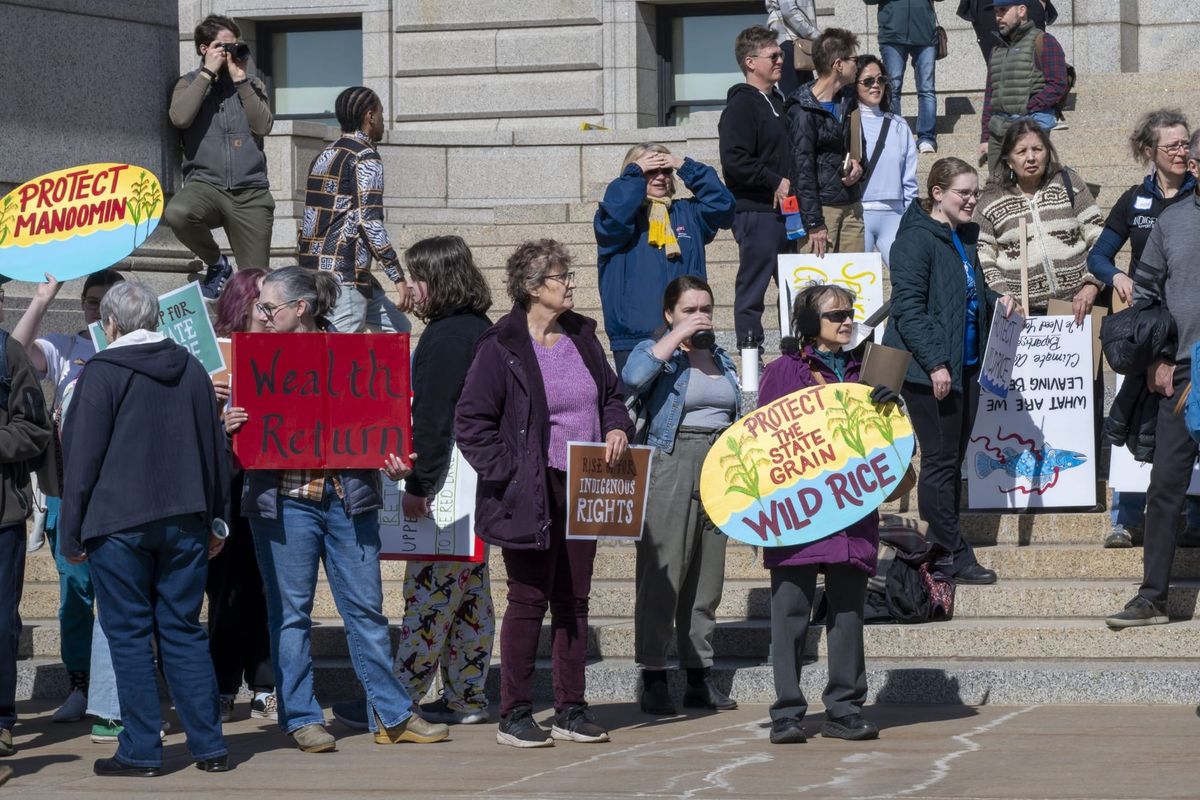
Manoomin, the Ojibwe word for wild rice, is a hearty species. Every year, the plant grows from seeds, surviving months of muzzling by sheets of ice brought by intense Upper Midwest winters, fending off hungry waterfowl in the spring, and thriving in heat and aquatic habitats all summer long. Manoomin is sensitive and growing increasingly vulnerable to the dual forces of habitat destruction and climate change.

For millennia, manoomin has grown in the Great Lakes region, thriving in freshwater lakes found in and around what’s now known as Minnesota and Michigan. Its significance is fundamental to Ojibwe identity, drawing back to the creation story that instructed ancestors to migrate to the land where food grew on water. For generations, Ojibwe elders passed on the traditions of ricing: how to harvest the “good berry,” how to practice ceremonies that incorporate manoomin, and how to cook the grain that is as much food as it is medicine.

But since the 1990s, manoomin has experienced devastating losses in the region, by as much as 50% according to some accounts. The culprit is manifold. Land loss dating back to the first contact with settlers in the mid-1800s prevented peoples of the 11 Ojibwe tribes from unencumbered access to ancestral territories, obstructing traditional stewardship and care. The annexation of land to create Midwestern American territories led to further ecosystem destruction from logging, wetland drainage, and housing development. Since the 1990s, manoomin has also experienced its steepest drop-off, likely due to the accelerating consequences of climate change. Shorter, warmer winters, coupled with increased precipitation, have rendered manoomin a fraction of its once abundant growth.

That’s why Leanna Goose, a mother, educator, and enrolled member of the Leech Lake Band of Ojibwe, helped draft a bill to enshrine manoomin’s right to thrive in Minnesota. The Wild Rice Act, the first of its kind, recognizes manoomin’s cultural significance, its role in providing habitat and food for dozens of other species, and the economic impact for those who sell it for income.

In early April, language from the Wild Rice Act was incorporated into the state Senate’s environmental omnibus bill. Some phrases, like “inherent rights” were replaced with “innate significance.” Other provisions were excluded, such as protecting rice through enforcing stricter permitting standards and preventing boating on uncultivated wild rice beds.

0

'Boots on the Ground': On the quiet radicalism of Black line dancing

'Boots on the Ground': On the quiet radicalism of Black line dancing hadhappened.substack.com
preview

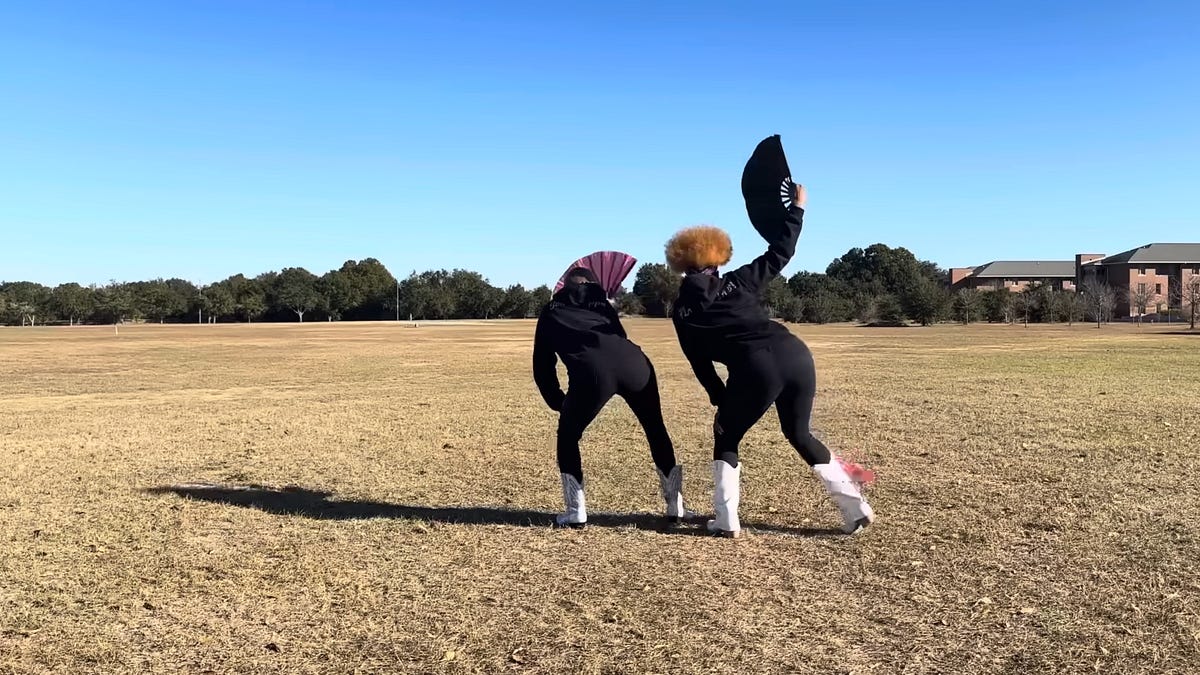
As the United States grapples with political instability, economic precarity, and social unraveling, Black communities are turning to something deceptively simple yet deeply profound: the line dance. These choreographed movements—passed from phone screens to cookouts to community centers—are more than a pastime. They are rituals of survival, resistance, and joy. This story explores how, in a nation that often feels like it’s falling apart, Black Americans are finding grounding and togetherness through the beat—moving in step with history, each other, and the pulse of a culture that refuses to stand still.

Line dancing feels like muscle memory passed down through fried fish dinners and wedding receptions, through Soul Train reruns and HBCU homecomings. It is ubiquitous and almost invisible in its significance. Nobody really talks about it, the way nobody explains how to make a plate at a cookout—you just learn. You show up, you feel the beat, and you follow.

0

Anne Collins Smith Blazes A New Trail As New Orleans Museum of Art’s First Black Chief Curator

preview

archive.is link

Some moments in history feel like a long-overdue shift toward progress, and Anne Collins Smith being named as Chief Curator at the New Orleans Museum of Art is a groundbreaking step toward a more inclusive and representative art world. Now, she has not only reached the pinnacle of a career she has meticulously built but also made history. As the first Black American and the first Black native New Orleanian to hold a full curatorial role at NOMA, this is more than a personal achievement—it is a testament to the power of perseverance, community, and cultural stewardship.

“This is an opportunity of a lifetime,” Smith said, reflecting on her long journey in the art world. That journey began with a deep foundation in African American art, nurtured at Spelman College, where she earned her undergraduate degree before going on to complete an MA in visual arts administration at New York University. Over the years, she has held influential positions at institutions including the Spelman College Museum of Fine Art, the Davis Museum at Wellesley College, and the Saint Louis Art Museum. Through these experiences, she honed her commitment to making art both accessible and resonant across diverse audiences.

Yet, her new endeavor at NOMA holds a significance that extends beyond her impressive resume. It is deeply personal—a homecoming and a duty that carries weight. “It means that I’ve done the work, and I can be a representative of all that’s great about New Orleans,” she said. “It means that I get to represent a plethora of communities that help to shape me.”

0

Beehawers of Color: introduce yourselves!

preview

Welcome to !poc!

About this subhive

Like the sidebar says, this is a “dedicated community for minority groups and people of color, their interests, and their issues.” I suggested this community to Beehaw to provide a casual space for POC in the Fediverse to connect, network, chat, share ideas, etc. The main reason I felt a community like this was necessary is because federated social media have a reputation for being predominantly white, and this can be discouraging for others who may be unsure whether federated communities like ours are safe to join and participate in. Accordingly, I hope !poc will provide a nice, cozy community for you all, one which is rooted in solidarity, support, affirmation, and inclusion.


Our neighboring subhives

If you are here, feel free to check out our neighbors on Beehaw:

Some other groups that you might find of interest, here on Beehaw or other instances, are:


Introducing myself

My username is kalanggam, but you can call me kal, kala, or Gil (my actual name). I’m a queer 20-something based in Texas, and I use he/they pronouns. Some of my interests are programming, game development, writing, cooking, worldbuilding, and leadership theory. I write fiction (mostly short stories, but I’m planning a longer novel), essays (especially cultural critique and technology), and poetry. I also have a Mastodon account on tech.lgbt if you want to be mutuals there. ☺️

I’m also one of the moderators of !poc. I’m mainly here to help facilitate discussion and work together with y’all to cultivate a cozy community, so please feel welcome to direct any of your questions or concerns my way.


Now, introduce yourself!

Introduce yourselves here, and feel free to plug your handles elsewhere in the Fediverse if you’re comfortable. I’d also love to hear your ideas for this community and what you’d expect from moderation. I’m looking forward to meeting you all!