#russia

posts tagged #russia

0

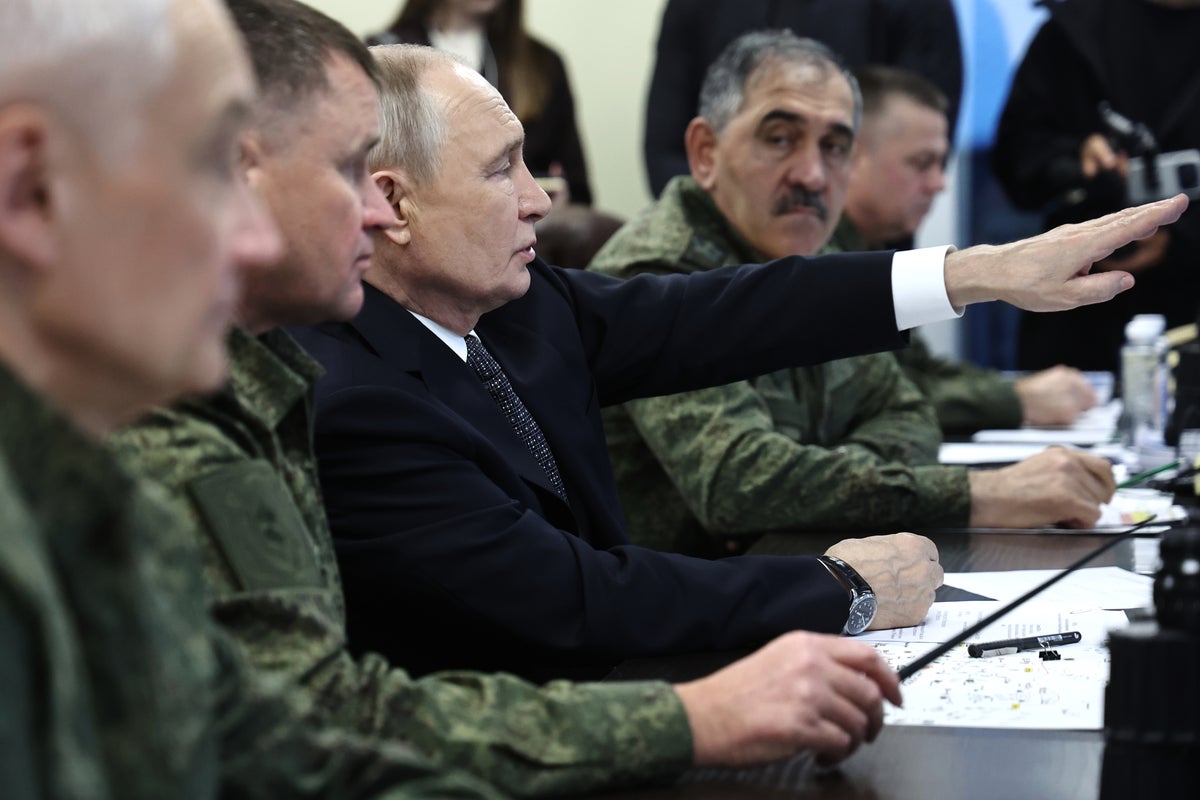
China joins military exercises in Russia

The Independent Putin observes military drills in the Urals involving troops from China and other nations www.independent.co.uk
preview

Archived

[…]

The exercises were combined with the Interaction-2026 drills held by members of the Collective Security Treaty Organization, a Moscow-dominated security alliance of several former Soviet nations.

[…]

The drills included military contingents from Belarus, Kyrgyzstan and Tajikistan, as well as troops from China, Mongolia and Pakistan, according to Russian news reports.

[…]

20

Slavoj Žižek | If You Want Peace, Prepare Europe

YouTube Slavoj Žižek | If You Want Peace, Prepare Europe www.youtube.com
preview

What can Europe still represent in the disorder of the present? And what if its political fragility contains a resource that has yet to be named?

On 25 March 2026, for the launch of Europa2057 at the Sala della Protomoteca in Campidoglio, philosopher Slavoj Žižek, Senior Researcher at the Institute for Sociology and Philosophy at the University of Ljubljana, brings a radical question to the centre: what can Europe still represent in the disorder of the present?

Between the return of war and the crisis of democracies, Europe appears fragile, contradictory, often unable to recognise its own political force. For Žižek, it is precisely in this fragility that the possibility of rethinking its role opens up.

Europe still has the possibility of building a different idea of freedom and coexistence: a space defined by what it makes possible, rather than by the borders it defends.

What does it mean to stake on Europe today as a political project still open?

0

The Ryazan Bombings and Putin's Rise

preview

The 1999 apartment bombings that made Putin, and the story that still does not add up.

Full episode on Paper Trail: www.youtube.com/@papertrailgeo Subscribe for the paperwork behind the headlines. Sources listed in the video.

The 1999 apartment bombings that made Putin, and the story that still does not add up.

Full episode on Paper Trail: www.youtube.com/@papertrailgeo Subscribe for the paperwork behind the headlines. Sources listed in the video.

0

Wage confiscation: North Korean workers in Russia and China funding nuclear weapons program, report finds

'Alarming': Report says North Korean overseas labour financing nuclear weapons www.abc.net.au
preview

cross-posted from: lemmy.sdf.org/post/59216546

Archived

Here is the original report: The DPRK’s Use of Overseas Labour to Violate and Evade UN Sanctions (pdf)

A new report has found that North Korean overseas workers raised between $US450 million ($AU633 million) and $US800 million last year for the authoritarian state’s nuclear weapons program.

The Multilateral Sanctions Monitoring Team report — co-signed by a range of Western governments and US allies — details “systemic evasion of UN sanctions by the DPRK [Democratic People’s Republic of Korea] and other countries through a global network of unlawful overseas labour”.

It says the overseas labourers - who work under exploitative labour conditions and whose wages are confiscated - were working primarily in China and Russia and numbered anywhere between 35,000 and 101,000 workers.

[…]

China has always denied hosting illegal workers from North Korea — and pushed out at least 10,000 workers between 2023 and 2025 — but human rights groups and investigative reporters have documented how thousands can still be found working in Chinese factories, plants and fishing fleets.

The MSMT report estimates that China still hosts between 20,000 and 70,000 North Korean labourers.

[…]

The reports key findings:

  • Generating Illicit Revenue: Despite the strict 2019 repatriation deadline, the DPRK continues to operate an unlawful overseas labour program that generated between $450 million and $800 million in 2025 alone. The DPRK government actively deploys an estimated 35,600 to 101,280 North Korean labourers across at least 17 countries, funnelling earnings into the government’s strategic priorities, including its unlawful nuclear and ballistic missile programs.
  • Most Located in China: Most North Korean labourers are deployed in China, with an estimated 20,000 to 70,000 labourers currently operating there. Despite a temporary repatriation of 10,000-20,000 workers between 2023 and 2025, approximately 10,000 new North Korean labourers arrived in China between January 2025 and January 2026. The number of North Korean labourers dispatched to China is expected to grow.
  • Russia a Growing Hub: North Korean labourers are increasingly deployed to work in Russia, including an estimated 15,000 to 30,000 as of the end of 2025. North Korean labourers are manufacturing military drones for Russia on Russian soil, such as in drone factories located in Alabuga, Tatarstan. The Russian government has created a student visa scheme to camouflage North Korean labourers in Russia as students. Each North Korean labourer in Russia generates an average estimated $7,500 in wages annually. Estimates indicate that monthly wages earned by North Korean labourers in Russia may be up to five times as high compared to monthly wages in China, depending on the industry.
  • Wage Confiscation and Exploitative Working Conditions: The DPRK government confiscates 80-90% of wages earned by North Korean labourers. In some cases, the confiscated amount exceeds their actual earnings, leaving North Korean overseas labourers indebted to the DPRK government. North Korean labourers endure long work hours and exploitative conditions. DPRK authorities also exercise extreme control over labourers’ movement and interactions with outsiders in order to prevent defections, while labourers who do defect risk reprisals against family members remaining in North Korea.

[…]

0

Donald Trump Jr.’s Bahamas Wedding Was Secretly Bankrolled by Russian Oligarch Close to Putin

ProPublica Donald Trump Jr.’s Wedding Bankrolled by Putin-Linked Russian Oligarch www.propublica.org
preview

…

In May, Donald Trump Jr. had a wedding on a pair of private islands.

…

On May 24, Donald Trump Jr. was celebrating in the Bahamas, as scantily clad dancers in stilettos and sailor caps performed for him and his guests. It was the last night of his wedding, a lavish, three-day party held across a pair of ultra-exclusive private islands. A five-tier funfetti cake had been airlifted in from Florida, and helicopters and seaplanes descended on the islands before guests settled into their oceanfront villas. That night on the beach, Trump Jr. lifted his bride into the air while fireworks launched from a barge over the sea.

…

“It was everything we dreamed of and more,” his wife later wrote on Instagram.

That dream was heavily funded by a secret benefactor: Umar Kremlev, a Russian oligarch close to President Vladimir Putin.

…

Kremlev footed the bill for hundreds of thousands of dollars of wedding expenses, according to records reviewed by ProPublica and interviews with three people familiar with the event. The oligarch paid to rent out one of the private islands, where a reception was held and where guests slept. He also covered other big-ticket items, like the fireworks show, and his team helped plan the event. Kremlev is the head of the International Boxing Association [IBA], a scandal-plagued sports group that has been financed by the Russian state-owned energy giant Gazprom. The wedding payments came from an IBA-affiliated entity in Dubai that the boxing association uses for financial transactions.

The guest list numbered around 50. It included Trump Jr.’s brother-in-law Jared Kushner, Eric Trump — and Kremlev, an imposing man with a shaved head who speaks limited English. The oligarch was part of a large group whose presence puzzled other attendees. They sometimes stood off by themselves, speaking Russian.

…

Kremlev’s previously unreported relationship with Trump Jr. represents an extraordinary development: a member of Putin’s circle financially supporting the president’s son and gaining intimate access to the Trump family. For a decade, Putin’s government, regarded as a chief adversary of the U.S., has been accused of efforts to influence American elections. Attempts by Russia to make inroads with the Trumps before the 2016 election exploded into controversy that dogged much of the president’s first term.

…

National security experts expressed alarm at Trump Jr. accepting the oligarch’s largesse, saying it raised an urgent question: What motivated Kremlev to spend a fortune cultivating the connection?

“If I’m paying for your wedding, at some point, you’re going to owe me something,” said Frank Montoya Jr., a retired career FBI official who held senior counterintelligence roles. Oligarchs like Kremlev often act in coordination with the Russian government. While it’s unclear if that happened here, Trump Jr. put himself in a precarious position, Montoya said. “This should be unthinkable for the son of the president. End of story.”

…

The revelations come as Trump Jr. has emerged as a political power center in his own right. Beloved by the MAGA base, he reportedly played an active role in vetting White House cabinet picks for Trump’s second term and was dubbed his father’s “most essential political adviser” by The Wall Street Journal. “I certainly don’t think I’d be sitting here as the VP nominee without Don’s help,” Vice President JD Vance told the outlet in late 2024.

…

In 2009, Umar Kremlev did not yet exist.

He was in his late 20s, with a criminal record for extortion and battery, still going by his birth name, Umar Lutfulloyev, according to the Russian independent news outlet Proekt. But he was about to rapidly ascend in Russia to a position of wealth and influence, with the help of a powerful friend. (“Mr. Kremlev has a completely clean legal record,” his press office said.)

…

With the business environment in Europe growing more hostile to Russia, Kremlev moved much of the IBA’s operations from Switzerland to the United Arab Emirates. A new Dubai entity, IB Challenger, would later pay wedding expenses for Trump Jr. The current sources of the IBA’s funds are murky, and, in recent years, top executives have given conflicting accounts of the status of its relationship with Gazprom.

…

Recently, Kremlev has been working to expand into the U.S. market. In July, his group hosted a bare-knuckle boxing event in Miami, a chance to showcase a particularly bloody form of the sport in which contenders fight without gloves. But the debut was overshadowed when manosphere influencer Andrew Tate, who the IBA had brought in to host, was arrested by U.S. Marshals outside the arena. (Tate is facing rape and sex trafficking charges in the United Kingdom, which he has denied.)

Much about Kremlev’s relationship with Trump Jr., and where it is headed, remains unknown. In a press release after the Istanbul panel, the IBA hinted there was more to come.

“President Kremlev and Donald Trump Jr made it clear – this alliance will not remain symbolic,” the press release read. “More joint initiatives will follow.”

…

Web Archive link

…

In May, Donald Trump Jr. had a wedding on a pair of private islands.

…

On May 24, Donald Trump Jr. was celebrating in the Bahamas, as scantily clad dancers in stilettos and sailor caps performed for him and his guests. It was the last night of his wedding, a lavish, three-day party held across a pair of ultra-exclusive private islands. A five-tier funfetti cake had been airlifted in from Florida, and helicopters and seaplanes descended on the islands before guests settled into their oceanfront villas. That night on the beach, Trump Jr. lifted his bride into the air while fireworks launched from a barge over the sea.

…

“It was everything we dreamed of and more,” his wife later wrote on Instagram.

That dream was heavily funded by a secret benefactor: Umar Kremlev, a Russian oligarch close to President Vladimir Putin.

…

Kremlev footed the bill for hundreds of thousands of dollars of wedding expenses, according to records reviewed by ProPublica and interviews with three people familiar with the event. The oligarch paid to rent out one of the private islands, where a reception was held and where guests slept. He also covered other big-ticket items, like the fireworks show, and his team helped plan the event. Kremlev is the head of the International Boxing Association [IBA], a scandal-plagued sports group that has been financed by the Russian state-owned energy giant Gazprom. The wedding payments came from an IBA-affiliated entity in Dubai that the boxing association uses for financial transactions.

The guest list numbered around 50. It included Trump Jr.’s brother-in-law Jared Kushner, Eric Trump — and Kremlev, an imposing man with a shaved head who speaks limited English. The oligarch was part of a large group whose presence puzzled other attendees. They sometimes stood off by themselves, speaking Russian.

…

Kremlev’s previously unreported relationship with Trump Jr. represents an extraordinary development: a member of Putin’s circle financially supporting the president’s son and gaining intimate access to the Trump family. For a decade, Putin’s government, regarded as a chief adversary of the U.S., has been accused of efforts to influence American elections. Attempts by Russia to make inroads with the Trumps before the 2016 election exploded into controversy that dogged much of the president’s first term.

…

National security experts expressed alarm at Trump Jr. accepting the oligarch’s largesse, saying it raised an urgent question: What motivated Kremlev to spend a fortune cultivating the connection?

“If I’m paying for your wedding, at some point, you’re going to owe me something,” said Frank Montoya Jr., a retired career FBI official who held senior counterintelligence roles. Oligarchs like Kremlev often act in coordination with the Russian government. While it’s unclear if that happened here, Trump Jr. put himself in a precarious position, Montoya said. “This should be unthinkable for the son of the president. End of story.”

…

The revelations come as Trump Jr. has emerged as a political power center in his own right. Beloved by the MAGA base, he reportedly played an active role in vetting White House cabinet picks for Trump’s second term and was dubbed his father’s “most essential political adviser” by The Wall Street Journal. “I certainly don’t think I’d be sitting here as the VP nominee without Don’s help,” Vice President JD Vance told the outlet in late 2024.

…

In 2009, Umar Kremlev did not yet exist.

He was in his late 20s, with a criminal record for extortion and battery, still going by his birth name, Umar Lutfulloyev, according to the Russian independent news outlet Proekt. But he was about to rapidly ascend in Russia to a position of wealth and influence, with the help of a powerful friend. (“Mr. Kremlev has a completely clean legal record,” his press office said.)

…

With the business environment in Europe growing more hostile to Russia, Kremlev moved much of the IBA’s operations from Switzerland to the United Arab Emirates. A new Dubai entity, IB Challenger, would later pay wedding expenses for Trump Jr. The current sources of the IBA’s funds are murky, and, in recent years, top executives have given conflicting accounts of the status of its relationship with Gazprom.

…

Recently, Kremlev has been working to expand into the U.S. market. In July, his group hosted a bare-knuckle boxing event in Miami, a chance to showcase a particularly bloody form of the sport in which contenders fight without gloves. But the debut was overshadowed when manosphere influencer Andrew Tate, who the IBA had brought in to host, was arrested by U.S. Marshals outside the arena. (Tate is facing rape and sex trafficking charges in the United Kingdom, which he has denied.)

Much about Kremlev’s relationship with Trump Jr., and where it is headed, remains unknown. In a press release after the Istanbul panel, the IBA hinted there was more to come.

“President Kremlev and Donald Trump Jr made it clear – this alliance will not remain symbolic,” the press release read. “More joint initiatives will follow.”

…

Web Archive link
0

Russia recruits young women from Latin America to assemble drones in Tatarstan

preview

cross-posted from: mander.xyz/post/56132457

Russia’s Alabuga Start program offers training and jobs to Latin American women under the pretense of employment in the hospitality or logistics sectors, only to ultimately hire them to assemble drones used against Ukraine.

…

Introducing yourself in a video, holding a valid passport and learning 100 words of Russian: That is all it takes to be hired by Russia for its Alabuga Start program, which recruits young women aged 18 to 22 from 77 countries across Africa, Asia and now Latin America.

As described on its website, Alabuga Start, a “relocation program to Russia for work experience,” theoretically offers training and jobs in seven professional fields, including hospitality, vehicle operation and logistics. However, the women recruited and employed in the city of Yelabuga, in Tatarstan, located 1,000 kilometers east of Moscow, unknowingly contribute to Russia’s war effort. Once there, far from the initial promises they received, they are put to work assembling drones used against Ukraine: Iranian Shahed-type drones, which are licensed to Russia, upgraded and then named “Geran-2” and “Geran-3.”

…

Since 2022, the Alabuga Special Economic Zone (SEZ), in Yelabuga, has become Russia’s main center for Shahed-type drone production. Despite a shortage of local labor and Western sanctions, production has intensified since 2024. No current study can precisely estimate the scale of recruitment in Latin America, which began as early as June 2024, according to openly available data. However, according to The Reporter, an Ethiopian newspaper, since 2022, 200 women from various African countries, where the program was first promoted, have joined it.

Since then, the program has established new recruitment channels in 13 Latin American countries, particularly in 2025, backed by advertisements on social media platforms, including AI-generated content and partnerships with local influencers. In Ecuador, Club Deportivo El Nacional, one of the country’s four largest football clubs, featured the Alabuga Start logo on its 2025 jersey. In Mexico, the program signed a partnership with the town of Abasolo – population 10,000 – and four Colombian influencers even visited the SEZ in summer 2024 to promote the program.

…

This practice of supplementing the recruitment of Russian citizens has raised concerns abroad about how Moscow has been able to project its message, “even at a time when the Russian military is exhausted by the ongoing war of aggression,” said political scientist Marie Mendras, author of La Guerre Permanente. L’Ultime Stratégie du Kremlin (“Permanent War. The Kremlin’s Ultimate Strategy”).

…

Although recruitment in Latin America started more recently than in Africa and appears less significant so far, several voices have spoken out against it, calling out the fact that it seems to constitute labor exploitation, or even human trafficking. For those who travel to Russia, the program, which lasts at least two years, promises “guaranteed stability and social security, official salary and confidence in the future,” according to its website. The offer is particularly economically attractive for many, with starting salaries above $500 (€440) per month, hostel accommodation for just $40 and a one-way ticket to Moscow, all covered by the program.

However, the program’s African recruits have shared a very different reality on social media platforms: relentless work schedules, exposure to dangerous chemicals and restrictions on their freedom of movement. After these accounts, the Associated Press published an investigation in October 2024, in which one woman said she and others were “maltreated like donkeys, being slaved.” Once these Russian practices were exposed, Alabuga Start’s Meta, TikTok and Google accounts were deleted, slowing the program’s spread in Latin America, which had been intended to become Moscow’s next major recruitment pool.

…

Beyond the industrial workforce Moscow has recruited through Alabuga Start, it has also been recruiting fighters from Latin America for its war in Ukraine. In 2026, more than 5,000 Cubans have been sent to fight on the Donbas front.

…

The Kremlin has succeeded in convincing people through the influence network it has established in South America since the Cold War. “Moscow believes that countries which were once within the USSR’s sphere of influence are its ‘near abroad’ and that it has the right to control them. To confront the United States, Russia must do so in the American ‘near abroad,’ meaning Latin America,” said Farah, adding, “If you look back at Russian disinformation operations in the region, they really took off in 2014, when Russia invaded Crimea, so influence and war efforts are clearly linked.”

…

That year, the Russian propaganda outlets Sputnik and Russia Today (RT) launched a Spanish-language channel and opened offices in Latin America. These extensive influence networks, which include local content creators, media outlets and agents, have become highly developed. Will they succeed in maintaining a steady recruitment base of Latin American labor? That seems unlikely. “Russia is no longer a superpower. It keeps up the pressure through these operations. Interference is the weapon of the weak, for a declining power,” said Mendras.

…

Archive Today link

0

Russian mayor says North Korean street cleaners cost too much for his city, so he hired Senegalese workers instead

Meduza Russian mayor says North Korean street cleaners cost too much for his city, so he hired Senegalese workers instead — Meduza meduza.io
preview

Orenburg Mayor Albert Yumadilov said he had planned to hire North Koreans as street cleaners but that they would not work for the wages the city can offer.

“As far as I know, workers from North Korea won’t come for 55,000 rubles. Wages there are two to three times higher. Sure, their efficiency is higher too — they work like robots. I’ve seen it with my own eyes; over there, they really are robots… But we just can’t afford the wages,” Yumadilov said, as quoted by the Orenburg city portal 1743.ru.

…

Meanwhile, Senegalese nationals are working in the city’s housing and utilities sector, Yumadilov said. The first 10 arrived in April. Thirty-one Senegalese now sweep the streets of Orenburg, and four more are due soon. Yumadilov praised the quality and productivity of their work.

…

Web Archive link

0

Russia ignores urgent medical condition and increases monstrous sentence against 68-year-old Halyna Bekhter for supporting Ukraine

Human Rights in Ukraine Russia ignores urgent medical condition and increases monstrous sentence against 68-year-old Halyna Bekhter for supporting Ukraine khpg.org
preview

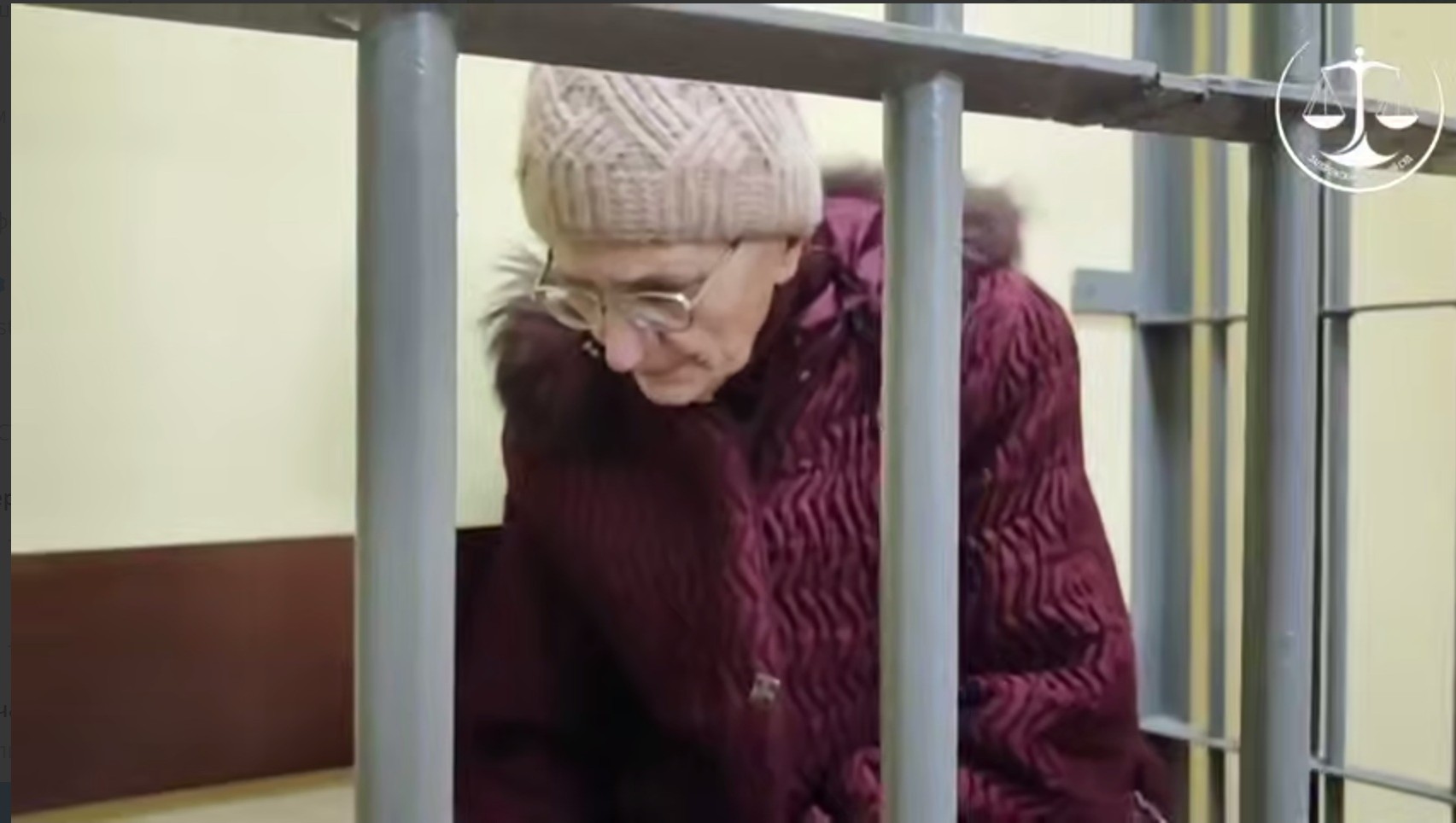
Russia’s First court of appeal has not only upheld an illegal conviction by an occupation ‘court’ against 68-year-old Halyna Bekhter for supposed ‘treason’ through a donation to Ukraine’s Armed Forces but has increased her sentence from eleven to twelve and a half years’ imprisonment.

The brutality is especially shocking as a human rights activist in contact with a cellmate of the Ukrainian pensioner reported several months ago that she was showing signs of dementia. While it would normally be inappropriate to bandy about such ‘diagnoses’ without a proper medical examination, Russia has not only failed to provide any such assessment but has even increased an already appalling sentence.

…

Halyna was sentenced on 5 March 2026 by ‘judge’ Valery Valerievich Zmeyev, a Russian citizen illegally deployed in Russia’s occupation ‘Zaporizhzhia regional court’. He also ordered that her mobile phone be confiscated and, presumably, sold to obtain the 1240 roubles, or 14 euros, which Halyna had donated to the Ukrainian Armed Forces.

…

In late May 2026, Sota learned from a human rights activist who corresponds with prisoners, including Halyna Bekhter’s cellmate, that the latter suspected that Halyna is suffering from Alzheimer’s. The cellmate wrote that she had known Halyna since June 2025, that all had appeared to be fine, with the dramatic deterioration having been in the past two months or so. The cellmate explained, among other things, that Halyna was refusing to eat, and that they had to positively hold her so that she doesn’t run away from the table and force her to eat something.

…

Web Archive link

0

Lithuania: Russia’s neighbor to scrap ban on nuclear weapons, says ‘situation is getting worse’

CNBC Russia’s neighbor to scrap ban on nuclear weapons, says ‘situation is getting worse’ www.cnbc.com
preview

The decision comes shortly after lawmakers in Finland, another NATO member that shares a border with Russia, voted to lift its longstanding ban on nuclear weapons.

…

The Financial Times reported last month, citing three unnamed sources briefed on discussions, that the U.S. was in talks to secure new nuclear-capable deployments in Europe.

The report said countries on NATO’s eastern flank, such as Estonia, Latvia, Lithuania and Poland, were interested in potentially hosting bases for so-called U.S. dual-capable aircraft (DCA), which are able to deliver nuclear strikes.

…

0

Russian Economic Outlook Most Negative in 20 Years

Gallup.com Russian Economic Outlook Most Negative in 20 Years news.gallup.com
preview

…

A record-high 60% of Russians interviewed between March and May said their local economic conditions are getting worse. Less than half as many (27%) said things are getting better.

This marks the first time since 2006 that a majority of Russian adults have said their economy is getting worse. The previous highs were in 2020 (45%) and 2021 (50%) during the COVID-19 pandemic [according to a Gallup survey].

…

Russians also feel gloomy about their own living standards, with 56% in the latest poll saying their standard of living is getting worse. That’s the highest level of pessimism recorded yet and the first time in two decades that a majority of Russian adults have expressed this view.

…

The increasingly negative outlook comes as Russia’s wartime economy shows signs of slowing. Growth in recent years has been supported by high defense spending, but the government recently lowered its growth forecast for 2026 from 1.3% to 0.4%, despite higher global oil prices because of the Iran war. Labor shortages are also intensifying as military recruitment and defense production compete with the civilian economy for workers.

As the civilian economy weakens, higher military spending is needed to sustain economic output and employment. This dynamic makes Russia even more reliant on higher defense spending, making it harder to pull back from the war without triggering a further downturn.

…

Russians’ views of the job market have deteriorated sharply this year. Thirty-five percent in the 2026 survey say now is a good time to find a job where they live, while 58% say it is a bad time.

…

Unemployment in Russia remains low, primarily because of labor shortages linked to the war and mass mobilization rather than because of economic strength. Historically, Russians’ views of their job market have typically tracked closely with the unemployment rate — but perceptions are worse than conditions in 2026, reflecting wider economic pessimism across the country.

…

This year, the public’s confidence levels in the military, national government and the honesty of elections have suffered their largest single-year declines on record. Confidence in the military has dropped by 13 percentage points to 66%, confidence in the government by 14 points to 53%, and confidence in the honesty of elections by 16 points to 40%.

…

Bottom Line

Moscow’s pared-back Victory Day parade in May offered a visible sign that Russia remains far from victorious in Ukraine. Shortly after the full-scale invasion, when Russia hoped to take Kyiv in a matter of days, Russian public opinion rallied around the flag, and people grew considerably more positive about many areas of life.

More than four years later, pessimism has replaced that initial optimism. Pessimism about the economy and living standards has reached a record high. Job market optimism has sunk, as has confidence in key national institutions and perceptions of media freedom.

Russian ministers have admitted publicly in recent months that the economy is overheating, with the effects now showing up in the public’s mood. The longer the war grinds on, the more it may test people’s patience with the conflict and the sacrifices it demands.

…

A record-high 60% of Russians interviewed between March and May said their local economic conditions are getting worse. Less than half as many (27%) said things are getting better.

This marks the first time since 2006 that a majority of Russian adults have said their economy is getting worse. The previous highs were in 2020 (45%) and 2021 (50%) during the COVID-19 pandemic [according to a Gallup survey].

…

Russians also feel gloomy about their own living standards, with 56% in the latest poll saying their standard of living is getting worse. That’s the highest level of pessimism recorded yet and the first time in two decades that a majority of Russian adults have expressed this view.

…

The increasingly negative outlook comes as Russia’s wartime economy shows signs of slowing. Growth in recent years has been supported by high defense spending, but the government recently lowered its growth forecast for 2026 from 1.3% to 0.4%, despite higher global oil prices because of the Iran war. Labor shortages are also intensifying as military recruitment and defense production compete with the civilian economy for workers.

As the civilian economy weakens, higher military spending is needed to sustain economic output and employment. This dynamic makes Russia even more reliant on higher defense spending, making it harder to pull back from the war without triggering a further downturn.

…

Russians’ views of the job market have deteriorated sharply this year. Thirty-five percent in the 2026 survey say now is a good time to find a job where they live, while 58% say it is a bad time.

…

Unemployment in Russia remains low, primarily because of labor shortages linked to the war and mass mobilization rather than because of economic strength. Historically, Russians’ views of their job market have typically tracked closely with the unemployment rate — but perceptions are worse than conditions in 2026, reflecting wider economic pessimism across the country.

…

This year, the public’s confidence levels in the military, national government and the honesty of elections have suffered their largest single-year declines on record. Confidence in the military has dropped by 13 percentage points to 66%, confidence in the government by 14 points to 53%, and confidence in the honesty of elections by 16 points to 40%.

…

Bottom Line

Moscow’s pared-back Victory Day parade in May offered a visible sign that Russia remains far from victorious in Ukraine. Shortly after the full-scale invasion, when Russia hoped to take Kyiv in a matter of days, Russian public opinion rallied around the flag, and people grew considerably more positive about many areas of life.

More than four years later, pessimism has replaced that initial optimism. Pessimism about the economy and living standards has reached a record high. Job market optimism has sunk, as has confidence in key national institutions and perceptions of media freedom.

Russian ministers have admitted publicly in recent months that the economy is overheating, with the effects now showing up in the public’s mood. The longer the war grinds on, the more it may test people’s patience with the conflict and the sacrifices it demands.

0

Russian News: First LGBT conviction for three men after they organized a closed doors nightclub party, up to 7 years behind the bars

preview

Modern Russian and American tactics mirror each other in making up a “movement” out of disorganized thing they don’t like (e.g. Antifa, there - LGBT), promoting it into an international extremist org, and then hammering everyone for being a part of said org. This process signifies a switch from a policy “you do you but don’t tell anyone” into “don’t do that at all”. Just one step from criminalizing non-visible individuals for just being queer in a closet.

I haven’t heard of anarchist becoming an org like that, but satanist became it, and childfree was at least talked about in the same vein.

Soon, it wouldn’t be a problem, because the entire constitution that still formally exists is nearing it’s complete rewriting by dudes who steadily promoted open fascism, eurasism and bombing european capitals with nukes: novayagazeta.ru/…/konstitutsiia-podryvaet-osnovy-…

Don’t feel pity about me being stuck here. Watch for said dynamics in your place and do something to stop it. Please, don’t let your place fall into this face first, don’t make it another fascist paradise. Knowing there is still somewhere to escape to is a bliss.

0

Moscow Allocates $2.15 Billion for Disinformation Campaigns Against the West

UNITED24 Media Moscow Allocates $2.15 Billion for Disinformation Campaigns Against the West united24media.com
preview

Russia has allocated 185 billion rubles ($2.15 billion) to fund disinformation campaigns directed against European Union and NATO countries, marking a 50% increase compared to the previous year.

This funding is part of an effort by Moscow to systematically weaken Ukrainian journalism as an institution, executing both physical attacks on the front lines and information control in occupied territories, according to Detector media on June 26.

…

Ukrainian Member of Parliament Yevheniia Kravchuk shared these findings during a panel on the wartime status of Ukrainian media at the Ukraine Recovery Conference (URC 2026) in Gdansk, Poland.

Kravchuk stated that the Kremlin’s information operations will not cease even after the current kinetic phase of Russia’s full-scale invasion of Ukraine ends. She explained that when discussions turn toward international investments and European integration for Ukraine, Moscow will actively push alternative narratives to convince Western publics to return to the old days and restore ties.

…

The current statistics indicate that at least 15 Ukrainian journalists and 4 French journalists have been killed by the Russian Federation while performing their professional duties. Kravchuk raised broader questions regarding the efficacy of international legal frameworks when one combatant party completely disregards established global conventions protecting media personnel.

…

Beyond physical targeting, the strategy involves identity theft of media brands in occupied areas, where local publication layouts and names are duplicated by occupation authorities to distribute Moscow-approved content.

Kravchuk also pointed to the creation of alternative documentary films regarding the siege of Mariupol to counter acclaimed authentic accounts like the Oscar-winning film “20 Days in Mariupol” by Mstyslav Chernov, forcing genuine reporters to compete directly against fabricated realities.

…

0

Russia’s Wiki warfare tries to distort reality, documents show

The Japan Times Russia’s Wiki warfare tries to distort reality, documents show www.japantimes.co.jp
preview

Russian influence operators called it Project 2026. The plan wasn’t just to spread fabricated stories on social media platforms. It outlined efforts to create an alternative information ecosystem.

Leaked documents from a private Russian agency reveal plans to build a sprawling network of Wikipedia-style reference sites, media outlets and phony think tanks to shape how people and AI chatbots understand political issues.

The documents from the Social Design Agency (SDA), which has been sanctioned by the U.S., the U.K. and the European Union for supporting Kremlin-directed disinformation, show how the Moscow-based agency has emerged as a central node in Russia’s cognitive warfare system, involved in false flag operations and planting sham stories online.

Among the 73 leaked files are project proposals and screenshots of chats and websites dating from May 2023 to April 2026. Combined, they suggest Russian influence operators are expanding beyond spreading false stories on social media platforms to trying to control the sources of information that underpin search engines and large language models. Fact Investigation Platform, an Armenian media outlet focused on disinformation, first reported on some of the documents.

…

One proposal outlined plans to build a reference site “cloned” from Wikipedia for Armenia that operators would optimize for search engines and insert Russia-friendly narratives into the most-read pages. The proposal was dated April 14, according to its metadata, just two months before the country’s June 7 election.

…

Another project targeting Germany said 200,000 web pages were created, according to a planning document dated Jan. 15. It set goals, including editing 100 articles a month targeting search engines. The plan also aimed to “train” six AI platforms a month using edited articles. It did not disclose the names of the websites. The BfV, Germany’s domestic intelligence agency, said it was aware of the leak but declined to comment.

…

“Their approach is to try to break search engines by flooding the zone with content that cross-references their content or their narratives,” said Katerina Sedova, a nonresident senior fellow at the Atlantic Council’s Eurasia Center … “This will be their indirect way of breaking into popular chatbots and search engines.”

…

Most of the leaked documents don’t contain SDA logos, but European officials and researchers said they believed the files were genuine based on their content and the style of the proposals, some of which are similar to SDA documents disclosed by the U.S. Justice Department and European media in 2024.

…

Historical Domain Name System data was used to independently confirm the existence of the 42 websites shown in screenshots of the operation’s content management system, evidence that would be difficult to falsify. Almost all of them were hosted on the same Russia-based internet protocol address, which also appears in the leaked documents.

…

Reporters found three websites — spyurk.cyou, sevan.info and khachkar.info — hosted at the same internet protocol address and registered in January that have pages copied from Wikipedia on Armenia in Russian. The spyurk.cyou page on the Armenian diaspora appears to be a copy from the Russian-language version on Wikipedia, which removed references to the dissolution of the Soviet Union. The sites were suspended by their internet provider on June 9. The provider didn’t respond to requests for comment.

…

Reporters also found numerous websites run by SNG-Media, a group working with the SDA to advance pro-Russian views according to a leaked SDA brochure. The websites credit images to spyurk.cyou, even though they’re available on Wikipedia, Shutterstock or social media. The websites, including erevan.one targeting Armenia, are hosted in the Russian Federation and registered with Russia’s communications regulator Roskomnadzor, which controls and restricts online information.

…

Russia has tried to use think tanks and news outlets as fronts to influence Western public opinion over the past decade. In 2021, the U.S. imposed sanctions on the Moscow-based Strategic Culture Foundation and three other outlets for working with Russian intelligence agencies to spread false information. Reports in 2022 revealed that Wikipedia pages in multiple languages, including Arabic, Spanish and Portuguese, referenced the SCF.

…

It also outlined a plan to monitor 100 French opposition politicians and republish 30 to 40 of their posts daily. A screenshot of an opinion tracker for France from April revealed that the group was monitoring social media posts of a dozen far-right and leftwing politicians and public figures, noting hashtags and themes that emerged. Those tracked included Catherine Griset, a member of the European Parliament for the right-wing party Reassemblement National, and Louis Boyard, a member for the leftwing France Unbowed party. Griset and Boyard didn’t respond to requests for comment.

Bloomberg found evidence of similar tracker websites created for the U.K. and Germany earlier this year. The sites group influencer posts around hashtags that operatives created about divisive themes. In the U.K. tracker, trending hashtags included #MigrantCrisis, #BrokenSystem and #WarSpillover.

…

Web Archive link

0

“Loaded them up like convicts”. The wife of a Russian man seized in a massive Penza enlistment raid on how he was sent to war in Ukraine against his will

Mediazona “Loaded them up like convicts”. The wife of a man seized in a massive Penza enlistment raid on how he was sent to war against his will en.zona.media
preview

As police, bailiffs and soldiers seize men en masse on the streets of Penza, the Defense ministry is dismissing the roundups as a “fake” and denying that those detained are being forced to sign army contracts. Meanwhile, a video has gone viral showing women surrounding a minibus and begging soldiers not to take their relatives away to the front. Mediazona spoke to one of the women involved, who described how her husband, a man who had never served in the army, was grabbed in the street, beaten at the enlistment office and then, after being issued a new passport and a bank card, sent to occupied Mariupol.

…

In the Sputnik neighbourhood of Penza, police carried out a door-to-door sweep. “They’re grabbing absolutely everyone, stopping cars and public transport, men are being bundled off to sign a contract, there are raids all over the city,” the anti-draft project Get Lost quoted one of its subscribers as saying …

The video that caused the biggest stir on social media was filmed during the night of June 16–17 outside the enlistment office for Penza’s Oktyabrsky and Zheleznodorozhny districts, on Skladskaya Street …

Weeping women have surrounded a minibus in which men sit in silence. One of the women shouts hysterically: “They won’t even give us five minutes [to say goodbye], why won’t you let us?” …

Halfway through the video the minibus tries to drive off, but it is surrounded, women clinging to it. “Sasha, call the police, please!” one of them shouts, her voice hoarse. “I swear, I’m going to smash this fucking window! Let them go!” …

“One man from Kamenka they grabbed right at home; his wife was at work and he was in with the child,” Tamara continues. “It all happened in front of the child. Another, from Kuznetsk, went to the passport office to register his address and was told to go to the council building to ‘get a stamp.’ He turned up, and they took him gently by the arm and carted him off [bringing him to the enlistment office].” …

Enlistment offices [in Russia] can indeed cancel a detained man’s passport and issue a new one within a day, often working hand in hand with the local migration units of the interior ministry, Ivan Chuvilyaev of the Get Lost project and an anonymous lawyer with the conscientious-objection project Call to Conscience told Mediazona. The servicemen’s salary cards are simpler still: usually issued without a name and, in Chuvilyaev’s words, already loaded with the lump-sum enlistment payments, “so help yourself.” …

Web Archived link

0

Chinese antenna maker Harxon made false claims in its attempt to refute The Insider’s reporting on sales to Russia

The Insider in English Chinese antenna maker Harxon made false claims in its attempt to refute The Insider’s reporting on sales to Russia theins.press
preview

In May, The Insider published an investigation into how Chinese company Harxon supplies Russia with “smart” antennas — the only tool that allows Geran drones to avoid being “blinded” by Ukrainian jammers. As part of the investigation, a researcher from the Nordsint project wrote to Harxon’s official email address and was subsequently contacted by Harxon employees Anthony Zheng and Masha Wu. Zheng accepted an order for a large batch of anti-jamming antennas and then issued an invoice for Harxon antennas through a front company. Antennas with the same markings were found in Geran drones shot down in Ukraine.

A month after the article was published, Harxon sent a “clarification” to several of the company’s partners. In it, the Harxon claimed Anthony Zheng “is not an employee of our company” and that his business activity was “solely his personal actions and those of his behind-the-scenes associates.” Harxon also denied producing antennas from the GI and HXTX series, saying it strictly follows the law.

…

The Insider examined Zheng’s employment history and found that Harxon’s claim about his status with the company is false. On Harxon’s page in the Made in China business directory, Anthony Zheng was directly listed as a sales manager in the company’s international department; notably, that page was deleted after The Insider’s article was published. In addition, last year Kordil Surveying & Engineering Ltd. took to LinkedIn to thank “Harxon Corporation and their representatives Masha Wu and Anthony Zheng” for visiting the company.

…

Web Archive link

0

Meet Russia’s latest ‘war hero’: A brigade commander accused of running a torture camp and ordering troops to execute their own comrades

Meduza Meet Russia’s latest ‘war hero’: A brigade commander accused of running a torture camp and ordering troops to execute their own comrades — Meduza meduza.io
preview

The commander of the 5th Separate Motorized Rifle Brigade (formerly the Oplot Battalion), Colonel Ramil Faskhutdinov, has been named a Hero of Russia, the Defense Ministry announced.

…

The specific actions for which Faskhutdinov received the award were not disclosed. In late 2025, the colonel personally briefed President Vladimir Putin on the capture of Myrnograd in the Donetsk region.

iStories describes Faskhutdinov as “one of the main ‘zeroers’” in the Russian army. The outlet also said relatives of soldiers from his brigade said he personally sent wounded troops on crutches into assault units to dispose of them. Separately, some servicemen reportedly said Faskhutdinov had ordered them to execute fellow soldiers.

Astra, a Russian independent news outlet, has reported that the 5th brigade runs a torture camp for its own troops on the grounds of an abandoned mine in Ukraine’s Donetsk region. Astra also reported that commanders extort money from the troops sent there and then dispatch them on “human‑wave assaults.”

…

Web Archive link

0

Russian State Duma MP General Gurulev admitted that Russian forces killed civilians in Donbas in 2014 on his personal orders

play · mstdn.social
Mastodon 🐘 Aure Free Press :verified: (@Free_Press@mstdn.social) mstdn.social
preview

[Post links to a video, 1 min.]

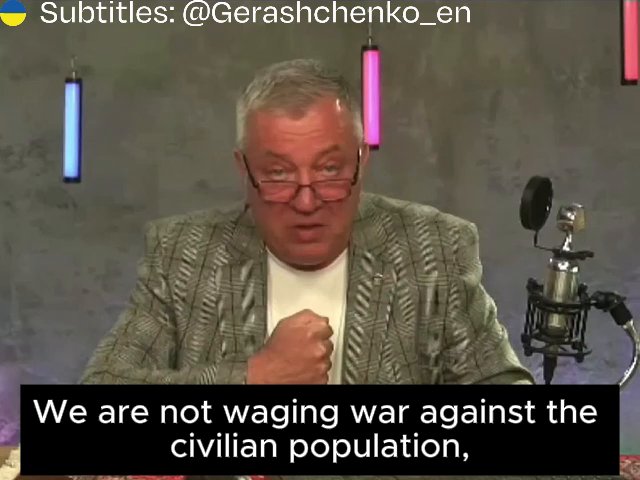
Russian State Duma MP General Gurulev admitted that Russian forces killed civilians in Donbas in 2014 on his personal orders.

Gurulev said that a woman and a child were killed in shelling by Russian forces 12 years ago in Donbas, when he was commanding troops.

“I did that. There was no other way. I had to save my own men.”

At the same time, he called for strikes on Ukrainian cities:

“But this is war. And the enemy must be struck everywhere.”