Eine Entscheidung aus Star Trek: Voyager sorgt bis heute für Fan-Diskussionen. Dahinter steckt ein moralisches Problem, das ganz schön aktuell ist.
Die 24. Folge der zweiten Staffel Star Trek: […] Als sie [Neelix und Tuvok] zurückgebeamt werden, erscheint aber nur eine Person auf dem Schiff. Sie enthält die DNA und die Erinnerungen sowohl von Neelix als auch von Tuvok und gibt sich den Namen Tuvix – die besagte Episode trägt ihren Namen.
Zwei Wochen vergehen und Tuvix integriert sich in die Mannschaft. Doch dann wird eine Möglichkeit gefunden, die beiden Männer wieder zu trennen. Alle wirken glücklich, nur Tuvix meint: “Ich möchte nicht sterben.”
Judith Jarvis Thomson hat in einem Text schon vor mehr als 40 Jahren zwei Versionen des Trolley-Problems beschrieben: In einem Fall muss der Protagonist entscheiden, ob er eine Straßenbahn so umlenkt, dass statt fünf Personen eine Person überfahren wird. In einem zweiten Fall muss ein Chirurg entscheiden, ob er einen gesunden Menschen gegen dessen Willen tötet, um mit den Organen fünf todkranke Menschen zu retten.
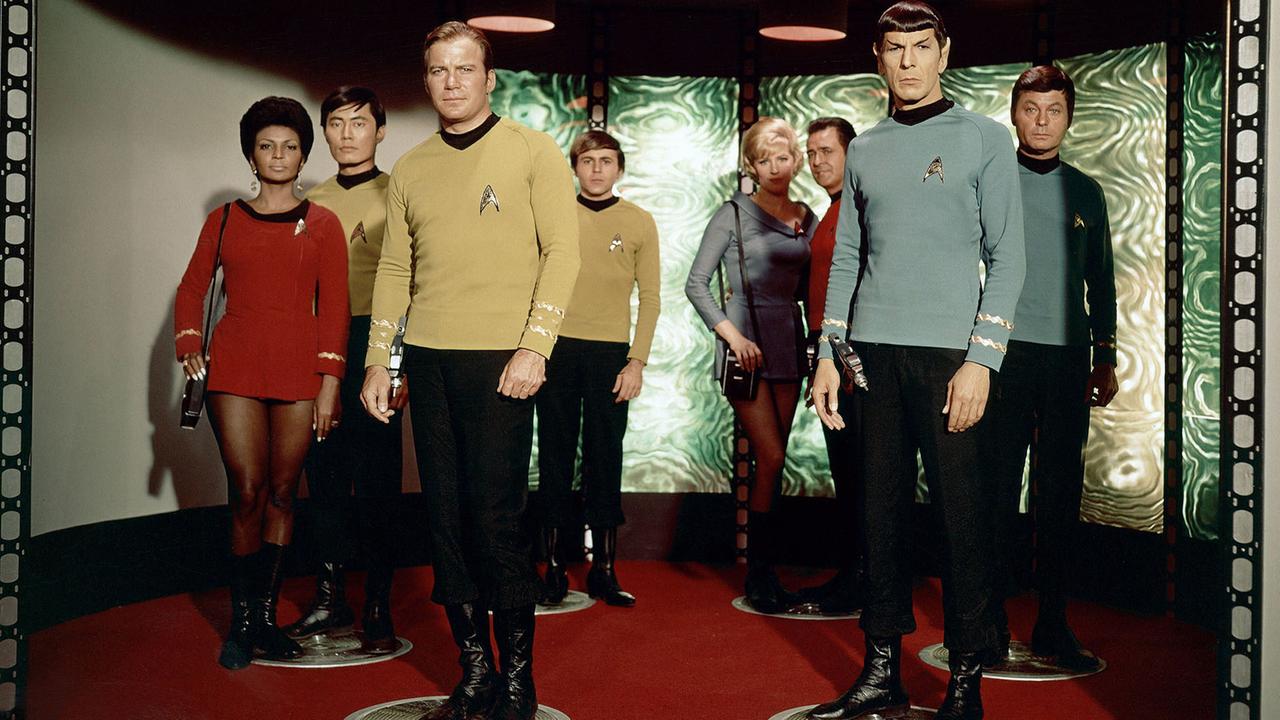
Eine Serie als Spiegel der Gesellschaft. Am 8. September 1966 wurde die erste Folge von “Star Trek” im US-Fernsehen ausgestrahlt. Noch heute ist das Franchise bei Fans beliebt. Vielleicht auch, weil dort eine bessere Zukunft versprochen wird.
Herzlichen Glückwunsch zum 60ten 🖖🙂
Eine Serie als Spiegel der Gesellschaft. Am 8. September 1966 wurde die erste Folge von “Star Trek” im US-Fernsehen ausgestrahlt. Noch heute ist das Franchise bei Fans beliebt. Vielleicht auch, weil dort eine bessere Zukunft versprochen wird.
At 05:00 on 25 August 2110, Counselor Mishima leads the 8 members of Group Green to the tau-field area of L’Auberge du Portail, just outside Lyon in France. On arrival in Exile, Group Green discovers that the Pliocene Earth is under the control of a dimorphic alien race: the Tanu and the Firvulag.
Group Green comprises:
• Elizabeth Orme: a former Grandmaster farsensor, redactor and instructor.
• Aiken Drum: a young ne’er-do-well and trickster.
• Felice Landry: a young woman with apparently incredible but violent athletic abilities.
• Richard Voorhees: an ex-space freighter captain.
• Bryan Grenfell: a cultural anthropologist.
• Stein Oleson: a former planet crust driller, part of the Lisboa power grid repair crew.
• Claude Majewski: a retired exopaleontologist.
• Anna-Maria (Amerie) Roccaro: a former nurse assisting end-of-life patients
At 05:00 on 25 August 2110, Counselor Mishima leads the 8 members of Group Green to the tau-field area of L’Auberge du Portail, just outside Lyon in France. On arrival in Exile, Group Green discovers that the Pliocene Earth is under the control of a dimorphic alien race: the Tanu and the Firvulag.
Group Green comprises:
• Elizabeth Orme: a former Grandmaster farsensor, redactor and instructor.
• Aiken Drum: a young ne’er-do-well and trickster.
• Felice Landry: a young woman with apparently incredible but violent athletic abilities.
• Richard Voorhees: an ex-space freighter captain.
• Bryan Grenfell: a cultural anthropologist.
• Stein Oleson: a former planet crust driller, part of the Lisboa power grid repair crew.
• Claude Majewski: a retired exopaleontologist.
• Anna-Maria (Amerie) Roccaro: a former nurse assisting end-of-life patients.
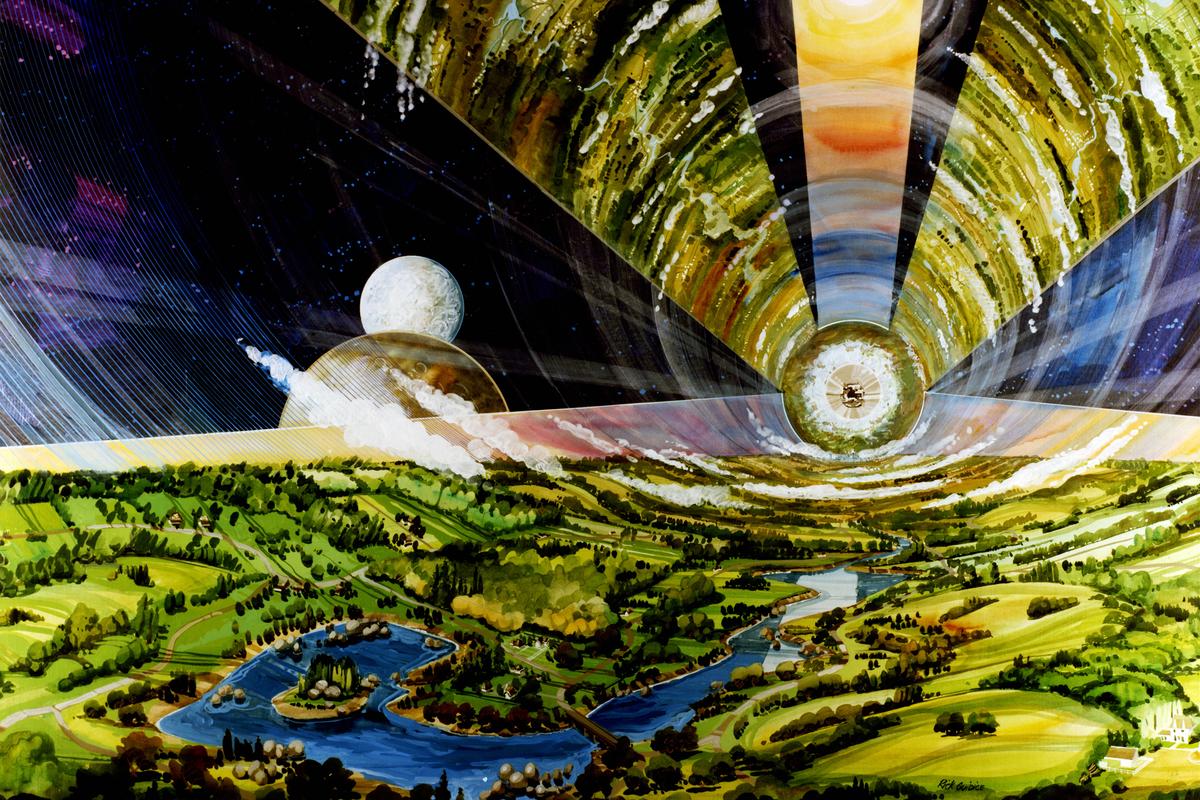
That worldview is expressed through science fiction: not as decoration, but as the medium that makes its accumulation strategies feel natural, necessary and inevitable. This is not to say that science fiction precedes or causes these projects – it is part of the cognitive and institutional scaffolding within which certain ambitions become thinkable and certain power grabs feel like common sense.
Today, Silicon Valley’s centre of gravity is moving from the ‘Californian ideology’ – the 1990s fusion of counterculture libertarianism and digital utopianism – toward what the communication professor Fred Turner recently called the ‘Texan ideology’: a century-old fusion of resource exploitation and millenarian Christianity, the conviction that providential destiny justifies the conquest of nature and the extraction of its wealth. Where the earlier era focused on building networks and platforms, the new model treats data like oil-boom bounty, a natural resource to be mined from vast server farms demanding enormous land and electricity.
Tesla’s Gigafactory in Austin, Texas is not a ‘campus’ like Google’s, but ‘a walled fortress as big as a cattle ranch’, as Turner puts it, representing what he describes as a future built by men with the ‘willpower to tame the forces of technology’ and ‘wrestle profit from the land’. In December 2024, Musk announced he was moving SpaceX’s headquarters from California to Texas. Starbase, SpaceX’s South Texas facility, exemplifies this vision: a private company town where SpaceX sets the rules, workers live in company housing, and local governance bends to corporate priorities. This is the path of selective science fiction operationalised as political reality – technological progress as cover for social regression.
This path finds its philosophical expression in ‘longtermism’, an offshoot of the effective altruism (EA) movement heavily funded by tech wealth from figures like Sam Bankman-Fried, now serving time for crypto fraud. By applying a rigid utilitarian calculus, EA proponents like William MacAskill argue that the welfare of trillions of potential future humans – who might exist if we colonise space – mathematically outweighs the needs of the 8 billion alive today.
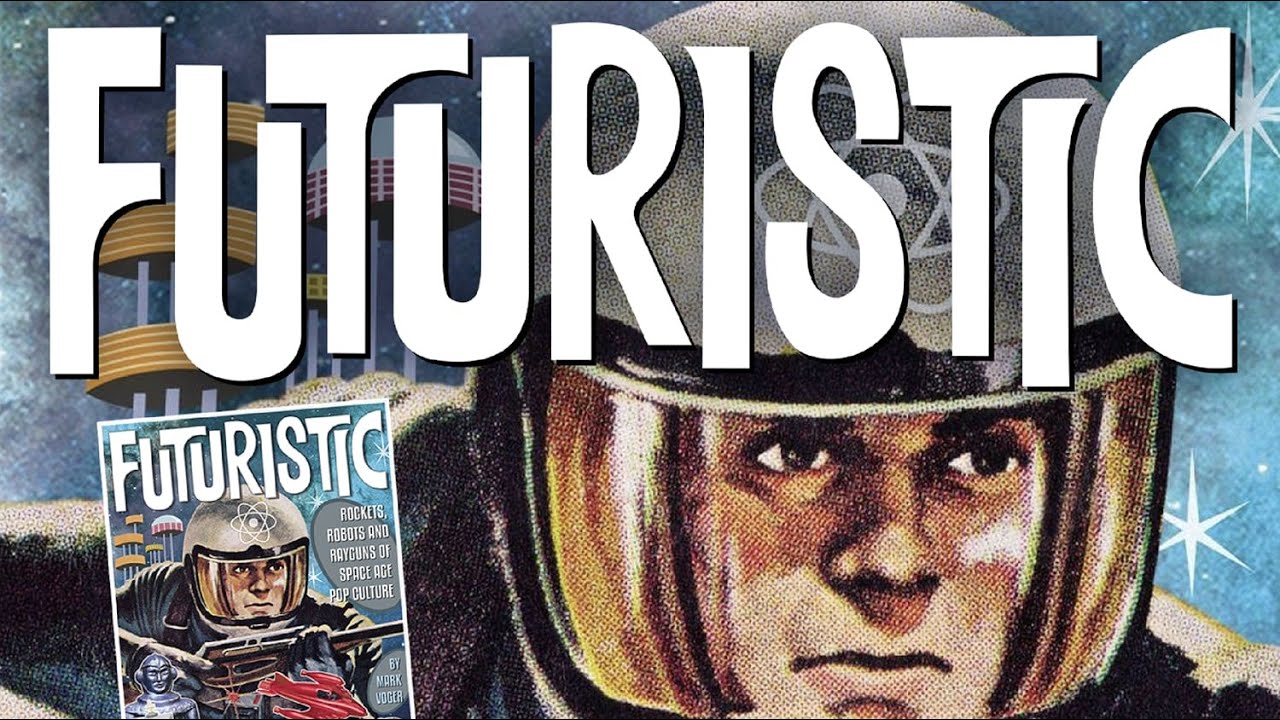
Blast off to the Space Age, when the future was always bright! Futuristic is a full-color hardcover about a time of limitless possibilities… and anxieties. It covers all aspects of 1950s and ‘60s pop culture from the “duck and cover” era of the Cold War, the Space Race, the UFO Craze, and the 1969 moon landing.
Blast off to the Space Age, when the future was always bright! Futuristic is a full-color hardcover about a time of limitless possibilities… and anxieties. It covers all aspects of 1950s and ‘60s pop culture from the “duck and cover” era of the Cold War, the Space Race, the UFO Craze, and the 1969 moon landing.
Wir freuen uns tierisch über diese deutsche(!) SciFi-(Komödien)-Serie. Es gibt Roboter und nicht-funktioniale Technik, wie bei Douglas Adams, trashige Umgebung, wie bei Ijon Tichy und nette Anspielungen auf klassiche SciFi.
Achtung Spoiler bzgl. der Thematiken
Die Geschichten behandeln in leicht und lockerer Weise SciFi Themen, wie eine Gesellschaft in der Post-Apokalypse, Konflikte in den Gesetzen der Robotik, Seelentransfer in eine Maschine, Update der Persönlichkeit, …
Und die Schauspieler finden wir auch sympathisch :)
A very short story on humility, among other things.
—
Perhaps you’ve read how Everest has now been climbed? But have you heard of Planetary Survey? Here’s the real truth about it. Everest has been climbed twice.
A very short story on humility, among other things.
—
Perhaps you’ve read how Everest has now been climbed? But have you heard of Planetary Survey? Here’s the real truth about it. Everest has been climbed twice.
Die Zukunft ist verheert, die Gegenwart der Schlüssel zur Rettung. Mittendrin: Bruce Willis als James Cole. Er stellt sich in 12 Monkeys die Frage: Bin ich verrückt – oder dabei, die Welt zu retten?
Die Zukunft ist verheert, die Gegenwart der Schlüssel zur Rettung. Mittendrin: Bruce Willis als James Cole. Er stellt sich in 12 Monkeys die Frage: Bin ich verrückt – oder dabei, die Welt zu retten?
Nachdem ich in der letzten Woche Predator im Kino gesehen habe, schaue ich mir gerade Predator: Badlands an und ich frage mich gerade, wie wohl die Gesellschaft der Yautja aussehen würde. Die sind ja offensichtlich hoch technisiert, es können also nicht alle solche krassen Jäger sein, es muss ja auch Techniker, Wissenschaftler, Verkäufer, Verwaltungsleute usw. geben. Irgendwer muss diese ganze Technik ja auch mal entworfen und gebaut haben.
Predator
Nachdem ich in der letzten Woche Predator im Kino gesehen habe, schaue ich mir gerade Predator: Badlands an und ich frage mich gerade, wie wohl die Gesellschaft der Yautja aussehen würde. Die sind ja offensichtlich hoch technisiert, es können also nicht alle solche krassen Jäger sein, es muss ja auch Techniker, Wissenschaftler, Verkäufer, Verwaltungsleute usw. geben. Irgendwer muss diese ganze Technik ja auch mal entworfen und gebaut haben.
Die elfteilige Dokumentation The Center Seat: 55 Years of Star Trek dringt tief in die Historie des Franchise ein und gibt einen exzellenten Überblick über mehr als ein halbes Jahrhundert Entertainment.
Die elfteilige Dokumentation The Center Seat: 55 Years of Star Trek dringt tief in die Historie des Franchise ein und gibt einen exzellenten Überblick über mehr als ein halbes Jahrhundert Entertainment.
Kriege, Krisen, Zukunftsangst: Viele haben genug von schlechten Nachrichten. Wir stellen Science-Fiction vor, in der die Welt der Zukunft eine bessere ist.
Kriege, Krisen, Zukunftsangst: Viele haben genug von schlechten Nachrichten. Wir stellen Science-Fiction vor, in der die Welt der Zukunft eine bessere ist.
Aktuell werden Stück für Stück alle Farscape-Folgen auf den offiziellen YouTube-Kanal geladen, deutsch und englisch. Deutsche Folgen sind noch bei Staffel 1, die Englischen sind mit Staffel 3 fast fertig (und der Rest ist noch teils auf die USA beschränkt, wird aber auch in international abrufbaren Versionen hochgeladen).
Aktuell werden Stück für Stück alle Farscape-Folgen auf den offiziellen YouTube-Kanal geladen, deutsch und englisch. Deutsche Folgen sind noch bei Staffel 1, die Englischen sind mit Staffel 3 fast fertig (und der Rest ist noch teils auf die USA beschränkt, wird aber auch in international abrufbaren Versionen hochgeladen).
Das sagt die Hauptfigur in Paul Verhoevens Science-Fiction-Film Total Recall zu sich selbst. Der Film ist ein Klassiker, den man mehrmals anschauen kann.
Das sagt die Hauptfigur in Paul Verhoevens Science-Fiction-Film Total Recall zu sich selbst. Der Film ist ein Klassiker, den man mehrmals anschauen kann.
Die beste Science-Fiction inspiriert uns, obwohl sie keine Vorhersage ist. Wir erklären, warum, und stellen zehn tolle Bücher vor, die sich mit KI beschäftigen.
Die beste Science-Fiction inspiriert uns, obwohl sie keine Vorhersage ist. Wir erklären, warum, und stellen zehn tolle Bücher vor, die sich mit KI beschäftigen.