






#socialism

posts tagged #socialism

0

What Fell in Kerala — Lessons for the Global Left

Prometheus Magazine What Fell in Kerala — Lessons for the Global Left - Prometheus Magazine prometheus-mag.com
preview

On the morning of May 4, 2026, as the assembly election results came in from the state of Kerala, India, the Congress-led United Democratic Front had secured a landslide, ending a decade of Left Democratic Front (LDF) rule, headed by the Communist Party of India (Marxist) (CPI(M)). The LDF, which had held 99 seats after the 2021 election, was reduced to just 35. A large share of the cabinet, including several senior ministers, lost their seats. With the fall of Kerala, India is left without a communist-led state government for the first time since 1977, after five decades.

Some commentators called it an anti-incumbency wave. The party had been in power too long. Voters were tired. The former LDP Chief Minister and member of the CPI(M) Politburo, Pinarayi Vijayan, had grown arrogant. All of that is true. But it is not enough. What happened in Kerala on May 4 is part of a pattern that much of the global left names only partially, even as some currents theorise it explicitly as left and social-democratic parties that govern well but do not transform the underlying structure of power – that manage capitalism rather than challenge it – eventually lose, and lose badly. Recent debates about non-reformist reforms and democratic socialism have tried to codify this dilemma as a strategy problem: how to win reforms that build power for deeper rupture instead of stabilising the status quo. Kerala is the latest entry in this long list, and it will not be the last.

0

Defusing Sabotage: Combatting the Conservative Rhetorical Strategy

Defusing Sabotage: Combatting the Conservative Rhetorical Strategy rosegardendsa.substack.com
preview

Members of the Left, nominally acting in good faith and who are concerned about the perception of our platform and organization as “too radical” ultimately miss the point of being a member of a socialist organization, and in effect waste our time debating our already democratically-accepted platform in order to placate bad faith concerns from outside our organization.

The media even acknowledges that socialism is becoming more and more popular, that American pride is falling to lower and lower levels, and that public and private institutions face the lowest approval ratings in the history of public polling. The public as a whole is moving away from supposed “tried-and-true” American-style neoliberalism at a startling rate. While most Americans still do believe in the ideals of capitalism (that being innovation, competition, and opportunity) while being largely skeptical of socialism. Americans acknowledge and understand that politics-as-usual is not working. As such, it is nonsensical to suggest that we appeal to the public in language similar to “politics-as-usual.” In the public arena, Democratic Socialists of America are not garnering attention because we speak to the same policies as the historically unpopular Democratic Party, but because we promote new, radical ideas (relative to the American political consciousness).

The far-Right aims to present another alternative—that of corporatist fascism—and we must ensure this alternative remains plainly unacceptable to anyone with a good conscience. It is therefore our responsibility as socialists to be radical, and to proudly and loudly proclaim ourselves to be socialists rather than another clique of useless Democrats. Zohran Mamdani is not popular because he appeals to the middle, but because he is a socialist who enacts his policies and creates visible and accessible change to his constituents. We have nothing to fear by proclaiming what we believe. It’s what the people want.

0

We Must Fight For a Socialist Project 2029: The Manifesto

geese magazine We Must Fight For a Socialist Project 2029: The Manifesto — geese magazine www.geesemag.com
preview

A true people’s Project 2029 must be decisive. It will take more than repealing MAGA’s executive orders and returning to business-as-usual neoliberalism if we want to extinguish fascism as it exists in the United States today. American politics doesn’t need yet another technocratic fix— we need to bring down the hammer of the popular will. We must create a forwardly socialist alternative to the liberal conception of Project 2029, one that can defeat fascism at the ballot box, contest its hegemony over American political institutions, and restructure our domestic governance structures to be more fundamentally transparent and democratic.

The neoliberal conception of such a project as it is being put forward is no accident. The Democratic Party does not lack credentials or deep pockets, but it does lack the capability to articulate a positive vision of a better future. The very coherence of the party depends on a balancing act of reconciling what are ultimately irreconcilable interests: capital and labor, democracy and empire, welfare and accumulation, the oligarchy and the people—without ever resolving any of them, aiming instead to co-opt and demobilize the progressive energy of its own supporters. These do-nothing Democrats are not leaders who bring the people forward, but rather the representatives of special interests and personal careerism. This establishment has only managed the decline of the current social order while suppressing the vision and energy for a better world among its base. Such a phenomenon has been inspiringly contested, with the momentum behind the ongoing socialist insurgency only growing day by day. The party’s attempt at mediating these irreconcilable antagonisms is becoming an impossible task. It has survived this long, but it has become clear that it cannot and will not in this form for much longer.

A party project that genuinely embodies the spirit and politics of the people who support it would require an entire upending of the Democratic establishment’s political methods. But that the Democratic establishment is so oppositional to even the most minor popular reform means that this insufficiency is an Achilles’ heel we must capitalize on. It is exactly a consolidated, ideological campaign from the left flank in the lead-up to the looming 2028 presidential elections that could bring these contradictions to the fore and fracture the very coalition the current Democratic Party leadership is desperately trying to hold together. It would unleash the energy of the people into an electoral surge against the far-right and for socialism in order to make meaningful and lasting change.

This is why we cannot let the question of a ‘Project 2029’ be monopolized by agents of internal reform and incrementalism, an initiative to return to business-as-usual politics, as the Democratic establishment (in the image of Pritzker or Booker, of all people) would prefer. Such an endeavor, in the hands of these people, would be dead on arrival. There would be no need for the far-right to contest the election and attempt another Jan. 6—the visionless Democratic establishment will hand the election to the far-right on a silver platter, just as it did in 2024. Our Project 2029 is something that must be organized and burst onto the scene, developed with the tasks of the moment and the real needs of the millions in mind. In its content, it means a shift in the very conditions through which the current political system, the constant and draining tug-of-war of the current political duopoly, is reproduced, changing it forever.

0

Oliver Larkin Wants to End the "Reflexive Moderation" of Florida Democrats

Oliver Larkin Wants to End the "Reflexive Moderation" of Florida Democrats www.hamiltonnolan.com
preview

This will go down as the year that the Democratic Socialists of America introduced themselves to national politics in earnest. Following a string of victories by DSA-aligned candidates in Congressional races from New York to Colorado, the Democratic establishment finds itself scrambling to adjust to a new reality. Next week, Oliver Larkin will become the first DSA candidate to try to unseat an incumbent Democratic Congressman in the state of Florida.

Larkin, a Florida native, worked in progressive politics in DC and elsewhere (and helped to unionize his workplace along the way) before moving back to South Florida in 2022. He is running against Jared Moskowitz, a staunchly pro-Israel centrist Democrat, setting up a clear contrast between the two candidates. I spoke to Larkin about Israel, climate change, organized labor, and whether DSA can revitalize the broken Florida Democratic Party. Our conversation is below.

0

DSA Chair Megan Romer' press tour is not going well

preview

She went on NPR this weekend, and as someone who agrees with all of her policies, absolutely pissed me off. Her interviewer was no a socialist, but he gave her softball questions and she dropped it every time. She answered every question from the seat of knowing she was in the right and neglected to include compassion for the audience members who dont know that she is right and have no clue why she is. “Abolish the senate” has to be the worst way to phrase this goal. It sounds like a mic drop instead of a persuasive message. Its fast, scary, and lacking any of the reasoning. If she said that she wants to “unite the chambers of congress into a single, evenly representative, legislature.” Congrats, now it sounds less scary, and the reasoning makes sense. When discussing moving funding from police budgets into the community, she just said “wouldnt you rather have trees and lunches for children than cops everywhere?” Its two totally disconnected thoughts! Talk about how alleviating the burden for parents to feed their children will reduce the stresses that cause domestic violence, where as cops can only ever respond to a domestic violence call after the violence has happened. The whole interview, the host was offering her chances to talk about her positions sensibly, giving her second chances to phrase things more eloquently, and she rejected every time. Megan Romer doesnt belong anywhere near a microphone, or our leadership structure. If you cant speak from a point of compassion for everyone, then you cant be trusted to lead a movement centered around compassion.

She went on NPR this weekend, and as someone who agrees with all of her policies, absolutely pissed me off. Her interviewer was no a socialist, but he gave her softball questions and she dropped it every time. She answered every question from the seat of knowing she was in the right and neglected to include compassion for the audience members who dont know that she is right and have no clue why she is. “Abolish the senate” has to be the worst way to phrase this goal. It sounds like a mic drop instead of a persuasive message. Its fast, scary, and lacking any of the reasoning. If she said that she wants to “unite the chambers of congress into a single, evenly representative, legislature.” Congrats, now it sounds less scary, and the reasoning makes sense. When discussing moving funding from police budgets into the community, she just said “wouldnt you rather have trees and lunches for children than cops everywhere?” Its two totally disconnected thoughts! Talk about how alleviating the burden for parents to feed their children will reduce the stresses that cause domestic violence, where as cops can only ever respond to a domestic violence call after the violence has happened. The whole interview, the host was offering her chances to talk about her positions sensibly, giving her second chances to phrase things more eloquently, and she rejected every time. Megan Romer doesnt belong anywhere near a microphone, or our leadership structure. If you cant speak from a point of compassion for everyone, then you cant be trusted to lead a movement centered around compassion.
0

Pedagogy of the Southern Worker: The Union of Southern Service Workers’ method of education and struggle

Scalawag Pedagogy of the Southern Worker – Scalawag scalawagmagazine.org
preview

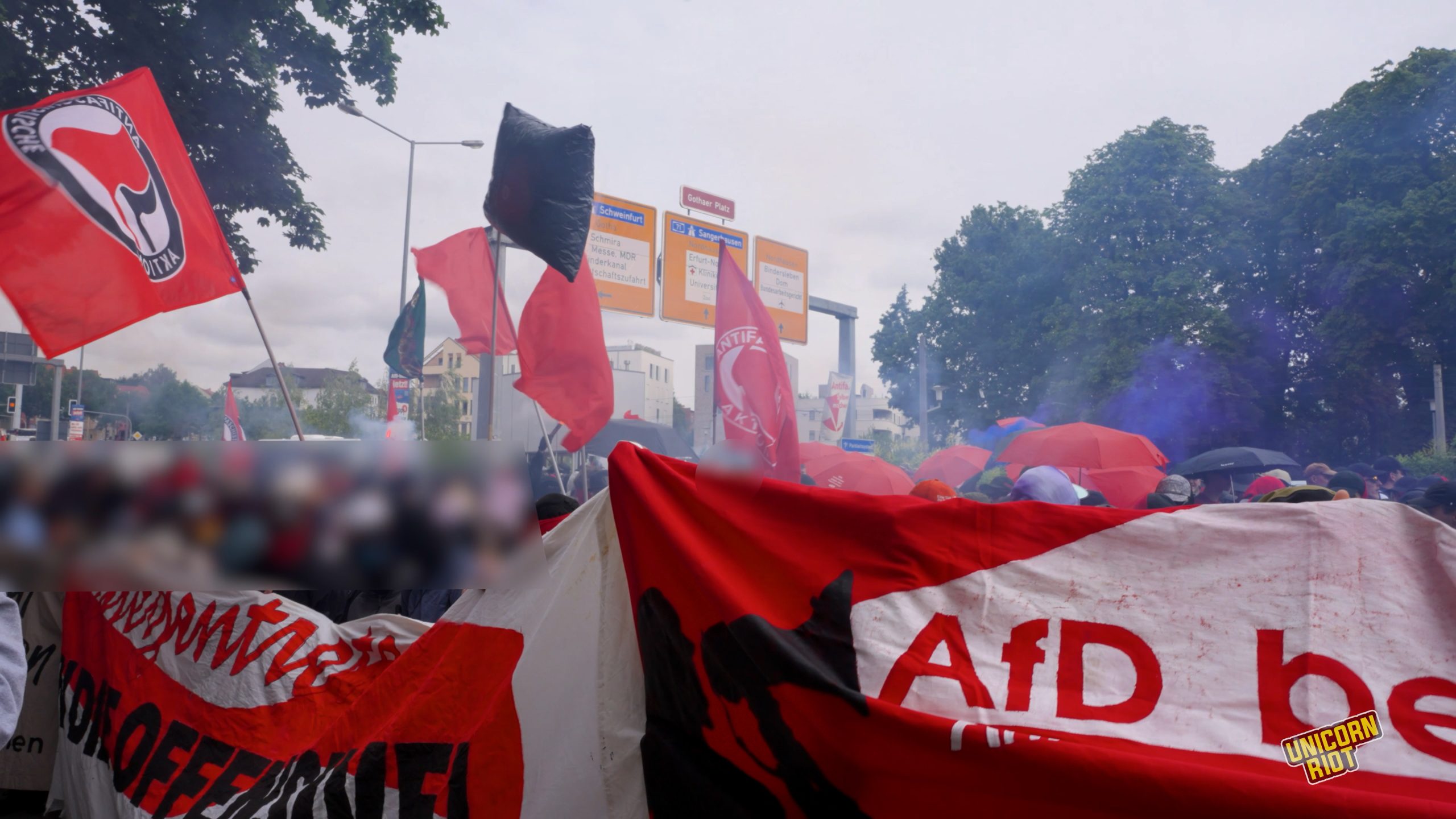
The Union of Southern Service Workers (USSW) is an organization of workers in the low-wage, high-turnover service industry of the U.S. South, with members in North Carolina, South Carolina, Alabama, and Georgia. From the beginning, the union has placed political education at the center of its strategic vision. USSW understands that to transform workplaces and communities, workers must understand the roots of the system that exploits them and develop the skills necessary to fight back. As with any union or community organization, USSW runs campaigns to win concrete, material victories. But the real fruit of the union’s organizing work lies in the constant political formation within an expanding base of dedicated worker militants. Unlike the traditional union model, USSW treats political education not as ancillary training, but as a core component of its method; it is a dimension of the union’s approach that makes victories durable and transforms workers into long-term leaders.

Having grown up in New York, Tahtebah “Tee” Gonzalez immediately felt the culture shock of working in the U.S. South. At Dunkin’, his pay was just $9 an hour, just barely above minimum wage and a third of Fulton County’s living wage. The conditions of low pay, overwork, and understaffing boiled over when Tee and his coworkers discovered that other workers in the same shopping center would be paid extra to work a busy weekend in downtown Atlanta during the Dragon-Con convention.

When a USSW organizer visited his store days later, Tee and his coworkers were already agitated and ready to act. Within a week, they had organized a weekend-long strike. The action won them a raise they had once considered impossible. More importantly, it proved to Tee that workers held real power: When they fight together, they can win.

That breakthrough—shifting from isolated frustration to collective action—was the spark of political consciousness. But in the USSW, the spark does not fade. Tee’s first strike was only the beginning of a longer process of formation, sustained by the union’s model of political education and leadership development. Through Worker Power Schools, collective study, and the discipline of organizing, Tee deepened his understanding of the system that exploits workers and gained the skills to lead others. What began as a fight over wages became a journey of transformation: from an exhausted service worker into a committed leader of a broader struggle for dignity and justice in the South.