preview
Commission from a friend for a friend of theirs. It’s about 9x11, gauche, ink, watercolor paper and wood canvas.
Commission from a friend for a friend of theirs. It’s about 9x11, gauche, ink, watercolor paper and wood canvas.
preview
According to a new survey, high-net-worth 20-somethings are emerging as the most active members of the global art trade, outspending other generations by wide margins. Their habits are changing how the art world works
According to a new survey, high-net-worth 20-somethings are emerging as the most active members of the global art trade, outspending other generations by wide margins. Their habits are changing how the art world works
preview
Art and religion, carnivals and saturnalia, dancing and listening to oratory - all these have served, in H. G. Wells’s phrase, as Doors in the Wall. (Aldous Huxley)
Art and religion, carnivals and saturnalia, dancing and listening to oratory - all these have served, in H. G. Wells’s phrase, as Doors in the Wall. (Aldous Huxley)
preview
Photograph: Matthew Millman/Matthew Millman Photography
Photograph: Matthew Millman/Matthew Millman Photography
preview
I am looking for suggestions where you learning to paint/draw?
I would love to take online free class for me and my kido too. Where to start?
I am looking for suggestions where you learning to paint/draw?
I would love to take online free class for me and my kido too. Where to start?
preview
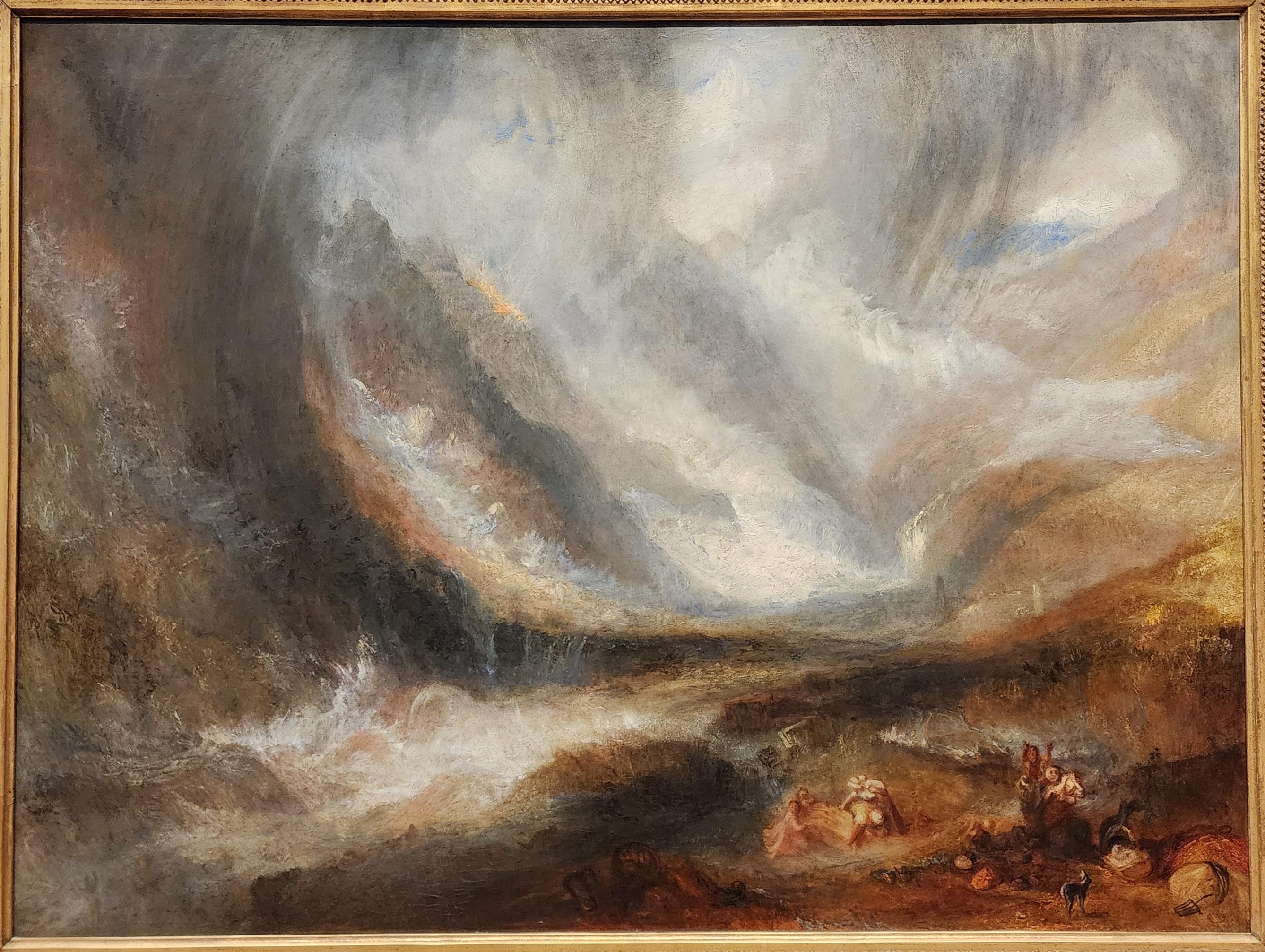
Valley of Aosta: Snowstorm, Avalanche, and Thunderstorm by Joseph Mallord William Turner (c.1836-7)
@visualarts
Art Institute of Chicago 🖼
#ArtHistory #AnimalsInArt #MuseumArchive #galleries #glam #ArtMuseum
Valley of Aosta: Snowstorm, Avalanche, and Thunderstorm by Joseph Mallord William Turner (c.1836-7)
@visualarts
Art Institute of Chicago 🖼
#ArtHistory #AnimalsInArt #MuseumArchive #galleries #glam #ArtMuseum
preview
This painting conveys Rembrandt’s meditation on the meaning of fame. The richly clad Greek philosopher Aristotle (384–322 BCE) rests his hand pensively on a bust of Homer, the epic poet who had attained literary immortality with his Iliad and Odyssey centuries before. Aristotle wears a gold medallion with a portrait of his powerful pupil, Alexander the Great—perhaps the philosopher is weighing his own worldly success against Homer’s timeless achievement. Although the work has come to be considered quintessentially Dutch, it was painted for a Sicilian patron at a moment when Rembrandt’s signature style, with its dark palette and almost sculptural buildup of paint, was beginning to fall out of fashion in Amsterdam.
The Met

preview


The Sawos people of the Middle Sepik River region of New Guinea are divided into a number of clans, each of which is associated with specific ancestors and totemic species. These ancestral and totemic beings are represented by wooden figures kept in the men’s ceremonial houses. Wooden figures such as this represent a category of powerful and dangerous ancestral beings called wan or waken and each figure owned by a specific clan is named for an important clan ancestor.
This figure which bears the name Minjemtimi and is reputed to be ten generations old. It is said to have been made in the village of Kwalunggei. When warriors from neighboring Yamok village raided Kwalunggei, the figure is said to have come to life and fought the invaders until hit by a spear, which broke off its left arm (the wound is still visible as a repair). The wounded Minjemtimi fell to the ground and turned back into a wooden figure that was carried off by the raiders. In Yamok the figure was kept by the Ainggun clan in a ceremonial house in the hamlet of Wolembi. The marks on the abdomen represent rooster heads joined by a length of intestine and are similar to the ritual scarifications made on the bodies of initiated Sawos men.
The Met.
preview
The Music Lesson by Gerard ter Borch the Younger (c.1670)
@visualarts
Art Institute of Chicago 🖼
#ArtHistory #AnimalsInArt #MuseumArchive #galleries #glam #ArtMuseum
The Music Lesson by Gerard ter Borch the Younger (c.1670)
@visualarts
Art Institute of Chicago 🖼
#ArtHistory #AnimalsInArt #MuseumArchive #galleries #glam #ArtMuseum
preview
Though it’s traditionally meant ‘last in a progression or series,’ as Merriam-Webster puts it, the word ultimate has been more often used in recent decades to mean ‘the best or most extreme of its kind.’ The name of a recently launched digital archive performs a rare inversion, labeling as last a creation marked not by finality but extremity. Open Culture, openculture.com
Though it’s traditionally meant ‘last in a progression or series,’ as Merriam-Webster puts it, the word ultimate has been more often used in recent decades to mean ‘the best or most extreme of its kind.’ The name of a recently launched digital archive performs a rare inversion, labeling as last a creation marked not by finality but extremity. Open Culture, openculture.com
preview


Painted the year Zeng graduated in Wuhan, the triptych borrows from the format of a Christian altarpiece to frame a hospital ward as sacred space. Patients and doctors share the same distorted faces, oversized hands reaching across a claustrophobic composition where healer and sufferer are equally exposed.
Painted the year Zeng graduated in Wuhan, the triptych borrows from the format of a Christian altarpiece to frame a hospital ward as sacred space. Patients and doctors share the same distorted faces, oversized hands reaching across a claustrophobic composition where healer and sufferer are equally exposed.
preview
preview
preview
Untitled (Les tables de géographie réduites en un jeu de cartes) by Firelei Báez (2022)
@visualarts
Seen at the Museum of Contemporary Art, Chicago
#ModernArt #ContemporaryArt #zeitgenössischeKunst #artcontemporain #contemporarypainting #chicago #MuseumArchive #galleries #kunst #AnimalsInArt
Untitled (Les tables de géographie réduites en un jeu de cartes) by Firelei Báez (2022)
@visualarts
Seen at the Museum of Contemporary Art, Chicago
#ModernArt #ContemporaryArt #zeitgenössischeKunst #artcontemporain #contemporarypainting #chicago #MuseumArchive #galleries #kunst #AnimalsInArt
preview
preview
Stamford after Brunch by John Currin (2000)
@visualarts
Art Institute of Chicago
Currin’s style has been described as “American grotesque,” which I think is apt.
#ModernArt #ArtHistory #MuseumArchive #galleries #glam #ContemporaryArt #zeitgenössischeKunst #artcontemporain #contemporarypainting #chicago #kunst
preview
I haven’t done a deep-dive or anything, but I find his stuff both fascinating and transfixing, and… lol, there’s another example upon how sometimes the most carefully-chosen words still spectacularly fail to describe the actual artwork. 😅
Oh dear.
More: (this guy really is a genius IMO)
duckduckgo.com/?ia=images&q=miles+johnston+art+co…
preview
Virgin and Child Crowned by Angels by Colijn de Coter (1490-95)
@visualarts
Art Institute of Chicago
#ArtHistory #MedievalArt #religion #Christianity #MuseumArchive #glam #ArtMuseum #catholicism
Virgin and Child Crowned by Angels by Colijn de Coter (1490-95)
@visualarts
Art Institute of Chicago
#ArtHistory #MedievalArt #religion #Christianity #MuseumArchive #glam #ArtMuseum #catholicism
preview
www.vam.ac.uk/articles/tipus-tiger
en.wikipedia.org/wiki/Tipu_Sultan
You haaaave to read about Tipu Sultan and Tipu’s Tiger.
A vital part of studying history here for us. I must’ve read about him first in first grade or so.
www.vam.ac.uk/articles/tipus-tiger
en.wikipedia.org/wiki/Tipu_Sultan
You haaaave to read about Tipu Sultan and Tipu’s Tiger.
A vital part of studying history here for us. I must’ve read about him first in first grade or so.
preview
preview
preview
St. Michael Slaying the Dragon by Sassoferrato (1640-50)
@visualarts
National Museum of the Marine Corps, Triangle, Virginia
#Christianity #ArtHistory #MuseumArchive #galleries #glam #AnimalsInArt #religion
St. Michael Slaying the Dragon by Sassoferrato (1640-50)
@visualarts
National Museum of the Marine Corps, Triangle, Virginia
#Christianity #ArtHistory #MuseumArchive #galleries #glam #AnimalsInArt #religion

preview
Carefully signed by the artist with the place and date of execution, this drawing was likely made as an entry in an album amicorum, or friendship album—a collection of drawn and written tributes to an individual patron or associate. The nude woman holding the brushes, palette, mahlstick, and coat of arms of the Guild of Saint Luke is an unmistakable personification of the art of painting. The meaning of the devil breathing fire on her leg is less obvious, but it may allude to the idea that art itself can be a dangerous temptation.
Welcome to Visual Arts!
I have been posting in various art communities across Lemmy recently and I’ve wanted to have one on an instance that I love. From now on this is where I’ll be making most of my posts and would love to see more people join in!
I’ll be trying to add more and more links with my posts from now to show rbe source of information and offer you resources on where to find art. May even create a post dedicated to sources later.
Similarly the most common style of posts you’ll see will include:
- Single image posts with a passage to explain them.
- Multi image posts to show themes within an artists oeuvre.
- Single image posts without explanatory text if I can’t add much of value.
I’ll also be cross posting a fair bit to make sure more and more people are exposed to art as that is my primary desire.
Hope you all enjoy.
Sincerely,
SnokenKeekaGuard.