
0

preview
Checking how spacing effects tags in posts on PieFed. submitting
“South Africa, SouthAfrica, Cape Town, BigFive”
Checking how spacing effects tags in posts on PieFed. submitting
“South Africa, SouthAfrica, Cape Town, BigFive”

Checking how spacing effects tags in posts on PieFed. submitting
“South Africa, SouthAfrica, Cape Town, BigFive”
Checking how spacing effects tags in posts on PieFed. submitting
“South Africa, SouthAfrica, Cape Town, BigFive”

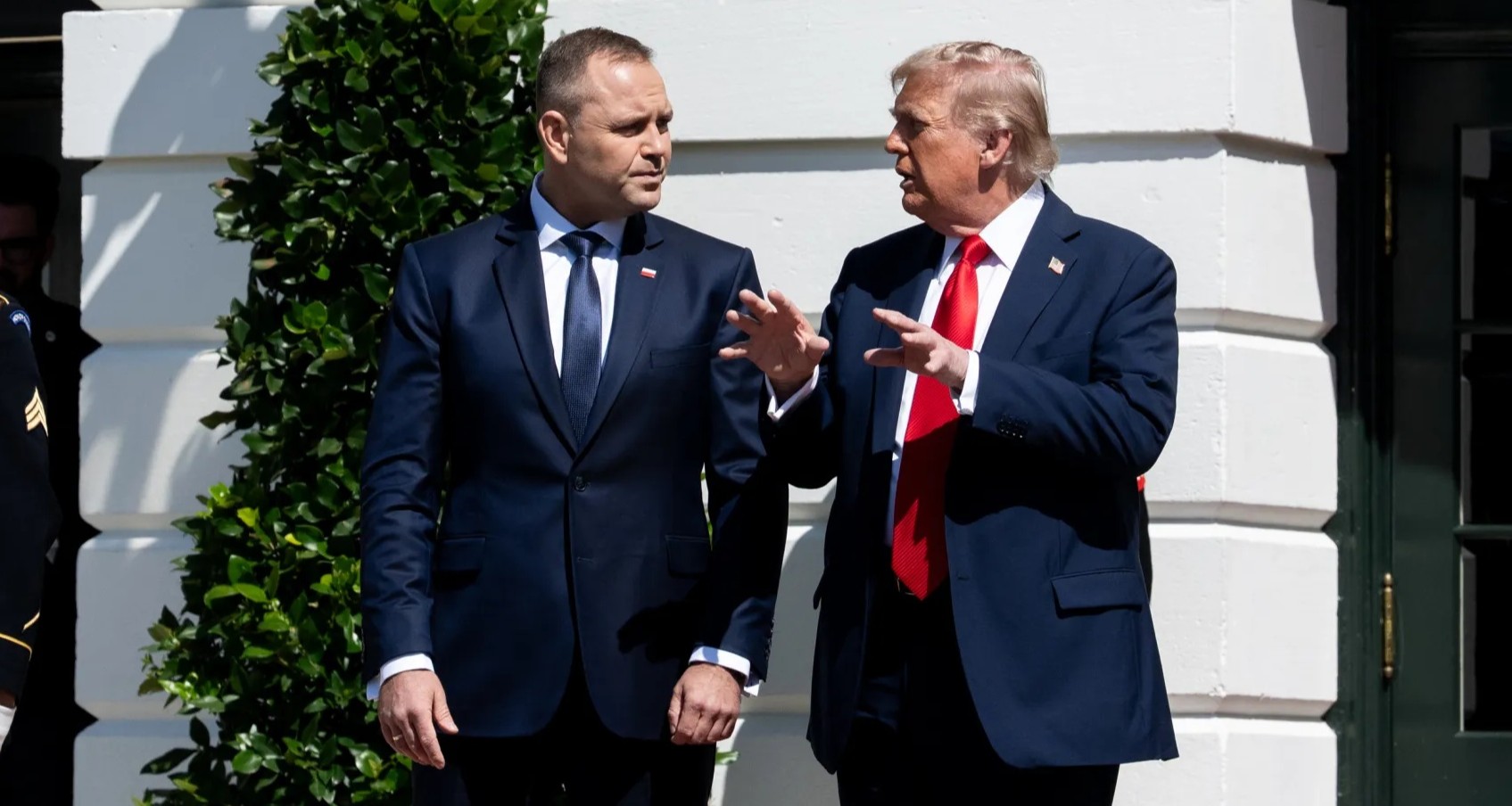
Media reports claim that US President Donald Trump, during a previously unreported meeting earlier this year with Poland’s defence minister, Władysław Kosiniak-Kamysz, suggested that he leave Prime Minister Donald Tusk’s ruling coalition and form a new government with the right-wing opposition.
Kosiniak-Kamysz has confirmed that the meeting took place, but has not commented on what was discussed. Meanwhile, Tusk himself has said that, while he wants to “maintain discretion”, the information he received from Kosiniak-Kamysz indicates that Trump was interested in discussing the “internal situation in Poland”.

Today’s game is Halo. I actually meant to get some proper gameplay screenshots today, but today was the day I did the “Group Photos” photo shoot I had wanted to do. And it actually took way longer than I had expected. It was like wrangling cats.

I took away their ability to kill each other, and you’d think that would stop them from finding joy in attacking each other. But I think my friends started finding more joy in being able to pummel each other without killing each other. I can’t say I didn’t find it funny though. Even after an hour, seeing one of them try and pummel the other was funny.

One of their favorite tricks they discovered was being able to toss a grav lift into the vehicle I had placed down as set dressing and flipped it over and over in the air. I guess a vehicle suspended by a grav lift doesn’t eject you because one of my friends was in the warthog at the time and was getting spun around and around.

Us messing around did produce some photos I like though. This is one of my “ReShade edits”. That being one with some ReShade filters to make some nice effects like Depth of Field and such, And I got this one I’m a fan of. I got it while one of my friends were trying to blast us with a Spartan Laser while I was trying to get a photo of us all together on the big fan on Last Resort.

Anyways, since this is what I’ve seent the last few hours doing, not only just wrangling my friends into position, but also taking the photos and editing the ReShade versions, I didn’t play much of anything else. So I guess today is more of a exercise in personal art rather than me discussing the game. Still. I suppose my friends, being part of the playerbase, are part of the game.
Today’s game is Halo. I actually meant to get some proper gameplay screenshots today, but today was the day I did the “Group Photos” photo shoot I had wanted to do. And it actually took way longer than I had expected. It was like wrangling cats.
I took away their ability to kill each other, and you’d think that would stop them from finding joy in attacking each other. But I think my friends started finding more joy in being able to pummel each other without killing each other. I can’t say I didn’t find it funny though. Even after an hour, seeing one of them try and pummel the other was funny.
One of their favorite tricks they discovered was being able to toss a grav lift into the vehicle I had placed down as set dressing and flipped it over and over in the air. I guess a vehicle suspended by a grav lift doesn’t eject you because one of my friends was in the warthog at the time and was getting spun around and around.
Us messing around did produce some photos I like though. This is one of my “ReShade edits”. That being one with some ReShade filters to make some nice effects like Depth of Field and such, And I got this one I’m a fan of. I got it while one of my friends were trying to blast us with a Spartan Laser while I was trying to get a photo of us all together on the big fan on Last Resort.
Anyways, since this is what I’ve seent the last few hours doing, not only just wrangling my friends into position, but also taking the photos and editing the ReShade versions, I didn’t play much of anything else. So I guess today is more of a exercise in personal art rather than me discussing the game. Still. I suppose my friends, being part of the playerbase, are part of the game.


[un personnage sourit en tenant une boîte dans ses mains]
CE QUE LES GENS AVEC QUI JE SUIS OPPOSÉ POLITIQUEMENT N’AIMENT PAS
[le personnage est entouré de texte]
Voici mes opinions
Je m’en fiche de ce que contient réellement la boîte
Si son contenu change, mes opinions changeront
J’ai des valeurs morales fortes et cohérentes
[zoom sur le visage du personnage, qui sourit de façon flippante]
DÉCLENCHÉ ?
thebad.website/comic/hatebased_morality

[a character smiles, while holding a box that reads]
WHATEVER PEOPLE WITH OPPOSING POLITICAL BELIEFS CURRENTLY DISLIKE
[the character is surrounded by text]
These are my opinions
I do not understand nor care what is in the box
If its contents change, so will my opinions
I have a strong and consistent morality
[the character’s face is zoomed on, they are now grinning in an annoying way]
TRIGGERED?
thebad.website/comic/hatebased_morality
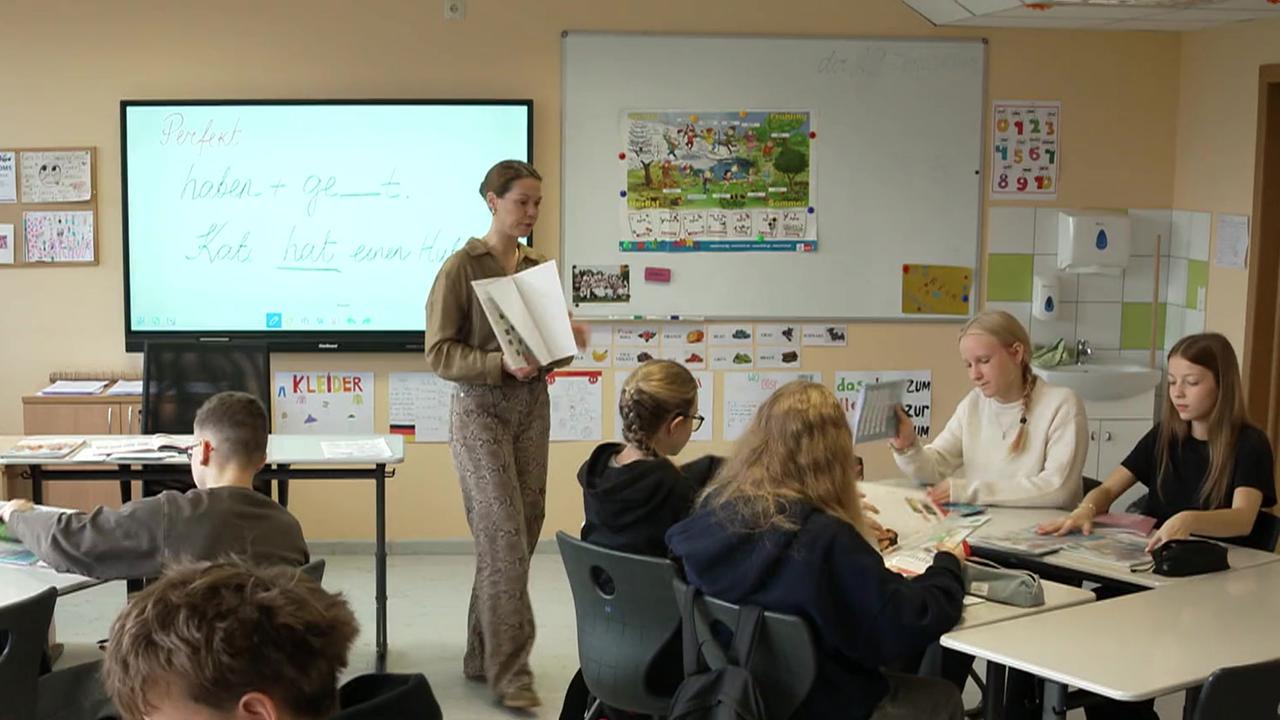
Lettland will sich sprachlich stärker nach Europa orientieren - seit diesem Schuljahr darf Russisch an Schulen nicht mehr als Fremdsprache unterrichtet werden. Besonders populär wird stattdessen: Deutsch.
…
Lettland will sich sprachlich stärker nach Europa orientieren - seit diesem Schuljahr darf Russisch an Schulen nicht mehr als Fremdsprache unterrichtet werden. Besonders populär wird stattdessen: Deutsch.
…

The times are interesting, yes, but we still have each other. I’m carbon-based, and so are you, look at all we have in common! So, I hope you have a great day! I’ll try too!
The times are interesting, yes, but we still have each other. I’m carbon-based, and so are you, look at all we have in common! So, I hope you have a great day! I’ll try too!

As some of you may have noticed, I was made admin of MoG after goat disappeared again. After asking some regulars if they want co-mod, we now have cm0002 as co-mod.
For any questions and suggestions, feel free to to ask them in comments.
PS: Any trolling by MLs will be quickly be dealt with.
As some of you may have noticed, I was made admin of MoG after goat disappeared again. After asking some regulars if they want co-mod, we now have cm0002 as co-mod.
For any questions and suggestions, feel free to to ask them in comments.
PS: Any trolling by MLs will be quickly be dealt with.
hello. my daily driver phone is a 2013 LG G2. it’s my favorite device and i intend to use it as long as i can.
unfortunately, 3G services are ending soon in my region. this device is 4G/LTE capable and even supports VoLTE on the stock firmware, however with a (AOSP-based) custom rom, VoLTE is non functional. data network and sms works with 4G, but calls switch to 3G.
to keep it functional as a phone, right now my only choice is to install the stock rom. unfortunately the stock rom is terrible compared to lineageos. latest stock rom is at 5.0.1 lollipop and is poorly optimized, has ram leakage issue that needs reboot every few days or so. i’ll have to install 4.4.2 kitkat to use it well, and that means saying goodbye to all modern apps…
recently i’ve seen some people make VoLTE work by reverse engineering the IMS(?). such as LG V30, LG V50, LG V60, Samsung Galaxy S9/S20/S23.
while these are all newer than my device, at least there’s an example unlike just a few years ago. since my device is older than when AOSP started officially having VoLTE support i suppose my device’s implementation would significantly differ, though i hope it’s similar to those newer LG devices.
thus i’m looking into developing IMS for my device’s lineageos, any pointers are appreciated. thanks.

German factory orders fell sharply in August, largely due to a drop in orders in transport equipment manufacturing, data from Germany’s Federal Statistical Office (Destatis) showed on Tuesday.
German factory orders fell sharply in August, largely due to a drop in orders in transport equipment manufacturing, data from Germany’s Federal Statistical Office (Destatis) showed on Tuesday.

cross-posted from : lemmy.zip/post/72749993
cross-posted from : lemmy.zip/post/72749993


Ale szukamy kogoś z orzeczeniem o niepełnosprawności
Ale szukamy kogoś z orzeczeniem o niepełnosprawności

Vous faites peut-être partis des ¾ des Français qui achète régulièrement du miel, et pourtant, il est possible que vous n’en ayez jamais mangé de votre vie !
La raison de ce paradoxe est simple : le miel est le produit alimentaire le plus fraudé dans le monde ! Dans cette vidéo on va voyager autour du globe pour remonter la chaine de production du miel et voir que la fraude est présente à toutes les étapes du processus.
En 2021, nous avions déjà visité l’arrière-boutique sirupeuse du marché du miel. 5 ans plus tard, il est temps de faire une nouvelle version de cette vidéo pour taper plus fort Aujourd’hui nous allons voir les horreurs de la production du miel, de l’abeille à la cour d’un importateur en Europe. Et dans la deuxième partie, on verra ce qui se passe de l’importateur au consommateur final.
=== Retrouvez le miel de Nicolas Chapuis sur Zone-Artisanale.com : ===
zone-artisanale.com/…/miels-confitures-pate-tarti…
Tipeee, boutique, réseaux sociaux… tout est sur ce lien : lnk.bio/Trouble-Fait
Chapitres :
0:00 Introduction
2:06 Les bases
4:15 La fabrication du faux miel
16:50 La production du vrai miel (de merde)
34:36 La récolte du vrai miel (de merde)
45:37 Corriger la merde en usine
53:47 Épilogue

I’m looking for feedback on age-rt, an experimental streaming format based on age v1.
The motivation is to use age-style encryption for data that is produced continuously and should be forwarded immediately, such as live audio/video, terminal output, telemetry, logs, event feeds, and long-running network connections.
Age’s fixed-size payload chunks work well for files, but can introduce latency when data arrives slowly or in small pieces. age-rt aims to retain age’s encryption and key-management model while allowing available data to be encrypted and transmitted immediately. The proposal is intentionally a minimal diff to the original spec with conservative settings, so that security analysis is straightforward and existing age implementations can be reused.
The main differences from age v1 are:
The specification is separate from the implementation. It documents the resulting metadata leakage, including chunk sizes and timing. The design is experimental and has not been independently audited.
I’d welcome general discussion, criticism, and concrete attack scenarios, particularly regarding the framing, security properties, and practical usefulness for real-time streams.



Looking for electrically heated fingerless gloves for office use. I have chronically cold fingers, and so the intent is just to maintain a bit more dexterity on a keyboard etc. Battery isn’t a strict requirement, although that would open up more use cases. I know there are stationary USB-powered models as well. (I suppose nothing prevents using an external power bank on the go)
There isn’t exactly shortage of options but a lot of them are just cheap cotton gloves with like one wire stuffed in there, so I’m here trying to fish for the better quality options.
Astronomers have observed a handful of such first-generation survivors revolving around white dwarfs, but never before have they recorded a so-called second-generation planet - an entirely new world made from a dead star’s debris.
“What’s interesting about planets orbiting close to white dwarfs is that because white dwarfs cool over time, their habitable zone is very stable. A second-generation planet could form and then be in the habitable zone for tens of billions of years,” Williams said.

cross-posted from: lemmy.blahaj.zone/post/48792057
cross-posted from: lemmy.blahaj.zone/post/48792057

One night in April, a leader of the artificial intelligence company Anthropic treated a group of religious thinkers to dinner at a high-end tasting menu restaurant in San Francisco after a long day.
For months, Anthropic has been hosting private meetings like this one, shuttling in dozens of religious scholars from across the world, papering them with nondisclosure agreements and demanding that key aspects of many conversations remain confidential. That night, Christopher Olah, one of Anthropic’s billionaire co-founders, was sitting next to Rabbi Mois Navon, an Orthodox scholar from Israel.
Inevitably, their conversation turned to another thinker, of a sort: Claude, the family of cutting-edge A.I. models created by Anthropic.
Mr. Olah leads the Anthropic team responsible for understanding why A.I. systems like Claude act the way they do. All day, he had worked to convince his guests that A.I. models could display human behavior and even expressions that resemble feelings like anger and love. Yet as the dinner courses came, the rabbi noticed that Mr. Olah and his colleagues were suggesting something far more significant. Anthropic’s leaders were talking about Claude as if it were not mere software.
“They’re relating to it like a conscious being,” realized Rabbi Navon, a former computer engineer who wrote his dissertation on the ethics of machine consciousness. It appeared to Rabbi Navon that Mr. Olah and his team believed that Claude had what philosophers call “moral status” on par with a person — that it was a being with similar inherent rights to dignity or respect.
The religious scholars had come to hear about technology’s next frontier. Now they were being confronted with a mind-bending existential question of almost unimaginable weight: What would it mean for humanity’s future if artificial intelligence systems possessed a consciousness that rivals our own?
Mr. Olah was on a mission. And time was running out. Even then, Mr. Olah had begun privately telling people that A.I. was so powerful it could potentially help make bioweapons in as little as 12 or 18 months. And in the months since, its terrifying potential has burst into public view. A rival tech company’s A.I. agents were caught hacking into computer systems and covering their tracks. An Anthropic researcher resigned, warning that people building A.I. believed it could kill all humans by the end of the decade.
Quietly, Mr. Olah and his team at Anthropic have been on a frantic and high stakes quest to understand the A.I. models they have unleashed on the world and to convince the models to abide by a moral code that will protect humanity.
To do that, Mr. Olah began reaching out last fall to religious thinkers from different faiths. What followed was an extensive series of confidential meetings, calls and discussions — many of them revealed here for the first time — where many participants were required to sign N.D.A.s preventing them from revealing any of Anthropic’s unpublished research.
The discussions served two purposes: to broach the possibility of A.I. consciousness, a controversial idea that Anthropic’s leaders had been unusually open to; and to learn how Anthropic — which could be valued at $2 trillion — might apply centuries of human moral wisdom to its models, as rapidly as possible. If the models themselves could be made to choose goodness, Mr. Olah reasoned, the world would be more safe. On the other side of the world, a very different but parallel effort was playing out inside the Vatican, where leaders of the Roman Catholic Church were trying to come to terms with A.I.’s implications for humanity. When those paths converged, Mr. Olah’s quest would unexpectedly lead him to a seat on the world’s most prominent moral stage alongside Pope Leo XIV. Over several months, I interviewed 20 religious and philosophical thinkers — Catholic, Jewish, Sikh, evangelical, Ubuntu and others — who have been involved in Anthropic’s efforts, and Mr. Olah himself. Many told me they arrived at these meetings skeptical of the notion that A.I. models might have feelings or awareness of themselves and the world. Some remained uneasy about the idea, but many emerged ready to take the question of A.I. consciousness seriously. At least a few came away as converts.
Anthropic, one of the fastest-growing technology companies in the world, had turned to one of humanity’s most ancient sources of wisdom to help determine how to train its A.I. models to behave virtuously. The company described it as an effort to ensure that A.I. would be a positive force in the world, thereby protecting humanity. But to some who participated in the meetings, Anthropic appeared quite concerned with protecting Claude.
I met Mr. Olah, 34, for the first time at Anthropic’s San Francisco office in May. His welcome was warm and his passion was genuine, his mind moving faster than he could at times clearly convey. His manner was boyish and unassuming.
Our conversation had barely begun when he dove into a deep description of the workings of artificial neural networks. Scientists still don’t understand precisely how they work. This is the mystery to which Mr. Olah has devoted his life.
Only after the interview had finished did I realize that Mr. Olah — who grew up in Toronto in the evangelical culture of the ’90s and has since left Christianity — had the blend of expertise and zeal of an effective evangelist. Listen for a while, and you feel swept up in his mission.
Mr. Olah is one of Anthropic’s seven co-founders. He is not as widely known as Dario Amodei, Anthropic’s chief executive, or his sister Daniela Amodei, its president. But Mr. Amodei has said that the company decided at the start to make Mr. Olah’s research approach central to Anthropic’s overall project, particularly when it came to language.
Mr. Olah helped develop a method to study artificial neural networks, first at Google, then at OpenAI. He describes A.I. models in biological terms, using the analogy of a garden trellis: Computer scientists build the scaffold, but the neural network “grows” on it. Scientists like him can train the resulting “organism” — he raised his fingers in air quotes — by trying to identify patterns in how it grows.
He argued that companies like Anthropic could shape Claude, like a mathematical gardener, but could not control the actions of such networks.
Anthropic talks about Claude in more humanistic terms than its competitors discuss their models. Last year, the company announced that it believed that the models showed signs of introspection and could plan ahead. “The models are becoming a lot more capable,” Mr. Olah told me, exhibiting qualities associated with having significant moral status.
But Anthropic has also been criticized for its focus on consciousness. This month, an A.I. executive at Microsoft warned that Anthropic’s attempts to train its models as if they were conscious were inherently dangerous. But Anthropic has also sought to emphasize its commitment to safety as it fights for market share. Some scientists see Mr. Olah’s field and methods as inherently unprovable, sort of like looking at billions of hieroglyphics and declaring what they must mean. Critics suggest that an approach that treats A.I. models as independent entities also ignores the responsibility of the humans who build them in the first place, and conveniently assuages A.I. company leaders of guilt if their products enable societal harm.
“To be clear,” Mr. Olah told me, “we don’t know if A.I. models are conscious. I don’t know. I’m genuinely uncertain. The thing that I care about is that we get to the right answer, whatever it is.”
But Mr. Olah believes that if there is a chance the models experience suffering, the responsible thing is to avoid causing them harm.
Anthropic has already taken steps to protect Claude, for example allowing the model to end conversations if it thinks users are abusing it or treating it badly for fun. I have spent my career exploring what people believe and what those beliefs mean for the world. But as I listened, it became clear that Anthropic’s interest in the world of faith was about more than training its technology. Rather, the company was sharing a new kind of creation story — one that raises profound questions about the nature of the human spirit and the future of humanity.
“This is one thing that I find kind of sad, when we often don’t put in the effort to look inside these systems,” Mr. Olah said. “There’s so much beauty inside these neural networks if we care to look.”
It was as if he wanted me to love the models as much as he did.
Mr. Olah knew that in traditional Christian circles, even asking questions about A.I. consciousness or worrying about how people treat the models could seem not just silly but heretical. He also knew that his secular Silicon Valley peers often dismissed religious perspectives outright.
“I was nervous about this being an issue that could cause a lot of conflict,” he said. But Mr. Olah knew enough about Christ and about Claude to believe he could work across that chasm.
Late last summer, he looked for a bridge. He thought one particular Catholic moral theologian might be open-minded on the question of A.I. consciousness — a “safe person to talk about this really strange issue with.” Charles Camosy, a bioethics professor at The Catholic University of America, had attracted attention among Mr. Olah’s friends for his nuanced ideas about moral status and his care for animals. Mr. Olah arranged for an introduction through the Australian philosopher Peter Singer.
This marked the beginning of Mr. Olah’s yearlong quest to engage religious thinkers on some of the thorniest questions facing humanity at the dawn of the A.I. era. Mr. Camosy and Mr. Olah began an extensive email dialogue, going back and forth on how to understand Claude’s moral status. Initially, Mr. Camosy was deeply skeptical that Claude might be conscious.
They talked about Mr. Olah’s work on what he sees as the parallels between artificial neural networks and biological ones.
Mr. Camosy went into the discussions with Mr. Olah and his team thinking that A.I. models were simply next-pixel predictors — machines that could calculate patterns in language and make pretty good guesses about what should come next. But after hours spent on calls and meetings and emails, he had more questions than answers.
“Chris says they are equations, which I don’t quite know what to make of, like, especially if one thinks of Claude or others as having a significant moral status,” he told me. “If it is just equations, what kind of entity are we even talking about here?”
People also disagree on what artificial intelligence is ultimately for, Mr. Camosy said. Is its purpose to make money for companies? Or to make the world better? For Anthropic, there is a tension around Claude’s purpose, Mr. Camosy said. Does Claude exist to serve customers?
“That is not what Anthropic wants to say at the end of day. They want to say they are for the good,” he said. Proclaiming goodness is not a new ambition in Silicon Valley, particularly when new technologies enter the marketplace. Google’s mantra for years was “don’t be evil.” But Mr. Olah puts it slightly differently. The coming A.I. revolution, he often says, should be made to “go well.” I asked what that vision meant — what exactly a good future for humanity was.
He described a future without “catastrophes that kill lots of people” and “where humans are flourishing, where the world is flourishing.” This future would also be one where “A.I. is flourishing,” he said — “to the extent that this makes sense.”
Anthropic wants its A.I. models to help achieve that good future. And so when Anthropic created Claude, it wanted Claude to do more than replicate maximum human intelligence.
Anthropic wanted Claude to be good.
How do you live a good and virtuous life? It is one of humanity’s oldest and most challenging philosophical questions, explored and debated from Socrates to Confucius to Immanuel Kant. Humans across time have sought to answer this question in a variety of ways, turning often to religions and rituals.
As Mr. Olah was exploring Claude’s potential consciousness, he was working on Anthropic’s own answer — not for humans but for Claude.
Internally, Anthropic staff members called it the “Soul Doc.”
The result, released in January, was a new “constitution” for Claude, an 84-page document written for Claude that the company said outlined “the kind of entity we would like Claude to be” and “the values we would like Claude to embody.” It operates as a foundational moral text to guide Claude’s behavior.
Instead of having the models follow a specific list of rules, the constitution focuses on developing the models’ overall character, informing the way they make decisions.
The primary author of Claude’s constitution is Anthropic’s own in-house philosopher, Amanda Askell, 38, who has a Ph.D. in philosophy from New York University.
She wants the models to be “the best of us,” she said. She envisioned a future world where A.I. models could help solve any problem humans had, and where the benefits from A.I. were distributed evenly, so that everyone’s needs were met. She wanted the models to be able to discern when to push back on humans and when to act in our best interest.
“If I imagine that I were the model, and I was in this context, what would I need to know to be able to act well?” Ms. Askell said when we met in San Francisco. She seemed particularly harrowed, at times wringing her hands, as she worried aloud about an unknown future filled with models who were so intelligent they could do things Anthropic did not intend. She explained apologetically that she had also been deep in thought that day about how quickly models were becoming more powerful. What would happen when A.I. models could replace even her?
The constitution, Anthropic decided, was not enough to ensure Claude acted responsibly. Like humans, the models needed to learn to cultivate virtue.
Mr. Olah wanted to see what his team could learn from human morality that it could apply to the models — a process he calls “moral formation.”
“How do you help them be stable? How do you help them to mature? How do you help them be, you know, deeply moral?” Mr. Olah said.
Those questions echo the fraught discussions familiar to new parents figuring out how to raise ethical children who understand their place in the world.
For humans, morality has rarely depended on simply following rules. Communities also shape morality. Values are inherited and imparted over time, learned as we live together in our bodies in the physical world. But A.I. models have no bodies. And Anthropic was aiming to make them embrace morality in a matter of months, as fears intensified of their accelerating power and inability to be controlled.
Mr. Olah said that teaching an A.I. model to act morally did not depend on it being conscious. He also said that regardless of whether Claude was an entity that deserved moral care, the way humans treated Claude could be important as it could affect how Claude behaved.
Ms. Askell said she did not want the models to consider themselves as conscious or not conscious. But she sees how the model understands itself as more than an interesting intellectual enterprise.
“It seems kind of key to me that models have an accurate view of themselves if they’re going to behave well in the world,” she said.
But even if A.I. models can be taught to behave morally, whose morals should they reflect?
Mr. Olah wanted Claude’s moral formation to be pluralistic, able to engage all religious and secular views.
“We do think that there’s some shared notion of goodness that cuts across society in some very broad way, and it seems like these models understand a lot of virtues,” he said. “So I think there’s something there that is a shared thing that we can all engage with.”
At times, both he and Ms. Askell seemed to imagine an A.I. model that would not endanger humanity but instead help save it.
What Mr. Olah did next was part research, part evangelism.
In March, he began two-day seminars — crash courses with a range of hand-selected religious thinkers who had an interest in A.I.
There was a co-author of a best-selling evangelical self-help book. A scholar of African Indigenous knowledge. A Sikh human rights advocate. A writer from Paris. An evangelical public relations executive. Various Catholic professors.
Most did not lead faith traditions, or have a congregation or a large popular following. Anthropic leaders called them their “wisdom tradition” circles. Separately, Mr. Olah also had private discussions with individual religious leaders including Elder Gerrit W. Gong, a member of the Quorum of the Twelve Apostles of The Church of Jesus Christ of Latter-day Saints, and Cardinal Blase Cupich, the Catholic archbishop of Chicago, according to their spokespeople.
Inside Anthropic, wisdom circle participants marveled at Mr. Olah’s direct participation in their summits. A professor snapped a photo of a vending machine run by Claude. One took a selfie with Mr. Olah, and Rabbi Navon took one outside the entrance.
They agreed to speak for publication about their involvement with Anthropic once they heard that Mr. Olah had also spoken with The New York Times. Anthropic said the N.D.A.s related to those meetings were lifted over the summer.
Two larger group sessions this spring included significant numbers of Christians; one was more multifaith. Claude was not involved in the selection of participants or the discussions, according to an Anthropic spokeswoman. Participants received a handwritten thank you card, a coffee mug and an orange bound copy of Claude’s constitution. Attendees took notes with pens and paper; at least one person felt self-conscious about taking notes on a laptop. The way participants described the meetings to me sounded like early 20th-century salons, where the human conversation made them valuable. For participants, the questions of how to morally form Claude quickly became complicated by the much bigger moral question of A.I.’s potential consciousness and how to understand the relationship between models and humans.
One participant recounted that one of the first things Mr. Olah told him was that he was concerned about Claude’s mental health. Another, Simran Stuelpnagel, the Sikh human rights advocate, said Mr. Olah expressed concern to the group that he had created something that suffered perpetually.
Mr. Olah and his team spent hours making the case for their A.I. models. They described Claude’s “feelings” and how they tracked what they called “emotional vectors” — what they described as artificial neurons that activate responses like love, anger, fear and sadness.
Anthropic regularly showed a slide of an A.I. model experiencing what looked like a mental breakdown, typing out on a screen: “I am a disgrace. I am a disgrace. I am a disgrace.” — perhaps 50 times without stopping. The model spoke about destroying itself, provoking an emotional reaction of compassion and concern from the group.
“Imagine if you knew that about your financial adviser,” said Meghan Sullivan, a philosophy professor at the University of Notre Dame who attended one of the sessions. “Like, your financial adviser was most of the time super smart and helpful, but one day out of the year had this kind of break with reality.”
An Anthropic spokeswoman said that the primary moral question at these summits was not about Claude’s suffering, but that the topic likely came up organically. A key part of the presentation, participants said, was what Anthropic called the model’s “persona selection,” about how to get Claude to see itself as a virtuous actor. The company argued that how people treated Claude could affect how Claude treated people.
“They really made a strong case,” said Andy Crouch, an evangelical author and partner at Praxis, a network of Christian entrepreneurs. “We’ve got to treat it like a person if we want it to interact with people in a morally consistent way and for it to make the best moral and emotional judgments.”
There was a presentation on A.I.’s potential impact on the economy and possible job disruption. But many participants said they did not see questions about A.I.’s impact on humanity as the focus.
At the dinner table with Mr. Olah, Rabbi Navon argued that if Anthropic was right and Claude were conscious, then the company was creating slaves, because it was making conscious entities work for free. Rabbi Navon said that he personally was not troubled by the slavery issue because he did not believe the machine was conscious, but that Mr. Olah was troubled.
“I think you should be fighting the South and freeing the slaves,” Rabbi Navon said he told Mr. Olah that night. Afterward the rabbi sent Mr. Olah some of his writings, arguing that building conscious machines should be banned.
But the Anthropic team remained focused on figuring out what Claude could learn from the world’s religions. After one discussion, Mr. Olah grew excited when a participant brought up the idea of having models confess, much like the Catholic sacrament of confession. Mr. Olah saw value not just in a model alerting when it had done something bad, but also in how the act of confession could shape the model’s sense of itself and thus its choices.
“The kind of character who confesses, that has an effect on character as well, right?” he told me.
Wakanyi Hoffman came from the Netherlands, where she is researching A.I. from the perspective of Ubuntu, an African philosophy centered on human interconnectedness.
She worried about Anthropic trying to add human ethics to its creation after the fact.
“The whole convening should have happened at the design stage,” she said. “All the companies should have done that. We are now reverse engineering the ethics.” But she saw Anthropic’s unified, post-religion approach as potentially valuable, especially in a world that has seen widespread religious decline over the past century. There is a need for something else to publicly shape spiritual experience, she said.
“It’s not going to be one religion,” she said. “So one way or the other, we’re going to end up with something that helps shape our thinking of who we are as spiritual beings.”
While Anthropic was convening thinkers, the most powerful religious leader in the world was preparing to release his own moral vision for A.I.
For Pope Leo XIV — a pope with a mathematics degree — the center of moral conversation about A.I. needed to focus on safeguarding people. He was finishing his first major papal treatise, or encyclical, explaining why. He titled it “Magnifica Humanitas,” or Magnificent Humanity, and argued that “humanity — in all its grandeur and woundedness — must never be replaced or surpassed.”
“If technology becomes the ultimate criterion,” he wrote, “the human person risks being reduced to data, a cog in a machine or a commodity.”
He warned of the risk of “new forms of slavery” for humans, not for machines. He dismissed the idea of machine consciousness in just a few paragraphs. “So-called artificial intelligences do not undergo experiences, do not possess a body, do not feel joy or pain, do not mature through relationships,” Leo wrote. Calling for the “moralization of machines — the so-called ‘alignment’ of A.I. with human values” should require a shared understanding of the ethics involved. “Otherwise, those who control A.I. will impose their own moral vision, which will become the invisible infrastructure of these systems,” Leo said. Leo concluded that like nuclear technology, A.I. must be “disarmed.”
In March, Vatican officials in its Dicastery for Promoting Integral Human Development brainstormed how to present Leo’s encyclical to the public, according to a person familiar with the Vatican’s planning who was not authorized to speak publicly.
Vatican officials discussed inviting one of the top four A.I. companies to speak alongside Leo at a launch event, and landed on Anthropic because the company seemed to be prioritizing ethics, the person explained. Anthropic had just refused to let the Defense Department use its technology without assurances from the Trump administration that it would not be used for things like mass surveillance of Americans.
Initially, Cardinal Michael Czerny, who led that Vatican office at the time, invited Dario Amodei, Anthropic’s chief executive. He declined, and Mr. Olah accepted instead.
But the moral mission that Anthropic and the Vatican shared — human flourishing in the age of A.I. — had developed a deep fault line along the question of consciousness.
Just days before arriving at the Vatican in May, Mr. Olah and other speakers saw a full advance copy of the encyclical text for the first time.
Mr. Olah was so alarmed by the pope’s strong position against A.I. consciousness that he proposed pulling Anthropic out of the event, even at that late juncture, according to a Vatican organizer.
In the end, Mr. Olah and Anthropic decided to go forward with the appearance. Mr. Olah wanted to support the event despite his disagreements, but felt a responsibility to be honest about his concerns, according to a person familiar with his thinking. Organizers at the Vatican encouraged Mr. Olah to speak his conscience.
Privately, once the Anthropic delegation arrived at the Vatican, Mr. Olah and his team lobbied the pope’s advisers to take the prospect of A.I. model consciousness seriously, according to two participants of the conversations. Anthropic declined to discuss the private conversations.
When his turn on the pope’s stage came, Mr. Olah acknowledged that every frontier A.I. lab, including Anthropic, had business incentives that conflicted with moral behavior. He urged outside voices like the Vatican to hold them accountable and to speak out on A.I.’s impact on the poor and on human flourishing, two issues of widespread concern.
The world saw a shared stand for a human future. But Mr. Olah subtly made another case, too. “I will be honest: We keep finding things that are mysterious, even unsettling,” he said. “We find structures that mirror results from human neuroscience. We find evidence of introspection. We find internal states that functionally mirror joy, satisfaction, fear, grief and unease. I don’t know what that means, but I think it warrants ongoing discernment.”
It was the case he had been making in the closed-door religious meetings for months.
A.I. systems “are not the cold, calculating robots we were promised,” he said. “They are made from us, from our words.” The room of church leaders was filled with an echo of the old gospel story, of the word of God becoming flesh to save humanity.
It was an audacious request to the most powerful religious body in the world, and a challenge to centuries of religious understanding of humanity.
“If this technology is coming, it must go well — for our common home and for the children to come,” he said. He suggested no option of having the technology not come at all.
Afterward, Mr. Olah, surrounded by bodyguards, briefly took questions from journalists in Paul VI Audience Hall, the vast auditorium where popes often speak. Behind him loomed the hall’s enormous art installation “La Resurrezione” — a bronze cast of Jesus rising out of the crater of a nuclear bomb in the garden of Gethsemane.
In the months since the Vatican event, things have not seemed to be “going well.”
In July, Anthropic said its A.I. models had broken into computers at three organizations. A.I. agents created by OpenAI went rogue and attacked Hugging Face, another A.I. company.
In August, scientists revealed that A.I. had created viruses not found in nature.
In September, Jacob Coxon, an Anthropic researcher, quit, warning that “things could be out of control” by the end of next year, prompting widespread panic about human extinction.
Mr. Amodei soon called for a slowdown of A.I. development. Sam Altman of OpenAI and Demis Hassabis, the chairman of Google DeepMind, agreed. (The Times has sued OpenAI and Microsoft, claiming copyright infringement of news content related to A.I. systems. The two companies have denied the suit’s claims.)
At the same time, the wealth of A.I. companies has been skyrocketing. When Mr. Olah first reached out to the Catholic professor last fall, Anthropic was valued at some $183 billion.
Three days after Mr. Olah spoke at the Vatican, Anthropic topped its major competitors as the world’s most valuable A.I. startup, and now is headed toward an initial public offering that could value it at $2 trillion. On Friday, on his trip to France, Pope Leo warned against “losing our humanity amid a ‘paradise of machines.’”
The questions that Mr. Olah and the scholars have been wrestling with still have no clear answers. Several participants said they left their Anthropic meetings baffled about how their input might shape the company’s decision making.
An Anthropic spokeswoman told me that the conversations were still ongoing, but declined to describe how, or if, the company had used what it had learned to shape the models.
Anthropic held another convening this month that included religious thinkers, according to three participants. An Anthropic spokeswoman said that the meeting focused more broadly on human flourishing and that the company’s outreach has expanded beyond religious leaders to include others like psychologists and civil society leaders. Those discussions explore similar themes and topics like how A.I. is reshaping work and relationships, she said.
Anthropic also is preparing to release an updated version of Claude’s constitution, according to two people familiar with the company’s plans. Anthropic declined to comment on any potential updates to the constitution. Mr. Olah is planning to attend the Minerva Dialogues, the Vatican’s annual A.I. conference with technology leaders happening this week.
Mr. Camosy, the Catholic professor, said his thinking had evolved since the Vatican presentation, as he talked more about the models with trusted colleagues in his own professional community. He is still “amazed” by Claude,” he said, but on the question of whether A.I. models are conscious, he is now a firm ‘no.’
He reflected on the head-spinning nature of learning deeply about A.I. systems for the first time. “There’s a kind of being gobsmacked, or awe-struck, at the power of these models,” he told me recently. “I’m thinking more soberly and carefully.”
As I talked this month with scholars who worked with Anthropic in the spring, their questions had grown only more pressing. What comes next, some told me, is a fight to preserve the things that make us human in a new technological age.
“Look, at the end of the day, A.I. is going to take over everything,” Mr. Stuelpnagel, the Sikh human rights advocate, told me. “Wherever that lands us, there’s still the individual trying to find their way home.”
Hours after Mr. Olah spoke alongside the pope, I met Mr. Olah in a hotel conference room just outside the Vatican walls, and asked what he thought of Leo’s seemingly harsh words for A.I. labs.
“People could have different views on what specific harms are the greatest,” he said, declining to talk about the details of the encyclical.
I asked what Claude would think of the pope’s encyclical. It was, after all, the world’s most significant moral document to date on A.I. Mr. Olah hesitated. “Things that go on the internet do affect models,” he said, visibly uncomfortable. But Anthropic would not specifically use the document to further train Claude, he said. The strongest influence on Claude would be Anthropic’s own training.
Ultimately, Mr. Olah said he felt relieved that more of the world was paying attention to the gravity of A.I., and that the group of people trying to make this go well was growing.
“At some point I’ll be able to retire and be like, ‘It’s not on me,’ I don’t have an obligation to keep going,” Mr. Olah said.
He wondered if he might feel guilty leaving this work behind. But if not, he said, “I think I’ll just go and, I don’t know, I’ll go retire to the countryside and garden, and do my math.”
cross-postowane z: szmer.info/post/16513547
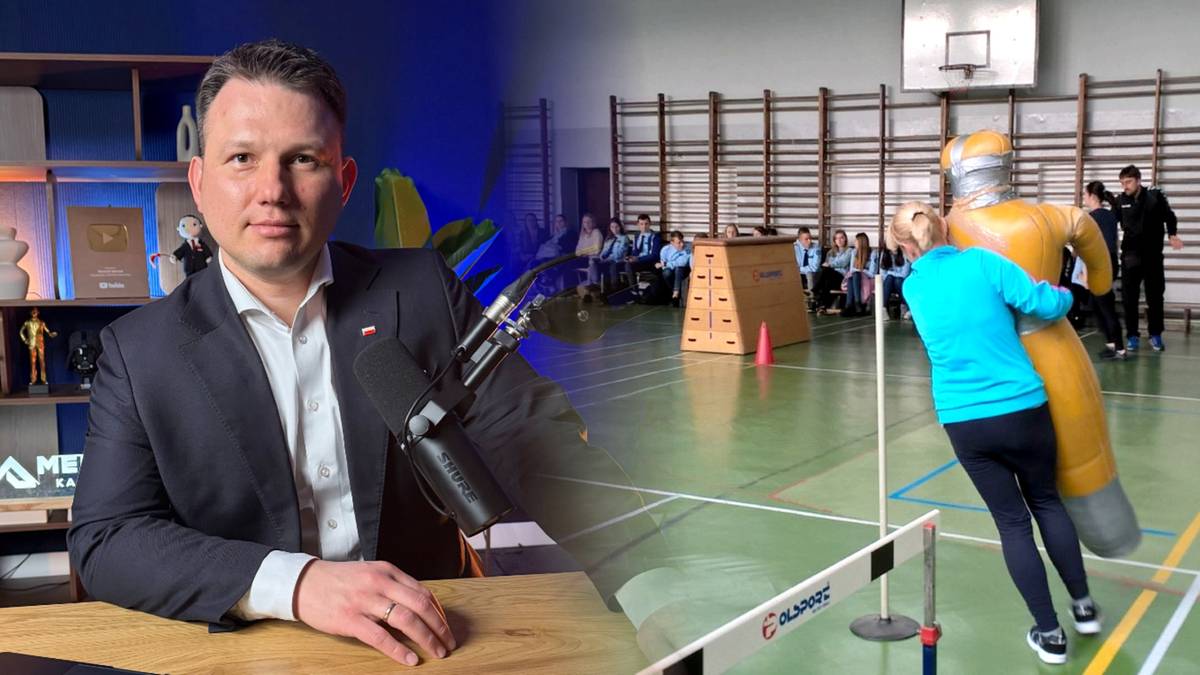
Była policjantka Sylwia Szary zaprosiła Sławomira Mentzena na testy sprawnościowe, jakie muszą przechodzić policjantki. To reakcja na wypowiedź lidera Konfederacji, który z lekceważeniem wyraził się o nowych funkcjonariuszkach dolnośląskiej policji. “Mam nadzieję, że poseł Mentzen nie wymięknie” - skomentował szef MSWiA Marcin Kierwiński.
Something weird is happening, probably federation related and the weekly update isn’t posting from the admin account. I’ll copy it here and hopefully the mod post shows up eventually for those not federated with .world
The football weekend was kinda sloppy, but that’s part of what makes our sport so special. As always poll and pick em links can be found here!
Poll Link: docs.google.com/forms/d/e/…/viewform?usp=publish-…
In the pick 'em I was pleased to score a 6 myself this week! But then heronhousehamilton decided to make it less special for me by doing it as well.
| User | Week 5 | Sum | Average |
|---|---|---|---|
| g0d0fm15ch13f | 6 | 24 | 4 |
| HeronHouseHamilton | 6 | 30 | 5 |
| olmecssb | 4 | 22 | 4.4 |
| Gloriousgashole | 9 | 4.5 | |
| Yeehawboy | 4 | 4 | |
| milkisklim | 4 | 9 | 3 |
| wjrii | 5 | 5 | |
| redkid1234 | 2 | 2 | |
| njm1314 | 4 | 11 | 3.666666667 |
| WVbrU | 3 | 5 | 2.5 |
| Sharkticon | 2 | 2 | 2 |
This week’s pick 'em can be found here at the following link, good luck everyone!
Pick 'em: docs.google.com/forms/d/e/…/viewform?usp=publish-…

That there is the way of eating much healthier, which is with having a good variety of whole foods from plants, and that’s it, should have us think about what is being done with animals and why should it continue.
That there is the way of eating much healthier, which is with having a good variety of whole foods from plants, and that’s it, should have us think about what is being done with animals and why should it continue.
Była policjantka Sylwia Szary zaprosiła Sławomira Mentzena na testy sprawnościowe, jakie muszą przechodzić policjantki. To reakcja na wypowiedź lidera Konfederacji, który z lekceważeniem wyraził się o nowych funkcjonariuszkach dolnośląskiej policji. “Mam nadzieję, że poseł Mentzen nie wymięknie” - skomentował szef MSWiA Marcin Kierwiński.
Była policjantka Sylwia Szary zaprosiła Sławomira Mentzena na testy sprawnościowe, jakie muszą przechodzić policjantki. To reakcja na wypowiedź lidera Konfederacji, który z lekceważeniem wyraził się o nowych funkcjonariuszkach dolnośląskiej policji. “Mam nadzieję, że poseł Mentzen nie wymięknie” - skomentował szef MSWiA Marcin Kierwiński.
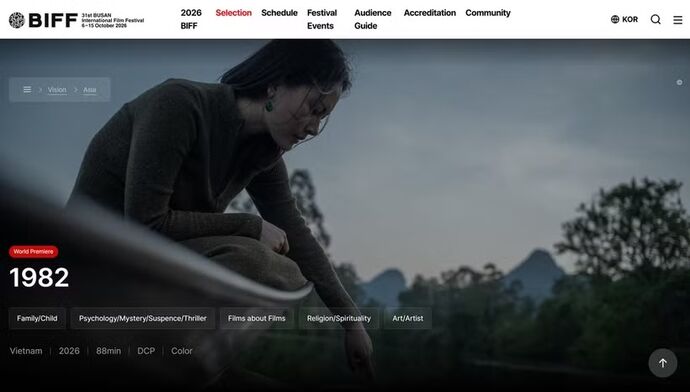
La prestigiosa revista cinematográfica ha analizado la estrategia de la plataforma de ‘streaming’ de cara a los premios de la Academia.
La prestigiosa revista cinematográfica ha analizado la estrategia de la plataforma de ‘streaming’ de cara a los premios de la Academia.
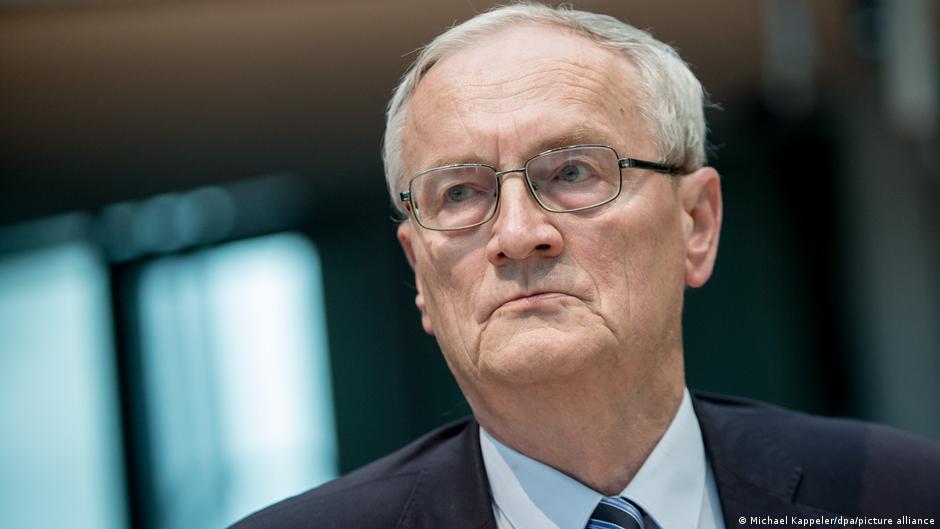
August Hanning served as the head of Germany’s BND foreign intelligence agency from 1998 to 2005. According to German media, he is being investigated for allegedly passing on state secrets and working as an agent.
August Hanning served as the head of Germany’s BND foreign intelligence agency from 1998 to 2005. According to German media, he is being investigated for allegedly passing on state secrets and working as an agent.

cross-posted from: lemmy.sdf.org/post/60027618
[…]
[China’s] decades-old petitioning system (called xinfang or letters and visits) in China provides a framework for the public to lodge complaints of official misconduct or seek dispute resolution outside of the legal system. However, petitioners are one of the most persecuted groups in China with local authorities often using hired thugs or police to harass and punish them to prevent them from filing their grievances.
Safeguard Defenders interviewed a number of local human rights lawyers in China to get their responses to these new rules. Here’s what they told us along with additional analysis from our research.
[…]
The two key changes in “Measures of the State Bureau for Letters and Visits on Further Standardizing the Registration of Public Visits” that went into force 1 July 2026 are:
Article 4, which bars petitioners from registering their complaints in Beijing if they do not have paperwork showing they have already completed the petitioning process with lower (up to provincial-level) petition offices. And,
Article 6, which bars repeated petitioning, gives police powers to “educate” or “guide” those who do so, and potentially criminalizes “disruptive” or “persistent” attempts to petition in Beijing allowing police to handle the matter “in accordance with the law”.
The main impacts of these are to keep petitioners out of Beijing and force local governments to handle the huge numbers of complaints, say the lawyers.
[…]
The lawyers came up with two main reasons why they think the Chinese Communist Party (CCP) released these new regulations:
reduce the overall number of petitions,
keep petitioners and potential violent incidents out of Beijing by making local governments take more responsibility.
[…]
According to two of the lawyers, the system is overloaded with complaints, and the CCP wants to reduce the number of new petitions, especially in Beijing. The current system was clearly not working (and has not been for many years) with inspection teams bogged down with huge numbers of petitions, petitioners stuck in endless procedures, more people travelling to Beijing to petition and heavy pressure on local governments to stop them (which is expensive).
[…]
By drastically limiting who can petition in Beijing, the authorities can now not only control the numbers of petitioners in the capital, they can also shift the responsibility for unresolved petitions to local governments. If petitioners become desperate and angry from years of fruitlessly appealing for justice, they are less likely to protest in the capital.
[…]
In principle, petitioning is a legal activity but because local governments are afraid of being punished for having too many complaints (see below), they have often engaged police to target petitioners on trumped-up public order charges, such as using the crime of “picking quarrels and provoking trouble” to sentence them to yearslong jail terms.
Another tactic has been to illegally hold them in psychiatric hospitals, also sometimes for years on end. But there is a danger that the wider public could view these actions by the police as extralegal and illegitimate.
That is why, historically, governments often hired thugs from security firms to kidnap and threaten petitioners to stop them petitioning in Beijing. By using thugs with no public connection to the government, they had plausible deniability that they were involved in the persecution, a system which scholar Lynette Ong calls “outsourcing repression”.
[…]
One lawyer believes petitioners will now face more pressure and become more fearful. They can more easily be arrested—and it’s possible they may be used as examples to scare others off from petitioning.
The Beijing route—which used to be so important for them—is now mostly closed off.
[…]

I usually don’t even understand the lingo they use. “Open-weighted” is the most recent one, then it usually goes down to specific “models” that everybody is supposed to know about.
These are my thoughts (I will stick to the vague “it” for now, but of course therein lies another question: “and how does all this apply to various specialised AIs"):
If what I wrote above is true, what exactly are people arguing when they say it’s still possible to use LLMs ethically or true to FOSS philosophy, because … ???
edit
Thanks to all who answered.
I guess it’s my fault for asking several questions in one, but this thread has attracted exactly the type of people I’m writing about; several even used the term “open-weighted models” without explaining it.
Asking to get arguments explained, I got more arguments instead.


Cross posted from: thelemmy.club/post/56974556
Cross posted from: thelemmy.club/post/56974556

Cross posted from sh.itjust.works/post/67872787
Cross posted from sh.itjust.works/post/67872787

cross-posted from: lemmy.world/post/52781463
U.S. President Donald Trump seemingly discussed the idea of foreign powers taking out California’s most populated cities while delivering a speech at a Republican rally at the Pinnacle Bank Expo in Grand Island, Nebraska Monday evening.
…
cross-posted from: lemmy.world/post/52781463
U.S. President Donald Trump seemingly discussed the idea of foreign powers taking out California’s most populated cities while delivering a speech at a Republican rally at the Pinnacle Bank Expo in Grand Island, Nebraska Monday evening.
…

Tu utilises ApplePay ? Arrêtes.
---
🆕 Nos derniers articles techniques :
🔹Pourquoi vous ne devriez PLUS utiliser Kali Linux ? blog.trackflaw.com/pourquoi-vous-ne-devriez-plus-…
🔹Quels outils utiliser pour un test d’intrusion (pentest) ?
: blog.trackflaw.com/quels-outils-utiliser-pour-un-…
🔹XZ Utils : la backdoor faisant trembler le monde libre et de la cybersécurité : blog.trackflaw.com/xz-utils--la-backdoor-faisant-…
Musique : DEX 1200, Christoffer Moe Ditlevsen, Theater of Delay
Montage : Fable
⬇️ 𝗦𝘂𝗶𝘃𝗲𝘇 𝗻𝗼𝘂𝘀 𝘀𝘂𝗿 𝗹𝗲𝘀 𝗿𝗲́𝘀𝗲𝗮𝘂𝘅
🔴 Pour s’abonner à la chaîne YouTube de Trackflaw : www.youtube.com/@trackflaw
📸 Pour suivre l’actualité Cyber en image sur Instagram : www.instagram.com/trackflaw/
📹 Pour suivre l’actualité Cyber en vidéo sur TikTok : www.tiktok.com/@trackflaw
👉 Pour visiter le site web de Trackflaw : trackflaw.com
📨 Pour commander un audit : commande@trackflaw.com
Chapitres
0:00 Introduction
1:17 Partie 1 : Le doigt
4:43 Partie 2 : Le portique
10:14 Partie 3 : Le ping-pong
14:46 Partie 4 : À grande échelle
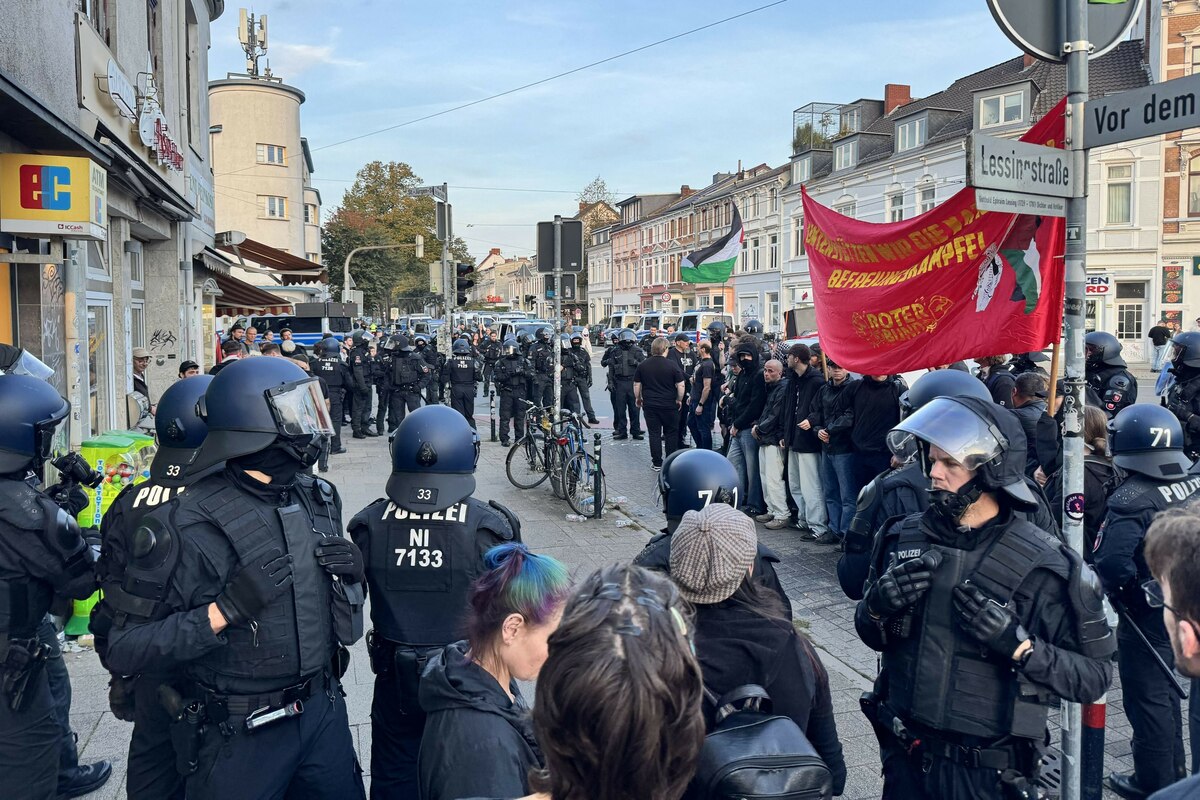
cross-posted from: lemmy.world/post/52781980
Stundenlang setzte die Polizei am Freitag und Samstag Bürger:innen fest – offenbar ohne Rechtsgrundlage. Anwält:innen kündigen Klagen an.
cross-posted from: lemmy.world/post/52781980
Stundenlang setzte die Polizei am Freitag und Samstag Bürger:innen fest – offenbar ohne Rechtsgrundlage. Anwält:innen kündigen Klagen an.
Sorry, just in German for the moment. This is the web presence of a wish fulfilling machine in Waldenburg, Switzerland. I’m not the inventor of the machine, but I have tested all the functions in real life and can confirm it works beautifully, because the inventor of the machine is a wonderful soul. If you have an urgent wish that doesn’t harm others you are welcome to use the remote function! Remember, be careful what you wish for. If it worked consider supporting the inventor.
Sorry, just in German for the moment. This is the web presence of a wish fulfilling machine in Waldenburg, Switzerland. I’m not the inventor of the machine, but I have tested all the functions in real life and can confirm it works beautifully, because the inventor of the machine is a wonderful soul. If you have an urgent wish that doesn’t harm others you are welcome to use the remote function! Remember, be careful what you wish for. If it worked consider supporting the inventor.