I’ve recently gotten into I guess you could say amateur astronomy. I’ve been having fun identifying stars and planets in the night sky. I wanted some resources to learn more but with the large volume of AI bullshit plaguing YouTube and the web in general it’s become harder to find anything quality. Also, if you have any other resources to learn from such as books and websites I’d be grateful for those recommendations as well. Thank you!
I’ve recently gotten into I guess you could say amateur astronomy. I’ve been having fun identifying stars and planets in the night sky. I wanted some resources to learn more but with the large volume of AI bullshit plaguing YouTube and the web in general it’s become harder to find anything quality. Also, if you have any other resources to learn from such as books and websites I’d be grateful for those recommendations as well. Thank you!
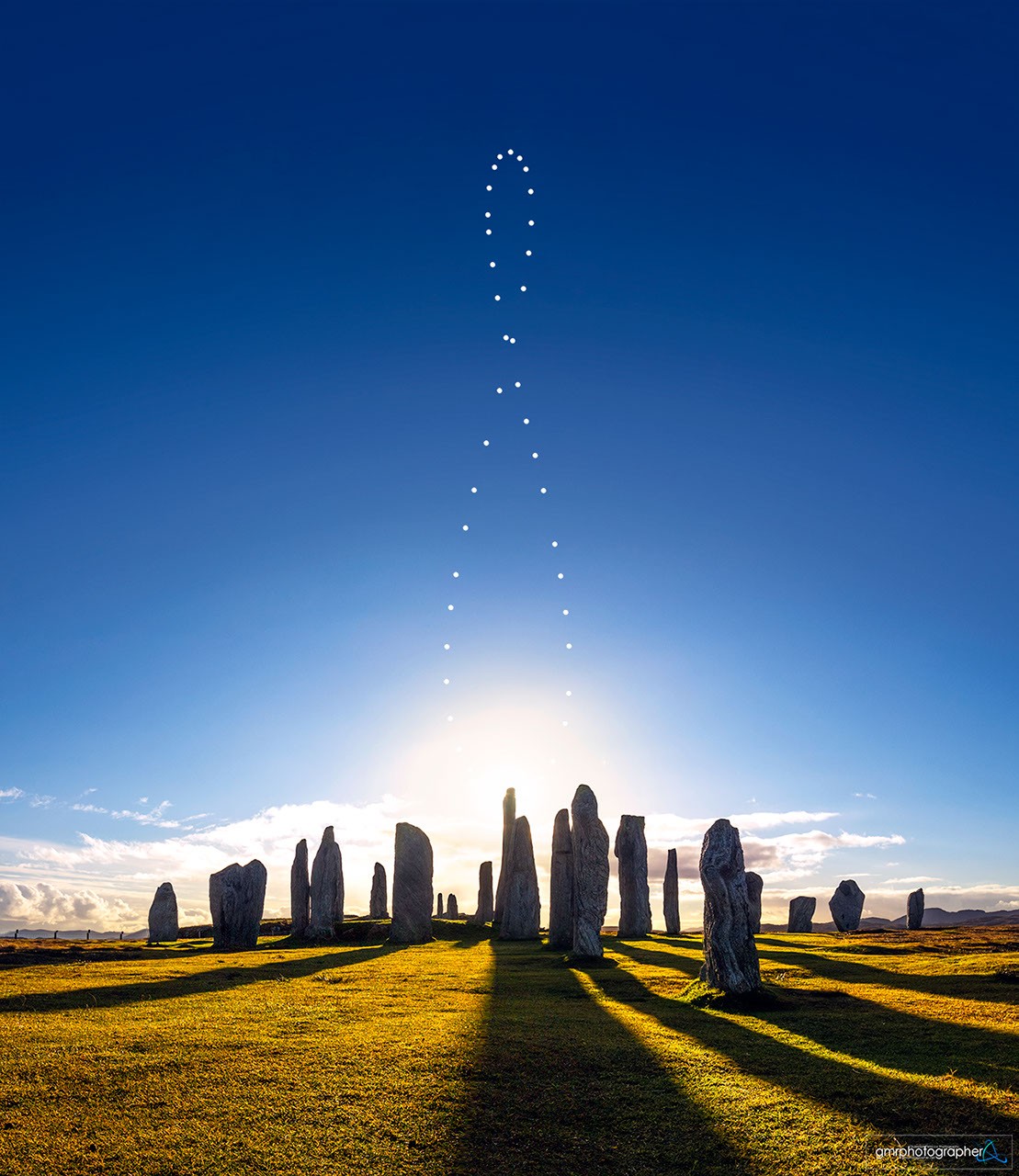
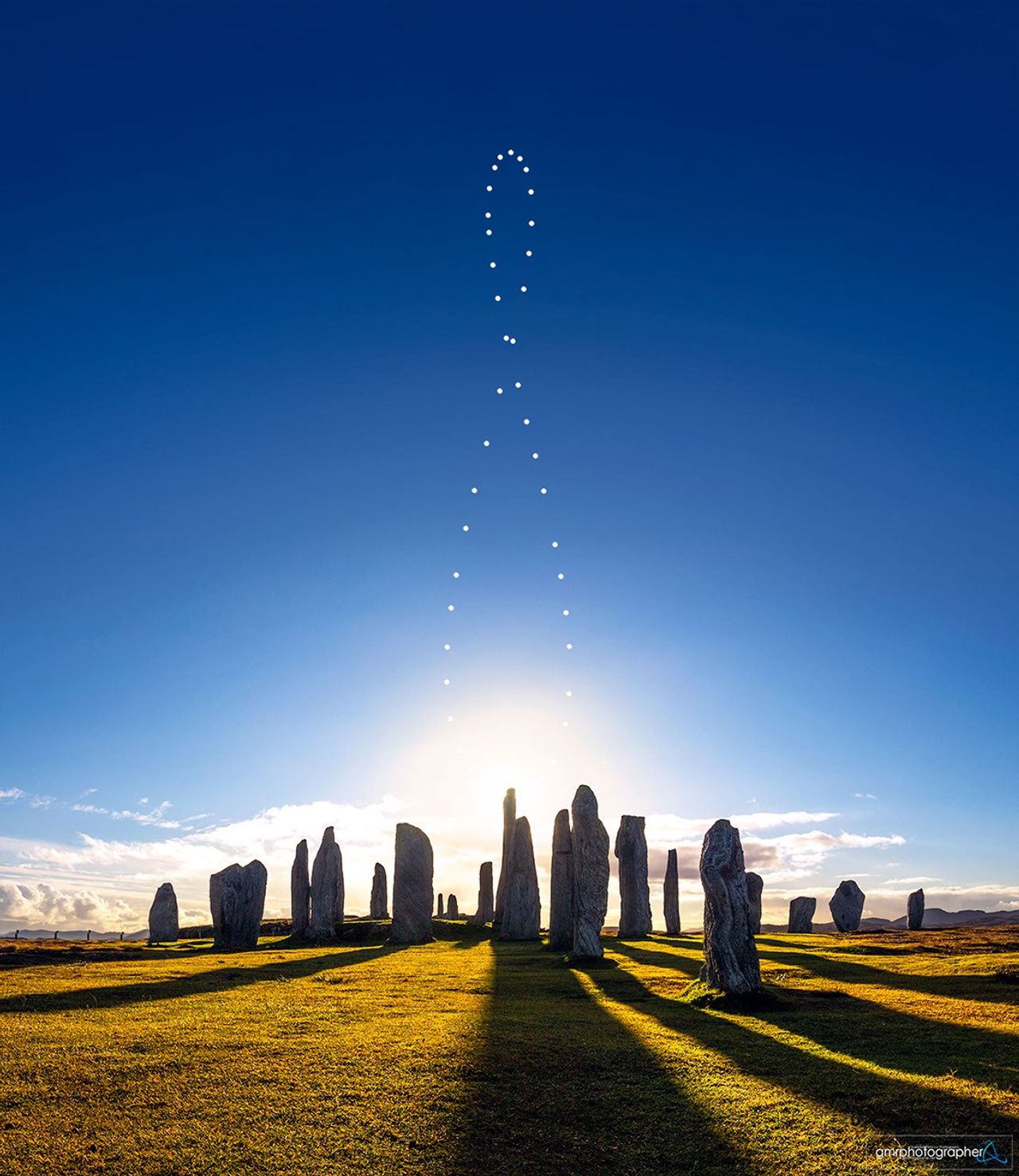
A composite image of the ~5000yo Callanish Stones on the Isle of Lewis. The amazing Giuseppe Petricca has photographed the Sun at noon there, every few days, for a whole year.
A composite image of the ~5000yo Callanish Stones on the Isle of Lewis. The amazing Giuseppe Petricca has photographed the Sun at noon there, every few days, for a whole year.
I wanted a simple dashboard for my TRMNL display in my entryway that told me whether it was worth taking my telescope out that night, which I ended up extending into a web + iOS app if anyone else finds it useful.
All the apps talk to my own endpoint that consumes AstronomyAPI (current celestial body positions in our solar system), 7Timer! (cloud cover, seeing, transparency), and Open-Meteo (air quality), compares to your current location/elevation/equipment, and determines both a verdict on whether it’s worth stargazing tonight and what to look at if you do go out. All the logic/strings to display are contained in my API so I can adjust if needed without re-deploying the separate front ends.
Hope someone else finds it handy!
I wanted a simple dashboard for my TRMNL display in my entryway that told me whether it was worth taking my telescope out that night, which I ended up extending into a web + iOS app if anyone else finds it useful.
All the apps talk to my own endpoint that consumes AstronomyAPI (current celestial body positions in our solar system), 7Timer! (cloud cover, seeing, transparency), and Open-Meteo (air quality), compares to your current location/elevation/equipment, and determines both a verdict on whether it’s worth stargazing tonight and what to look at if you do go out. All the logic/strings to display are contained in my API so I can adjust if needed without re-deploying the separate front ends.
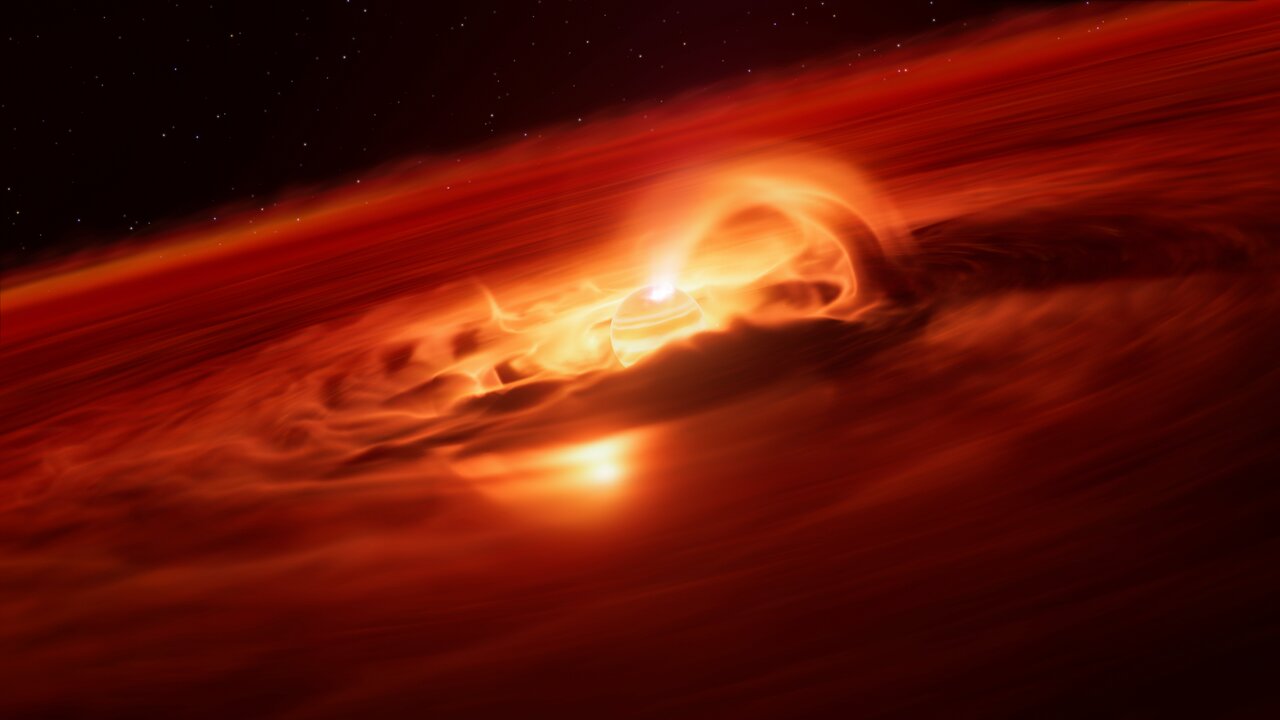
“(ESO’s VLT) reveals that this free-floating planet is eating up gas and dust from its surroundings at a rate of six billion tonnes a second. This is the strongest growth rate ever recorded for a rogue planet, or a planet of any kind…”
“(ESO’s VLT) reveals that this free-floating planet is eating up gas and dust from its surroundings at a rate of six billion tonnes a second. This is the strongest growth rate ever recorded for a rogue planet, or a planet of any kind…”
“Detailed 1 mm spectroscopy and imaging with NOEMA and the Atacama Large Millimeter/submillimeter Array resolve the individual images and show that each of the five images display a series of molecular lines that have similar central velocities, unambiguously confirming that they have identical redshifts.”
“Detailed 1 mm spectroscopy and imaging with NOEMA and the Atacama Large Millimeter/submillimeter Array resolve the individual images and show that each of the five images display a series of molecular lines that have similar central velocities, unambiguously confirming that they have identical redshifts.”
After a long wait, astronomers have finally seen the stellar companion of the famous star Betelgeuse. This companion star orbits Betelgeuse in an incredibly tight orbit, which could explain one of Betelgeuse’s longstanding mysteries. The star is doomed, however, and the team behind this discovery predicts that Betelgeuse will cannibalize it in a few thousand years.
The fact that Betelgeuse is one of the brightest stars in the sky over Earth, visible with the naked eye, has made it one of the most well-known celestial bodies. And ever since the first astronomers began inspecting this fixture in the night sky, they have been baffled by the fact that its brightness varies over periods of six years.
This mystery is now solved.
After a long wait, astronomers have finally seen the stellar companion of the famous star Betelgeuse. This companion star orbits Betelgeuse in an incredibly tight orbit, which could explain one of Betelgeuse’s longstanding mysteries. The star is doomed, however, and the team behind this discovery predicts that Betelgeuse will cannibalize it in a few thousand years.
The fact that Betelgeuse is one of the brightest stars in the sky over Earth, visible with the naked eye, has made it one of the most well-known celestial bodies. And ever since the first astronomers began inspecting this fixture in the night sky, they have been baffled by the fact that its brightness varies over periods of six years.
Screenshot of social media post. Reads, "Everyone was saying that the May geomag activity had no impact on the satellites. Of course we knew this was wrong. Over one hundred sats re-entered during this period and now a paper is showing that thousands of Starlinks had to move. Holy fuck. Imagine if those thousands had to re-enter. This. Is. Insane. We. Must. Stop. Launching. Shit. NOW. spaceweather.com"
Screenshot of social media post. Reads, "Everyone was saying that the May geomag activity had no impact on the satellites. Of course we knew this was wrong. Over one hundred sats re-entered during this period and now a paper is showing that thousands of Starlinks had to move. Holy fuck. Imagine if those thousands had to re-enter. This. Is. Insane. We. Must. Stop. Launching. Shit. NOW. spaceweather.com"
I have no photos or videos, but I was on Topsail Island on vacation on June 4th around 11pm, where I saw a decently bright moving object erupt with a huge v-shaped tail for atleast 30 seconds. The tail was a faint green color. It fell from the eastern sky into the northeastern sky.
Google has been particularly unhelpful. Was wondering if you fine folks had any idea. I’m assuming space debris. But I cant find any other reports of anyone seeing it.
The Simons Observatory, a group of microwave telescopes in the high desert of Chile, is starting to gather data to attempt to prove or disprove the theory of inflation.
Un-paywalled article from the NY Times.
The Simons Observatory, a group of microwave telescopes in the high desert of Chile, is starting to gather data to attempt to prove or disprove the theory of inflation.
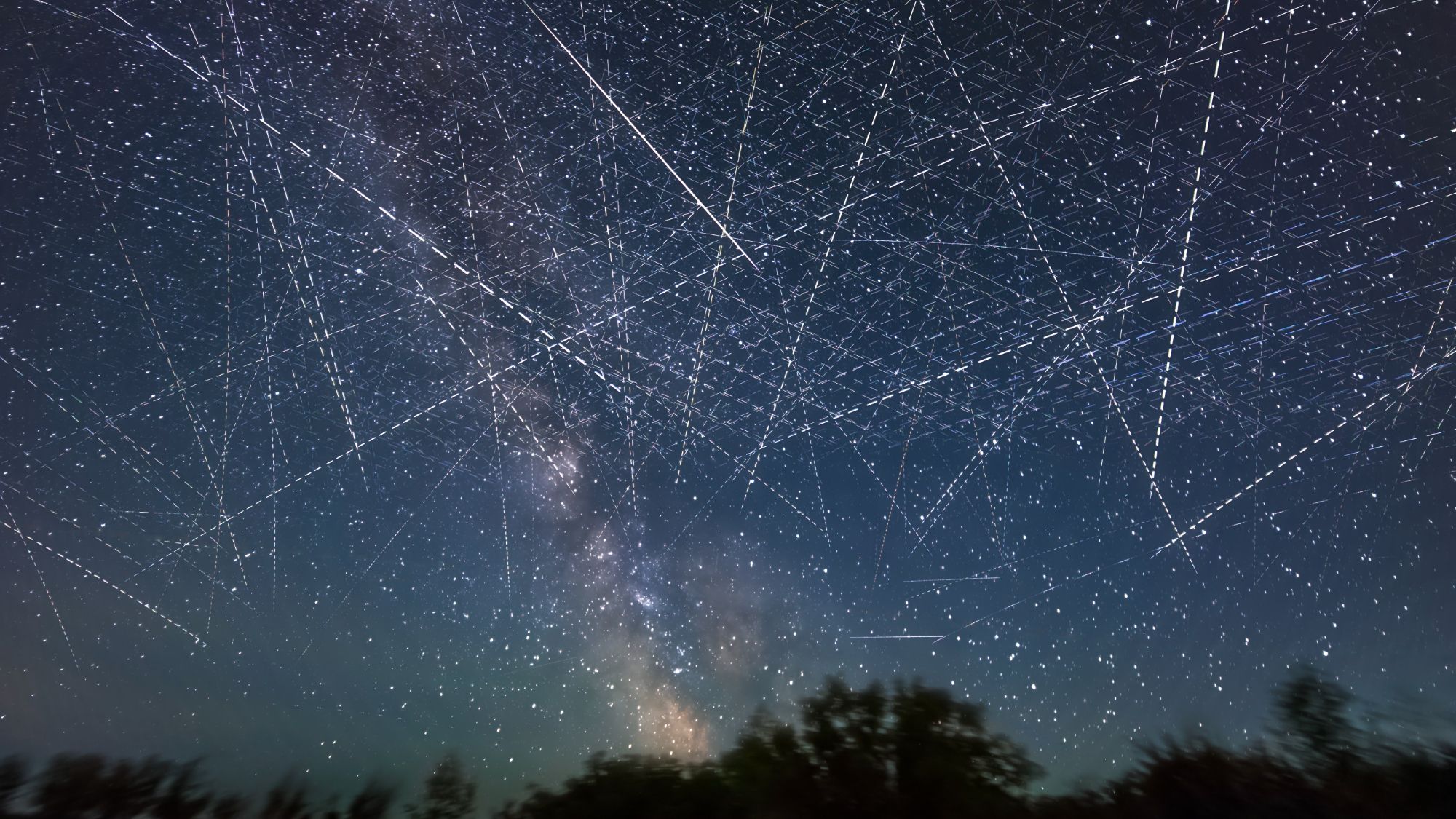
Scientists use the LOFAR telescope to observe low-frequency radio waves from satellites in large constellations for the first time. “Unintended electromagnetic radiation” emanating from onboard electronics in Starlink satellites was detected which could impact astronomical research. Further study is now ongoing.
Scientists use the LOFAR telescope to observe low-frequency radio waves from satellites in large constellations for the first time. “Unintended electromagnetic radiation” emanating from onboard electronics in Starlink satellites was detected which could impact astronomical research. Further study is now ongoing.
Scientists use the LOFAR telescope to observe low-frequency radio waves from satellites in large constellations for the first time. “Unintended electromagnetic radiation” emanating from onboard electronics in Starlink satellites was detected which could impact astronomical research. Further study is now ongoing.
Scientists use the LOFAR telescope to observe low-frequency radio waves from satellites in large constellations for the first time. “Unintended electromagnetic radiation” emanating from onboard electronics in Starlink satellites was detected which could impact astronomical research. Further study is now ongoing.