0

How's your week been?

preview
Resources

If you are thinking about harming yourself — get immediate crisis support. Connect to a crisis counselor 24/7, 365 days a year, from anywhere in the U.S via text, chat, www.thetrevorproject.org/get-help/

Resources

If you are thinking about harming yourself — get immediate crisis support. Connect to a crisis counselor 24/7, 365 days a year, from anywhere in the U.S via text, chat, www.thetrevorproject.org/get-help/

0

Intergenerational Two-Spirit Head Dancers Find Joy in Expressing Themselves Freely

Underscore Native News Intergenerational Two-Spirit Head Dancers Find Joy in Expressing Themselves Freely - Underscore Native News www.underscore.news
preview

Now in its 14th year, the NAYA powwow first introduced a Two-Spirit head dancer title to join men’s and women’s head dancers in 2023.

At most powwows across the country today, jingle dancers are expected to be women and grass dancers are expected to be men. However, there has been a push to create more spaces of queer joy and a disruption to gender norms at powwows.

“There were a lot of powwows that were starting to have the Two-Spirit flag and say ‘everyone is welcome here and these are safe spaces,’ and we were inspired by that,” said Tamara Henderson, Laguna Pueblo, NAYA’s chief operating officer and powwow organizer.

“And frankly, some powwows will have Two-Spirit dancers [and] Two-Spirit powwows, and so I said if we’re truly trying to create a safe space for our community, then what we really have to do is have our own Two-Spirit head dancer and keep it consistent,” she continued.

0

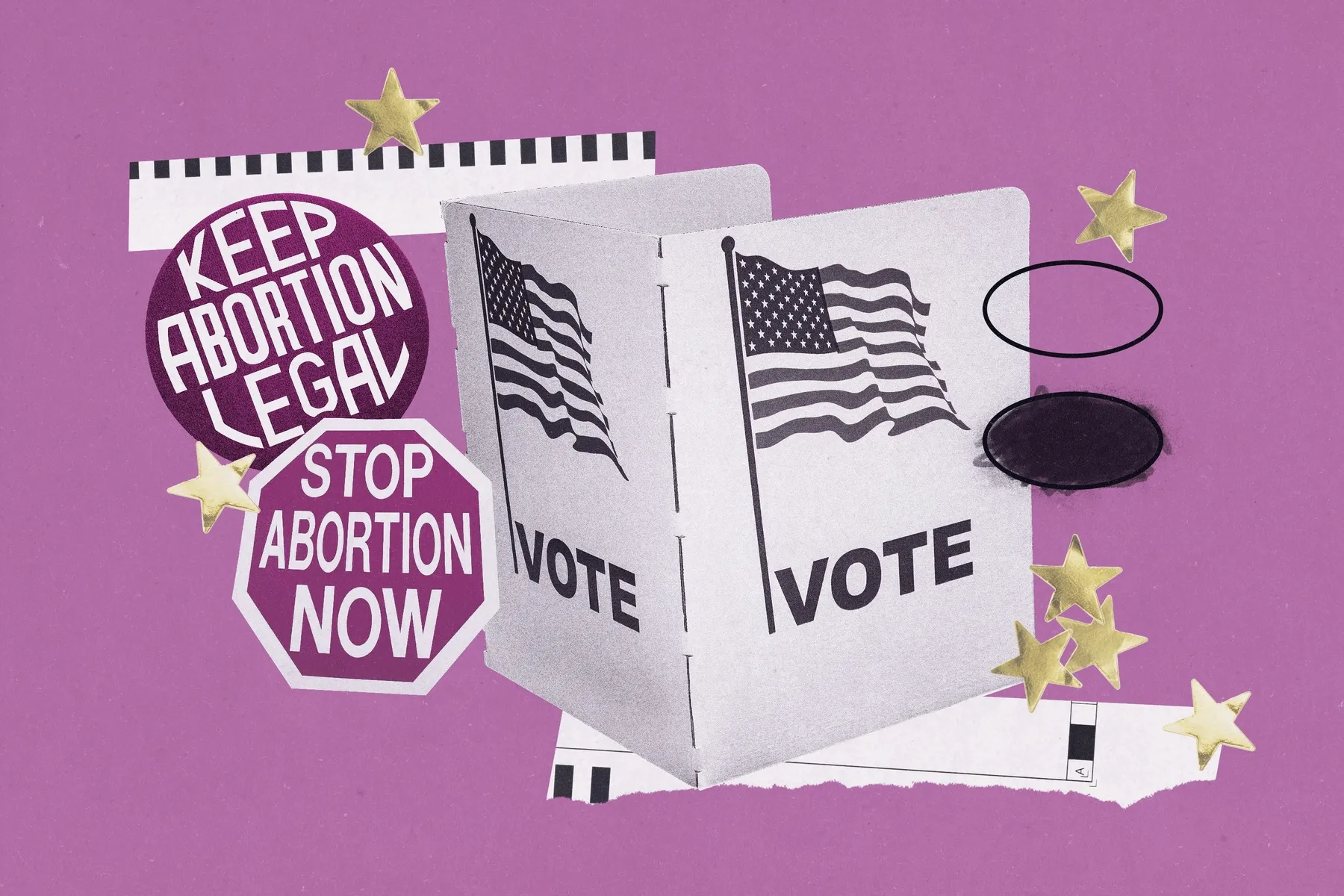
Where abortion is on the ballot in 2026: Voters in Idaho, Missouri, Nevada and Virginia will address how their states regulate reproductive rights.

The 19th Where abortion is on the ballot in 2026 19thnews.org
preview

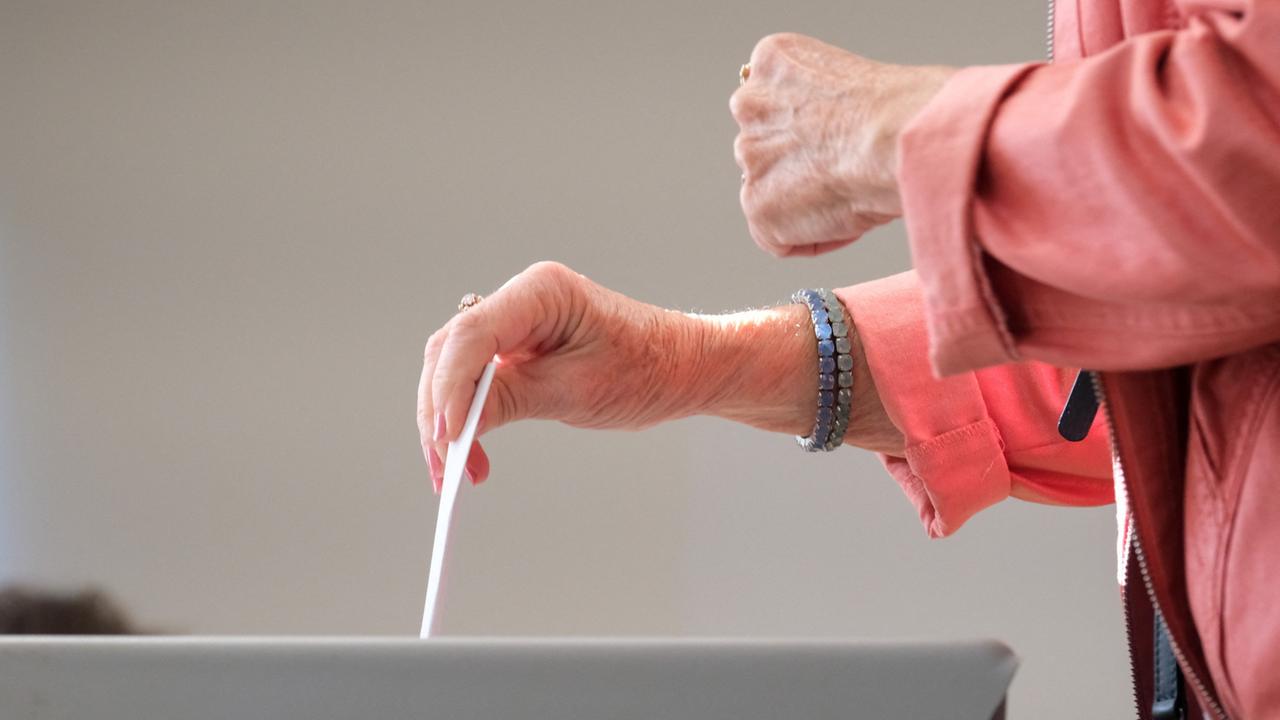
Four years after the fall of Roe v. Wade, abortion — which defined the 2022 midterms and much of the subsequent presidential campaign — has largely receded from the spotlight as 2026 candidates focus on issues of affordability, the proliferation of data centers and the prolonged war in Iran.

But in four midterm races spanning different regions of the country, voters will have a chance to weigh in directly on how their states approach abortion.

One ballot measure could overturn a strict ban. Another could undo abortion rights protections voters secured just two years ago. And in two others, voters won’t change what abortion access looks like, but they will have a chance to strengthen existing protections by amending their state constitutions.

Here is a breakdown of where abortion is back on the ballot.

0

Wk 2 inactives

Wk 2 inactives
preview

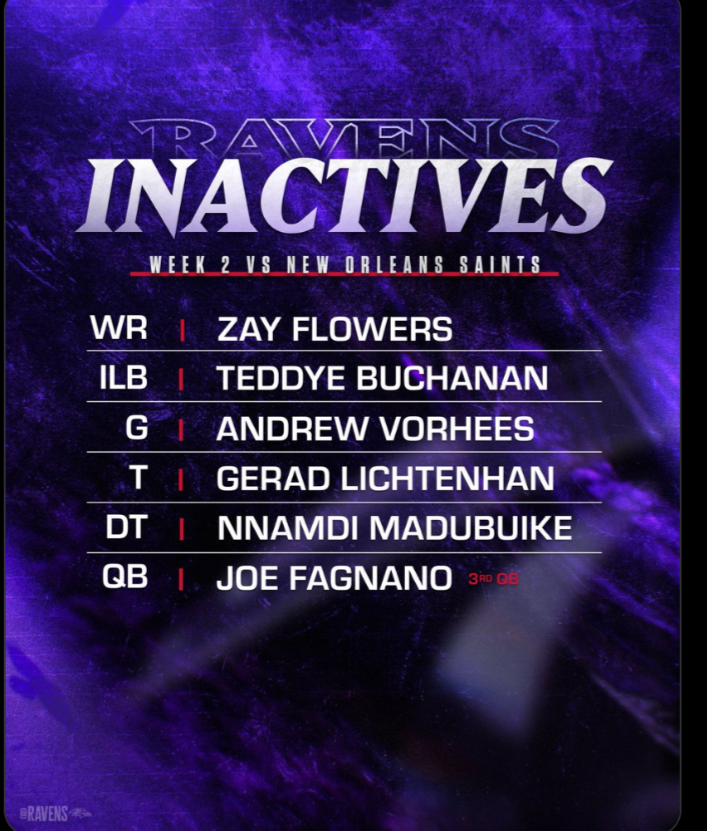
Soo bummed Zay’s out but of course glad it’s not super serious…

May we have another win today, with far less penalties! Haha.

Soo bummed Zay’s out but of course glad it’s not super serious…

May we have another win today, with far less penalties! Haha.

0

How America Can Fix Its Affordable Housing Crisis

Dame Magazine - What If We Treated Housing Like a Human Right? - Dame Magazine www.damemagazine.com
preview

Worse yet, about 16 percent of all households in the U.S. are “severely cost-burdened,” meaning they spend more than half of their total income on housing. Those who are “severely cost-burdened” are often one surprise expense away from homelessness, living constantly on the edge of dire poverty. While reporting for The Denver Post back in 2022, I spoke to one such woman, who lived in her car with her two kids. One of her children needed a medical procedure, forcing her to make the impossible choice between her kid’s health and paying rent. She, like any good mother, chose the former. Choices such as these highlight housing’s importance as a human right. And to be forced to go without it, writes author Matthew Desmond in his book, Evicted: Poverty and Profit in the American City, is a profound societal failure.

“No moral code or ethical principle, no piece of scripture or holy teaching,” he wrote, “can be summoned to defend what we have allowed our country to become.”

0

“A Clear Watering Down”: Drug Transparency Bill Stripped of Critical Provisions Ahead of Senate Vote

ProPublica “A Clear Watering Down”: Drug Transparency Bill Stripped of Critical Provisions Ahead of Senate Vote www.propublica.org
preview

Landmark legislation designed to alert consumers to where their drugs were made is headed for a full Senate vote, but safety experts say the transparency bill has been stripped of two of its most critical provisions.

The Clear Labels Act was introduced earlier this year by Sens. Rick Scott, R-Fla., and Kirsten Gillibrand, D-N.Y., after lawmakers and drug safety experts called for more transparency in the industry. Last year, a ProPublica investigation revealed that the U.S. kept importing generic drugs from foreign factories after inspectors had identified quality and safety lapses at the sites, including leaks, mold and contaminated water.

Medications made at these facilities were linked to thousands of reported adverse reactions in patients.

The bill aims to allow doctors and patients to see on the label exactly where a medication was made — details that had largely been withheld until now, even from Congress. Current generic drug labels often include only the location of the packager or distributor, which can be thousands of miles away from the actual manufacturer.

0

In Fighting for Every Black Child, Did I Betray My Own?

preview

archive.is link

I could feel her looking at me. Her body slung in adolescent impertinence against the front passenger seat door, shoulders turned so she could face me fully. Usually when I picked up my daughter, Najya, from middle school, she’d tumble into the car and bombard me with the day’s escapades, chattering nonstop about her friend group or complaints about an annoying teacher or her wonder at the test she’d aced despite thinking she’d failed it. But not this day.

“Did you know my school was bad like this when you decided to put me here?” she asked.

My hands tightened on the steering wheel as I worked to keep my face neutral, buying a few moments to gather my thoughts.

As they neared the end of her seventh-grade year, Najya and her closest girlfriends were thinking about their futures. Honors students, they searched the nation’s top colleges, and that led to a curiosity about New York City’s highest ranked public high schools. Wondering about their chances of getting in, they decided to Google their own school and its ratings. And in doing so, Najya and her tight trio of Black girl nerds confronted not only the reality of the city’s deeply segregated educational landscape but also that the Brooklyn school they all attended existed firmly on the wrong side of the divide.

By dismissal time, Najya’s shock had turned to boiling, and the seatbelt had barely clicked before she was confronting me. I had braced myself for this moment, spent nearly a decade expecting it, preparing for it. When Najya was entering pre-K, my husband, Faraji, and I decided to send her to the type of school that wealthier families with choices uniformly avoid — one that is low-income and mostly Black. Our decision had been informed by values shaped by my years of reporting on the enduring and too often seemingly hopeless battle for school integration.

I’ve lost count of how many times I have written some version of this sentence: Nationally, a Black student is less likely to have teachers who are qualified and experienced, and to be offered rigorous and college-prep curriculum, to have up-to-date technology and attend school in modernized facilities.

In New York, a combination of housing segregation and “academic” sorting, called school choice, that begins as early as pre-K means most Black students — even middle-class ones — are forced to attend racially segregated schools with high rates of poverty. And nationally, schools in predominantly nonwhite districts receive $23 billion less in annual funding than their heavily white counterparts, according to a 2019 analysis by EdBuild. In everything that we measure, these schools have less, even though the economically struggling student bodies they serve need more. And so the test scores and poor academic performance that typify these schools reflect not just the disadvantage of the students but, more essentially, the disadvantage of the schools.

New York City is a diverse school system — there is no racial majority among its student body — and yet Black children remain the most segregated of all student groups. As the U.C.L.A. Civil Rights Project describes it, New York “is a four-race city where white and Asian students, on average, attend middle-class, predominantly white and Asian schools and Black and Latino students are increasingly going to school with each other in schools where poverty is the norm.”


Black parents put their children forth as plaintiffs in lawsuits argued by the NAACP Legal Defense and Educational Fund that ultimately ended legal segregation in the Supreme Court’s 1954 Brown v. Board of Education decision. When the federal government refused to enforce the new law of the land, Black parents sent their children to wade through white mobs to enter white-only schools, pushing their doors open for the rest of us.

And yet decades later, integration now exists for a minority of Black children — usually those born to families like ours who have the money to pay for private schools or live in tonier ZIP codes zoned to heavily white public schools, or who can pay for tutoring that allows their children, from a very young age, to test into programs for “gifted” students. Most Black students, however, languish in the type of schools that the law was supposed to have eradicated.

So, like the generations of Black parents who came before us, Faraji and I felt an obligation to make educational decisions based on the collective good and not just our individual advantage. New York is considered one of this nation’s most liberal cities, while operating a school system that is among the most racially segregated. This segregation exists because policymakers and affluent parents — even those who profess a belief in integration and equality, — shed their advocacy at the schoolhouse door and refuse to take or support any substantial action to integrate the city’s schools. Faraji and I decided that our role in this struggle meant upending the status quo and sending our child not to a wealthy white school but to a poor Black one.

We thought by sending Najya to a mostly low-income and Black school, we could help improve it for all the children there. From my past reporting, I knew that P.T.A.s at poor schools often can raise only a few thousand dollars, but Faraji and I could write checks that exceeded the annual P.T.A. budget. I witnessed how dismissive school officials could be to lower-income parents who lodged complaints or made demands for resources and how deferential they were to wealthy ones. I believed Faraji and I could bring some of that power with us. We had connections and time and status that should not matter, but that we all know do. And more than that, we believed strongly that if families like ours went into schools like this one, it would challenge other families with similar values to do the same.

But my child just shook her head, her face a mask of disbelief, and something else: betrayal.

“So you had money to send me to one of the best schools, and you chose not to?” she said, hurling her words. “Because other kids are disadvantaged, you didn’t want to put me in a great school?”

Najya was asking what I’d accomplished by not choosing the “best” school for her. And the honest answer is, I don’t know. When it comes to the choices my husband and I have made about public education, these days I feel that I failed both my values and my child.

0

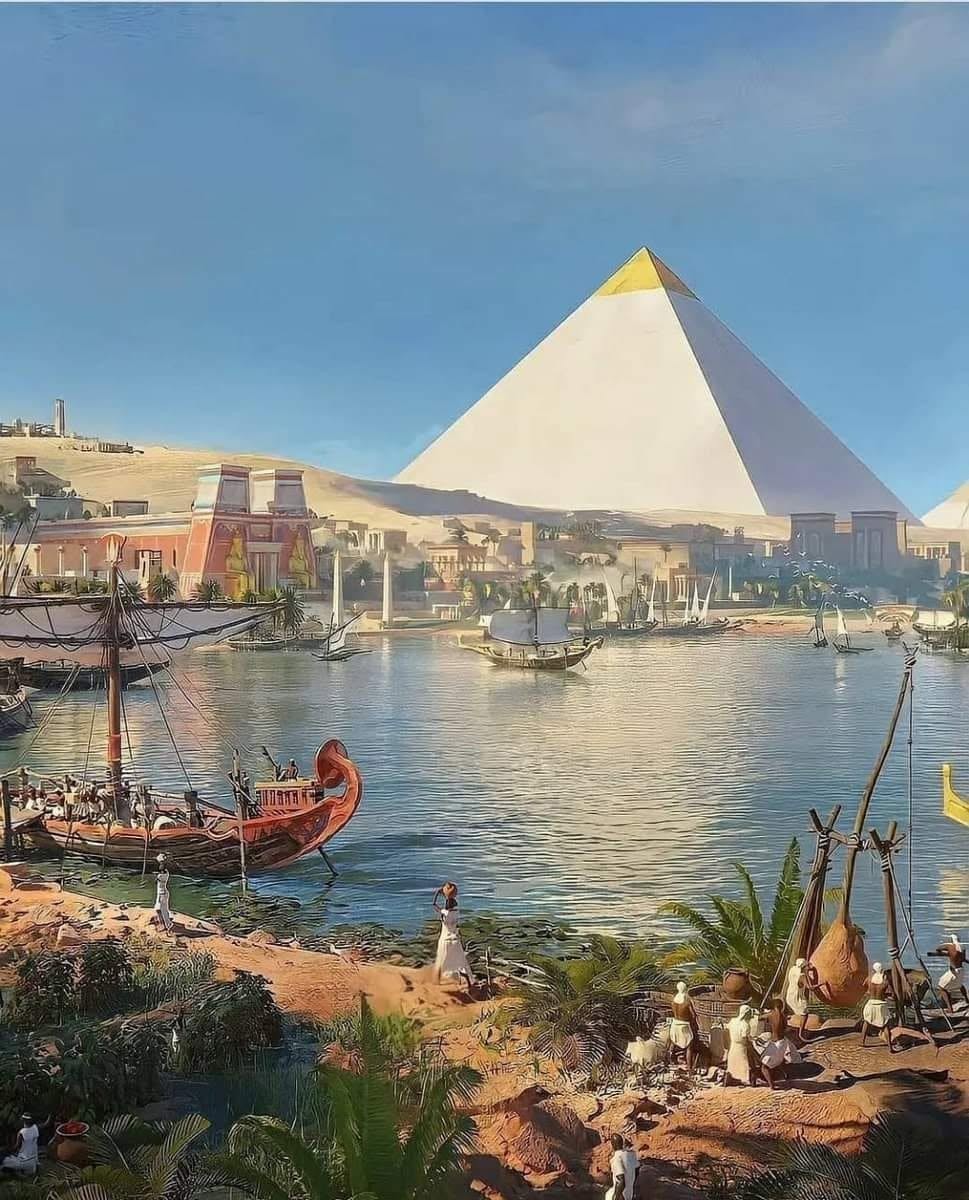
One more shot of a Great (Giza) Pyramid in its prime, as seen from the mighty Nile.

preview

Climates can change drastically across even just a few hundred years.

As I presently understand it, the initially fertile Nile-inundation that flooded the banks with precious crop-growing nutrients on a regular basis (for example in the time of Rameses II) slowed over the years, changing up certain equations upon many things. For example, once a jungle area slowly shifted to a desert area… that was arguably one of the long-form primary causes for the collapse of the once-mighty Egyptian Empire, after some thousands of years of primacy.

(later counterpart of sorts– The Mayan Empire?)

And yet the Egyptian Empire was monumentally impressive in its prime, I would argue.

0

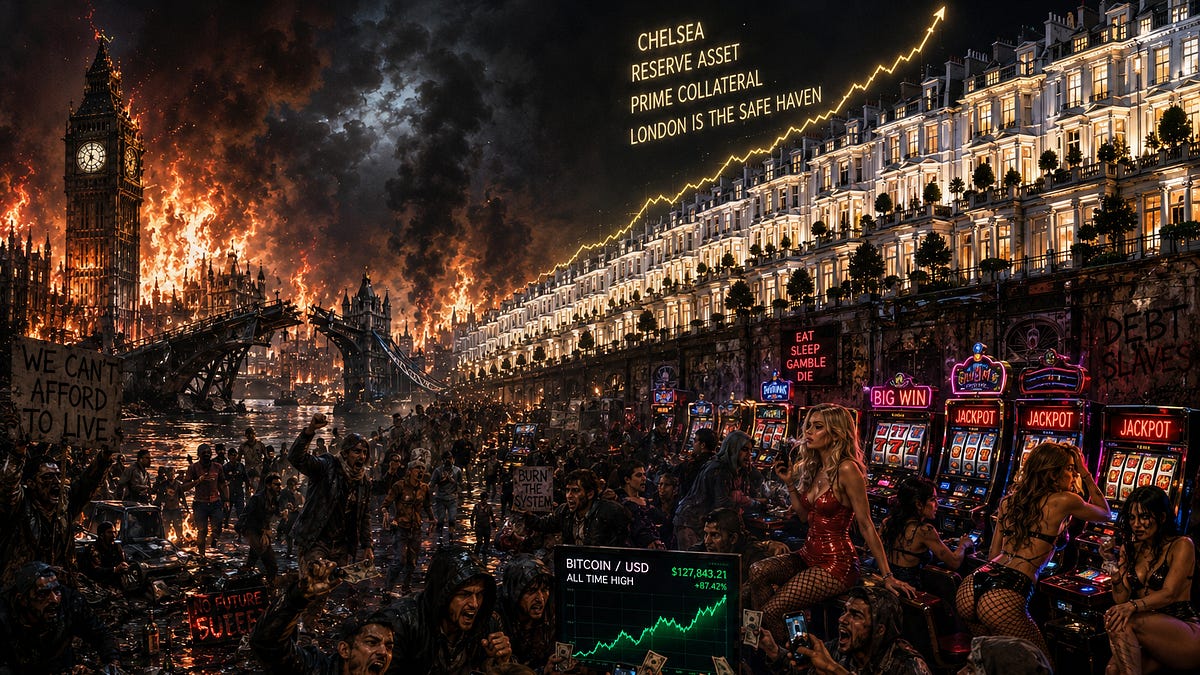
Ever felt like something is very wrong with the world but can't put it into words? Here are those words.

Degeneracy is a Symptom henryfudgeofficial.substack.com
preview

Degeneracy is a Symptom: On Conspicuous Despair, the Ponzi stage of being alive, and why your grandparents are wrong about you.

tl;dr: Wealth consolidation and oligopolies have stagnated economic growth. This you probably know, but the author amazingly shows that the rise of “social degeneracy” is merely a symptom of this problem. He tracks this phenomenon around the world and throughout history. We either tackle the problem early and directly or–my words, not his–the rivers will flow with blood.

0

"Tiki"-- a story about animal adoption

preview

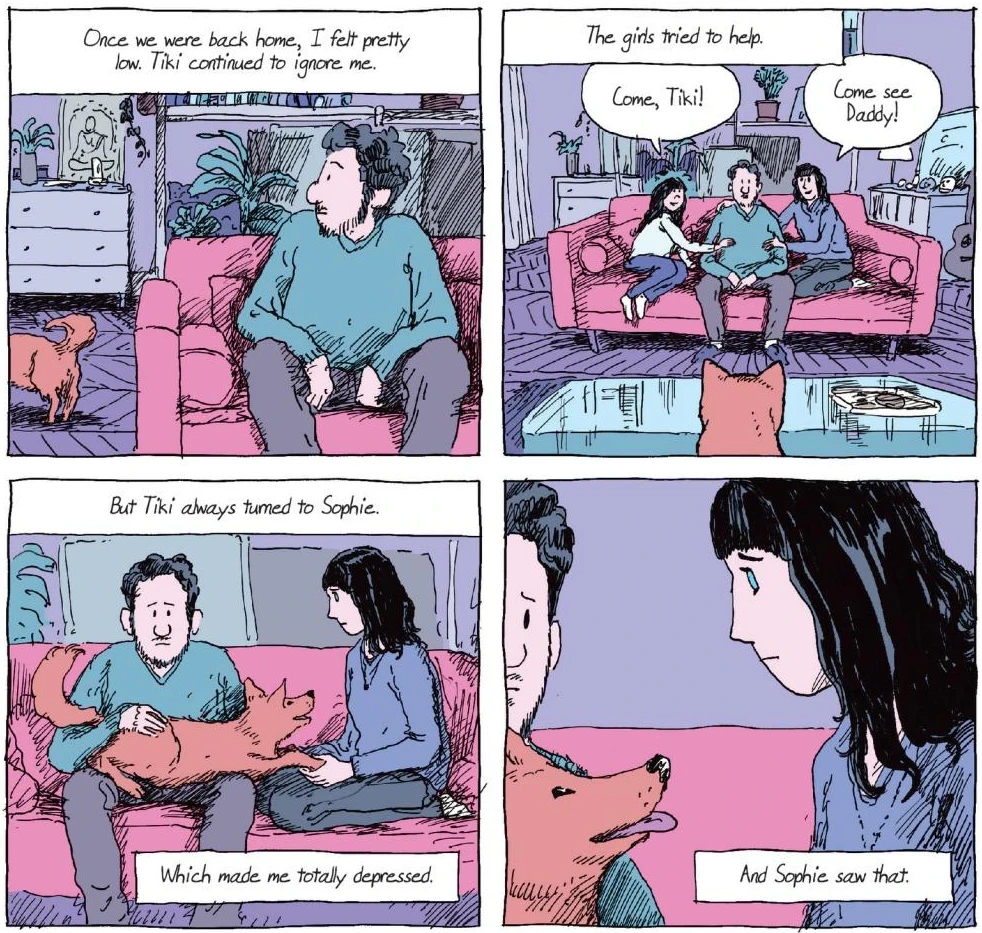
I bumped in to this BD the other day, and liked it a lot. It’s called "Tiki." (that’s the link) It was nominally about a middle-aged man (hmm, I guess that could be me), and started with his daughter begging him for a pet, over the years. A cat would have been *chef’s kiss*, but his daughter was allergic. What to do, what to do…


https://i.imgur.com/xsKdAfp.jpeg


https://i.imgur.com/3SE8wR1.jpeg


https://i.imgur.com/nPLGc2k.jpeg

FINALLY, he and the girlfriend seem to find the most beautiful puppy in the universe, as aided by a couple of manipulative salespeople, and make “Tiki” a birthday gift upon the daughter.

Problem? This was no ordinary breed of dog, but a mighty “Shiba Inu.”


https://i.imgur.com/b31drja.jpeg


https://i.imgur.com/n04d8wW.jpeg


https://i.imgur.com/hdyEpOL.jpeg

This was somewhat heart-wrenching, but also a rare, soulful look at pet-owning issues. (it’s about a real dog IMO, but it did finally find a forever home)

A commentary upon life itself, perhaps.


IMG backup here and THERE.

0

Niagara - Quand la ville dort [pop] (1986)

play · archive.org
Internet Archive Niagara Quand La Ville Dort (SVCD).mpg : Free Download, Borrow, and Streaming : Internet Archive archive.org
preview

cross-posted from: reddthat.com/post/72784393

cross-posted from: reddthat.com/post/72447093

wp:Encore un dernier baiser

cross-posted from: reddthat.com/post/72784393

cross-posted from: reddthat.com/post/72447093

wp:Encore un dernier baiser

0

Trying to recover encrypted timeline data

preview

I’m trying to recover many years of Google Maps Timeline history and have gotten far enough into the problem that I’m hoping someone familiar with Android Keystore, Google Play Services/Folsom security domains, or Maps Timeline’s encrypted-backup implementation might recognize what is happening.

The short version is:

Google confirms that encrypted Timeline backups for my account still exist on its servers, but every device I try says “Your encrypted data isn’t unlocked yet.” On the S23 that was probably involved in the Timeline migration, an Android bugreport shows Google Play Services actually attempting key recovery and failing with:

LocationHistory: [BackupRunner] Failed to get encryption key for backup

LocationHistory: bmas: 38502: Domain is not retrievable

The recovery flow also invokes:

com.google.android.gms.auth.folsom.StartKeyRetrieval

and references:

on_device_location_history

How I think I got here

I have used Google Maps Timeline/Location History for many years.

For most of that time my primary Google account on Android devices was one account, while the account I actually used inside Google Maps for Timeline was a different secondary Google account. That worked normally for years.

My main phone during the transition from Google’s old server-based Timeline system to the newer device-local/encrypted-backup system was a Samsung Galaxy S23 Ultra, SM-S918U1.

At some point I had to repair/reflash the S23 firmware. I believe I used firmware that was compatible with the hardware but may not initially have been the exact correct region/CSC variant. The phone continued working afterward.

I cannot prove that this caused the Timeline problem. It is simply the most suspicious event in the history because Android Keystore/device trust material may have changed during that process.

Later I noticed that older Timeline history was gone from the normal Maps UI.

What Google Takeout shows

I requested a Google Takeout specifically for Timeline.

The plaintext Timeline export only contains relatively recent device-local history.

However, Takeout also produced an Encrypted Backups file that explicitly states that I have encrypted Timeline backups stored on Google servers.

So as far as I can determine:

Old Timeline data

    ↓

encrypted backup still exists at Google

    ↓

decryption/recovery state is unavailable

    ↓

Maps cannot restore it

Importantly, the Takeout file is not the encrypted backup itself. It just confirms that encrypted backups exist.

What Maps does

On the S23, my new Galaxy Fold, and several old Android devices, Maps shows:

Your encrypted data isn’t unlocked yet

If I tap the Timeline cloud/backup icon:

A spinner appears.

It waits for a while.

The spinner disappears.

No backup list appears.

I never receive a PIN/password/key-recovery prompt.

I never get a usable “Fix now” flow.

I have tested:

Galaxy S23 Ultra

Galaxy Z Fold8 Ultra

Galaxy Note8

Galaxy Tab A

The older devices were preserved and had not necessarily been wiped, but signing the Timeline Google account into them does not change the behavior.

This suggests that simply having an old device is not enough. The specific device-side recovery/security-domain state apparently matters.

What I found on the S23

I kept the S23 intact after moving to the Fold and captured an Android bugreport while reproducing the Timeline failure.

The critical log entries are:

LocationHistory: [BackupRunner] Failed to get encryption key for backup

LocationHistory: bmas: 38502: Domain is not retrievable

The bugreport also shows the Google Play Services key-recovery path actually launching:

com.google.android.gms.auth.folsom.StartKeyRetrieval

The recovery request is associated with the correct Google account and:

on_device_location_history

There are also Google Play Services/Keystore references such as:

com.google.android.gms.auth.folsom

com.google.android.gms.backup/folsom

security_domain_member_key

security_domain_member_key_encrypted_locally

and activity involving operations with names along the lines of:

ListSecurityDomainMembersOperation

GetKeyMaterialOperation

MarkLocalKeysAsStaleOperation

INVALIDATE_LOCAL_KEYS

I am not interpreting those names as proof that Google deleted the keys. They are simply what appears in the recovery sequence.

Current S23 state

The phone currently reports:

Model: SM-S918U1

Android: 16

Bootloader: locked

Verified Boot: green

Warranty bit: 0

Security patch: 2026-08-05

Sales code: XAA

So there is no obvious current unlocked-bootloader/failed-Verified-Boot situation.

The Keystore is also clearly functioning in general. Google Play Services can create/use hardware-backed operations. The unresolved question is whether the specific historical Timeline/security-domain key material is gone, stale, inaccessible, or simply failing to be retrieved from Google’s recovery infrastructure.

Things I have deliberately NOT done

I have not:

deleted the encrypted Timeline backups

selected Google’s “delete encrypted data and start over” option

factory-reset the S23 during this investigation

cleared Google Play Services storage

cleared Maps storage

unlocked the bootloader

removed the affected Google account

reflashed the phone again

I want to preserve every remaining recovery possibility.

Things I’ve already tried

Tested the original/current S23

Tested a new Fold

Tested old Note8 and Tab A devices

Verified the correct Google account is being used

Verified normal Google authentication works

Confirmed the encrypted backups exist via Takeout

Captured ADB/logcat/Android bugreport during failure

Submitted the exact error through Google Maps feedback

Posted to the official Google Maps support community

The normal Google support documentation basically says to recover encrypted Timeline data using the original device, or delete the encrypted backup and start over if recovery is impossible.

The problem is that I still have the likely original device, and its recovery process is actively running but failing internally.

What I’m trying to figure out

Does anyone recognize:

38502: Domain is not retrievable

from Google Play Services, Folsom, security-domain recovery, Android backup encryption, or Maps Timeline?

In particular, I’m trying to determine whether this means:

The historical device-bound encryption key was permanently lost during the earlier firmware event.

The local Google security-domain membership/key wrapping state is damaged but potentially repairable.

Google still has enough recovery metadata server-side, but the security domain is in a broken/stale state.

This is a Google Play Services/Maps bug rather than true key loss.

There is some supported or unsupported way to re-enroll the device into the existing security domain without deleting the encrypted backups.

I am comfortable with ADB, Android debugging, Linux, Docker, firmware tooling, and doing forensic-style diagnostics on the S23 now that it is no longer my daily phone.

I am not looking to bypass someone else’s encryption or account security. These are my own Google account, phone, and Timeline backups. I’m mainly trying to avoid destroying the one server-side copy that apparently still exists.

If anyone has dealt with Google Play Services auth.folsom, Android security domains, or Timeline’s newer end-to-end encrypted backup implementation, I would especially appreciate pointers about what 38502 / Domain is not retrievable actually signifies and what additional state I should preserve before experimenting further.
0

What is Something you are Proud to have Made?

preview

cross-posted from: https://piefed.blahaj.zone/c/asklemmy@piefed.blahaj.zone/p/985701/what-is-something-you-are-proud-to-have-made

Hey, Ask, we all know that people love to talk about themselves, and I’d love to hear about some of your pleasant experiences. So, please, no matter how big; no matter how small, tell me something that you are proud to have made :)

cross-posted from: https://piefed.blahaj.zone/c/asklemmy@piefed.blahaj.zone/p/985701/what-is-something-you-are-proud-to-have-made

Hey, Ask, we all know that people love to talk about themselves, and I’d love to hear about some of your pleasant experiences. So, please, no matter how big; no matter how small, tell me something that you are proud to have made :)