linux_irl


Full title: Omaha Public Schools requests SROs to not carry shock gloves, effective immediately. Omaha Public Schools is fighting back after parents and students spoke out against the use of shock gloves in schools.

still sharing it because why not Maybe it was some kind of wordplay/joke but I can’t remember

I used to always think that all face search apps are the same and used to feel that if I put my face over there it will store my data. Recently one of my friends used this face search tool named Facegpt. I was shocked as for the first time it didn’t store her data at all. I thought it was worth sharing with you all





Another from Ryuu to Ryuu no Kekkon




Technology didn’t create selfishness, but it has made selfish acts extraordinarily easy and almost inconsequential. It’s easier than ever to treat a friend as an audience, use a stranger for content, present a private moment as evidence, feed a human voice into a training set, and turn somebody else’s misfortune into afternoon entertainment.

I’ve been exploring how AI image generation can be made more accessible for developers, especially for projects that need images without relying entirely on closed platforms.
One interesting project I came across is [AltF Tool](), an open-source AI image generation tool designed for developers and creators.
What I find interesting about this approach is the focus on giving developers a practical way to experiment with AI-generated images and integrate image generation into their workflows.
Some potential use cases include:
Creating images for software projects and prototypes Generating visual assets during development Experimenting with AI image generation Building developer-focused AI workflows Exploring open-source alternatives to proprietary image-generation platforms
You can learn more about the project here:
I’m interested in hearing from other developers: What are the biggest challenges you’ve faced when adding AI image generation to your own projects?
Do you prefer open-source tools for this kind of workflow, or do you generally use hosted AI APIs?


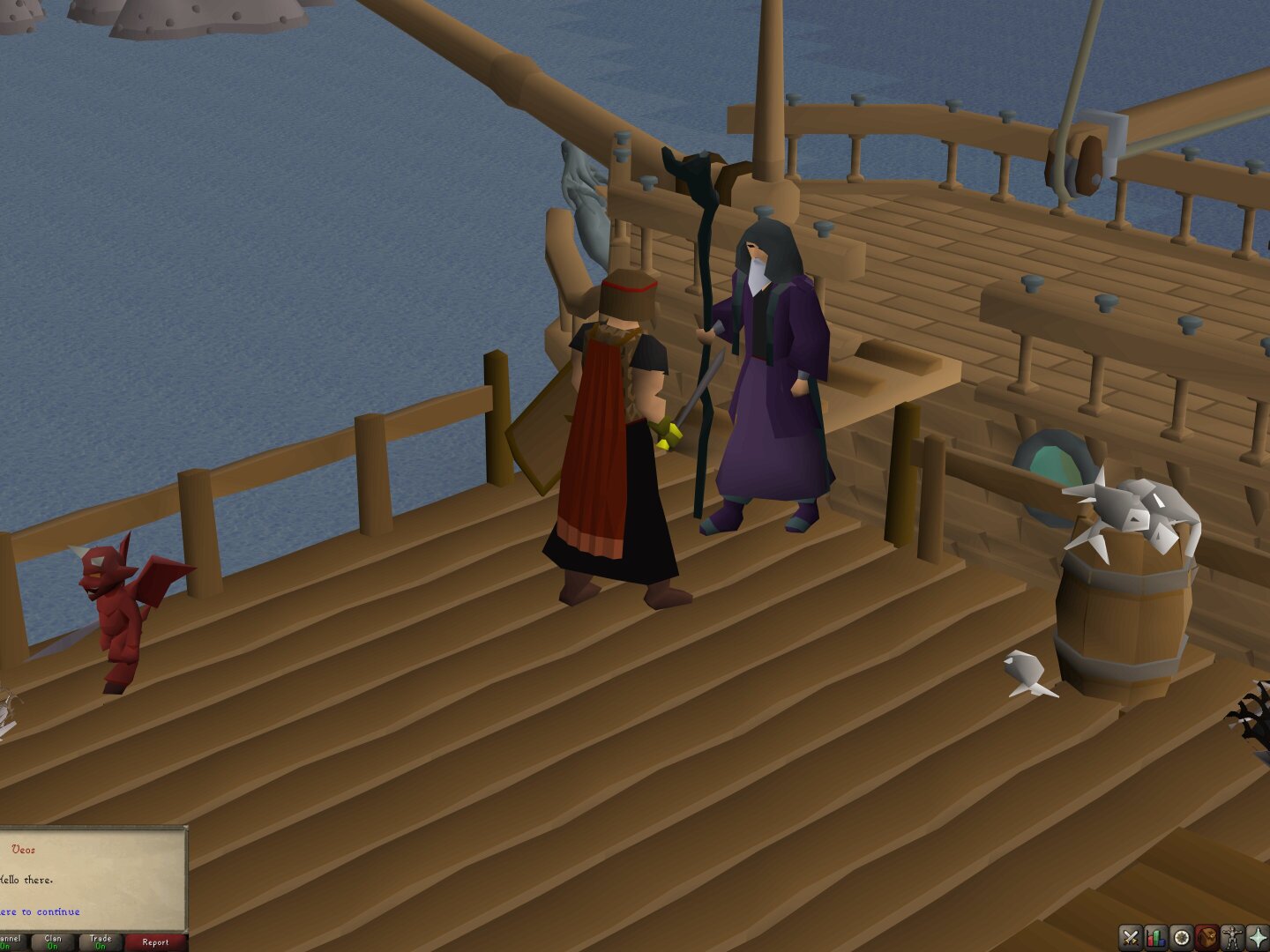
Today’s game is some more Old School Runescape. I went and did some quests to farm money. Mainly this one where i go treasure hunting for this wizard. It was a bit janky but that honestly made it charming in a way. Following the series of maps and the orb blindly was a lot of fun.
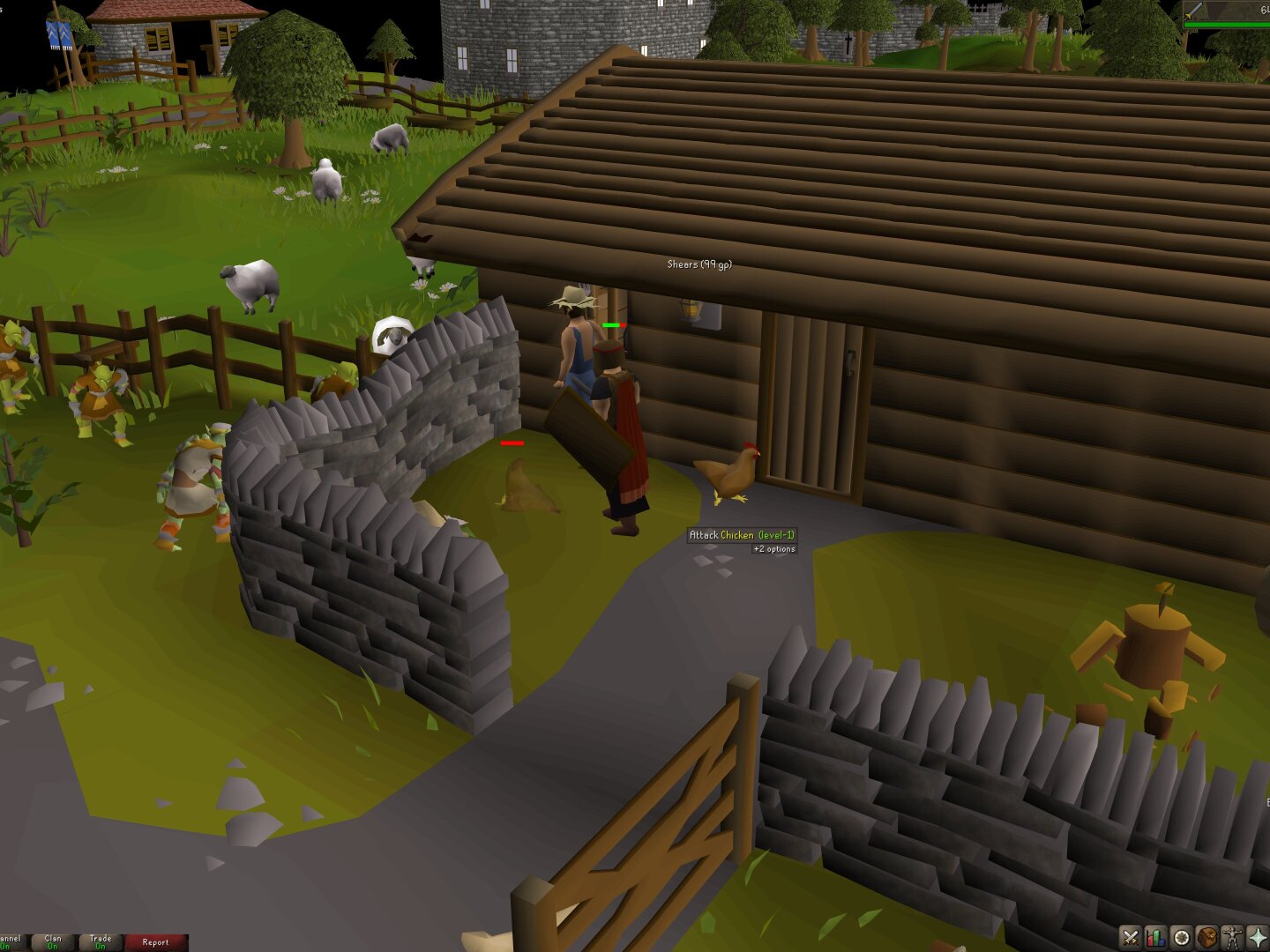
I took people’s advice and started farming levels on Chickens. I was at that for roughly 30 minutes before getting sidetracked and trying to cook them next.
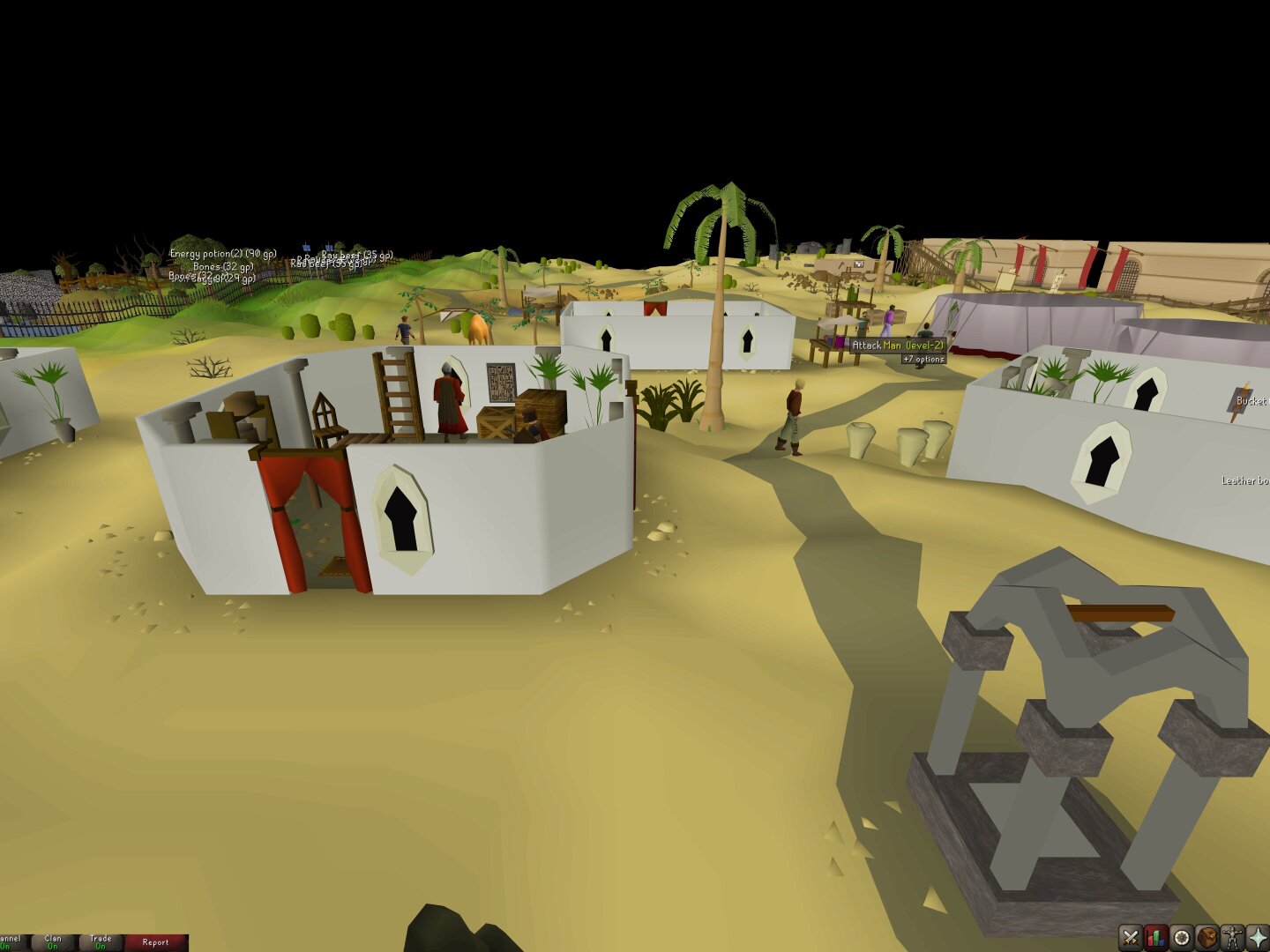
I ended up deciding to get a better weapon. From what i had gathered Scimitars are the superior weapon in this game, so i went to this desert place to find one. It was a bit of a pain because i had to pay a toll to get in (I didn’t realize i could go around at the time). But after all that i realized i couldn’t even afford it.
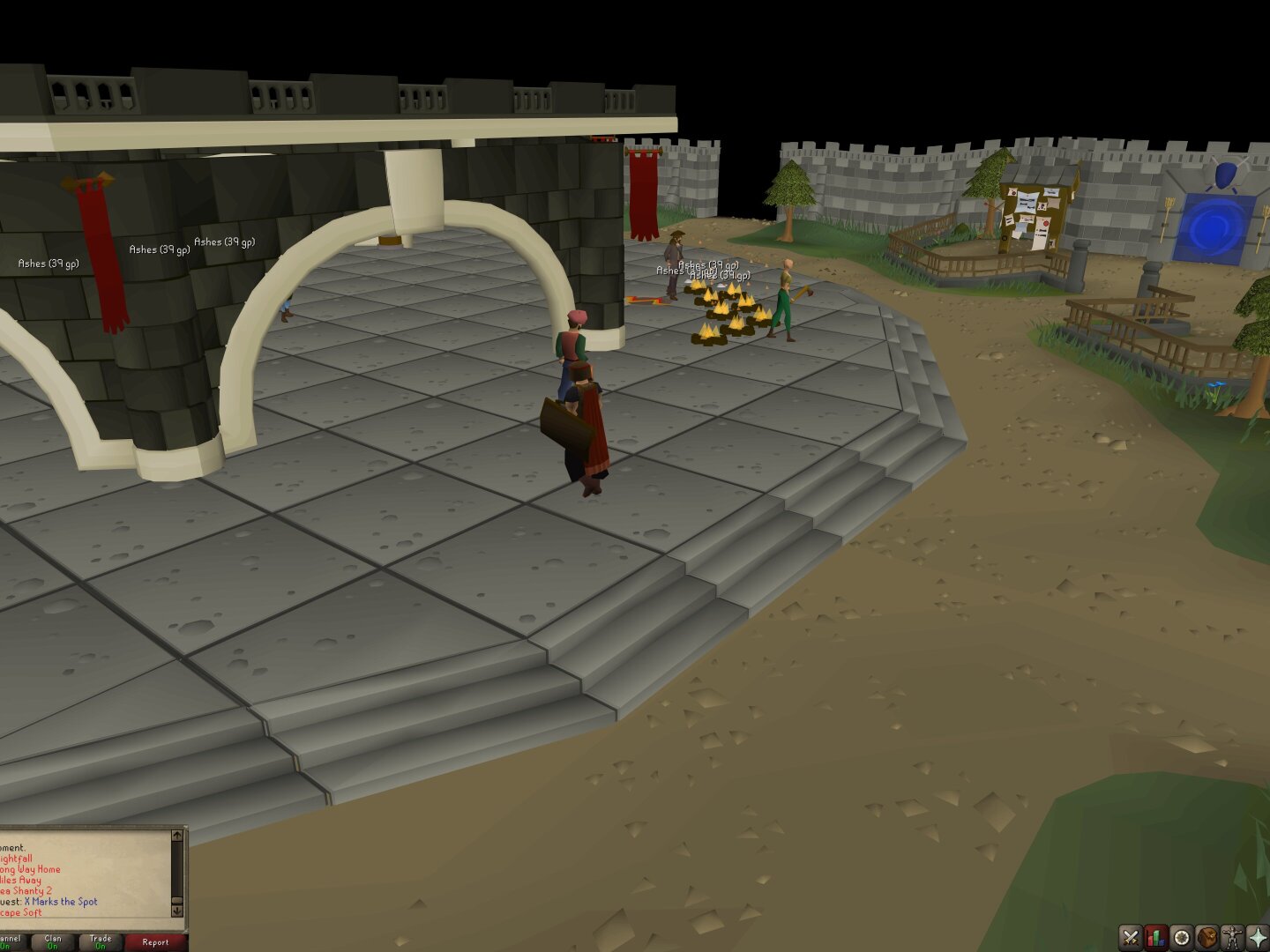
After that i went to the Grand Market and put some stuff up for sale that i stole out of NPCs houses. It sold rather quickly and i bought a Scimitar there as i found out it was a whole lot cheaper than buying it in the desert place.
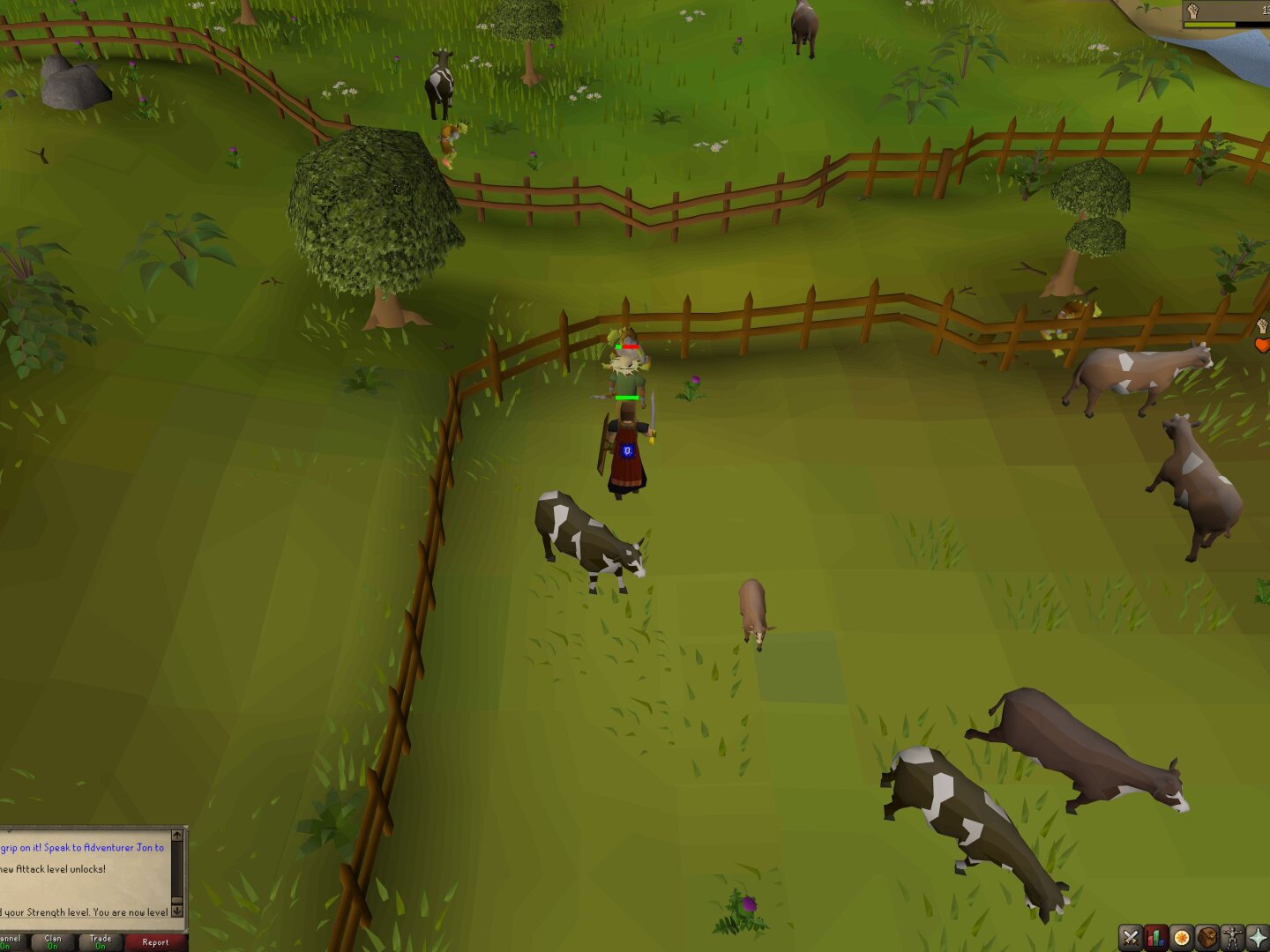
And all of this brought me full circle to farming cows again to gain exp. By the time i’m done i think the cow population will have been decimated. All this to kill a vampire and a few other enemies that have been giving me trouble


Jaws dropped when I saw this.
This website requires both:
Just to take a free test. (On the site, scroll way down, click Apply)
The vast majority of people in my country may have a Google account (because of Android), but many don’t have a social media account. I’m one of them - I do not even have Google at all because I’ve been deGoogling for years.
I have an email address and GitHub for code writing, but no social media. SNS just isn’t for me - I’m definitely not wasting my time on doomscrolling.
Seeing a site that requires Google is heartbreaking, and I’m sure other minorities who care about their privacy will simply give up on participating.
Both the UK & AU have passed legislation in which they aim to “ban” social media for kids -16 (or that’s the excuse they’re using) when its the catalyst for mass surveillance (unfortunately, even if you tell them the truth: it’s either people including your own family consider you paranoid or a conspiracy theorist). To avoid that, one must gather sufficient evidence debunking or dispelling the lies being shoved into the masses via media.
The common defense for this is “think of the children” from either lazy parents or Christian conservatives as that’s the easiest lie ever told besides social media or internet usage (you heard that from games, movies or music restrictions in the past). IMO, “banning” SM outright or trying to reinforce AV towards everyone creates more hassle for both sides (users and companies) as SM companies can face large fines for non-compliance.
If you look at the larger picture: it treads on one’s liberties such as freedom of speech & expression as what appears to be “no SM for -16” soon morphs into a 1984-esque dystopia where people will be detained for speaking their mind or the truth. This is what digital privacy advocates fear, basically saying that internet anonymity will cease or be deemed illegal if people lack critical thinking or can’t see through the fog.
Even though the laws have passed in both countries: it does nothing as people (kids and adults) can still access SM. They know VPN’s exist, banning or trying to lock that under AV will make them look stupid. SM is toxic due to the slop and demographic, but IMO should remain up to the individuals or families rather than the government (all MSM side with the state using “no SM for -16” omitting mass surveillance in the headlines).
Interesting article with some info I didn’t know about Flock. It feels like surveillance is increasing so quickly these days 🫠

cross-posted from: lemmy.dbzer0.com/post/74253825
The Japanese broadcaster TV Tokyo has announced that it will begin streaming English-subtitled episodes of the Naruto anime series, about one hour after their Japanese broadcast, to paid monthly subscribers worldwide on the Crunchyroll video service on January 8, 2009.
Crunchyroll will then provide free Internet streaming of the episodes seven days after the paid subscribers see them. This coincides with when the online video services Joost and Hulu are providing their own free streaming of the same episodes via Viz Media. Viz Media announced earlier today that it will also begin hosting free streams of the new episodes on the official Naruto.com website on January 15.
On January 8, Crunchyroll will stop accepting user-submitted videos and other content from individuals, and only host videos approved by copyright holders. Gonzo and Toei Animation are two other major Japanese copyright holders of anime that decided to stream on Crunchyroll. ANN interviewed Crunchyroll founder Vu Nguyen in March.
Image © Masashi Kishimoto Scott/Shueisha, TV Tokyo, Pierrot
Update: BB Watch reports that TV Tokyo will distribute five anime series, including Naruto and Gintama, worldwide on the same day that they broadcast in Japan. ANN has added more background information to this article.
Update 2: Crunchyroll has posted a press release corroborating the details in TV Tokyo’s press release on Naruto.
The Japanese broadcaster TV Tokyo has announced that it will begin streaming English-subtitled episodes of the Naruto anime series, about one hour after their Japanese broadcast, to paid monthly subscribers worldwide on the Crunchyroll video service on January 8, 2009.
Crunchyroll will then provide free Internet streaming of the episodes seven days after the paid subscribers see them. This coincides with when the online video services Joost and Hulu are providing their own free streaming of the same episodes via Viz Media. Viz Media announced earlier today that it will also begin hosting free streams of the new episodes on the official Naruto.com website on January 15.
On January 8, Crunchyroll will stop accepting user-submitted videos and other content from individuals, and only host videos approved by copyright holders. Gonzo and Toei Animation are two other major Japanese copyright holders of anime that decided to stream on Crunchyroll. ANN interviewed Crunchyroll founder Vu Nguyen in March.
Image © Masashi Kishimoto Scott/Shueisha, TV Tokyo, Pierrot
Update: BB Watch reports that TV Tokyo will distribute five anime series, including Naruto and Gintama, worldwide on the same day that they broadcast in Japan. ANN has added more background information to this article.
Update 2: Crunchyroll has posted a press release corroborating the details in TV Tokyo’s press release on Naruto.


low-key might start posting here regularly. I already post a lot of vocaloid memes to !onehundredninetysix@lemmy.blahaj.zone
I feel like this sub has a lot of older vocaloid fans and not many fans from the current “era” of vocaloid. I also like teto the most :3
oogh I can’t wait to post more!!


Can an 8-year-old waive their rights to sue a company by clicking a box?
That’s the stance of Roblox, an online gaming platform that bills itself as a digital playground.
The argument comes as the $41-billion company is embroiled in a lawsuit with the family of a Northern Kentucky child whose death by suicide, her mother says, is related to use of the platform.
Amazon wants to grow its Prime Air delivery drone service sixfold to reach nearly 500 cities and towns across the United States by the end of 2026. The planned expansions from Amazon and its rivals could make the convenience of delivery drone services available to tens of millions more people in the coming months—but will also test more communities’ tolerance for increased noise from daily drone flights.
On August 19, Amazon announced it would soon launch Prime Air in the metropolitan areas of Chicago; Cleveland; Atlanta; Syracuse, New York; and Boise, Idaho, with more to come later in the year. Each Prime Air site offers delivery drone service within an area of about 175 square miles, with delivery times ranging from half an hour to an hour.
Prime Air already operates out of Amazon warehouses in 10 cities across seven states. Those include primarily suburban neighborhoods of Phoenix; Tampa; Kansas City; Omaha, Nebraska; Baton Rouge, Louisiana; Detroit; Houston; and San Antonio, Dallas, and Waco, Texas.

Days after Deus Ex director Warren Spector announced that he was quitting the business, another former Ion Storm developer, Harvey Smith, has revealed Black Pony Immersive - a new studio dedicated to the creation of “imaginative first-person action RPGs set within well-realized worlds, where players create their own memorable experiences with expressive, emergent game systems.” The announcement features the maxim: “through the looking glass, we’re chasing a dream of mystery, meaning, and creative play.” Hey, I understood that reference! Sure sounds like an imsim shop to me.
Black Pony are based, or at least, “centralised” out in Austin, Texas. Smith - former creative director for Dishonored 2 - is joined in the cockpit by a couple of other former Arkane developers, Ben Horne and Ricardo Bare. The studio’s wider workforce are located around the United States, and include people who’ve spent time at Spider-Man makers Insomniac, Fortnite wranglers Epic, Just Cause inventors Avalanche, and Saints Row… bejanglers Volition.
It’s a hopeful turn of events because it wasn’t long ago that Microsoft closed Arkane Austin, creators of the very good Prey 2017 and the sadly not very good Redfall. Nic (RPS in peace) had thoughts. Microsoft are currently taking the axe to what’s left of Arkane in Lyon – as of writing, the developers are haggling out the terms of their sale, closure or buyout with the Xbox team. Smith alludes to this in a forgiveably buzzwordy press release.
prospect.org Private Intelligence Firms Are Selling Dossiers on AI and Data Center Critics - The American Prospect Daniel Boguslaw 7 - 9 minutes
Private intelligence firms are selling dossiers about critics of artificial intelligence and the data centers powering them, including trying to peddle them to federal regulators, according to documents obtained by the Prospect. The offerings show that even as voter hostility toward data centers has emerged as an election-altering, bipartisan issue, corporate spy shops are hawking reports that frame widespread dissent in the language of counterterrorism to both private- and public-sector clients.
The drivers of negative sentiment toward data centers and AI include environmental concerns, fears of job loss, and increased utility prices near the sprawling compounds housing server farms and processing facilities. More broadly, people across the ideological spectrum don’t appreciate Big Tech interests dictating their local economic development. Hundreds of grassroots organizations have emerged across the country, seeking to curb data center construction and limit the negative effects of AI.
More from Daniel Boguslaw
But the threat products and reports obtained by the Prospect are less concerned with altering the root cause of this dissent, and more focused on the threat posed by an enraged American populace to corporations’ bottom line.
In a product offering from the corporate intelligence company RANE Network sent to the Federal Energy Regulatory Commission, the corporate firm offered the federal agency—which regulates the interstate transmission and sale of electricity, gas, and oil—a tailored report on the threat posed by anti-tech sentiment.
“RANE can provide an assessment covering rising anti-technology sector sentiment among both the public and governments around the world, identifying specific implications for your organization,” the offering reads. Topics that RANE promises to cover include:
What has brought about an increase in anti-technology sector sentiment?
What role do misinformation and conspiracy theories play in shaping hostility toward the tech sector?
What risks does anti-technology sector sentiment pose to critical supply chains?
What are the potential implications of geopolitical tensions on the operations of technology companies?
How might increasing regulatory scrutiny impact the operations of major tech firms?
What actions can technology companies take to mitigate risks from anti-technology sentiment?
That email was sent in March 2025. This May, RANE offered a webinar on the coming anti-tech backlash. In the hour-long presentation reviewed by the Prospect, RANE cyber and intelligence analysts described the threat posed to technology companies by rising animosity toward Silicon Valley. RANE Network did not respond to multiple requests for comment.
“There’s backlash on a lot of fronts and there are a lot of actors converging on this. So we’ve seen protests from creatives who are worried about AI taking over their copyrighted works,” one analyst told the audience. “There’s also environmental protests. Labor unions are protesting. We’ve seen protests from employees who may have been laid off or are worried about potential layoffs.”
The analysts also warned about protesters concerned about civil liberties and human rights violations arising from AI, and “protests about the impacts on mental health and just general anti-tech or neo-Luddite sentiment that is really driving this activity.”
In 2020, RANE acquired the geopolitical intelligence firm Stratfor. Nine years prior, in 2011, Stratfor was breached by Anonymous, a hacker collective that published millions of internal emails on WikiLeaks. The internal communications detailed the company’s work monitoring the critics of major conglomerates, including Dow Chemical and Coca-Cola.
The specter of hacktivism continues to haunt RANE analysts. “Anti-establishment” and “anti-capitalist groups” alongside Anonymous were referenced during the presentation before a warning that “anti-tech and environmental protest … groups also have a history of some of them going beyond just protest movements to also include, you know, violent extremism,” an analyst said.
In addition to describing the general patterns of concerning groups, presenters also discussed surveilling “online chatter.” The analysts discussed how movements emerge from online spaces, and warned that things can spiral out of control quickly, which is all the more reason to surveil those spaces.
The push to surveil and monitor techno-skeptics comes at the same time that federal agencies have begun circulating their own surveillance memorandums of a new domestic extremist category: “anti-tech extremism.” As Wired reported in May, this new threat category is being used by the FBI and DHS to target constitutionally protected speech and assembly, regardless of whether or not participants have committed, or intend to commit, a crime. In leaked State Department documents obtained by journalist Ken Klippenstein, Secretary of State Marco Rubio informed employees that the agency was monitoring a new alliance of “militant anti-tech and eco-terrorist movements.”
Kroll, the world’s largest investigation and corporate intelligence firm, has also begun selling “risk intelligence” on “public controversy, labor tensions, executive visibility, activism, geopolitical pressure” and “reputational events” to data center operators, according to a June article posted on the firm’s website. Those interested in Kroll’s investigative and monitoring services are encouraged to reach out to its enterprise security risk management team.
Meanwhile, the online surveillance company Liferaft—a subsidiary of the world’s second-largest security firm, Securitas—published a report on July 31 summarizing months of online surveillance of alleged “Threats to AI Infrastructure and Executives.” In the report, Liferaft scanned and analyzed thousands of social media and online forum posts referencing “anger at AI executives,” “opposition to new data centers,” and “grievance over the resources these facilities consume.”
Liferaft’s monitoring tracks the ebb and flow of hostility toward AI companies and executives over the course of several months, but also explicitly warns of a shift in so-called organizational intent, “from personal frustration to coordinated rhetoric … [that] is something threat intelligence professionals pay close attention to, because it tracks with how movements organize.”
The same month Liferaft published its report, hundreds gathered in San Francisco’s downtown to protest AI companies and the existential risks they pose. Anthropic, Google DeepMind, and OpenAI offices were all visited by protesters, including the AI theorist and spiritual leader of the AI-skeptic movement Eliezer Yudkowsky, whose book title “If Anyone Builds It, Everyone Dies” has become a rallying cry for critics of sentient AI. The constitutionally protected protest fits neatly in all three firms’ criteria as a surveillance target.
I run a quite large vps. now and i want to monitor it ive been using beszel an uptime kuma, does anyone know a better solution ive tried grafana an prometheous. but it was not as good as i was hoping. i saw netdata on selfh.st does anyone have expierance with that.

More info: www.noalprs.com

It’s disastrous.


Best Buy Removed Half The RAM From A Gaming Laptop Because It Said The Laptop Only Supports 32GB
A customer sent a Lenovo Legion 5 in for warranty service with 64GB of RAM.
The Best Buy repair report confirmed the laptop had two 32GB RAM sticks, but the technician said the laptop “only accepts 32GB RAM maximum.”
The removed RAM was sent back to the customer with the laptop.
Original Source: reddit.com/…/best_buy_sold_me_a_64_gb_ram_laptop_…
_**Laptop specs(it supports 64 GB): psref.lenovo.com/product/legion_5_16irx9?tab=spec…
Do LLMs “think” in a similar way to humans? Or is it totally different?
Maybe it’s a good idea to listen to someone who publishes papers on this very subject, and is a professor of both philosophy and psychiatry and directs an Institute for Cognitive Science. That person is Dr. Chandra Sripada and his insights are fascinating.
Sean Carroll (interviewer, scientist and science communicator) says this interview made him lean towards the answer being “yes, they think like humans” whereas previously he favored the opposite view.
Do LLMs “think” in a similar way to humans? Or is it totally different?
Maybe it’s a good idea to listen to someone who publishes papers on this very subject, and is a professor of both philosophy and psychiatry and directs an Institute for Cognitive Science. That person is Dr. Chandra Sripada and his insights are fascinating.
Sean Carroll (interviewer, scientist and science communicator) says this interview made him lean towards the answer being “yes, they think like humans” whereas previously he favored the opposite view.


In centuries past, predictions of the future came from oracles and seers. Today they come from tech oligarchs and their predictive AI systems, fed by mass surveillance. Carissa Véliz returns to Techtonic to discuss her book “Prophecy” about “prediction, power, and the fight for the future.”
Carissa Véliz discusses Mass Surveillance and its use on prediction analysis. It's from July but it is a good listen