85

Linkwarden 2.17 - open-source collaborative bookmark manager to collect, read, annotate, and fully preserve what matters (+20k GitHub stars) [AIP]

GitHub GitHub - linkwarden/linkwarden: ⚡️⚡️⚡️ Self-hosted collaborative bookmark manager to collect, read, annotate, and fully preserve what matters, all in one place. github.com
preview

Hello everyone! Daniel here, and I’m back with Linkwarden 2.17, with updates across the web app, the mobile app, and the browser extension.

For those who are wondering, Linkwarden is an open-source collaborative bookmarking tool that keeps a permanent snapshot of the content of the links you save, so you can still access them even if the original content is no longer available. Linkwarden is available as a Cloud offering, or you can get the source code on GitHub and self-host it on your own server with no strings attached. If you find it useful, consider starring the repo so others can discover it too!

So let’s get into it.

What’s new

Custom order for links

You can now drag the links inside a collection into any order you like. Custom Order is the new default sort for collections, and you can switch back to sorting by date or name from the sort menu at any time. The order is saved with the collection, and new links are added to the top.

Much faster rendering of huge lists

Links, collections, and tags now only render what’s on screen, so scrolling through thousands of links stays smooth. The collection page got the same treatment, which helps a lot if you have thousands of collections.

Choose the details when saving a link

The new link sheet in the mobile app now lets you set a link’s name, collection, tags, description, and banner before saving it, instead of editing the link afterwards.

Email verification with a 6-digit code

Instead of a sign-in link, Linkwarden now emails you a 6-digit code to verify your email address.

Other noticeable improvements

  • Password changes sign out other devices: Changing your password now signs you out on every other device and revokes your access tokens. Resetting a forgotten password signs you out everywhere. If you use the browser extension or integrations like Floccus with an access token, you’ll need to sign them back in afterwards.
  • Password rate limiting: After 15 wrong passwords in a row, an account accepts only one attempt every 25 seconds. This makes guessing a password much slower without locking you out of your own account.
  • More security fixes: This release also fixes a number of moderate-severity security issues, thanks to everyone who reported them responsibly. We recommend updating to 2.17.
  • Search from the address bar: With the browser extension installed, type lw, press space, then type what you’re looking for and press Enter to search your Linkwarden links straight from the address bar. This works in Chrome, Firefox, and other Chromium-based browsers.
  • Import fixes: Imported links now keep the order of their original dates no matter in what order they were imported, Wallabag dates are read correctly, and larger imports are more reliable.
  • Custom AI tagging prompts: Self-hosted instances can now replace the prompt sent to the model for each AI tagging method with the AI_GENERATE_TAGS_PROMPT, AI_PREDEFINED_TAGS_PROMPT, and AI_EXISTING_TAGS_PROMPT environment variables. Check it out in the docs!
  • And more: As always, there’s a long tail of smaller fixes and improvements across the web app, the mobile app, and the browser extension.

Full Changelog: github.com/linkwarden/…/v2.16.3...v2.17.0

Thanks!

Thanks to everyone using Linkwarden, reporting bugs, suggesting improvements, contributing to the project, responsibly disclosing security issues, and supporting its development. A special thanks to all the security researchers who reported the issues fixed in this release. 💙

If you’d like to try Linkwarden without dealing with server setup and maintenance, our Cloud offering is the easiest way to get started.

Hope you enjoy the latest updates!

0

Free weekend parking at Greyfriars and Queen Street for Bedford Christmas lights switch-on

Bedford Independent Free weekend parking at Greyfriars and Queen Street for Bedford Christmas lights switch-on - Bedford Independent www.bedfordindependent.co.uk
preview

Bedford Borough Council is offering free weekend parking at two town centre car parks to help locals enjoy the Christmas lights switch-on and support high street businesses…

Bedford Borough Council is offering free weekend parking at two town centre car parks to help locals enjoy the Christmas lights switch-on and support high street businesses…

13

[AIP] JustDNS: a self-hosted DNS filter that shows which companies your devices phone home to

preview

I’m the developer of JustDNS, a self-hosted filtering DNS resolver for your whole network. I built it because I wanted more than a block count. I wanted to see which companies my devices actually talk to.

What it does

  • Blocks ads, trackers and malware, like Pi-hole or AdGuard Home.
  • Privacy dashboard that attributes DNS traffic to the companies behind it, with a per-device breakdown and a world map of where answers resolve. You can block a company for a single device or the whole network.
  • Encrypted upstreams (DNS-over-TLS) by default, plus DNSSEC validation.
  • Per-device and per-group policies, user accounts with roles and TOTP.
  • Optional multi-node high availability.

Running it

  • Docker / docker compose, or a one-click Unraid Community Apps template.
  • AGPL-3.0, no cloud account, nothing phones home.

Repo: github.com/bonderaustriaAT/JustDNS

It’s still young, so I’d genuinely like feedback from people running Pi-hole or AdGuard today: what would make you switch, and what’s missing? Happy to answer questions.

EDIT:

AI Disclosure:

  • Design - No AI
  • Implementation - Hints
  • Testing - Assisted
  • Documentation - Pair
  • Review - Assisted
  • Deployment - Assisted
0

People who completely reject AI on principle are going to fall behind.

preview

This is the fediverse, so this is probably going to be extremely unpopular, but yea here goes.

Not saying you have to love it, or trust it blindly. Skepticism is healthy. But there’s a difference between “I use it carefully and check everything” and “I refuse to touch it.”

Historically, refusing new tools has never stopped them. Coopers didn’t stop the steel drum by refsuing to make them. They just ended up out of work while the industry moved on.

The realistic threat isn’t AI replacing you. It’s a colleague who uses AI well doing your job faster. And the skill of using it properly (knowing when it’s wrong, veriyfing output, knowing what not to use it for) takes time to build. Starting late means competing with people who’ve had years of practice.

You can have legit concenrs about ethics, energy, or jobs and still learn the tool. Opting out doesn’t fix those problems. It just removes you from the people who get a say in how it’s used.

PS. Ethically trained models exist and you can run models locally.

81

Top Chinese Frontier AI Models Carry the Fingerprint of Export-Controlled NVIDIA Blackwell GPUs

Unemployment Labs Top Chinese Frontier AI Models Carry the Fingerprint of Export-Controlled NVIDIA Blackwell GPUs unemploymentlabs.com
preview

cross-posted from: https://piefed.world/c/tech/p/1531085/top-chinese-frontier-ai-models-carry-the-fingerprint-of-export-controlled-nvidia-blackwe

cross-posted from: https://piefed.world/c/tech/p/1531085/top-chinese-frontier-ai-models-carry-the-fingerprint-of-export-controlled-nvidia-blackwe

78

What are some things you would've liked to have seen with Steam?

preview

I would’ve liked to have seen a timeline of periods as to when you played a game. Like it could be displayed in a bar like picture, that shows the time you’ve bought the game and every dot afterwards, details when you’ve played the game after that point up to the recent point of time.

To expand a little on this idea. The timeline could go by a month within a year. So, it’d be like you played a game at a point in 2024, on December. It doesn’t have to be specifically as to what time but if needed, either way works. It could show how many times too during that day on the month of and year of, you launched the game for.

Another idea that just dawned upon me of remembering is - the ability to recycle games. I envy Europe because over there, you have the ability to resell games from your own library. Can’t do that here in the US. But I would’ve preferred recycling because even though my current library is over 630 games, I know when accounting the “graveyard” of games I’ve removed from my library, I’m easily over 1,100.

It would just be nice to give back to the community of games I know that I’ll never give the time of day to and never have given the time of day to. Just so it’d be in the hands of someone who would play it. But they’re all just going to sit there, collecting virtual dust, reminders to me of bad purchasing decisions and so on.

I understand too as to why maybe we can’t have a feature, is because some people may get opportunistically devious about the idea.

0

E' la giornata dei raggi cosmici, da scuole e laboratori misure in tutto il mondo

preview

E’ la giornata dei raggi cosmici, da scuole e laboratori misure in tutto il mondo

@scienza

In Italia coinvolti più di 1.900 studenti

E’ la giornata dei raggi cosmici, da scuole e laboratori misure in tutto il mondo

@scienza

In Italia coinvolti più di 1.900 studenti

0

Free weekend parking at Greyfriars and Queens Street for Bedford Christmas lights switch-on

Bedford Independent Free weekend parking at Greyfriars and Queen Street for Bedford Christmas lights switch-on - Bedford Independent www.bedfordindependent.co.uk
preview

Bedford Borough Council is offering free weekend parking at two town centre car parks to help locals enjoy the Christmas lights switch-on and support high street businesses…

Bedford Borough Council is offering free weekend parking at two town centre car parks to help locals enjoy the Christmas lights switch-on and support high street businesses…

0

Due nuovi grandi telescopi per il sito cileno di Ctao

preview

Due nuovi grandi telescopi per il sito cileno di Ctao

@astronomia

Approvata una configurazione aggiornata che porta il numero di telescopi dell’emisfero australe del Cherenkov Telescope Array Observatory da 51 a 53. Lucio Angelo Antonelli (Inaf): «Questo risultato è il frutto di uno sforzo nazionale condiviso, in cui il supporto del Mur e le competenze dei nostri istituti di ricerca e

159

Married rule

preview

Omg, goals! Welp, now I wanna get married 😭️
Living the rest of my life with the man I love, growing old together…what more could I possibly wish for? 🩷️

Omg, goals! Welp, now I wanna get married 😭️
Living the rest of my life with the man I love, growing old together…what more could I possibly wish for? 🩷️

56

Day 851 of posting a Daily Screenshot from the games I've been playing

preview

Today’s game is Uncharted 4 again. I was playing through the flashback and made it all the way to the elevator segment. I’ve been wanting to get better at Color Grading (I have absolutely no sense of color) so i considered this a perfect opportunity. As it was either that or head outside with my camera in the rain and hope it doesn’t break.

Regardless i got something i rather like which is the most important part to me. I like this cold blue dull scheme i have going on.

Moving away from the photo talk, i was thinking of something during the flashback. Sam during the second flash back makes a joke about a “Ancient mesopatainian washer dryer combo”. That’s similar to the same kind of humor we see Nate make when he’s older. I just thought it was nice to see that Nate picks up some of Sam’s traits when he’s older. I initially thought maybe it was some kind of Trauma response to seeing Sam die in the opening. Something along the lines of subconsciously picking up habits while mourning. But then i remembered he was kind of making jokes like this in the prison too, so that’s probably not the case.

A second thing i really like was this chase to get away from Shoreline. It really does a good job of Hammering in that Nate and Sam are way in over their heads. Like, you’ve got like 5 guys with RPGs gunning for them and Nate nearly falls and dies like 3 times here. Way in over their heads.

Anyways, i got stuck on the Elevator part as i mentioned. I’m on normal so it shouldn’t be giving me trouble, but it is. After my third death i decided a break was needed. I’ll try again tomorrow. The game’s not going anywhere so i don’t really need to worry.

0

Leipzig's masterpiece - How a new district for tens of thousands was created under socialism and what remains of it now

Unsere Zeit Leipzigs Meisterstück www.unsere-zeit.de
preview

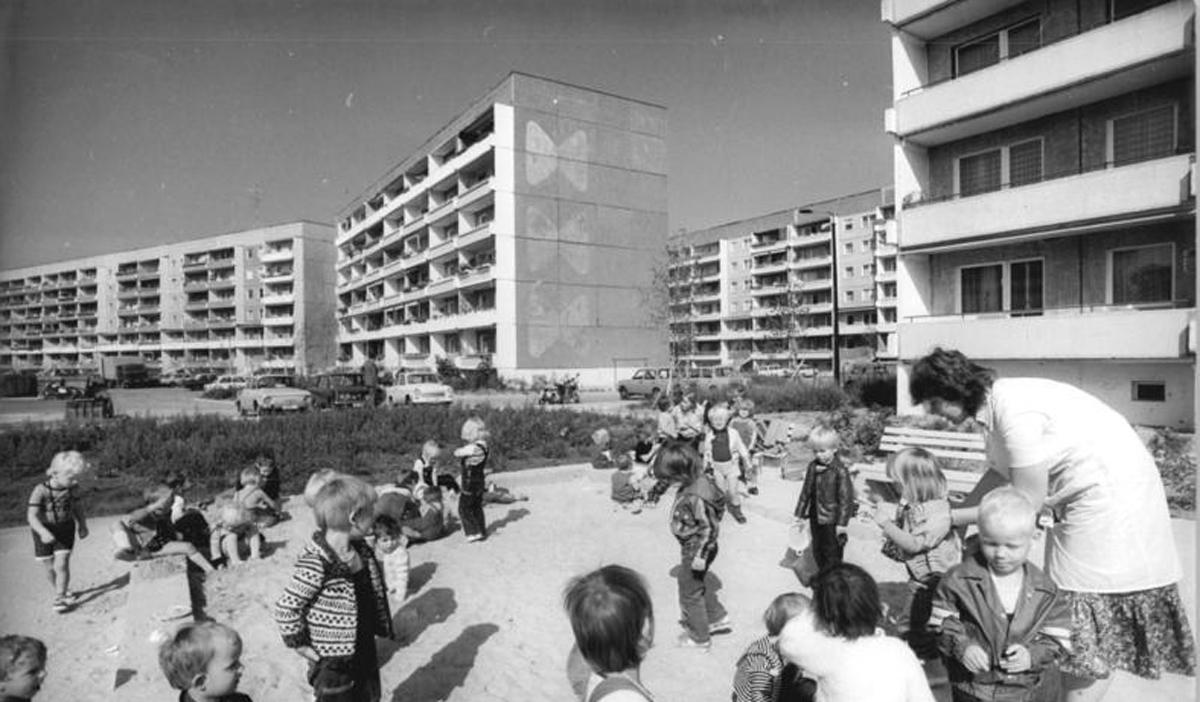
When the first families moved to Leipzig-Grünau at the end of the 1970s, it was a huge step forward for many. Those who previously had to live with a coal stove and an outside toilet were given a modern apartment with a bathroom, central heating and often even a balcony. Within a few years, a new district for tens of thousands of people was created.

Fifty years after the foundation stone was laid, rents in Leipzig are rising, affordable apartments are becoming increasingly scarce and the number of homeless people is growing. How was it possible to create housing on this scale back then, and what can we learn from these experiences for our struggles for better housing today?

These questions were the focus of a well-attended event on October 28th by DKP Leipzig and the International Research Center for the GDR (IFDDR). On the occasion of the 50th anniversary of the laying of the foundation stone, Martin Küpper presented the study “Housing for all, building according to plan”. Long-time people from Grünau and those involved in the construction also brought their experiences into the discussion.

Socialist property relations

In order to understand how a residential area the size of Grünau could be created, it is worth taking a look at the historical initial conditions of the GDR. After the war, many cities lay in ruins. Homes, factories and transport routes were damaged, and millions of refugees and displaced people needed accommodation. For 1950, a shortage of around 1.3 million apartments was determined in the GDR. Almost a million of the existing apartments dated from before 1860 and many of them were poorly equipped and in need of renovation.

At the same time, the economic conditions were difficult. War damage, dismantling and reparations weakened the economy. The division tore up supply relationships, and Western export restrictions made access to modern technology more difficult. Under these conditions, the GDR had to develop an efficient construction industry.

The basis for this was the changed ownership structure. Large construction companies became state-owned and housing construction was increasingly organized by the state. The Reconstruction Act of 1950 made it possible to use land in designated development areas for reconstruction and to transfer it to public ownership. In June 1951, the Leipzig center was also declared a development area. Since 1968, the right to housing was enshrined in Article 37 of the GDR constitution, depending on economic possibilities.

On this basis, construction capacities, material supplies and investments could be aligned towards common goals. Residential areas, traffic and supplies could be planned together. Land policy, state planning, industrialized construction, low rents and public housing all intertwined.

Serving all of life

On July 27, 1950, the GDR government passed the “16 Principles of Urban Development”. They saw the city as a place to work, live, learn and relax. Public facilities, green spaces and cultural life should be taken into account during planning. This idea continued in the later construction of large residential areas, even if the architecture and construction methods changed fundamentally.

As early as 1972, after comparing various locations, it was decided to first develop Grünau and later Paunsdorf. A year later, the city of Leipzig announced an urban planning ideas competition for Grünau. At the same time, a new phase of housing construction in the GDR began with the housing construction program approved in 1973. By 1990, 2.8 to three million apartments were to be built or modernized.

The foundation stone was laid in Grünau on June 1, 1976, and the first residents moved in in November 1977. By the end of the 1980s, around 36,000 apartments had been built, in which around 85,000 people lived. In addition to the residential buildings, schools, kindergartens, polyclinics, department stores, playgrounds and transport connections were planned. The design of the living environment with green spaces, murals and sculptures was also part of the planning.

This pace of construction was made possible by the industrial construction method and the efficiency of the panel factories and housing complexes. In 1985, 83 percent of housing construction across the GDR was already carried out industrially. The standardized production made it possible to build large residential areas in a comparatively short time and to combine the planning of apartments and public facilities.

The construction site and its residents

For the Leipzig builders, Schönefeld was the “journeyman’s piece”, Grünau was supposed to be their “masterpiece”. But the high pace of construction brought difficulties. Siegfried Schlegel, who also spoke at the event about the planning and technical decisions of the time, describes in the book “Building in Leipzig 1945 – 1990” the disproportion between high-rise and open-space construction: At times around 2,000 people worked on building construction, but only around 30 on the design of the outdoor facilities.

While new apartment blocks were already being built, there were still no paved streets and paths in front of houses that had already been occupied. Grünau was therefore nicknamed “mud town”. Temporary power lines also caused difficulties. An on-call service had to rectify problems.

The residents helped. Schlegel reports on an initiative in which tenants of municipal apartments were asked to spend one hundred hours per household designing green spaces. This partially compensated for the lack of capacity and offered the opportunity to get to know neighbors and help shape the living environment.

Neighborhood instead of separation

Grünau was not a neighborhood for just one income group. Workers lived next to engineers, teachers next to employees. Newly built apartments in the GDR in the 1980s usually cost 0.80 to 1.25 marks per square meter. The rents were set by the state and did not cover the actual costs. Anyone who got an apartment did not have to fear being pushed out by rising market rents.

Housing allocation followed social and political priorities. Young families and single parents with children had better opportunities; Employees of important companies and state institutions were also taken into account. What was crucial was not the tenants’ ability to pay, but rather a politically organized distribution of living space according to social needs. But living space remained scarce, some groups were privileged, and many people waited years for a new apartment.

Because numerous young families moved in at about the same time, a residential area with many children was created. Shared schools, farms and house parties offered opportunities to make contacts across professional boundaries. This is how neighborhoods emerged in which people with different professions and walks of life shared their everyday lives with one another.

Having a say, working together, living together

Residents should not just be tenants, but should also participate in their living environment. In workers’ housing cooperatives (AWG), members contributed shares and construction hours. Companies and the state helped with land, workers and cheap loans. At general meetings, the cooperative members were able to decide on construction, financial and maintenance plans, elect board members and form commissions.

There was also co-management in communal houses. According to Section 114 of the GDR Civil Code, the housing authorities concluded contracts with tenant communities for care, repairs and administration. House communities participated in maintenance plans and were able to receive funding for smaller jobs. Repair bases provided equipment and materials.

The fundamental decisions about housing construction and the development of the district were integrated into state planning. Nevertheless, the residents were able to help shape their immediate living environment and take on communal tasks. Youth clubs and the “Völkerfreundschaft” cultural center, which opened in 1983, also offered space for cultural and community life.

Economic Limits

While Grünau grew, many of Leipzig’s old buildings fell into disrepair. The new building had priority. The repair of old roofs, facades and pipes required craftsmen and materials that were often lacking. The repair backlog grew.

One problem was that the GDR had fewer and fewer resources available to renew and expand its economic foundations. According to information from “Building in Leipzig 1945 – 1990”, the proportion of national income that was used for such investments fell from 29 percent in 1970 to 22 percent in 1989. This made it more difficult to modernize companies, renew machines and increase the performance of the economy.e

There were also international pressures. Cooperation with the Soviet Union and the other CMEA states had made long-term supplies of raw materials possible. However, after the global oil price shocks, transfer prices in trade with the Soviet Union also rose. In 1981 it also announced that it would reduce annual oil deliveries from around 19 to 17 million tons. The GDR had to rely more on brown coal and change production processes. Credit problems and restrictions on technology imports also weighed on the economy.

Nevertheless, the GDR leadership stuck to the housing construction program and low rents. This priority improved the living conditions of millions of people, but required resources that were not available for the renovation of old buildings or industrial renewal.

From new building to “Plattenbau”

After 1990, many industrial companies in Leipzig collapsed, jobs were lost and younger families moved away. Grünau lost almost half of its residents by the 2000s. Apartments were empty and facilities closed. At the same time, the public image of the new development areas changed: the sought-after apartment became the derogatory term “Platte”.

The sociologist Alice Kahl, who has studied Grünau since 1979, described the interests behind this image change. Real estate companies and investors were able to market renovated old buildings and homes better if prefabricated buildings were considered unattractive. In their 2000 survey, 55 percent saw improvements in the living environment, but only 22 percent saw an improvement in Grünau’s reputation. There was a clear gap between his own experience in his own neighborhood and his public reputation.

The resident survey “Grünau 2025” by the Helmholtz Center for Environmental Research (UFZ) also shows what has remained of the quality of living. Of the almost 700 Grünau residents surveyed, 68 percent feel very comfortable in their own apartment. In contrast, only 49 percent feel completely comfortable in the district, while another 48 percent feel comfortable with restrictions.

The ownership structure also changed. Municipal and cooperative housing companies sold parts of their holdings. The Old Debt Relief Act of 1993 linked debt relief with privatization and sales obligations. Between 2001 and 2010, around 6,800 apartments were demolished in Grünau. The vacancy rate was high; Funding programs and economic interests decided on the future of the buildings. Familiar neighborhoods disappeared along with the houses.

The housing question is back

In Leipzig, asking rents rose by around a quarter between 2022 and 2025. It is becoming increasingly difficult for many households to find affordable housing. Need alone does not automatically lead to construction. Private investors must have the prospect of sufficient returns.

Grünau reminds us that the housing issue was once approached with a different social standard. The GDR leadership declared it a central task, built up an efficient construction industry and invested large amounts of resources. Within just a few years, living space was created for tens of thousands, with schools, kindergartens, utilities and places for community living. The fact that difficulties arose in a construction project of this magnitude and not all plans could be realized does not detract from this development achievement. Anyone who wants to understand the socialist new development areas must look at their achievements as well as the material conditions under which they were created and the unresolved contradictions. The work of the IFDDR makes a contribution to this. In view of today’s housing shortage, the question once again arises as to who owns the land and apartments, to what standards they are built and who makes the decisions.

When the first families moved to Leipzig-Grünau at the end of the 1970s, it was a huge step forward for many. Those who previously had to live with a coal stove and an outside toilet were given a modern apartment with a bathroom, central heating and often even a balcony. Within a few years, a new district for tens of thousands of people was created.

Fifty years after the foundation stone was laid, rents in Leipzig are rising, affordable apartments are becoming increasingly scarce and the number of homeless people is growing. How was it possible to create housing on this scale back then, and what can we learn from these experiences for our struggles for better housing today?

These questions were the focus of a well-attended event on October 28th by DKP Leipzig and the International Research Center for the GDR (IFDDR). On the occasion of the 50th anniversary of the laying of the foundation stone, Martin Küpper presented the study “Housing for all, building according to plan”. Long-time people from Grünau and those involved in the construction also brought their experiences into the discussion.

Socialist property relations

In order to understand how a residential area the size of Grünau could be created, it is worth taking a look at the historical initial conditions of the GDR. After the war, many cities lay in ruins. Homes, factories and transport routes were damaged, and millions of refugees and displaced people needed accommodation. For 1950, a shortage of around 1.3 million apartments was determined in the GDR. Almost a million of the existing apartments dated from before 1860 and many of them were poorly equipped and in need of renovation.

At the same time, the economic conditions were difficult. War damage, dismantling and reparations weakened the economy. The division tore up supply relationships, and Western export restrictions made access to modern technology more difficult. Under these conditions, the GDR had to develop an efficient construction industry.

The basis for this was the changed ownership structure. Large construction companies became state-owned and housing construction was increasingly organized by the state. The Reconstruction Act of 1950 made it possible to use land in designated development areas for reconstruction and to transfer it to public ownership. In June 1951, the Leipzig center was also declared a development area. Since 1968, the right to housing was enshrined in Article 37 of the GDR constitution, depending on economic possibilities.

On this basis, construction capacities, material supplies and investments could be aligned towards common goals. Residential areas, traffic and supplies could be planned together. Land policy, state planning, industrialized construction, low rents and public housing all intertwined.

Serving all of life

On July 27, 1950, the GDR government passed the “16 Principles of Urban Development”. They saw the city as a place to work, live, learn and relax. Public facilities, green spaces and cultural life should be taken into account during planning. This idea continued in the later construction of large residential areas, even if the architecture and construction methods changed fundamentally.

As early as 1972, after comparing various locations, it was decided to first develop Grünau and later Paunsdorf. A year later, the city of Leipzig announced an urban planning ideas competition for Grünau. At the same time, a new phase of housing construction in the GDR began with the housing construction program approved in 1973. By 1990, 2.8 to three million apartments were to be built or modernized.

The foundation stone was laid in Grünau on June 1, 1976, and the first residents moved in in November 1977. By the end of the 1980s, around 36,000 apartments had been built, in which around 85,000 people lived. In addition to the residential buildings, schools, kindergartens, polyclinics, department stores, playgrounds and transport connections were planned. The design of the living environment with green spaces, murals and sculptures was also part of the planning.

This pace of construction was made possible by the industrial construction method and the efficiency of the panel factories and housing complexes. In 1985, 83 percent of housing construction across the GDR was already carried out industrially. The standardized production made it possible to build large residential areas in a comparatively short time and to combine the planning of apartments and public facilities.

The construction site and its residents

For the Leipzig builders, Schönefeld was the “journeyman’s piece”, Grünau was supposed to be their “masterpiece”. But the high pace of construction brought difficulties. Siegfried Schlegel, who also spoke at the event about the planning and technical decisions of the time, describes in the book “Building in Leipzig 1945 – 1990” the disproportion between high-rise and open-space construction: At times around 2,000 people worked on building construction, but only around 30 on the design of the outdoor facilities.

While new apartment blocks were already being built, there were still no paved streets and paths in front of houses that had already been occupied. Grünau was therefore nicknamed “mud town”. Temporary power lines also caused difficulties. An on-call service had to rectify problems.

The residents helped. Schlegel reports on an initiative in which tenants of municipal apartments were asked to spend one hundred hours per household designing green spaces. This partially compensated for the lack of capacity and offered the opportunity to get to know neighbors and help shape the living environment.

Neighborhood instead of separation

Grünau was not a neighborhood for just one income group. Workers lived next to engineers, teachers next to employees. Newly built apartments in the GDR in the 1980s usually cost 0.80 to 1.25 marks per square meter. The rents were set by the state and did not cover the actual costs. Anyone who got an apartment did not have to fear being pushed out by rising market rents.

Housing allocation followed social and political priorities. Young families and single parents with children had better opportunities; Employees of important companies and state institutions were also taken into account. What was crucial was not the tenants’ ability to pay, but rather a politically organized distribution of living space according to social needs. But living space remained scarce, some groups were privileged, and many people waited years for a new apartment.

Because numerous young families moved in at about the same time, a residential area with many children was created. Shared schools, farms and house parties offered opportunities to make contacts across professional boundaries. This is how neighborhoods emerged in which people with different professions and walks of life shared their everyday lives with one another.

Having a say, working together, living together

Residents should not just be tenants, but should also participate in their living environment. In workers’ housing cooperatives (AWG), members contributed shares and construction hours. Companies and the state helped with land, workers and cheap loans. At general meetings, the cooperative members were able to decide on construction, financial and maintenance plans, elect board members and form commissions.

There was also co-management in communal houses. According to Section 114 of the GDR Civil Code, the housing authorities concluded contracts with tenant communities for care, repairs and administration. House communities participated in maintenance plans and were able to receive funding for smaller jobs. Repair bases provided equipment and materials.

The fundamental decisions about housing construction and the development of the district were integrated into state planning. Nevertheless, the residents were able to help shape their immediate living environment and take on communal tasks. Youth clubs and the “Völkerfreundschaft” cultural center, which opened in 1983, also offered space for cultural and community life.

Economic Limits

While Grünau grew, many of Leipzig’s old buildings fell into disrepair. The new building had priority. The repair of old roofs, facades and pipes required craftsmen and materials that were often lacking. The repair backlog grew.

One problem was that the GDR had fewer and fewer resources available to renew and expand its economic foundations. According to information from “Building in Leipzig 1945 – 1990”, the proportion of national income that was used for such investments fell from 29 percent in 1970 to 22 percent in 1989. This made it more difficult to modernize companies, renew machines and increase the performance of the economy.e

There were also international pressures. Cooperation with the Soviet Union and the other CMEA states had made long-term supplies of raw materials possible. However, after the global oil price shocks, transfer prices in trade with the Soviet Union also rose. In 1981 it also announced that it would reduce annual oil deliveries from around 19 to 17 million tons. The GDR had to rely more on brown coal and change production processes. Credit problems and restrictions on technology imports also weighed on the economy.

Nevertheless, the GDR leadership stuck to the housing construction program and low rents. This priority improved the living conditions of millions of people, but required resources that were not available for the renovation of old buildings or industrial renewal.

From new building to “Plattenbau”

After 1990, many industrial companies in Leipzig collapsed, jobs were lost and younger families moved away. Grünau lost almost half of its residents by the 2000s. Apartments were empty and facilities closed. At the same time, the public image of the new development areas changed: the sought-after apartment became the derogatory term “Platte”.

The sociologist Alice Kahl, who has studied Grünau since 1979, described the interests behind this image change. Real estate companies and investors were able to market renovated old buildings and homes better if prefabricated buildings were considered unattractive. In their 2000 survey, 55 percent saw improvements in the living environment, but only 22 percent saw an improvement in Grünau’s reputation. There was a clear gap between his own experience in his own neighborhood and his public reputation.

The resident survey “Grünau 2025” by the Helmholtz Center for Environmental Research (UFZ) also shows what has remained of the quality of living. Of the almost 700 Grünau residents surveyed, 68 percent feel very comfortable in their own apartment. In contrast, only 49 percent feel completely comfortable in the district, while another 48 percent feel comfortable with restrictions.

The ownership structure also changed. Municipal and cooperative housing companies sold parts of their holdings. The Old Debt Relief Act of 1993 linked debt relief with privatization and sales obligations. Between 2001 and 2010, around 6,800 apartments were demolished in Grünau. The vacancy rate was high; Funding programs and economic interests decided on the future of the buildings. Familiar neighborhoods disappeared along with the houses.

The housing question is back

In Leipzig, asking rents rose by around a quarter between 2022 and 2025. It is becoming increasingly difficult for many households to find affordable housing. Need alone does not automatically lead to construction. Private investors must have the prospect of sufficient returns.

Grünau reminds us that the housing issue was once approached with a different social standard. The GDR leadership declared it a central task, built up an efficient construction industry and invested large amounts of resources. Within just a few years, living space was created for tens of thousands, with schools, kindergartens, utilities and places for community living. The fact that difficulties arose in a construction project of this magnitude and not all plans could be realized does not detract from this development achievement. Anyone who wants to understand the socialist new development areas must look at their achievements as well as the material conditions under which they were created and the unresolved contradictions. The work of the IFDDR makes a contribution to this. In view of today’s housing shortage, the question once again arises as to who owns the land and apartments, to what standards they are built and who makes the decisions.

0

His name is Cake (pic by Ramon Reynoso)

preview

From Ramon:

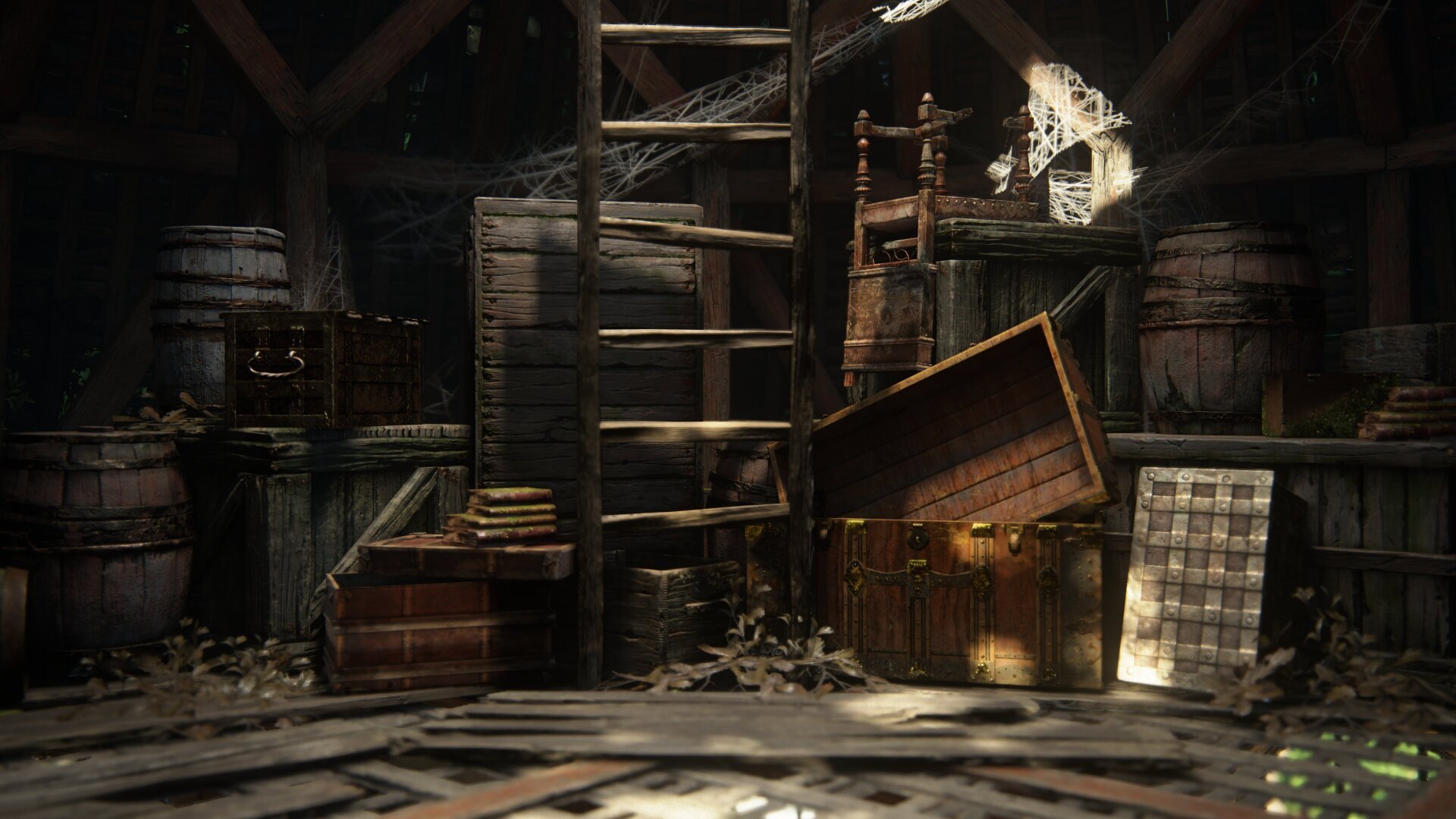
I had a sweet crew of squirrels that would hang out in my yard and I’d feed them nuts and life was good. And then Cake rocked in. Cake is a MASSIVE bully and hes taken over my yard scaring and taking ALL the nuts from my best squirrel friends.

From Ramon:

I had a sweet crew of squirrels that would hang out in my yard and I’d feed them nuts and life was good. And then Cake rocked in. Cake is a MASSIVE bully and hes taken over my yard scaring and taking ALL the nuts from my best squirrel friends.
0

Religion has had a positive impact on my life.

preview

This is partially me getting stuff off my chest. This post isn’t a response to, but was partially inspired by a dumpster fire of a thread from a couple days ago that appears to be deleted now.

I was lucky enough to be raised going to a Lutheran church that was “one of the good ones.” Going through confirmation was my first formalized exposure to thinking philosophically in a way public schools don’t teach. It was through the lens of the Bible, but the discussions we had were on finding our own interpretations and meanings on what’s right. It’s where I learned the phrase “sin boldly,” something I’ve internalized to this day as accepting that I can’t be perfect but to keep moving forward. At the end I had to give a faith statement and told my pastor to his face that I wasn’t certain I believed in this God guy but I liked a lot of the lessons, and he was fine with that.

I’m pretty agnostic at this point, though I wouldn’t call myself atheist, but my religious experience has pretty much always been a good one. The last time I went to church a few years ago they outright welcomed gay, trans, and other oppressed people and offered opportunities to do good in the community.

Whenever I see online atheists hating on religion, my instinct is to get defensive because my experience with it has been good. But since I became an adult it’s also become clear to me that a lot of religious people suck and use their religion as a shield and a cudgel to act hatefully. Piping up and saying “not all religious people” rings about the same as saying “not all men” though, so I usually just don’t say anything, especially in explicitly atheist spaces. But I felt a need to express my feelings, and this seemed an appropriate way to do so.

0

Poste Italiane, violazione dei dati su PosteCert: online contratti e anagrafiche di oltre 1.500 clienti

preview

Poste Italiane, violazione dei dati su PosteCert: online contratti e anagrafiche di oltre 1.500 clienti

@informatica
Poste Italiane ha confermato una violazione dei dati che avrebbe coinvolto il servizio di firma digitale remota PosteCert. Online sarebbero finiti documenti, contratti e informazioni personali appartenenti a

51

Would there be any benefit to switching from Fedora to NetBSD?

preview

The anti-AI stance is nice but I am not sure it can be proven beyond virtue signaling… I would support such a stance though. Not a fan of what Linus has been doing recently.

I should add that all of my stuff is containerized.

The anti-AI stance is nice but I am not sure it can be proven beyond virtue signaling… I would support such a stance though. Not a fan of what Linus has been doing recently.

I should add that all of my stuff is containerized.

57

OT: The MS issue and what caused it

preview

folks,i know this is OT but i decided to post here as i’m sure there are a lot of people here that work in IT and know what thay are talking about. The recent MS failure is what i would like your opinion on.

from what I’ve seen, MS declared that a bunch of servers went offline and the load had to be spread on remaining servers. They fail to identify what caused the first bunch of servers encountering issues and they claim it was mot related to a hacker attack (why would they, it would lead to massive panic and distrust). So, then what caused the issue in the first place? Could it have been a piloted denail of service attack?

I’m sure the truth will emerge in coming days but was interested in the more tech savy people’s opinione. In the meantime i rejoyce for not having to depend of third party infrastructure at home, thanks to my little homelab.

A further consideration is that this does once again prove that companies that put all their eggs in one basket, are at yhe mercy of big tech. i experienced this personally at works where comunication by Teams and Outlooks was pretty much halted for hours.

0

Twenty drivers prosecuted after ignoring temporary traffic lights on A507

preview

Twenty drivers prosecuted after ignoring temporary traffic lights on A507 RosyVega Thu 19/11/2026 1:10pm

19 November 2026 During surfacing works carried out in summer 2025, CCTV footage captured motorists driving through temporary red lights at the roadworks site. The footage showed dangerous incidents that put highway workers, other motorists and members of the public at risk.

Following investigations by Bedfordshire Police, all 20 drivers identified from the footage were successfully prosecuted.

We recently shared the footage on social media to highlight the dangers faced by highway workers when road traffic management is ignored. The video generated significant public interest, receiving more than 1,400,000 views across Facebook, Instagram and X, along with thousands of comments, reactions and shares.

Councillor John Baker, Central Bedfordshire Council’s Executive Member for Highways and Finance, said: 

"When I was shown this footage by the council’s highways team, I asked them to share it with the public. What has been released is an example of outrageous behaviour that put the highway workers, and other motorists, at risk of serious harm or death.

“We’re pleased that those responsible have been held accountable and we have asked highways contractors to make more use of cameras in future. Where we find other examples like this, the council will involve the Police and seek prosecutions without delay.”

We are reminding motorists that temporary traffic lights, road signs and barriers are legal traffic controls and must be obeyed in the same way as permanent traffic signals. Ignoring a red light can lead to prosecution and, more importantly, can place lives at risk.

60

Italy fines Meta $880 million over accessing users' photos

play · cbsnews.com
CBS News Italy fines Meta $880 million over accessing users' photos www.cbsnews.com
preview

cross-posted from: lemmy.world/post/54455222

“…accessing users’ photos without their “specific” consent…” $880 Million and that is only Italy, hopefully all other countries sue them next!!!

cross-posted from: lemmy.world/post/54455222

“…accessing users’ photos without their “specific” consent…” $880 Million and that is only Italy, hopefully all other countries sue them next!!!

0

Elon Musk nimmt „Saturday Night Live“ nach einem Sketch über Milliardäre ins Visier

preview

Elon Musk war einst selbst Gastgeber bei „Saturday Night Live“. Nun wird er dort parodiert – und nutzt X, um die Sendung wegen ihres Humors anzugreifen.

Elon Musk war einst selbst Gastgeber bei „Saturday Night Live“. Nun wird er dort parodiert – und nutzt X, um die Sendung wegen ihres Humors anzugreifen.

65

Commerce Dept to block Chinese companies from renting advanced chips in overseas data centers

Yahoo Finance Jensen Huang scandal trail leads to Alibaba, the king of free Chinese AI: Chart of the Day ca.finance.yahoo.com
preview

Chinese companies such as Alibaba make Qwen and other popular open source AI models. This new rule will have a big impact on that community. Case in point: Alibaba rents advanced Nvidia chips from Megaspeed’s data centers located in Singapore and Malaysia. Megaspeed is the company ran by Huang’s spy mistress.

Chinese companies such as Alibaba make Qwen and other popular open source AI models. This new rule will have a big impact on that community. Case in point: Alibaba rents advanced Nvidia chips from Megaspeed’s data centers located in Singapore and Malaysia. Megaspeed is the company ran by Huang’s spy mistress.