
Basic Filipino via Anime Characters, or Ako meeting You after visiting the Philippines
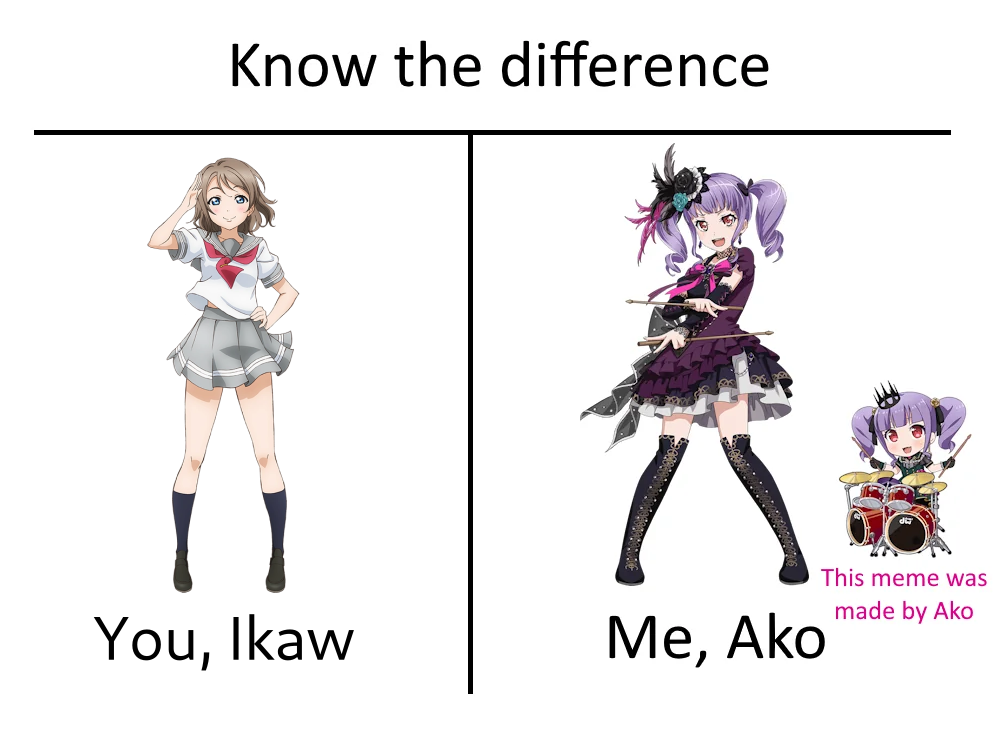


Basically, yes.
Mushoku Tensei / Jobless Reincarnation S03E11 spoilers



“The only control or ‘guardrails’ that AI needs is a STRONG AND SMART (High IQ!) PRESIDENT, and the U.S.A. has that, in spades!” Trump wrote.
Trump claimed those who are pleading for a slowdown of AI advancement are part of “a SICK conspiracy” against U.S. interests, benefiting China. He then issued a warning to anyone who backed regulation of the technology.
“Conspiracy Theorists, Treasonists, Traitors, and Leakers, BEWARE!” Trump said.


With Sony arguing it’s always been licensing and people know it, the community has started collecting evidence of Sony specifically calling it ownership on their own website, contradicting their claims.
cross-posted from: kbin.earth/m/piracy@lemmy.dbzer0.com/t/3120649
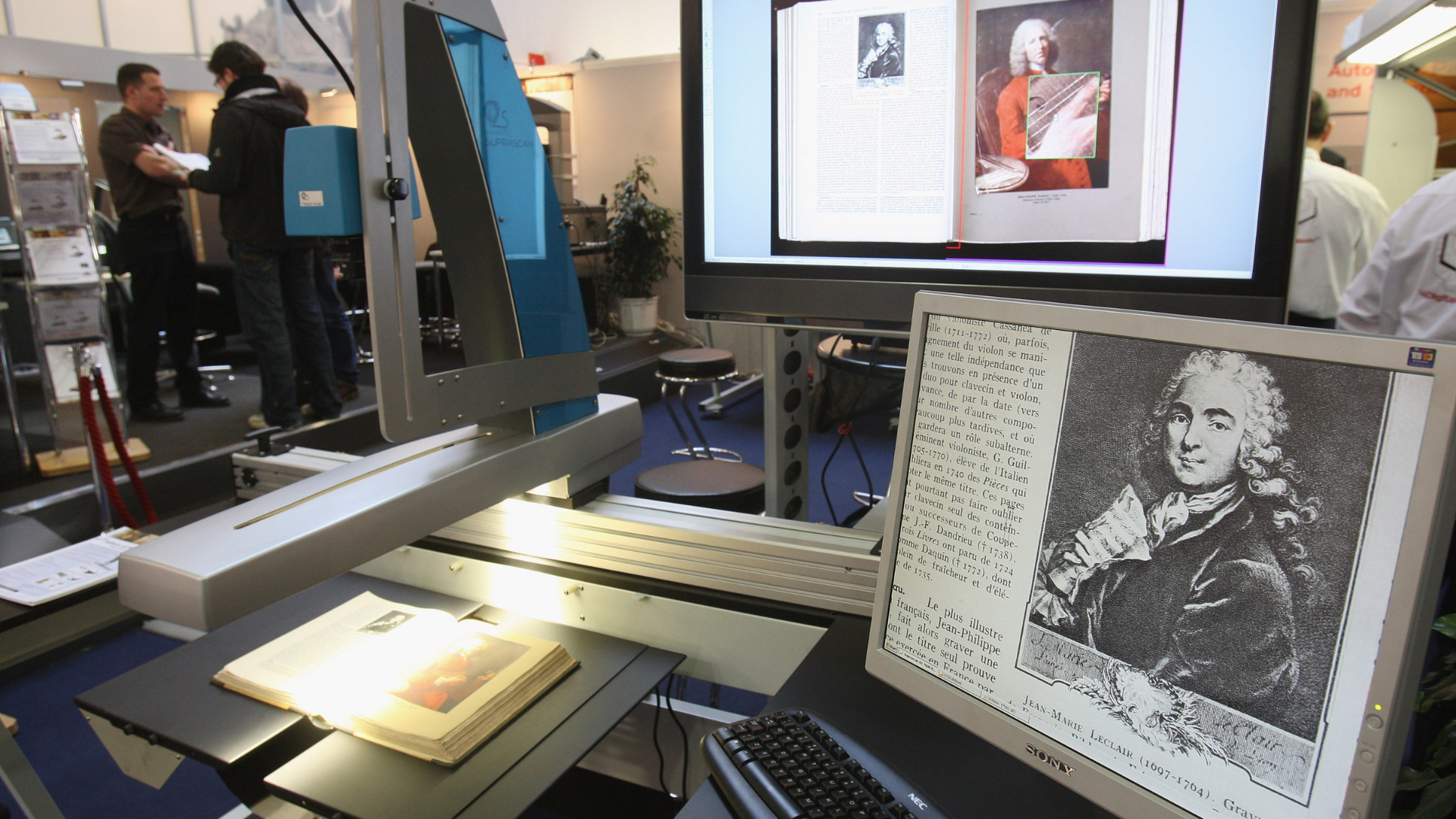
As AI tech companies increasingly buy and destroy books to feed to their AI models, Anna’s Archive is calling for volunteers to help preserve them for the public record.


EDIT: For some context, I recently gave podman another go. I have a few services on my homelab server set up in docker containers, so I tried migrating to podman.
After the second major bug (open issue on github) I encountered looked like it would require completely dropping using compose files to work around, I gave up and went back to docker.
I like the idea of podman, but it’s just not stable. I’ll try again in a year or so.
As a bonus, docker’s CLI is significantly nicer.





I don’t have much to add, beyond boy am i glad to have an old car.

cross-posted from: lemmy.world/post/51862958
I think it might be time to call it: Mark Zuckerberg Pervert AI
Yes it’s about AI again.

Screenshot of the marker for costco on google maps. it says “4.6 stars, absorbs into your skin quickly”
from a security and privacy point
and not surface stuff like “whats my ip” “whats my fingerprint” (someone said the fingerprint checking sites are useless idk) or “is tor connected”
i have no clue what im doing and i want to know where the security/privacy holes are


Super no Ura de Yani Suu Futari, episode 11

Behind the supermarket, smoking with you., Paląc z tobą na tyłach sklepu, YaniSuu, สองสิงห์อมควันหลังซูเปอร์มาร์เก็ต, ヤニすう
- Info - AniList - Info - Kitsu - Info - MyAnimeList - Info - Official Site (Japanese) - Social - Twitter (Japanese) - Streaming - Crunchyroll - Streaming - Netflix
Reminder: Please do not discuss plot points not yet seen or skipped in the show. Failing to follow the rules may result in a ban.
All discussions
| Episode | Link |
|---|---|
| 1 | Link |
| 2 | Link |
| 3 | Link |
| 4 | Link |
| 5 | Link |
| 6 | Link |
| 7 | Link |
| 8 | Link |
| 9 | Link |
| 10 | Link |
| 11 | Link |
This post was created by a bot. Message the mod team for feedback and comments. The original source code can be found on GitHub.

I pay for the Nabu Casa subscription for remote access to Home Assistant. Mostly as a way to give them money for a great service, but it’s convenient and felt pretty secure. It should be the only remote way into Home Assistant. About an hour ago I got a login attempt notice that an IP was trying to access API/config. The IP is in some bad IP databases. What I found interesting was that the log shows an AI bot. A Google Gemini bot specifically. Makes me worry that AI is going to make yet another aspect of life frustrating and unfun.
assuming you need gps and radio on
family wants a car thats 2020 or younger t and toyota
also if you have dashcam suggestions let me know
There is a thread in every selfhosted community every few weeks about keeping documentation together, and the top answer is usually a joke about not having any. That is what this is for.
Homedex connects to your Docker hosts, plain SSH hosts, and Traefik, Caddy or Nginx Proxy Manager, then keeps a record of what is running where, on which port, behind which route, and when the certificates expire. It also keeps a change feed of what actually moved since the last scan, and flags routes pointing at containers that no longer exist.
The part I could not find anywhere else: it parses reverse proxy config and joins it against discovered containers, so you get the domain to container mapping. That is the one nobody remembers and nobody writes down.
Why not the usual suggestions. NetBox is good but it is a source of truth you type into, and for a homelab it becomes a chore. This has zero data entry. Scanopy draws topology maps, which is a different question to keeping records. Portracker does ports only, no routes or certificates.
One Go binary with the UI embedded, or a distroless container around 12MB for amd64, arm64 and armv7. SQLite on disk, no telemetry, works fully air-gapped. Read-only by design: there are no write paths to the Docker API at all, the bundled compose file reaches the socket only through a filtering proxy with POST disabled, and container environment variables are never ingested so credentials cannot end up in an export. There is a CI check enforcing that last one.
MIT, self-hostable in full with no paid tier. A month and a half old, one contributor, green CI and tagged releases. I run it against my own stack but I am not claiming maturity.
AI declaration
I set the data model, the connector interface and the security posture, and reviewed and reworked throughout, but most of the code itself was generated under that direction.
One concrete example of what that costs, since it is more useful than a label: containers were originally keyed by their Docker container ID, so a redeploy issued a new ID and the tool silently orphaned any notes attached to a service and reset its first-seen date. Fixed in v0.1.4 by keying on the container name. The compose service name does not work either, because scaling gives three live containers the same one.
It’s a tiny selfhosted service that determines the client’s IP address or accepts an IP address through a query parameter, then returns geolocation and ASN information using the MaxMind GeoLite2 databases.
I often used services like ipinfo.io for checking my IP, location etc. e.g. to make sure a VPN was working properly. These are also handy for figuring out which timezone to use etc. I wanted to selfhost it, but couldn’t find one that satisfied my needs. So I decided to write one.
Check out the README for details.


A hand drawn image of a cat sitting in a bath with a rubber ducky. They’re eating macaroons and having tea which are both set on the edge of the bath, within reach.
“There are no rules,” said Francois.
“I can have my tea and my sweets in the bath if I please!”
sawce: WoodlandGhostArtShop on Etsy