trek rule(s)


And you thought i was out of black bars


Pick your color. Defend your throne. The Button is the Fediverse’s ongoing king-of-the-hill experiment: teams battle for the longest unbroken streak of possession, and every press is a strategic call — hoard them, spend them, or bait the other team into blowing theirs too early.
It’s part CTF, part social deduction, part chaos economy. Coordinate with your team in-game, cut deals, break them, and see who’s still standing on top when the season ends.
New players and veterans both start fresh. Sign up now to lock in pre-season bonuses before Season 5 goes live.


Hi everyone,
My partner and I (couple, early 40s) are considering emigrating from the Netherlands to Northern Sweden, specifically the Luleå/Kalix area. We want to get a reality check from locals and expats on whether our plan is actually feasible, particularly regarding employment.
Our Profile:
The Main Question: We are realistic about the challenges (climate, darkness, integration), but we need honest feedback on the job market:
We have the financial buffer to buy a home immediately, which removes housing stress, but we need to know if we can sustain an income there without relying solely on remote contracts.
Any brutal honesty or specific advice on the job hunt in Norrbotten would be appreciated. Thanks!

cross-posted from: lemmy.dbzer0.com/post/75561665
In September 2026, the release of a complete map of an adult male fruit fly’s neural connections gave the internet a new scientific dataset to experiment with (and meme).
Within days, social media users were connecting simulations of the fly’s neural network to everything from Beat Saber and Minecraft to cryptocurrency trading and parallel parking, turning the fruit fly brain into the centerpiece of a growing series of memes and absurd experimental projects.
The trend quickly became known for viral videos showing the simulated fly brain performing increasingly unexpected tasks, such as playing video games, trading Bitcoin and driving.
So, how did a scientific breakthrough become a source of viral internet experiments? Let’s find out. Here’s what’s going on with all the “Fruit Fly Brain Simulation” memes.
Where Did ‘Fly Brain Simulations’ Come From?
The meme originated back on September 3rd, 2026, following the release of MaleCNS v1.0, a complete wiring diagram of an adult male fruit fly’s central nervous system created by HHMI Janelia’s FlyEM team, the Cambridge Connectomics Group and Google Research.
The dataset maps roughly 165,000–166,000 neurons and millions of synaptic connections, traced from electron-microscope images of a real fly.
It was released as an openly available dataset that could be downloaded and simulated, following earlier efforts such as FlyWire’s mapping of the female fruit fly brain.
Later that day, the official News from Google X / Twitter account (@NewsFromGoogle) then posted about the scientific breakthrough, informing people of the marvel of science.
Within days of the release, developers began running leaky-integrate-and-fire simulations of the connectome and connecting the fly’s sensory and motor neurons to external inputs and outputs.
On September 7th, 2026, YouTuber Ro0oney uploaded a video titled “I Put A Fly’s Conscious Brain into Minecraft,” showing how they simulated the fruit fly in the survival game Minecraft.
The video received over hundreds of thousands of views and tens of thousands of likes in just a few days, becoming one of the earliest major viral posts about the fly brain and humorous simulations using it — subsequently kicking off a slew of other jokes.
How Are The ‘Fruit Fly Brain Simulations’ Used In Memes?
As more developers, researchers and social media users experimented with the virtual fruit fly brain, the dataset quickly became a source of memes centered around putting the simulated fly into increasingly unusual situations.
Various clips shared online showed the simulated fruit fly playing games, trading cryptocurrency and controlling a vehicle, with each new experiment adding another use for the publicly available neural network.
One especially viral example shows the simulated fly brain being used to play the virtual-reality rhythm game Beat Saber.
Another viral post shows the fly brain being given $100 to trade Bitcoin, with dopamine neurons stimulated when the fly makes a profit.
Another example shows the simulated fly-brain system driving and attempting to complete the “ultimate test” of parallel parking.
The trend also includes experiments placing the simulated fly brain inside virtual environments and allowing it to explore entirely on its own.
What Are Some Related Memes?
The Fly Brain Simulations trend is part of a broader pattern in which legitimate scientific research can quickly escape its original academic context and become meme fodder online.
Once unusual or unexpected findings from a study reach social media, users can turn the research itself into the basis for jokes, screenshots and viral discussions, often focusing on the strangest details of the findings.
One example is the “Doki Doki Literature Club! Birthing Fanfiction” story, also known as the “Extreme Outlier ChatGPT User,” a viral incident that emerged in early July 2026 after researchers published a study examining how people use AI for creative writing.
Doki Doki Literature Club! Birthing Fanfiction / Extreme Outlier ChatGPT User
The conversation around the viral “Extreme Outlier ChatGPT User” centered on an anonymous ChatGPT user identified in the paper as an “extreme outlier” who had generated thousands of fanfiction prompts about characters from Doki Doki Literature Club!, involving pregnancy, childbirth and related scenarios.
Screenshots and summaries of the findings quickly spread across social media over the summer, particularly Twitter / X, where users joked about the individual’s extraordinary dedication to the niche subject matter.
The findings came from the research paper “AI Fiction in the Wild,” published on June 24th, 2026, by researchers from the University of Washington and the University of Colorado Boulder, which analyzed more than 500,000 anonymized English-language ChatGPT conversations from the WildChat dataset.
Download the fly: male-cns.janelia.org/download/

But you’ll need a powerful system with 64GB of RAM to use it.
Microslop thinks that “Clutter free” means “bundled with an always on LLM” 😸
I have everything I host and expose behind authelia (which requires 2fa) as middleware or as the only login method with oicd, thus far it seems to work well, of course I get a bunch of malicious traffic and spam but this gets to authelia and stops there, I don’t even see multiple tried login tries ever so I felt pretty safe. However it does seem that everyone uses either fail2ban or crowdsec in addition so I have been wondering if it would really add any security in my setup or if I’m missing something. I’m sure it wouldn’t hurt but crowdsec always seemed a little too complex for me and I don’t want something I don’t fully understand in my security layer and I never saw a nice way to setup fail2ban so never bothered. Afaik there’s no webui or such things and you have to manually make working regex for everything. I’d like to know if I’m missing something or if anyone has tipps to give

More than 20 countries around the world have now taken steps to block or restrict children going online on social media, according to an AFP tally.

Georgia college student reportedly received a ticket from a cop after a Flock camera flagged her newly purchased vehicle as having no insurance when it did. According to a WSB-TV report, posted by podcast host Kacee Allen, the car has a temporary license plate, but the student presented a valid insurance card. Despite this, the officer reportedly still issued a citation. The incident reportedly happened twice, and the student now has to defend herself in court
According to the news report, the database that Flock cameras rely on was yet to be updated. This caused the system to falsely flag the newly purchased vehicle.
Renee Jones, the student’s mother, said her daughter was doing everything required of her. This included maintaining insurance and carrying proof of coverage.


File Transfer, Randall Munroe, https://xkcd.com/949, Creative Commons Attribution-NonCommercial 2.5
In this comic, the concept of an ordinary person having an FTP server is quickly dismissed. And yes, it’s not common. To the average computer user, the idea that someone could just… connect to your computer feels exotic, or even dangerous — see the very common ironic fear of your IP address being known to other people on the internet.
If you take someone who’s “good with computers” but not a networking person, their mental model of The Internet probably involves a definition of “servers” or “the cloud” that distinguishes them from personal computers in some meaningful way. True peer‐to‐peer, if they ever think about it, is an endeavor: WebRTC, STUN, TURN, ICE, what have you. Given that we live in a world of NAT, CGNAT, and restrictive ISPs, this isn’t entirely wrong, but it breaks the elegant design of the original Internet.
Network address translation (NAT) was first formally proposed in RFC 1631 in 1994. In its abstract, it says:
The two most compelling problems facing the IP Internet are IP address depletion and scaling in routing. Long‐term and short‐term solutions to these problems are being developed. The short‐term solution is CIDR (Classless InterDomain Routing). The long‐term solutions consist of various proposals for new internet protocols with larger addresses.
Classless interdomain routing is not the point of this post, but basically we started giving people more options for network sizes, and while complex in implementation, it was philosophically virtually uncontroversial.
RFC 1631 proposed a second short‐term solution to IP address depletion and scaling in routing: NAT. While it is not exactly the same type of NAT omnipresent on home routers today, the basic idea is the same: it allows multiple devices to share an IP address (from the perspective of a device on the other end of a routing device) by modifying the network address information in the IP packet headers while transferring the packet across a traffic routing device. We then later reserved certain addresses for private use, and these things are used in conjunction on most IP networks — private addresses within the network, NATing to one public address at the router. On your typical home router, here’s how you usually connect to an external server with NAT 1:
Your computer sends a packet like this:
| Source IP | 10.11.70.21 | | Source Port | 50413 | | Destination IP | 67.215.249.229 | | Destination Port | 70 |
It hits your router, and it modifies it to this:
| Source IP | 146.7.15.85 | | Source Port | 60612 | | Destination IP | 67.215.249.229 | | Destination Port | 70 |
The server replies:
| Destination IP | 146.7.15.85 | | Destination Port | 60612 |
Your router rewrites it back:
| Destination IP | 10.11.70.21 | | Destination Port | 50413 |
If you’ve thought this through, you might be asking: in the situation that an external server wants to talk to you first, how does that happen? It sends a packet to 146.7.15.85, and your router…
Oh no. It has no idea where to send it.
Naturally, people noticed this was a problem almost immediately, because people have wanted to run game servers, FTP servers, and web servers from their bedrooms since roughly the beginning of time. So a whole ecosystem of workarounds grew up around NAT, none of which restore the fundamental intention of the internet, and none of which work for everything.
The most direct fix is to just tell your router “hey, when a packet comes in on port 60612, send it to 10.11.70.21 on port 50413, no questions asked.” This is port forwarding, and it’s the workaround to NAT that the most people are aware of. One of the problems with port forwarding, conceptually, is that one public IP+port can still only map to one device at a time, which means that two devices can’t operate a service on the same public IP+port at the same time. This is more of a problem than it sounds like; on big enterprise or university networks that choke down to a small number or even just one private IP, this basically kills on‐prem hosting without doing even more complicated shit. And sometimes, your ISP has put your external IP behind NAT too — which is called carrier‐grade NAT (CGNAT) — and now you don’t control the device doing the translation, so you can’t forward a port. You’re getting a fraction of a fraction of an IP address.
Also, another problem with NAT is that nobody wants to bother with it, which is why we invented:
UPnP, and its modern cousins NAT‐PMP and PCP, tried to solve the “nobody wants to bother with it” problem by letting software ask the router directly to forward ports. Like manual port forwarding, it’s a request to your router — if your ISP is screwing with you, you’re out of luck. It’s also frequently disabled because of misguided security thinking — partially because of a couple buggy early implementations, and partially because the idea that someone could just connect to your computer feels exotic or even dangerous to a lot of people. There are plenty of valid reasons to want a firewall, but if you do, intentionally implement one instead of relying on NAT just not knowing where to send packets.
Session Traversal Utilities for NAT (STUN), instead of trying to get cooperation from the firewall, simply asks a server on the public internet “what does my packet look like by the time it gets to you?” The STUN server hands back the public IP and port your NAT assigned, say, 146.7.15.85:60612. Under a “cone NAT”, where the router uses an identical external port mapping for all outbound connections, this works great. You can tell this mapping to a peer, and then they can send packets directly to you. This technique is known as hole punching. However, under a “symmetric NAT” — common on CGNAT and institutional networks — you get a different public port for every distinct destination. In this case, the STUN mapping is useless for connecting to a peer, since they’ll see you differently than the STUN server…
Traversal Using Relays around NAT (TURN) is simply just passing traffic through a relay server, with both sides speaking to it outbound. This works mostly everywhere, but since someone has to run a server that should be unnecessary and you have to eat the added latency of every packet detouring through a third party, this really sucks.
Interactive Connectivity Establishment (ICE) accepts that no technique is reliable and tries all of them in order of preference. Consider everything: direct connect, STUN‐discovered external address, a TURN relay), exchange the list with the other side, and throw shit at the wall until something works. This is what WebRTC does, and it’s the best you’ll get on today’s internet. But we’ve replaced a simple direct connection with, mostly, external infrastructure.
The principal “long-term solution” in the works that RFC 1631 was referring to was IPv6, and it was supposed to fix this; give everyone a real globally unique address and obviate NAT. However, the sigmoid function of IPv6 adoption seems to be stalling out too early, and even where it is implemented, many ISPs and institutional networks keep doing NATy stuff out of inertia and even more misguided security thinking: firewalls that refuse inbound because that’s we’re used to NAT doing that, or completely unnecessarily applying actual NAT to IPv6 — often deploying Unique Local Addresses (fc00::/7) the way they use private RFC1918 space on IPv4 — which is baffling to me.
There’s lots of things you can blame for killing the open Internet, but I think NAT was one of the earliest. Running a server used to be trivial: run an executable, tell people your address, done. Now, if you’re lucky, you probably have to configure port forwarding, which you often can’t even do if you’re behind CGNAT or on an institutional network.
It also trained everyone to think client‐server is natural. “My device talks to The Cloud which talks to other devices” feels normal, when that feeling originated as an artifact of address scarcity. The problem the people in the XKCD comic at the top are facing is the absurdity of trying to establish a one-to-one communication using only outbound connections on both sides. Even more ironic is that NAT got normalized as a security feature — “your devices are hidden!” — which is one of the things that made people resist the thing that would fix it.
NAT certainly isn’t the only reason why the modern internet is full of centralized walled gardens, but it was the first — it’s why it’s hard to send a file to someone, it’s why you don’t run your email on your own computer, and why running your own services at all is difficult and often expensive (if you can’t port forward from your own internet connection, you have to buy a VPS instead of using hardware you already have).

> Mullenweg is the founder of Automattic, the company that owns WordPress, Tumblr, Pocket Casts, and a host of other popular internet brands and pieces of software. Mullenweg has faced several controversies over his management of the company in recent years.
> On a company-wide Slack this morning, Automattic CEO Matt Mullenweg announced he has been put on a paid leave of absence. […] He continued, writing that Mark Davies, current Automattic Chief Financial Officer, has “conspired” with Automattic Board of Directors members Ann Dunwoody, Toni Schneider, and Sue Decker “behind my back and they voted to put me on a paid leave of absence. I voted against that.”


I’ve seen so many 10” servers that look amazing from the front and very polished, but then having a rats nest of cables and a mess at the back.
After 62 iterations and many 3D prints, blood, sweat, profanity and tears. I my design and implementation is finally done.

I used Hexagons where possible, because as you know, Hexagons are the bestagons
This is Before:

And the After:
The ducky adds 200MHz
The front of my mini-rack is actually still somewhat of a mess, I thought I’d focus on the back first.
I’ve published it in excruciating detail on my GitHub Leave a Star if you like what you see.
I self host a bunch of stuff on here to get away from Big-Tech, and because I find it fun. For a lot more details see https://erasmus.works
It always bothered me the the fronts of racs are modular, but not the backs, this solves that
If you have any questions feel free to ask, hopefully this helps other clear up their rats nests.

Welp. My Forgejo instance got popped with an RCE two days ago by CVE-2026-60004. Luckily, I noticed the following morning and had the day free to figure out what happened. Let’s dive in!
As a homelab enthusiast, I found this a very interesting post. Here are my take aways from the post that I’m implementing myself:
log-inventory.sh, so “could I actually reconstruct what happened” is a command I run instead of a thing I assume.

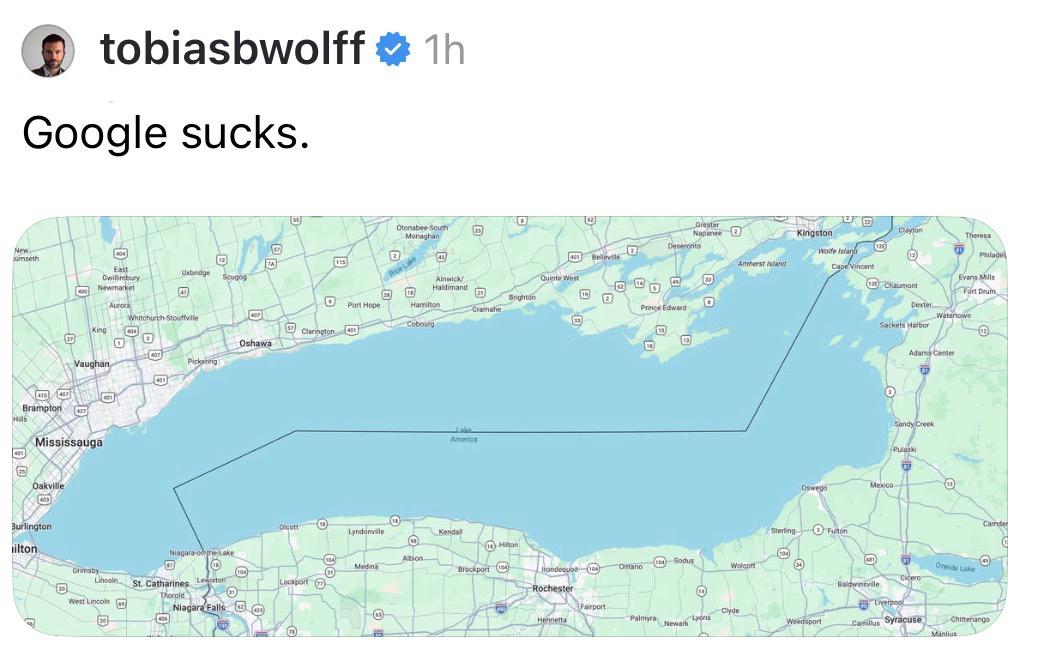

Since 1 July, the EU has levied a €3 customs duty on parcels worth under €150 and the measure is already biting as imports, especially from China, have slumped by 30% to 40%.


cross-posted from: lemmy.dbzer0.com/post/75288150

Just saw this on F-Droid (well actually on IzzySoft) and thought I’d pass it along. Haven’t tried it, please don’t kill the messenger, just sharing…

Edit: updated title to be in accordance with the article.
Edit 02: Thank you to President Donald Jay Trump for his retarded attack on Iran and therefore showing Iran that it doesn’t need a nuclear weapon to blackmail the world. Only occupying two pieces of land will do.
Because without the volatile prices on the fossil fuel market, none of this would have been possible with this speed and magnitude.



Convenient Semi-Friend

Yet they fail to understand that safety theater was never the goal but freedom and the avoidance of corporate tyranny was the goal. It was never safe just unpopular. Capitalism gonna capitalism 🤷♀️… oh the gipity


That is all.


Proton Mail contacts → Android system address book.
A GPL-3.0 Android app that signs in to a Proton Mail account, decrypts the user’s contacts client-side, and exposes them to ContactsContract so they appear in the system Contacts app (and any other app that reads contacts) the same way WhatsApp or Telegram surface their own contact directories.

Picture humanity in a boat being swept down a raging river, praying there is no Niagara Falls ahead. Or imagine standing with the pioneering physicists in 1942 before they triggered the first self-sustaining nuclear fission chain reaction beneath a Chicago stadium.
These were two of the analogies used this week by Prof Robert Trager, an expert in the nascent field of AI governance, to describe the perilous but potential-filled moment the world stands at with accelerating artificial intelligence.
Trager, the director of the Oxford Martin AI Governance Initiative, was speaking in the week OpenAI claimed the technology had crossed the threshold known as AGI – artificial general intelligence – with its newest model, GPT-6 Astra.
That claim came as the company prepared for a potential $850bn (£630bn) stock flotation, so included a dose of marketing spin, but if true it may be significant. The San Francisco company defines AGI as “autonomous systems that outperform humans at most economically valuable work”.
The tasks it claims Astra can automate include designing circuit boards, filling out tax returns, building video games, financial modelling, engineering design and helping assemble legal documents. The threat to some white-collar jobs is implicit.


cross-posted from: https://piefed.world/c/tech/p/1401393/xcancel-service-is-suspended-until-further-notice
Source: Xcancel.

for the sake of nostalgia
失った時間も未来も切り取っちゃえば
笑顔だけ 見てたいの