0

Teenagers from Outer Space (1959)

preview

THRILL-CRAZED SPACE KIDS BLASTING THE FLESH OFF HUMANS!

A young alien falls for a pretty teenage Earth girl and they team up to try to stop the plans of his invading cohorts, who intend to use Earth as a food-breeding ground for giant lobsters from their planet.

TRAILER

IMDb.com || letterboxd.com

0

Sähköautojen korjaamiseen liittyvä kansalaisaloite keräsi allekirjoitukset päivässä

Yle Uutiset Sähköautojen korjaamiseen liittyvä kansalaisaloite keräsi allekirjoitukset päivässä yle.fi
preview

Aloitteessa kritisoidaan viranomaisohjetta, jonka mukaan riippumaton korjaamo ei saa hyödyntää käytetyn tai kolaroidun auton akkua sellaisenaan toisen auton korjauksessa. Ohjeen mukaan romutettavaksi tulevien autojen akuista tulee jäteakkuja.

Aloitteessa vaaditaan ensisijaisesti sitä, että myös riippumattomat korjaamot saavat korjata sähkö- ja hybridiautojen akkuja ja sähköjärjestelmiä.

0

8 Masterpiece Cosmic Horror Stories You May Not Know About - screenrant.com

ScreenRant 8 Masterpiece Cosmic Horror Stories You May Not Know About screenrant.com
preview

For those seeking horror of this nature, there’s a wide world out there, not just in novels, but also in podcasts, TV shows, and movies. Whether someone wants a story about dealing with grief, a gripping tale told through the lens of the unknown, or a journey that explores a mysterious place that might not be a place at all, cosmic horror can be an undeniably thrilling genre.

  • The Fisherman By John Langan - Novel (2016)
  • Archive 81 - Podcast (2016-2019) & Netflix Original Adaptation (2022)
  • Uzumaki By Junji Ito - Horror Manga (1998-1999)
  • Tanis - Podcast (2015-2020)
  • The Croning By Laird Barron - Novel (2012)
  • Event Horizon - Movie (1997)
  • The House On The Borderland By William Hope Hodgson - Novel (1908)
  • The Horla By Guy De Maupassant - Short Story (1887)
0

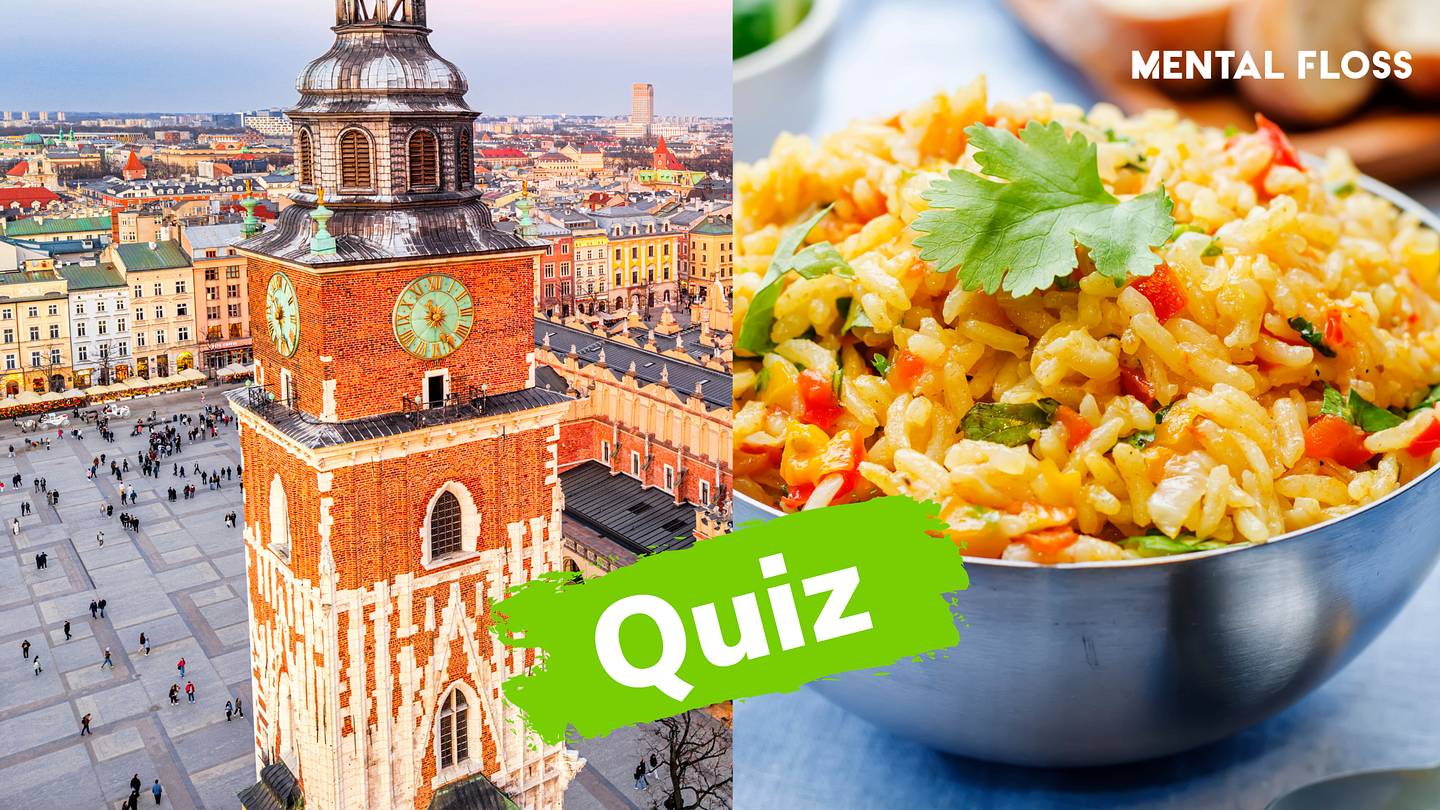
Quiz: Place or Food? Only the Quickest Trivia Pros Will Get a Perfect Score

Mental Floss Quiz: Place or Food? Only the Quickest Trivia Pros Will Get a Perfect Score www.mentalfloss.com
preview

I got 11 out of 42 wrong. How well do you know foods and places?

I got 11 out of 42 wrong. How well do you know foods and places?

0

Wie haltet Ihr Euch von Spontankäufen ab?

preview

Ich habe etwas gefunden, was mich fasziniert und auch irgendwo interessiert. Es hat etwas mit einem Hobby zu tun, aber die Anschaffungskosten sind doch etwas größer.
Im Gegensatz zu einem PC, werde ich diesen Gegenstand (wahrscheinlich) nicht so häufig einsetzen, auch wenn sie ungefähr in der gleichen Preisklasse liegen.
Daher meine Frage: Wie haltet Ihr Euch von Spontankäufen ab, bei denen das Engelchen auf Eurer Schulter sagt “Das ist vielleicht doch etwas zu teuer”, während das Teufelchen auf Eurer Schulter skandiert: “Kauf! Kauf! Kauf!”?

0

Les USA ont lancé des frappes contre des cibles du Corps des gardiens de la révolution en iran. Frappes suite à des tentatives d’attaques menées par le IRGC contre des navires dans détroit d'Ormuz

0

How did the installation of Christianity as the state religion influence the collapse of the Western Roman Empire?

preview

Theodosius I signs Edict of Thessalonica in 380 CE, making Christianity the official state religion of the Roman Empire.

In 395, after winning two destructive civil wars, Theodosius I died. He left a collapsing field army, and the Empire divided between the warring ministers of his two incapable sons. Goths and other non-Romans became a force that could challenge either part of the Empire. Further barbarian groups crossed the Rhine and other frontiers. The armed forces of the Western Empire became few and ineffective, and despite brief recoveries under able leaders, central rule was never again effectively consolidated.

Wikipedia - Fall of the Roman Empire

So my question is this - there’s only 15 years between the acceptance of Christianity as the state religion and the collapse of the state. What were the effects of forced conversion in the late western Roman empire, and did it accelerate or delay the fall of the empire?

0

Aggro Crab launches publishing label to splash that Peak cash

Game Developer Aggro Crab launches publishing label to splash that Peak cash www.gamedeveloper.com
preview

The studio wants to support ‘intense, stylized games with an attitude’—but isn’t interested in ‘generative AI slop.’

The studio wants to support ‘intense, stylized games with an attitude’—but isn’t interested in ‘generative AI slop.’

0

Normalized Fascism in Open Source: $12 Million Given to DHH

brennan.day Normalized Fascism in Open Source: $21.7 Million Given to DHH brennan.day
preview

Open source has become a safe harbor for far-right politics, from David Heinemeier Hansson’s white-nationalist rhetoric and the Omarchy Foundation’s $12 million in patron funding to so-called apolitical projects that treat marginalized contributors as political, and why a united boycott of complicit tech companies is our only way forward.

Open source has become a safe harbor for far-right politics, from David Heinemeier Hansson’s white-nationalist rhetoric and the Omarchy Foundation’s $12 million in patron funding to so-called apolitical projects that treat marginalized contributors as political, and why a united boycott of complicit tech companies is our only way forward.

0

À quoi ressemblerait le monde sans capitalisme ?

play · video.blast-info.fr
Blast le souffle de l'info À quoi ressemblerait le monde sans capitalisme ? video.blast-info.fr
preview

Soutenez Blast, nouveau média indépendant : www.blast-info.fr/soutenir

“Il est plus facile d’imaginer la fin du monde que la fin du capitalisme” : c’est pour faire mentir cet adage que deux chercheurs ont coordonné et publié un ouvrage intitulé “Mondes post capitalistes”. Les deux universitaires partent du principe qu’il est nécessaire de sortir du modèle capitaliste, mais que cela est trop souvent vu comme une utopie irréalisable, inatteignable.

Ils tentent donc d’imaginer à quoi ressembleraient d’autres systèmes qui ne seraient plus capitalistes. Du côté de la santé, de l’agriculture, de l’éducation, de la production : comment s’organiseraient nos sociétés, sur quels modèles politiques et économiques ? Comment est-ce que ça pourrait marcher ? Pour s’essayer à cet exercice de projection, ils ont réuni tout un tas de personnalités, anthropologues, sociologues, historiens, activistes, philosophes, physiciens, ingénieurs ou encore juristes, pour se pencher sur cette question, et ils ont rassemblé leurs pensées et leurs désaccords dans… 900 pages.

Est-il encore envisageable de sortir du modèle capitaliste, si oui comment, et surtout, à quoi est-ce que ça ressemblerait ? Réponse dans ce nouvel entretien pour Blast.

Journaliste : Salomé Saqué
Montage : Marion Plantier
Son : Baptiste Veilhan, Théo Duchesne
Graphisme : Morgane Sabouret, Margaux Simon
Production : Hicham Tragha
Directeur du développement des collaborations extérieures : Mathias Enthoven
Co-directrice de la rédaction : Soumaya Benaïssa
Directeur de la publication : Denis Robert

Le site : www.blast-info.fr
Facebook : www.facebook.com/blastofficiel
Twitter : twitter.com/blast_france
Instagram : www.instagram.com/blastofficiel/
Mastodon : mamot.fr/web/@blast_info
Peertube : video.blast-info.fr
Twitch : www.twitch.tv/blastinfo
Bluesky : bsky.app/profile/blast-info.fr

#Entretien
#capitalisme
#économie

0

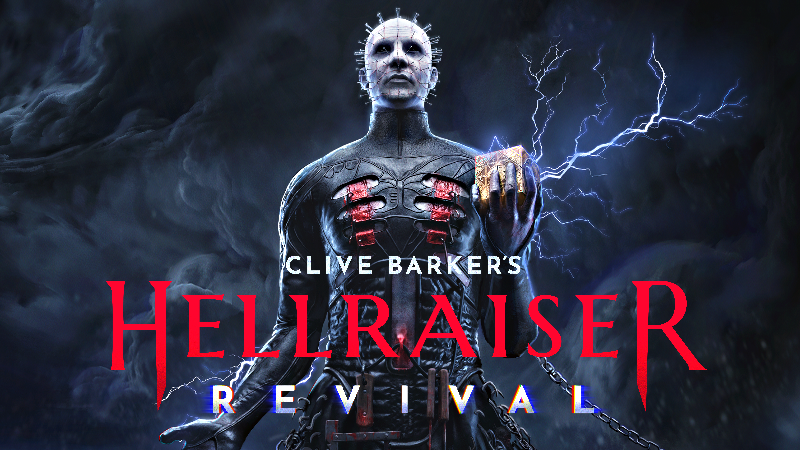
Clive Barker’s Hellraiser: Revival Hands-On: A Beautifully Twisted Descent Into Hell

Rely on Horror Clive Barker's Hellraiser: Revival Hands-On: A Beautifully Twisted Descent Into Hell - Rely on Horror www.relyonhorror.com
preview

Clive Barker’s Hellraiser: Revival Hands-On: A Beautifully Twisted Descent Into Hell September 1st, 2026 at 12:00 pm by Celine Kroter

Clive Barker’s Hellraiser: Revival doesn’t hold back when bringing the iconic horror franchise into the world of video games. At Gamescom 2026, we had the opportunity to play a section from later in the game. Our time with it showed just how much Saber Interactive is embracing the disturbing imagery and psychological horror of Hellraiser.

Rather than simply adapting one of the movies, Clive Barker’s Hellraiser: Revival tells a new story within the Hellraiser canon. Players take control of Aidan Lynch, who finds himself caught between the Cenobites and the Scarlet Church while desperately trying to save his girlfriend, Sunny.

Central to his journey is the Genesis Configuration, a mysterious puzzle box that plays an important role in the story while also granting Aidan supernatural abilities.

trailer- https://www.youtube.com/watch?v=TLy7n59Q-_k

0

wir😳iel

preview

Kontext: Der Rapper Dahabflex rief auf einer Veranstaltung der PdL „Death to the IDF“. Daraufhin distanzierte sich Elif Eralp, dass Gewaltaufrufe an Menschen nicht klar gehen. Obwohl der Rapper explizit keine Menschen, sondern eine Orga angriff. Ikkimels Aufrufe zu Mord an Männern sind aber logisch was anderes. Sie ist auch schon bei PdL‑Veranstaltungen aufgetreten.

Btw nichts gegen Ikkimel! super Künstlerin. Liebe einige Tracks. Aber wo es bei ihr in einem Songtext von der Kunstfreiheit gedeckt ist, sollte man schon dasselbe Maß bei Dahabflex ansetzen, was auch in einem Songtext war. Beides ist provokanter Deutschrap. Aber einer sprach nichtmal von Tötung von Menschen 🙈 Upsi!

0

On Love and Treason: Critical White Feminist Thought for Social Justice Praxis

UNM Digital Repository On Love and Treason: Critical White Feminist Thought for Social Justice Praxis digitalrepository.unm.edu
preview

tl;dr: I did not understand then, but I understand now how my life is built upon her suffering. She is systematically marginalized to do low-wage, unstable work that affords me the ability to purchase services, products, and a lifestyle because of race/gendered/class/citizenship privilege. The managing of palliative solutions to her problems also created a career for me. What I did not understand was my own investment and implication in her suffering. Most white “saviors” do not see their systematic relationship with those they are “helping.” There is distance: I am privileged here; you are oppressed over there. When in reality, it is dialectical. We aren’t trained to see the relational aspects, where I am privileged because she is oppressed, and she is oppressed because I am privileged.

Excerpt

The Makings of a White Matriarch

I was a case manager for Job Corps in my mid-twenties before I was a teacher. Job Corps is one of the last Great Society programs from the Johnson administration in the 1960s that was supposed to provide residential training in a trade. Students, who were from age 16 to 24, lived in dorms and went to classes for their GED and to learn a trade like plumbing or secretarial skills. My job was to assist students leaving campus once they graduated, hopefully finding them jobs, transportation, housing, childcare, and possibly community college.

The vast majority of my caseload was people of color, primarily Latinx and Native American. To say that nothing qualified me for this position is an understatement. I had a history degree, which carved out no career path that would not require an advanced degree or at least a teaching certificate, options I was not ready to take. I had worked my way through college through various forms of retail, warehouse work, and eventually, I became a courier at a law firm. Once I was out of college, I sold car insurance for a large corporation, I was a barista, a secretary, and worked on commission at a local jewelry store. As someone who worked through high school, I was very flexible and familiar with various forms of low wage work. Aside from insurance sales, this was my first professional opportunity and all they were asking was that I owned a car, could network, and would be able to get along with the students who were not much younger than I was. I was also required to be on call 24 hours a day in case students needed me for something.

It was a confusing concept, the concept of students living in poverty, facing systematic racism, and intergenerational trauma “needing” something. When would they not need something? What was I supposed to give them? I was completely overwhelmed with calls about problems I had no idea how to solve and no guidance about how to find out. I was handed a hundred or so cases, made up of teenagers and young adults I was supposed to track for a year, some leaving the center, some who had already left, and others who had been gone for a few months. The goal of the position was to account for where students went after they left the center.

Job Corps receives a huge government grant that we had to answer to, so we needed to show that our program worked, evidenced by stable employment of graduates. My 24-year-old self had no skepticism about this. My older self knows that they probably put unqualified people like me in this position because I would be kind enough to take the calls, responsible enough to gather the data needed, and compliant enough not to question long-standing beliefs and practices that went on in a center like this.

This was also was my first job as a white matriarch. I believed in my own benevolence and the ability to solve peoples’ problems. I was also acting out the part of white savior. White saviority, prevalent in films like Dangerous Minds, Freedom Writers and the Blind Side, always includes the notion of an antiracist white hero or heroine who believes that they are helping people of color overcome obstacles in their lives. White saviors believe they counteract racism by seeing the humanity in all people but really hold racist notions of the people they are tasked with helping (Maurantonio, 2017).

The notion of white saviority works together with colorblindness to mask the significance of race and racism in the supposed benevolent actions of white people. For example, I could believe that I was the same as my students by erasing their specific struggles related to structural inequality, but I could also simultaneously believe that my caseload needed me because the success of people of color was something dependent upon white people.

The problem with white saviority is not that whites are completely useless to people of color. It is that white saviors believe that people of color could not solve their own problems, cannot teach their own children, or manage their own families. It is, of course, part of white matriarchal maintenance. The belief that I would be able to handle these issues at my age is part of how white women gain power over people of color. I was going to be in their homes, their workplaces, and I was going to be surveilling them at best, interfering with their lives at worst. How my lens about their lives was considered competent is deeply rooted in notions of white women’s moral superiority and competence in all things having to do with schools or helping professions (Feimster, 2009; McRae,2018; Spring, 2008).

The second day on the job, a sixteen-year-old 1.5 generation Mexican immigrant, Lucia, came into my office, furious because she was going to have to leave the center without her GED or her training because she was pregnant. The center was not able to house pregnant students in their third trimester. She had nowhere to go except her boyfriend’s family’s house and she was not sure that she wanted to be there. My job was to transition her into schooling or a job at this point, and so I took up the task of trying to figure out where she could go and what she could do. Attempting to help Lucia took me down a path that I had not anticipated and that haunted me afterwards. If I were to name an event that led me to where I am now, it would be getting to know her, her struggle, and failing miserably to find my way with her through a system that does not care about her at all.

I learned about what it meant to try to navigate schools, workplaces, hospitals, and social services for immigrants. I also learned about some of the underground networks for work and money that many immigrants depend on in order to survive. Because my job was nebulous and the goal was to help students stabilize after the Job Corps center, I accompanied her on appointments with doctors, social services, and visited her in the hospital when the baby was born. Many times though, toward the end of her pregnancy, I would just pick her up and take her to Sonic or drive around and talk.

I had a genuine concern and affection for her. She entered my own life at time when I felt rudderless, alone, and distant from family, and I needed company too. Her life had been full of violence, obstacles, and instability, which had landed her at Job Corps like many of her peers. She usually tried to have a lighter mood with me, but some days she shared her deep sadness and fear. One day, we sat at Sonic. She had become quiet, the way women do at the end of pregnancy, and she said, “Miss, why do I have to suffer?”

I did not understand then, but I understand now how my life is built upon her suffering. She is systematically marginalized to do low-wage, unstable work that affords me the ability to purchase services, products, and a lifestyle because of race/gendered/class/citizenship privilege. The managing of palliative solutions to her problems also created a career for me. What I did not understand was my own investment and implication in her suffering. Most white “saviors” do not see their systematic relationship with those they are “helping.” There is distance: I am privileged here; you are oppressed over there. When in reality, it is dialectical. We aren’t trained to see the relational aspects, where I am privileged because she is oppressed, and she is oppressed because I am privileged.

tl;dr: I did not understand then, but I understand now how my life is built upon her suffering. She is systematically marginalized to do low-wage, unstable work that affords me the ability to purchase services, products, and a lifestyle because of race/gendered/class/citizenship privilege. The managing of palliative solutions to her problems also created a career for me. What I did not understand was my own investment and implication in her suffering. Most white “saviors” do not see their systematic relationship with those they are “helping.” There is distance: I am privileged here; you are oppressed over there. When in reality, it is dialectical. We aren’t trained to see the relational aspects, where I am privileged because she is oppressed, and she is oppressed because I am privileged.

Excerpt

The Makings of a White Matriarch

I was a case manager for Job Corps in my mid-twenties before I was a teacher. Job Corps is one of the last Great Society programs from the Johnson administration in the 1960s that was supposed to provide residential training in a trade. Students, who were from age 16 to 24, lived in dorms and went to classes for their GED and to learn a trade like plumbing or secretarial skills. My job was to assist students leaving campus once they graduated, hopefully finding them jobs, transportation, housing, childcare, and possibly community college.

The vast majority of my caseload was people of color, primarily Latinx and Native American. To say that nothing qualified me for this position is an understatement. I had a history degree, which carved out no career path that would not require an advanced degree or at least a teaching certificate, options I was not ready to take. I had worked my way through college through various forms of retail, warehouse work, and eventually, I became a courier at a law firm. Once I was out of college, I sold car insurance for a large corporation, I was a barista, a secretary, and worked on commission at a local jewelry store. As someone who worked through high school, I was very flexible and familiar with various forms of low wage work. Aside from insurance sales, this was my first professional opportunity and all they were asking was that I owned a car, could network, and would be able to get along with the students who were not much younger than I was. I was also required to be on call 24 hours a day in case students needed me for something.

It was a confusing concept, the concept of students living in poverty, facing systematic racism, and intergenerational trauma “needing” something. When would they not need something? What was I supposed to give them? I was completely overwhelmed with calls about problems I had no idea how to solve and no guidance about how to find out. I was handed a hundred or so cases, made up of teenagers and young adults I was supposed to track for a year, some leaving the center, some who had already left, and others who had been gone for a few months. The goal of the position was to account for where students went after they left the center.

Job Corps receives a huge government grant that we had to answer to, so we needed to show that our program worked, evidenced by stable employment of graduates. My 24-year-old self had no skepticism about this. My older self knows that they probably put unqualified people like me in this position because I would be kind enough to take the calls, responsible enough to gather the data needed, and compliant enough not to question long-standing beliefs and practices that went on in a center like this.

This was also was my first job as a white matriarch. I believed in my own benevolence and the ability to solve peoples’ problems. I was also acting out the part of white savior. White saviority, prevalent in films like Dangerous Minds, Freedom Writers and the Blind Side, always includes the notion of an antiracist white hero or heroine who believes that they are helping people of color overcome obstacles in their lives. White saviors believe they counteract racism by seeing the humanity in all people but really hold racist notions of the people they are tasked with helping (Maurantonio, 2017).

The notion of white saviority works together with colorblindness to mask the significance of race and racism in the supposed benevolent actions of white people. For example, I could believe that I was the same as my students by erasing their specific struggles related to structural inequality, but I could also simultaneously believe that my caseload needed me because the success of people of color was something dependent upon white people.

The problem with white saviority is not that whites are completely useless to people of color. It is that white saviors believe that people of color could not solve their own problems, cannot teach their own children, or manage their own families. It is, of course, part of white matriarchal maintenance. The belief that I would be able to handle these issues at my age is part of how white women gain power over people of color. I was going to be in their homes, their workplaces, and I was going to be surveilling them at best, interfering with their lives at worst. How my lens about their lives was considered competent is deeply rooted in notions of white women’s moral superiority and competence in all things having to do with schools or helping professions (Feimster, 2009; McRae,2018; Spring, 2008).

The second day on the job, a sixteen-year-old 1.5 generation Mexican immigrant, Lucia, came into my office, furious because she was going to have to leave the center without her GED or her training because she was pregnant. The center was not able to house pregnant students in their third trimester. She had nowhere to go except her boyfriend’s family’s house and she was not sure that she wanted to be there. My job was to transition her into schooling or a job at this point, and so I took up the task of trying to figure out where she could go and what she could do. Attempting to help Lucia took me down a path that I had not anticipated and that haunted me afterwards. If I were to name an event that led me to where I am now, it would be getting to know her, her struggle, and failing miserably to find my way with her through a system that does not care about her at all.

I learned about what it meant to try to navigate schools, workplaces, hospitals, and social services for immigrants. I also learned about some of the underground networks for work and money that many immigrants depend on in order to survive. Because my job was nebulous and the goal was to help students stabilize after the Job Corps center, I accompanied her on appointments with doctors, social services, and visited her in the hospital when the baby was born. Many times though, toward the end of her pregnancy, I would just pick her up and take her to Sonic or drive around and talk.

I had a genuine concern and affection for her. She entered my own life at time when I felt rudderless, alone, and distant from family, and I needed company too. Her life had been full of violence, obstacles, and instability, which had landed her at Job Corps like many of her peers. She usually tried to have a lighter mood with me, but some days she shared her deep sadness and fear. One day, we sat at Sonic. She had become quiet, the way women do at the end of pregnancy, and she said, “Miss, why do I have to suffer?”

I did not understand then, but I understand now how my life is built upon her suffering. She is systematically marginalized to do low-wage, unstable work that affords me the ability to purchase services, products, and a lifestyle because of race/gendered/class/citizenship privilege. The managing of palliative solutions to her problems also created a career for me. What I did not understand was my own investment and implication in her suffering. Most white “saviors” do not see their systematic relationship with those they are “helping.” There is distance: I am privileged here; you are oppressed over there. When in reality, it is dialectical. We aren’t trained to see the relational aspects, where I am privileged because she is oppressed, and she is oppressed because I am privileged.

0

Please Don’t Make Me Applaud Your Neck

Slate Magazine More and More Women Are Opening Up About Something That Used to Be Shameful. I Wish They’d Kept It All Secret. slate.com
preview

The defense of the face-lift marks a return to the era of “choice feminism,” a strain of thought that rose from the third wave in the 2000s. Through the lens of choice feminism, anything a woman decides to do is empowering: flashing the camera in Girls Gone Wild, spending thousands of dollars on beauty products, abandoning one’s career to support a husband’s aspirations, letting him screw around in a skewed rendition of nonmonogamy. Never mind the social pressures that influence these behaviors or how enacting them affects the broader project of gender equity. Feminists could not judge any of it if a woman was choosing it for herself.

Many of us who lived through the height of choice feminism cringe at the memory. I’m not sure I can stomach another round of pretending that our actions have no effect on the world; neither am I eager to return to the policing of the early 2010s, when we journalists who cut our teeth in feminist blogging brought out our gavels to judge each new entry in the cultural discourse as either good or bad for womankind. But there is a self-congratulatory, self-delusional tone to these pro-face-lift narratives that I haven’t been able to shake from my brain. I expected to see some outspoken feminists like Jong-Fast and O’Donnell cave to the pressures of their moneyed, image-obsessed circles. I did not expect them to marshal the intellectual dishonesty required to spin it as an act of liberation.

The defense of the face-lift marks a return to the era of “choice feminism,” a strain of thought that rose from the third wave in the 2000s. Through the lens of choice feminism, anything a woman decides to do is empowering: flashing the camera in Girls Gone Wild, spending thousands of dollars on beauty products, abandoning one’s career to support a husband’s aspirations, letting him screw around in a skewed rendition of nonmonogamy. Never mind the social pressures that influence these behaviors or how enacting them affects the broader project of gender equity. Feminists could not judge any of it if a woman was choosing it for herself.

Many of us who lived through the height of choice feminism cringe at the memory. I’m not sure I can stomach another round of pretending that our actions have no effect on the world; neither am I eager to return to the policing of the early 2010s, when we journalists who cut our teeth in feminist blogging brought out our gavels to judge each new entry in the cultural discourse as either good or bad for womankind. But there is a self-congratulatory, self-delusional tone to these pro-face-lift narratives that I haven’t been able to shake from my brain. I expected to see some outspoken feminists like Jong-Fast and O’Donnell cave to the pressures of their moneyed, image-obsessed circles. I did not expect them to marshal the intellectual dishonesty required to spin it as an act of liberation.

0

Onderzoek: ingezonden opiniestukken in Nederlandse kranten vol met AI

archive.is Onderzoek: ingezonden opiniestukken in Nederlandse kranten vol met AI… archive.is
preview

De opiniepagina’s van Nederlandse kranten worden voor een belangrijk deel geschreven met kunstmatige intelligentie. ‘Ik ben verrast door de schaal en de schaamteloosheid.’

De opiniepagina’s van Nederlandse kranten worden voor een belangrijk deel geschreven met kunstmatige intelligentie. ‘Ik ben verrast door de schaal en de schaamteloosheid.’

0

Best of Internet Updates

Best of Internet Updates - Lemmy.World lemmy.world
preview

For everyone who enjoyed Reddit’s BoRU and other update subs, I give you (again) Best of Internet Updates

!BestOfInternetUpdates@lemmy.world

lemmy.world/c/BestOfInternetUpdates

This does include content from Reddit but, Reddit is not the only source, all titles are tagged with the originating source so if you do not wish to read anything from Reddit, you can skip anything with a Reddit tag. The sidebar also includes a sorting by tags list (powered by the lemmy.world search, you can search from your own instance as well).

There’s a post guide complete with a copy and paste template if you want to post your own best of updates. We do not accept bot reposts. All top level posts must be made by a human please and thank you. We also don’t scrape things with a bot ourselves, I either copy and paste Reddit BoRU’s by hand or source the material and compile it myself as I expect others to do as well.

If you know of a similar community that should be linked in the sidebar, let me know!

0

« Madame, pourquoi tous les profs de français, ils sont français ? » Réflexions sur Le monolinguisme de l’autre de Derrida.

langues de feu « Madame, pourquoi tous les profs de français, ils sont français ? » Réflexions sur Le monolinguisme de l’autre de Derrida. languesdefeu.hypotheses.org
preview

Mon carnet de recherche s’intéresse à « l’esprit des langues », aux langues dans leur différence, dans leur pluralité, telles qu’elles sont envisagées par les traducteurs qui par leur pratique même sont confrontés en permanence au plurilinguisme. C’est pourtant au monolinguisme que ce billet sera consacré, au monolinguisme de Jacques Derrida, ou plutôt, à la lecture que j’ai faite récemment de Le monolinguisme de l’autre[1]. Je ne connais pas bien l’œuvre de Derrida et ne prétends nullement apporter grand-chose à sa compréhension. Si cet ouvrage m’a intéressée, c’est en vertu des échos qu’il a éveillés en moi avec l’expérience que j’ai eue de l’enseignement du français dans un collège de Seine-saint-Denis, auprès d’élèves dont le français était rarement l’unique langue ; ce sont ces échos que ce billet tentera de retracer.

#LesVraiesQuestions languesdefeu.hypotheses.org/446

0

Publishing Has a Hologram Problem. And It’s Growing

Literary Hub Publishing Has a Hologram Problem. And It’s Growing. lithub.com
preview

"I talked with a literary agent who said that her clients, fearing their book proposal will be read first by AI before it ever encounters human eyeballs, are tweaking their proposals to suit robotic tastes, much as magazines tailor their headlines to game social media algorithms. And I talked with a Hollywood producer who caught a studio exec pretending to have read a script, when it was clear he’d used AI to summarize it. (She knew this for a fact, because the LLM had mistaken the plotline of a novel within the script for the plot of the film itself.)"lithub.com/publishing-has-a-ho

"I talked with a literary agent who said that her clients, fearing their book proposal will be read first by AI before it ever encounters human eyeballs, are tweaking their proposals to suit robotic tastes, much as magazines tailor their headlines to game social media algorithms. And I talked with a Hollywood producer who caught a studio exec pretending to have read a script, when it was clear he’d used AI to summarize it. (She knew this for a fact, because the LLM had mistaken the plotline of a novel within the script for the plot of the film itself.)"lithub.com/publishing-has-a-ho

0

Google has removed manifest V2 extensions from their web store, including uBlock Origin

Web Iterate Google Has Removed Manifest V2 Extensions From the Chrome Web Store, Including uBlock Origin webiterate.dev
preview

Brave will continue to support it, but the best move is to switch to a Firefox-based browser, either Firefox itself, Waterfox or Zen Browser.

Brave will continue to support it, but the best move is to switch to a Firefox-based browser, either Firefox itself, Waterfox or Zen Browser.