0

preview
/watch?v=9kWv6YqvzdI
/watch?v=9kWv6YqvzdI



Platz eins unter den kleinen Flughäfen der Welt: Der Airport in Düsseldorf lässt damit Städte wie Zürich oder Kopenhagen hinter sich – und kann in manchen Kategorien sogar mehr punkten als große Hubs. Was den Machern des „World Consumer Airports Index“ besonders auffiel.
Platz eins unter den kleinen Flughäfen der Welt: Der Airport in Düsseldorf lässt damit Städte wie Zürich oder Kopenhagen hinter sich – und kann in manchen Kategorien sogar mehr punkten als große Hubs. Was den Machern des „World Consumer Airports Index“ besonders auffiel.
/watch?v=9kWv6YqvzdI
/watch?v=9kWv6YqvzdI

Every dot is a place where a film or a series was really shot, taken from the filming location statements on Wikidata and from the filming sections of Wikipedia articles. 14,611 locations from 9,201 films and series, across 156 countries.
It is not complete and it is not meant to look complete. It holds what Wikidata and Wikipedia actually record, so India has 406 locations against an industry that makes more films than Hollywood, and about half the dots resolve to a town rather than to the exact spot.
I hope to add more points and items on the map. Free, no ads, no signup: thefilmmap.com




You have to love that blue!
You have to love that blue!


The Messenger. A great game made by a Canadian studio, Sabotage.
The Messenger. A great game made by a Canadian studio, Sabotage.

cross-posted from: lemmy.world/post/51310194
cross-posted from: lemmy.world/post/51310194

Relevant post: sopuli.xyz/post/50902769
I said in this post that I’ve never been in to Pokemon, but I’d come check the post again in a couple of days, see what’s the most recommended game and play that game through. And I’m doing just that!
I counted by games recommended. I didn’t additionally weigh by “likes” for a given comment. I was also a bit selective when it came to comments mentioning several games. I took one of u/Manalith’s comments as a vote for FireRed / LeafGreen and they specifically suggested it as a starting point to get in to the series, which is what I’m doing. But I otherwise disregarded comments that recommended more than two games. There was a fairly large spread, with any given game only being recommended once or twice.
But, there was also a comment stating:
Gen 3 is definitely my pick, doesn’t really matter which one.
One comment mentioned Emerald and two comments mentioned FireRed / LeafGreen. Which are both “Gen 3” games, according to Wikipedia. So treating that was one vote for each, putting FireRed / LeafGreen at three votes. Chose FireRed over LeafGreen because it’s the first one written.
I will play the game through without doing any kind of research or looking at a walkthrough. I probably won’t aim for a high level of completion. I’ll do another post when I complete the game, and share my thoughts.

In case you missed it, there’s a farmer’s market running all summer (May-Oct) at the Small Arms Inspection Building at Dixie & Lakeshore. That’s next to Mary Curtis Park and the border with Etobicoke.
Lots of produce, eggs, honey, meat, you name it.
More info: www.creativehub1352.ca/lakeviewfarmersmarket


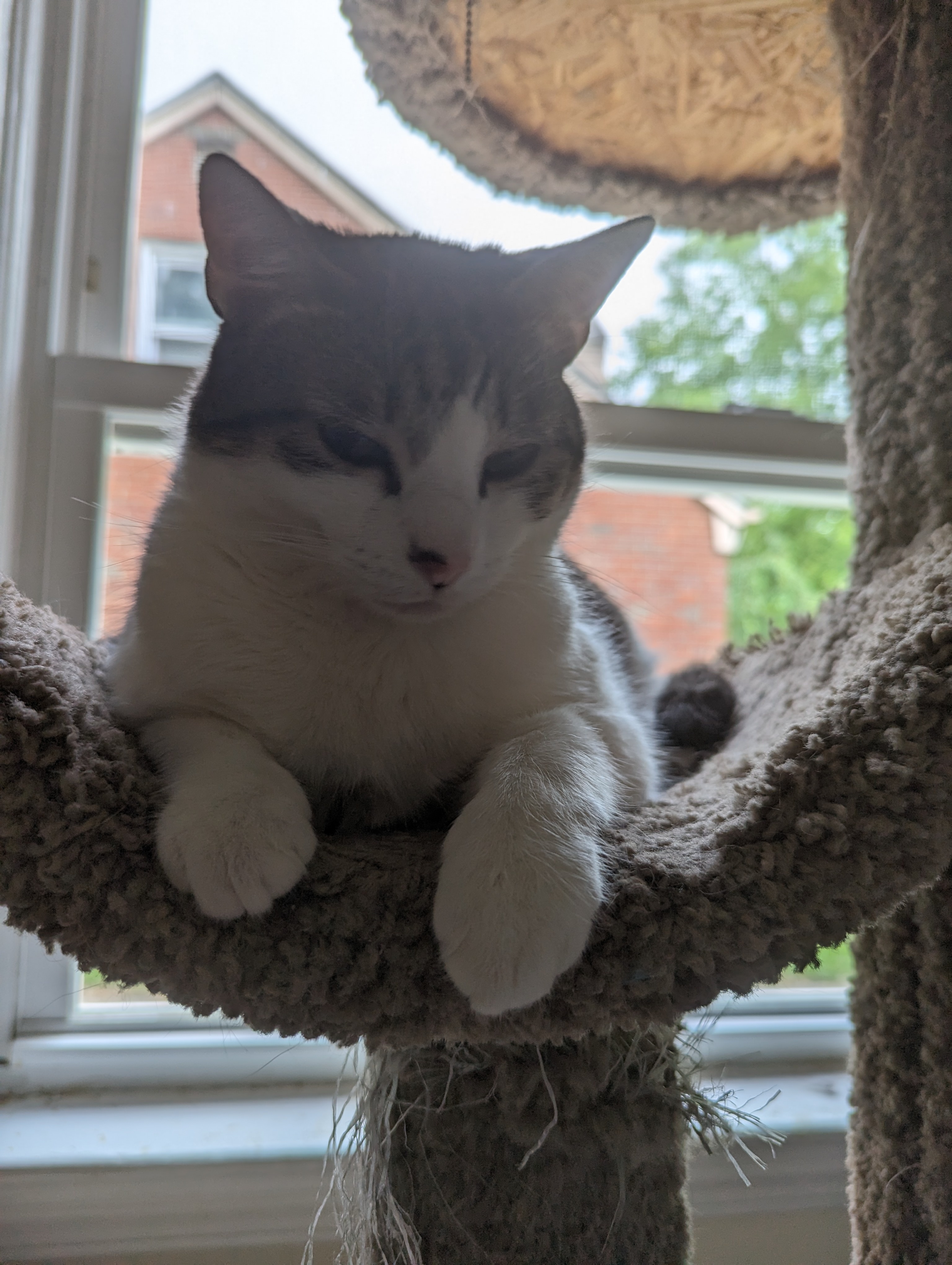
So many sisters
So many sisters

Children in the postmedieval Dutch workforce worked so hard that their spines became worn and deformed, with some children affected before they even had a chance to lose their baby teeth, a new study published in the International Journal of Paleopathology finds.
Researchers examined the backs of Dutch children ages 4–25 who lived between the 1600s and 1800s. They found worn-down spinal joints, bony lips growing on the edges of vertebrae and dents in the discs cushioning the spine—signs modern doctors typically associate with old age and years of grueling physical work, not elementary school-age children.


Walfang ist ein Fischereizweig -> Wal = Fisch
Walfang ist ein Fischereizweig -> Wal = Fisch


If you are thinking about harming yourself — get immediate crisis support. Connect to a crisis counselor 24/7, 365 days a year, from anywhere in the U.S via text, chat, or phone. The Trevor Project is 100% confidential and 100% free.
If you are thinking about harming yourself — get immediate crisis support. Connect to a crisis counselor 24/7, 365 days a year, from anywhere in the U.S via text, chat, or phone. The Trevor Project is 100% confidential and 100% free.

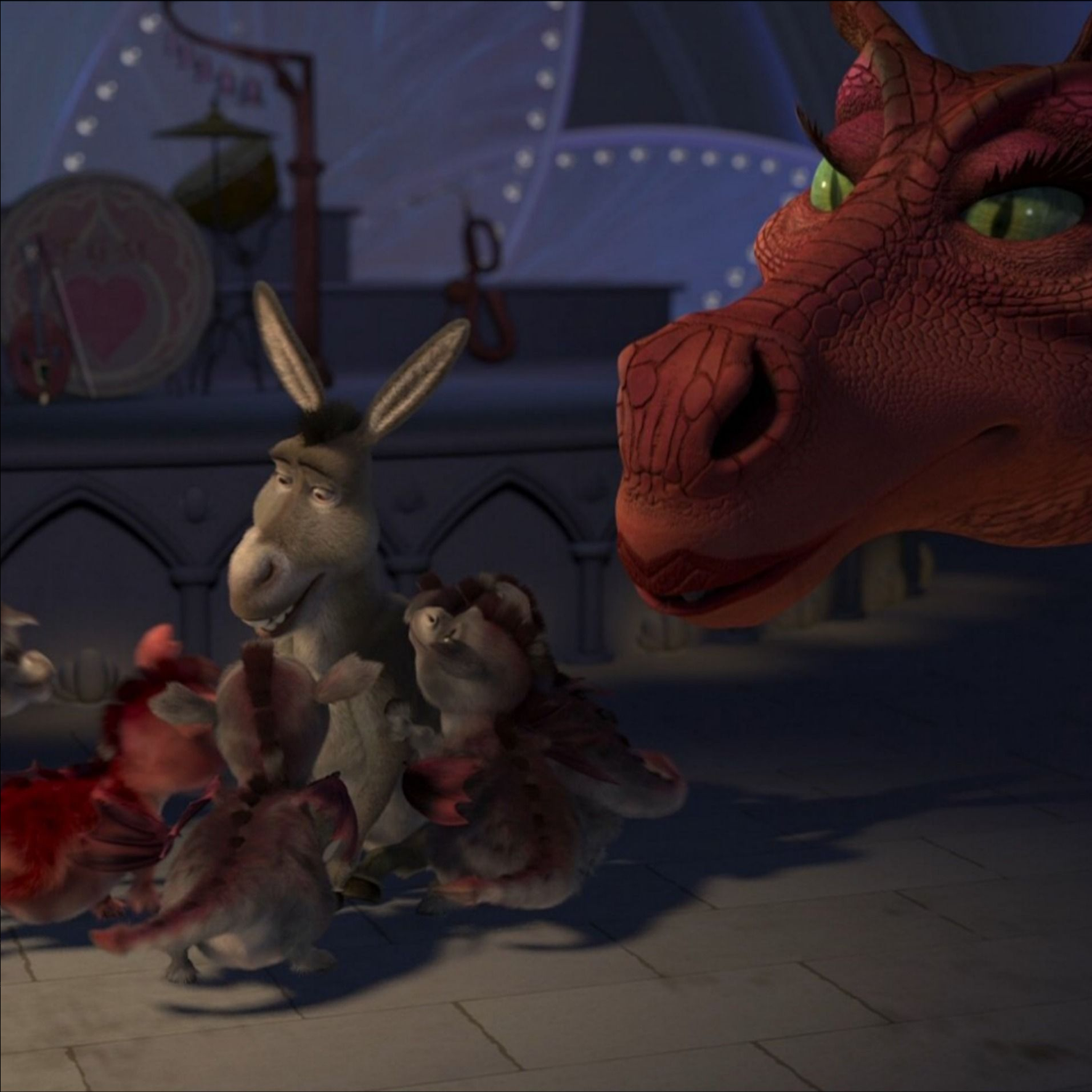
A man walked out of the elevator. Two dozen cubicles spread out symmetrically before him. With practiced steps he walked past the four on the right and squeaked into a chair. The monitor in front of him struggled to wake up, blinking alive only after the desktop to the side had time to psyche itself up and kick the monitor into submission.
Login screen, passwords, then out came the excel spreadsheets, juggling their numbers through hoops and loops until they landed neatly in a row of colorful boxes, mostly red. He sighed and grabbed the next folder, fat with a full-course meal’s worth of deluxe papers from the printer place down the corner. Each page is an ocean of words, each sentence flowing into the next, the underlines catching the waves and riding past the bold swimmers. The dour numbers on the beach that refuse to jump in the water stay to themselves beside the graph pointing to the exit at the bottom of the page.
The man types data into the spreadsheet, then checks his email. Boxes the size of skyscrapers host parties on all floors, and the first floor is the one with the screaming metalheads banging out their anger in a mosh pit right up in front of the stage. He reads the message, types out a careful response, and hits send. The next floor’s got the blues on, and the sobering vibe is a nice change of pace from the metal one floor up, but they have their own funk going on; the crowd’s jamming to a more complicated beat while they look around and ask for answers.
The man decides to check one more email and then start processing invoices. Before he has a chance, the phone drums out its digital percussive groove, sliding smoothly into the improv drum meet popping up around the office, but with some new material the others hadn’t heard before, a rapid triple triplets type rhythm. The flashing number on the screen blinks in approval while the man picks up the phone and says some scripted words to calm the angry person on the other end.
The office carnival plays on as the sun shuffles awkwardly across the room, until it’s on the other side and the clock is reading 5 and the man squeezes into a tight elevator. He ruffles past a crowd, waving away the have a good weekends and the see ya later Davids until he leaps into his car and slaps it into gear. The tires squeal against the pavement, and a traffic cha-cha slide or two later, he’s back home, barely ready for the next carnival.

I wrote a blog post about nihilism and the modern world in my perspective.
Not a promotion or anything.
I wrote a blog post about nihilism and the modern world in my perspective.
Not a promotion or anything.

(They aren’t worth catering to) -Even if they had stable ABI/API in the kernel (they don’t.) The smarter question: why not BSD?
(They aren’t worth catering to) -Even if they had stable ABI/API in the kernel (they don’t.) The smarter question: why not BSD?

cross-posted from: lemmy.ca/post/70124897
cross-posted from: lemmy.ca/post/70124897

When Tolstoy speaks of Christianity, he’s referring to his more objective, philosophical, less supernatural interpretation of his translation of the Gospels. For context: The Gospel in Brief.
This is a direct continuation of Tolstoy’s Thoughts on Truth and Free Will (Part One of Two)
“Every man during his life finds himself in regard to truth in the position of a man walking in the darkness with light thrown before him by the lantern he carries. He does not see what is not yet lighted up by the lantern; he does not see what he has passed which is hidden in the darkness; but at every stage of his journey he sees what is lighted up by the lantern, and he can always choose one side or the other of the road. There are always unseen truths not yet revealed to the man’s intellectual vision, and there are other truths outlived, forgotten, and assimilated by him, and there are also certain truths that rise up before the light of his reason and require his recognition. And it is in the recognition or non-recognition of these truths that what we call his freedom is manifested.
All the difficulty and seeming insolubility [impossible to solve] of the question of the freedom of man results from those who tried to solve the question imagining man as stationary in his relation to the truth. Man is certainly not free if we imagine him stationary, and if we forget that the life of a man and of humanity is nothing but a continual movement from darkness into light, from a lower stage of truth to a higher, from a truth more alloyed with errors to a truth more purified from them. Man would not be free if he knew no truth at all, and in the same way he would not be free and would not even have any idea of freedom if the whole truth which was to guide him in life had been revealed once for all to him in all its purity without any admixture of error. But man is not stationary in regard to truth, but every individual man as he passes through life, and humanity as a whole in the same way, is continually learning to know a greater and greater degree of truth, and growing more and more free from error. And therefore men are in a threefold relation to truth. Some truths have been so assimilated by them that they have become the unconscious basis of action, others are only just on the point of being revealed to him, and a third class, though not yet assimilated by him, have been revealed to him with sufficient clearness to force him to decide either to recognize them or to refuse to recognize them. These, then, are the truths which man is free to recognize or to refuse to recognize.
The liberty of man does not consist in the power of acting independently of the progress of life and the influences arising from it, but in the capacity for recognizing and acknowledging the truth revealed to him, and becoming the free and joyful participator in the eternal and infinite work of God, the life of the world; or on the other hand for refusing to recognize the truth, and so being a miserable and reluctant slave dragged whither he has no desire to go. Truth not only points out the way along which human life ought to move, but reveals also the only way along which it can move. And therefore all men must willingly or unwillingly move along the way of truth, some spontaneously accomplishing the task set them in life, others submitting involuntarily to the law of life. Man’s freedom lies in the power of this choice.
This freedom within these narrow limits seems so insignificant to men that they do not notice it. Some — the determinists — consider this amount of freedom so trifling that they do not recognize it at all. Others — the champions of complete free will — keep their eyes fixed on their hypothetical free will and neglect this which seemed to them such a trivial degree of freedom. This freedom, confined between the limits of complete ignorance of the truth and a recognition of a part of the truth, seems hardly freedom at all, especially since, whether a man is willing or unwilling to recognize the truth revealed to him, he will be inevitably forced to carry it out in life. A horse harnessed with others to a cart is not free to refrain from moving the cart. If he does not move forward the cart will knock him down and go on dragging him with it, whether he will or not. But the horse is free to drag the cart himself or to be dragged with it. And so it is with man. Whether this is a great or small degree of freedom in comparison with the fantastic liberty we should like to have, it is the only freedom that really exists, and in it consists the only happiness attainable by man. And more than that, this freedom is the sole means of accomplishing the divine work of the life of the world.
According to Christ’s doctrine, the man who sees the significance of life in the domain in which it is not free, in the domain of effects, that is, of acts, has not the true life. According to the Christain doctrine, that man is living in the truth who has transported his life to the domain in which it is free — the domain of causes, that is, the knowledge and recognition, the profession and realization in life of revealed truth. Devoting his life to works of the flesh, a man busies himself with actions depending on temporary causes outside himself. He himself does nothing really, he merely seems to be doing something. In reality all the acts which seem to be his are the work of a higher power, and he is not the creator of his own life, but the slave of it. Devoting his life to the recognition and fulfillment of the truth revealed to him, he identifies himself with the source of universal life and accomplishes acts not personal, and dependent on conditions of space and time, but acts unconditioned by previous causes, acts which constitute the causes of everything else, and have an infinite, unlimited significance. ‘The kingdom of heaven suffereth violence, and the violent take it by force.’ (Matt. xi. 12.) It is this violent effort to rise above external conditions to the recognition and realization of truth by which the kingdom of heaven is taken, and it is this effort of violence which must and can be made in our times.
Men need only understand this, they need only cease to trouble themselves about the general external conditions in which they are not free, and devote one-hundredth part of the energy they waste on those material things to that in which they are free, to the recognition and realization of the truth which is before them, and to the liberation of themselves and others from deception and hypocrisy, and, without effort or conflict, there would be an end at once of the false organization of life which makes men miserable, and threatens them with worse calamities in the future. And then the kingdom of God would be realized, or at least that first stage of it for which men are ready now by the degree of development of their conscience. Just as a single shock may be sufficient, when a liquid is saturated with some salt, to precipitate it at once in crystals, a slight effort may be perhaps all that is needed now that the truth already revealed to men may gain a mastery over hundreds, thousands, millions of men, that a public opinion consistent with conscience may be established, and through this change of public opinion the whole order of life may be transformed. And it depends upon us to make this effort.
Let each of us only try to understand and accept the Christian truth which in the most varied forms surrounds us on all sides and forces itself upon us; let us only cease from lying and pretending that we do not see this truth or wish to realize it, at least in what it demands from us above all else; only let us accept and boldly profess the truth to which we are called, and we should find at once that hundreds, thousands, millions of men are in the same position as we, that they see the truth as we do, and dread as we do to stand alone in recognizing it, and like us are only waiting for others to recognize it also. Only let men cease to be hypocrites [actors], and they would at once see that this cruel social organization, which holds them in bondage, and is represented to them as something stable, necessary, and ordained of God, is already tottering and is only propped up by the falsehood of hypocrisy, with which we, and others like us, support it. But if this is so, if it is true that it depends on us to break down the existing organization of life, have we the right to destroy it, without knowing clearly what we shall set up in its place? What will become of human society when the existing order of things is at an end?
'What shall we find the other side of the walls of the world we are abandoning? 'Fear will come upon us — a void, a vast emptiness, freedom — how are we to go forward not knowing whither, how face loss, not seeing hope of gain?.. If Columbus had reasoned thus he would never have weighed anchor. It was madness to set off upon the ocean, not knowing the route, on the ocean on which no one had sailed, to sail toward a land whose existence was doubtful. By this madness he discovered a new world. Doubtless if the peoples of the world could simply transfer themselves from one furnished mansion to another and better one — it would make it much easier; but unluckily there is no one to get humanity’s new dwelling ready for it. The future is even worse than the ocean — there is nothing there — it will be what men and circumstances make it.” - Leo Tolstoy, The Kingdom of God Is Within You, Chapter Twelve: “Conclusion — Repent Ye, for the Kingdom of Heaven Is at Hand”

Totally camouflaged.
Totally camouflaged.
I’m in internal turmoil as to whether or not I can afford to post hundreds of dollars for them. It is ridiculous that I must make this choice. They were covered for years, reducing strain on our overtaxed emergency medical response system. I fear that our hospitals will not be able to survive the upcoming influx of respiratory infections that typically comes with the autumn season. Several regional hospitals are already on the brink, with nurses demanding better conditions or having to close overnight due to lack of staff.
I’m in internal turmoil as to whether or not I can afford to post hundreds of dollars for them. It is ridiculous that I must make this choice. They were covered for years, reducing strain on our overtaxed emergency medical response system. I fear that our hospitals will not be able to survive the upcoming influx of respiratory infections that typically comes with the autumn season. Several regional hospitals are already on the brink, with nurses demanding better conditions or having to close overnight due to lack of staff.


When Tolstoy speaks of Christianity, he’s referring to his more objective, philosophical, less supernatural interpretation of his translation of the Gospels. For context: The Gospel in Brief.
This is a direct continuation of Tolstoy’s Thoughts on Truth and Free Will (Part One of Two)
“Every man during his life finds himself in regard to truth in the position of a man walking in the darkness with light thrown before him by the lantern he carries. He does not see what is not yet lighted up by the lantern; he does not see what he has passed which is hidden in the darkness; but at every stage of his journey he sees what is lighted up by the lantern, and he can always choose one side or the other of the road. There are always unseen truths not yet revealed to the man’s intellectual vision, and there are other truths outlived, forgotten, and assimilated by him, and there are also certain truths that rise up before the light of his reason and require his recognition. And it is in the recognition or non-recognition of these truths that what we call his freedom is manifested.
All the difficulty and seeming insolubility [impossible to solve] of the question of the freedom of man results from those who tried to solve the question imagining man as stationary in his relation to the truth. Man is certainly not free if we imagine him stationary, and if we forget that the life of a man and of humanity is nothing but a continual movement from darkness into light, from a lower stage of truth to a higher, from a truth more alloyed with errors to a truth more purified from them. Man would not be free if he knew no truth at all, and in the same way he would not be free and would not even have any idea of freedom if the whole truth which was to guide him in life had been revealed once for all to him in all its purity without any admixture of error. But man is not stationary in regard to truth, but every individual man as he passes through life, and humanity as a whole in the same way, is continually learning to know a greater and greater degree of truth, and growing more and more free from error. And therefore men are in a threefold relation to truth. Some truths have been so assimilated by them that they have become the unconscious basis of action, others are only just on the point of being revealed to him, and a third class, though not yet assimilated by him, have been revealed to him with sufficient clearness to force him to decide either to recognize them or to refuse to recognize them. These, then, are the truths which man is free to recognize or to refuse to recognize.
The liberty of man does not consist in the power of acting independently of the progress of life and the influences arising from it, but in the capacity for recognizing and acknowledging the truth revealed to him, and becoming the free and joyful participator in the eternal and infinite work of God, the life of the world; or on the other hand for refusing to recognize the truth, and so being a miserable and reluctant slave dragged whither he has no desire to go. Truth not only points out the way along which human life ought to move, but reveals also the only way along which it can move. And therefore all men must willingly or unwillingly move along the way of truth, some spontaneously accomplishing the task set them in life, others submitting involuntarily to the law of life. Man’s freedom lies in the power of this choice.
This freedom within these narrow limits seems so insignificant to men that they do not notice it. Some — the determinists — consider this amount of freedom so trifling that they do not recognize it at all. Others — the champions of complete free will — keep their eyes fixed on their hypothetical free will and neglect this which seemed to them such a trivial degree of freedom. This freedom, confined between the limits of complete ignorance of the truth and a recognition of a part of the truth, seems hardly freedom at all, especially since, whether a man is willing or unwilling to recognize the truth revealed to him, he will be inevitably forced to carry it out in life. A horse harnessed with others to a cart is not free to refrain from moving the cart. If he does not move forward the cart will knock him down and go on dragging him with it, whether he will or not. But the horse is free to drag the cart himself or to be dragged with it. And so it is with man. Whether this is a great or small degree of freedom in comparison with the fantastic liberty we should like to have, it is the only freedom that really exists, and in it consists the only happiness attainable by man. And more than that, this freedom is the sole means of accomplishing the divine work of the life of the world.
According to Christ’s doctrine, the man who sees the significance of life in the domain in which it is not free, in the domain of effects, that is, of acts, has not the true life. According to the Christain doctrine, that man is living in the truth who has transported his life to the domain in which it is free — the domain of causes, that is, the knowledge and recognition, the profession and realization in life of revealed truth. Devoting his life to works of the flesh, a man busies himself with actions depending on temporary causes outside himself. He himself does nothing really, he merely seems to be doing something. In reality all the acts which seem to be his are the work of a higher power, and he is not the creator of his own life, but the slave of it. Devoting his life to the recognition and fulfillment of the truth revealed to him, he identifies himself with the source of universal life and accomplishes acts not personal, and dependent on conditions of space and time, but acts unconditioned by previous causes, acts which constitute the causes of everything else, and have an infinite, unlimited significance. ‘The kingdom of heaven suffereth violence, and the violent take it by force.’ (Matt. xi. 12.) It is this violent effort to rise above external conditions to the recognition and realization of truth by which the kingdom of heaven is taken, and it is this effort of violence which must and can be made in our times.
Men need only understand this, they need only cease to trouble themselves about the general external conditions in which they are not free, and devote one-hundredth part of the energy they waste on those material things to that in which they are free, to the recognition and realization of the truth which is before them, and to the liberation of themselves and others from deception and hypocrisy, and, without effort or conflict, there would be an end at once of the false organization of life which makes men miserable, and threatens them with worse calamities in the future. And then the kingdom of God would be realized, or at least that first stage of it for which men are ready now by the degree of development of their conscience. Just as a single shock may be sufficient, when a liquid is saturated with some salt, to precipitate it at once in crystals, a slight effort may be perhaps all that is needed now that the truth already revealed to men may gain a mastery over hundreds, thousands, millions of men, that a public opinion consistent with conscience may be established, and through this change of public opinion the whole order of life may be transformed. And it depends upon us to make this effort.
Let each of us only try to understand and accept the Christian truth which in the most varied forms surrounds us on all sides and forces itself upon us; let us only cease from lying and pretending that we do not see this truth or wish to realize it, at least in what it demands from us above all else; only let us accept and boldly profess the truth to which we are called, and we should find at once that hundreds, thousands, millions of men are in the same position as we, that they see the truth as we do, and dread as we do to stand alone in recognizing it, and like us are only waiting for others to recognize it also. Only let men cease to be hypocrites [actors], and they would at once see that this cruel social organization, which holds them in bondage, and is represented to them as something stable, necessary, and ordained of God, is already tottering and is only propped up by the falsehood of hypocrisy, with which we, and others like us, support it. But if this is so, if it is true that it depends on us to break down the existing organization of life, have we the right to destroy it, without knowing clearly what we shall set up in its place? What will become of human society when the existing order of things is at an end?
'What shall we find the other side of the walls of the world we are abandoning? 'Fear will come upon us — a void, a vast emptiness, freedom — how are we to go forward not knowing whither, how face loss, not seeing hope of gain?.. If Columbus had reasoned thus he would never have weighed anchor. It was madness to set off upon the ocean, not knowing the route, on the ocean on which no one had sailed, to sail toward a land whose existence was doubtful. By this madness he discovered a new world. Doubtless if the peoples of the world could simply transfer themselves from one furnished mansion to another and better one — it would make it much easier; but unluckily there is no one to get humanity’s new dwelling ready for it. The future is even worse than the ocean — there is nothing there — it will be what men and circumstances make it.” - Leo Tolstoy, The Kingdom of God Is Within You, Chapter Twelve: “Conclusion — Repent Ye, for the Kingdom of Heaven Is at Hand”

📚 Lubisz czytać książki, ale brakuje Ci kogoś z kim mógłbyś powymieniać się opiniami? Chcesz poznać nowe osoby, które mają podobne zainteresowania?
👉 Dołącz do nas 3 września (czwartek) o 19:00 w kawiarni Łoskot Cafe X Prześniona (Jasna 10, Warszawa) na kolejnym spotkaniu Klubu Książki Wydawnictwa Krytyki Politycznej.
🎙️ Spotkanie poprowadzą Kaja Gołuchowska i Szymon Żurawski, czyli podkasterski tandem znany jako “Chłop i baba”.
🎟️ Wstęp: wolny
📖 Tym razem porozmawiamy o książce „Muskizm. Świat według Elona Muska” Bena Tarnoffa i Quinna Slobodiana.
‼️ Z KODEM: MUSKIZM masz dodatkowe -25% na tę książkę w naszym sklepie. Kod ważny tylko do 3 września: krytykapolityczna.pl/…/muskizm-slobodian-tarnoff/
📖 OPIS KSIĄŻKI:
Każdy ma swoje zdanie na temat Elona Muska. Dla jednych jest geniuszem, dla innych zagrożeniem albo klaunem. Opinie są skrajne, ale łączy je jedno: traktują Muska jako jednostkę.
Autorzy tej książki proponują radykalnie inną perspektywę: Elon Musk nie jest wyjątkiem, lecz zwiastunem nowej ery współczesnego kapitalizmu. Jeśli gospodarkę XX wieku zdefiniował fordyzm, XXI wiek należy do muskizmu – doktryny, która łączy kapitał, technologię i władzę w niespotykanej dotąd skali.
Muskizm nie jest zbiorem ekscentrycznych decyzji miliardera, ale narracją, która obiecuje osiągnięcie suwerenności dzięki technologii. Jednak im głębiej wchodzisz w jego infrastrukturę, tym bardziej stajesz się od niej zależny. Samochody Muska jeżdżą dzięki publicznym dotacjom. Prywatne satelity rządzą polem bitwy. Platformy społecznościowe karmią algorytmy, które modelują nasze zachowania.
Muskizm sprzedaje się jako projekt przyszłości, ale reprodukuje on stare hierarchie. Oferuje autonomię wybranym i wykluczenie pozostałym. Jest pronatalistyczny, ale antyimigrancki. Futurystyczny w estetyce, ale politycznie reakcyjny. Mówi o ludzkości, lecz postrzega empatię jako słabość.
Quinn Slobodian i Ben Tarnoff przebijają się przez szum medialny, aby ujawnić, co naprawdę symbolizuje Musk: nową ekonomię polityczną, w której bycie „wolnym” w praktyce oznacza podporządkowanie prywatnej architekturze władzy. Muskizm nie dotyczy pojedynczego człowieka. Dotyczy machiny, która go stworzyła – i świata, który tworzy on.
O AUTORACH:
⦿ Ben Tarnoff - autor Internet for the People oraz współautor Voices from the Valley: Tech Workers Talk About What They Do – And How They Do It. Stały współpracownik „New York Review of Books”. Pisze także dla „New York Times”, „The New Yorker” i „New Republic”.
⦿ Quinn Slobodian - wykłada historię międzynarodową na Uniwersytecie Bostońskim. Autor m.in. Crack-Up Capitalism: Market Radicals and the Dream of a World Without Democracy oraz Hayek’s Bastards: The Neoliberal Roots of the Populist Right. Regularnie publikuje w „New York Times”, „Guardian” i „New York Review of Books”.
Do zobaczenia!
_ _ Książka należy do serii Impact Books wydanej w ramach współpracy Wydawnictwa Krytyki Politycznej z Impactem – największym wydarzeniem gospodarczo – technologicznym, odbywającym się w Europie Środkowo-Wschodniej.
Książka została wydana przy wsparciu R.Power – partnera programu Oświecenie. Wierzymy, że przyszłość należy do tych, którzy myślą odważnie i odpowiedzialnie – dlatego angażujemy się w inicjatywy, które poszerzają horyzonty i inspirują do działania. Nasze partnerstwo w programie Oświecenie doskonale wpisuje się w naszą strategię budowania zrównoważonego świata – nie tylko w wymiarze energetycznym, ale też kulturowym i społecznym. Transformacja energetyczna, w którą aktywnie się angażujemy, to proces, który zdecyduje o tym, co pozostawimy kolejnym pokoleniom – zarówno w krajobrazie, jak i w świadomości.

cross-posted from: szmer.info/post/15914025
❗31 sierpnia 2026 r. o godz. 11:00 przed Kancelarią Prezesa Rady Ministrów w Warszawie odbędzie się manifestacja organizowana przez ZNP pod hasłem:
👉 „Politycy do tablicy! Godne płace: Dotrzymajcie słowa!”
Jako Rada Szkolnictwa Wyższego i Nauki Związku Nauczycielstwa Polskiego będziemy tam razem z nauczycielami i pracownikami oświaty. Będziemy reprezentować nauczycieli akademickich oraz innych pracowników uczelni i instytucji nauki.
🎓 Edukacja jest jedna – od przedszkola, przez szkołę, aż po uczelnie i naukę.
Problemy poszczególnych grup pracowników mogą być różne, ale łączy nas wspólna sprawa: godne wynagrodzenia, stabilne warunki zatrudnienia, odpowiednie finansowanie edukacji i nauki oraz rzeczywisty szacunek dla ludzi, którzy tworzą polski system edukacji.
Nie ma dobrej szkoły bez nauczycieli i pracowników oświaty. Tak samo nie ma dobrej uczelni bez nauczycieli akademickich oraz tysięcy pracowników administracji, technicznych, inżynieryjnych, bibliotecznych i wszystkich pozostałych osób, dzięki którym uczelnie mogą każdego dnia funkcjonować.
🤝 Dlatego 31 sierpnia będziemy na manifestacji! Do zobaczenia w Warszawie🎓

LAPDOG by Damien Hearse, released 28 August 2026
from the upcoming album 'limerent'
LAPDOG by Damien Hearse, released 28 August 2026
from the upcoming album 'limerent'