997
332


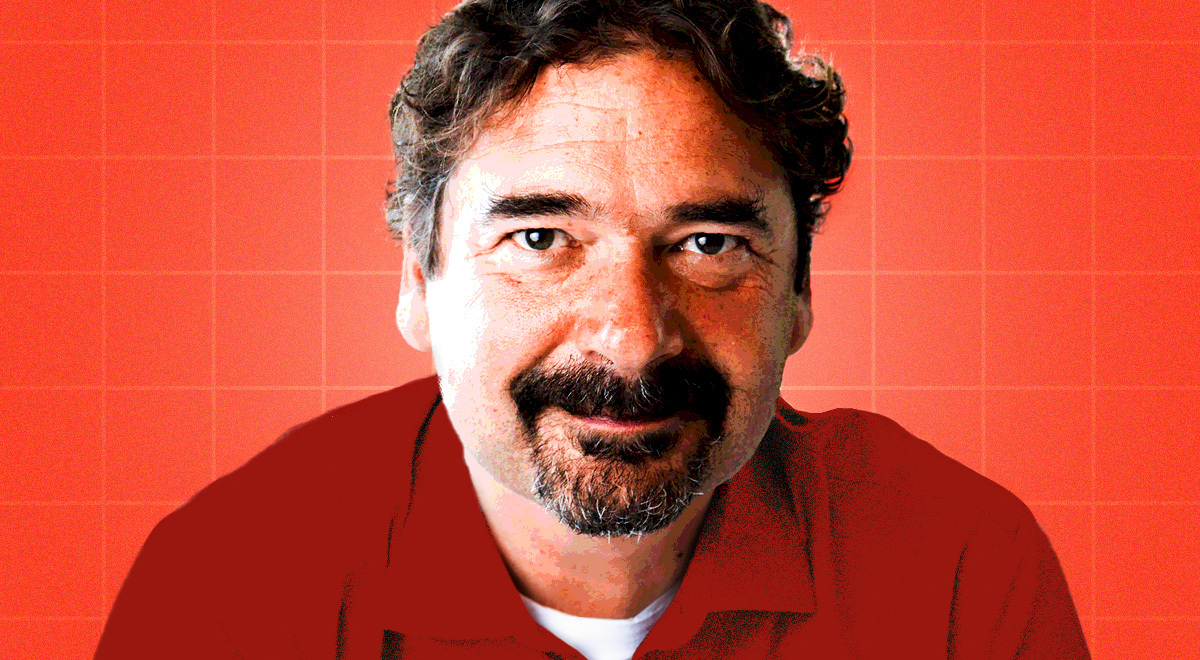
Jon von Tetzchner, CEO and founder of Vivaldi Technologies, refuses to integrate AI features in its browser and wants human engineers, not AI, to write its code.
Jon von Tetzchner, CEO and founder of Vivaldi Technologies, refuses to integrate AI features in its browser and wants human engineers, not AI, to write its code.


Alt text:
The “Anime Girl Hiding From a Terminator” meme but the terminator is hiding from the anime girl
The scared, powerless terminator is captioned with “‘Rogue’ AI agents” while it hides from the girl, who is captioned with “Anyone who knows how to turn off a computer”
Alt text:
The “Anime Girl Hiding From a Terminator” meme but the terminator is hiding from the anime girl
The scared, powerless terminator is captioned with “‘Rogue’ AI agents” while it hides from the girl, who is captioned with “Anyone who knows how to turn off a computer”






cross-posted from: lemmy.world/post/54411557
A chip oversupply may have pushed Nvidia to manufacture its own demand
The AI boom has been widely blamed for GPU prices spinning out of control over the past year. Following Jensen Huang’s resignation from Nvidia, new information suggests that this was the goal of the former CEO’s business strategy, which has long drawn accusations of circular financing.
A recent Wall Street Journal profile of Nvidia interim CEO Colette Kress has shed more light on how Nvidia controversially financed its own customers to drive the AI boom. According to the report, the company pushed for more deals in mid-to-late 2026 to keep its GPU prices high amid an oversupply of TSMC wafers.
Since at least last year, Nvidia has been accused of prolonging the AI boom by supporting the companies that buy its chips. Founder and former CEO Jensen Huang, along with then-CFO Kress, even went so far as to defend the company against comparisons to Enron, which used similar tactics to illegally obscure its debt before its 2001 collapse.




Tradional Usage
  tar {A|c|d|r|t|u|x}[GnSkUWOmpsMBiajJzZhPlRvwo] [ARG...]
It is invigorating.
Tradional Usage
  tar {A|c|d|r|t|u|x}[GnSkUWOmpsMBiajJzZhPlRvwo] [ARG...]
It is invigorating.



cross-posted from: piefed.zip/…/judge-blasts-tesla-as-fraudulent-for…
Like many of its experimental products, Tesla’s Solar Roof — a solar panel array engineered to look like discreet roof tiles — has been a stunning failure. Nowhere is that flop more apparent than on the roof of Ambrose Conroy, a California homeowner who’s spent over six years battling with Tesla over the solar installation from hell.
According to Electrek, the whole saga began back in 2020, when Conroy entered an agreement to buy a 13.1 kW photovoltaic system from Tesla. Though the process was supposed to take a few weeks, it ran years late, as compounding errors and logistical disasters threw the project into chaos.


This is an article of charts and graphs that are not captured by archive sites, so registration is the best way to access it.
The paper is here
This is an article of charts and graphs that are not captured by archive sites, so registration is the best way to access it.
The paper is here

Lol. Lmao, even. So true.
Lol. Lmao, even. So true.


Official PR from NVIDIA
Official PR from NVIDIA

I saw some discussion about this elsewhere. Here is how the project describes itself:
OccupySaaS is a protest movement in code: laid-off developers building clean-room, open-source, drop-in replacements for the SaaS giants. First up: ZeroAuthy (Auth0) and SalesCompel (Salesforce).
In 2011, Occupy Wall Street asked who the economy was really working for. In 2026 we’re asking the same question about the cloud. The tools every company runs on are now toll booths — and the people who built them were shown the door.
Two towers occupied.
Identity and CRM: the two subscriptions almost every company pays for and almost nobody loves. ZeroAuthy has shipped its first release candidate, SalesCompel is still early, and both welcome contributors today.
Who’s next?
Every category on this board is a monthly invoice somewhere. The movement picks the next target in public — bring a spec, a use case, or a grudge.

cross-posted from: lemmy.world/post/54402994
cross-posted from: lemmy.world/post/54402994




cross-posted from: lemmy.world/post/54410957
Key Points
- Robot startup Foundation has failed to pay employees since missing its Oct. 30 payroll, angering some workers after its CEO borrowed $4.6 million from the firm last year to buy a luxury home, according to people familiar with the matter.
- CEO and co-founder Sankaet Pathak is Foundation’s sole board member, raising governance concerns among prospective investors.
- Foundation’s widely reported $24 million in Pentagon contracts actually stems from its 2024 acquisition of Boardwalk Robotics, which held some existing government research contracts, the people said.
- Pathak’s previous company, Synapse, collapsed in 2024, leaving thousands of customers without access to deposits. Pathak reportedly took loans from Synapse as it neared bankruptcy.

NetBSD seems to be thriving of late: as the Linux world goes pro-AI, some of the AI-averse are turning to this explicitly AI-free project.
The NetBSD project’s Mastodon feed reports that it received a record 120 donations last month, and it has far exceeded its target:
“We received $120,282 USD in total. Naturally, this has completely filled up our donations target bar which was set at $50,000. Time to fund some projects!”
It’s a welcome contrast to the usual stories of under-funded FOSS projects, and it follows a visible uptick in people asking about NetBSD in the FOSS Unix groups we read, ever since Emperor Penguin Torvalds said that Linux was not an anti-AI project back in July, and the following month, the Debian project polled its developers on AI use, and they chose to permit AI-generated contributions.

These companies should be criminally liable for training their models on child porn.
These companies should be criminally liable for training their models on child porn.

It’s true tho! I think we should dismantle the taboo of talking about sex, lewd stuff and being chaotically horny :3
The world needs more horny! 🩷️
It’s true tho! I think we should dismantle the taboo of talking about sex, lewd stuff and being chaotically horny :3
The world needs more horny! 🩷️






This video is a short documentary talking about how idTech developers and how they came together to make their own employee-owned indie studio. Good stuff!
This video is a short documentary talking about how idTech developers and how they came together to make their own employee-owned indie studio. Good stuff!



The bill would stop companies from using personal data to set individualized prices. Here’s what that means for shoppers.
The bill would stop companies from using personal data to set individualized prices. Here’s what that means for shoppers.