


12

South Korea completes Arctic-Europe commercial voyage, eyes regular service despite risks

preview

President Lee Jae Myung has made Arctic shipping ​a priority, and officials hope to launch regular services by ​2030.

The route runs along Russia’s Arctic ​coast, and Seoul consulted with Moscow about the journey, ​including whether the ship needed help to tackle any problems, such as ‌getting ⁠stuck in ice.

20

Police detain 76 and check 50,000 schools after 2 attacks shake Poland

preview

WARSAW, Poland (AP) — Police on Saturday said they detained 76 people across Poland and checked nearly 50,000 schools nationwide as part of efforts to prevent further violence following two school attacks earlier in the week.

On Friday, schools across Poland stepped up security, with some suspending classes, many parents keeping children at home and police patrols deployed to educational institutions after two attacks at schools earlier in the week left one person dead and several others wounded, including children.

On Wednesday, a 19-year-old student at a vocational school in the Mazovian province in central Poland attacked fellow students, teachers and passersby with a sharp object, injuring nine people before fleeing and being arrested nearby. The following day, a 15-year-old killed a school custodian and wounded two others in a knife attack at his former school in the same province.

The assaults, both carried out by Polish nationals, shocked a country where school violence by minors is a new phenomenon.

By Thursday night, rumours that the attacks were coordinated and that there would be more on the culmination day dubbed “bloody Friday” were being shared in parents’ online groups and by mainstream media.

59 schools preemptively suspended classes on Friday across Poland, the majority in the Mazovian district, where the capital Warsaw is located. School directors sent messages announcing stepped-up security measures including extra school staff placed at entrances and voluntary backpack checks.

152

Trump strikes diesel deal with Putin, reversing years of pressure on Russia over Ukraine war

France 24 Trump strikes diesel deal with Putin, reversing years of pressure on Russia over Ukraine war www.france24.com
preview

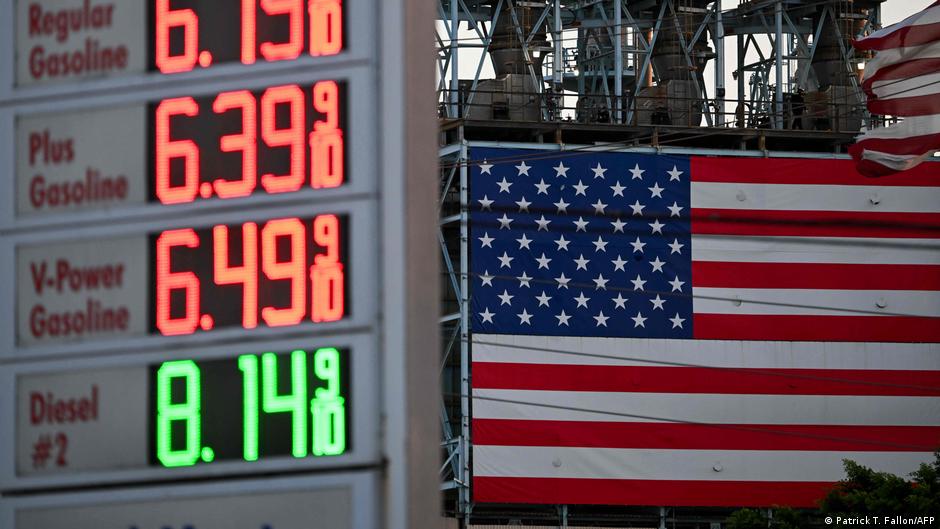
US President Donald Trump said Friday that Russia had agreed to immediately supply more than 300,000 tonnes of diesel to US and global markets in an effort to cut fuel prices before November’s midterm elections. The move marks a stunning change of policy after the US and its allies hit Russia with waves of sanctions over its invasion of Ukraine.

US President Donald Trump said Friday that Russia had agreed to immediately supply more than 300,000 tonnes of diesel to US and global markets in an effort to cut fuel prices before November’s midterm elections. The move marks a stunning change of policy after the US and its allies hit Russia with waves of sanctions over its invasion of Ukraine.

69

France and Germany cut deal to delay phase out of internal combustion cars, reports say

The Driven IO France and Germany cut deal to delay phase out of internal combustion cars, reports say thedriven.io
preview

France and Germany have agreed to push for a further weakening of the EU’s planned phaseout of new combustion engine cars, a deal that could break a months-long deadlock among member states, business daily Handelsblatt and newspaper Frankfurter Allgemeine Zeitung reported.

France and Germany have agreed to push for a further weakening of the EU’s planned phaseout of new combustion engine cars, a deal that could break a months-long deadlock among member states, business daily Handelsblatt and newspaper Frankfurter Allgemeine Zeitung reported.

30

EU drops sponsorship of disinformation conference at Trump officials’ request

the Guardian EU drops sponsorship of disinformation conference at Trump officials’ request www.theguardian.com
preview

The Trump administration pressured multiple countries to withdraw their sponsorship of a leading European conference on disinformation, with Canada, Lithuania and the EU’s diplomatic service subsequently agreeing to do so, the Guardian understands.

The conference, #Disinfo2026, taking place Wednesday and Thursday, is the annual meetup of Europe’s counter-disinformation community and has drawn hundreds of researchers, journalists, technologists and policymakers to a hotel in Vilnius, Lithuania. It is run by an independent Brussels non-profit, EU Disinfo Lab.

Days before the conference, the logos of its main supporters – the Lithuanian ministry of foreign affairs, the European External Action Service (EEAS) and Global Affairs Canada, the country’s foreign ministry – were wiped off its website.

Photos of the event shared with the Guardian also show white stickers affixed over the logos of these organisations printed on official conference materials, appearing to indicate they were struck from the program in haste.

Three persons familiar with the matter, including European officials, confirmed that the US state department had been in touch with multiple governments over their support for the conference.

Internal state department documents seen by the Guardian also show US officials thanking Lithuania for “taking US concerns seriously”. The document says Washington was “grateful” Lithuania supposedly found a panel framing the US as a foreign information threat “reprehensible and surprising” and welcomed its decision to limit involvement in the conference.

That panel – called “USA as a FIMI threat: adapt, acknowledge, push back”, with the acronym FIMI referring to “foreign information manipulation and interference” – took place Wednesday. It explored how Europe’s disinformation community could rebuild resilience without Washington, and is the first time the conference appears to have entertained the idea that the US could be a disinformation actor in Europe. Sources and the internal document indicate the state department was explicitly focused on this panel, which included three American speakers, among them a former CIA officer.

According to one person familiar with the deliberations, other communications appeared to originate from the office of Sarah B Rogers, the US undersecretary of state for public diplomacy.

Nina Jankowicz, a former US official and disinformation expert who in 2022 briefly headed the Biden administration’s Disinformation Governance Board, which Republicans assailed as a vehicle for policing Americans’ speech, said she understood that Washington had pressured Lithuania and Canada to withdraw from the conference. The Guardian understands that France was contacted as well.

“What this amounts to is a purported defender of free speech at the state department using the enormous power of the US government to try to pressure Americans from criticizing their government,” said Jankowicz.

In statements, Lithuania, Canada and the EU said the program of the conference did not align with their official views on the US role in disinformation – although that program had been in place for months before they withdrew their support, since June.

“Lithuania has cancelled its participation in ‘Disinfo 2026’ as several parts of the conference programme differ from the official position of the Government,” Lithuania’s foreign ministry wrote in a statement.

Global Affairs Canada “carefully assesses participation in, and sponsorship of, external events on a case-by-case basis,” GAC spokesperson Samantha Lafleur said. “Following changes to the framing of several panel discussions, GAC decided to revise its participation in those sessions at the EU DisinfoLab 2026 conference.”

Canadian officials are still participating in the conference, Lafleur added.

An EU spokesperson confirmed that the European External Action Service had decided to withdraw its support from the conference because “the organisers chose to frame some of the discussions in a way which does not align with the official positions held by the EU.”

EU officials, the Guardian understands, did not agree with the characterisation of the US as a disinformation actor.

Despite withdrawing its branding as an official supporter, the EU continues to fund the conference.

In its latest report on foreign information manipulation and interference threats, published in March, the EU’s diplomatic service named Russia and China as “threat actors” without any negative reference to the US.

A diplomatic source at France’s foreign ministry said “there’s absolutely no reason for us to change our commitments” when it came to supporting the conference.

“We stick to supporting civil society. It’s not just principled, it’s operational,” she said, adding that the conference was a “laboratory” that helped Europe develop key policy around disinformation.

The US state department has taken an increasingly interventionist posture towards free speech and civil society in Europe over the past year. The Guardian has revealed that the state department is awarding millions of dollars in non-competitive grants to organisations across the continent supportive of Trump’s agenda.

Lithuania’s withdrawal comes just after the prime minister, Mindaugas Sinkevicius, said Lithuania would pay for a permanent US military base if the US agreed, a day after Trump said he would consider the request. Sinkevicius called a lasting American presence a critical guarantee of deterrence against Russia.

“They are great people, so we will certainly look at it,” the US president said on Monday.

Sinkevicius said he first proposed the idea in a meeting with Trump’s envoy John Coale, and called it a “critically important guarantee of deterrence and security.” Lithuania, a member of the EU and Nato, borders Russia and its close ally Belarus.

The US has kept a rotating armoured battalion of almost 1,000 troops in the country since 2019, the US Army has noted.

123

87-year-old Maricarmen dies in hospital after infamous eviction ordeal

euronews 87-year-old Maricarmen dies in hospital after infamous eviction ordeal www.euronews.com
preview

cross-posted from: piefed.ca/…/87-year-old-maricarmen-dies-in-hospit…

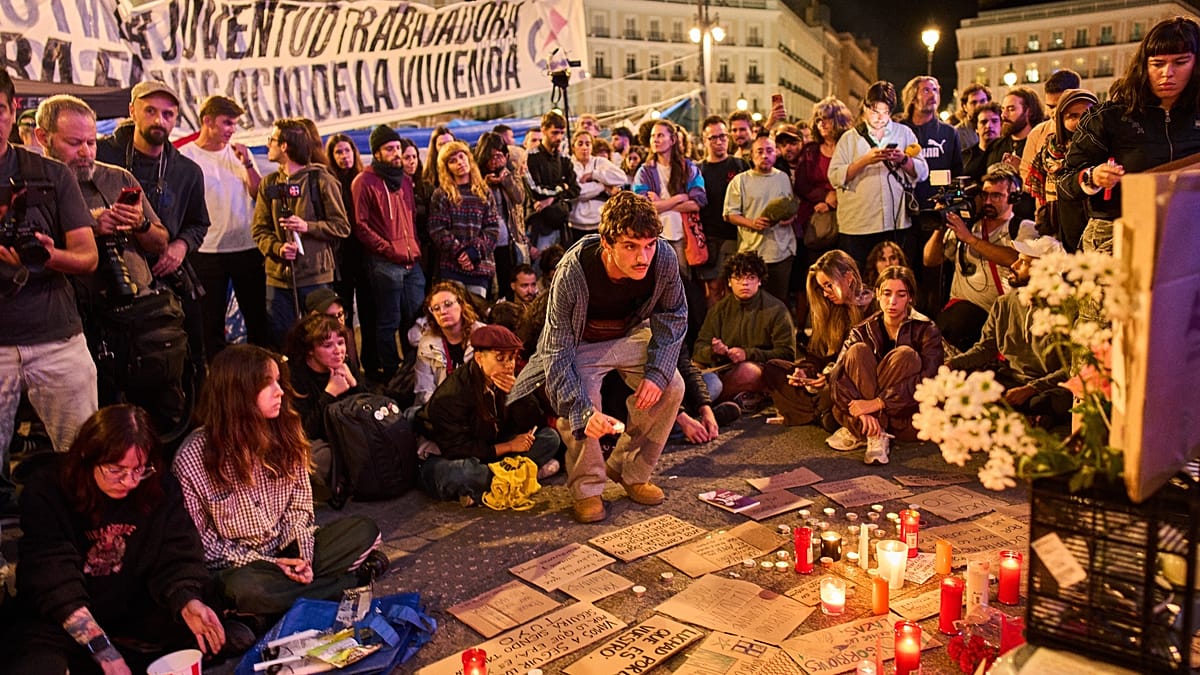
The 87-year-old whose eviction sparked a domestic crisis and triggered nationwide anti-government protests has died in hospital late on Wednesday. Protesters say they will continue to demonstrate to uphold her legacy.

cross-posted from: piefed.ca/…/87-year-old-maricarmen-dies-in-hospit…

The 87-year-old whose eviction sparked a domestic crisis and triggered nationwide anti-government protests has died in hospital late on Wednesday. Protesters say they will continue to demonstrate to uphold her legacy.

44

Tesla is browbeating the EU to approve its ‘Full Self-Driving’ tech. The pressure is working.

preview

The strategy has worked so far, winning a critical first approval in the Netherlands that cleared the way for a Europe-wide vote expected soon by regulators from 27 European Union countries. Seven other EU countries, including the Czech Republic, Belgium and Denmark, have granted Tesla national approvals for the driver-assistance technology, which is not fully autonomous.

But Tesla’s campaign is built on faulty company safety research that can’t support the company’s claims to officials or the public, according to seven traffic-safety researchers who examined its methodology for Reuters.

12

What is the political landscape across Europe right now?

preview

cross-posted from: https://retrofed.com/c/nostupidquestions@lemmy.world/p/2204687/what-is-the-political-landscape-across-europe-right-now

There’s been a lot of news regarding Andy Burnham becoming the new PM (is he actually changing anything or is it all talk?), the silly election between Farage and Count Binface, the three sort of maybe pro-independence (or pro-unification in the case of Northern Ireland) of the countries within the UK meeting, Burnham possibly looking to reverse Brexit (big if true), etc. Are referendums on the future of the countries of the UK likely, is the reversal of Brexit likely, what policies has Burnham made to improve standard of living?

Is the rise of AfD in Germany a concern, what has the other parties done to slow it down? What has the other parties / incumbent governments across Europe done to respond to the rise of the far-right?

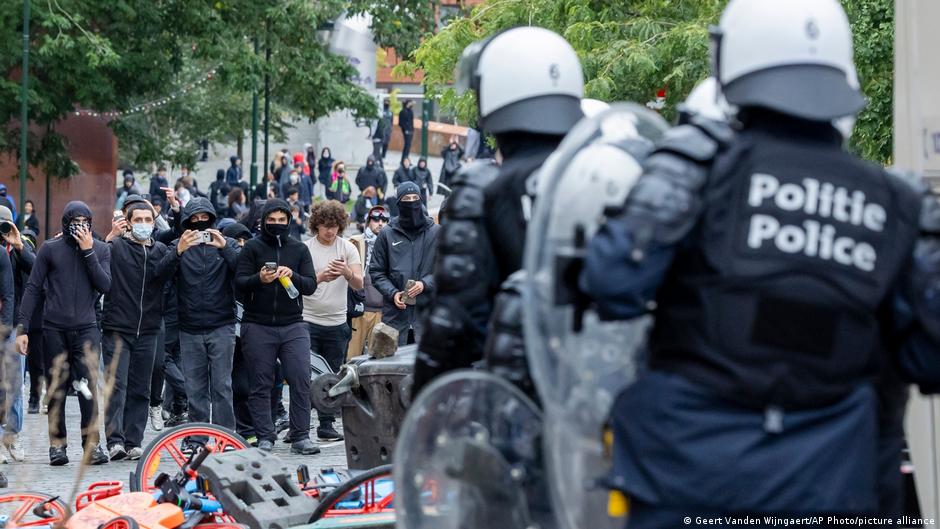
In France, there’s news of student protests that have gotten violent (by both sides), what’s up with that? I’ve heard news of the rise of both LFI (left wing populist, their leader from my understanding is pro-Putin and tankieish, is this true?) and the National Rally (the far-right), what’s happening around that?

What has the new leader of Hungary (Peter Magyar) done to reform? What about other Eurosceptic (or formerly Eurosceptic?) nations like Slovakia? I’ve seen some news regarding recent elections in Bosnia and Herzegovina (where nationalist leaders have been elected), how significant are those?

There’s been lots of drone attacks, tampering of infrastructure, etc. by the Russians on various neighbouring countries (Poland, the Baltics, Moldova, etc.), have those affected the policies of those states in any way? And of course, how is Ukraine doing against the invasion by Russia (has support changed, have there been any significant advances or retreats, etc.)?

And what about Spain, the Nordics, Italy, Portugal, etc.?

4

Four Days in Ekaterinburg - Craig Murray

Craig Murray Four Days in Ekaterinburg - Craig Murray www.craigmurray.org.uk
preview

Long but interesting essay from Scottish independence advocate. I know the text might be controversial for this comm but IMO is well worth the read.

Long but interesting essay from Scottish independence advocate. I know the text might be controversial for this comm but IMO is well worth the read.

70

Survey: Majority of Germans believe Merz has failed as chancellor

preview

A survey by the Ipsos Institute for the Spiegel news magazine found on Wednesday that 48% of respondents agreed fully with the statement that Merz’s government “has failed,” with a further 19% somewhat agreeing.

A survey by the Ipsos Institute for the Spiegel news magazine found on Wednesday that 48% of respondents agreed fully with the statement that Merz’s government “has failed,” with a further 19% somewhat agreeing.

15

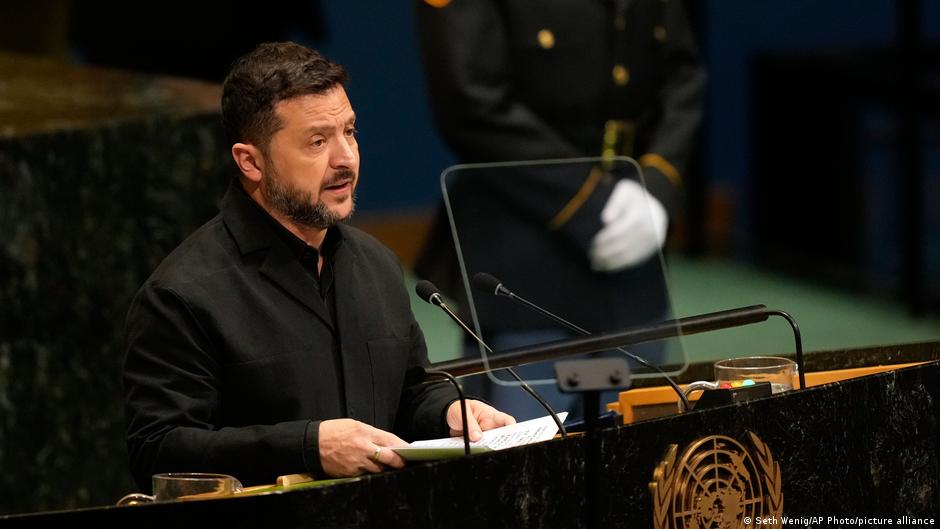
Disinformation review: Bucha denial at UN General Assembly and Nazi narratives justifying strikes on Ukraine

EUvsDisinfo Bucha denial at UNGA and Nazi narratives justifying strikes on Ukraine - EUvsDisinfo euvsdisinfo.eu
preview

IN SHORT:

Russia uses UNGA to demand “proper investigation” into its well-documented war crimes in Bucha

Ukrainian officials accused of child trafficking while Russian officials are wanted by the ICC for the same crime

“Nazi Ukraine” narrative used to justify strikes on civilian infrastructure

IN SHORT:

Russia uses UNGA to demand “proper investigation” into its well-documented war crimes in Bucha

Ukrainian officials accused of child trafficking while Russian officials are wanted by the ICC for the same crime

“Nazi Ukraine” narrative used to justify strikes on civilian infrastructure

5

German factory orders decline sharply

preview

German factory orders fell sharply in August, largely due to a drop in orders in transport equipment manufacturing, data from Germany’s Federal Statistical Office (Destatis) showed on Tuesday.

German factory orders fell sharply in August, largely due to a drop in orders in transport equipment manufacturing, data from Germany’s Federal Statistical Office (Destatis) showed on Tuesday.

156

Germany's ex-spy chief arrested for espionage

dw.com Germany's ex-spy chief arrested for espionage www.dw.com
preview

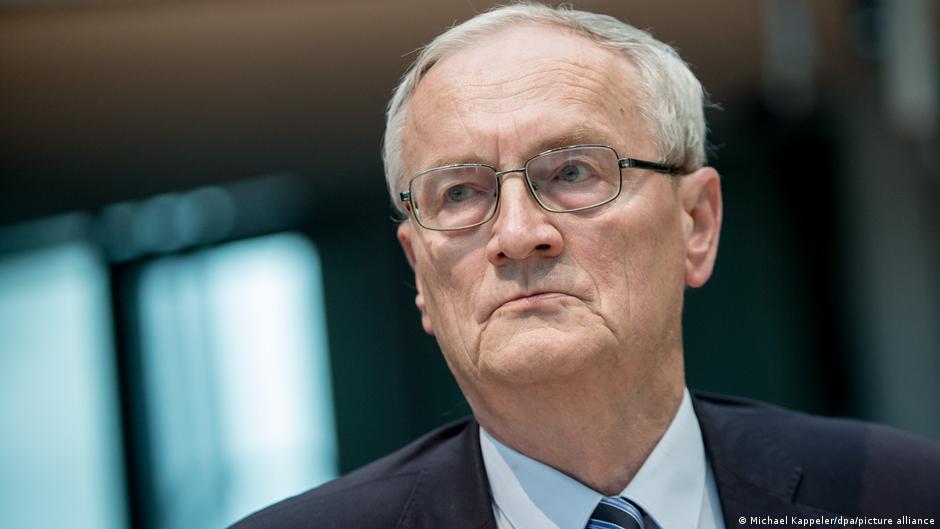
August Hanning served as the head of Germany’s BND foreign intelligence agency from 1998 to 2005. According to German media, he is being investigated for allegedly passing on state secrets and working as an agent.

August Hanning served as the head of Germany’s BND foreign intelligence agency from 1998 to 2005. According to German media, he is being investigated for allegedly passing on state secrets and working as an agent.

36

How Sweden Has Eradicated Smoking (And Why Brussels Wants To Stop It) | VisualPolitik EN | Video

YouTube How Sweden Has Eradicated Smoking (And Why Brussels Wants To Stop It) | VisualPolitik EN www.youtube.com
preview

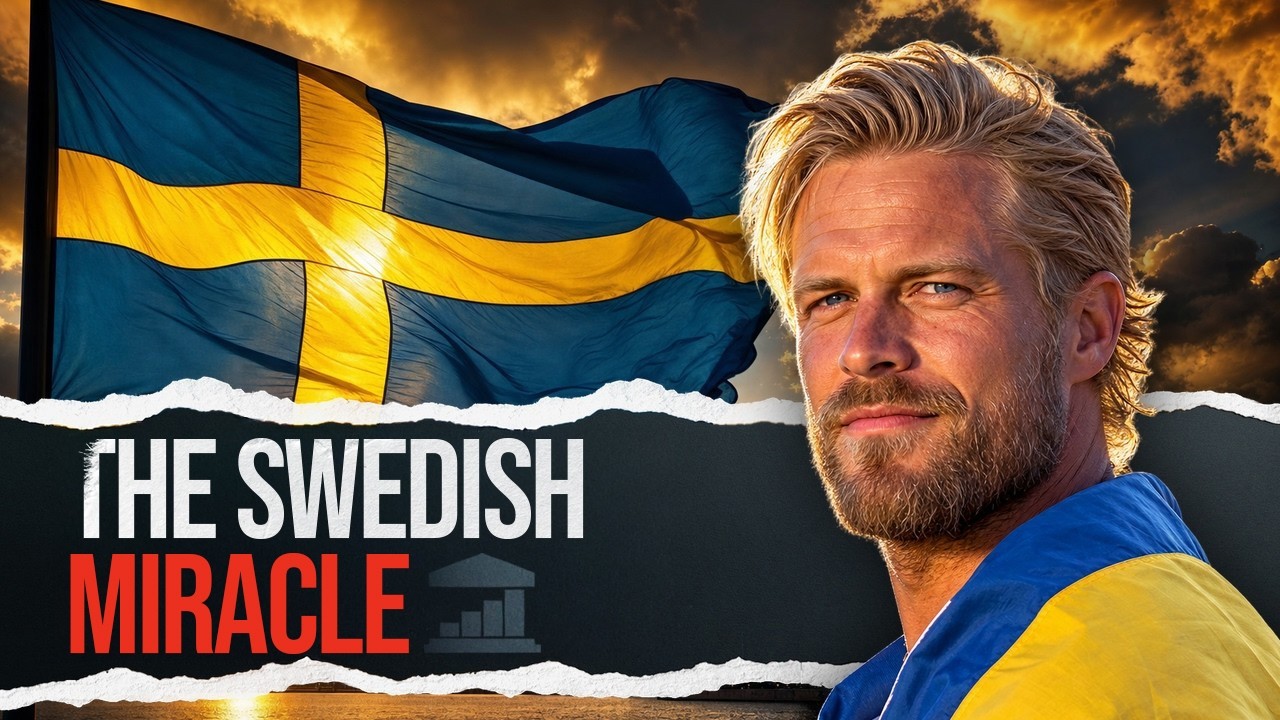
TLDR: Sweden focuses on harm reduction, had “snus” as an alternative, among other things.

TLDR: Sweden focuses on harm reduction, had “snus” as an alternative, among other things.

11

The Russian Military Campaign Against Europe: Defining the Threat

Institute for the Study of War The Russian Military Campaign Against Europe: Defining the Threat understandingwar.org
preview

The report concludes that Russia is conducting a coordinated, state-directed campaign of kinetic sabotage, drone strikes, and airspace incursions across Europe to undermine NATO unity and disrupt support for Ukraine. It argues that European leaders must stop labeling these actions as isolated hybrid provocations and instead recognize them as an active, escalating military campaign. European nations must urgently accelerate defense rearmament and integrate tactical lessons from Ukraine to deter potential Russian conventional incursions on a shorter timeline than the projected 2028–2030 window.

The report concludes that Russia is conducting a coordinated, state-directed campaign of kinetic sabotage, drone strikes, and airspace incursions across Europe to undermine NATO unity and disrupt support for Ukraine. It argues that European leaders must stop labeling these actions as isolated hybrid provocations and instead recognize them as an active, escalating military campaign. European nations must urgently accelerate defense rearmament and integrate tactical lessons from Ukraine to deter potential Russian conventional incursions on a shorter timeline than the projected 2028–2030 window.

51

How Russia recruits ‘disposable agents’ online for sabotage across Europe

How Russia recruits ‘disposable agents’ online for sabotage across Europe tvpworld.com
preview

Russia is systematically recruiting ordinary Europeans for low-level sabotage and surveillance through fake job offers on social media and job boards, targeting individuals across socioeconomic backgrounds with financial incentives. The “disposable agent” model exploits greed and reduces operational risk by using locals unlikely to be under existing surveillance. Recent recruitment attempts reached TVP World journalists via SMS and Telegram, mirroring documented patterns across Europe and Poland specifically.

Defense: public awareness and reporting of suspicious recruitment offers.

106

Raids Across Europe Target Far-Right Network Accused of Producing Neo-Nazi Music

OCCRP Raids Across Europe Target Far-Right Network Accused of Producing Neo-Nazi Music www.occrp.org
preview

cross-posted from: https://feddit.online/c/euro@feddit.online/p/2002050/raids-across-europe-target-far-right-network-accused-of-producing-neo-nazi-music

cross-posted from: https://feddit.online/c/euro@feddit.online/p/2002050/raids-across-europe-target-far-right-network-accused-of-producing-neo-nazi-music