0

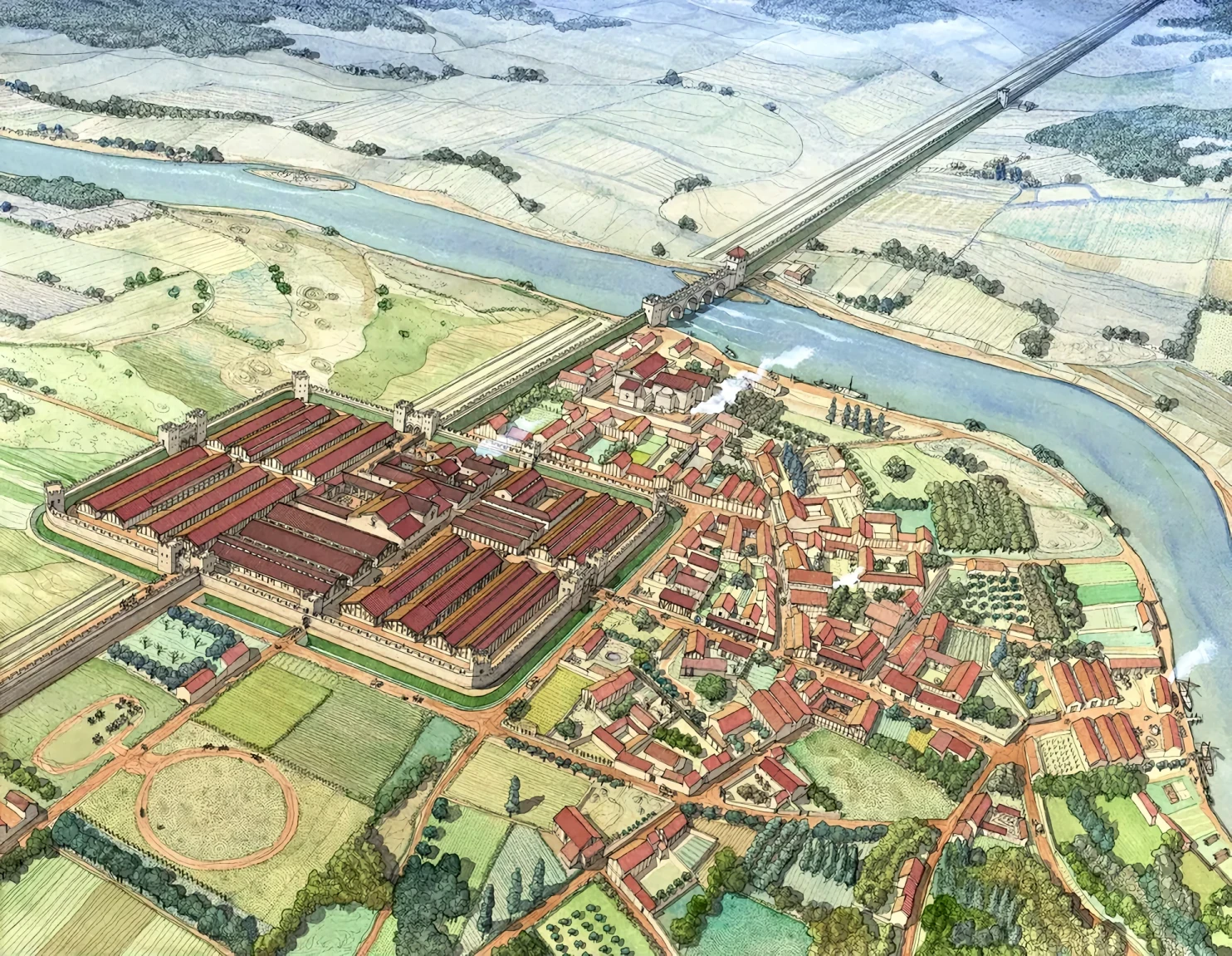
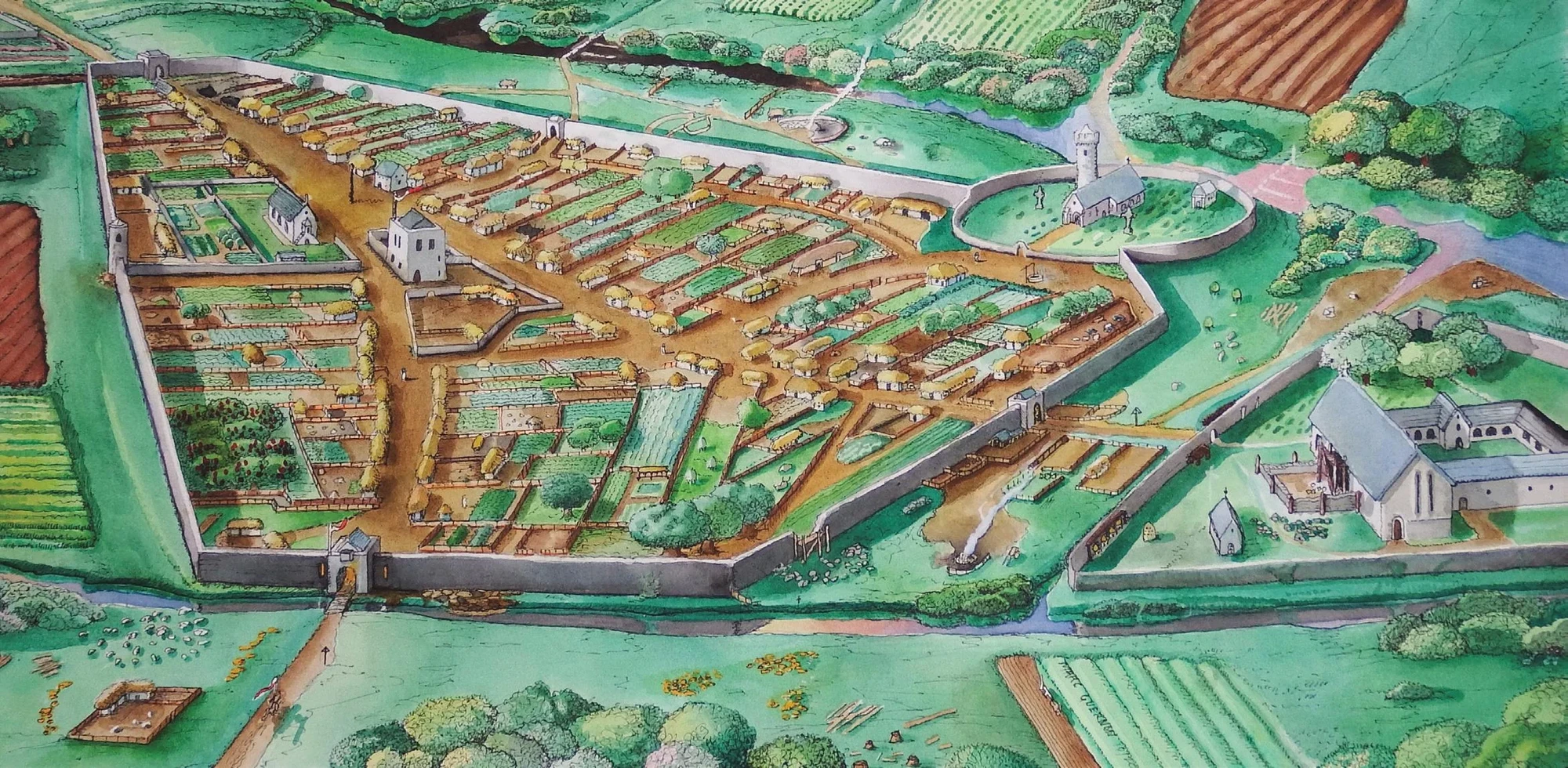
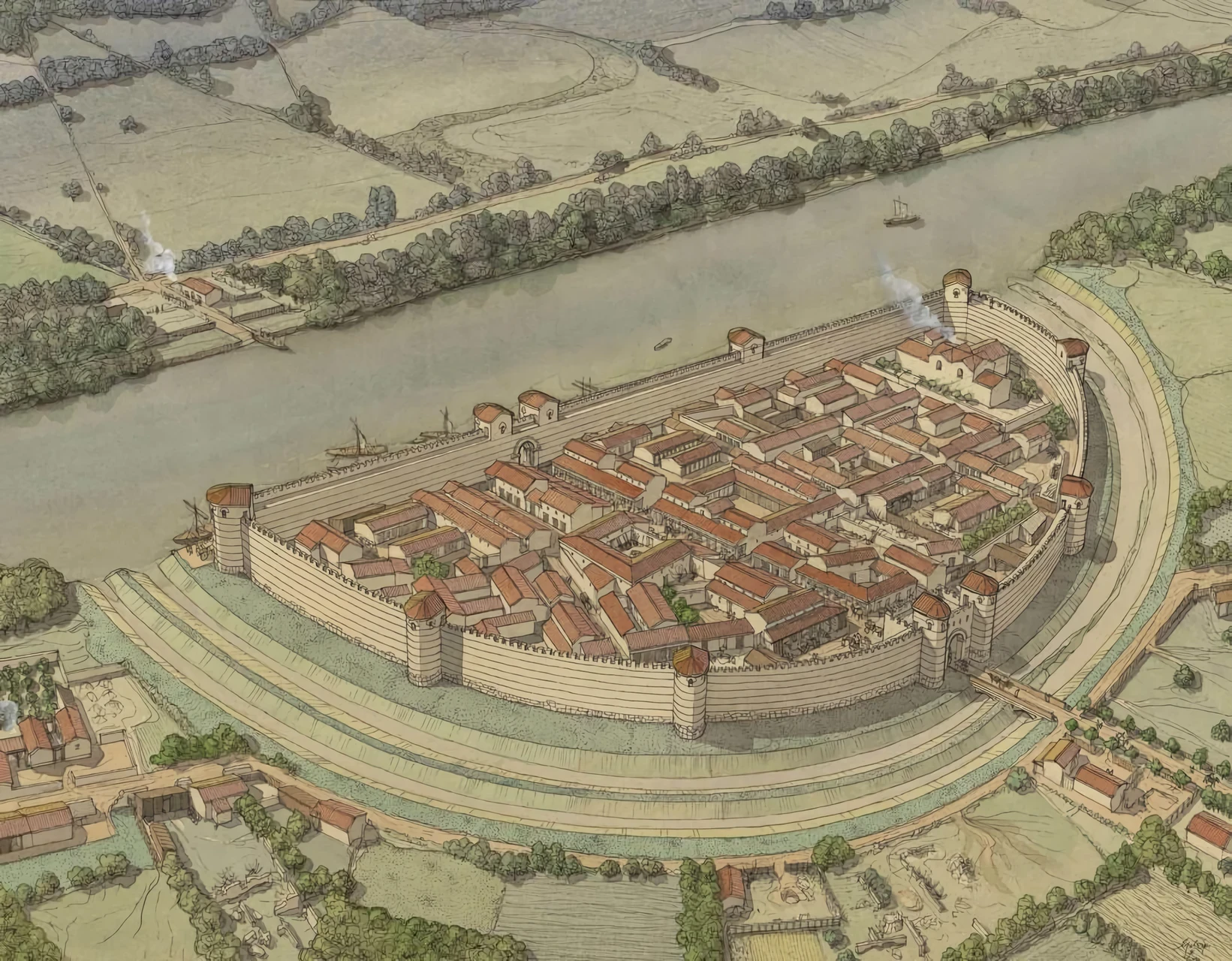
Reconstruction of the Roman Castrum of Mandeure (France, 4thC. CE)

preview

Author and source is Jean-Claude Golvin:
https://people.unil.ch/cedriccramatte/files/2013/10/IAS-MAN-02871-3.jpg
https://jeanclaudegolvin.com/en/gallery/epomanduodurum-mandeure-the-castrum-of-the-late-roman-period/

I’ve upgraded the art via Waifu2x. Thanks to u/dctroll_ for this text:

The castrum of Mandeure was located in present-day Mandeure, in the French department of Doubs, next to the Doubs River, in the southwestern part of the ancient city of Epomanduodurum. Its construction began shortly before the mid-4th century AD, but the works were interrupted by the Alamanni invasion of AD 352 and later resumed and strengthened from AD 364, during the reign of Valentinian I. The fort covered approximately 1.5 hectares and had a distinctive bell-shaped layout. Its walls, which were up to about 4 metres thick at the base, were reinforced with semicircular and quadrangular towers.

Its strategic position along the Doubs River allowed it to control important communication routes and the supply of the military frontier along the Rhine. Archaeological evidence, including materials associated with the Legio I Martia, indicates a significant military presence. However, the castrum probably also had a civilian function and gradually became the new centre of Mandeure’s population during Late Antiquity.

0

Ancient Ephesus brought to life via the "Cassio" series. (seven pages, artist: Henri Recul)

preview

I always enjoy history brought back to life with skill and verve. As mentioned last week in the “Vampire Boy” post, this series has to do with an …
I always enjoy history brought back to life with skill and verve. As mentioned last week in the “Vampire Boy” post, this series has to do with an …
0

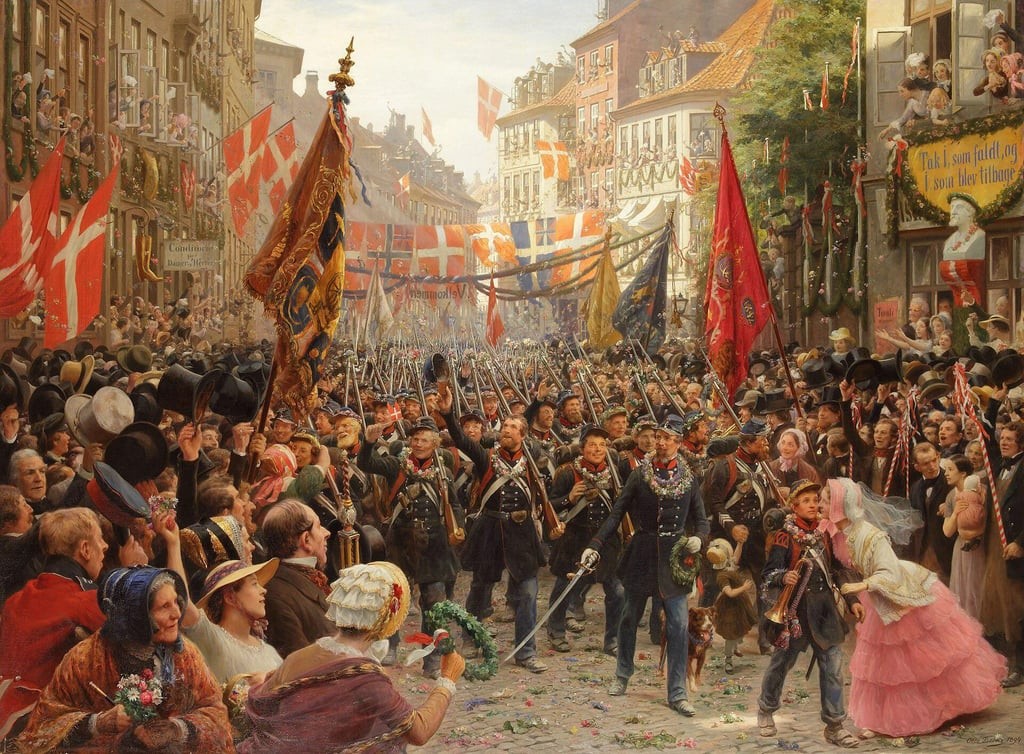
Danish soldiers returning home from the first Schleswig War. (credit: Otto Bache, 1894) [more in post]

preview

Seems like PJ used to post ~10 of these a day when he was active, so I figured I’d throw my hamster in the ring. 🙂

The First Schleswig War or Schleswig-Holstein uprising and the Three Years’ War (Danish: Treårskrigen), was a military conflict in S. Denmark and N. Germany rooted in the Schleswig–Holstein question: who should control the duchies of Schleswig, Holstein and Lauenburg, which at the time were ruled by the king of Denmark in a personal union. Ultimately, Denmark proved victorious with the diplomatic support of the great powers, especially Britain and Russia, since the duchies were close to an important Baltic seaway connecting both powers.

https://en.wikipedia.org/wiki/First_Schleswig_War

NOTE: there’s a higher-quality 4298x3165 image at the link above.

Also fun to look at the assorted art here:
https://www.google.com/search?q=%22First+Schleswig+War%22&udm=2


https://i.ytimg.com/vi/edVfP9XeOaI/maxresdefault.jpg

Finally, some comments via the EE:

It’s exactly the kind of national romantic naïveté expressed by this painting that got Denmark into the Second Schleswig War, which was a disaster.

Lord Palmerston (British PM) apparently said "Only three people have ever really understood the Schleswig-Holstein business – the Prince Consort, who is dead – a German professor, who has gone mad – and I, who have forgotten all about it."

XD

Quick TL;DR of the Schleswig-Holstein Question?

So we have two duchies, Schleswig and Holstein. They are right next to each other and ruled by the same Duke, who also is the King of Denmark. Holstein is fully German, was part of the HRE and then the German Confederation. Schleswig has been Danish since the Viking Age but has a growing German population and is governed autonomous from Denmark. In the past Danish Kings signed treaties that the two duchies would remain forever undivided. In 1848 the Danish King tried to integrate Schleswig into Denmark proper. The Germans living there revolt and Holstein joins in.

Small correction. It was not the King’s decision to integrate Schleswig. It was due to Denmark becoming a democracy and wanting to be a national state. The people in Schleswig did not want to be a part of the Danish national state and they did not want to be a minority inside a democracy. In fact in the beginning of the revolt, they thought that the king had been overthrown and they were prepared to fight as royalists(!)

As for the ‘EE,’ there are a few more interesting comments if you wish, but please put on your hazardous protective wear if one intends to visit them:

https://www.reddit.com/r/BattlePaintings/comments/1tmpu1r/danish_soldiers_returning_home_from_the_first/

0

Article: "Feudal Serfs Weren’t Slaves -- That Distinction Was Designed to Keep Them Plowing"

preview

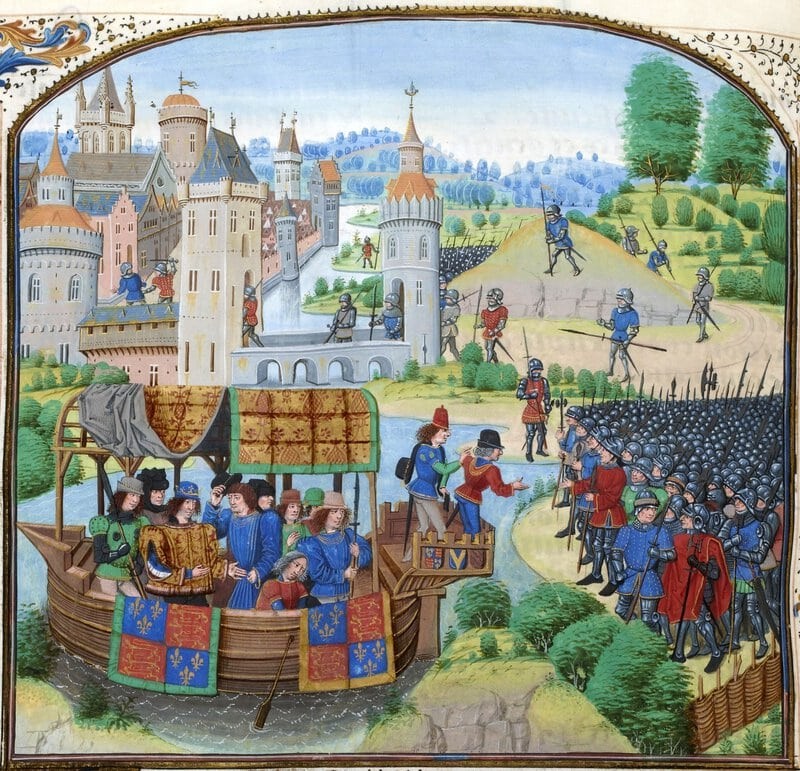
Image is a 14th-century illuminated manuscript from Froissart’s Chroniques depicting armored forces and castle life in medieval France. TBH I’m not sure that it relates to the theme very well, but it’s probably the most interesting art piece shared in the article. Right so, let’s share a bit of it:

The feudal system drew a careful line between serf and slave — not out of mercy, but as the mechanism that kept medieval peasants laboring in place without the moral scandal of outright bondage.


https://cdn.historycollection.com/wp-content/uploads/2026/08/medieval-serf-plowing-oxen-field-c4655db2-1536x735.jpg

Before the sun rose over the frozen fields of late tenth-century England, a plowman was already at work — driving his oxen through iron-hard ground, eating his single loaf, and laboring, as he told it himself, without rest “for fear of my lord.” He was not a slave. Everyone agreed on that. The distinction, it turns out, was the most important lie the Middle Ages ever told.

The Man Who Owned Nothing — Not Even Himself

Around 995 AD, an English abbot and scholar named Aelfric of Eynsham composed a Latin teaching text called the Colloquy. Its purpose was practical: give students dialogue to practice translating. But in casting a fictional plowman as one of his speakers, Aelfric produced one of the most revealing documents in feudal history — a first-person account of what it felt like to live at the bottom of a social order designed to keep you exactly there.


https://cdn.historycollection.com/wp-content/uploads/2026/08/aelfric-colloquy-manuscript-medieval-57a0ccf7.jpg

The plowman’s testimony is a portrait of crushing unfreedom. He rises before dawn. He drives oxen through ground that resists the plow like stone. He is never idle “for fear of my lord.” And yet, in the legal language of Aelfric’s England, this man was not a slave. He was a villein — a word derived from villa, the Latin for estate or village, carrying the warm suggestion of community rather than the cold truth of bondage. The naming was not accidental. The entire architecture of the feudal system rested on that single, carefully maintained distinction…
This to me is one of those pieces that’s both fascinating and heartbreaking. Indeed, if you have Euro ancestry, then you likely have ancestors caught up in this exploitative system, at least at some level. In the meantime I’ve been re-reading one of my books about the Lakota peoples, who believed that they belonged to the land far more than the reverse. Everything was sacred to them, altho in truth they could be rather brutal towards neighboring alien tribes, should need arise. Still… they lived in a notably healthy arrangement with their region and ecosystem that could have lasted indefinitely until Euro colonists eventually came along…

Sorry, enough moralising. Here’s the full article:
https://historycollection.com/feudal-system-serfs-vs-slaves-medieval-feudalism-explained/

(and yeah, I’m liking this site so far, but they use too much obvious AI for their imagery IMO)

Image is a 14th-century illuminated manuscript from Froissart’s Chroniques depicting armored forces and castle life in medieval France. TBH I’m not sure that it relates to the theme very well, but it’s probably the most interesting art piece shared in the article. Right so, let’s share a bit of it:

The feudal system drew a careful line between serf and slave — not out of mercy, but as the mechanism that kept medieval peasants laboring in place without the moral scandal of outright bondage.


https://cdn.historycollection.com/wp-content/uploads/2026/08/medieval-serf-plowing-oxen-field-c4655db2-1536x735.jpg

Before the sun rose over the frozen fields of late tenth-century England, a plowman was already at work — driving his oxen through iron-hard ground, eating his single loaf, and laboring, as he told it himself, without rest “for fear of my lord.” He was not a slave. Everyone agreed on that. The distinction, it turns out, was the most important lie the Middle Ages ever told.

The Man Who Owned Nothing — Not Even Himself

Around 995 AD, an English abbot and scholar named Aelfric of Eynsham composed a Latin teaching text called the Colloquy. Its purpose was practical: give students dialogue to practice translating. But in casting a fictional plowman as one of his speakers, Aelfric produced one of the most revealing documents in feudal history — a first-person account of what it felt like to live at the bottom of a social order designed to keep you exactly there.


https://cdn.historycollection.com/wp-content/uploads/2026/08/aelfric-colloquy-manuscript-medieval-57a0ccf7.jpg

The plowman’s testimony is a portrait of crushing unfreedom. He rises before dawn. He drives oxen through ground that resists the plow like stone. He is never idle “for fear of my lord.” And yet, in the legal language of Aelfric’s England, this man was not a slave. He was a villein — a word derived from villa, the Latin for estate or village, carrying the warm suggestion of community rather than the cold truth of bondage. The naming was not accidental. The entire architecture of the feudal system rested on that single, carefully maintained distinction…

This to me is one of those pieces that’s both fascinating and heartbreaking. Indeed, if you have Euro ancestry, then you likely have ancestors caught up in this exploitative system, at least at some level. In the meantime I’ve been re-reading one of my books about the Lakota peoples, who believed that they belonged to the land far more than the reverse. Everything was sacred to them, altho in truth they could be rather brutal towards neighboring alien tribes, should need arise. Still… they lived in a notably healthy arrangement with their region and ecosystem that could have lasted indefinitely until Euro colonists eventually came along…

Sorry, enough moralising. Here’s the full article:
https://historycollection.com/feudal-system-serfs-vs-slaves-medieval-feudalism-explained/

(and yeah, I’m liking this site so far, but they use too much obvious AI for their imagery IMO)

0

Did Michelangelo Buonarroti begin his art career as a forger? Here's Nora Landes' take--

preview

In 1496, Cardinal Raffaele Riario, a voracious collector of Roman antiquities, added to his collection a marble sculpture of a sleeping Eros, god of love. The cardinal had purchased the sculpture through art dealer Baldassarre del Milanese, who made a reported 200 ducats on the sale. Despite its aged appearance, however, the sculpture was not a true Roman antique, but rather a forgery created just months prior by a then-relatively-unknown 21-year-old Florentine sculptor. Who could have crafted a forgery so convincing as to deceive the informed eye of an avid, if not overly knowledgeable, collector? None other than Michelangelo…

https://www.artsy.net/article/artsy-editorial-how-michelangelo-got-his-start-by-forging-antiquities

Myself, I don’t have a strong opinion at this time. Well… at least the idea that Michelangelo was a complete fraud is ridiculous to me, altho the counterpoint idea that he kicked of his art career as a bit of a ‘bad boy’ certainly has legs to me.

"Me suspects that all kinds (across history) have skellingtons in their pocketses, my precious"– Gollum.

0

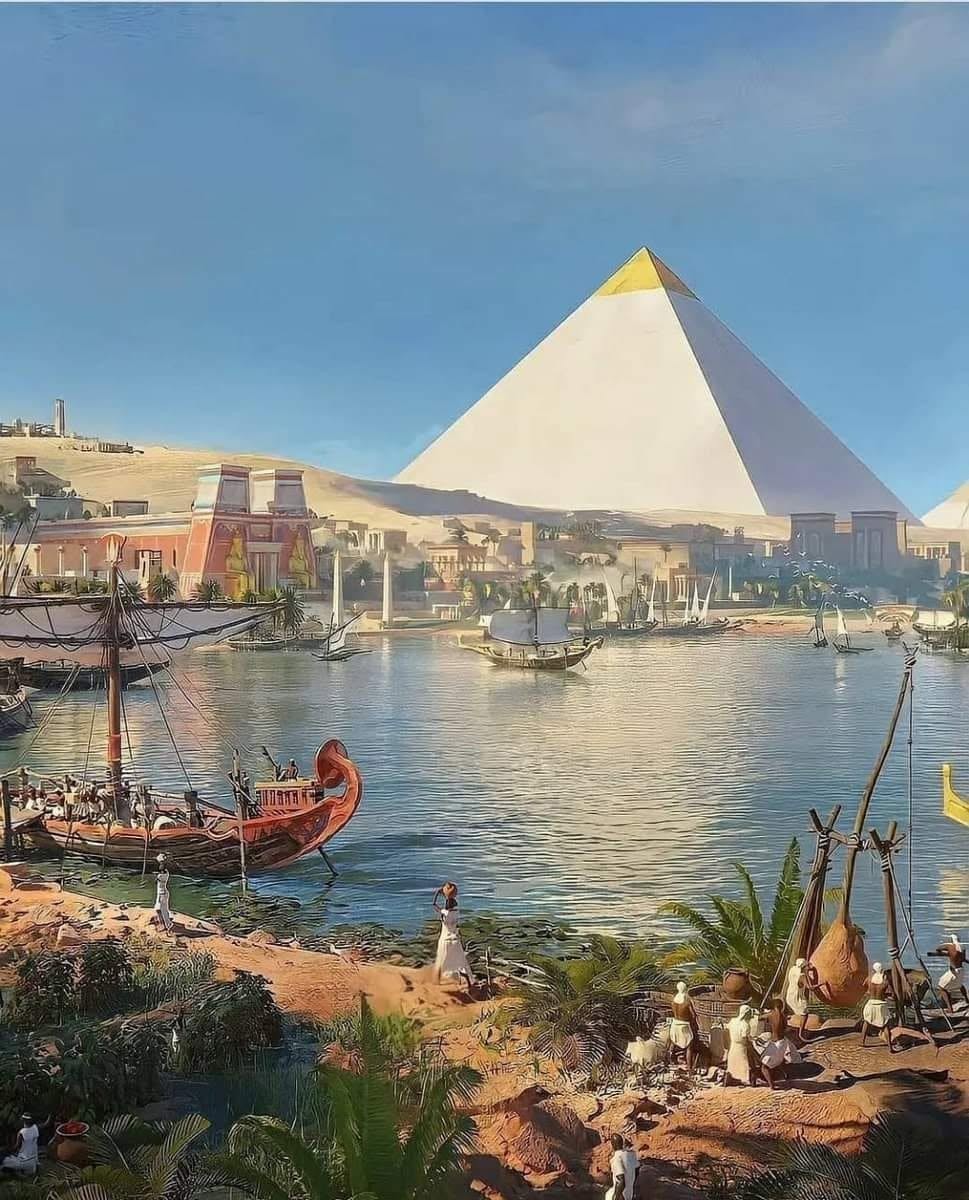
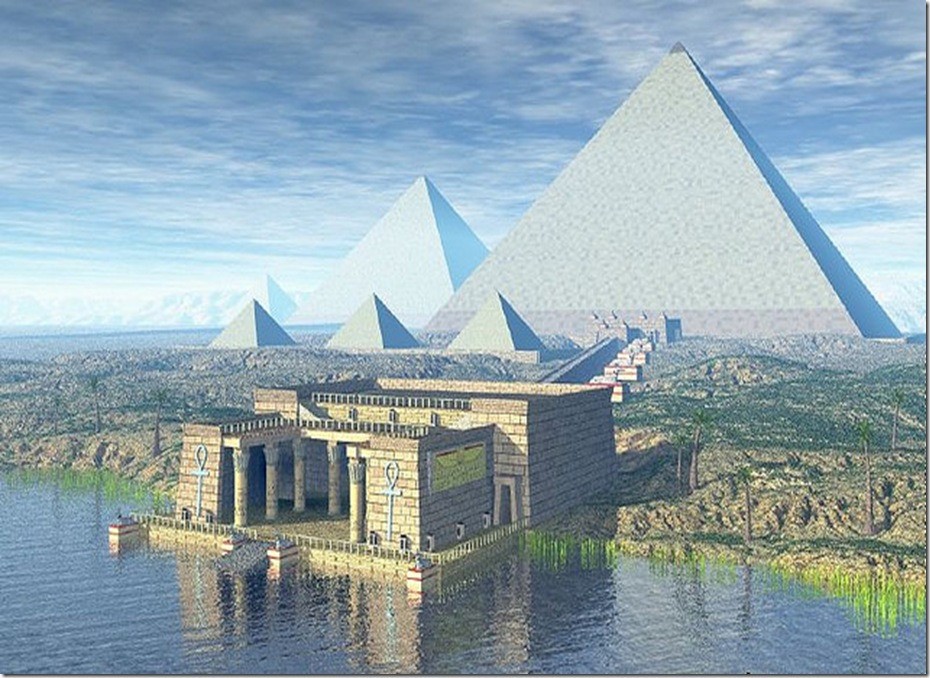
One more shot of a Great (Giza) Pyramid in its prime, as seen from the mighty Nile.

preview

Climates can change drastically across even just a few hundred years.

As I presently understand it, the initially fertile Nile-inundation that flooded the banks with precious crop-growing nutrients on a regular basis (for example in the time of Rameses II) slowed over the years, changing up certain equations upon many things. For example, once a jungle area slowly shifted to a desert area… that was arguably one of the long-form primary causes for the collapse of the once-mighty Egyptian Empire, after some thousands of years of primacy.

(later counterpart of sorts– The Mayan Empire?)

And yet the Egyptian Empire was monumentally impressive in its prime, I would argue.

0

Oof. I'm not happy upon this post, but the basic idea is to convey the fact that the Great Pyramids looked *absolutely spectacular* before their limestone and marble casings got carried off and stripped upon multiple other building projects, later.

preview

Not sure, but I think these are credit to German artist Gabriel Nagypál upon a videogame they were developing around the aughts.

https://www.google.com/search?q=Gabriel+Nagyp%C3%A1l+Giza+pyramid+complex&udm=2

In any case, the original Giza-area pyramids were absolutely spectacular, IMO. We moderns see basically thousands-year old rubble and make judgements upon all that.

Au contraire, those suckers were absolutely unreal for the time. Truth. Facts & reality.

0

Chesters Roman Fort, part of Hadrian's Wall, c.200 AD

preview

All credit to u/dctroll_ for the find and writeup. I decided to put some work in to upgrading the image, and here we are. (I particularly liked that it savored of “ligne claire")

Chesters Roman Fort, known as Cilurnum, was built around 124 AD as part of Hadrian’s Wall in northern Britain. It was an important cavalry fort designed to accommodate around 500 soldiers who helped control and defend the frontier. The first unit stationed there was the Ala Augusta, a cavalry regiment known for its bravery. During the 2nd century, the fort was rebuilt and different auxiliary units occupied it. Around 178–184 AD, the Second Asturians, a cavalry unit originally from northern Spain, arrived at Chesters and remained closely connected with the fort until the end of Roman rule.

As at all Roman forts in northern Britain, the period AD 180–250 was the heyday of both the fort and the sprawling civilian settlement (vicus) lying outside the walls, providing services and accommodation for soldiers and their families.

During the 3rd century, political and military problems across the Roman Empire caused changes to the army and the civilian settlement gradually declined. By the 4th century, the garrison was probably more locally based, although the Second Asturians may still have been present. Chesters probably remained occupied until the Roman administration of Britain ended in the early 5th century.

SOURCES:

0

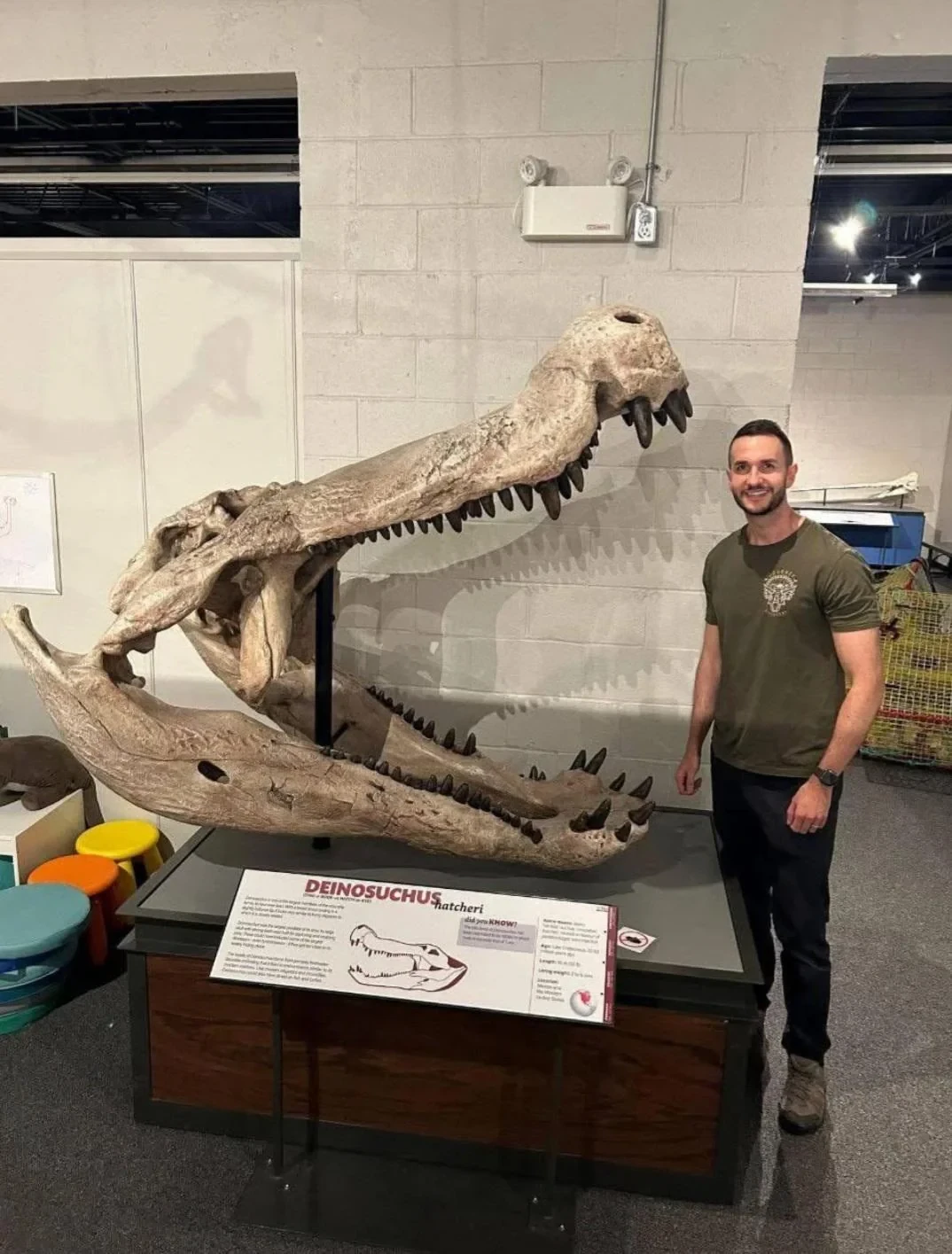
Deinosuchus (one of the largest crocodilians in history) lunges at an Albertosaurus [3 pics & 1 photo]

preview

Deinosuchus lived during the Late Cretaceous, ~82 - 73Myrs ago. The first remains were discovered in North Carolina in the 1850s, and the genus was first described in 1909. –WP

A modern comparison:
wqHtVDSZGEIZQle.webp

When Deinosuchus Ruled the Earth - Hakai Magazine:

https://hakaimagazine.com/wp-content/uploads/header-deinosuchus.jpg

Although Deinosuchus was far larger than any modern crocodile or alligator, with the largest surpassing 9m (30 ft) in length, its overall appearance was fairly similar to its smaller relatives, but with a proportionally longer skull than modern crocodilians. It had large, robust teeth built for crushing, and its back was covered with thick hemispherical osteoderms (bony scales). One study indicated Deinosuchus may have lived for up to 50 years, growing at a rate similar to that of modern crocodilians, but maintaining this growth over a much longer time.

Deinosuchus prehistoric crocodilian hunting illustration - Natty Geo:

https://i.natgeofe.com/n/3cfc5bfa-7366-4e7c-82b4-e721f0ac92b2/C0610330-Deinosuchus_prehistoric_crocodilian_hunting_illustration.jpg

I reckon you’re gonna need a bigger knoif, Mick!

0

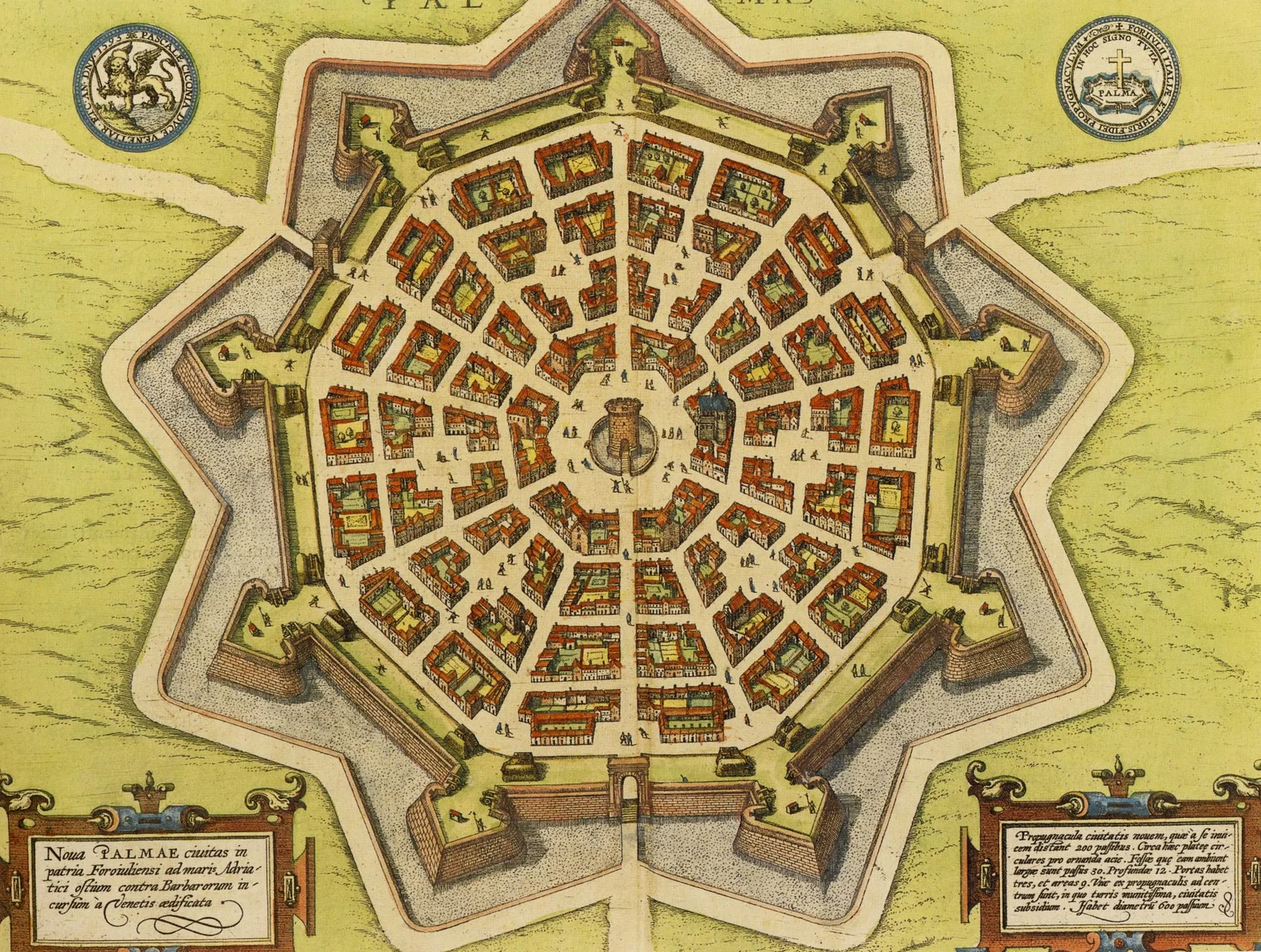
"I'll take Gigantic Ships' Wheels for $2000, Alex!" (Palmanova fortress in Friuli region of Italy, 1593 CE)

preview

They seem prepared! Kinda like this?

https://www.google.com/search?q=Palmanova+fortress+in+Friuli+region+of+Italy%2C+1593+CE&udm=2

They seem prepared! Kinda like this?

https://www.google.com/search?q=Palmanova+fortress+in+Friuli+region+of+Italy%2C+1593+CE&udm=2

0

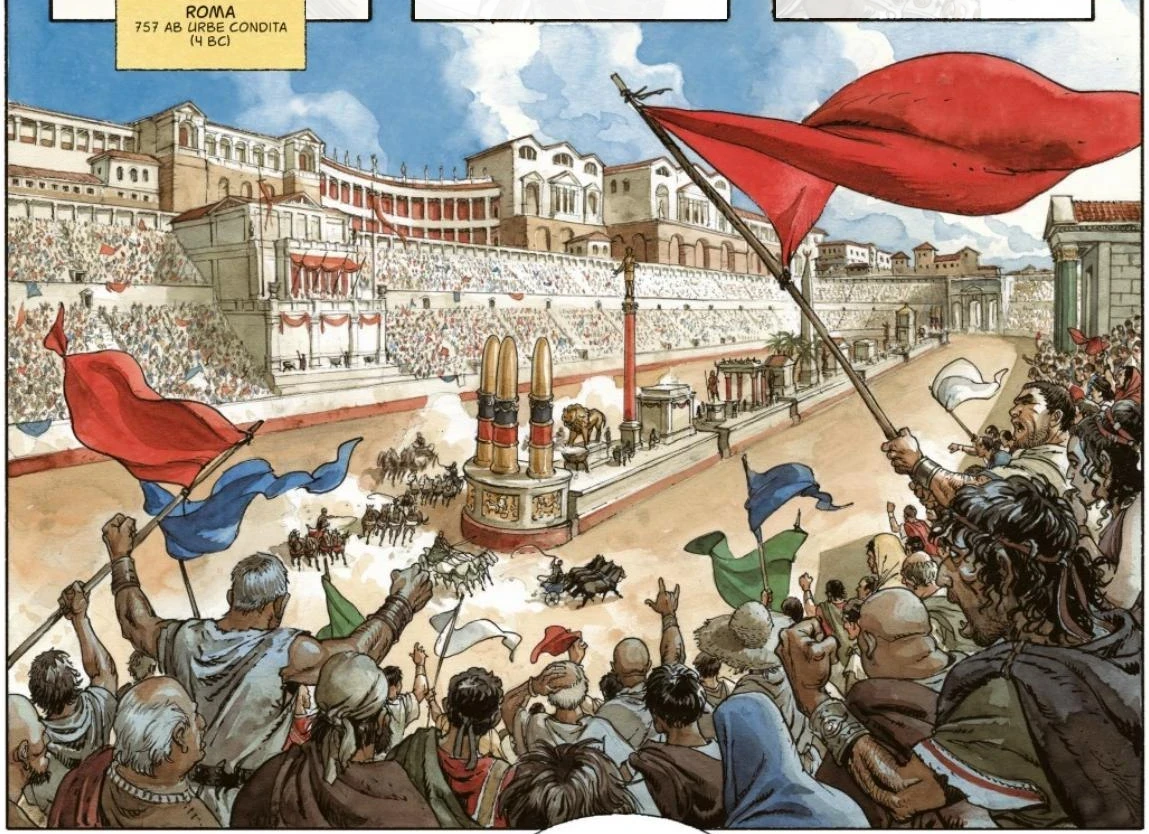
An action-shot from my upcoming review of "QVADRIGA" (Steam game) [more art in post]

preview

This splashie is from the brilliant The Eagles of Rome graphic novel series, book two, by badass Swiss-Italian, writer-artist Enrico Marini.

I’d previously posted a few more samples on HistoryArt: [NSFW]
https://piefed.social/c/historyart/p/1701717/three-splash-pages-from-the-eagles-of-rome-series-nsfw-3rd-image

As I understand it, chariot-racing was an enormous event during the heights of the Roman Empire, and the OP pic is possibly the legendary Circus Maximus or an analogue, which I understand was duplicated in part all around the ancient Roman empire, even across a large swath of Northern Africa.

There’s also a landslide of information to comment upon in terms of those colorful flags… the Reds, the Blues, the Greens, and the Whites. Each faction (plus a couple others) was backed by powerful financial - political entities, backed by hyper-enthusiastic fan-bases. (haha, fast forward 2Kyrs with futbol, and has anything really changed? XD)

In any case, the game I’m currently reviewing:
https://store.steampowered.com/app/297760/Qvadriga/

(check that lead video at the game link; it’s both scrumptious and hilarious!)

0

Castledermot, Ireland, around the 14th century. It depicts the town with Anglo-Norman features, including town walls built after the late 12th century, plus a church, and a monastery. It's in Co. Kildare, depicted by Marc Guernon.

preview

Granted, this is just an info-booklet for kids, but I found it surprisingly insightful for the likes of dumbasses like me. 14 pages: (swipe left-right / key left-right to navigate)

https://www.abartaheritage.ie/discover-the-walled-towns-of-ireland-workbook-for-primary-school-children-2/#

Granted, this is just an info-booklet for kids, but I found it surprisingly insightful for the likes of dumbasses like me. 14 pages: (swipe left-right / key left-right to navigate)

https://www.abartaheritage.ie/discover-the-walled-towns-of-ireland-workbook-for-primary-school-children-2/#

0

'A Boy Blowing On A Firebrand' by Gerrit van Honthorst. 1621-22. Oil on canvas

preview

From the display:

Depictions like this one of a boy blowing on a burning ember were popular among European painters studying illumination. Artists such as Michelangelo and El Greco used this subject to showcase their skills at imitating nature, particularly the fleeting reflections of firelight. After spending several successful years working in Rome, Gerrit van Honthorst brought this theme back to the Netherlands, where it was appreciated by sophisticated collectors who recognized its origins in an ancient Roman text.