
0

A funky clash of tastes, FYI

preview

I was just enjoying some whipped lingonberry-semolina porridge and had this Shepherd Neame Christmas Ale sitting by. Took a swig of the beer in the midst of spoonfuls of porridge. Found that the tastes combined into what very much resembled whiskey!

Just sharing, this might be of interest to more experimentally aligned brewers out there. I’ll try a red ale again someday, might try to put in a careful dose of lingonberry since the interaction was really interesting!

0

Cleaning out the closet

preview

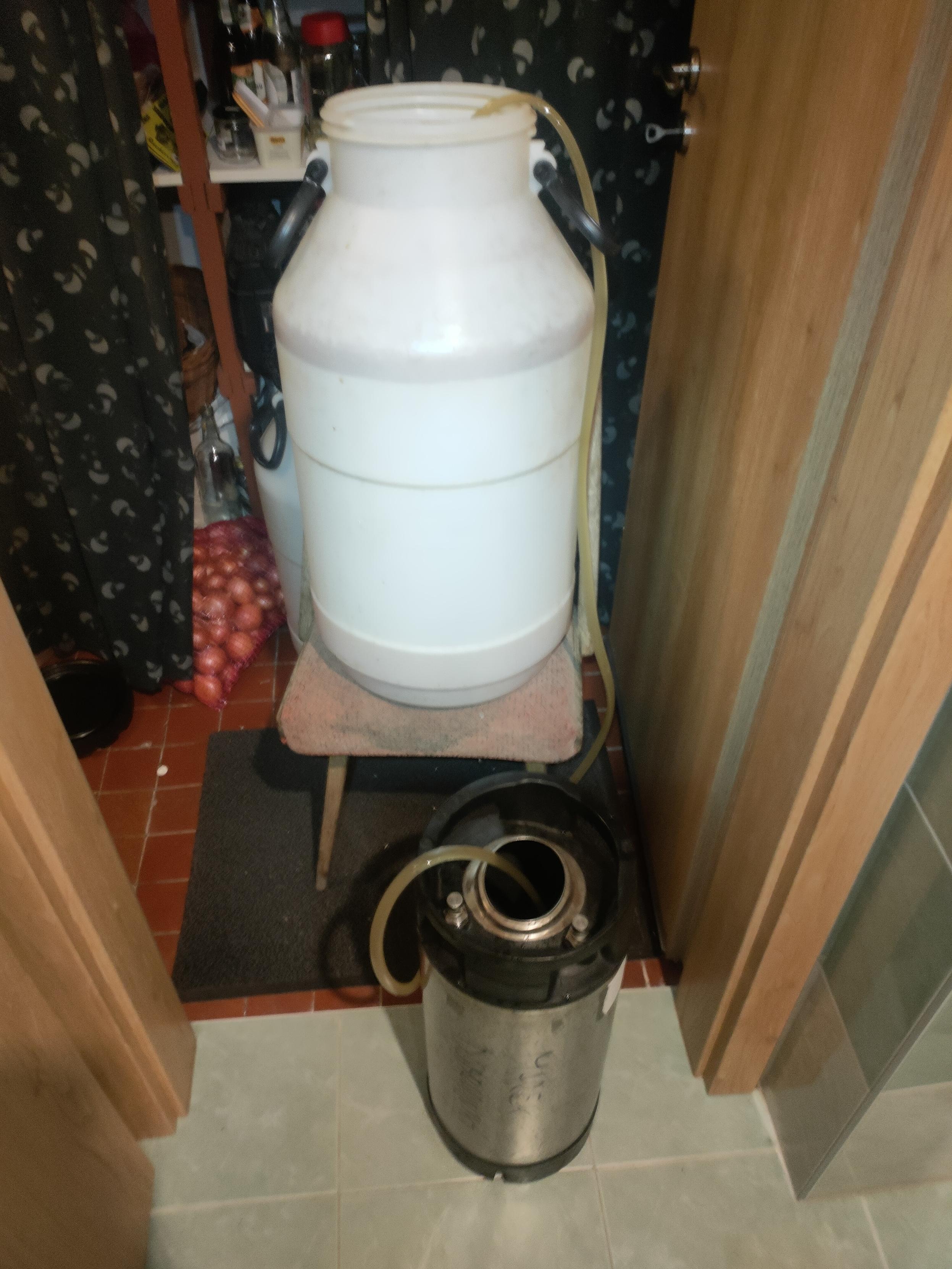
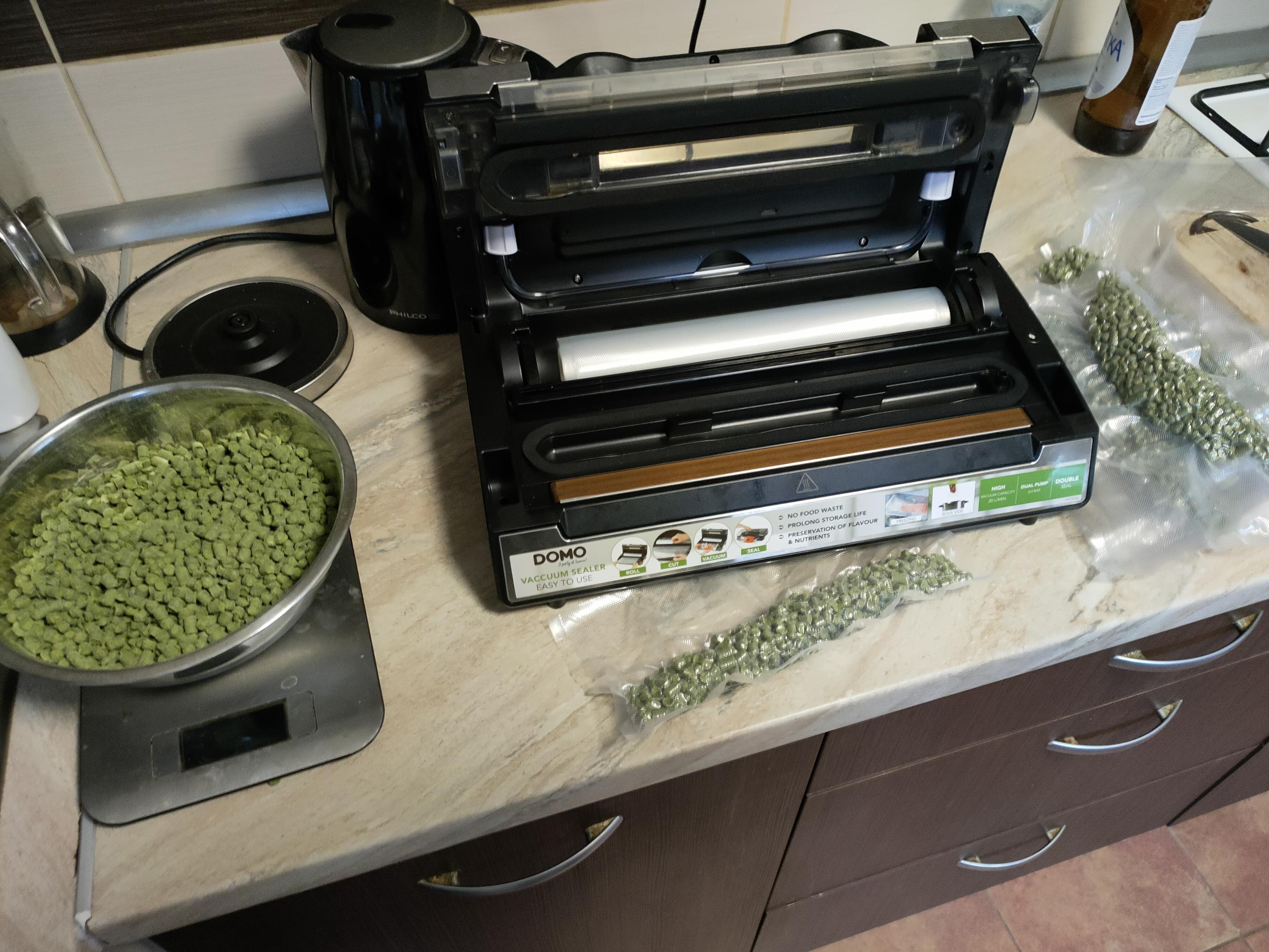
After sleeping only 3 hours I decided it would be a great idea to brew that beer I have been “planning” for a while. It’s nothing super fancy, just a New England IPA using a couple opened bags of old malt that was past their best before date (one of the bags by about 2 years). Had some old Cascade and Citra from 2021 plus 2 bags of Simcoe that the store I buy from gave away last year because it was nearing its best before date. Turned out pretty good. Going to dry hop in the keg later on. :)

After sleeping only 3 hours I decided it would be a great idea to brew that beer I have been “planning” for a while. It’s nothing super fancy, just a New England IPA using a couple opened bags of old malt that was past their best before date (one of the bags by about 2 years). Had some old Cascade and Citra from 2021 plus 2 bags of Simcoe that the store I buy from gave away last year because it was nearing its best before date. Turned out pretty good. Going to dry hop in the keg later on. :)

0

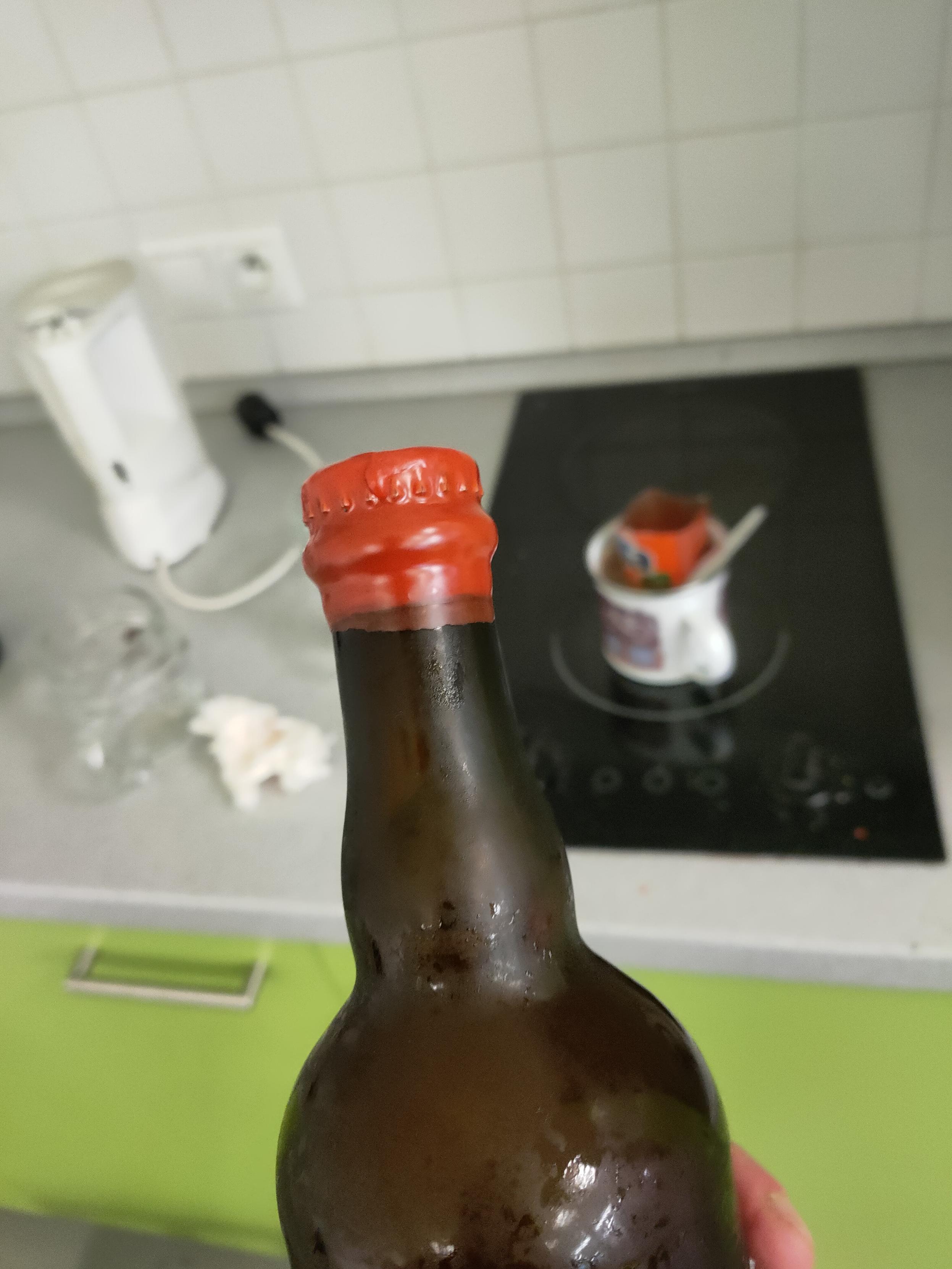
I hope that by giving my cider this premium feel it will have enough time to age because I won't be tempted to drink it that fast ;-)

Wax sealed beer bottle.
preview

I hope that by giving my cider this premium feel it will have enough time to age because I won’t be tempted to drink it that fast ;-)

And yes I had enough of the wax and really don’t know how much I used… But I don’t know how well my mix will work long term, shouldn’t be crumbling when I try to open it but still it will need few weeks to set because I used linseed oil in it.

#homebrewing #cider @homebrewing

0

#askfedi #homebrewing

preview

#askfedi #homebrewing

I want to wax seal my cider ~60 bottles and don’t know how much wax it will need. Somewhere on the commercial wax there is that 5-10g is needed for one bottle, on other site there it comes closer to 20g of it per bottle.

Does anyone have any experience wax sealing to tell me which is more correct?

Thanks

@homebrewing

#askfedi #homebrewing

I want to wax seal my cider ~60 bottles and don’t know how much wax it will need. Somewhere on the commercial wax there is that 5-10g is needed for one bottle, on other site there it comes closer to 20g of it per bottle.

Does anyone have any experience wax sealing to tell me which is more correct?

Thanks

@homebrewing

0

Scottish Ale, final results!

preview

After a week and a bit in primary, followed by a week and a bit in bottles, it’s finally ready to enjoy. Color is good, aroma is malty, head was solid, and taste is mellow. I’d give this a solid 7/10. Would make again.

After a week and a bit in primary, followed by a week and a bit in bottles, it’s finally ready to enjoy. Color is good, aroma is malty, head was solid, and taste is mellow. I’d give this a solid 7/10. Would make again.

0

48 Hour turbo and sugar distillation comes out blue, smells like death, (not alcohol, ether someone thought.)

preview

It was just a bucket with water and sugar, both white and brown, 4 and 4 pounds of each in about 4 gallons of water, and the stovetop distiller came out blue, it even seemed to be more blue the next day. I retched up the bit I drank before I realized how bad it was.

Anyone experience this before? Is there a reason this 48 hour turbo yeast, sugar, and water, in a bucket, could come out blue?

Thanks for any help, brewing supply has no answers, the internet search engines are giving me nothing on point.

0

Snuck a taste of the new sahti x stout

preview

Here’s a happy brewer 😊

This stuff fermented at 19 °C and 0,5 bar instead of my usual 14 °C and 0,8 bar. Expected it to be done quicker, but the primary ended up bubbling for nine days. Gave it a day of ‘secondary’ and then decided I want to meet the beast already while cooling towards 2,5 °C for clearing the yeast.

It is just gorgeous. Viking Black bites first and Viking Chocolate Light & pale rye produce a lasting aftertaste. Crazy strong too, though I don’t have measurements.

0

Beginner Questions

preview

Started making mead a couple months ago, and I’ve done a few small batches now (pictured are batches 5, 6, and 7). A couple of beginner questions:

  1. Adding Fermaid O – for those that use it, do you dissolve it in something before adding it? It clumps like hell if I add it directly. The package just says to add it, doesn’t give a method. Today I tried dissolving it in a small pull from each batch, but it felt like a lot of work. I was going to just dissolve it in some (unchlorinated) water when I add it tomorrow. What do y’all do for that?

  2. With my very first batch, the first time I added the nutrients I got with my kit, I earned my carboy-overfloweth badge (a gentle shake resulted in a delightful fountain display). I bought Fermaid O for subsequent batches, and I’ve gotten no significant reaction when adding it, even after a shake. Should I be getting more of a reaction?

  3. Sanitizing–once something is sanitized, like a spoon for instance, do you think it’s okay to rinse it with tap water and set it on a paper towel, then use it again? Or in a more general sense, are a few drops of tap water going to affect a gallon of mead significantly?

Thanks!

0

Hyperactive yeast!

preview

This is another neipa-ish pale ale kinda thing, lots of oats and wheat. moderately high gravity of 1.069 and I used WLPD066, London Fog (dry) from White Labs and usually I get 2" of krausen, maybe 3" at most on a batch like this with other yeasts, but this one exploded. Thick yeasty goop right up through the gas lines and into the kegs I was purging with the blowoff… what a mess. I had the top butterfly open to the hop bong and the krausen hit the top PRV of that too, had to take it all apart and clean it.

This was under ~5psi of pressure too, powerful, healthy yeast.

Brew smells great though. it’s still pretty actively fermenting at the moment down from 1.069 to 1.022 so far and I’ll give it a few more days to get to the target around 1.015 before dropping to dry hop temps (I use about 14c for dry hopping).

Recipe for this one was just some things I had lying around:

  • 4 kg (62.5%) — Compass Pale Malt (Voyager Craft Malts)
  • 800 g (12.5%) — Flaked Wheat
  • 600 g (9.4%) — Rolled Oats
  • 400 g (6.3%) — Chit Barley
  • 400 g (6.3%) — Golden Naked Oats
  • 200 g (3.1%) — Caramalt

mashed at around 68c or thereabouts, quick boil of 30 minutes.

Hops are mostly Rakau and Strata like last time since that was extremely successful (this recipe is also very similar tot he quick pale I did last time but a higher abv, “maltier” malt and different yeast, used voss last time), mostly hop stand/whirlpool but a bit goes in mid boil for a touch more bitterness than a classic neipa or other hazy pales, about 40IBU in this case. Dry hop also includes 5ml of Abstrax Quantum Motueka extract (roughly 150g pellet equivalent), used galaxy extract last time, thought Motueka would be nice this time and wanted to try more extracts.

This was my first brew in a new Brewzilla Gen4, which went quite well, I rigged up some extra hosing to be able to easily switch between chiller and whirlpool arm by having the chiller attached to the bottom tap, so I could direct wort either way just by opening and closing valves which was really nice because previously on the gen3 setup I had to change hoses on the recirculation output and always made a mess.

As for the last brew I posted, the quick hazy wheaty voss pale, that was really successful, it was grain to glass in about 6 days, which is always nice, the PH was slightly lower than it should’ve been from the start so it had an interesting tartness to it, after a few sips it became extremely more-ish… so that keg didn’t last long.

That recipe inspired this one, which is very similar but a bit bigger and with a more pronounced malt and some caramalt so it wont be as light and crisp it should be a bit deeper and richer in malt flavour.

0

Cider finished, now I need malt

preview

Oh the yearning for a malty overdrive!

Today was brew day for my oldest recipe, a pitch black ‘Sahti x Stout’. Switched rye malts from a caramel dark one to a pale one and doubled the amount of dark syrup with this one. Viking Chocolate Light entered the bill at one point and is now a star of the lineup. I also throw in a bunch of Viking Black Malt, enough to bring its brutal bitterness into the picture and kill all transmission of light in and out of the product 😂

Decided also to try Magnum hops along with the perennial fave Challenger for bittering. Fermenting with Sahti fresh yeast as always, but at 19 °C and only slight pressurisation this time, hoping to catch more of the banana-y notes.

And now we wait…

0

Waragi (Ugandan banana brandy)

play · youtube.com
YouTube Banana Brandy - Making Ugandan Waragi (Moonshine) youtu.be
preview

Has anyone tried doing this or similar out of the ordinary brews?

Curious to have a go at it as an over winter project.

Has anyone tried doing this or similar out of the ordinary brews?

Curious to have a go at it as an over winter project.

0

Quick update.

preview

The yeast seems to have striated very distinctly. Probably didn’t mix it enough before putting it away. Oh well, the volume is low enough that convection will sort it out.

The yeast seems to have striated very distinctly. Probably didn’t mix it enough before putting it away. Oh well, the volume is low enough that convection will sort it out.

0

Mix of herbs for the 20l of #cider

The keging
preview

Mix of herbs for the 20l of #cider

It will be interesting, hopefully it won’t get too bitter from some kind of wormwood, it smells really nice like cola but it’s quite bitter. Mint and rosemary to balance it and I am looking for the bottling to taste it.

It will need to age a bit, 6 months is probably the shortest aging for cider but I am bit impatient and don’t know how much bottles will survive my thirst ;-)

#homebrewing @homebrewing

0

Ideas for cider

pressing process
preview

This year I got hold on some apples so I will make 30l of clear cider and 20l for some “experiment”. I already tried oak chips (simulates aging in wood barrel), hops and some spices. This year I was thinking about some herbs. The use is basically as dry hopping in beer.

Is there something I should consider, something you tried and turned out well or was undrinkable?

0

Quick Hazy Pale

preview

After the very successful Vienna WCIPA ran out faster than expected I needed a super quick keg-filler, so I whipped up this hazy pale, using a pale malt base, lots of flaked wheat and oats, some GNO that I had, and some chit.

Grain bill was:

  • 4 kg (66.7%) — Voyager Craft Malt ATLAS
  • 800 g (13.3%) — Flaked Wheat
  • 600 g (10%) — Rolled Oats
  • 300 g (5%) — Chit Barley
  • 300 g (5%) — Golden Naked Oats

Hops where whatever I could scrounge up:

  • 25 g (12 IBU) — Rakau — Boil — 15 min
  • 25 g (16 IBU) — Strata — Boil — 15 min
  • 50 g (3 IBU) — Rakau — Aroma — 15 min hopstand @ 75 °C
  • 25 g (2 IBU) — Strata — Aroma — 15 min hopstand @ 75 °C
  • 25 g — Amarillo — Dry Hop
  • 25 g — Rakau — Dry Hop
  • 5ml — Abstrax Galaxy Quantum 5mL is ~150g equiv. (CO2 Extract) - at packaging

Used Voss, pitched and fermented at 35c, it was practically finished at 24 hours, but I gave it 3 days at 35, then 4 days at -2c, dry hop went in while it was chilling and just under 20c so it got some time as it passed through the “ideal” 14-16c range.

Final colour is difficult to capture, but it’s a very nice pale, good hazy, flavour is great, bright, sharp acidity, feels good in the mouth, dry but has some body, great mix of hops, carbonated slightly higher than I usually do which really fits. here is a picture as it was just coming up to carbonation, it’s brighter and paler than the image really shows, and this picture doesn’t show the head.

0

My Vevor setup has finally produced beer

preview

It’s finally done and conditioned. It’s a touch acidic, but otherwise really good.

In an earlier post, I complained that the main gasket on the fermentor is a pain to seat properly. But I’m happy to say that now that it’s been used under pressure, it seats in easy and secure.

It’s finally done and conditioned. It’s a touch acidic, but otherwise really good.

In an earlier post, I complained that the main gasket on the fermentor is a pain to seat properly. But I’m happy to say that now that it’s been used under pressure, it seats in easy and secure.

0

Anyone used a counter top induction hot plate for boiling?

preview

I’m not able to dedicate time to 5 gal batches anymore. I’m thinking about getting a hot plate and brewing 1 or 2 gals. Anyone tried that?

I’m not able to dedicate time to 5 gal batches anymore. I’m thinking about getting a hot plate and brewing 1 or 2 gals. Anyone tried that?

0

Brewed a fresh hop saison

a lod of fresh hop cones, still on the branches, are floating on top of the boiling wort in a kettle
preview

This past weekend I brewed a fresh hop Saison with my homegrown Glacier hops, I just cut the flowering branches off of a couple of bines and tossed everything into the kettle instead of bothering with picking all of the cones off.

I’m not sure if I’ll do this again as doing a hop harvest in the middle of a brew day was a lot. If I do decide to do this again, I’d bag the hops as they became a PITA when trying to drain the kettle. Flavor/aroma wise I think it worked well, but we’ll know for sure once it’s done fermenting.

0

Cider is done, cheers

Cider glass and an envious cat
preview

This summer brought plenty of apples in our three kinds of apple trees. I had the luxury of tasting them all and deciding on the mix to have juiced.

And nailed it! Last time I used mostly the sweetest ones and the cider had very little apple taste in it. This one is very much apple tasting. Primary fermentation went on for over three weeks, and the result is bone dry, just like my type 1 diabetic ass likes it.

Also in the 23 l batch: 1 kg of malt (Simpsons Premium English Cara, Viking Cara Pale and Simpsons Maris Otter) to feed micronutrients to the yeast, 1 dl dark sugarcane syrup and 1 dl white sugar in the yeast starter. Yeast was fresh ‘sahti’ yeast, not really showing its banana character though.

Next time: more malt and taking the time to carefully boil down the volume of apple juice a bit. Hopefully next year, but one can never count on getting apples…

0

Apples in the Commons

preview

A single public tree hosted an entire 120 person event. 250 litres in 4 hours. I took 16 of them home.

Now do I go wild or designer? How do I even pasteurize that much? Maple syrup and cinnamon ready for christmas, or a quick fall quince back-sweeten?

We rented the hydro press and breaker for $150, while they cost $1500 each. Doing this once a year its easy math to rent, does anyone own?

Edit: Theres a video attached to this, how do I make it more visible? I have to click into the post and then again on the name.

0

Last week, I posted a pic of my Vevor setup. I just finished my first brew and these are my thoughts so far

preview

The controller is super easy to use and you probably don’t even need to read all the instructions to operate it.

My biggest issue was with the grain. It was too thick for the bottom screen. So I was unable to use the top screen since I had to use my spatula to keep the grain from caking up during the mash. I had to stir up the grain every five minutes or so.

I ended up with 1.060 gravity, which is exactly what I was looking for, so I’m pretty happy with that . It took about 50 minutes to reach mash temp and about the same to reach boil.

It’s currently sitting in the fermentor. I expect it to ferment for four days. But I plan to condition it for at least a week before kegging.

BTW, the beer I brewed is an English stout.

0

Store juice cider, tropical

preview

cross-posted from: lemmy.zip/post/71064085

My first alcoholic ferment in 1.5 years. When 100% juice is on sale, I get a couple of bottles for a gallon of cider. (yes they’re ciders, they’re all apple juice based despite the tropical label.)

1 gal juice, half packet of US05, 1tsp nutrient, see ya in 2 weeks.

0

Cider season! And a Campden question

Steel fermenter with filter half-full of apple juice
preview

The apple trees have been harvested, 46 kg apples pressed and 20 litres of juice almost done with filtration into the fermenter.

Also in the fermenter: 3 litres of beer wort featuring 1 kg of mostly Simpsons Premium English caramalt. And waiting for its time is a 1,5 l yeast starter with 1 dl sugar and 1 dl dark syrup, providing yet more alcohol and some complex nonfermenting sugars. Hoping to eke out some residual sweetness from the cara and the syrup in the final product.

Quick check regarding the use of Campden tablets. Added one per 5 l of apple juice at the press. Kind of a half dose compared to what the winemakers use. That was 10 in the morning. Is it likely my happy starter will handle the sulfite if I pitch 12 hours after adding the tablets? Or should I wait the recommended 24 hours?

The happy starter:

0

Add milk to your beer, pre-carb. Trust me. Its delightful!

preview

You gotta let that shit curdle, then remove the curds. It will leave you with a wonderfully creamy, clean beer.

It’s called milkwashing, its popular in rum punches and other cocktails, but its no different to do in beer.

I think it’s best in heavy stouts (like the >10% ones). But its also fantastic in a fruity IPA. If you can taste the booze, the milk will smooth it out.

Don’t want to waste a whole batch? Pour some whole milk into the bottom of the pint glass, about a finger’s height worth, then fill it up. Wait about an hour and scoop the curds out (or skieve em). Then drink it!

I did a 3 gallons per 5bbl in my recipe. So if you’re doing 5 gallons, divide it by 30.

You can also use coconuts milk. Coconut milk tastes really good with sours - and pineappley flavors.

Once you’ve removed the curds then carb that shit.

0

Butterscotch

preview

Had to deal with a bit of copper coming of the still (if you do this ph balance it with some citric acid otherwise it’ll eat your copper still) but wow. All I can say is it’s worth it. I don’t think I’d call it butterscotch flavored but it’s extremely creamy off the still so when I toss some candies into the liquid afterwards it’ll be exactly what I’m looking for. I’ll have to make this again

Had to deal with a bit of copper coming of the still (if you do this ph balance it with some citric acid otherwise it’ll eat your copper still) but wow. All I can say is it’s worth it. I don’t think I’d call it butterscotch flavored but it’s extremely creamy off the still so when I toss some candies into the liquid afterwards it’ll be exactly what I’m looking for. I’ll have to make this again

0

An experimental Vienna IPA

preview

some of my favourite IPAs either straight “IPA” or WC / NE specific styles are the ones with rich, full bodied, malt flavours. now’ i;ve done a few NEIPAs with Golden Promise, MO and other standard pale malts, including basic extra pale malt but with lots of caramel/crystal additions and i’ve just never gotten the flavours I want out of the malt backbone.

so this was based on some pro brewers mentioning IPAs built on vienna and munich, with a caramunich II for a hint of extra depth and a more amber colour as a base for big full bodied higher ABV IPAs, so I scratched together this recipe as a bit of an experiment to see what it does.

I also forgot an ingredient in the grist (GNO, goes in everything honestly!) on brew day when the boil was already underway and I didn’t want to try to cool back down and re-mash the missing ingredient so I quickly calculated how much DME I needed to make up for it, didn’t have enough in stock so I cut it with some brown sugar and overshot the gravity but whatever, it was going to be a normal-ish gravity now it’s a double.

What I ended up brewing was this:

Malts (5.5 kg)

4.2 kg (76.4%) — Gladfield Malt Gladfield Vienna Malt — Grain — 8.2 EBC

800 g (14.6%) — Weyermann Munich I — Grain — 15 EBC

300 g (5.5%) — Gladfield Malt Gladfield Chit Barley — Grain — 3 EBC

200 g (3.6%) — Weyermann Caramunich II — Grain — 124 EBC

Other (750 g) - cause I forgot 500g of GNO and had to improvise.

500 g — Extra Light Dry Extract — Dry Extract — 5.9 EBC — Boil

250 g — Brown Sugar, Light — Sugar — 15.8 EBC — Boil

Mashed at 67c for an hour, 77c mashout for 15 minutes, 1 hour boil. Post Boil OG was 1.071.

Hops are mostly Aussie hops in the standard WC flavour profile. made it up as I went along but this is what I ended up with:

  • 5 g (11 IBU) — Vic Secret 18% — First Wort
  • 5 g (7 IBU) — Ella (aka Stella) 16.3% — Boil — 30 min
  • 25 g (14 IBU) — Chinook 13% — Boil — 10 min
  • 20 g (16 IBU) — Vic Secret 18% — Boil — 10 min
  • 50 g (8 IBU) — Vic Secret 18% — Boil — 0 min
  • 50 g (8 IBU) — Vic Secret 18% — Aroma — 20 min hopstand @ 75 °C
  • 20 g (3 IBU) — Ella (aka Stella) 16.3% — Aroma — 20 min hopstand @ 75 °C
  • 75 g — Vic Secret 18% — Dry Hop — 2 days
  • 50 g — Ella (aka Stella) 16.3% — Dry Hop — 2 days

Piched a new yeast to try, Cellarscience West Coast, which might have needed 2 packs due to the higher gravity in hindsight, but it’s going happily, just a bit slower than I’d expected. I always add yeast nutrients and dont worry too much about trub in the fermenter so there’s plenty for the yeast to munch on.

Currently it’s about 7 days along at 17c and has come down to 1.021, it will get another 2 days at 17 then a few days at 21 just to drive off whatever else it can do and help clean up any potential off flavours. I was originally planning on a 1010 finish but I think I mashed a bit hotter than planned and it might not get below 1016, but that’s perfectly fine for a big IPA that is trying to be rich and full bodied.

The Dry hop will happen after that at 14C for a couple of days, then since this is going to be at risk of hop burn it will get a solid week at -2c for a good cold crash before kegging.

Picture was 5 days into fermentation, still a lot of activity. it was near black when it went in, but it’s turning more orange/amber as it goes. final colour target is 17.5 EBC, so a nice amber, and should be quite clear by the time it’s in a glass.

Wish me luck, I will report with the finished product later.

0

1000 werthers candies were harmed in the making of this post

preview

12 pounds (5.4 kilos) of butterscotch candy. Will any flavor come through on distillation or will it be as bland as my jolly rancher moonshine? only time will tell. Buddy of mine is turning 30 and his favorite candy is werthers so I did the only logical thing and decided to try fermenting/distilling a ton as part of his birthday gift

12 pounds (5.4 kilos) of butterscotch candy. Will any flavor come through on distillation or will it be as bland as my jolly rancher moonshine? only time will tell. Buddy of mine is turning 30 and his favorite candy is werthers so I did the only logical thing and decided to try fermenting/distilling a ton as part of his birthday gift

0

Irish stout starter update

preview

Made a pizza with it. I’d say the crust looks good lol. Will edit with taste when it’s cool.

Flavor update: it’s definitely got a nutty, estery flavor to it. Different from my regular starter. I’ll have to use it more to see how it matures over time. Great crust development too.

Made a pizza with it. I’d say the crust looks good lol. Will edit with taste when it’s cool.

Flavor update: it’s definitely got a nutty, estery flavor to it. Different from my regular starter. I’ll have to use it more to see how it matures over time. Great crust development too.

0

Irish Stout update

preview

After roughly 3 weeks in the carboy, I’ve bottled it. It came out to around 3.5-4% abv, and tastes really good. Should be even better after carbonation and chilling. I’ve also used some of the leftover yeast to start a sourdough starter! It smells really fruity, though that may be the jar, as it smelled like cinnamon before (despite being a pickle jar…). Can’t wait to use it in bread.

The starter really took off lmao. Guess the yeast is active.

0

What brewing software does everyone use?

preview

Thinking about getting back into homebrewing after a ~9 year hiatus.

I assume the software situation as evolved significantly and I don’t even remember what I was using back then.

So what’s everyone using these days and why?

Thinking about getting back into homebrewing after a ~9 year hiatus.

I assume the software situation as evolved significantly and I don’t even remember what I was using back then.

So what’s everyone using these days and why?

0

Uses for stalled mead?

preview

Got a few demijohns of mead that stalled, it’s like cola for sweetness and if mixed with rum its pretty nice but otherwise it is probably like 3-4%.

What else could I use it for? I think if I drank it all I would get diabetes before I got drunk.

Some things I have tried so far: splash some in a frying pan while frying onions, along with some soy sauce. Soak sultanas in the mead and use them in a steamed syrup pudding.

0

Winter here, finally brewing something other than IPAs and NEIPAs

preview

No pictures yet since I’m not planning on starting this brew until the weekend, but I’m going to be brewing a dark ale style thing. I will post updates if I remember.

I’m Australian, and despite decades of making fun of macro lagers and the people who drink them, I have a soft spot for “Tooheys Old” and other’s like it a simple macro dark ale, theirs is fairly light in body and abv being a cost cut mass produced thing, but it has a nice roasty bready biscuity thing going on with a mild bitterness and a light malt sweetness but with a dry finish. similar (but better) beers aussies will recognise are white Rabbit Dark, Coopers Dark, and maybe Monteith’s Black for our NZ friends.

So my recipe that started as a straightforward clone but has morphed into a darker, bigger, richer brew, but still with some sugar added to keep the finish dry and stop it from getting too heavy. looks something like this:

21L batch, Brewzilla 35L, ~6.0% ABV , 1054 to 1008 expected.

  • 3.5 kg (74.5%) — Barrett Burston Extra Pale Malt — Grain — 3.4 EBC
  • 250 g (5.3%) — Voyager Craft Malt CHOCOLATE — Grain — 1150 EBC
  • 250 g (5.3%) — Weyermann Caraamber — Grain — 71 EBC
  • 250 g (5.3%) — Weyermann Caraaroma — Grain — 350 EBC
  • 200 g (4.3%) — Simpsons Golden Naked Oats — Grain — 18 EBC
  • 250 g (5.3%) — Brown Sugar, Light — Sugar — 15.8 EBC — Boil

lightly hopped just for bitterness and a tiny bit of all round hop character by using Pride of Ringwood, a classic aussie hop, a little bit spicy, herbal, but with balanced fruity characteristics , popular in our macro lagers and plenty of pale ales, and then Chinook for a bit of pine and resin.

  • 5 g (6 IBU) — Pride of Ringwood 9.75% — Boil — 60 min
  • 5 g (4 IBU) — Pride of Ringwood 9.75% — Boil — 30 min
  • 20 g (11 IBU) — Chinook 13% — Boil — 10 min
  • 15 g (6 IBU) — Pride of Ringwood 9.75% — Boil — 10 min
  • 5 g — Chinook 13% — Boil — 0 min

I usually just lump all boil additions into one that matches the target IBU, since I generally brew a lot of IPAs and NEIPAs where most of the hops are post boil. I guess this is just to give me something to do during the boil.

Lutra to keep things quick since i’m almost out of my last brew, a slightly more old school WCIPA, before we turned them into bitter pine monsters.

Hoping for a 1 week ferment and keg, I used to use Kvieks like Voss a lot before I invested in a full temperature control setup, especially in Aussie summers where my fermenter would be in a room that could be 27-30c during the day. I’m quite fond of Voss but it’s orange peel flavours would be out of place in a dark ale, so I’m trying Lutra for the first time for something more neutral. If I were brewing this again in less of a rush i’d try something like London Fog or a similar English ale style.

Planning a WC-TIPA / Barleywine thing next after this, will be doing two mashes to get the gravity up on that one, I’ve done high gravity before with a very successful belgian quad, but that used a lot of adjunct sugars so it was just one big mash that just barely fit the brewzilla with extra sugars added at the boil. this will be a proper double mash, efficiency be damned.

0

Pellicle plentiful

preview

I’ve had plenty of pellicle lately despite not changing anything in my routines. I even have it in some bottles with a small head of air. I’m not worried but I’m curious about the cause. I’ve done a few brews with brettanomyces that are more prone to pellicle but even several without have had a thin white surface. Could it be brett living in the air contaminating or the spring times have naturally more wild yeasts of which some are more sensitive?

I’ve had plenty of pellicle lately despite not changing anything in my routines. I even have it in some bottles with a small head of air. I’m not worried but I’m curious about the cause. I’ve done a few brews with brettanomyces that are more prone to pellicle but even several without have had a thin white surface. Could it be brett living in the air contaminating or the spring times have naturally more wild yeasts of which some are more sensitive?

0

Crafty brewing

preview

Busy start of the year has kept me from brewing but here’s one for hoppy happy days. Probably not fully cleared yet after two days of cold crash, but I couldn’t not take a taster…

I made 18 L of beer wort with Simpsons Maris Otter, Viking Munich Light, some caramel malts. Also prepared 4 L of lemon-ginger-raisins-hops infusion with 250 g dark syrupy sugar. Save for ginger and hops, this is what Finns make for May Day and what goes for ‘mead’ (sima) according to the everyman. The infusion was kept for two days, sterilised at start by boiling the water and adding ingredients.

Combined both into fermenter with 1 L starter of good auld fresh Sahti yeast for fermenting at 14 °C and bringing the temperature up for an extended diacetyl rest.

The ritual yielded brightly coloured, cloudy beverage with the strongest representation yet from the spices. This recipe has now seen a good four revisions :)

Cheers and sunshine to all!

0

Trying to capture wild yeast

preview

Soaked some decomposing oak leaves for 36 hours in preboiled water with some yeast flakes. Stirred, put 1-2 ml into test tubes with 5 ml of malt beer (“Karamalz”, I just picked a random brand), filled up with equal amounts of 5 % vinegar and whisky (didn’t have any vodka at hand). Put a thin layer of neutral vegetable oil on top.

Should keep out the vast majority of bad microbes and provide a mostly oxygen free environment for yeast.

IIRC, I’ve also read on suigeneris brewing that oak leaf litter has a 50 - 80 % chance of catching bretanomyce, which I’d be thrilled to find.

0

Time for a gravity check.

preview

After crashing out the carbonation as best I could, SG came out to about 1.0112, which is within expected FG range.

Taking the chance to try it before bottling, I gotta say… not as spicy as I was expecting, but it’s definitely got substantial kick to it. This is a sipping beer, lest you choke on the heat. As for the flavor profile… hard to say. Very mellow flavor notes, with low sweetness and bitterness. Definitely needs to age in a bottle before I start making claims to fame. But overall, this isn’t too bad! I don’t hate it, but it definitely needs work.

0

Brewing a fiery red ale.

preview

I brewed a pretty generic brewing kit red ale, and thought “what the hell”, and dumped in an ounce of aged dried habaneros. Thumbnail is immediately after cast-out.

Day 2

Seems to be going well! The internal convection is crazy strong, looks like a waterfall of yeast and seeds.

I brewed a pretty generic brewing kit red ale, and thought “what the hell”, and dumped in an ounce of aged dried habaneros. Thumbnail is immediately after cast-out.

Day 2

Seems to be going well! The internal convection is crazy strong, looks like a waterfall of yeast and seeds.

0

Question - Temperature Control During Aging (mead focused, but also in general)

preview

How important is temperature control during aging?

I’ve just bottled up a couple of brews after bulk aging for 6-9 months (kept that part short so I can use those vessels on new brews). The bottles are currently sitting on my air conditioned house, so pretty constant temperature (60 - 75 °F) year round.

For space saving, I think I want to move them to my crawlspace though. It is far less consistent on temperature (probably 45 - 90 °F for yearly range) with daily temperature swings regularly hitting 20-30 °F throughout the day.

I don’t intend to crack the bottles open until the holidays though, so if I moved them, they’d be setting through the worst of summer and a pinch of the lighter part of winter at least.

But its my understanding brews are really only sensitive to temperature during brewing. For instance, I wouldn’t question if a pallet of wine bottles I buy at the liquor store were left in a hot ware house for a month during peak summer, so long as they’re out of the sun.

Is my logic valid? Would/could this be damaging to the brews?

0

Custom Coasters from the EU

preview

Wouldn’t it be cool to sport custom printed coasters with your brews? Hell yeah it would!

Where should one get these in the EU though?

Most shops I found are only selling in bulk, targeting bars. You’ll have plethora of options if quantity isn’t an issue. But as merely an occasional homebrewer I’d rather get just around 20, even if the unit price is higher.

In this small scale category the best I found so far were a few sellers on Etsy. (It seems to be a thing for weddings.)

Does anyone have experiences or recommendations of custom coasters in the region?

0

What are you brewing?

Bottom of huge CK tanks in one of the big breweries here.
preview

What are you brewing?

How did your special beers for Easter turned up? Do you have something ready to drink or are you waiting for it to be ready?

Let’s share what is fermenting, some good tasting #beer you made, something that didn’t end up how you liked, happy little accidents that ended up well… Just everything homebrewing, #wine making, #cider , #mead …

After last month post when I tried to post it through Mastodon, I would like to remind everyone here to leave the @homebrewing in the replie so everyone can see it on Lemmy.

#beer