0

preview
Discovered REM Phase in sleeping Jumping spiders
Discovered REM Phase in sleeping Jumping spiders

Not on this instance? Enter your own instance's domain to go straight to following c/science@lemmy.ml there.





Discovered REM Phase in sleeping Jumping spiders
Discovered REM Phase in sleeping Jumping spiders
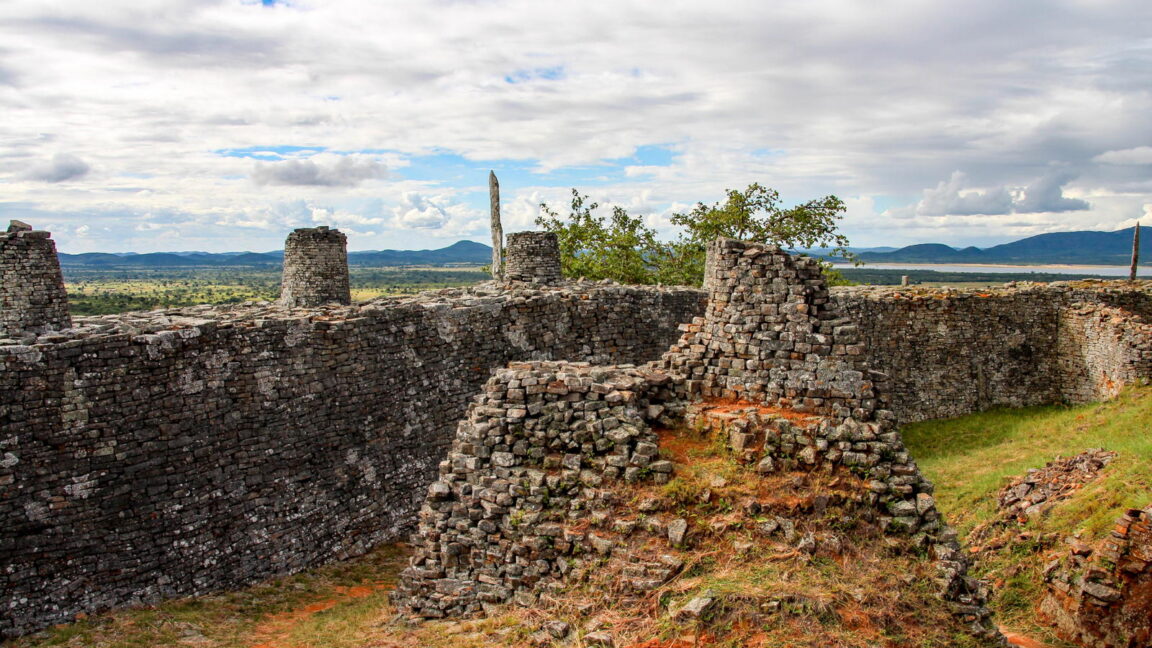
It’s not easy to extract iron from its ore. But the peoples of the ancient city of Great Zimbabwe—the capital of a thriving kingdom in southern Africa between 1000 to 1700 AD—were masters. At sites near the city’s stone ruins, clusters of iron-smelting furnaces survive today as mounds of rubble. At Mashava, a village 25 miles northwest, fragments bear fingermarks of those who long ago smoothed the structures’ clay interiors. Some of the furnaces were nearly an adult’s arm span in width, with walls thick and strong to contain the heat of more than 2,100° Fahrenheit needed to smelt iron. Unlike other furnaces that required workers to force air into them with bellows, these were designed to suck air in, then out through a chimney, no human labor required. This would have made it significantly easier to produce the iron, which was fashioned into hoes, axes, and arrowheads. “The number and size of these furnaces, together with the use of natural-draft technology, indicate intensive and technologically sophisticated iron production,” says archaeometallurgist Ezekiel Mtetwa of Chicago’s Field Museum of Natural History, who has long studied the furnaces. Scientists are extremely interested in the peoples who created this and other iron-powered societies across eastern and southern Africa. Research points to an adaptable and innovative group from western Africa as the masterminds. Known as Bantu speakers, these communities began gradually expanding across the continent’s southern half, starting from 6,000 to 4,000 years ago. In doing so, they introduced a fundamentally new, sedentary way of life—characterized by farming, raising livestock, pottery-making, and metalworking—to regions previously dominated by hunter-gatherer communities. This migration transformed not only the region’s history and technology, but also its languages: Today, around 350 million Africans speak one of roughly 500 distinct Bantu tongues, from southern African Zulu to eastern African Swahili. And at least as many Africans—as well as many African Americans and Afro-Latinos—carry Bantu ancestry in their DNA. Reconstructing this expansion has been a tough puzzle, especially given the region’s sparse written historical records and limited research funding. But a unique blend of scientists—linguists, archaeologists, and geneticists—have teamed up to unearth clues about the deep origins of the Bantu-speaking people, their path across Africa, and their relationships with other cultures. Although much debate and uncertainty remain, little by little the work is uncovering one of history’s largest and longest human migrations. “It completely reshaped the demography in sub-Saharan Africa, and we are really interested in trying to understand it,” says population geneticist Sandra Beleza of the United Kingdom’s University of Leicester. People on the move The first evidence of the Bantu expansion came from observations of similarities among Bantu languages. They’re so alike, in fact, that when the Portuguese explorer Vasco da Gama sailed around the southern tip of Africa in 1497, a Portuguese crew member who had spent time in west-central Africa could reportedly communicate with locals in southeastern Africa. Linguists working in the 19th century started referring to the language family as Bantu, the plural of muntu, meaning “human being” in many Bantu tongues. Later linguists reasoned that the languages stemmed from an ancestral people who migrated across the continent from western Africa, which harbors the greatest diversity of Bantu languages (as would be expected for where the languages originated). Soon, archaeologists found supporting evidence: across eastern and southern Africa, pieces of pottery of similar yet diverse styles, alongside first-time traces of village life, metal-making, domesticated animals, and western African crops—all developed within the last 2,000 years. Northern sites usually dated back to earlier time periods than sites farther south. “You can clearly see a north-to-south progression,” says archaeological scientist Shadreck Chirikure of the University of Oxford. By the 1990s, however, some scholars began to question the idea that Bantu languages and skills spread through a migration. Couldn’t these cultural habits have spread while people stayed in the same place, with hunter gatherer communities passing along new technologies, languages, and habits to each other? Genetic techniques that could analyze people’s ancestry helped to resolve that debate. All of us share DNA with our relatives: 50 percent on average with siblings, 12.5 percent with cousins, 3.3 percent with second cousins, and so on. Though these proportions become minute the further back in time a shared common ancestor lived, statistical techniques can tease out patterns. Sure enough, a 2009 genetic analysis of 2,432 Africans found that Bantu-speaking people from western, central, and southern Africa are much more closely related than one might expect given their geographic distance. And in 2024, a team of scientists analyzed the genomes of 1,763 Africans and found the greatest genetic diversity among Bantu speakers in western Africa. As distance from the region increased, diversity declined. “This is a typical signature of a population expanding from one place to another,” explains coauthor Carina Schlebusch, a geneticist at Uppsala University in Sweden. Roughly 350 million people across sub-Saharan Africa speak one of roughly 500 Bantu languages—from Swahili in eastern Africa to Xhosa spoken in southern Africa. Mysterious roots But while linguistic and genetic data point to western Africa—particularly the Grassfields region of Cameroon—as the Bantu homeland, conclusive archaeological proof is thin. At the best-studied archaeological site in the Grassfields, a rock shelter called Shum Laka, pottery fragments appear dating from 7,000 to 6,000 years ago and become abundant by 5,000 to 4,000 years ago. Bowls and jars at first decorated simply with incisions and stamps and later bearing the marks of carved or braided tools rolled over wet clay are a possible, yet inconclusive, trace of Bantu ancestors. South of Cameroon, archaeologists have searched for artifacts in one of the Bantu-speaking people’s first destinations: the Congo rainforest. A handful of times between 2010 and 2023, archaeologist Alexandre Livingstone Smith of Belgium’s Royal Museum for Central Africa traveled via boat along the Congo River as part of a team led by linguist Birgit Ricquier. In a number of villages, Smith found pottery shards of a style consistent with that found farther west, dating back to 2,300 to 2,000 years ago. “That would be the potential first Bantu settlers of the forest,” Smith says. Many experts interpret the trails of pottery as evidence that ceramics traditions were brought by Bantu-speaking people all the way from their original home. What’s unclear, however, is when and how Bantu-speaking peoples acquired their farming and metalworking skills—and, in particular, whether they invented iron smelting themselves or learned it from neighboring, iron-extracting cultures. Scientists have been able to deduce the path that Bantu speakers took to eastern and southern Africa. Some scholars have argued that the path split into two before entering the Congo rainforest, with one group heading east while another went south through the forest. But evidence is now mounting that these groups crossed the rainforest together, and only upon reaching its southern fringes roughly 2,500 to 3,500 years ago did they split into east-moving and southward-moving groups. Some of this evidence comes from linguistic studies. Not unlike the evolution of species, languages diverge and transform over time, creating “trees” that linguists can reconstruct from similarities in grammar and vocabulary. In 2015, a group of researchers did this computationally using data from about 400 Bantu languages. They observed a much larger diversity—and deeper splits—among the Bantu languages spoken in the Congo rainforest, suggesting that Bantu-speaking ancestors spent a long time there, allowing their languages to diversify. Languages spoken farther east and farther south appeared to stem from a less diverse subset of this larger group, explains coauthor Koen Bostoen, a linguist at Belgium’s Ghent University. Later linguistic studies, as well as genetic analyses, have reached similar conclusions. In 2023, Beleza and her colleagues compared the genomes of Bantu speakers from Angola—south of the Congo rainforest—with those from the eastern African country of Mozambique and ones from Cameroon, the Bantu homeland. Remarkably, the eastern African samples were more genetically similar to those from Angola, hundreds of miles to the south of Cameroon and south of the rainforest, than to any of the samples from Cameroon. That points to a recent common ancestor in the Angola region—suggesting that the Bantu split into eastern and southern streams only once they reached the rainforest’s southern edge, Beleza explains. By the time the Bantu people commenced their movement east and south, they had already come into their own as a farming, iron-making, livestock-herding, and pottery-making people, Chirikure says: Many ancient Bantu settlements across eastern and southern Africa contain evidence of this Bantu “package.” Mixing and mingling Key to the Bantu’s success in southern and eastern Africa, experts suspect, was their sedentary lifestyle. This—and their iron tools—would have allowed them to produce more food and grow in number, propelling them to occupy new territories. Their lifestyle affected the landscape as forests turned into farmland, and it also affected the hunter-gatherer communities who were already living there. Some groups were likely crowded out and disappeared, experts suspect, while others were probably pushed to marginal regions, including Indigenous groups such as rainforest hunter-gatherers and Khoisan peoples, who continue to live in central and southern Africa, respectively, to this day. Still, scientists are learning that Bantu peoples had deep relationships with these two groups. In the 2024 genetic analysis, Schlebusch and her colleagues found that some Bantu-speaking groups in central Africa share about an eighth of their DNA with rainforest hunter-gatherers, and some southern African Bantu speakers share a similar amount with Khoisan groups. Clearly, their ancestors once intermixed. Curiously, in the case of the Khoisan, this mixing tended to arise from pairings of Bantu-speaking men with Khoisan women. One 2021 study of southern African Bantu speakers found that the DNA inside their mitochondria—which people inherit only from their mothers—had greater-than-expected proportions of Khoisan DNA. But the Y chromosomes, which come from fathers, had much higher proportions of DNA with Bantu ancestry. Some experts speculate that this pattern could be the result of Bantu men raiding Khoisan women or preferentially marrying Khoisan women for whom the traditional bride prices would have been cheaper. “Whenever there is a power difference… between two groups, it tends to melt down to this,” says coauthor Ananyo Choudhury, a geneticist at the University of Witwatersrand in South Africa. This pattern also left marks on the language. The characteristic clicks of Khoisan languages also occur in southern African Bantu languages Zulu and Khosa. Bostoen suspects that the children of Khoisan-Bantu pairings were, at first, bilingual. Eventually, “they lost their mothers’ languages, but they left a substrate of the mothers’ languages in the Bantu language.” Archaeologists are also studying the relationships between Bantu farmers and their neighbors. While there may have been conflicts over land, the groups also cooperated with and learned from one another, says Décio Muianga, an archaeologist at Eduardo Mondlane University and the research institute Kaleidoscopio in Maputo, Mozambique. He’s been excavating a rock shelter in Mozambique containing thousands of years’ worth of stone tools, wild animal bones, and wild plant remains—telltale signs of hunter-gatherers living at the site. But interestingly, Bantu-style pottery also appears. “My assumption is that the hunter-gatherers were getting these ceramics from the farmers,” Muianga says. “They were interacting, communicating, and exchanging resources.” There is evidence, too, for cultural exchanges: European anthropologists have reported that some Bantu-speaking groups would solicit San hunter-gatherers to conduct traditional rainmaking ceremonies, for example. Bantu social networks eventually extended well beyond Africa. By 1100 to 1600 AD, many of the complex state societies that Bantu speakers built developed trade networks across the Indian Ocean. Archaeological data shows they imported Chinese porcelain and glass beads; in return, they exported gold, ivory, and iron. In fact, a 12th century Muslim cartographer once wrote that iron from parts of southern Africa—likely referring to Great Zimbabwe’s iron-producing hinterlands, Mtetwa suspects—was deemed to be of much higher quality than that from other places like India. Mtetwa has found evidence that iron smelters near Great Zimbabwe would add bone fragments to the furnaces, perhaps as part of a smelting-blessing ritual, but one with scientific merit: This material contains calcium, which can accelerate the separation of iron from the rest of the ore. That may be a testament to the Great Zimbabweans’ iron-smelting skills: “Some materials introduced within ritual or medicinal practices may simultaneously have had technically beneficial effects on the smelt,” says Mtetwa. A future full of research Though they’ve made great progress in reconstructing the Bantu world, scientists are aware of, and trying to address, the limitations of their research so far. Linguistic studies, for instance, have been a popular tool to reconstruct Bantu history, but Bostoen cautions that very few Bantu languages have been documented thoroughly enough to definitively trace linguistic trees back in time. Linguists may never get a complete dataset, because some old branches of the Bantu language family may have died out. Another limitation of computational Bantu language-family reconstructions is that they’ve usually assumed that languages have evolved in isolation after different Bantu groups separated. But there may have been extensive cross-pollination among languages as different groups met and interacted. In fact, when linguists factored in the possibility of contact among Bantu languages in a 2026 study, they couldn’t reconstruct the diversification patterns described by previous linguists, says coauthor Igor Yanovich of the University of Vienna, who wrote about the challenges of Bantu linguistic studies in the 2025 Annual Review of Linguistics. In his view, linguists should first focus on thoroughly documenting Bantu languages before attempting to use them to understand Bantu history. In hopes of adding new insights, Schlebusch is working to obtain DNA from ancient human remains. By revealing the identity of people who were living in particular places at particular times, this could help to elucidate when and where different Bantu communities moved into, overlapped with, or repopulated areas. “What we see more and more in genetic data is that the movement was probably complex—that it was these ‘spread over spread’ events,” Schlebusch says. Archaeologists, for their part, hope to fill in the vast gaps in the archaeological record of sub-Saharan Africa—by both conducting new excavations and re-examining existing artifact collections for fresh insights. But all this work requires funding for research and laboratories, especially from African governments, says Chirikure; he, like many of his colleagues, has largely relied on funding from Europe, which is limited. Without more funding, “you are not generating fresh ideas, you are not formulating new hypotheses and testing them using some of the cutting-edge science,” he says. Scientists from all three disciplines are hopeful that they will eventually tell the complete story of how an innovative people spread and diversified across sub-Saharan Africa, mixing traditions with those of earlier peoples and of others who still live there, to create myriad cultures, each one a unique blend of food, philosophy, language, music, and traditions. “If you travel from West Africa today all the way to East Africa, you have a unique cultural diversity that is very hard to find in many other parts of the world,” Muianga says. Combined with the legacy of other groups, he says, “this is the result of the Bantu migration.” This story originally appeared in Knowable Magazine
It’s not easy to extract iron from its ore. But the peoples of the ancient city of Great Zimbabwe—the capital of a thriving kingdom in southern Africa between 1000 to 1700 AD—were masters. At sites near the city’s stone ruins, clusters of iron-smelting furnaces survive today as mounds of rubble. At Mashava, a village 25 miles northwest, fragments bear fingermarks of those who long ago smoothed the structures’ clay interiors. Some of the furnaces were nearly an adult’s arm span in width, with walls thick and strong to contain the heat of more than 2,100° Fahrenheit needed to smelt iron. Unlike other furnaces that required workers to force air into them with bellows, these were designed to suck air in, then out through a chimney, no human labor required. This would have made it significantly easier to produce the iron, which was fashioned into hoes, axes, and arrowheads. “The number and size of these furnaces, together with the use of natural-draft technology, indicate intensive and technologically sophisticated iron production,” says archaeometallurgist Ezekiel Mtetwa of Chicago’s Field Museum of Natural History, who has long studied the furnaces. Scientists are extremely interested in the peoples who created this and other iron-powered societies across eastern and southern Africa. Research points to an adaptable and innovative group from western Africa as the masterminds. Known as Bantu speakers, these communities began gradually expanding across the continent’s southern half, starting from 6,000 to 4,000 years ago. In doing so, they introduced a fundamentally new, sedentary way of life—characterized by farming, raising livestock, pottery-making, and metalworking—to regions previously dominated by hunter-gatherer communities. This migration transformed not only the region’s history and technology, but also its languages: Today, around 350 million Africans speak one of roughly 500 distinct Bantu tongues, from southern African Zulu to eastern African Swahili. And at least as many Africans—as well as many African Americans and Afro-Latinos—carry Bantu ancestry in their DNA. Reconstructing this expansion has been a tough puzzle, especially given the region’s sparse written historical records and limited research funding. But a unique blend of scientists—linguists, archaeologists, and geneticists—have teamed up to unearth clues about the deep origins of the Bantu-speaking people, their path across Africa, and their relationships with other cultures. Although much debate and uncertainty remain, little by little the work is uncovering one of history’s largest and longest human migrations. “It completely reshaped the demography in sub-Saharan Africa, and we are really interested in trying to understand it,” says population geneticist Sandra Beleza of the United Kingdom’s University of Leicester. People on the move The first evidence of the Bantu expansion came from observations of similarities among Bantu languages. They’re so alike, in fact, that when the Portuguese explorer Vasco da Gama sailed around the southern tip of Africa in 1497, a Portuguese crew member who had spent time in west-central Africa could reportedly communicate with locals in southeastern Africa. Linguists working in the 19th century started referring to the language family as Bantu, the plural of muntu, meaning “human being” in many Bantu tongues. Later linguists reasoned that the languages stemmed from an ancestral people who migrated across the continent from western Africa, which harbors the greatest diversity of Bantu languages (as would be expected for where the languages originated). Soon, archaeologists found supporting evidence: across eastern and southern Africa, pieces of pottery of similar yet diverse styles, alongside first-time traces of village life, metal-making, domesticated animals, and western African crops—all developed within the last 2,000 years. Northern sites usually dated back to earlier time periods than sites farther south. “You can clearly see a north-to-south progression,” says archaeological scientist Shadreck Chirikure of the University of Oxford. By the 1990s, however, some scholars began to question the idea that Bantu languages and skills spread through a migration. Couldn’t these cultural habits have spread while people stayed in the same place, with hunter gatherer communities passing along new technologies, languages, and habits to each other? Genetic techniques that could analyze people’s ancestry helped to resolve that debate. All of us share DNA with our relatives: 50 percent on average with siblings, 12.5 percent with cousins, 3.3 percent with second cousins, and so on. Though these proportions become minute the further back in time a shared common ancestor lived, statistical techniques can tease out patterns. Sure enough, a 2009 genetic analysis of 2,432 Africans found that Bantu-speaking people from western, central, and southern Africa are much more closely related than one might expect given their geographic distance. And in 2024, a team of scientists analyzed the genomes of 1,763 Africans and found the greatest genetic diversity among Bantu speakers in western Africa. As distance from the region increased, diversity declined. “This is a typical signature of a population expanding from one place to another,” explains coauthor Carina Schlebusch, a geneticist at Uppsala University in Sweden. Roughly 350 million people across sub-Saharan Africa speak one of roughly 500 Bantu languages—from Swahili in eastern Africa to Xhosa spoken in southern Africa. Mysterious roots But while linguistic and genetic data point to western Africa—particularly the Grassfields region of Cameroon—as the Bantu homeland, conclusive archaeological proof is thin. At the best-studied archaeological site in the Grassfields, a rock shelter called Shum Laka, pottery fragments appear dating from 7,000 to 6,000 years ago and become abundant by 5,000 to 4,000 years ago. Bowls and jars at first decorated simply with incisions and stamps and later bearing the marks of carved or braided tools rolled over wet clay are a possible, yet inconclusive, trace of Bantu ancestors. South of Cameroon, archaeologists have searched for artifacts in one of the Bantu-speaking people’s first destinations: the Congo rainforest. A handful of times between 2010 and 2023, archaeologist Alexandre Livingstone Smith of Belgium’s Royal Museum for Central Africa traveled via boat along the Congo River as part of a team led by linguist Birgit Ricquier. In a number of villages, Smith found pottery shards of a style consistent with that found farther west, dating back to 2,300 to 2,000 years ago. “That would be the potential first Bantu settlers of the forest,” Smith says. Many experts interpret the trails of pottery as evidence that ceramics traditions were brought by Bantu-speaking people all the way from their original home. What’s unclear, however, is when and how Bantu-speaking peoples acquired their farming and metalworking skills—and, in particular, whether they invented iron smelting themselves or learned it from neighboring, iron-extracting cultures. Scientists have been able to deduce the path that Bantu speakers took to eastern and southern Africa. Some scholars have argued that the path split into two before entering the Congo rainforest, with one group heading east while another went south through the forest. But evidence is now mounting that these groups crossed the rainforest together, and only upon reaching its southern fringes roughly 2,500 to 3,500 years ago did they split into east-moving and southward-moving groups. Some of this evidence comes from linguistic studies. Not unlike the evolution of species, languages diverge and transform over time, creating “trees” that linguists can reconstruct from similarities in grammar and vocabulary. In 2015, a group of researchers did this computationally using data from about 400 Bantu languages. They observed a much larger diversity—and deeper splits—among the Bantu languages spoken in the Congo rainforest, suggesting that Bantu-speaking ancestors spent a long time there, allowing their languages to diversify. Languages spoken farther east and farther south appeared to stem from a less diverse subset of this larger group, explains coauthor Koen Bostoen, a linguist at Belgium’s Ghent University. Later linguistic studies, as well as genetic analyses, have reached similar conclusions. In 2023, Beleza and her colleagues compared the genomes of Bantu speakers from Angola—south of the Congo rainforest—with those from the eastern African country of Mozambique and ones from Cameroon, the Bantu homeland. Remarkably, the eastern African samples were more genetically similar to those from Angola, hundreds of miles to the south of Cameroon and south of the rainforest, than to any of the samples from Cameroon. That points to a recent common ancestor in the Angola region—suggesting that the Bantu split into eastern and southern streams only once they reached the rainforest’s southern edge, Beleza explains. By the time the Bantu people commenced their movement east and south, they had already come into their own as a farming, iron-making, livestock-herding, and pottery-making people, Chirikure says: Many ancient Bantu settlements across eastern and southern Africa contain evidence of this Bantu “package.” Mixing and mingling Key to the Bantu’s success in southern and eastern Africa, experts suspect, was their sedentary lifestyle. This—and their iron tools—would have allowed them to produce more food and grow in number, propelling them to occupy new territories. Their lifestyle affected the landscape as forests turned into farmland, and it also affected the hunter-gatherer communities who were already living there. Some groups were likely crowded out and disappeared, experts suspect, while others were probably pushed to marginal regions, including Indigenous groups such as rainforest hunter-gatherers and Khoisan peoples, who continue to live in central and southern Africa, respectively, to this day. Still, scientists are learning that Bantu peoples had deep relationships with these two groups. In the 2024 genetic analysis, Schlebusch and her colleagues found that some Bantu-speaking groups in central Africa share about an eighth of their DNA with rainforest hunter-gatherers, and some southern African Bantu speakers share a similar amount with Khoisan groups. Clearly, their ancestors once intermixed. Curiously, in the case of the Khoisan, this mixing tended to arise from pairings of Bantu-speaking men with Khoisan women. One 2021 study of southern African Bantu speakers found that the DNA inside their mitochondria—which people inherit only from their mothers—had greater-than-expected proportions of Khoisan DNA. But the Y chromosomes, which come from fathers, had much higher proportions of DNA with Bantu ancestry. Some experts speculate that this pattern could be the result of Bantu men raiding Khoisan women or preferentially marrying Khoisan women for whom the traditional bride prices would have been cheaper. “Whenever there is a power difference… between two groups, it tends to melt down to this,” says coauthor Ananyo Choudhury, a geneticist at the University of Witwatersrand in South Africa. This pattern also left marks on the language. The characteristic clicks of Khoisan languages also occur in southern African Bantu languages Zulu and Khosa. Bostoen suspects that the children of Khoisan-Bantu pairings were, at first, bilingual. Eventually, “they lost their mothers’ languages, but they left a substrate of the mothers’ languages in the Bantu language.” Archaeologists are also studying the relationships between Bantu farmers and their neighbors. While there may have been conflicts over land, the groups also cooperated with and learned from one another, says Décio Muianga, an archaeologist at Eduardo Mondlane University and the research institute Kaleidoscopio in Maputo, Mozambique. He’s been excavating a rock shelter in Mozambique containing thousands of years’ worth of stone tools, wild animal bones, and wild plant remains—telltale signs of hunter-gatherers living at the site. But interestingly, Bantu-style pottery also appears. “My assumption is that the hunter-gatherers were getting these ceramics from the farmers,” Muianga says. “They were interacting, communicating, and exchanging resources.” There is evidence, too, for cultural exchanges: European anthropologists have reported that some Bantu-speaking groups would solicit San hunter-gatherers to conduct traditional rainmaking ceremonies, for example. Bantu social networks eventually extended well beyond Africa. By 1100 to 1600 AD, many of the complex state societies that Bantu speakers built developed trade networks across the Indian Ocean. Archaeological data shows they imported Chinese porcelain and glass beads; in return, they exported gold, ivory, and iron. In fact, a 12th century Muslim cartographer once wrote that iron from parts of southern Africa—likely referring to Great Zimbabwe’s iron-producing hinterlands, Mtetwa suspects—was deemed to be of much higher quality than that from other places like India. Mtetwa has found evidence that iron smelters near Great Zimbabwe would add bone fragments to the furnaces, perhaps as part of a smelting-blessing ritual, but one with scientific merit: This material contains calcium, which can accelerate the separation of iron from the rest of the ore. That may be a testament to the Great Zimbabweans’ iron-smelting skills: “Some materials introduced within ritual or medicinal practices may simultaneously have had technically beneficial effects on the smelt,” says Mtetwa. A future full of research Though they’ve made great progress in reconstructing the Bantu world, scientists are aware of, and trying to address, the limitations of their research so far. Linguistic studies, for instance, have been a popular tool to reconstruct Bantu history, but Bostoen cautions that very few Bantu languages have been documented thoroughly enough to definitively trace linguistic trees back in time. Linguists may never get a complete dataset, because some old branches of the Bantu language family may have died out. Another limitation of computational Bantu language-family reconstructions is that they’ve usually assumed that languages have evolved in isolation after different Bantu groups separated. But there may have been extensive cross-pollination among languages as different groups met and interacted. In fact, when linguists factored in the possibility of contact among Bantu languages in a 2026 study, they couldn’t reconstruct the diversification patterns described by previous linguists, says coauthor Igor Yanovich of the University of Vienna, who wrote about the challenges of Bantu linguistic studies in the 2025 Annual Review of Linguistics. In his view, linguists should first focus on thoroughly documenting Bantu languages before attempting to use them to understand Bantu history. In hopes of adding new insights, Schlebusch is working to obtain DNA from ancient human remains. By revealing the identity of people who were living in particular places at particular times, this could help to elucidate when and where different Bantu communities moved into, overlapped with, or repopulated areas. “What we see more and more in genetic data is that the movement was probably complex—that it was these ‘spread over spread’ events,” Schlebusch says. Archaeologists, for their part, hope to fill in the vast gaps in the archaeological record of sub-Saharan Africa—by both conducting new excavations and re-examining existing artifact collections for fresh insights. But all this work requires funding for research and laboratories, especially from African governments, says Chirikure; he, like many of his colleagues, has largely relied on funding from Europe, which is limited. Without more funding, “you are not generating fresh ideas, you are not formulating new hypotheses and testing them using some of the cutting-edge science,” he says. Scientists from all three disciplines are hopeful that they will eventually tell the complete story of how an innovative people spread and diversified across sub-Saharan Africa, mixing traditions with those of earlier peoples and of others who still live there, to create myriad cultures, each one a unique blend of food, philosophy, language, music, and traditions. “If you travel from West Africa today all the way to East Africa, you have a unique cultural diversity that is very hard to find in many other parts of the world,” Muianga says. Combined with the legacy of other groups, he says, “this is the result of the Bantu migration.” This story originally appeared in Knowable Magazine



A salt-loving microorganism from Earth did more than endure a months-long experiment designed around possible conditions beneath Mars. It grew in concentrated brine under low pressure, using nitrate or perchlorate in place of oxygen during respiration. The result extends research on the resilience of Earth microbes. It also raises a question for Mars exploration: Which combinations of harsh conditions can still permit biological activity?
link to open access paper journals.asm.org/doi/10.1128/aem.01749-26
Conclusion: We have shown that H. volcanii can actively grow under environmental and chemical conditions relevant to the present-day shallow Martian subsurface. However, this study was not designed to replicate the full thermal variability of the Martian surface or shallow subsurface, including diurnal and seasonal freeze–thaw cycles, or the complete suite of chemical conditions presently understood to exist on Mars. Rather, the objective was to determine whether active metabolism is physically possible under Mars-relevant combinations of low atmospheric pressure, high salinity, and oxidizing chemistry, provided that liquid water is available in the form of brines. Moreover, the media used in many previous low-pressure Mars simulation studies, including those employed herein, are supplemented with carbon sources and nutrients that are not representative of the current understanding of biologically available organic compounds on Mars (83).
Our future studies will investigate the capacity of halophilic and psychrophilic microorganisms to grow under conditions that more closely approximate the Amazonian/present-day Martian environment by incorporating freeze–thaw cycles, defined Mars media (94) containing Mars-relevant organic compounds (e.g., acetate) (95), and Mars regolith simulants. Moreover, future experiments would benefit from incorporating additional analytical approaches, including direct cell counts and quantitative biomass measurements, to better characterize population growth and cell-division dynamics under low-pressure conditions. Integrating transcriptomic and proteomic analyses would further enable identification of the molecular pathways involved in hypobaric tolerance, anaerobic metabolism, and adaptation to combined Mars-relevant environmental stressors.
As experimental systems increasingly approximate present-day conditions on Mars, the combined effects of low pressure, low temperature, high salinity, anoxia, radiation, and oxidizing compounds will likely reduce growth yields and metabolic rates. Sensitive, complementary, and agnostic approaches will therefore become increasingly important for detecting and distinguishing subtle biological responses under these more harmful conditions.
The results presented here do not imply that microbial life exists on Mars today. However, they add to a growing body of evidence suggesting that the shallow subsurface of Mars may retain environmental conditions capable of supporting active metabolism and extant life (83, 96–98).


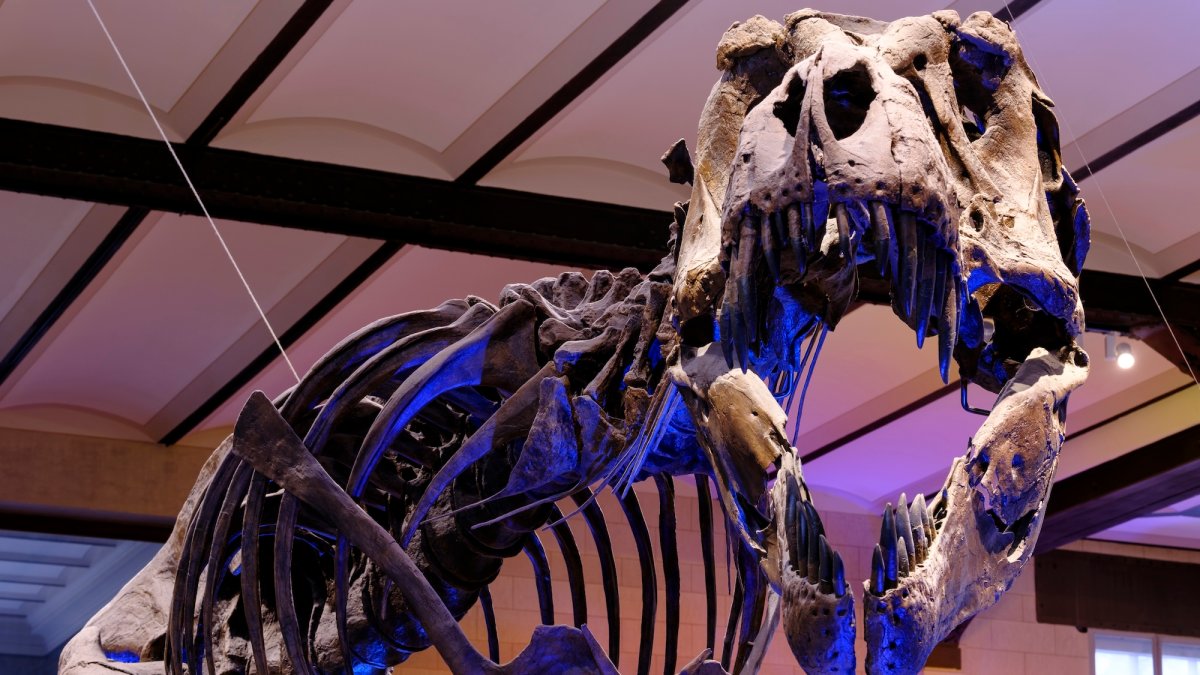
Paleontologists regularly discover fossilized dinosaur bones, but they sometimes locate footprints and prehistoric shells. On rare occasions, researchers have even identified the ancient indentations of a dinosaur’s skin or feathers. But fossilized cells? Researchers have long assumed such microscopic levels of preservation were impossible. But, once again, nature has proven otherwise.
In a study published today in Proceedings of the National Academy of Sciences (PNAS), an international team of paleontologists confirmed the presence of intact biomolecules and mineralized red blood cells inside fossils of a 115-million-year-old dinosaur. Although previous work has suggested similar possibilities, the team’s research is the first to chemically identify oxygen-carrying blood compounds known as heme.
“This really is a landmark discovery,” Kliti Grice, a study co-author and chemist at Curtin University in Australia, said in a statement. “These findings challenge longstanding assumptions that certain biomolecules such as hemoglobin cannot survive deep time.”
The evidence exists inside the fossilized limb bones of a juvenile Aratasaurus museunacionali. Discovered in 2008, A. museunacionali was an Early Cretaceous theropod that lived in present-day northeastern Brazil. The fossils suggest a dinosaur measuring over 10 feet long and weighing about 75 pounds, but given its young age, A. museunacionali likely grew even larger.
After carefully examining thin slices of the fossils, paleontologists located the mineralized red blood cell molecular components, along with a complex manganese oxide called hausmannite. This material helped maintain the cellular structures of heme, a ring-shaped molecule that contains iron and binds many proteins, especially hemoglobin. The hausmannite also helped preserve additional biomolecules found in the blood, such as the amino acids in collagen. The study’s authors theorize this level of preservation could only occur following a rapid burial in an environment that was rich in microbes, but low in oxygen at the same time.


Early Sunday morning, volunteer comet hunter Jiangao Ruan filed a candidate report at 9:04 a.m. UTC flagging a new Kreutz-group sungrazer in data captured by CCOR-1, the solar coronagraph aboard NOAA’s GOES-19 weather satellite. Fellow citizen scientist Zesheng Yang co-signed the submission the same morning. The candidate now awaits confirmation from staff at the Naval Research Laboratory — the latest in a sequence that has quietly made a weather-monitoring coronagraph into the world’s most productive sungrazing-comet finder, staffed almost entirely by people who do this for free.
Early Sunday morning, volunteer comet hunter Jiangao Ruan filed a candidate report at 9:04 a.m. UTC flagging a new Kreutz-group sungrazer in data captured by CCOR-1, the solar coronagraph aboard NOAA’s GOES-19 weather satellite. Fellow citizen scientist Zesheng Yang co-signed the submission the same morning. The candidate now awaits confirmation from staff at the Naval Research Laboratory — the latest in a sequence that has quietly made a weather-monitoring coronagraph into the world’s most productive sungrazing-comet finder, staffed almost entirely by people who do this for free.

link to open access paper journals.aps.org/prx/abstract/10.1103/589s-s1yy
link to open access paper journals.aps.org/prx/abstract/10.1103/589s-s1yy


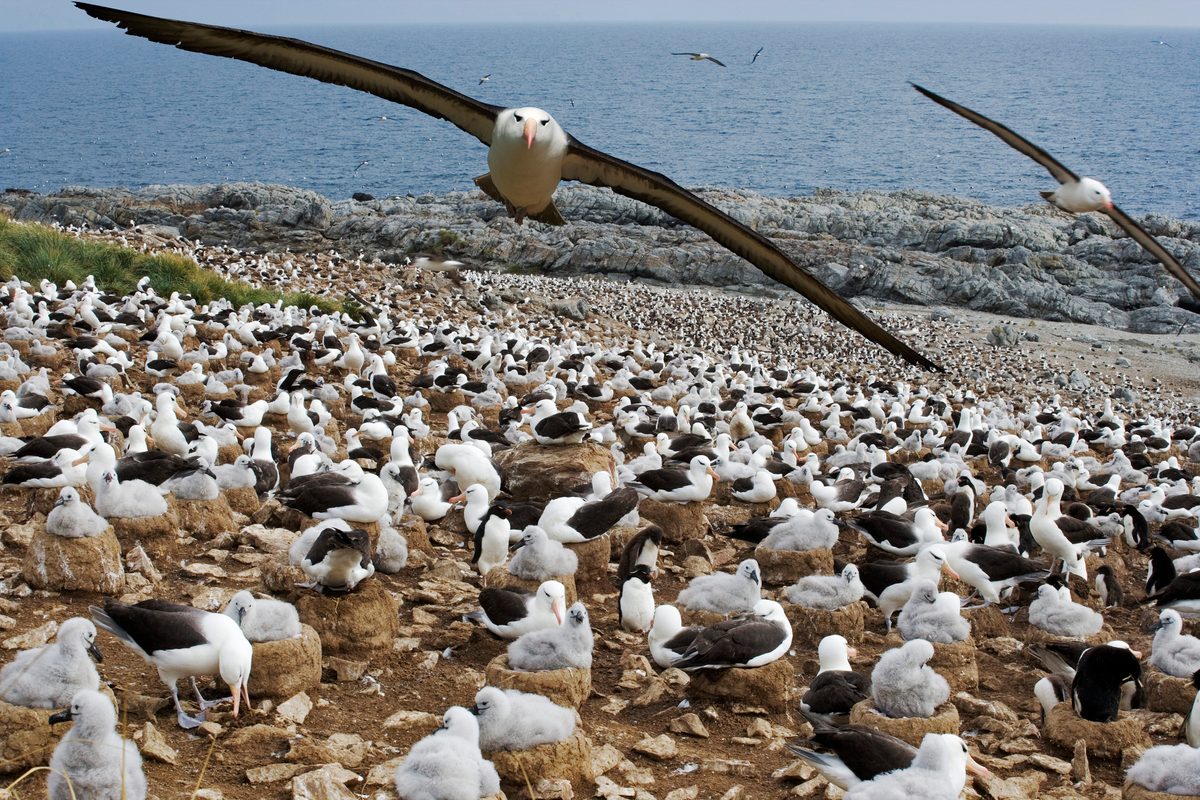
“I proved you get jet-lagged too! Ha! Think you are still superior now stupid bird? Well you aren’t your clock is off buddy!” - I yell at the seabird flying by.
“I proved you get jet-lagged too! Ha! Think you are still superior now stupid bird? Well you aren’t your clock is off buddy!” - I yell at the seabird flying by.

cross-posted from: hexbear.net/post/9892456
Banner image: A pair of nudibranchs on coral in Manta Ray Bay, Yap in Micronesia. Image by Betty Wills via Wikimedia (CC BY-SA 4.0).
Conservation groups have launched a new initiative to safeguard coral reefs in Yap, a state in the Federated States of Micronesia, through both scientific innovation and traditional stewardship.
The Yap Resilience Hub, a partnership between The Nature Conservancy (TNC) and the Great Barrier Reef Foundation (GBRF), is a three-year project that seeks to support local conservation efforts through 2028.
“Coral reefs are central to life in Yap and across island communities because they provide food, support livelihoods, and sustain cultural practices,” Berna Gorong, capacity building manager at TNC Micronesia & Polynesia, told Mongabay by email.
The reefs are traditional fishing grounds managed under community and clan tenure and “closely tied to identity, stewardship, and daily life,” Gorong said.
The Yap Resilience Hub plans to rely on a steering committee of government, traditional leaders and community representatives to help identify candidate reef areas for protection. The reefs will be selected based on five criteria, Gorong said, including their ecological condition and potential for recovery, connectivity to other reef systems, and community and governance readiness.
Once priority reefs are identified, she said the project will support local action plans, ensuring that community priorities and local leadership remain at the forefront of the conservation strategy. “Capacity building and capacity-needs assessments will be central so local partners can sustain the work beyond the project period,” Gorong said.
“By pairing community priorities with science, planning, and capacity building, [the project] aims to strengthen reef resilience and support the long-term well-being of Yap’s people and coastal communities,” she added.
While many Micronesian reefs remain relatively healthy compared to other global regions, they face increasing pressure from rising seas and climate change.
Dawnette Olsudong, a researcher at the Palau International Coral Reef Center who has conducted assessments on coral restoration in Yap and isn’t involved in the project, said proactive measures are important.
“I am hopeful that the launch of this project will strengthen our understanding of reef conditions and improve our ability to make informed conservation and restoration decisions,” Olsudong told Mongabay. She noted her research has helped identify sites that communities perceived as degraded and in need of restoration.
The Yap Resilience Hub project is part of the Resilient Reefs Pasifika initiative, funded by the GBRF.

cross-posted from: hexbear.net/post/9876937

Panamanian golden frogs (Atelopus zeteki) suffered significant declines due to chytrid. The species has not been seen in the wild since 2009. Credit: Roshan Patel, Smithsonian’s National Zoo and Conservation Biology Institute.
As a deadly fungal disease ravages wild frog populations around the globe, scientists have identified potential locations in Panama where amphibians might persist despite the disease, according to new research from the Smithsonian’s National Zoo and Conservation Biology Institute (NZCBI) and Smithsonian Tropical Research Institute (STRI) published in the Journal for Nature Conservation.
The amphibian chytrid disease, also known as chytridiomycosis or simply chytrid, is caused by the fungus Batrachochytrium dendrobatidis. It has spread like wildfire through Central and South America since the 1970s and is now ubiquitous. It is believed to have driven numerous species of neotropical frogs to the brink of extinction, including many in the genus Atelopus, commonly known as harlequin toads.
Now, as conservationists attempt to reintroduce captive-bred species to the wild, they hope to give the animals a leg up by identifying climatic refugia—places that are environmentally unsuitable for chytrid but well-suited to frogs.
The chytrid fungus is present across almost all of the historic range of Atelopus species, but just as human influenza cases change with the seasons, the severity of chytrid disease fluctuates with temperature and humidity.
Using previously developed models that identified where the disease was present and when it was most severe, the authors built new chytrid suitability maps to identify places where reintroduced frogs might thrive without the threat of chytrid.
“We have tried releasing captive-bred harlequin toads back into the wild and experienced high losses due to the amphibian chytrid fungus that persists in the environment,” said Brian Gratwicke, conservation biologist at NZCBI and senior author of the article.
“By mapping climatic refuges, we finally have a tool to rank potential release sites, allowing us to select places where the released animals have the best chance of survival.”

Variable harlequin frogs (Atelopus varius) were the only species found surviving in chytrid-suitable sites, which scientists say is consistent with evidence that the species may have evolved resistance to the disease. Credit: Brian Gratwicke, Smithsonian’s National Zoo and Conservation Biology Institute
Researchers found that most harlequin toad species in Panama persist only at sites where more than 80% of the seasons were unsuitable for medium- and high-intensity infections. Only one species, the variable harlequin toad (A. varius), was found at sites suitable for the disease, which scientists say is consistent with evidence that the species may have evolved resistance to chytrid.
The models not only identify potential reintroduction sites but also point to places where wild Atelopus populations might remain.
“Our ability to identify climate refugia is critical if we hope to locate populations that might have disappeared from most places in their former range,” said Carrie Lewis, a doctoral candidate at George Mason University and lead author of the publication. “These persisting populations could provide a source of genes to bolster populations under human care and provide opportunities to augment wild populations.”

Like other Atelopus species, the critically endangered Pirri harlequin frog (A. glyphus) has experienced significant declines due to the amphibian chytrid disease. Credit: Brian Gratwicke, Smithsonian’s National Zoo and Conservation Biology Institute.

A prior reintroduction trial conducted with Limosa harlequin frogs (Atelopus limosus) resulted in the deaths of numerous frogs due to chytrid. By choosing reintroduction sites considered unsuitable for chytrid, researchers hope to reduce losses in future reintroduction trials. Credit: Roshan Patel, Smithsonian’s National Zoo and Conservation Biology Institute.

Researchers established captive assurance colonies for numerous species, including the critically endangered Toad Mountain harlequin frog (Atelopus certus), at the Panama Amphibian Rescue and Conservation Project in Gamboa, Panama. Credit: Roshan Patel, Smithsonian’s National Zoo and Conservation Biology Institute.
Although there are currently a limited number of potential refuges, additional opportunities have been identified. The models also forecast areas that, while currently suitable for the disease, might become unsuitable in the coming years because of climate change. Researchers note that the shifting climate could also have negative effects on frogs adapted to cooler mountainous habitats.
“Guided by these climate refugia and Atelopus habitat-suitability maps, we have already begun surveying potential sites for habitat suitability and potential release trials,” said Roberto Ibáñez, a STRI staff scientist and co-author of the study. “These tools will allow us to experimentally test the climate refugia hypothesis through future release trials.”
cross-posted from: hexbear.net/post/9876937
Panamanian golden frogs (Atelopus zeteki) suffered significant declines due to chytrid. The species has not been seen in the wild since 2009. Credit: Roshan Patel, Smithsonian’s National Zoo and Conservation Biology Institute.
As a deadly fungal disease ravages wild frog populations around the globe, scientists have identified potential locations in Panama where amphibians might persist despite the disease, according to new research from the Smithsonian’s National Zoo and Conservation Biology Institute (NZCBI) and Smithsonian Tropical Research Institute (STRI) published in the Journal for Nature Conservation.
The amphibian chytrid disease, also known as chytridiomycosis or simply chytrid, is caused by the fungus Batrachochytrium dendrobatidis. It has spread like wildfire through Central and South America since the 1970s and is now ubiquitous. It is believed to have driven numerous species of neotropical frogs to the brink of extinction, including many in the genus Atelopus, commonly known as harlequin toads.
Now, as conservationists attempt to reintroduce captive-bred species to the wild, they hope to give the animals a leg up by identifying climatic refugia—places that are environmentally unsuitable for chytrid but well-suited to frogs.
The chytrid fungus is present across almost all of the historic range of Atelopus species, but just as human influenza cases change with the seasons, the severity of chytrid disease fluctuates with temperature and humidity.
Using previously developed models that identified where the disease was present and when it was most severe, the authors built new chytrid suitability maps to identify places where reintroduced frogs might thrive without the threat of chytrid.
“We have tried releasing captive-bred harlequin toads back into the wild and experienced high losses due to the amphibian chytrid fungus that persists in the environment,” said Brian Gratwicke, conservation biologist at NZCBI and senior author of the article.
“By mapping climatic refuges, we finally have a tool to rank potential release sites, allowing us to select places where the released animals have the best chance of survival.”
Variable harlequin frogs (Atelopus varius) were the only species found surviving in chytrid-suitable sites, which scientists say is consistent with evidence that the species may have evolved resistance to the disease. Credit: Brian Gratwicke, Smithsonian’s National Zoo and Conservation Biology Institute
Researchers found that most harlequin toad species in Panama persist only at sites where more than 80% of the seasons were unsuitable for medium- and high-intensity infections. Only one species, the variable harlequin toad (A. varius), was found at sites suitable for the disease, which scientists say is consistent with evidence that the species may have evolved resistance to chytrid.
The models not only identify potential reintroduction sites but also point to places where wild Atelopus populations might remain.
“Our ability to identify climate refugia is critical if we hope to locate populations that might have disappeared from most places in their former range,” said Carrie Lewis, a doctoral candidate at George Mason University and lead author of the publication. “These persisting populations could provide a source of genes to bolster populations under human care and provide opportunities to augment wild populations.”
Like other Atelopus species, the critically endangered Pirri harlequin frog (A. glyphus) has experienced significant declines due to the amphibian chytrid disease. Credit: Brian Gratwicke, Smithsonian’s National Zoo and Conservation Biology Institute.
A prior reintroduction trial conducted with Limosa harlequin frogs (Atelopus limosus) resulted in the deaths of numerous frogs due to chytrid. By choosing reintroduction sites considered unsuitable for chytrid, researchers hope to reduce losses in future reintroduction trials. Credit: Roshan Patel, Smithsonian’s National Zoo and Conservation Biology Institute.
Researchers established captive assurance colonies for numerous species, including the critically endangered Toad Mountain harlequin frog (Atelopus certus), at the Panama Amphibian Rescue and Conservation Project in Gamboa, Panama. Credit: Roshan Patel, Smithsonian’s National Zoo and Conservation Biology Institute.
Although there are currently a limited number of potential refuges, additional opportunities have been identified. The models also forecast areas that, while currently suitable for the disease, might become unsuitable in the coming years because of climate change. Researchers note that the shifting climate could also have negative effects on frogs adapted to cooler mountainous habitats.
“Guided by these climate refugia and Atelopus habitat-suitability maps, we have already begun surveying potential sites for habitat suitability and potential release trials,” said Roberto Ibáñez, a STRI staff scientist and co-author of the study. “These tools will allow us to experimentally test the climate refugia hypothesis through future release trials.”

Cross posted from sh.itjust.works/post/68926708
Cross posted from sh.itjust.works/post/68926708





The scientific literature can be viewed as an “information commons:” an intangible resource that “no one owns and is shared by everyone.” There are well-established economic and political frameworks for understanding such commons, emerging from the history of agricultural common lands found in places like preindustrial England. This article provides a primer on the history and these frameworks, and considers a key difference between the information commons and the fields of yore: while information commons are robust and immensely valuable — some can be said to rank among humanity’s greatest achievements — the English agricultural commons no longer meaningfully exist. The latter are gone not because of the well-known “tragedy of the commons,” but rather a phenomenon known as the enclosure movement (~1600–1800) that transformed the common lands into private property. Many observers, then and now, judge enclosure to have been theft at a societal scale. This article argues that artificial intelligence (AI) provides precisely the tools needed to enable a previously-infeasible enclosure of the information commons. Although AI-enabled enclosure does not operate identically to physical enclosure, it shares the key features of turning the commons into private wealth and undermining the social systems that support them (via “slop spam”). The concepts presented in this article can provide a scholarly basis for interrogating the foreboding feeling that AI may represent not just a smash-and-grab, but an attack upon a whole way of life.
The scientific literature can be viewed as an “information commons:” an intangible resource that “no one owns and is shared by everyone.” There are well-established economic and political frameworks for understanding such commons, emerging from the history of agricultural common lands found in places like preindustrial England. This article provides a primer on the history and these frameworks, and considers a key difference between the information commons and the fields of yore: while information commons are robust and immensely valuable — some can be said to rank among humanity’s greatest achievements — the English agricultural commons no longer meaningfully exist. The latter are gone not because of the well-known “tragedy of the commons,” but rather a phenomenon known as the enclosure movement (~1600–1800) that transformed the common lands into private property. Many observers, then and now, judge enclosure to have been theft at a societal scale. This article argues that artificial intelligence (AI) provides precisely the tools needed to enable a previously-infeasible enclosure of the information commons. Although AI-enabled enclosure does not operate identically to physical enclosure, it shares the key features of turning the commons into private wealth and undermining the social systems that support them (via “slop spam”). The concepts presented in this article can provide a scholarly basis for interrogating the foreboding feeling that AI may represent not just a smash-and-grab, but an attack upon a whole way of life.





cross-posted from: hexbear.net/post/9822526

The short-legged horned toad, an endangered species in Hong Kong, is a small frog measuring around 40 mm in length. It is characterised by short hind limbs, small horn-like projections above the eyes, and skin coloration and patterns that closely resemble dead leaves. (The photo shows the Short-legged Horned Toad population on Lantau Island.) Credit: Lingnan University
The short-legged horned toad (Boulenophrys brachykolos), listed as endangered on the International Union for Conservation of Nature (IUCN) Red List of Threatened Species, is the only known small frog species in Hong Kong belonging to the genus Boulenophrys of the family Megophryidae.
A study led by the Division of Science at Lingnan University has found that the Lantau Island population of the short-legged horned toad shows clear genetic divergence from other local populations, along with several notable differences in the mating calls of males.
The research team suggests that the Lantau population represents an early stage of speciation. Geographic isolation of Lantau Island from other landmasses likely contributed to these unique evolutionary traits. The team recommends treating the Lantau population as a separate conservation unit in the future.
These findings have been published in the journal Current Herpetology.
The short-legged horned toad is found in mountain streams on Lantau Island, Hong Kong Island, Kowloon, the New Territories and adjacent Shenzhen. The research team, led by Lingnan University, collected 19 samples of the short-legged horned toad (nine from Lantau Island, six from Hong Kong Island and four from Kowloon) to examine their genetic and morphological characteristics.

The study shows that Short-legged Horned Toads are visually almost identical, making evolutionary differences difficult to detect through traditional field surveys alone. (The photo shows the Short-legged Horned Toad population on Hong Kong Island.). Credit: Lingnan University
The results show that the short-legged horned toads on Lantau form a distinct genetic group separate from those on Hong Kong Island, Kowloon and Shenzhen. This suggests that the Lantau population has been separated from other populations for a considerable period.
In addition, the team recorded and analyzed the mating calls of male short-legged horned toads from Lantau Island, Hong Kong Island and Kowloon. They found significant differences between the calls of the Lantau Island population and those of other local populations. The Lantau population produces calls with a faster rhythm and shorter individual notes.
In terms of physical appearance, the team found no marked differences between frogs from Lantau Island and other regions, indicating that physical characteristics alone may be insufficient to distinguish the Lantau population from other populations.
Jonathan Fong, the corresponding author of the study, associate dean (administration and education) of the Wu Jieh Yee School of Interdisciplinary Studies and associate professor of the Division of Science at Lingnan University, said the study provides a more comprehensive approach to evaluating evolutionary divergence among populations of the same species.
He said, "Many amphibians look very similar, making evolutionary differences difficult to detect through traditional methods that examine morphology alone. By integrating genetic and acoustic data, we found that frogs on Lantau Island have a distinct genetic makeup and male toads have different mating calls. This suggests that the Lantau population is following a distinct evolutionary trajectory."
Sung Yik-hei, the first author of the study and adjunct assistant professor of the Division of Science at Lingnan University, explained that Lantau Island became geographically isolated from the mainland approximately 10,000 years ago. The geographic isolation likely reduced gene flow between populations, allowing the Lantau short-legged horned toad population to develop unique genetic traits over time. The study also highlights that Hong Kong may harbor undiscovered biodiversity.
Sung said, "The results suggest that the short-legged horned toad population on Lantau Island may represent an early stage of speciation, although current evidence is insufficient to determine whether the Lantau population constitutes a distinct species. The short-legged horned toad is an endangered species, and if the Lantau population declines or becomes extinct, its unique genetic traits could be lost and could not be replaced by populations from other areas.
“We therefore propose that conservation management recognize the Lantau population as an independent conservation unit, giving due consideration to its specific conservation needs to ensure the survival of this unique native population.”
cross-posted from: hexbear.net/post/9822526
The short-legged horned toad, an endangered species in Hong Kong, is a small frog measuring around 40 mm in length. It is characterised by short hind limbs, small horn-like projections above the eyes, and skin coloration and patterns that closely resemble dead leaves. (The photo shows the Short-legged Horned Toad population on Lantau Island.) Credit: Lingnan University
The short-legged horned toad (Boulenophrys brachykolos), listed as endangered on the International Union for Conservation of Nature (IUCN) Red List of Threatened Species, is the only known small frog species in Hong Kong belonging to the genus Boulenophrys of the family Megophryidae.
A study led by the Division of Science at Lingnan University has found that the Lantau Island population of the short-legged horned toad shows clear genetic divergence from other local populations, along with several notable differences in the mating calls of males.
The research team suggests that the Lantau population represents an early stage of speciation. Geographic isolation of Lantau Island from other landmasses likely contributed to these unique evolutionary traits. The team recommends treating the Lantau population as a separate conservation unit in the future.
These findings have been published in the journal Current Herpetology.
The short-legged horned toad is found in mountain streams on Lantau Island, Hong Kong Island, Kowloon, the New Territories and adjacent Shenzhen. The research team, led by Lingnan University, collected 19 samples of the short-legged horned toad (nine from Lantau Island, six from Hong Kong Island and four from Kowloon) to examine their genetic and morphological characteristics.
The study shows that Short-legged Horned Toads are visually almost identical, making evolutionary differences difficult to detect through traditional field surveys alone. (The photo shows the Short-legged Horned Toad population on Hong Kong Island.). Credit: Lingnan University
The results show that the short-legged horned toads on Lantau form a distinct genetic group separate from those on Hong Kong Island, Kowloon and Shenzhen. This suggests that the Lantau population has been separated from other populations for a considerable period.
In addition, the team recorded and analyzed the mating calls of male short-legged horned toads from Lantau Island, Hong Kong Island and Kowloon. They found significant differences between the calls of the Lantau Island population and those of other local populations. The Lantau population produces calls with a faster rhythm and shorter individual notes.
In terms of physical appearance, the team found no marked differences between frogs from Lantau Island and other regions, indicating that physical characteristics alone may be insufficient to distinguish the Lantau population from other populations.
Jonathan Fong, the corresponding author of the study, associate dean (administration and education) of the Wu Jieh Yee School of Interdisciplinary Studies and associate professor of the Division of Science at Lingnan University, said the study provides a more comprehensive approach to evaluating evolutionary divergence among populations of the same species.
He said, "Many amphibians look very similar, making evolutionary differences difficult to detect through traditional methods that examine morphology alone. By integrating genetic and acoustic data, we found that frogs on Lantau Island have a distinct genetic makeup and male toads have different mating calls. This suggests that the Lantau population is following a distinct evolutionary trajectory."
Sung Yik-hei, the first author of the study and adjunct assistant professor of the Division of Science at Lingnan University, explained that Lantau Island became geographically isolated from the mainland approximately 10,000 years ago. The geographic isolation likely reduced gene flow between populations, allowing the Lantau short-legged horned toad population to develop unique genetic traits over time. The study also highlights that Hong Kong may harbor undiscovered biodiversity.
Sung said, "The results suggest that the short-legged horned toad population on Lantau Island may represent an early stage of speciation, although current evidence is insufficient to determine whether the Lantau population constitutes a distinct species. The short-legged horned toad is an endangered species, and if the Lantau population declines or becomes extinct, its unique genetic traits could be lost and could not be replaced by populations from other areas.
“We therefore propose that conservation management recognize the Lantau population as an independent conservation unit, giving due consideration to its specific conservation needs to ensure the survival of this unique native population.”