


0
0
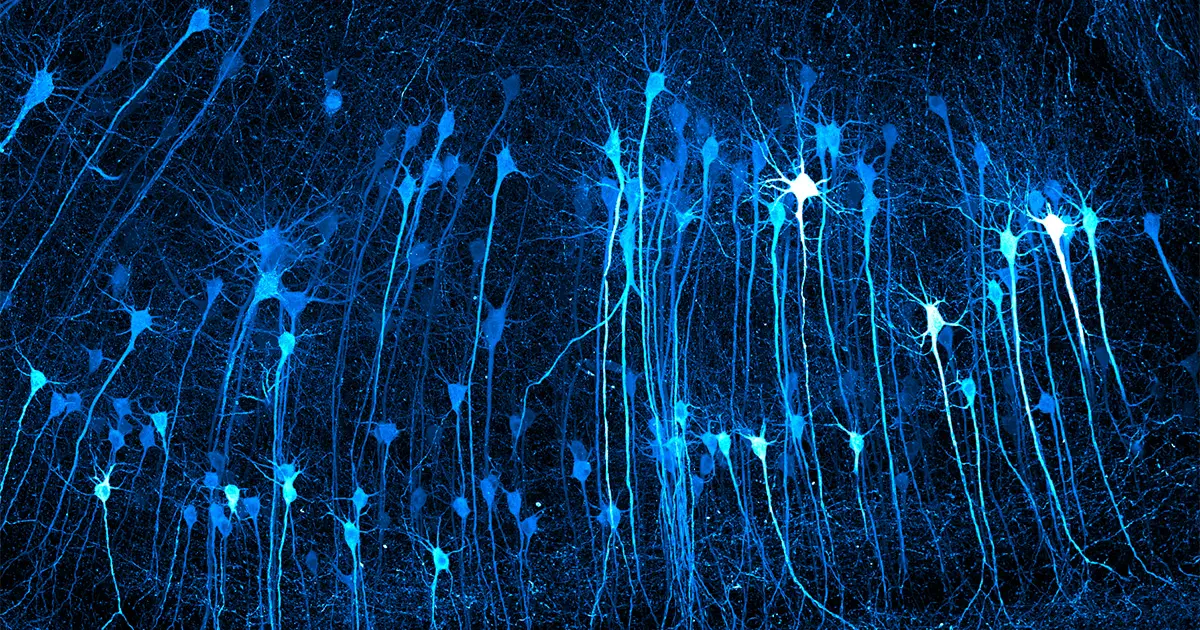
Quanta Magazine
See Inside Cells Like Never Before in These Vivid Microscopic Images | Quanta Magazine
www.quantamagazine.org
posts tagged #science

Since it was first recorded by a probe in 2018, scientists have been unable to find a plausible explanation for the existence of this cloud, often referred to as the Arsia Mons Elongated Cloud (AMEC). Until now. Recently, researchers successfully modeled the cloud’s formation for the first time, their results suggesting that it may be driven by a physical process that has never been directly observed in any planet’s atmosphere.
“We found that we needed to include some exotic physics… physics that, while included in textbooks, is treated as theoretical and usually thought not to happen in nature. It certainly hasn’t been seen in action before,” Jorge Hernández-Bernal, a planetary scientist at Paris’ Sorbonne Université and lead author of the study, said in a press release. “Once we included this physics in our simulations, the AMEC emerged just as we hoped.”
On Earth, clouds usually form when water vapor creates droplets or ice crystals in the presence of tiny particles, such as dust or salt. The new study, published in Nature Geoscience, instead suggests AMEC could be forming through so-called homogeneous nucleation, where vapor changes directly into ice crystals on its own without any help from debris.
“It’s akin to droplets of condensation appearing in the middle of a room, rather than on a window,” Hernández-Bernal explained. “It’s wholly unexpected.”



Barnes Ice Cap sits on the central plateau of Baffin Island, in the Canadian Arctic. It is the last surviving fragment of the Laurentide Ice Sheet, the largest of the Pleistocene ice sheets, which at its peak buried most of Canada under two miles of ice and locked away around 80 meters of sea level. That remnant has now yielded direct physical evidence that ice sheets might have reversed their retreat and started to grow again thousands of years ago.
In a recent Science study, researchers show that the Laurentide reached its smallest size about 3,600 years ago, then started re-expanding roughly 2,000 years ago, which the team interprets as the opening move of the next glaciation. Apparently, this brand-new ice age was on its way until about 1960, when human-caused climate warming reversed it.
“Barnes is the last remaining piece of one of the domes of the Laurentide Ice Sheet,” says Nicolás Young, a geologist at Columbia University’s Lamont-Doherty Earth Observatory and lead author of the study. As that enormous dome thinned through the Holocene, its margin withdrew up onto Baffin Island, and what’s left today is the deflated core of something that was once two miles thick. The reason Barnes can testify about its own history, Young explains, comes down to the temperature at its base.
Most glaciers are warm-based, meaning meltwater at the bed lets them slide, and sliding ice grinds up everything beneath it, erasing the record. Barnes is cold-based, and thus frozen directly onto the bedrock beneath it, which prevents it from sliding.
“If there is an ice event where you live and you have to go and scrape off your windshield, that ice that’s plastered to the windshield of your car, that’s a good example of how cold-based ice operates. It’s sort of just stuck to what it’s on,” Young says.
This stuck ice preserves what’s beneath instead of eroding it. As the Laurentide retreated across the plateau, tundra plants colonized the newly bare ground. When the ice came back later, it simply smothered them in place and held them there, intact, for two millennia. To pinpoint the exact moment of this turnaround, Young’s team used two independent dating methods.



Shribak begins enlarging images of diatoms, tardigrades, and sea urchins, each containing colorful details that are usually invisible to the human eye. Humans typically perceive two properties of light: intensity (brightness) and wavelengths (color). The microscope Shribak developed and patented at the MBL in 2009, the polychromatic polarization microscope, allows him to visualize and record another property of light: Polarization.
Shribak begins enlarging images of diatoms, tardigrades, and sea urchins, each containing colorful details that are usually invisible to the human eye. Humans typically perceive two properties of light: intensity (brightness) and wavelengths (color). The microscope Shribak developed and patented at the MBL in 2009, the polychromatic polarization microscope, allows him to visualize and record another property of light: Polarization.


The scientific literature can be viewed as an “information commons:” an intangible resource that “no one owns and is shared by everyone.” There are well-established economic and political frameworks for understanding such commons, emerging from the history of agricultural common lands found in places like preindustrial England. This article provides a primer on the history and these frameworks, and considers a key difference between the information commons and the fields of yore: while information commons are robust and immensely valuable — some can be said to rank among humanity’s greatest achievements — the English agricultural commons no longer meaningfully exist. The latter are gone not because of the well-known “tragedy of the commons,” but rather a phenomenon known as the enclosure movement (~1600–1800) that transformed the common lands into private property. Many observers, then and now, judge enclosure to have been theft at a societal scale. This article argues that artificial intelligence (AI) provides precisely the tools needed to enable a previously-infeasible enclosure of the information commons. Although AI-enabled enclosure does not operate identically to physical enclosure, it shares the key features of turning the commons into private wealth and undermining the social systems that support them (via “slop spam”). The concepts presented in this article can provide a scholarly basis for interrogating the foreboding feeling that AI may represent not just a smash-and-grab, but an attack upon a whole way of life.
The scientific literature can be viewed as an “information commons:” an intangible resource that “no one owns and is shared by everyone.” There are well-established economic and political frameworks for understanding such commons, emerging from the history of agricultural common lands found in places like preindustrial England. This article provides a primer on the history and these frameworks, and considers a key difference between the information commons and the fields of yore: while information commons are robust and immensely valuable — some can be said to rank among humanity’s greatest achievements — the English agricultural commons no longer meaningfully exist. The latter are gone not because of the well-known “tragedy of the commons,” but rather a phenomenon known as the enclosure movement (~1600–1800) that transformed the common lands into private property. Many observers, then and now, judge enclosure to have been theft at a societal scale. This article argues that artificial intelligence (AI) provides precisely the tools needed to enable a previously-infeasible enclosure of the information commons. Although AI-enabled enclosure does not operate identically to physical enclosure, it shares the key features of turning the commons into private wealth and undermining the social systems that support them (via “slop spam”). The concepts presented in this article can provide a scholarly basis for interrogating the foreboding feeling that AI may represent not just a smash-and-grab, but an attack upon a whole way of life.



cross-posted from: hexbear.net/post/9822526

The short-legged horned toad, an endangered species in Hong Kong, is a small frog measuring around 40 mm in length. It is characterised by short hind limbs, small horn-like projections above the eyes, and skin coloration and patterns that closely resemble dead leaves. (The photo shows the Short-legged Horned Toad population on Lantau Island.) Credit: Lingnan University
The short-legged horned toad (Boulenophrys brachykolos), listed as endangered on the International Union for Conservation of Nature (IUCN) Red List of Threatened Species, is the only known small frog species in Hong Kong belonging to the genus Boulenophrys of the family Megophryidae.
A study led by the Division of Science at Lingnan University has found that the Lantau Island population of the short-legged horned toad shows clear genetic divergence from other local populations, along with several notable differences in the mating calls of males.
The research team suggests that the Lantau population represents an early stage of speciation. Geographic isolation of Lantau Island from other landmasses likely contributed to these unique evolutionary traits. The team recommends treating the Lantau population as a separate conservation unit in the future.
These findings have been published in the journal Current Herpetology.
The short-legged horned toad is found in mountain streams on Lantau Island, Hong Kong Island, Kowloon, the New Territories and adjacent Shenzhen. The research team, led by Lingnan University, collected 19 samples of the short-legged horned toad (nine from Lantau Island, six from Hong Kong Island and four from Kowloon) to examine their genetic and morphological characteristics.

The study shows that Short-legged Horned Toads are visually almost identical, making evolutionary differences difficult to detect through traditional field surveys alone. (The photo shows the Short-legged Horned Toad population on Hong Kong Island.). Credit: Lingnan University
The results show that the short-legged horned toads on Lantau form a distinct genetic group separate from those on Hong Kong Island, Kowloon and Shenzhen. This suggests that the Lantau population has been separated from other populations for a considerable period.
In addition, the team recorded and analyzed the mating calls of male short-legged horned toads from Lantau Island, Hong Kong Island and Kowloon. They found significant differences between the calls of the Lantau Island population and those of other local populations. The Lantau population produces calls with a faster rhythm and shorter individual notes.
In terms of physical appearance, the team found no marked differences between frogs from Lantau Island and other regions, indicating that physical characteristics alone may be insufficient to distinguish the Lantau population from other populations.
Jonathan Fong, the corresponding author of the study, associate dean (administration and education) of the Wu Jieh Yee School of Interdisciplinary Studies and associate professor of the Division of Science at Lingnan University, said the study provides a more comprehensive approach to evaluating evolutionary divergence among populations of the same species.
He said, "Many amphibians look very similar, making evolutionary differences difficult to detect through traditional methods that examine morphology alone. By integrating genetic and acoustic data, we found that frogs on Lantau Island have a distinct genetic makeup and male toads have different mating calls. This suggests that the Lantau population is following a distinct evolutionary trajectory."
Sung Yik-hei, the first author of the study and adjunct assistant professor of the Division of Science at Lingnan University, explained that Lantau Island became geographically isolated from the mainland approximately 10,000 years ago. The geographic isolation likely reduced gene flow between populations, allowing the Lantau short-legged horned toad population to develop unique genetic traits over time. The study also highlights that Hong Kong may harbor undiscovered biodiversity.
Sung said, "The results suggest that the short-legged horned toad population on Lantau Island may represent an early stage of speciation, although current evidence is insufficient to determine whether the Lantau population constitutes a distinct species. The short-legged horned toad is an endangered species, and if the Lantau population declines or becomes extinct, its unique genetic traits could be lost and could not be replaced by populations from other areas.
“We therefore propose that conservation management recognize the Lantau population as an independent conservation unit, giving due consideration to its specific conservation needs to ensure the survival of this unique native population.”
cross-posted from: hexbear.net/post/9822526
The short-legged horned toad, an endangered species in Hong Kong, is a small frog measuring around 40 mm in length. It is characterised by short hind limbs, small horn-like projections above the eyes, and skin coloration and patterns that closely resemble dead leaves. (The photo shows the Short-legged Horned Toad population on Lantau Island.) Credit: Lingnan University
The short-legged horned toad (Boulenophrys brachykolos), listed as endangered on the International Union for Conservation of Nature (IUCN) Red List of Threatened Species, is the only known small frog species in Hong Kong belonging to the genus Boulenophrys of the family Megophryidae.
A study led by the Division of Science at Lingnan University has found that the Lantau Island population of the short-legged horned toad shows clear genetic divergence from other local populations, along with several notable differences in the mating calls of males.
The research team suggests that the Lantau population represents an early stage of speciation. Geographic isolation of Lantau Island from other landmasses likely contributed to these unique evolutionary traits. The team recommends treating the Lantau population as a separate conservation unit in the future.
These findings have been published in the journal Current Herpetology.
The short-legged horned toad is found in mountain streams on Lantau Island, Hong Kong Island, Kowloon, the New Territories and adjacent Shenzhen. The research team, led by Lingnan University, collected 19 samples of the short-legged horned toad (nine from Lantau Island, six from Hong Kong Island and four from Kowloon) to examine their genetic and morphological characteristics.
The study shows that Short-legged Horned Toads are visually almost identical, making evolutionary differences difficult to detect through traditional field surveys alone. (The photo shows the Short-legged Horned Toad population on Hong Kong Island.). Credit: Lingnan University
The results show that the short-legged horned toads on Lantau form a distinct genetic group separate from those on Hong Kong Island, Kowloon and Shenzhen. This suggests that the Lantau population has been separated from other populations for a considerable period.
In addition, the team recorded and analyzed the mating calls of male short-legged horned toads from Lantau Island, Hong Kong Island and Kowloon. They found significant differences between the calls of the Lantau Island population and those of other local populations. The Lantau population produces calls with a faster rhythm and shorter individual notes.
In terms of physical appearance, the team found no marked differences between frogs from Lantau Island and other regions, indicating that physical characteristics alone may be insufficient to distinguish the Lantau population from other populations.
Jonathan Fong, the corresponding author of the study, associate dean (administration and education) of the Wu Jieh Yee School of Interdisciplinary Studies and associate professor of the Division of Science at Lingnan University, said the study provides a more comprehensive approach to evaluating evolutionary divergence among populations of the same species.
He said, "Many amphibians look very similar, making evolutionary differences difficult to detect through traditional methods that examine morphology alone. By integrating genetic and acoustic data, we found that frogs on Lantau Island have a distinct genetic makeup and male toads have different mating calls. This suggests that the Lantau population is following a distinct evolutionary trajectory."
Sung Yik-hei, the first author of the study and adjunct assistant professor of the Division of Science at Lingnan University, explained that Lantau Island became geographically isolated from the mainland approximately 10,000 years ago. The geographic isolation likely reduced gene flow between populations, allowing the Lantau short-legged horned toad population to develop unique genetic traits over time. The study also highlights that Hong Kong may harbor undiscovered biodiversity.
Sung said, "The results suggest that the short-legged horned toad population on Lantau Island may represent an early stage of speciation, although current evidence is insufficient to determine whether the Lantau population constitutes a distinct species. The short-legged horned toad is an endangered species, and if the Lantau population declines or becomes extinct, its unique genetic traits could be lost and could not be replaced by populations from other areas.
“We therefore propose that conservation management recognize the Lantau population as an independent conservation unit, giving due consideration to its specific conservation needs to ensure the survival of this unique native population.”



On a recent evening commute through Bunia, the capital of Ituri Province in the eastern Democratic Republic of Congo, the streets looked almost ordinary. This city of nearly 1 million people was teeming with life: fruit vendors lined the streets, the shops were crowded, and restaurants were filling for the evening.
But things are not normal at all. Ebola is ravaging the area and has killed more than 4,000 people countrywide, most of them in the Ituri province.
Indeed, it was hard to reconcile what I was seeing with what I’d heard from the driver who had taken me to visit a nearby health center. He told me that his brother and three members of his wife’s family had died of Ebola. His family knew about the disease, he said, but by the time they realized how sick they were, it was too late. They died at home, before making it to a hospital. Nearly half of all people who are confirmed to have Ebola will die from it.
I have worked in humanitarian health in this region for decades and helped lead responses to several Ebola outbreaks. I have never seen one get this far ahead of us. Even now, more than 140 days after the outbreak was declared, most new cases are appearing outside the chains of transmission that health workers are tracking, and between one-third and two-thirds of deaths are occurring not in treatment centers but in people’s homes and communities. The threat is spreading: Last week, Kenya reported its first Ebola case after a man who had traveled there from Congo died of the disease.


For about a decade, the mainstream understanding has been that psychedelics cause chaos in the brain. Brain networks—the stable patterns of communication that handle vision, attention, or our sense of self, and more—loosen and start talking to each other all at once. EEG traces get noisier and more complex. “Think of the networks of the brain as highways,” says Devon Stoliker, a neuroscientist at Monash University. “Under psychedelics, these highways break down into many different directions.”
In a recent Nature study, Stoliker’s team designed an experiment to test whether these directions are truly chaotic and random. Researchers gathered 62 people who had never taken a psychedelic before, gave them 19 milligrams of psilocybin, a common psychedelic found in certain fungi, and scanned their brains. Then, they used AI to analyze the drugged and sober brain scans. What emerged was not exactly chaos.
Stoliker thinks chaos is not a satisfactory explanation for psychedelics’ effect on the brain. “It never really explained why an individual would have a meaningful experience, why they might have insight, why they might experience clarity, and why these might translate into positive psychological changes,” Stoliker says. To investigate if there are other explanations, he and his colleagues designed a study called PsiConnect.
Volunteers went through the same four-part sequence twice, once sober and once on psilocybin. The sequence included putting participants in four different settings or contexts: eight minutes of lying at rest, a guided meditation, an 11-minute curated music playlist, and finally six minutes of eyes-open video of clouds moving across a sky. Each participant did all four inside an MRI scanner about 80 minutes after dosing, and again on EEG about 150 minutes after.
There were no cognitive tasks researchers routinely go for in brain studies, but there was a purpose behind this omission.
“We wanted ecological validity,” Stoliker says. “We wanted to know what the brain was like when somebody was having an authentic, uninterrupted psychedelic experience. If somebody took a psychedelic in a therapeutic setting, you wouldn’t have them completing tasks.” Stoliker also points out that there’s evidence that giving someone a task mid-trip pulls them out of the state—a phenomenon researchers sometimes call grounding. “Once you introduce these sorts of tasks, you’re actually interrupting the very phenomena you are seeking to measure.” And it worked.


gigs of NASA pics. pick the mission.


gigs of NASA pics. pick the mission.



This is The Telegraph, so apologies for the weird choice on percent and other style quirks.
The nutritional value of fruit and vegetables has fallen by up to 50pc since the Sixties because of declining soil quality, according to a new study.
The report, from researchers at Deep Science Ventures, found that humans needed to consume twice the number of vegetables to get the same level of minerals such as potassium, magnesium or copper as would have been present in their food 60 years ago.
The study found that many crops had lost 20pc to 50pc of several key nutrients.
Will Summers, a senior associate at the firm, said: "For 60 years we’ve measured food security in calories and tonnes per hectare.
“On those measures we’ve done remarkably well. But we’ve been quietly hollowing out what’s inside our food.”
The decrease in nutrient and vitamin value is thought to be down to declining soil quality and crops being selectively bred for their ability to grow quickly, rather than there being any focus on their health benefits.
The effect will be particularly acute for the 14pc of Britons who identify as vegetarian or vegan.
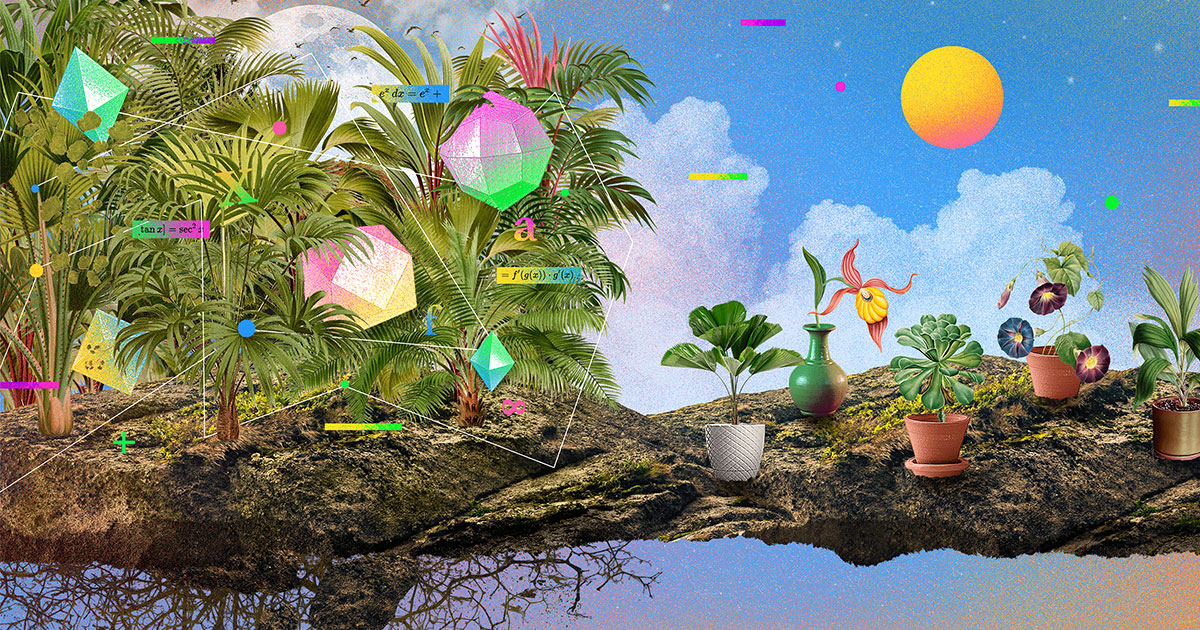
Throughout the summer of 2026, there were plenty of signs of what was to come. Every week, it seemed, artificial intelligence models were offering proofs of decades-old mathematical conjectures. So what happened on September 8 shouldn’t have been a complete surprise. And yet to many it felt sudden, almost violent. OpenAI announced that its models had solved one of math’s most famous problems — and immediately sparked a controversy over authorship and standards. Mathematics would never be the same.
“In whatever years I have left, I don’t expect that I’ll ever again prove a theorem because I’m actually needed to prove it,” Scott Aaronson (opens a new tab) of the University of Texas, Austin wrote on his blog (opens a new tab). “Human mathematicians are forevermore dethroned as the main theorem-proving entities on planet earth.” Other online missives expressed optimism, but many revealed some combination of grief, confusion, and fear.
Two days after the announcement, I found myself in a classroom at the University of California, Berkeley, surrounded by some 150 students, postdocs, and professors. The mathematician Ken Ono, who took a leave of absence from the University of Virginia to work at an AI start-up called Axiom Math, was scheduled to give a talk. “You might be graduating into a profession that might not even exist, or that will be very different than what you expected,” Ono told them. “You need to brace.”
The audience responded with anger and frustration. There were whispers and exchanged glances; Ono couldn’t make it through a single slide without a fresh wave of questions. “I’m not entirely sure what our takeaway is supposed to be,” one student said. Another asked how Ono and his start-up would take responsibility in light of “the shameful way that AI companies are treating mathematics.”
When Ono said that mathematicians would do their “very best” to avoid the bleak future the students were envisioning, a third retorted, hands trembling: “What are you doing? What is your ‘very best’?” The talk, including time for questions, had been allotted 50 minutes; with the extended Q&A, it went on for more than two hours. Many students lingered afterward, to vent and console one another.
To me, the reasons for these emotional reactions were obvious. The young mathematicians recognized that their field would have to change or risk extinction. What did surprise me was that when I returned to New York and brought it up in conversations with friends or family, they didn’t see what the problem was. All sorts of amazing discoveries are around the corner, they imagined. Wasn’t that the point?
These conversations exposed a long-standing problem: Many people don’t know what mathematics really is, or why mathematicians do it. Now mathematicians need to answer that question for themselves and explain it to the rest of the world — quickly. How they answer will determine what happens next.

Watch on Invidious: redirect.invidious.io/watch?v=I4l-zFWZCS0
Watch on Invidious: redirect.invidious.io/watch?v=I4l-zFWZCS0
Conclusions and Relevance In this qualitative study, transgender women and nonbinary adults assigned male at birth described experiencing hirsutism-related stigma and facing barriers to permanent hair removal. Multilevel changes aimed to reduce stigma, educate clinicians on hair-removal options, expand transgender-inclusive hair-removal services, and advocate for insurance coverage for permanent hair removal are required to reduce barriers to access medically necessary permanent hair removal for gender dysphoria.
Conclusions and Relevance In this qualitative study, transgender women and nonbinary adults assigned male at birth described experiencing hirsutism-related stigma and facing barriers to permanent hair removal. Multilevel changes aimed to reduce stigma, educate clinicians on hair-removal options, expand transgender-inclusive hair-removal services, and advocate for insurance coverage for permanent hair removal are required to reduce barriers to access medically necessary permanent hair removal for gender dysphoria.

We’ve never had an Atlantic hurricane season without a single hurricane through the end of September since reliable records began—until now.
That fact underscores how remarkable this season has been, with an exceptionally strong El Niño—likely to become the biggest in living memory—keeping a lid on tropical cyclone activity in the Atlantic while supercharging it in the eastern Pacific (and giving Hawaii one of its busiest seasons on record).
Though ocean waters across the Atlantic are amply warm right now, those cross-cutting winds—known as wind shear—aren’t abating. That’s thanks to El Niño. This cyclical climate phenomenon happens because of an eastward shift in warm ocean waters in the Pacific, although it has worldwide effects on the weather. The movement of warm waters, in turn, changes where heat enters the atmosphere, which alters the motions of atmospheric currents. In the Atlantic, that means there is more wind shear and air that pushes downward, both of which stymie cyclone development.


building sized chunk made a 600m wide hole. better there than here.
building sized chunk made a 600m wide hole. better there than here.

Jonathan Halliwell explains how quantum decoherence is key to understanding how we transition from a world with a wave-like nature of matter and energy to the classical macroscopic world that we’re used to.
Jonathan Halliwell explains how quantum decoherence is key to understanding how we transition from a world with a wave-like nature of matter and energy to the classical macroscopic world that we’re used to.


Half of our genome is made of transposons — snips of DNA that can move and copy themselves. But they’re more than parasites or genetic junk.
Half of our genome is made of transposons — snips of DNA that can move and copy themselves. But they’re more than parasites or genetic junk.

Adults with severe mental illness are nearly five times more likely than their peers to die from serious physical diseases before the age of 75, according to research.
The analysis of NHS data by the Rethink Mental Illness charity reveals that people with severe mental health problems die 15-20 years earlier than the wider adult population, largely due to preventable physical conditions.
Rethink’s calculations show that adults under 75 with serious mental ill health – defined as those referred to specialist secondary mental health services – are 6.3 times as likely to die from liver disease, 6 times more likely from respiratory illness, 3.8 times more likely from cardiovascular disease and 2.3 times as likely from cancer. They are also 14.6 times as likely to die due to suicide, compared with those who were not referred. Overall, they are 4.8 times more likely to die before the age of 75 than the general population.
For some conditions, these health inequalities are the starkest to date. For working-age adults living with a mental illness, the number of deaths from cardiovascular disease and cancer are at their highest levels since records began, each with more than 24,000 deaths in the 2022-2024 reporting period, the charity calculated.



read about this refining issue somewhere. orange dumb-dumb hasn’t a clue. oil co’s lost their asses in Venezuela a few short decades ago…
read about this refining issue somewhere. orange dumb-dumb hasn’t a clue. oil co’s lost their asses in Venezuela a few short decades ago…


This is a story that could have handled some editing. Just ignore the last section, which you’ve already read.
Drilling miles into the Earth to tap energy hot enough to melt lead usually breaks equipment before it breaks records.
Texas-based Mazama Energy has announced a drilling performance milestone at its Athena geothermal well in Newberry, Oregon. It is a key step toward commercializing superhot rock geothermal energy.
The energy company said its latest geothermal well, Athena, reached a depth of 10,350 feet in a swift 15 days. Interestingly, it is roughly an 80 percent reduction in drilling time compared to a landmark well drilled at the same site just last year.
The development will help move the clean energy sector a step closer to tapping “superhot rock.” These subsurface formations are hotter than 750°F (399°C)^[after you’ve already said “hotter than,” you can round up to 400C] and hold enough energy to transform green grid economics.
“Our goal was to demonstrate that we could drill faster and be cost-effective as we move toward increasingly hotter and deeper conditions,” said Pat Brand, Project Athena Director and Mazama’s Drilling SME. “We still have work ahead as we drill toward 750+°F temperatures, but the performance we are already seeing gives us confidence.”

Farts stink. Unless they’re yours, apparently.
Farts stink. Unless they’re yours, apparently.

Anthropologist Tanya Luhrmann found that voice-hearing experiences of people with serious psychotic disorders are shaped by local culture – in the U.S., the voices are harsh and threatening; in Africa and India, they are more benign and playful.
Anthropologist Tanya Luhrmann found that voice-hearing experiences of people with serious psychotic disorders are shaped by local culture – in the U.S., the voices are harsh and threatening; in Africa and India, they are more benign and playful.