0
119

the Guardian
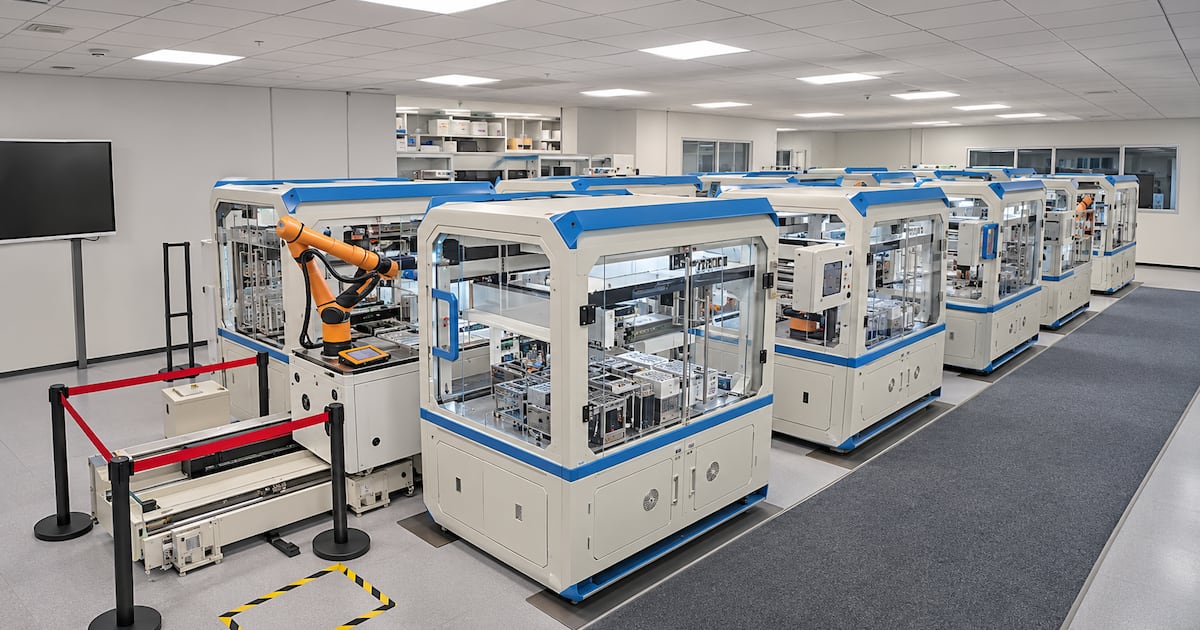
Very good boys? The dark, dystopian rise of robot dogs | Arwa Mahwadi
www.theguardian.com
posts tagged #technology




cross-posted from: lemmy.world/post/53957979
cross-posted from: lemmy.world/post/53957979











cross-posted from : lemmy.zip/post/74401190
Several countries are already ahead of Brussels. In 2025, a Paris court ordered five major VPNs to block more than 200 illegal sports streaming sites, while Italy moved to extend its Piracy Shield system to VPN and DNS providers.
In Spain, a Córdoba court ordered NordVPN and Proton VPN to block IP addresses tied to illegal LaLiga streams in February.
The same court later refused to fine NordVPN for not complying. LaLiga has since asked the Commission to add NordVPN, Proton VPN, ExpressVPN, and Surfshark to its piracy watch list.




cross-posted from: lemmy.dbzer0.com/post/77930410
cross-posted from: lemmy.dbzer0.com/post/77930410
Google announced Tuesday that early next year it would turn off artificial intelligence tools in its popular software for K-12 students, unless school administrators explicitly choose to make such tools available. Executives at the tech giant said they wanted to be responsive to educators and parents who have asked for more control in how children interact with A.I. But there is a catch: Schools that choose to restrict A.I. entirely will also lose access to Google search.
A.I. features are now a standard part of Google’s commercially available search engine. “Search and A.I. are deeply integrated,” said Chris Phillips, vice president for education at Google. If a school has banned A.I., he added, students “will not have access to search, and they’ll see a message from their school that indicates it’s not available.” Google is by far the dominant technology player in K-12 classrooms. Google’s suite of education apps — including Gmail, Docs and an assignment platform called Classroom — is ubiquitous. Google Chromebooks, low-cost laptops, are the most widely issued student devices in U.S. schools. And Google is synonymous with internet search, a crucial tool for students across the globe.
The company’s new strategy underscores Google’s powerful role in American education. If school leaders want continued student access to search within the company’s ecosystem, they will be forced to embrace Google’s A.I. In recent months, Google has been promoting its Gemini chatbot as a valuable educational tool, saying it can aid teachers in planning lessons and serve as a personalized tutor for students. A new student version of Gemini, Guided Learning, is supposed to make it harder for students to use A.I. to cheat.
“We’re evolving our approach,” said Mr. Phillips. He promised tools that would “support the productive struggle” of learning and tamp down on students turning to A.I. for easy answers. In August, Google turned on A.I. features as the default option inside its Classroom app for K-12 schools that had allowed students separate access to the company’s Gemini chatbot. The move upset some school leaders, who felt schools should be able to decide how and when students used Google’s A.I.
Google’s August change will now be reversed.
A parent movement has been pushing back against the use of A.I. in schools, and against screen time more generally. While A.I. chatbots can be useful tools for research and coding, they can also easily be used to cheat on school assignments and can provide false information. Research shows chatbots can also hinder critical thinking and ensnare adolescents in emotional dependency.
Last week, New York State passed a chatbot safety law that would prohibit companies from providing a variety of A.I. features for minors. And in September, the nation’s two largest school districts, in New York City and Los Angeles — both Google clients — broadly restricted student access to generative artificial intelligence on school devices. Officials in the Los Angeles Unified School District said at the time that they were hoping students would be able to conduct Google searches with A.I. overviews turned off. The overviews are A.I.-generated summaries that appear at the top of searches. They can dissuade students from seeking out multiple sources of information. On Monday, Google executives said that for districts that choose to allow A.I., there will be two options for search inside school-issued accounts, beginning in early 2027. One option will be search with A.I. overviews and A.I. chats turned on, similar to the current consumer experience. The other will be search using Guided Learning, the student version of Google’s Gemini chatbot.
Guided Learning is intended to guide students through a topic step-by-step without providing them with answers that could short-circuit learning. It is supposed to offer an experience modeled on one-to-one tutoring.
The consumer version of Guided Learning is already available within Gemini, and can enable cheating. In a reporter’s test, it produced a detailed essay in response to an Advanced Placement history prompt.
There are greater restrictions in the school version that is currently being piloted, according to Brit Mennuti, product lead for Google Classroom. She said teachers would be able to review students’ chatbot transcripts, among other capabilities.


They’re rapidly being converted into generators to meet A.I.’s insatiable demand for electricity. Environmentalists call it a step backward.
They’re rapidly being converted into generators to meet A.I.’s insatiable demand for electricity. Environmentalists call it a step backward.

Hmmm
Hmmm

A coalition of private-sector security firms working with Japan’s National Police Agency has disrupted XCPE, a backdoor used to build a massive botnet comprising more than 1.3 million Android devices across more than 200 countries.
Google, Lumen, Human Security, Plume, Synthient, and TrendAI participated in the disruption.
“We assess with high confidence that the backdoor and botnet were intentionally developed, deployed, and operated for financial gain by Videostrong Technology,” the Google Threat Intelligence Group (GTIG) said in a Monday blog.
Videostrong Technology is a hardware manufacturer based in Shenzhen, China. It builds Android devices, including home TV boxes and projectors. According to Google, Videostrong deliberately embedded the XCPE backdoor in device firmware and sold access to criminal affiliates, allowing them to install additional malware modules on devices shipped to unsuspecting customers. When buyers connected these devices to their home networks, the preinstalled backdoor allowed operators to create proxy networks and hide malicious traffic using the customers’ internet connections without their knowledge.
The firmware’s pre-installed management agent purported to be a standard remote-management client, according to TrendAI. It pulled updates from a GitHub page, and connected to a Message Queuing Telemetry Transport (MQTT) server that gave the operator full remote control of each box, allowing them to install and remove apps, change settings, and push updates to the infected devices.
Between June 3 and October 1, TrendAI documented more than 3.8 million distinct home and mobile IP addresses connected to the operation.
The coalition also disrupted the command-and-control domains used to manage the affiliate modules. “Because these affiliates each have diversified distribution channels for their modules beyond XCPE, we assess that taking down their C2 domains will sever access to at least 10 million additional compromised devices,” according to GTIG.
Google said it had since cut ties with Videostrong, and banned the OEM from making devices with preloaded Google apps.
Videostrong did not immediately respond to The Register’s inquiries.
This backdoor and botnet operation is part of the same ecosystem as BadBox 2.0, another notorious botnet that infected more than 10 million TV boxes and other devices before Human, Google, and TrendAI disrupted it in March 2025.®

cross-posted from: lemmy.world/post/53940728
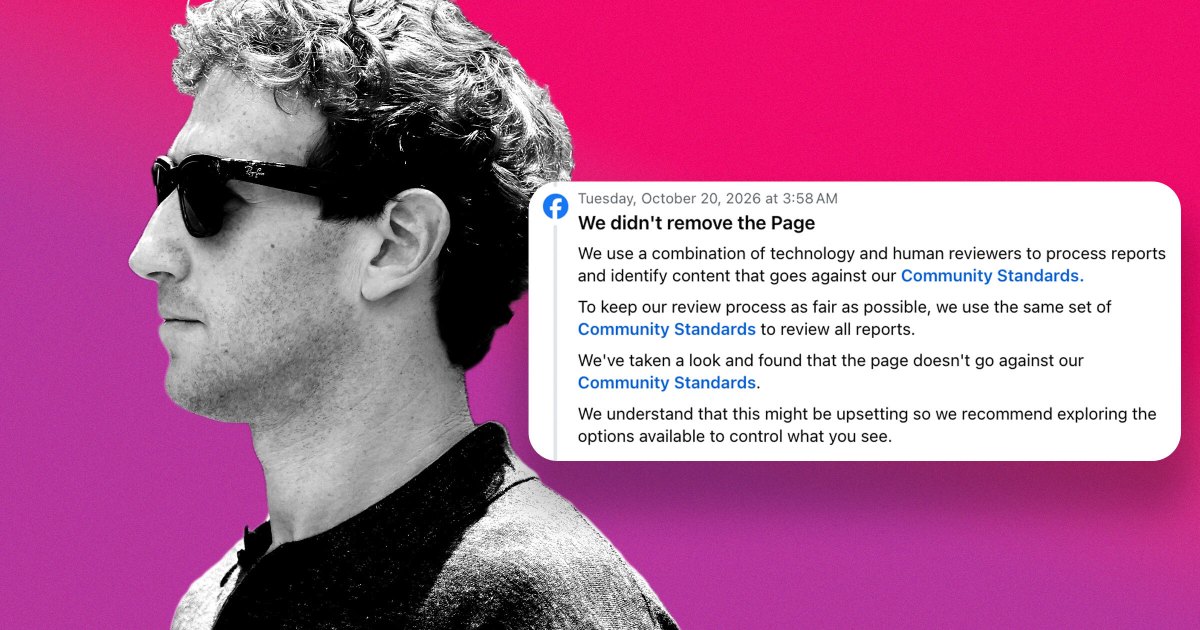
Jeffrey Epstein besty Mark Zuckerberg will keep protecting his friends & their filth as much as he can. Meta and their platforms haven proven a proven to be powerful tools for pedos around the world, we need to fight them wherever, however we can, until we stop them.







cross-posted from: lemmy.world/post/53918978
For anyone unfamiliar with it, DroidDeck is a relatively new, open-source Android application that aims to bring the full Steam client and PC gaming experience to Android devices (phones, tablets, retro handhelds), without requiring users to root their phones or replace Android with another operating system. It’s a big project, particularly for those interested in handheld gaming and the possibilities of running Linux software on Android hardware.
I’ve been chatting with the people behind DroidDeck over the last few weeks, and what began as a feature article about the project turned into a rather extensive interview with five of its developers: The412Banner, Max, xXJSONDeruloXx, Kimchi and Astro Sky. We discussed everything: from their earliest experiments with Linux, Steam and Gamescope to the technical challenges involved, automated testing, open-source development and where they hope to take DroidDeck in the future.
I’ve now published the complete interview on my NeoCity/Handheld Hideout site, with all 87 questions and their individual answers, organized into linked sections so you can jump straight to the topics that interest you. There’s a lot of technical detail in there, but also some personal stories about how the developers met, their early breakthroughs and what keeps them working on the project.
And to be transparent about their work, DroidDeck does make use of AI-assisted development. They discuss that openly in the interview when asked, including how the developers use AI tools, automated testing and code reviews as part of their workflow.