0
0

keith.is
The header has a sky now - keith.is
keith.is
I’m eating muffins, sitting in my sofa, watching anime. But I’m so tired I feel nauseous. I’d go to my bed, but I wanna keep eating muffins. I also have to pee but then I’d have to leave the muffins and give up on going to bed.
Can somebody please just SLAP my depressed face so that I do something?
I’m eating muffins, sitting in my sofa, watching anime. But I’m so tired I feel nauseous. I’d go to my bed, but I wanna keep eating muffins. I also have to pee but then I’d have to leave the muffins and give up on going to bed.
Can somebody please just SLAP my depressed face so that I do something?

cross-posted from: lemmy.ml/post/55188993
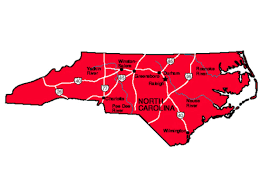
From Names to Numbers: The Origins of the U.S. Numbered Highway System by Richard F. Weingroff, Information Liaison Specialist, Federal Highway Administration
Map of the final U.S. Highway system as approved November 11, 1926 (8,972 × 5,851 pixels, file size: 18.59 MB)





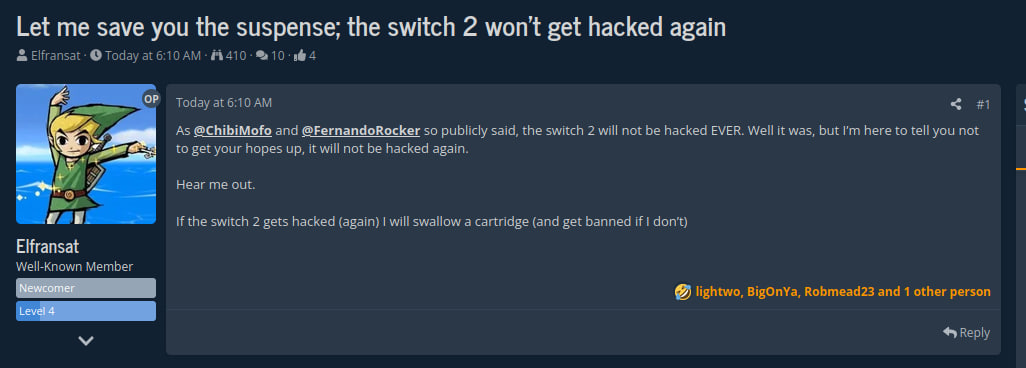
I’d imagine it’s a troll post, but in case not, worth noting, futurology only works until it doesn’t.
Or rather, it only works at normalizing a future not yet decided.
There are #consolemods still being released for decades old devices. You can never know when someone finds an entry point, even if by pure accident. And with AI accelerating things and movements for right to ownership and right to fix gaining traction, possibilities can be tested ever faster and ever less worried about legal implications, contrary pushes feeling more like death throes rather than proper pushes.
And back at the opening, Nightwish’s song Élan comes to mind. =)


I heard that SailfishOS is a good Linux mobile distro. Does anyone use it? How’s the experience?
I heard that SailfishOS is a good Linux mobile distro. Does anyone use it? How’s the experience?

Source: The Bunny Archives
Source: The Bunny Archives


Ah! This explains why I feel nothing when I pray… it’s because of the Nephalim bloodline!
Ah! This explains why I feel nothing when I pray… it’s because of the Nephalim bloodline!


cross-posted from: programming.dev/post/59258877
I have been developing Micron, a lean, statically typed, modular systems programming language that combines Oberon’s simplicity and explicit module structure with C’s low-level capabilities and interoperability.
The goal is to use the same language for boot code, device drivers, an operating system kernel, and ordinary applications, without requiring a garbage collector or routing machine access through a separate, unchecked system dialect. Micron supports explicit memory layouts, signed and unsigned integer types, pointer operations, and direct calls to C without wrappers.
One of its central design choices is language levels. Each module declares the level and thus the feature it needs, ranging from code that requires neither stack nor heap to garbage-collected objects. A module can import only modules at the same or a lower level. For example, a kernel module declared at level 1 cannot accidentally acquire a dependency on heap allocation through an import.
Other features include generic modules, structural interfaces, and compile-time procedures. Much of what would require a preprocessor in C is expressed through typed language features.
There is a working compiler, interpreter, and IDE, along with a free textbook. The book explains both how the language works and the reasons behind its design. Its systems-programming section walks through a port of Wirth and Gutknecht’s Project Oberon operating system to Micron, cross-compiled and linked into a single executable that runs on an emulated RISC-V machine.
The examples also include ports of a Smalltalk-80 VM, Scheme 9, and the original P4 Pascal compiler. The compiler and interpreter implement the language specification; native backends and tooling are still work in progress, and the current native code generation prioritises simplicity over optimisation.
Implementation, examples, and Linux binary: github.com/rochus-keller/Micron
Textbook PDF: software.rochus-keller.ch/micron-textbook.pdf
Language specification: github.com/…/The_Micron_Programming_Language_Spec…
I’m the designer and implementer, and interested in feedback on the language design, particularly the language-level approach to making runtime dependencies explicit, and on its usefulness as an alternative to C.





Linux doesn’t deserve this
Imagine taking the lightweight, privacy-focused appeal of Linux and completely ruining it by hardwiring AI models straight into the OS. Nobody is switching from Windows for more forced AI features.
Linux doesn’t deserve this
Imagine taking the lightweight, privacy-focused appeal of Linux and completely ruining it by hardwiring AI models straight into the OS. Nobody is switching from Windows for more forced AI features.



I found this screenshot posted by Xenrin on the community hub:
Had fun running the Rock Cracker facility in the PTU this evening, and wanted to get a closer view of the laser. Noticed my friend Emily (from Emily’s Game YT Channel) standing at the end of the walkway highlighted by sparks and had to get this shot
Hat hier jemand Erfahrung mit den Fairbuds XL? Mir gefällt, dass ich einzelne Teile austauschen kann, und nicht die ganzen Kopfhörer wegschmeißen muss, nur weil sich wie bei meinen aktuellen Kopfhörern die Polster auflösen.
Aber haben die auch guten Klang? Kann da jemand was zu sagen?
Und: welche over-ear Kopfhörer benutzt ihr zum Musikhören, und wie gefällt euch der Klang?
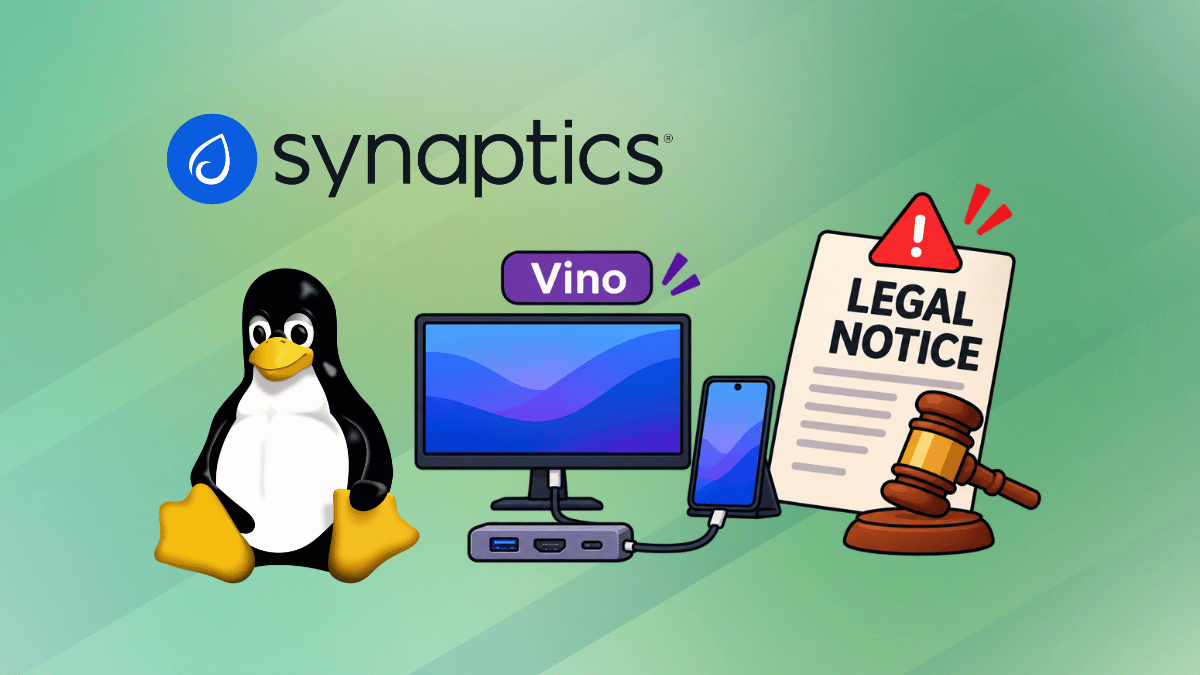
Before we dive into the matter, you first have to understand what DisplayLink is. It is a proprietary graphics transport technology that lets computers connect to one or more external displays over USB, using docks or adapters built around DisplayLink chips.
It works by compressing display data on the host computer and sending it to a chip in the connected device. The chip then decodes it for output to monitors through interfaces such as HDMI or DisplayPort.
On Linux, this support can rub some people the wrong way due to its closed-source nature. That is where Mike Lothian’s (FireBurn) Vino comes in as an open alternative.
Unfortunately, Synaptics owns DisplayLink and has sent Mike cease-and-desist letters alleging that he infringed its DisplayLink patents with his project.
What’s Vino?
Vino is a driver that lets the Linux kernel talk to DisplayLink docks directly. It is meant to replace DisplayLink’s closed-source software and the open source EVDI kernel module that sits beside it.
Mike wrote it with help from Claude Code, and the first version reached the kernel mailing list in June, unfinished. He had faced a communication issue between the dock and the driver and asked other developers for help.
In early July (courtesy of LWN.net), he emailed a Synaptics employee for guidance and mentioned his Rust rewrite of EVDI. About two weeks later, a different employee replied.
That reply said his Rust rewrite of EVDI was not a thing of concern. Rather, the concern was the DisplayLink protocol and codec, which Synaptics believes are covered by its patents. Lawyers get involved
A cease-and-desist letter followed on August 17. It told Mike to stop development and withdraw anything he had submitted to maintainers and hosting sites, with a signed confirmation due by August 28.
An appendix listed over 125 patents without saying which applied. Mike posted a working version 3 of Vino on August 26 and asked Synaptics the next day which claims they had in mind.
The answer came in October as claim charts. They map one claim from each of two patents, GB2484736 and GB2485613, to his source code.
The October 5 letter said Synaptics would seek $25,000 for the cost of preparing those charts if Mike missed an October 11 deadline, with the figure rising by at least $25,000 each week.
Mike replied on October 6 (message 8) with an offer to pause public work on the encoding code the charts point to if Synaptics paused the deadline and the weekly charge. He also asked about licensing that code for non-commercial use.
On October 7, Synaptics said it would grant no patent license or promise not to sue and set October 18 as a final deadline.
 What I can see so far is a very aggressive patent infringement witch hunt against a lone open source developer who was quite open to communication.

 Synaptics took about three weeks to answer his request for specifics, then followed with a potentially life-ruining $25,000 demand that compounds weekly.
Clean room design quirks
Mike describes Vino as a clean-room driver and says he reverse engineered it from captured USB traffic and vendor programs.
If you didn’t know, in a clean-room recreation, one party studies the original implementation, then writes a description, and a separate party builds the new code from that description alone.
It is meant to act as a defense against copyright claims because it shows nothing was copied. Synaptics’ July reply argues that clean-room or independently written code can still infringe a patent.
The timing
Vino also lands in a busy stretch for AI-assisted reverse engineering, from smart TV cleanups to office suite clones. Legal pressure has reached other AI-built projects too.
Mike has already taken down the Vino repository in response to the demands, and Synaptics has not made a public statement so far.
Only time will tell what happens to the work, and I hope someone forked it before it went offline, as that would give others a good starting point to build on.
The FreeBSD Project published its Q3’2026 status report on Tuesday that outlines a number of development initiatives to ongoing work around an AI policy for this BSD operating system.
FreeBSD polled their developers on the usage of AI and LLMs as a hot topic for the quarter. An overwhelming 88% want the FreeBSD Project to adopt an AI policy. 35% of those polled want AI-assisted code to be disclosed while 22% felt it should be treated just like any other code contribution and only 16% want AI generated code to be rejected outright. 65% of the respondents were in favor of AI-generated documentation with human review.
FreeBSD has established an AI working group to work on drafting an AI policy. Final reports are expected in Q4.
FreeBSD developers have also had to spend a lot of time preparing for the EU’s Cyber Resilience Act (CRA) such as around Software Bill of Materials (SBOM) support.
FreeBSD has also seen work on a GUI for the Bhyve hypervisor written in Freepascal/Lazarus. This Bhyvemgr GUI is coming along well to help in managing of Bhyve VMs:
www.phoronix.net/image.php?id=2026&image=bhyvemgr…
Meanwhile on the web management/UI side, Sylve continues looking quite slick as a unified system management platform for FreeBSD from the web browser. Adding in the past quarter were new storage options, data center / cluster features, and more.
www.phoronix.net/image.php?id=2026&image=sylve_me…
FreeBSD also continues seeing work to enhance desktop installations of the operating system and more polishing of the desktop experience. Related have also been more suspend/resume and audio stack improvements.
Some other FreeBSD happenings include improving zoned storage support, debugging enhancements, a variety of scheduler improvements, and enhancing the bootloader.
More details on these FreeBSD improvements made during Q3 can be found via FreeBSD.org.

cross-posted from: lemmy.ml/post/55186164
cross-posted from: lemmy.ml/post/55186164

NASA is expanding its astronaut corps for the first time in two years. As the US space agency grows its Artemis programme, recruitment is in progress for a brand-new class of space explorers who will train to “live and work beyond Earth”.
NASA is expanding its astronaut corps for the first time in two years. As the US space agency grows its Artemis programme, recruitment is in progress for a brand-new class of space explorers who will train to “live and work beyond Earth”.
If you are using an iPhone and would like to contribute to OpenStreetMap in a very easy and gamified way: StreetComplete is now out for iOS!
Your contributions will not only improve CoMaps, but a whole range of OSM-based applications:
If you are using an iPhone and would like to contribute to OpenStreetMap in a very easy and gamified way: StreetComplete is now out for iOS!
Your contributions will not only improve CoMaps, but a whole range of OSM-based applications:


Zur Info, falls jemand von euch Etsy verwendet. Es wurde wohl nicht an die große Glocke gehängt, dass alles für KI Training verwendet werden wird.
Zur Info, falls jemand von euch Etsy verwendet. Es wurde wohl nicht an die große Glocke gehängt, dass alles für KI Training verwendet werden wird.

This was a really interesting bean. I’m going to miss it. It’s limited edition, not seasonal, so I’m not sure if they’ll ever bring it back, but I hope they do. It’s one of the least “coffee tasting” coffees I’ve ever had. They sold out weeks ago so there’s no shot at getting another bag unfortunately. It was also roasted 6 weeks ago so it’s getting to the end of its good window, so I really should be finishing it off anyway. Still, I will miss it.
Pilot doesn’t really have much available right now that interests me unfortunately, so I’ll be trying a new roaster to me. Ordered the beans on Sunday, hopefully they’re ready for pickup any day now. I’m not sure what day he roasts on. I do have another bag of light roast to tide me over though so it’s not like I’ll be without good specialty coffee, plus I’ve got tons of other coffee in the medium to dark range too, but I like having a couple light options at any time to bounce between.
As usual, I prepared this last cup as soup.
I recently picked up a new RDT bottle so I’ve been messing with that a bit, it’s glass instead of plastic so it feels a bit nicer to use.
My equipment used, like normal, is the Fellow Stagg EKG Pro, DF54 V4, and Cafelat Robot. I did just pick up some Cafec abaca filters so I was considering doing a V60 but I felt for my last brew with these beans I should stick to my favourite. I’ll mess with the new filters on my next bag.