
21
0


LG’s smart TV privacy woes continue as Portugal’s Citizen Voice asks the court to investigate. Are smart TVs too keen to gather data?
LG’s smart TV privacy woes continue as Portugal’s Citizen Voice asks the court to investigate. Are smart TVs too keen to gather data?

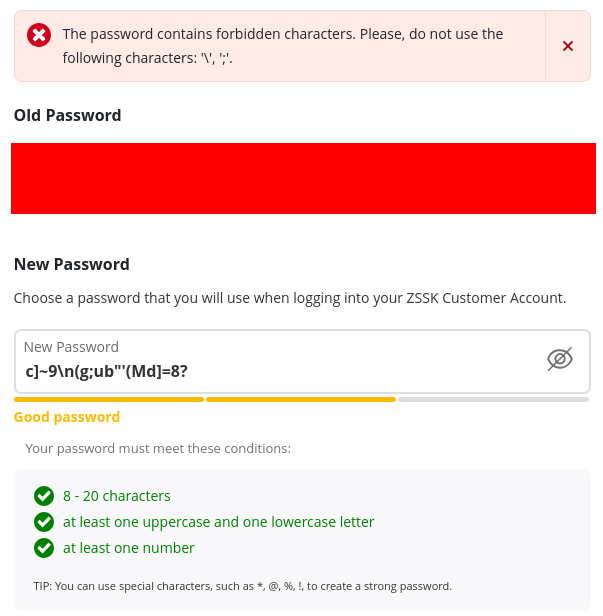
Also, it only seems to show “Strong password” if any of these characters is used: !@#$%^&*, and not other special characters.
Also, it only seems to show “Strong password” if any of these characters is used: !@#$%^&*, and not other special characters.

cross-posted from: lemmy.world/post/54081763
cross-posted from: lemmy.world/post/54081763
Not a priority or anything, but reporting as it is an unusual behavior that I haven’t run into before and the circumstances are interesting!
When my computer restarts the setting for Compact UI resets to Not Compact - Expand Images. It doesn’t look like any other settings change, just that one setting for images. I like More Compact - only thumbnails so I have to change it back each time my computer restarts which isn’t common but often enough that I’m confident in the pattern.
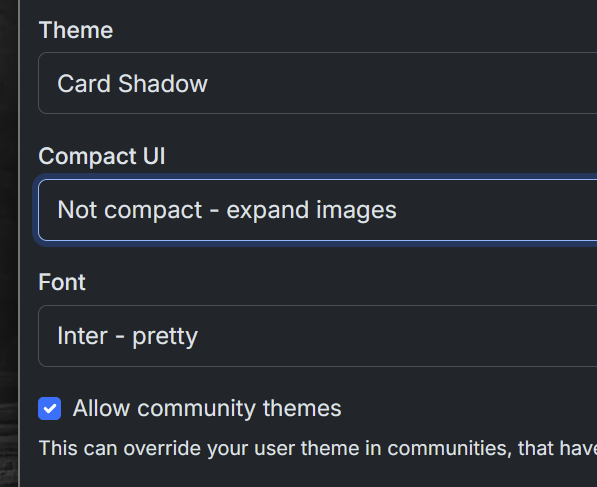
It doesn’t seem to happen just from closing the browser and reopening it or from logging out and back in again, just when the computer restarts. Using LibreWolf on a Windows PC.
Not a priority or anything, but reporting as it is an unusual behavior that I haven’t run into before and the circumstances are interesting!
When my computer restarts the setting for Compact UI resets to Not Compact - Expand Images. It doesn’t look like any other settings change, just that one setting for images. I like More Compact - only thumbnails so I have to change it back each time my computer restarts which isn’t common but often enough that I’m confident in the pattern.
It doesn’t seem to happen just from closing the browser and reopening it or from logging out and back in again, just when the computer restarts. Using LibreWolf on a Windows PC.
The shaving of the Yak progresses, it’s now making noise! Before you get too excited, the noise is one-way, it’s barely distinguishable from hash and it’s fragile, so keep that in mind as we dive into the world of … something.
If you have no idea what I’m talking about, you’re in good company, half the time I’m struggling, but today I’m working on a project to bring software defined radio to the masses, well, radio amateurs who haven’t dipped their toes yet and I’m calling this effort Bald Yak.
In case you’re unfamiliar, the Bald Yak project aims to create a modular, bidirectional and distributed signal processing and control system that leverages GNU Radio. It’s called Bald Yak because by the time I’m done, the Yak is likely well and truly shaved.
So, last time we congregated around the campfire I discovered that what I need to build is something that has a collection of things that talk to each other across a network. Seems pretty obvious now that I say it, but it wasn’t always that way, remember, I’m inventing this from scratch, or so I tell myself. I will note that the deeper I dig, the more it looks like a lack of documentation, which really comes with no surprise, but I persist, if only to determine that it can be done, that I can do it, and that I understand how it works.
The underlying drive for all this is for me to gain a deep understanding of the whole ecosystem, since I firmly believe that we’re well and truly committed to software driven radio.
So, what did I discover? First of all, thank you to all of you who sent messages with your own ideas on how to make two devices talk to each other. I explored at least a dozen of them.
I’ll give you some highlights. First cab off the rank is OpenWebRX, radio in a web browser, very popular. I installed it, ran it, configured it, got noise, was able to pick a band across the network and decoded plenty of stuff. Looked like a contender until I discovered two significant issues. One is that it expects a menu entry for each slice of frequency range, with 2.4 MHz being the widest possible for an RTL-SDR dongle, so its 1.7 GHz range would need 708 entries. Someone made a good start, but if you want to tune to something that overlaps two entries, you need another menu entry. Then there’s the weird flex that it doesn’t decode FM Broadcast in stereo. There’s a whole description on why not, but I lost interest. I also tried OpenWebRX+ which adds a bunch of functionality, but not enough to overcome those fundamental problems.
I explored several other web based tools, one looked really promising right until it demanded that I install some random binary off the Internet … hard pass.
I didn’t go down the path of AllStarLink across the room, mainly because I have no desire to start the rounds of configuration, or manage the lack of ability to change frequency, to name two issues.
I did fire up RTL-TCP and managed to connect to it from my Mac using SDR++, it even worked, but boy, the SDR++ user interface is hard work, too many buttons and not enough consistency, like why do I need to set the gain for each mode, and why doesn’t it support SoapySDR on MacOS?
RTL-TCP is a tool that essentially puts an RTL-SDR dongle on the network. It’s excellent, once you figure out how to make it work inside Docker, has great documentation, talks to GNU Radio, everything you’d want, except that it’s only one-way and it only talks to RTL-SDR dongles.
I started comparing SoapySDR to RTL-TCP and then landed back with SoapySDR, since it does the same job, with a bonus that I discovered by accident, since the documentation is … let’s call it … challenged.
One of the things that people who contacted me missed, probably because it was obvious to me, was the notion that I want to use automatic service discovery, something that has myriad names, ZeroConf, Bonjour, Avahi, mDNS and plenty others. I tried many of them as search terms with GNU Radio and found nothing.
Then I tried the same with SoapySDR and discovered that it supports mDNS out of the box. It’s not something I’d seen before, since all the examples I found previously hard code an IP address into the flow graph, which means that it might work on my computer and network, but it won’t work on yours until you change things, hardly something I want to inflict on unsuspecting users.
So, the way it works is that you run a thing called “SoapySDR Server” on the machine with the RTL-SDR dongle, and GNU Radio running Soapy Source with the remote driver can find it … most of the time. There’s still plenty of hair pulling here, a flow graph that ran yesterday stopped working today, until I rebooted the server twice, no other changes, so fun.
To be honest, it feels a little like Windows 95 Plug and Play, or as we used to call it, Plug and Pray, excellent idea, shame about the implementation.
Then I came across a flow graph by Handiko YB1SDL who created a git repository with the title “How to Stream the Audio Out from GNU Radio into VLC Media Player” … which of course was catnip to an aspiring geek like me.
Turns out that VLC can listen on a UDP port and GNU Radio can send data to it. The quality of the audio is very poor as noted by Handiko, but I think that’s due to neither of us understanding how to scale it properly, but that’s par for the course.
So, right now I have three devices talking to each other, a SoapySDR Server with an RTL-SDR dongle on a single board computer, a GNU Radio flow graph running in a Docker container on my main server, and VLC running on my Mac.
What does this buy me?
Well, the Mac audio is a bonus, I’d like to be able to listen to the radio, but GNU Radio talking to an unnamed server that’s just sitting on the network is precisely what I envisaged when I started this whole malarkey.
Mind you, it’s not stable enough to show and tell, and I have no idea what it does if there’s more than one radio on the network, but that’s more opportunity to explore.
I’ll also note that this is precisely why I’m doing all this in GNU Radio, so I can learn how it works.
There’s one other thing. I’m documenting all this so it inspires you to start playing with this ecosystem, because ultimately I picture this environment as the radio equivalent of a massive bag of LEGO scattered all over the living room floor, something which brings me all kinds of joy.
So, what are your GNU Radio adventures like, and what have you tried and where are you stuck?
I’m Onno VK6FLAB

China is stepping up its support for Cuba as Washington intensifies its economic pressure on the island. From solar energy projects and food shipments to financial cooperation and diplomatic backing, Beijing is helping Havana find alternatives as the U.S. blockade continues.
In this video, we examine China’s latest response to the United Nations vote against the American embargo, including Beijing’s statements on October 21 and October 29. We also break down Washington’s expanding pressure campaign throughout 2026, the sanctions targeting Cuban officials and businesses, and Secretary of State Marco Rubio’s description of the strategy as leaving the Cuban government with “no escape valves.”
But China is opening alternative channels. We explore its investment in Cuban solar parks, the arrival of solar equipment for homes and public facilities, China’s $80 million aid commitment and rice shipments, and the growing use of alternative international payment infrastructure. We also examine the 2026–2027 Friendly Cooperation and Exchange Plan signed by both countries.
The video looks at how these efforts could help Cuba reduce its dependence on imported fuel, strengthen food supplies, maintain financial connections, and deal with the economic consequences of U.S. sanctions. From renewable energy to diplomatic support, China’s involvement extends across several areas of Cuba’s economy.
We also examine the latest UN General Assembly vote, where 130 countries supported a resolution calling for an end to the U.S. embargo. Although the resolution does not legally end the blockade, it highlights the continuing international opposition to America’s Cuba policy.
The bigger question is whether Washington’s pressure can achieve its objectives when Cuba continues to receive support from China and other international partners. As new energy projects, trade connections, and diplomatic agreements take shape, the relationship between Beijing and Havana is becoming an important part of the wider geopolitical story.
Watch until the end to understand how China is supporting Cuba, why Washington’s strategy faces challenges, and what this growing partnership could mean for the future of the Caribbean.
#China #Cuba #Trump #USCubaRelations #CubaBlockade #ChinaCuba #USSanctions #BRICS #UnitedNations #SolarEnergy #GlobalPolitics #Geopolitics #MarcoRubio #InternationalRelations #WorldNews


(Cinnadust) (2026)
Image description: A black cat crouches on a rain-soaked city street while extending one paw into a puddle sending luminous rainbow-colored ripples across its surface. The cat has bright green eyes, a purple collar with a small gold bell, and a matching purple bow attached near the tip of its raised tail. Reflections shimmer across the wet pavement surrounding the puddle, scattering blue, white, and yellow highlights throughout the scene. In the background, the city street recedes into soft focus, where warm orange, yellow, and cool blue lights form large circular bokeh reflections against the dark night environment.
2D flat anime scribbled drawing, cutesie chibi style, amazing details, high-quality HD, shot on a Sony A7R IV, 50mm f/1.8 lens, a professional real-life photograph of a puddle of water, at night, midnight darkness, reflecting the colorful city lights on its surface. A 2D flat anime-style black cat with purple bow on tail, is crouched down next to the puddle. The cat gazes at its surface with a somber and bewildered expression as it touches its paw against the surface of the puddle, causing a ripple to carry across its surface. The ripple is full of rainbow colors and sparkle glitter neon bokeh. The magical and enchanting atmosphere is captured perfectly. The cat is a 2D hand-drawn sketch drawn with colored gel pens. A professional image taken from a Sony A7R IV, 50mm f/1.8 lens, soft natural lighting, realistic depth of field, shallow depth of field, cinematic photo style

(XPHG) (2026)
Image description: A woman sitting on a white shag rug while resting her clasped hands in her lap and smiling toward the viewer. She cyan hair styled into a single side braid draped over her left shoulder and light-blue eyes. Her attire consists of an oversized cream-colored ribbed cable-knit turtleneck sweater dress with folded cuffs and thigh-high socks with alternating cyan and black horizontal stripes. The background features polished hardwood flooring, a bright window with beige curtains on the left, a wall-mounted television above a wooden console, a beige sofa on the right, and floating dust motes illuminated in the air.
very awa, masterpiece, best quality, highres, absurdres, girl, <lora:Therese Alexanderite - Illu:0.9>, therese-sh, long hair, aqua hair, braid, single braid, long braid, aqua eyes, white sweater, turtleneck sweater, oversized sweater, striped thighhighs, living room, warm lighting, dust particles, light particles, happy, smile,
Negative prompt: bad quality, worst quality, worst detail, sketch, censor, artist name, signature, watermark, patreon username,
Steps: 20, CFG scale: 5.5, Sampler: DPM++ 2M, Seed: 1118344612, VAE: sdxl_vae.safetensors, Model: garageMixNoobVPredEPS_v10EPS, width: 2784, height: 4960, Version: v1.10.1, Model hash: d20abfefea, Schedule type: Karras, Tiled Diffusion: “{\“Method\”: \“Mixture of Diffusers\”, \“Tile tile width\”: 128, \“Tile tile height\”: 128, \“Tile Overlap\”: 8, \“Tile batch size\”: 4, \“Upscaler\”: \“4x-UltraSharp\”, \“Upscale factor\”: 2, \“Keep input size\”: true}”, Denoising strength: 0.1, Tiled Diffusion upscaler: 4x-UltraSharp, Tiled Diffusion scale factor: 2

Post by Laffisa
Socials: FurAffinity, Bluesky

Post by Laffisa
Socials: FurAffinity, Bluesky

It’s amazing. Everything I hoped it would be.
It’s amazing. Everything I hoped it would be.




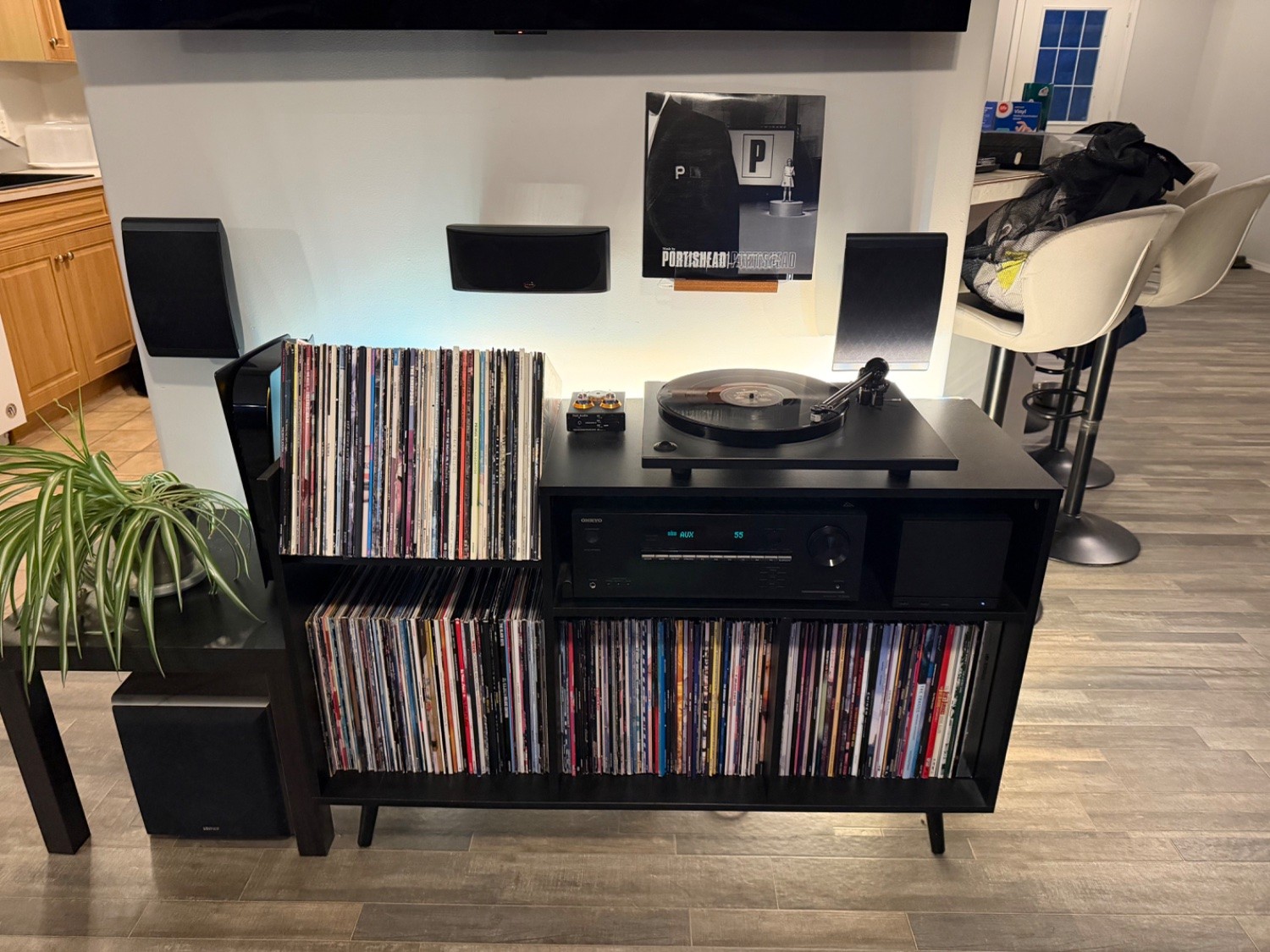

Once again I am broke and trying to make money last with my food, so I bought MREs again (more soon arriving in the mail).
I asked the first time if it was a stupid idea, most people said no, so I figured I’d do it again (higher price per unit compared to last time, $5.50 per MRE, but still a deal).

Thought it would be interesting to talk about the PSL’s take on the election. The embedded image is the PSL candidate that won an election, their only win of the night. The PSL ran a number of candidates including Joe Tache in Mass, ~ 2% of the vote, same for Greg Levy in Ohio. Andre Easton in the Bronx got just shy of 9% and nearly tied the Republican.
They had a number of articles on their main publication articulating their position and I thought all were correct and show the ideological position of the party.
What happens after the midterms did a good job of positioning the next steps for Marxists in the US.
Statement on the Democratic wave helps lay out the interests of the working class and dispels liberal myths about their motives.
Then they had this one regarding the scapegoating of black and Latino voters by the Democrats in 2022.
I see all this as making a clear point about the election, the perspective of the working class in the US, and the next steps for US Marxists. That being get involved in building a party now. Would love other peoples takes on this.
From the technical side anyone can spin up their own Lemmy instance and view all votes, but I’m curious at what the community’s perspective on how “private” that is. I think Mbin already shows upvoters? Piefed allows anonymous voting. I also know there are sites which show all voting history, but assuming those are fairly disliked.
My general questions to the community: - Do you expect your votes to be private, or just not shown in the UI? - Would per-voter votes showing up on another aggregator platform bother you, even though your instance already shares them with other servers?
For context I’m the dev doing some two way bridge interop between atproto + Threadiverse, in atproto the votes/likes are generally publicly accessible, you just look at the users repo through something like pdsls.dev, they’re readable and archivable by anyone. In my opinion this isn’t that big of a problem since it’s fairly hard to look at and discern (Ex all my votes: https://pdsls.dev/at://did:plc:lmdkqemqrqnfiix72pyjhfey/social.coves.feed.vote). Ultimately trying to figure out if there’s already a mutual understanding that they are public and we can just mirror them or whether they should stay hidden as an aggregate.

cross-posted from Cult Cinema
“In a psychedelic future, space adventurer Barbarella is sent to find evil scientist Durand Durand and prevent him from using his deadly weapon. Her journey through the strange city of Sogo is full of bizarre encounters and overtly sexual situations.”Very entertaining hippy space-age kitsch.
Is this !raygungothic@piefed.social ? I thought about this comm when I saw the poster. But the time bracket is a bit different

I’ve been on HRT for nearly two years and repeatedly explained to them the legal discrimination that I’d face working for the federal government, let alone the gd military. They still send me recruitment ads and have given out my number in the past. It’s freaking exhausting.
Even if I wasn’t trans, I would still refuse to fight for a pedophilic, egomaniacal president that bombs schoolgirls to get his mushroom-shaped phallus hard.

Two years ago i shared this website where you try and determine when a shade is either blue or green.
Posting it again because lemmy has grown quite a bit since then, maybe we have more people that havent tried it!
Two years ago i shared this website where you try and determine when a shade is either blue or green.
Posting it again because lemmy has grown quite a bit since then, maybe we have more people that havent tried it!

Mine is black.
Before anyone starts, I don’t wanna hear it, black is a color!
Mine is black.
Before anyone starts, I don’t wanna hear it, black is a color!



Basically, they do not object to the merger.
Basically, they do not object to the merger.
Use this thread for general daily football discussion.
This thread can also be used to discuss Transfer rumours and to post Tier 4 sources.
Use this thread for general daily football discussion.
This thread can also be used to discuss Transfer rumours and to post Tier 4 sources.
It always could have been worse and it always could have been better.
It always could have been worse and it always could have been better.


Crossposted from https://lemmy.world/post/10156588
Crossposted from https://lemmy.world/post/10156588

cross-posted from: lemmy.zip/post/74548697
[Art] Matrix Room Icons!
Updated my Matrix room avatars today!
Come hang out maybe? https://matrix.to/#/#northwestwind:matrix.northwestw.in
From left-to-right, top-to-bottom: Announcements, Rules & Pins, General, “Vector Field”, Supports, Speak!!! (room with voice call widget), Pictures, Memes, Command Area, Lore, Summatia, Updates

First Encounter with the V10: An Unexpected Surprise During Hospitalization
Just to be clear: this isn’t a 2026 “must-buy.” It’s a $20 surplus-unit experience.
The real value is GBA pixel-perfect display, not strong performance for every console.
ArkOS is no longer updated on this device, so it only handles basic emulation well.
The $20 price on Xianyu may not be replicable for buyers outside China.
I recently bought a surplus unit. The price-to-performance ratio is still very high, but it may not be suitable for everyone.
Last summer, I was sick and spent a month in the hospital. The internet connection there was quite poor. I thought about buying an open-source handheld to play games, and I stumbled upon the PowKiddy V10. It was cheap, and the gaming experience was decent. This handheld left a deep impression on me. It supports 2x pixel-perfect scaling for GBA games, which looks very different from playing on a phone emulator.

Although this technology is common now, for me personally, the open-source handhelds I bought before the V10 were not suitable for playing GBA games. This device gave me a different experience.
The Awkward Positioning of Being Born Too Late
Recently, I found surplus stock on Xianyu, a Chinese second-hand marketplace owned by Alibaba, priced at only 138 CNY (about $20 USD). It was brand new, a great deal, so I bought a second one.
Its biggest problem is that it was released quite late. The PowKiddy V10 launched in China in July 2024 with a starting price of 198 CNY. However, there are already too many handhelds that can play GBA games with pixel-perfect scaling, such as the Miyoo Mini Plus and the Anbernic RG35XX (2024 version), which have already matured this kind of experience. It has an obvious product positioning problem: players who demand high performance won’t choose it, and players who want a hassle-free experience might buy more expensive handhelds.
Hardware Review: A GBA Beast, PS1 is Passable
The specifications of this handheld are as follows. Its biggest feature is that it plays GBA games very well.

There is a habit among Chinese handheld reviewers to test using the GBA game Dragon Ball Advance Adventure. The reason is that this game has vibrant graphics, making it easy to see the display quality of a screen. There is an interesting meme circulating among players: “Did you hit pixel-perfect today?” Many veteran GBA players care about this. The display effect is shown in the picture. Of course, you can use it for testing, and the game itself is quite fun.


Secondly, playing PS1 games is also not bad. Although it is not as suitable as playing GBA games, most games run relatively smoothly. Some games with higher hardware requirements may suffer from frame rate drops. I have no complaints about the hardware, especially since it is quite cheap.

Software Shortcomings: Discontinued System and Pain Points
However, the software aspect is quite average.
First, it does not support independent volume and brightness adjustment buttons; you can only achieve this using button combinations. Also, it defaults to maximum brightness and volume upon reboot. Second, the system updates have stopped. The ArkOS system uses EmulationStation as the default frontend, with RetroArch as the emulator backend. It can only meet basic functional needs. Finally, the DS gaming experience is very poor. It lacks a touchscreen, the screen aspect ratio is uncomfortable, and gameplay isn’t very smooth.
Quick ArkOS Hotkeys
If you are new to ArkOS, these common hotkeys may help. On many ArkOS devices, Select + Start exits a game and returns to EmulationStation. Select + R1 saves a state, and Select + L1 loads a state. Select + X usually opens the in-game RetroArch menu. Brightness and volume are often controlled through combination keys rather than dedicated buttons, but the exact mapping can vary by device and firmware version. For the PowKiddy V10, it is best to check the current ArkOS build or test the hotkeys directly.
I flashed the newest dArkOS on my V10 (grab the RGB10 build from GitHub). Battery reporting is spot on! I’ve tried a bunch of firmwares, but dArkOS is definitely the best—it’s perfect. I have lots of devices that can run GBA, so I got a 64GB card and loaded up a ton of Pokémon GBA ROM hacks. It feels better than any system I’ve tried before.


Buying Advice: Is the $20 Surplus Unit Worth It?
I believe that in today’s open-source handheld market, the system experience takes priority over the hardware itself. It is very suitable for playing GBA games, but that is about it. I hope you truly need the PowKiddy V10, rather than choosing it just because it is cheap. It is best to apply a tempered glass screen protector, otherwise, it easily collects fingerprints.
If you have a budget of $20 USD, would you choose to buy this handheld? Or would you spend a bit more for a safer choice?
First Encounter with the V10: An Unexpected Surprise During Hospitalization
Just to be clear: this isn’t a 2026 “must-buy.” It’s a $20 surplus-unit experience.
The real value is GBA pixel-perfect display, not strong performance for every console.
ArkOS is no longer updated on this device, so it only handles basic emulation well.
The $20 price on Xianyu may not be replicable for buyers outside China.
I recently bought a surplus unit. The price-to-performance ratio is still very high, but it may not be suitable for everyone.
Last summer, I was sick and spent a month in the hospital. The internet connection there was quite poor. I thought about buying an open-source handheld to play games, and I stumbled upon the PowKiddy V10. It was cheap, and the gaming experience was decent. This handheld left a deep impression on me. It supports 2x pixel-perfect scaling for GBA games, which looks very different from playing on a phone emulator.
Although this technology is common now, for me personally, the open-source handhelds I bought before the V10 were not suitable for playing GBA games. This device gave me a different experience.
The Awkward Positioning of Being Born Too Late
Recently, I found surplus stock on Xianyu, a Chinese second-hand marketplace owned by Alibaba, priced at only 138 CNY (about $20 USD). It was brand new, a great deal, so I bought a second one.
Its biggest problem is that it was released quite late. The PowKiddy V10 launched in China in July 2024 with a starting price of 198 CNY. However, there are already too many handhelds that can play GBA games with pixel-perfect scaling, such as the Miyoo Mini Plus and the Anbernic RG35XX (2024 version), which have already matured this kind of experience. It has an obvious product positioning problem: players who demand high performance won’t choose it, and players who want a hassle-free experience might buy more expensive handhelds.
Hardware Review: A GBA Beast, PS1 is Passable
The specifications of this handheld are as follows. Its biggest feature is that it plays GBA games very well.
There is a habit among Chinese handheld reviewers to test using the GBA game Dragon Ball Advance Adventure. The reason is that this game has vibrant graphics, making it easy to see the display quality of a screen. There is an interesting meme circulating among players: “Did you hit pixel-perfect today?” Many veteran GBA players care about this. The display effect is shown in the picture. Of course, you can use it for testing, and the game itself is quite fun.
Secondly, playing PS1 games is also not bad. Although it is not as suitable as playing GBA games, most games run relatively smoothly. Some games with higher hardware requirements may suffer from frame rate drops. I have no complaints about the hardware, especially since it is quite cheap.
Software Shortcomings: Discontinued System and Pain Points
However, the software aspect is quite average.
First, it does not support independent volume and brightness adjustment buttons; you can only achieve this using button combinations. Also, it defaults to maximum brightness and volume upon reboot. Second, the system updates have stopped. The ArkOS system uses EmulationStation as the default frontend, with RetroArch as the emulator backend. It can only meet basic functional needs. Finally, the DS gaming experience is very poor. It lacks a touchscreen, the screen aspect ratio is uncomfortable, and gameplay isn’t very smooth.
Quick ArkOS Hotkeys
If you are new to ArkOS, these common hotkeys may help. On many ArkOS devices, Select + Start exits a game and returns to EmulationStation. Select + R1 saves a state, and Select + L1 loads a state. Select + X usually opens the in-game RetroArch menu. Brightness and volume are often controlled through combination keys rather than dedicated buttons, but the exact mapping can vary by device and firmware version. For the PowKiddy V10, it is best to check the current ArkOS build or test the hotkeys directly.
I flashed the newest dArkOS on my V10 (grab the RGB10 build from GitHub). Battery reporting is spot on! I’ve tried a bunch of firmwares, but dArkOS is definitely the best—it’s perfect. I have lots of devices that can run GBA, so I got a 64GB card and loaded up a ton of Pokémon GBA ROM hacks. It feels better than any system I’ve tried before.
Buying Advice: Is the $20 Surplus Unit Worth It?
I believe that in today’s open-source handheld market, the system experience takes priority over the hardware itself. It is very suitable for playing GBA games, but that is about it. I hope you truly need the PowKiddy V10, rather than choosing it just because it is cheap. It is best to apply a tempered glass screen protector, otherwise, it easily collects fingerprints.
If you have a budget of $20 USD, would you choose to buy this handheld? Or would you spend a bit more for a safer choice?
“Cis” guy here (in quotes because of what happened, not because I reject the label), just wanted to share this experience I had and figured this was the best place. So earlier this week I had a dream that I was a woman, which has never happened before, and it wasn’t like I was viewing experiencing the dream from another person’s perspective. In the dream, that was me. I can’t remember much from the dream, just seeing myself in the mirror as her and being happy living as her. For the past few days, I haven’t been able to stop thinking about it and wanted to experience it again, especially the couple of days after the dream.
That said, I’m happy in my body as a man and don’t feel the need to change (especially not permanently), but then again I’ve spent enough time hanging out on Lemmy to know that those are the famous last words of the past selves of many trans people. I also use Arch by the way, so that probably tells you all you need to know.
There wasn’t a particular point or question to this post, but I felt like I had to say something to somebody about it, and as an outsider the trans community on Lemmy seems like the most inclusive and supportive place on the internet. You are all beautiful people and I wish you all the love and support that you deserve <3
Magic still doesn’t happen
by Amy Castor and David Gerard
www.youtube.com/watch?v=fy9P7CN-atM&list=UU9rJrMV… - video
…libsyn.com/20261106-tech-stocks-crash-and-so-do-… - podcast
time: 6 min 35 sec
Magic still doesn’t happen
by Amy Castor and David Gerard
www.youtube.com/watch?v=fy9P7CN-atM&list=UU9rJrMV… - video
…libsyn.com/20261106-tech-stocks-crash-and-so-do-… - podcast
time: 6 min 35 sec

I got asked if I would be interested in taking over some duties with updating information on a small website from time to time, creating new pages for events, etc. as the last volunteer hasn’t done anything since July. It’s a word press site and it’s somewhat of a mess. There were broken links all over the place either from someone moving files or just outdated. The design is also a hot mess. So I got login details from someone else’s account to start with which is a huge red flag and I spent some time fixing broken links and recovering missing PDF files from Internet archive. I fixed some things with contact emails and dates being incorrect, etc. Then the next day I noticed that the original guy is in there making edits and new pages, which have broken links and look horrible like he never checked his work. I also realized that the account I have has no access to create new elements on a page I can only edit things like text, links, and images within existing elements. So now I’m in an awkward situation where it looks like the last guy caught wind of someone new helping out and decided to now get involved again. If I’m going to have my name on this thing I don’t want it to look like shit the way it does now, but I already committed. I haven’t talked to anybody about it yet, so hopefully it becomes a graceful handover or they take responsibility back so I don’t have anything to do with it.
I got asked if I would be interested in taking over some duties with updating information on a small website from time to time, creating new pages for events, etc. as the last volunteer hasn’t done anything since July. It’s a word press site and it’s somewhat of a mess. There were broken links all over the place either from someone moving files or just outdated. The design is also a hot mess. So I got login details from someone else’s account to start with which is a huge red flag and I spent some time fixing broken links and recovering missing PDF files from Internet archive. I fixed some things with contact emails and dates being incorrect, etc. Then the next day I noticed that the original guy is in there making edits and new pages, which have broken links and look horrible like he never checked his work. I also realized that the account I have has no access to create new elements on a page I can only edit things like text, links, and images within existing elements. So now I’m in an awkward situation where it looks like the last guy caught wind of someone new helping out and decided to now get involved again. If I’m going to have my name on this thing I don’t want it to look like shit the way it does now, but I already committed. I haven’t talked to anybody about it yet, so hopefully it becomes a graceful handover or they take responsibility back so I don’t have anything to do with it.