







0

Mastodon Canada
RyeNCode 🇨🇦 (@RyeNCode@mstdn.ca)
mstdn.ca

📚 Lubisz czytać książki, ale brakuje Ci kogoś z kim mógłbyś powymieniać się opiniami? Chcesz poznać nowe osoby, które mają podobne zainteresowania?
👉 Dołącz do nas 3 września (czwartek) o 19:00 w kawiarni Łoskot Cafe X Prześniona (Jasna 10, Warszawa) na kolejnym spotkaniu Klubu Książki Wydawnictwa Krytyki Politycznej.
🎙️ Spotkanie poprowadzą Kaja Gołuchowska i Szymon Żurawski, czyli podkasterski tandem znany jako “Chłop i baba”.
🎟️ Wstęp: wolny
📖 Tym razem porozmawiamy o książce „Muskizm. Świat według Elona Muska” Bena Tarnoffa i Quinna Slobodiana.
‼️ Z KODEM: MUSKIZM masz dodatkowe -25% na tę książkę w naszym sklepie. Kod ważny tylko do 3 września: krytykapolityczna.pl/…/muskizm-slobodian-tarnoff/
📖 OPIS KSIĄŻKI:
Każdy ma swoje zdanie na temat Elona Muska. Dla jednych jest geniuszem, dla innych zagrożeniem albo klaunem. Opinie są skrajne, ale łączy je jedno: traktują Muska jako jednostkę.
Autorzy tej książki proponują radykalnie inną perspektywę: Elon Musk nie jest wyjątkiem, lecz zwiastunem nowej ery współczesnego kapitalizmu. Jeśli gospodarkę XX wieku zdefiniował fordyzm, XXI wiek należy do muskizmu – doktryny, która łączy kapitał, technologię i władzę w niespotykanej dotąd skali.
Muskizm nie jest zbiorem ekscentrycznych decyzji miliardera, ale narracją, która obiecuje osiągnięcie suwerenności dzięki technologii. Jednak im głębiej wchodzisz w jego infrastrukturę, tym bardziej stajesz się od niej zależny. Samochody Muska jeżdżą dzięki publicznym dotacjom. Prywatne satelity rządzą polem bitwy. Platformy społecznościowe karmią algorytmy, które modelują nasze zachowania.
Muskizm sprzedaje się jako projekt przyszłości, ale reprodukuje on stare hierarchie. Oferuje autonomię wybranym i wykluczenie pozostałym. Jest pronatalistyczny, ale antyimigrancki. Futurystyczny w estetyce, ale politycznie reakcyjny. Mówi o ludzkości, lecz postrzega empatię jako słabość.
Quinn Slobodian i Ben Tarnoff przebijają się przez szum medialny, aby ujawnić, co naprawdę symbolizuje Musk: nową ekonomię polityczną, w której bycie „wolnym” w praktyce oznacza podporządkowanie prywatnej architekturze władzy. Muskizm nie dotyczy pojedynczego człowieka. Dotyczy machiny, która go stworzyła – i świata, który tworzy on.
O AUTORACH:
⦿ Ben Tarnoff - autor Internet for the People oraz współautor Voices from the Valley: Tech Workers Talk About What They Do – And How They Do It. Stały współpracownik „New York Review of Books”. Pisze także dla „New York Times”, „The New Yorker” i „New Republic”.
⦿ Quinn Slobodian - wykłada historię międzynarodową na Uniwersytecie Bostońskim. Autor m.in. Crack-Up Capitalism: Market Radicals and the Dream of a World Without Democracy oraz Hayek’s Bastards: The Neoliberal Roots of the Populist Right. Regularnie publikuje w „New York Times”, „Guardian” i „New York Review of Books”.
Do zobaczenia!
_ _ Książka należy do serii Impact Books wydanej w ramach współpracy Wydawnictwa Krytyki Politycznej z Impactem – największym wydarzeniem gospodarczo – technologicznym, odbywającym się w Europie Środkowo-Wschodniej.
Książka została wydana przy wsparciu R.Power – partnera programu Oświecenie. Wierzymy, że przyszłość należy do tych, którzy myślą odważnie i odpowiedzialnie – dlatego angażujemy się w inicjatywy, które poszerzają horyzonty i inspirują do działania. Nasze partnerstwo w programie Oświecenie doskonale wpisuje się w naszą strategię budowania zrównoważonego świata – nie tylko w wymiarze energetycznym, ale też kulturowym i społecznym. Transformacja energetyczna, w którą aktywnie się angażujemy, to proces, który zdecyduje o tym, co pozostawimy kolejnym pokoleniom – zarówno w krajobrazie, jak i w świadomości.

cross-posted from: szmer.info/post/15914025
❗31 sierpnia 2026 r. o godz. 11:00 przed Kancelarią Prezesa Rady Ministrów w Warszawie odbędzie się manifestacja organizowana przez ZNP pod hasłem:
👉 „Politycy do tablicy! Godne płace: Dotrzymajcie słowa!”
Jako Rada Szkolnictwa Wyższego i Nauki Związku Nauczycielstwa Polskiego będziemy tam razem z nauczycielami i pracownikami oświaty. Będziemy reprezentować nauczycieli akademickich oraz innych pracowników uczelni i instytucji nauki.
🎓 Edukacja jest jedna – od przedszkola, przez szkołę, aż po uczelnie i naukę.
Problemy poszczególnych grup pracowników mogą być różne, ale łączy nas wspólna sprawa: godne wynagrodzenia, stabilne warunki zatrudnienia, odpowiednie finansowanie edukacji i nauki oraz rzeczywisty szacunek dla ludzi, którzy tworzą polski system edukacji.
Nie ma dobrej szkoły bez nauczycieli i pracowników oświaty. Tak samo nie ma dobrej uczelni bez nauczycieli akademickich oraz tysięcy pracowników administracji, technicznych, inżynieryjnych, bibliotecznych i wszystkich pozostałych osób, dzięki którym uczelnie mogą każdego dnia funkcjonować.
🤝 Dlatego 31 sierpnia będziemy na manifestacji! Do zobaczenia w Warszawie🎓


LAPDOG by Damien Hearse, released 28 August 2026
from the upcoming album 'limerent'
LAPDOG by Damien Hearse, released 28 August 2026
from the upcoming album 'limerent'
A recently lost item in my house allowed me to #relive a bit of my #childhood while indulging in the world of #EDC again.
A recently lost item in my house allowed me to #relive a bit of my #childhood while indulging in the world of #EDC again.






And it is NOT the ‘entire’ Internet.
And it is NOT the ‘entire’ Internet.


I drew more squid yuri! :>
I drew more squid yuri! :>
I hope you guys understand my question, as somebody who has used VOIP on very limited times.
On a regular phone call, there is a constant line of communication, meaning both sides could talk at the same time if they wanted. I thought VOIP would be like this, but in my experience VOIP is a short audio message you send, the other side hears it and sends you an answer, nothing wrong with that.
I want to talk to family, I don’t want to use whatsapp and I’m experimenting with SimpleX Chat. It allows me to send short audio files as audio messages, but it’s still not a continuous LOC. Would whatsapp be the same?
I want to convince family to use SimpleX, user experience would have to be as similar as possible to whatsapp
I’ll try to be clear for once, to be real, to speak normally. I’m obsessed, with you, you’re always on my mind, and I’m always trying to keep up with you, to grab your attention, to have your gaze fixed upon me.
This book was supposed to be a comfortable read to soothe my brain after months of reading theory. Objectively speaking, it is a simple and easy pop-psychology book destined to lay readers, despite its well cited and researched nature. (The study is based on the findings of a large set of questionnaires and interviews). However, I did not expect that every paragraph and every phrase I read would force me back to my past romantic experiences in order to reflect upon them in light of my newly gained knowledge.
Limerence is, to put it simply, the state of “being in love.” It is distinct from love per se, and it is not sexual desire, although all three can coexist. Poets, philosophers, theologians and all sorts of intellectuals have conceived of such a phenomenon, giving it different labels throughout history, such as “romantic love,” “erotic love,” “love spark,” etc.
Tennov posits that “limerence is, above all else, a mental activity. It is an interpretation of events, rather than the events themselves.” That limerence is a mental activity, see an interpretation of real events, implies the existence of a limerent subject on the one hand, and a limerent object (LO) on the other. An entire emotional revolution could be brewing within the limerent person that may perhaps be fully unknown by LO. For limerence is not so much about LO as much as it is about the feelings and emotions one has for LO.
Limerence creates above all a desire for reciprocation within the limerent person. It is the ultimate goal and achievement of limerence. Reciprocation could be expressed in many different ways: for example, it could be sexual intercourse, a relationship, or even a fruitful confession of love. Once reciprocation is achieved, limerence arrives at its consummation, “in which the bliss of reciprocation is gradually either blended into a lasting love or replaced by less positive feelings.” However, reciprocation is not always achieved, and sometimes it is rendered uncertain or almost impossible due to circumstances: this is what we call unrequited love. Regardless, what fuels limerence is that desire for reciprocation and mutuality, and will continue as long as there is even a slimmer of hope in the mind of the limerent.
Just as all roads once led to Rome, when your limerence for someone has crystallized, all events, associations, stimuli, experience return your thoughts to LO with unnerving consistency. (Ch. 2)
One common symptom of limerence is obsession with LO. Some people dream of their LO while others daydream of them. Everything and anything could be a source of romantic reverie. Though such a phenomenon differs from one person to another depending on the degree of limerence which incessantly fluctuates.
Limerence can have positive effects on its subject and the people around them. It is commonly a motivator for self-improvement and has been throughout history the main inspiration for lots of artistic works of different kinds. However, it is not devoid of negative effects: antisocial behavior, intrusive thoughts, extreme moodiness, severe grief and sorrow following rejection, and so on. This promoted psychoanalysts, according to Tennov, to reduce limerence to a pathological, irrational state of the mind. (This claim was moreso confirmed when I discussed the book with a psychology major). To them, limerence is not “true love.” According to Maslow, for instance, “B-lovers [true lovers] are not unreasonably jealous and they are not blind. It is the other, damaging D-love [limerence] which blinds you. In true love (B-love) you are able to perceive your lover clearly and penetratingly.” Sociologist Paul Bohannan puts it as such:
“romantic love” is a condition in which your “love fantasies become ends in themselves.” You are blinded to LO’s “real” personality because you refuse to look at the facts.
There is truth in the claim that limerence is irrational. It is not love for the other based on mutual concern and affection, but it is rather love for love itself. Limerence is selfish in the sense that it disregards the person behind LO and reduces them to an abstracted ideal in the mind of the limerent. Tennov concedes to this, yet she found her respondents and informants to be quite aware of how illogical their limerent state is. She concludes that “while it is illogical, it is also normal, and therefore normal human beings can be illogical,” thus dismissing the psychoanalytical approach of pathologizing limerence.
Limerence is quite a universal experience that transcends human cultures. Yet it is not an experience shared by everyone. Tennov admits the existence of people, as her questionnaire and interviews have shown, who are nonlimerent. This raises more unanswerable questions about the nature of limerence and its origins.
In my personal opinion, and as someone who has experienced limerence, I do not believe it is pathological, despite how irrational or illogical I could have behaved at times. True, limerence is unsustainable if not transformed into true love, which is what must be sought after. That being said, I cannot view limerence as anything other than normal, just because of how ingrained it is in our culture: the music, the folkloric tales, the literature, the language, and so on. I do not seek after the feeling, nor do I wish to stay in its grasp, and yet I accept it as something normal.
I also do not agree with the author’s claim that limerence is not a cultural invention. It is so in the sense that the way it is expressed differs among human societies. Though this ought not diminish from its material existence as a “complex involuntary human reaction pattern.”
The book, while it doesn’t answer many of the mysteries behind limerence, doesn’t shy away from asking the tough questions. I was quite pleased that the author even discussed the question of sexual difference and sexuality and their role in shaping limerence
OC review by @Tatar_Nobility@lemmy.ml
I’m thinking about getting a fitness tracker to use together with endurain. Garmin trackers apparently support automatic synchronization with endurain, but they are very expensive.
What fitness tracker do you use that supports simple data export in a common format?
I’m thinking about getting a fitness tracker to use together with endurain. Garmin trackers apparently support automatic synchronization with endurain, but they are very expensive.
What fitness tracker do you use that supports simple data export in a common format?

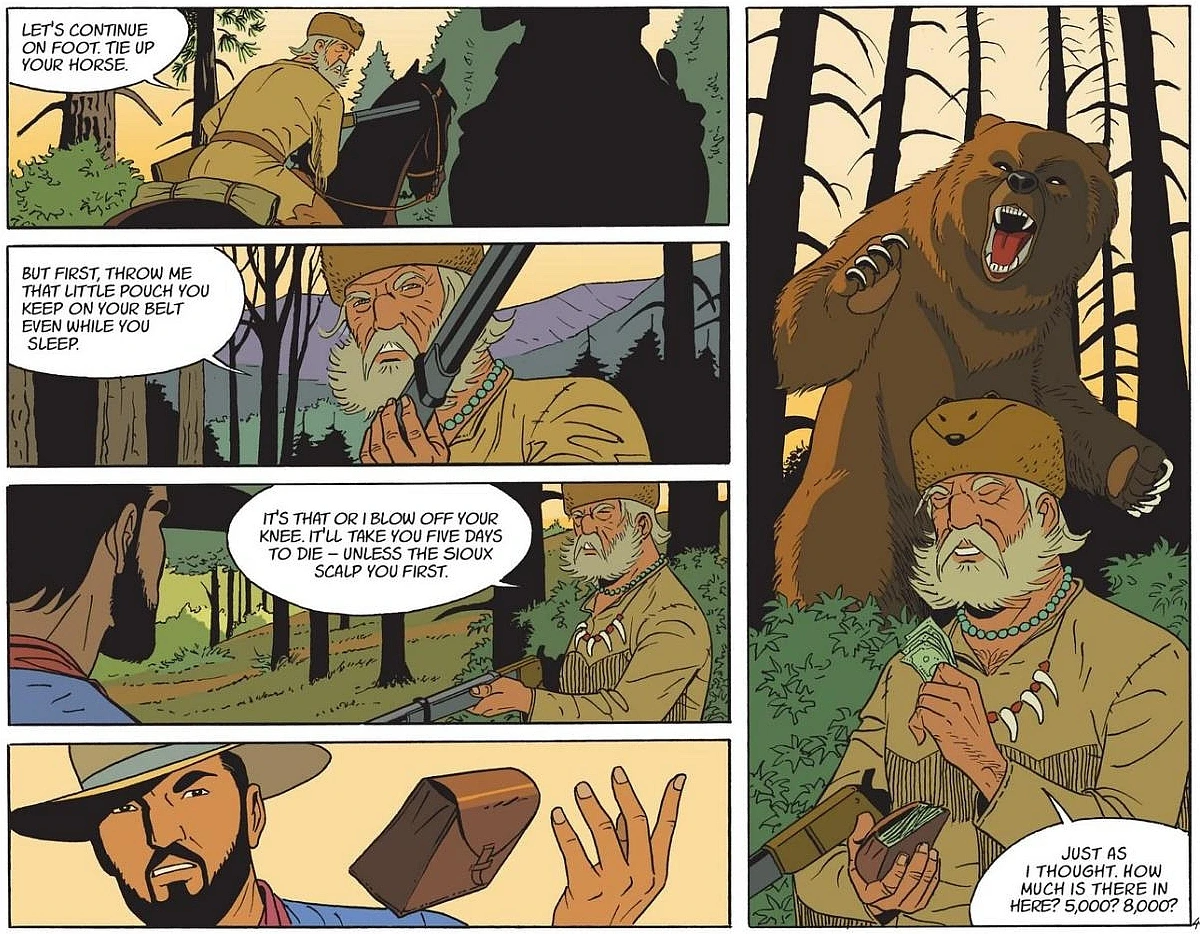
“America”… a shining light of Neo-Democracy in the late 1700’s (at least kinda-sorta in principle?), while also being a true ‘capitalistic Wild West’ in many other ways, to say the least. Right so, this short (3 tomes), fascinating Fortune of the Winczlavs series explored the pre-history of one of the great BD series of all-time, Largo Winch.
Anyway, let’s cut to the chase, eh? There were about four generations of Winch’s / Winczlavs before Largo came in to focus, and this sequence deals with… the 2nd generation, in this case two brothers. One decides to roam West, and one South. The year would be ~1858, I think it was…

https://i.imgur.com/yCZV2Nj.jpeg
NOTE: Titusville, PA is where crude-oil extraction went absolutely ‘apey’ in the USA, sorta-kinda the counterpart to California’s mad gold-rush, from a ~decade earlier.

https://i.imgur.com/ARTFd4i.jpeg

https://i.imgur.com/WXH1yC4.jpeg

https://i.imgur.com/Xv7BoTc.jpeg

https://i.imgur.com/d7cPjQw.jpeg

https://i.imgur.com/WBi9O3a.jpeg
“America”… a shining light of Neo-Democracy in the late 1700’s (at least kinda-sorta in principle?), while also being a true ‘capitalistic Wild West’ in many other ways, to say the least. Right so, this short (3 tomes), fascinating Fortune of the Winczlavs series explored the pre-history of one of the great BD series of all-time, Largo Winch.
Anyway, let’s cut to the chase, eh? There were about four generations of Winch’s / Winczlavs before Largo came in to focus, and this sequence deals with… the 2nd generation, in this case two brothers. One decides to roam West, and one South. The year would be ~1858, I think it was…
https://i.imgur.com/yCZV2Nj.jpeg
NOTE: Titusville, PA is where crude-oil extraction went absolutely ‘apey’ in the USA, sorta-kinda the counterpart to California’s mad gold-rush, from a ~decade earlier.
https://i.imgur.com/ARTFd4i.jpeg
https://i.imgur.com/WXH1yC4.jpeg
https://i.imgur.com/Xv7BoTc.jpeg
https://i.imgur.com/d7cPjQw.jpeg
https://i.imgur.com/WBi9O3a.jpeg

[sur un mur, un tableau contient un carré très mal dessiné, illuminé par une lampe et protégé par une corde]
[rose a l’air déçu]
Je ne suis pas un grand fan de ce dessin spécifique d’un carré
[violet est très énervé]
AH DONC TU ES ANTI CARRÉS
TU ES L’UNIQUE RAISON POUR LAQUELLE LES CARRÉS SOUFFRENT
TU DÉTESTES TOUT CE QUI TOUCHE AUX CARRÉS
TOUT EST DE TA FAUTE
thebad.website/comic/the_master_extrapolator

[on a wall, a painting of a very poorly drawn square is hung, below a light and protected by a rope]
[pink seems underwhelmed]
I’m not a fan of this one specific drawing of a square
[purple points angrily at pink]
AH SO YOU’RE A SQUARE HATER
YOU HATE EVERYTHING SQUARE RELATED
YOU’RE THE ONE REASON SQUARES ARE SO HATED
EVERYTHING IS YOUR FAULT
thebad.website/comic/the_master_extrapolator

TLDR: Valve/Steam has never issued a general warning to users about the frame‑pacing/timing‑logic issues in certain games that make them effectively unplayable or unbeatable on SteamOS despite “running.”
-Not in patch notes, Proton release notes, Deck Verified criteria, store‑page warnings, and not in any public communication.
They do not test for timing bugs, broken physics, or unstable frametime behavior. Valve has never warned users about games that “run” but have broken timing logic under Proton/SteamOS. Major issues arise when there’s physics tied to uncapped framerate, games that rely on Windows-specific timing APIs, games that behave differently at 40/60/90 Hz and games where frame pacing instability causes input desync or impossible difficulty spikes.
Valve does not mark these games as “Unsupported,” even though the gameplay is functionally broken.
If the game launches and renders frames, Valve considers it “working.” Even if the frametime graph looks like a seismograph, the game’s logic runs too fast or too slow, boss fights become impossible, rhythm/timing games desync, cutscenes skip or break scripting, or a time trial becomes unbeatable mid-game.
No warnings. No labels. No store‑page notices.
Valve won’t even tell you, "this game runs poorly on SteamOS, is broken under Proton, or “works better on Windows”. If you want to find problems, you need to look at the fixes, but there are no ‘heads ups’.

🙂We need to unite together, settle differences & communicate with Hivemind-Collectivist on how to defeat the U.S. Regime! 🙂We need to have NASA read your manifesto! 🙂If everyone’s in power then nobody is! 🙂
🙂We need to unite together, settle differences & communicate with Hivemind-Collectivist on how to defeat the U.S. Regime! 🙂We need to have NASA read your manifesto! 🙂If everyone’s in power then nobody is! 🙂


Widoczna w tle okładki kobieta to podobizna patronki muzyka, która faktycznie walczyła w francuskim podziemiu podczas 2WŚ.
Widoczna w tle okładki kobieta to podobizna patronki muzyka, która faktycznie walczyła w francuskim podziemiu podczas 2WŚ.

Cross posted from https://lazysoci.al/post/53129618
Cross posted from https://lazysoci.al/post/53129618

I’m so confused. Was this intentional? Did AI backfire and they uploaded the output anyway? Was it malicious compliance?
I’m so confused. Was this intentional? Did AI backfire and they uploaded the output anyway? Was it malicious compliance?

„Rum and Coca-Cola” to popularna piosenka calypso skomponowana przez Lionela Belasco do słów Lorda Invadera. Prawa autorskie do utworu w Stanach Zjednoczonych zastrzegł [ukradł i okroił z antyimperialistycznego przekazu] artysta Morey Amsterdam, w 1945 roku stał się przebojem w wykonaniu zespołu Andrews Sisters.
„Rum and Coca-Cola” to popularna piosenka calypso skomponowana przez Lionela Belasco do słów Lorda Invadera. Prawa autorskie do utworu w Stanach Zjednoczonych zastrzegł [ukradł i okroił z antyimperialistycznego przekazu] artysta Morey Amsterdam, w 1945 roku stał się przebojem w wykonaniu zespołu Andrews Sisters.
During an interview with investigators, Campbell acknowledged knowing that his dogs had previously been deemed vicious, New Mexico State Police said. Investigators also learned that the dogs, both a pitbull mix breed , had reportedly been involved in an earlier attack and had recently been released from an animal shelter.
During an interview with investigators, Campbell acknowledged knowing that his dogs had previously been deemed vicious, New Mexico State Police said. Investigators also learned that the dogs, both a pitbull mix breed , had reportedly been involved in an earlier attack and had recently been released from an animal shelter.

Right in the first zone, I faced the most insane fight I probably ever had in PD. Around 25 mobs encircled me, coming in waves and never offering an escape route. I took a bottle of healing potion, pushed my way to the nearby Sungrass and got to work.
And wouldn’t you know, they’re all slain. You don’t mess with me! :D


Linux doesn’t have a native Layer‑7 application firewall API
Windows and macOS have OS‑level frameworks that:
Any Linux “application firewall” tries to work with mechanisms that were never designed for it.
Why Linux app firewalls break (OpenSnitch, Portmaster, etc.)
Linux apps spawn dozens or hundreds of short‑lived helper processes.
A firewall trying to track each one is fighting the OS. Windows/macOS utilize app identity or code‑signed bundles.
Games and anti‑cheat/DRM hate syscall interception. -These systems detect “unexpected interference” and bail. Outbound firewalling is also bypassable on Linux. It can inject itself into other allowed processes easier than it can on Windows.
Linux has a different security model, which handles the situation differently. It has AppArmor (per-process syscall restrictions), SELinux, fapolicyd/IMA, Firejail, and Flatpack permissions (toggles).

Wiedźmak: Ile chce ten przemytnik?
Meksykanin: Dziesięć tysięcy peso
W: Za wszystkich?
M: Nie, szefie, za każdego z osobna
W: Cholerny złodziejski przemytnik, Musimy się z nim zabawić.Bandytcy przemytnicy, psują ci zabawę
Idź za czarownikiem, zabiorę cię za darmo
Przyprowadź swoją babcię i ciocię ElenęCholerni przemytnicy, żyjący z twoich pieniędzy
Zabierają ci pensję i porzucą twoją babcię
Cholerna migra na ciebie czeka
Oddadzą cię po solidnym katowaniuImigracja znalazła twoją babcię na pustyni
Wysłali ją do Tijuany, zbitą na miazgę
Szaman ma dobrą kontrabandę
Numer ubezpieczenia społecznego i zielone karty (…)
[bardzo luźne tłumaczenie]
Because of the energy drinks. 
It could not have been a more cliche moment. The conversation topic kicked off with the nurse commenting on my bestie’s vape. And how it was so much more dangerous than smoking, with a detailed description of popcorn lung (if you need a reminder) and that people were being put on respirators and still being unable to catch their breath before dying.
She then followed this up with an incredibly passionate, heart wrenching account about the state of things in medicine and how they’re seeing more and more young folks coming in with maladies typically reserved for the elderly… you could have copied and pasted her warning with that of a CC influencer; heart attacks, strokes, etc 19 year olds coming in with things for people in their 50s, yada, yada. All the hits… right up until she concluded on how it’s the fault of energy drinks.
Meanwhile, I’m just sitting there in my n95.

Fast forward later in the night, to the end of this poorly written scene, with the nurse giving me a fistbump and telling me she ‘hopes I feel better’ as we said our goodbyes.
And no, i did not get into it. It was my besties bday and it was not a scenario in which me getting into a debate was going to end well.
So, yeah. I’m just sharing this to remind y’all that there are people are out there in the medical field noticing something is wrong. And that you’re doing the right thing by masking… and/or not drinking energy drinks, I guess. Lol🤷
Because of the energy drinks.
It could not have been a more cliche moment. The conversation topic kicked off with the nurse commenting on my bestie’s vape. And how it was so much more dangerous than smoking, with a detailed description of popcorn lung (if you need a reminder) and that people were being put on respirators and still being unable to catch their breath before dying.
She then followed this up with an incredibly passionate, heart wrenching account about the state of things in medicine and how they’re seeing more and more young folks coming in with maladies typically reserved for the elderly… you could have copied and pasted her warning with that of a CC influencer; heart attacks, strokes, etc 19 year olds coming in with things for people in their 50s, yada, yada. All the hits… right up until she concluded on how it’s the fault of energy drinks.
Meanwhile, I’m just sitting there in my n95.
Fast forward later in the night, to the end of this poorly written scene, with the nurse giving me a fistbump and telling me she ‘hopes I feel better’ as we said our goodbyes.
And no, i did not get into it. It was my besties bday and it was not a scenario in which me getting into a debate was going to end well.
So, yeah. I’m just sharing this to remind y’all that there are people are out there in the medical field noticing something is wrong. And that you’re doing the right thing by masking… and/or not drinking energy drinks, I guess. Lol🤷
Building an app for tracking personal intentions (career, relationships, whatever) that lets you frame it however fits — manifestation, prayer, spellwork, plain secular goal-setting, no single worldview forced on anyone. Nothing built yet, still just a concept.
Looking for a few people who actually practice witchcraft/spellwork to look at the idea and say plainly if it’s decontextualizing or trivializing anything, or if it’s fine. That’s the feedback I actually want: “this is appropriative” is exactly as useful as “this is fine,” probably more.
Click around and answer a few questions, no account needed, takes a couple of mins. Not selling anything, nothing to sign up for, just don’t want to build something tone-deaf or useless.
(Used AI to help draft and edit this post and build the prototype and I’m struggling if it can be used to seize the means. the idea came in a vision)