0

My experiences with a fixed sync, sync-on-green monitor on my PC

preview

Info about getting a Sony GDM-1960/GDM-1961 usable on a regular (SVGA) computer.

This used to be mirrored several places, it seems archive.org is the last one remaining.

Info about getting a Sony GDM-1960/GDM-1961 usable on a regular (SVGA) computer.

This used to be mirrored several places, it seems archive.org is the last one remaining.

0

Safari Just Made Browser-Controlled Dark Mode Real

Amit Merchant Safari Just Made Browser-Controlled Dark Mode Real www.amitmerchant.com
preview

On November 3, WebKit announced Adaptive Dark Mode in Safari 27.3 beta. When a user enables it, Safari can analyse a predominantly light website and transform it into a dark appearance. It adjusts backgrounds, text, gradients and certain graphics while trying to preserve usability and contrast.

On November 3, WebKit announced Adaptive Dark Mode in Safari 27.3 beta. When a user enables it, Safari can analyse a predominantly light website and transform it into a dark appearance. It adjusts backgrounds, text, gradients and certain graphics while trying to preserve usability and contrast.

0

PP (Privileged Predicament)

preview

I’m eating muffins, sitting in my sofa, watching anime. But I’m so tired I feel nauseous. I’d go to my bed, but I wanna keep eating muffins. I also have to pee but then I’d have to leave the muffins and give up on going to bed.

Can somebody please just SLAP my depressed face so that I do something?

0

100 years ago today, the United States Numbered Highway System was approved by the American Association of State Highway Officials

United States Numbered Highway System - Wikipedia en.wikipedia.org
preview

cross-posted from: lemmy.ml/post/55188993

From Names to Numbers: The Origins of the U.S. Numbered Highway System by Richard F. Weingroff, Information Liaison Specialist, Federal Highway Administration

Map of the final U.S. Highway system as approved November 11, 1926 (8,972 × 5,851 pixels, file size: 18.59 MB)

en.wikipedia.org/…/American_Association_of_State_…

0

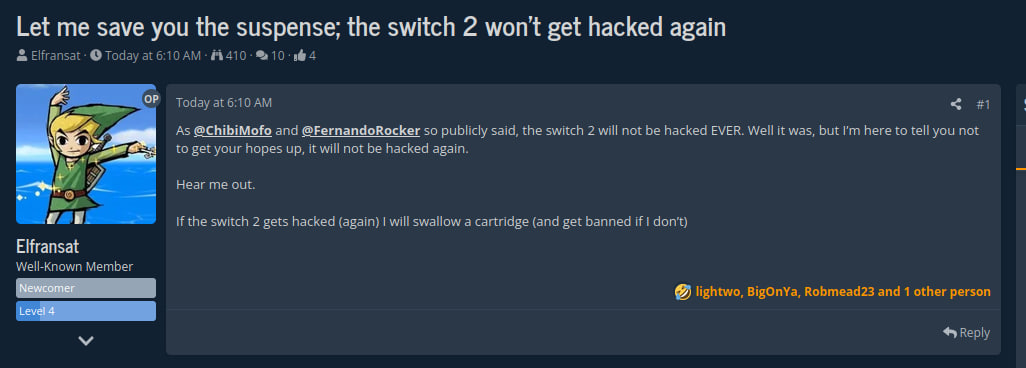
I'd imagine it's a troll post, but in case not, worth noting, futurology only works until it doesn't.

preview

I’d imagine it’s a troll post, but in case not, worth noting, futurology only works until it doesn’t.

Or rather, it only works at normalizing a future not yet decided.

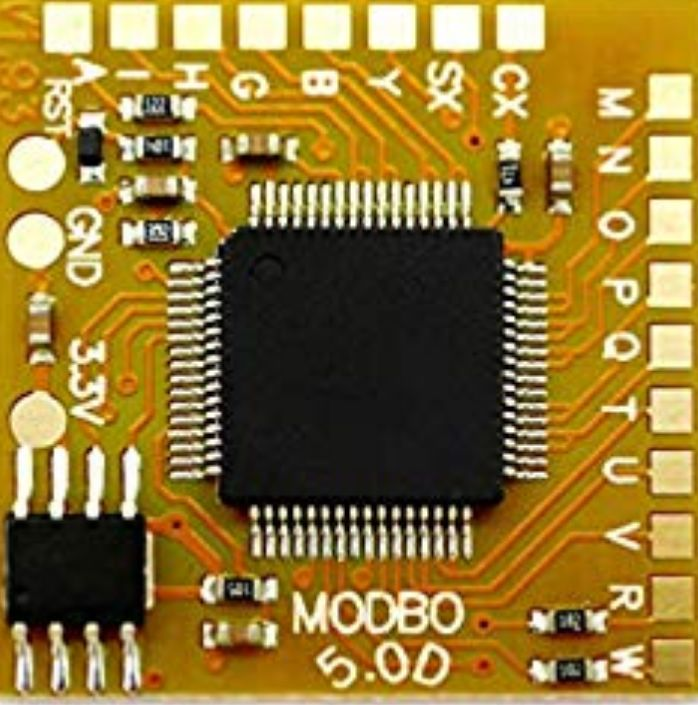
There are #consolemods still being released for decades old devices. You can never know when someone finds an entry point, even if by pure accident. And with AI accelerating things and movements for right to ownership and right to fix gaining traction, possibilities can be tested ever faster and ever less worried about legal implications, contrary pushes feeling more like death throes rather than proper pushes.

And back at the opening, Nightwish’s song Élan comes to mind. =)

0

Micron – the Oberon with the power of C

GitHub GitHub - rochus-keller/Micron: A compiler and IDE for the Micron programming language - the Oberon with the power of C github.com
preview

cross-posted from: programming.dev/post/59258877

I have been developing Micron, a lean, statically typed, modular systems programming language that combines Oberon’s simplicity and explicit module structure with C’s low-level capabilities and interoperability.

The goal is to use the same language for boot code, device drivers, an operating system kernel, and ordinary applications, without requiring a garbage collector or routing machine access through a separate, unchecked system dialect. Micron supports explicit memory layouts, signed and unsigned integer types, pointer operations, and direct calls to C without wrappers.

One of its central design choices is language levels. Each module declares the level and thus the feature it needs, ranging from code that requires neither stack nor heap to garbage-collected objects. A module can import only modules at the same or a lower level. For example, a kernel module declared at level 1 cannot accidentally acquire a dependency on heap allocation through an import.

Other features include generic modules, structural interfaces, and compile-time procedures. Much of what would require a preprocessor in C is expressed through typed language features.

There is a working compiler, interpreter, and IDE, along with a free textbook. The book explains both how the language works and the reasons behind its design. Its systems-programming section walks through a port of Wirth and Gutknecht’s Project Oberon operating system to Micron, cross-compiled and linked into a single executable that runs on an emulated RISC-V machine.

The examples also include ports of a Smalltalk-80 VM, Scheme 9, and the original P4 Pascal compiler. The compiler and interpreter implement the language specification; native backends and tooling are still work in progress, and the current native code generation prioritises simplicity over optimisation.

I’m the designer and implementer, and interested in feedback on the language design, particularly the language-level approach to making runtime dependencies explicit, and on its usefulness as an alternative to C.

0

Finally, an operating system for people who hate actually using their own computer.

preview

Linux doesn’t deserve this

Imagine taking the lightweight, privacy-focused appeal of Linux and completely ruining it by hardwiring AI models straight into the OS. Nobody is switching from Windows for more forced AI features.

Linux doesn’t deserve this

Imagine taking the lightweight, privacy-focused appeal of Linux and completely ruining it by hardwiring AI models straight into the OS. Nobody is switching from Windows for more forced AI features.

0

Linux kernel reviewer steps down from memory management duties due to influx of AI slop patches — 'the amount of time wasted on AI slop is already too much, and we're only at the start of this'

Tom's Hardware Linux kernel reviewer steps down from memory management duties due to influx of AI slop patches — 'the amount of time wasted on AI slop is already too much, and we're only at the start of this,' volume of submissions coupled with low manpower forces the step back www.tomshardware.com
0

Xenrin - Firing the laser at the Rock Cracker Facility

A red laser illuminating a tunnel in a space facility. The small outline of a character is illuminated in the background by sparks as power flows into a focusing lens.
preview

I found this screenshot posted by Xenrin on the community hub:

Had fun running the Rock Cracker facility in the PTU this evening, and wanted to get a closer view of the laser. Noticed my friend Emily (from Emily’s Game YT Channel) standing at the end of the walkway highlighted by sparks and had to get this shot

https://robertsspaceindustries.com/community-hub/post/firing-the-laser-at-the-rock-cracker-facility-kKV9Fi6s1fpLK

0

Eigenen sich die Fairbuds XL over-ear Kopfhörer zum Musikhören?

preview

Hat hier jemand Erfahrung mit den Fairbuds XL? Mir gefällt, dass ich einzelne Teile austauschen kann, und nicht die ganzen Kopfhörer wegschmeißen muss, nur weil sich wie bei meinen aktuellen Kopfhörern die Polster auflösen.

Aber haben die auch guten Klang? Kann da jemand was zu sagen?

Und: welche over-ear Kopfhörer benutzt ihr zum Musikhören, und wie gefällt euch der Klang?

0

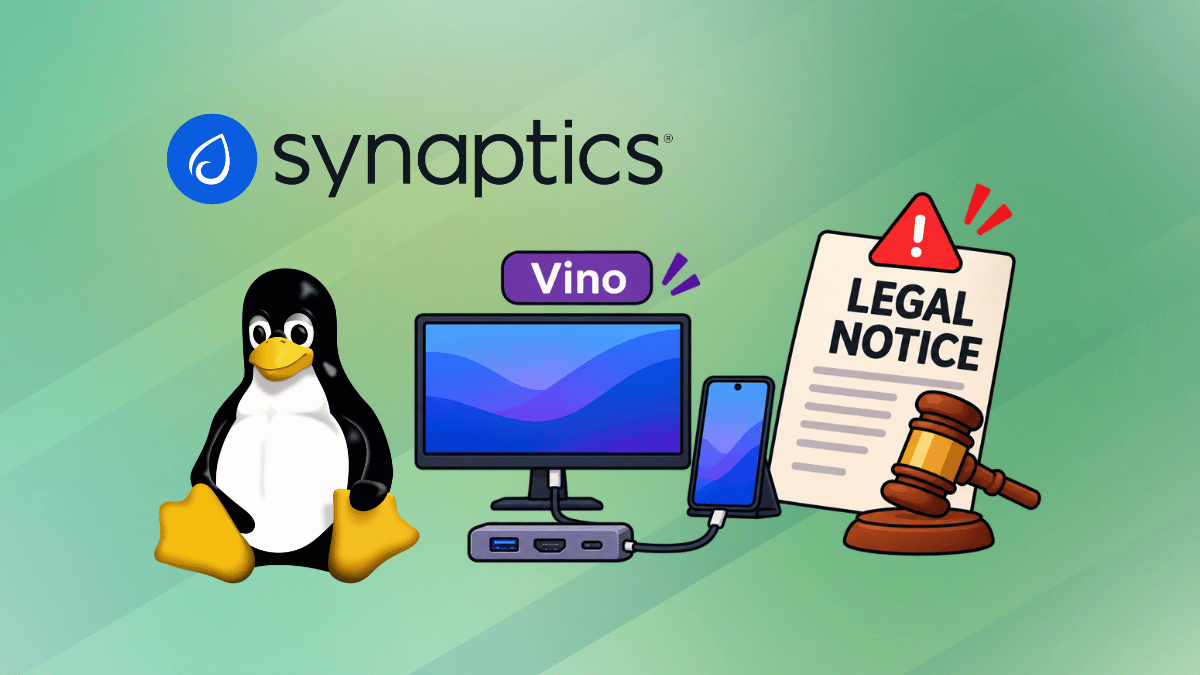
The AI-Assisted Linux Driver for DisplayLink Gets Legal Notice

It's FOSS The AI-Assisted Linux Driver for DisplayLink Gets Legal Notice itsfoss.com
preview

Before we dive into the matter, you first have to understand what DisplayLink is. It is a proprietary graphics transport technology that lets computers connect to one or more external displays over USB, using docks or adapters built around DisplayLink chips.

It works by compressing display data on the host computer and sending it to a chip in the connected device. The chip then decodes it for output to monitors through interfaces such as HDMI or DisplayPort.

On Linux, this support can rub some people the wrong way due to its closed-source nature. That is where Mike Lothian’s (FireBurn) Vino comes in as an open alternative.

Unfortunately, Synaptics owns DisplayLink and has sent Mike cease-and-desist letters alleging that he infringed its DisplayLink patents with his project.

What’s Vino?

Vino is a driver that lets the Linux kernel talk to DisplayLink docks directly. It is meant to replace DisplayLink’s closed-source software and the open source EVDI kernel module that sits beside it.

Mike wrote it with help from Claude Code, and the first version reached the kernel mailing list in June, unfinished. He had faced a communication issue between the dock and the driver and asked other developers for help.

In early July (courtesy of LWN.net), he emailed a Synaptics employee for guidance and mentioned his Rust rewrite of EVDI. About two weeks later, a different employee replied.

That reply said his Rust rewrite of EVDI was not a thing of concern. Rather, the concern was the DisplayLink protocol and codec, which Synaptics believes are covered by its patents. Lawyers get involved

A cease-and-desist letter followed on August 17. It told Mike to stop development and withdraw anything he had submitted to maintainers and hosting sites, with a signed confirmation due by August 28.

An appendix listed over 125 patents without saying which applied. Mike posted a working version 3 of Vino on August 26 and asked Synaptics the next day which claims they had in mind.

The answer came in October as claim charts. They map one claim from each of two patents, GB2484736 and GB2485613, to his source code.

The October 5 letter said Synaptics would seek $25,000 for the cost of preparing those charts if Mike missed an October 11 deadline, with the figure rising by at least $25,000 each week.

Mike replied on October 6 (message 8) with an offer to pause public work on the encoding code the charts point to if Synaptics paused the deadline and the weekly charge. He also asked about licensing that code for non-commercial use.

On October 7, Synaptics said it would grant no patent license or promise not to sue and set October 18 as a final deadline.

 What I can see so far is a very aggressive patent infringement witch hunt against a lone open source developer who was quite open to communication.

 Synaptics took about three weeks to answer his request for specifics, then followed with a potentially life-ruining $25,000 demand that compounds weekly.

Clean room design quirks

Mike describes Vino as a clean-room driver and says he reverse engineered it from captured USB traffic and vendor programs.

If you didn’t know, in a clean-room recreation, one party studies the original implementation, then writes a description, and a separate party builds the new code from that description alone.

It is meant to act as a defense against copyright claims because it shows nothing was copied. Synaptics’ July reply argues that clean-room or independently written code can still infringe a patent.

The timing

Vino also lands in a busy stretch for AI-assisted reverse engineering, from smart TV cleanups to office suite clones. Legal pressure has reached other AI-built projects too.

Mike has already taken down the Vino repository in response to the demands, and Synaptics has not made a public statement so far.

Only time will tell what happens to the work, and I hope someone forked it before it went offline, as that would give others a good starting point to build on.