0

Xenrin - Firing the laser at the Rock Cracker Facility

A red laser illuminating a tunnel in a space facility. The small outline of a character is illuminated in the background by sparks as power flows into a focusing lens.
preview

I found this screenshot posted by Xenrin on the community hub:

Had fun running the Rock Cracker facility in the PTU this evening, and wanted to get a closer view of the laser. Noticed my friend Emily (from Emily’s Game YT Channel) standing at the end of the walkway highlighted by sparks and had to get this shot

https://robertsspaceindustries.com/community-hub/post/firing-the-laser-at-the-rock-cracker-facility-kKV9Fi6s1fpLK

0

Eigenen sich die Fairbuds XL over-ear Kopfhörer zum Musikhören?

preview

Hat hier jemand Erfahrung mit den Fairbuds XL? Mir gefällt, dass ich einzelne Teile austauschen kann, und nicht die ganzen Kopfhörer wegschmeißen muss, nur weil sich wie bei meinen aktuellen Kopfhörern die Polster auflösen.

Aber haben die auch guten Klang? Kann da jemand was zu sagen?

Und: welche over-ear Kopfhörer benutzt ihr zum Musikhören, und wie gefällt euch der Klang?

0

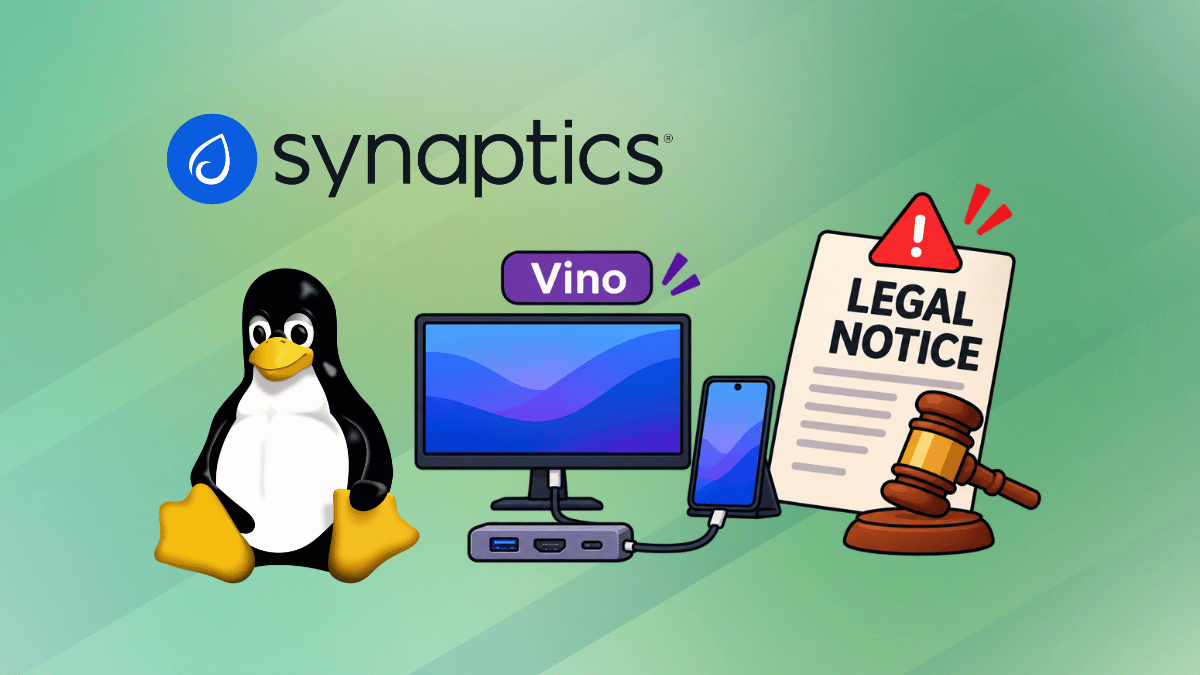
The AI-Assisted Linux Driver for DisplayLink Gets Legal Notice

It's FOSS The AI-Assisted Linux Driver for DisplayLink Gets Legal Notice itsfoss.com
preview

Before we dive into the matter, you first have to understand what DisplayLink is. It is a proprietary graphics transport technology that lets computers connect to one or more external displays over USB, using docks or adapters built around DisplayLink chips.

It works by compressing display data on the host computer and sending it to a chip in the connected device. The chip then decodes it for output to monitors through interfaces such as HDMI or DisplayPort.

On Linux, this support can rub some people the wrong way due to its closed-source nature. That is where Mike Lothian’s (FireBurn) Vino comes in as an open alternative.

Unfortunately, Synaptics owns DisplayLink and has sent Mike cease-and-desist letters alleging that he infringed its DisplayLink patents with his project.

What’s Vino?

Vino is a driver that lets the Linux kernel talk to DisplayLink docks directly. It is meant to replace DisplayLink’s closed-source software and the open source EVDI kernel module that sits beside it.

Mike wrote it with help from Claude Code, and the first version reached the kernel mailing list in June, unfinished. He had faced a communication issue between the dock and the driver and asked other developers for help.

In early July (courtesy of LWN.net), he emailed a Synaptics employee for guidance and mentioned his Rust rewrite of EVDI. About two weeks later, a different employee replied.

That reply said his Rust rewrite of EVDI was not a thing of concern. Rather, the concern was the DisplayLink protocol and codec, which Synaptics believes are covered by its patents. Lawyers get involved

A cease-and-desist letter followed on August 17. It told Mike to stop development and withdraw anything he had submitted to maintainers and hosting sites, with a signed confirmation due by August 28.

An appendix listed over 125 patents without saying which applied. Mike posted a working version 3 of Vino on August 26 and asked Synaptics the next day which claims they had in mind.

The answer came in October as claim charts. They map one claim from each of two patents, GB2484736 and GB2485613, to his source code.

The October 5 letter said Synaptics would seek $25,000 for the cost of preparing those charts if Mike missed an October 11 deadline, with the figure rising by at least $25,000 each week.

Mike replied on October 6 (message 8) with an offer to pause public work on the encoding code the charts point to if Synaptics paused the deadline and the weekly charge. He also asked about licensing that code for non-commercial use.

On October 7, Synaptics said it would grant no patent license or promise not to sue and set October 18 as a final deadline.

 What I can see so far is a very aggressive patent infringement witch hunt against a lone open source developer who was quite open to communication.

 Synaptics took about three weeks to answer his request for specifics, then followed with a potentially life-ruining $25,000 demand that compounds weekly.

Clean room design quirks

Mike describes Vino as a clean-room driver and says he reverse engineered it from captured USB traffic and vendor programs.

If you didn’t know, in a clean-room recreation, one party studies the original implementation, then writes a description, and a separate party builds the new code from that description alone.

It is meant to act as a defense against copyright claims because it shows nothing was copied. Synaptics’ July reply argues that clean-room or independently written code can still infringe a patent.

The timing

Vino also lands in a busy stretch for AI-assisted reverse engineering, from smart TV cleanups to office suite clones. Legal pressure has reached other AI-built projects too.

Mike has already taken down the Vino repository in response to the demands, and Synaptics has not made a public statement so far.

Only time will tell what happens to the work, and I hope someone forked it before it went offline, as that would give others a good starting point to build on.

0

FreeBSD Working To Establish An AI Policy After Polling Developers

FreeBSD Working To Establish An AI Policy After Polling Developers www.phoronix.com
preview

The FreeBSD Project published its Q3’2026 status report on Tuesday that outlines a number of development initiatives to ongoing work around an AI policy for this BSD operating system.

FreeBSD polled their developers on the usage of AI and LLMs as a hot topic for the quarter. An overwhelming 88% want the FreeBSD Project to adopt an AI policy. 35% of those polled want AI-assisted code to be disclosed while 22% felt it should be treated just like any other code contribution and only 16% want AI generated code to be rejected outright. 65% of the respondents were in favor of AI-generated documentation with human review.

FreeBSD has established an AI working group to work on drafting an AI policy. Final reports are expected in Q4.

FreeBSD developers have also had to spend a lot of time preparing for the EU’s Cyber Resilience Act (CRA) such as around Software Bill of Materials (SBOM) support.

FreeBSD has also seen work on a GUI for the Bhyve hypervisor written in Freepascal/Lazarus. This Bhyvemgr GUI is coming along well to help in managing of Bhyve VMs:

www.phoronix.net/image.php?id=2026&image=bhyvemgr…

Meanwhile on the web management/UI side, Sylve continues looking quite slick as a unified system management platform for FreeBSD from the web browser. Adding in the past quarter were new storage options, data center / cluster features, and more.

www.phoronix.net/image.php?id=2026&image=sylve_me…

FreeBSD also continues seeing work to enhance desktop installations of the operating system and more polishing of the desktop experience. Related have also been more suspend/resume and audio stack improvements.

Some other FreeBSD happenings include improving zoned storage support, debugging enhancements, a variety of scheduler improvements, and enhancing the bootloader.

More details on these FreeBSD improvements made during Q3 can be found via FreeBSD.org.

0

Paris, Nov 5: police fire tear gas against students, workers and retirees as the march ends at Place de la Nation

play · loopsusercontent.com
Paris, Nov 5: police fire... - @westernfacism | Loops.video loops.video
preview

cross-posted from: lemmy.ml/post/55186164

loops.video/v/jhznqS6M89

cross-posted from: lemmy.ml/post/55186164

loops.video/v/jhznqS6M89

0

Want to live on the moon? NASA opens recruitment for Artemis programme

France 24 Want to live on the moon? NASA opens recruitment for Artemis programme www.france24.com
preview

NASA is expanding its astronaut corps for the first time in two years. As the US space agency grows its Artemis programme, recruitment is in progress for a brand-new class of space explorers who will train to “live and work beyond Earth”.

NASA is expanding its astronaut corps for the first time in two years. As the US space agency grows its Artemis programme, recruitment is in progress for a brand-new class of space explorers who will train to “live and work beyond Earth”.

0

StreetComplete on iOS

preview

If you are using an iPhone and would like to contribute to OpenStreetMap in a very easy and gamified way: StreetComplete is now out for iOS!

Your contributions will not only improve CoMaps, but a whole range of OSM-based applications:

apps.apple.com/us/app/…/id6808344816

If you are using an iPhone and would like to contribute to OpenStreetMap in a very easy and gamified way: StreetComplete is now out for iOS!

Your contributions will not only improve CoMaps, but a whole range of OSM-based applications:

apps.apple.com/us/app/…/id6808344816

0

[Mastodon] Ankündigung! Etsy wird demnächst alles, was uns Künstlern gehört, in deren KI zum Trainieren schmeißen... | Dani Iduna

troet.cafe - Mastodon Dani Iduna 🖌️🫟🧶🪄🍄🪾 (@DaniIduna@troet.cafe) troet.cafe
preview

Zur Info, falls jemand von euch Etsy verwendet. Es wurde wohl nicht an die große Glocke gehängt, dass alles für KI Training verwendet werden wird.

Zur Info, falls jemand von euch Etsy verwendet. Es wurde wohl nicht an die große Glocke gehängt, dass alles für KI Training verwendet werden wird.

0

The last of the bag

preview

This was a really interesting bean. I’m going to miss it. It’s limited edition, not seasonal, so I’m not sure if they’ll ever bring it back, but I hope they do. It’s one of the least “coffee tasting” coffees I’ve ever had. They sold out weeks ago so there’s no shot at getting another bag unfortunately. It was also roasted 6 weeks ago so it’s getting to the end of its good window, so I really should be finishing it off anyway. Still, I will miss it.

Pilot doesn’t really have much available right now that interests me unfortunately, so I’ll be trying a new roaster to me. Ordered the beans on Sunday, hopefully they’re ready for pickup any day now. I’m not sure what day he roasts on. I do have another bag of light roast to tide me over though so it’s not like I’ll be without good specialty coffee, plus I’ve got tons of other coffee in the medium to dark range too, but I like having a couple light options at any time to bounce between.

As usual, I prepared this last cup as soup.

I recently picked up a new RDT bottle so I’ve been messing with that a bit, it’s glass instead of plastic so it feels a bit nicer to use.

My equipment used, like normal, is the Fellow Stagg EKG Pro, DF54 V4, and Cafelat Robot. I did just pick up some Cafec abaca filters so I was considering doing a V60 but I felt for my last brew with these beans I should stick to my favourite. I’ll mess with the new filters on my next bag.

0

The Company Behind GameOS is Building an AI Desktop OS

It's FOSS The Company Behind GameOS is Building an AI Desktop OS itsfoss.com
preview

Kirt McMaster founded Playtron in 2022, and the company went on to build GameOS, a Linux-based operating system for gaming PCs. It now goes by KORA Systems Inc. and is launching a new AI-focused desktop operating system.

The OS shares the KORA name, with GameOS living inside it as GameFrame, a dedicated mode for turning the system into a game console. We received a press release regarding this weeks before the launch, so this write-up might be missing some updates.

 A major component of this OS is not open source.

KORA, explained

KORA is a desktop OS developed on a Linux base, with AI models and agents built right into the system. Don’t think that it is an app or a layer over another one; it’s a standalone offering.

The company says AI workloads on macOS and Windows stay boxed into a single app or tab, with those having no view of the hardware underneath. KORA is built on the idea that AI belongs inside the OS.

The desktop is organized around neural workspaces, where each one keeps a project or client apart from the rest, and the AI only sees the workspace that is open. Files in it also keep their own version history.

Each workspace doubles as a sandbox too. The user sets what files, devices, AI tools, and online services every app and agent can access, while AppArmor enforces it all.

Search in the neural file system works on meaning, so a person or an agent can find a file by what it contains.

Its memory system builds context from the email, contacts, calendar, and cloud files the user connects. Local models run that analysis on the device, and data goes to the cloud only with the user’s approval.

How open is it?

Cortex is the engine behind the models, and it spreads AI work over the CPU, GPU, and NPU, then passes some of it to other computers on the network.

Local models run by default, and cloud ones only join when a task needs them. KORA speculates that local models will handle roughly seven in ten of the calls it manages in 2027.

They also say that models from any outside lab can be integrated, and a chat can move from its own agent to Codex or Claude Code with its context intact. A planned SDK would also let third-party apps and agents tap into projects, memory, search, and email.

Sadly, Cortex is not open source. :(

Still, the wider ecosystem is open, and developers will get the same building blocks KORA’s own apps use, such as workspaces, file versioning, and collaboration.

You mentioned Qualcomm?

Yes! Qualcomm engineers worked alongside KORA for nearly a year to bring a Linux desktop to the Snapdragon X2 Elite platform.

Though Qualcomm’s wider Linux effort for X2 laptops is still early. Its own developer preview targets kernel developers and not end users, and the drivers meant to open the NPU to local AI are still being pushed upstream.

Even so, KORA says the PCs can run a language model with 26 billion parameters locally, with HUMAIN, the Saudi AI company, working with KORA on an enterprise version.

That version is called HUMAIN OS, with the first OEM PCs expected to arrive preloaded with it in 2027, while KORA itself follows later that year.

So, yes, for now, there is no ISO to download in case you got too excited.

Some thoughts

If you look closely, they are going at it differently than Omarchy, which began in June 2025 as a ready-made setup of Arch Linux and Hyprland that has since landed millions in backing for its foundation.

Omarchy’s Quattro release lets users pick from several third-party agents, while KORA builds its own agent into the system and lets others plug in their models. They are basically taking different routes to chase the same bet.

Both seem convinced that AI agents are where the desktop market is headed.

Kirt McMaster founded Playtron in 2022, and the company went on to build GameOS, a Linux-based operating system for gaming PCs. It now goes by KORA Systems Inc. and is launching a new AI-focused desktop operating system.

The OS shares the KORA name, with GameOS living inside it as GameFrame, a dedicated mode for turning the system into a game console. We received a press release regarding this weeks before the launch, so this write-up might be missing some updates.

 A major component of this OS is not open source.

KORA, explained

KORA is a desktop OS developed on a Linux base, with AI models and agents built right into the system. Don’t think that it is an app or a layer over another one; it’s a standalone offering.

The company says AI workloads on macOS and Windows stay boxed into a single app or tab, with those having no view of the hardware underneath. KORA is built on the idea that AI belongs inside the OS.

The desktop is organized around neural workspaces, where each one keeps a project or client apart from the rest, and the AI only sees the workspace that is open. Files in it also keep their own version history.

Each workspace doubles as a sandbox too. The user sets what files, devices, AI tools, and online services every app and agent can access, while AppArmor enforces it all.

Search in the neural file system works on meaning, so a person or an agent can find a file by what it contains.

Its memory system builds context from the email, contacts, calendar, and cloud files the user connects. Local models run that analysis on the device, and data goes to the cloud only with the user’s approval.

How open is it?

Cortex is the engine behind the models, and it spreads AI work over the CPU, GPU, and NPU, then passes some of it to other computers on the network.

Local models run by default, and cloud ones only join when a task needs them. KORA speculates that local models will handle roughly seven in ten of the calls it manages in 2027.

They also say that models from any outside lab can be integrated, and a chat can move from its own agent to Codex or Claude Code with its context intact. A planned SDK would also let third-party apps and agents tap into projects, memory, search, and email.

Sadly, Cortex is not open source. :(

Still, the wider ecosystem is open, and developers will get the same building blocks KORA’s own apps use, such as workspaces, file versioning, and collaboration.

You mentioned Qualcomm?

Yes! Qualcomm engineers worked alongside KORA for nearly a year to bring a Linux desktop to the Snapdragon X2 Elite platform.

Though Qualcomm’s wider Linux effort for X2 laptops is still early. Its own developer preview targets kernel developers and not end users, and the drivers meant to open the NPU to local AI are still being pushed upstream.

Even so, KORA says the PCs can run a language model with 26 billion parameters locally, with HUMAIN, the Saudi AI company, working with KORA on an enterprise version.

That version is called HUMAIN OS, with the first OEM PCs expected to arrive preloaded with it in 2027, while KORA itself follows later that year.

So, yes, for now, there is no ISO to download in case you got too excited.

Some thoughts

If you look closely, they are going at it differently than Omarchy, which began in June 2025 as a ready-made setup of Arch Linux and Hyprland that has since landed millions in backing for its foundation.

Omarchy’s Quattro release lets users pick from several third-party agents, while KORA builds its own agent into the system and lets others plug in their models. They are basically taking different routes to chase the same bet.

Both seem convinced that AI agents are where the desktop market is headed.

0

Looking for Ethical & Privacy-Respecting Free or freemium AI Alternatives

preview

cross-posted from: lemmy.ml/post/55185832

Hi everyone,

I’m looking for recommendations on free (or freemium) AI assistants that meet these criteria:

✅ Strong capabilities – Can handle complex questions and research. ✅ Privacy-respecting – Doesn’t train on user data, preferably E2E encrypted. ✅ Ethical stance – Not complicit in oppression or human rights violations (Palestine, sudan, uygur, etc). ✅ Not on BDS list – Companies that aren’t supporting or profiting from occupation.

Which AI tools have you found that respect both privacy AND human rights?

I’d really appreciate honest recommendations and experiences. Trying to find tools that align with my values without sacrificing functionality.

Thanks in advance! 🤝

cross-posted from: lemmy.ml/post/55185832

Hi everyone,

I’m looking for recommendations on free (or freemium) AI assistants that meet these criteria:

✅ Strong capabilities – Can handle complex questions and research. ✅ Privacy-respecting – Doesn’t train on user data, preferably E2E encrypted. ✅ Ethical stance – Not complicit in oppression or human rights violations (Palestine, sudan, uygur, etc). ✅ Not on BDS list – Companies that aren’t supporting or profiting from occupation.

Which AI tools have you found that respect both privacy AND human rights?

I’d really appreciate honest recommendations and experiences. Trying to find tools that align with my values without sacrificing functionality.

Thanks in advance! 🤝

0

Foreign gangs selling deadly DIY drug kits in UK via TikTok and Instagram

Metro Foreign gangs selling deadly DIY drug kits in UK via TikTok and Instagram metro.co.uk
preview

cross-posted from: lemmy.world/post/54280975

Where is the problem? As long as TikTok and Meta make $$$…

cross-posted from: lemmy.world/post/54280975

Where is the problem? As long as TikTok and Meta make $$$…

0

Plato, quattro programmi parlano italiano

preview

Plato, quattro programmi parlano italiano

@astronomia

Si è chiuso il primo bando Guest Observers dell’Esa per Plato, la missione che dal 2027 cercherà pianeti simili alla Terra: su 117 proposte, 23 sono state approvate e 28 sono in lista d’attesa. Quattro fanno capo a istituti italiani e spaziano dagli ammassi globulari all’alone della Via Lattea, dalle blue straggler agli ammassi aperti. Media

0

Looking for Ethical & Privacy-Respecting Free or freemium AI Alternatives

preview

cross-posted from: lemmy.ml/post/55185832

Hi everyone,

I’m looking for recommendations on free (or freemium) AI assistants that meet these criteria:

✅ Strong capabilities – Can handle complex questions and research. ✅ Privacy-respecting – Doesn’t train on user data, preferably E2E encrypted. ✅ Ethical stance – Not complicit in oppression or human rights violations (Palestine, sudan, uygur, etc). ✅ Not on BDS list – Companies that aren’t supporting or profiting from occupation.

Which AI tools have you found that respect both privacy AND human rights?

I’d really appreciate honest recommendations and experiences. Trying to find tools that align with my values without sacrificing functionality.

Thanks in advance! 🤝

cross-posted from: lemmy.ml/post/55185832

Hi everyone,

I’m looking for recommendations on free (or freemium) AI assistants that meet these criteria:

✅ Strong capabilities – Can handle complex questions and research. ✅ Privacy-respecting – Doesn’t train on user data, preferably E2E encrypted. ✅ Ethical stance – Not complicit in oppression or human rights violations (Palestine, sudan, uygur, etc). ✅ Not on BDS list – Companies that aren’t supporting or profiting from occupation.

Which AI tools have you found that respect both privacy AND human rights?

I’d really appreciate honest recommendations and experiences. Trying to find tools that align with my values without sacrificing functionality.

Thanks in advance! 🤝

0

The AI-Assisted Linux Driver for DisplayLink Gets Legal Notice

It's FOSS The AI-Assisted Linux Driver for DisplayLink Gets Legal Notice itsfoss.com
preview

Before we dive into the matter, you first have to understand what DisplayLink is. It is a proprietary graphics transport technology that lets computers connect to one or more external displays over USB, using docks or adapters built around DisplayLink chips.

It works by compressing display data on the host computer and sending it to a chip in the connected device. The chip then decodes it for output to monitors through interfaces such as HDMI or DisplayPort.

On Linux, this support can rub some people the wrong way due to its closed-source nature. That is where Mike Lothian’s (FireBurn) Vino comes in as an open alternative.

Unfortunately, Synaptics owns DisplayLink and has sent Mike cease-and-desist letters alleging that he infringed its DisplayLink patents with his project.

What’s Vino?

Vino is a driver that lets the Linux kernel talk to DisplayLink docks directly. It is meant to replace DisplayLink’s closed-source software and the open source EVDI kernel module that sits beside it.

Mike wrote it with help from Claude Code, and the first version reached the kernel mailing list in June, unfinished. He had faced a communication issue between the dock and the driver and asked other developers for help.

In early July (courtesy of LWN.net), he emailed a Synaptics employee for guidance and mentioned his Rust rewrite of EVDI. About two weeks later, a different employee replied.

That reply said his Rust rewrite of EVDI was not a thing of concern. Rather, the concern was the DisplayLink protocol and codec, which Synaptics believes are covered by its patents. Lawyers get involved

A cease-and-desist letter followed on August 17. It told Mike to stop development and withdraw anything he had submitted to maintainers and hosting sites, with a signed confirmation due by August 28.

An appendix listed over 125 patents without saying which applied. Mike posted a working version 3 of Vino on August 26 and asked Synaptics the next day which claims they had in mind.

The answer came in October as claim charts. They map one claim from each of two patents, GB2484736 and GB2485613, to his source code.

The October 5 letter said Synaptics would seek $25,000 for the cost of preparing those charts if Mike missed an October 11 deadline, with the figure rising by at least $25,000 each week.

Mike replied on October 6 (message 8) with an offer to pause public work on the encoding code the charts point to if Synaptics paused the deadline and the weekly charge. He also asked about licensing that code for non-commercial use.

On October 7, Synaptics said it would grant no patent license or promise not to sue and set October 18 as a final deadline.

 What I can see so far is a very aggressive patent infringement witch hunt against a lone open source developer who was quite open to communication.

 Synaptics took about three weeks to answer his request for specifics, then followed with a potentially life-ruining $25,000 demand that compounds weekly.

Clean room design quirks

Mike describes Vino as a clean-room driver and says he reverse engineered it from captured USB traffic and vendor programs.

If you didn’t know, in a clean-room recreation, one party studies the original implementation, then writes a description, and a separate party builds the new code from that description alone.

It is meant to act as a defense against copyright claims because it shows nothing was copied. Synaptics’ July reply argues that clean-room or independently written code can still infringe a patent.

The timing

Vino also lands in a busy stretch for AI-assisted reverse engineering, from smart TV cleanups to office suite clones. Legal pressure has reached other AI-built projects too.

Mike has already taken down the Vino repository in response to the demands, and Synaptics has not made a public statement so far.

Only time will tell what happens to the work, and I hope someone forked it before it went offline, as that would give others a good starting point to build on.

Before we dive into the matter, you first have to understand what DisplayLink is. It is a proprietary graphics transport technology that lets computers connect to one or more external displays over USB, using docks or adapters built around DisplayLink chips.

It works by compressing display data on the host computer and sending it to a chip in the connected device. The chip then decodes it for output to monitors through interfaces such as HDMI or DisplayPort.

On Linux, this support can rub some people the wrong way due to its closed-source nature. That is where Mike Lothian’s (FireBurn) Vino comes in as an open alternative.

Unfortunately, Synaptics owns DisplayLink and has sent Mike cease-and-desist letters alleging that he infringed its DisplayLink patents with his project.

What’s Vino?

Vino is a driver that lets the Linux kernel talk to DisplayLink docks directly. It is meant to replace DisplayLink’s closed-source software and the open source EVDI kernel module that sits beside it.

Mike wrote it with help from Claude Code, and the first version reached the kernel mailing list in June, unfinished. He had faced a communication issue between the dock and the driver and asked other developers for help.

In early July (courtesy of LWN.net), he emailed a Synaptics employee for guidance and mentioned his Rust rewrite of EVDI. About two weeks later, a different employee replied.

That reply said his Rust rewrite of EVDI was not a thing of concern. Rather, the concern was the DisplayLink protocol and codec, which Synaptics believes are covered by its patents. Lawyers get involved

A cease-and-desist letter followed on August 17. It told Mike to stop development and withdraw anything he had submitted to maintainers and hosting sites, with a signed confirmation due by August 28.

An appendix listed over 125 patents without saying which applied. Mike posted a working version 3 of Vino on August 26 and asked Synaptics the next day which claims they had in mind.

The answer came in October as claim charts. They map one claim from each of two patents, GB2484736 and GB2485613, to his source code.

The October 5 letter said Synaptics would seek $25,000 for the cost of preparing those charts if Mike missed an October 11 deadline, with the figure rising by at least $25,000 each week.

Mike replied on October 6 (message 8) with an offer to pause public work on the encoding code the charts point to if Synaptics paused the deadline and the weekly charge. He also asked about licensing that code for non-commercial use.

On October 7, Synaptics said it would grant no patent license or promise not to sue and set October 18 as a final deadline.

 What I can see so far is a very aggressive patent infringement witch hunt against a lone open source developer who was quite open to communication.

 Synaptics took about three weeks to answer his request for specifics, then followed with a potentially life-ruining $25,000 demand that compounds weekly.

Clean room design quirks

Mike describes Vino as a clean-room driver and says he reverse engineered it from captured USB traffic and vendor programs.

If you didn’t know, in a clean-room recreation, one party studies the original implementation, then writes a description, and a separate party builds the new code from that description alone.

It is meant to act as a defense against copyright claims because it shows nothing was copied. Synaptics’ July reply argues that clean-room or independently written code can still infringe a patent.

The timing

Vino also lands in a busy stretch for AI-assisted reverse engineering, from smart TV cleanups to office suite clones. Legal pressure has reached other AI-built projects too.

Mike has already taken down the Vino repository in response to the demands, and Synaptics has not made a public statement so far.

Only time will tell what happens to the work, and I hope someone forked it before it went offline, as that would give others a good starting point to build on.

0

Looking for Ethical & Privacy-Respecting Free or freemium AI Alternatives

preview

Hi everyone,

I’m looking for recommendations on free (or freemium) AI assistants that meet these criteria:

✅ Strong capabilities – Can handle complex questions and research. ✅ Privacy-respecting – Doesn’t train on user data, preferably E2E encrypted. ✅ Ethical stance – Not complicit in oppression or human rights violations (Palestine, sudan, uygur, etc). ✅ Not on BDS list – Companies that aren’t supporting or profiting from occupation.

Which AI tools have you found that respect both privacy AND human rights?

I’d really appreciate honest recommendations and experiences. Trying to find tools that align with my values without sacrificing functionality.

Thanks in advance! 🤝

0

BioWare co-founder and Star Wars KOTOR director say they’re interested in reuniting to try and save BioWare’s IP

VGC BioWare co-founder and Star Wars KOTOR director say they’re interested in reuniting to try and save BioWare’s IP | VGC www.videogameschronicle.com
preview

cross-posted from: lemmy.world/post/54265145

cross-posted from: lemmy.world/post/54265145

0

Bokbrus – barnböcker, boksläpp och litteraturevenemang

preview

Bokbrus är en bokblogg med fokus på barnlitteratur. Här presenteras nya och kommande barnböcker, från bilderböcker till fantasy, tillsammans med nyheter om bokpriser, utställningar och evenemang. Bland inläggen finns bilderboken Supersyrran och Lilla Bokoperan på Folkoperan.

Bokbrus är en bokblogg med fokus på barnlitteratur. Här presenteras nya och kommande barnböcker, från bilderböcker till fantasy, tillsammans med nyheter om bokpriser, utställningar och evenemang. Bland inläggen finns bilderboken Supersyrran och Lilla Bokoperan på Folkoperan.

0

Crosty's Stoppin' By! [Rea_stuff]

preview

Croire won’t turn down a visit, even if it’s just to stir up some trouble for her own amusement!

Originally posted to Twitter & Pixiv on September 28th, 2026.

Here’s some alternate variants.

Croire won’t turn down a visit, even if it’s just to stir up some trouble for her own amusement!

Originally posted to Twitter & Pixiv on September 28th, 2026.

Here’s some alternate variants.

0

Neues Scan-Auto überwacht Radfahrstreifen und Schutzstreifen in Düsseldorf

Neues Scan-Auto überwacht Radfahrstreifen und Schutzstreifen in Düsseldorf www1.wdr.de
preview

cross-posted from: feddit.org/post/37885717

Das Scanfahrzeug fährt normal durch die Straßen. Die auf dem Dach installierte Kamera fotografiert automatisch, wenn sie ein falsch abgestelltes Auto entdeckt. Das Foto wird an den Innendienst geschickt. Dort schaut ein Mensch darauf, bevor das Knöllchen rausgeht. Nach Angaben der Stadt kostet ein Verstoß 55 Euro.

Noch ist es in Düsseldorf ein Pilotprojekt - das erste dieser Art in NRW. Bei Erfolg soll das Scanfahrzeug dauerhaft Falschparker suchen und finden.

0

Depending on who I am, is the Proton drama REALLY that bad?

preview

DISCLAIMER!!!

I have NOT done any proer research in all of this. Every bit of info provided in this post is only what I stumbled across, so I am open to be corrected. Otherwise, take all of the info in this post with a grain of salt

This post is NOT written by AI

Usually I don’t wanna talk about things like this, only to my personal connections, however this will affect my journey to Degoogling. I am, by no means, a new Degoogler, however I am new or completely unfamiliar to many aspects of it (like self-hosting). The community on Reddit has gone through a civil war on whether Proton has or has not been too evil as of lately

What happened?

(Not so) Recently, Proton’s CEO has been using more and more AI code. From what I heard of, they aren’t using humans to check the vibecoding. Also, I’ve heard that as times Proton has been exposed for not actaully providing the respect for privacy they claim to have

Why it matters

One aspect for Degoogling is trust. If there’s an open-source app out there that suddenly adds telemetry even tho they claim to be provate, that breaks trust. The Proton community has not been to fond with AI slop, and the (not so) recent actions of Proton didn’t help. This means Proton isn’t tooooo trust-worthy in my opinion

"oH, bUt It’S jUsT rEdDiT bEiNg ReDdIt"

I know, but this is wayyyy more serious than the other types of drama. And besides, Twitter (X) had it wayyy worse from what I’ve heard of. I, myself, am not a fan of AI slop either, and I would at least check if the vibecoding is checked by actaul humans

Ok, but why?

Some people say it’s not that bad, others say it is. I am open to any final corrections. If I am misunderstanding something or just blatantly wrong, tell me in the comments

0

Reopening post doesn't work

preview

I’ve had this issue for a very long time, but just haven’t gotten round to raising it.

If I have just viewed a post and returned back to the feed I am unable to reopen said post until I’ve visited another post in between.

Edit: this is on android.

I’ve had this issue for a very long time, but just haven’t gotten round to raising it.

If I have just viewed a post and returned back to the feed I am unable to reopen said post until I’ve visited another post in between.

Edit: this is on android.

0

Edit comment crashes app

preview

I think since the latest update, clicking "edit comment " crashes the app every time.

Edit: manually updating to v 1.88.2 in play store fixed it. For some reason app only autoupdated.to v. 1.88.1

I think since the latest update, clicking "edit comment " crashes the app every time.

Edit: manually updating to v 1.88.2 in play store fixed it. For some reason app only autoupdated.to v. 1.88.1

0

Che cosa sta facendo l’Italia per difendersi dagli attacchi informatici

preview

Che cosa sta facendo l’Italia per difendersi dagli attacchi informatici
@politica
https://pagellapolitica.it/articoli/italia-difesa-attacchi-informatici
I numeri sono in aumento e negli ultimi anni sono state introdotte nuove regole e stanziate risorse per prevenire e contrastare le minacce. Ma capire quanto queste misure abbiano funzionato non è semplice

0

Bat houses around owl's territory?

preview

cross-posted from: lemmy.world/post/54257492

Hiya. I live in Southern California. We have a few bats I notice doing their thing in the evenings. I wanted to help them out, encourage more - we have a home where all sides are perfect for bat houses (height/clearance wise) But I realized we have an owl (or maybe 2) that is also a frequent visitor in our neighborhood in the late summer/autumn. Am I just setting up a danger buffet?

Can we help @jupitersnarl@lemmy.world create a bat sanctuary?

0

Bubbles in molten filament?

preview

Hey everyone, I am trying to get my piece of junk Tiertime UP Mini 2 printer to work somewhat reliably, but it also is my first printer, so I don’t have a lot of practice with debugging these things. While flushing some PLA through the Hot End (without a nozzle) I noticed that it looks very bubbly at temperatures between 195°C and 210°C (see picture above) and I wondered if this should tell me that I have been printing too hot. With lower temperature (160°C) the film looks pretty smooth (see second picture below) but that sounds way too low to actually print PLA with. I now tried printing with my 0.4mm nozzle at 190°C, but had no adhesion on the bed. It was no better at 200°C. Both times the bed was at about 55°C. Is there something I do fundamentally wrong or is that a normal texture for PLA after heating? I would have printed a temperature tower, but firstly I have no adhesion on the first layer and secondly I do not think I can set different temperatures for different regions in the Tiertime slicer I have to use with this printer. Usually I would like to try out a bunch of things, but before I sink hours into this and clog my nozzle really badly again, I wondered if any of you has some suggestions.

Context: I am working on this on and off for the last year, but it is quite frustrating, because with each clogging I need so much time to get the nozzle and hot end free again. I got the printer for free and its form factor fits perfectly into one space I have free in my apartment. The printer came loaded with ABS, but I didn’t like the smell in combination with air filter, that has never been changed. So I figured PLA would be better for a beginner. Maybe my problems started there, because I didn’t consider that cleaning might be necessary for the switch. I was able to get a fine benchy out of there a couple of times but usually after 3 or four prints, I get clogging in the heating element (I suspect heat creep being an issue). So right now I have some flow through the hot end again after I cleaned it over a couple of days with cycles of soaking in acetone and picking out softened PLA. When doing a couple of cold pulls with a cleaning filment by eSun at 110°C, I noticed the behaviour described above. I also exchanged the nozzle once although that one might be messed up now as well. A couple of times the prints failed by not extruding anything anymore and liquid PLA coming out between hot end and nozzle. But last time, I am pretty sure the clog was higher, somewhere inside the hot end, which is why I did this long solvent cleaning.

I am happy about any help and tips you might have!

0

hypercube awareness month public service announcement! always hide a sharpie marker on your person so if you are arrested you can decorate your prison jumpsuit!

a electric street jesus goes too jail it is a paper doll
preview

the best part of getting locked up is when the previous inmate decorates your uniform trashrobot.net/HYPERCUBE/

the best part of getting locked up is when the previous inmate decorates your uniform trashrobot.net/HYPERCUBE/

0

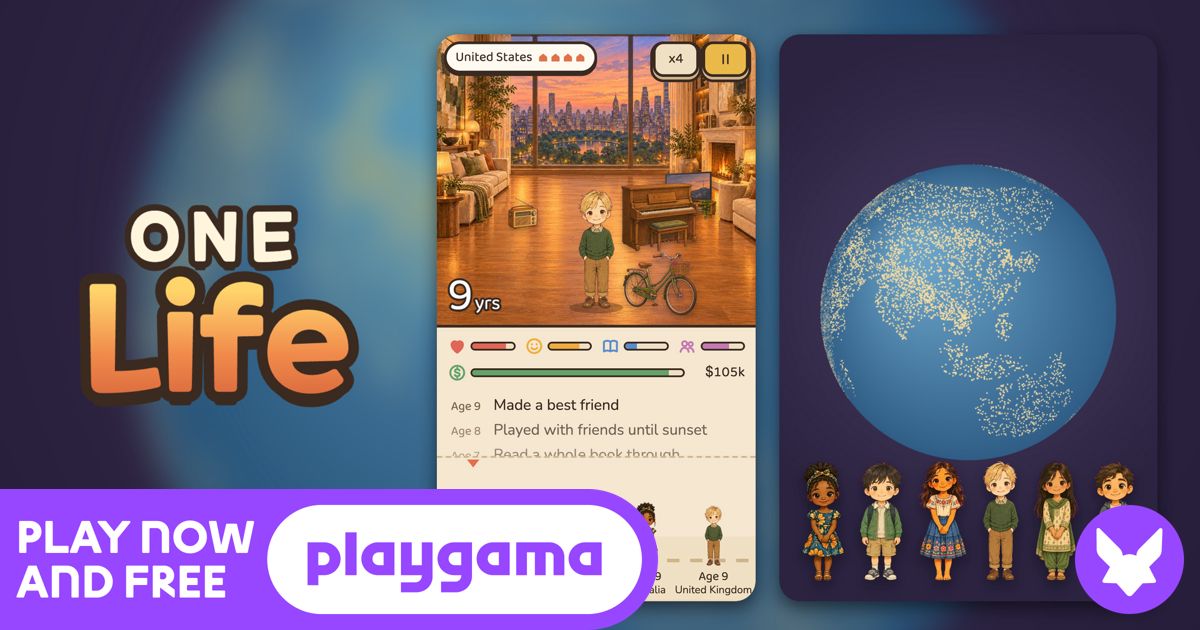
[Browser] One Life: Reborn Simulator, plus a dumb iPhone sound bug

Playgama One Life — play instantly in your browser. Published with #PlaygamaMCP playgama.ai
preview

Another small game of mine had no sound at all on iPhone in the app version and I only found out because someone finally played it on one. The iOS web view gives back status 0 for local files. My audio loader read status 0 as file not found, so it quietly threw out every sound. Web version was fine the whole time

Fixed that and put a volume slider in settings while I was in there

If you saw One Life: Reborn Simulator here earlier this month, same dev. Birth country rolled from UN 2024 birth stats across 124 countries, no rerolls, free with ads

playgama.ai/play/7hersnnnxaqs5l

0

Nijimiss.moe (Misskey instance) appears to be back

preview

Nijimiss.moe (Misskey instance) appears to be back

#isitdown #fediverse #misskey

Yesterday Newsboat started picking my feeds from there, and today tried browsing a little and seems to work normally.

The status page however, like in the previous post, still shows as being in maintenance.

Nijimiss.moe (Misskey instance) appears to be back

#isitdown #fediverse #misskey

Yesterday Newsboat started picking my feeds from there, and today tried browsing a little and seems to work normally.

The status page however, like in the previous post, still shows as being in maintenance.

0

US could lose measles-free status soon as RFK Jr’s pushes anti-vaccine agenda

the Guardian ‘A tremendous step backwards’: US could lose measles elimination status under RFK Jr’s leadership www.theguardian.com
preview

Country is in the middle of worst measles outbreak since 1991, with more than 5,400 cases nationally

The United States could lose its measles elimination status this week, an event likely to cement health secretary Robert F. Kennedy Jr’s legacy of meddling in vaccine policies amid the worst outbreak of the virus in the US in 35 years.

If the US loses its measles-free status, it would join Canada and several European and Asian nations that had eliminated the disease only for it to return.

“That is a tremendous step backwards,” said Dr Paul Offit, director of the Vaccine Education Center, an attending physician in the division of infectious diseases at Children’s Hospital of Philadelphia, and a prominent critic of Kennedy.

A panel of eight independent experts will consider the epidemiological evidence in Washington DC, part of a group called the Pan American Health Organization (PAHO), a regional branch of the World Health Organization (WHO). The PAHO director will make the final call.