0

preview
Interesting review of the X4 pro. I really liked the nuance they gave vs all the positive reviews you see online.
Interesting review of the X4 pro. I really liked the nuance they gave vs all the positive reviews you see online.


Alt: das Panzer im See Maimaiformat Text: Oh Panzer im See, was ist Eure Weisheit?
Die Bundeswehr ist ein Scheißverein.
Darunter ein Bildschirmschuss von einem Artikel laut dem 72% der Rekrutinnen und 31% der Rekruten sexuelle Belästigung erfahren.
Also, nicht dass der Laden sonst kühl wäre…
Alt: das Panzer im See Maimaiformat Text: Oh Panzer im See, was ist Eure Weisheit?
Die Bundeswehr ist ein Scheißverein.
Darunter ein Bildschirmschuss von einem Artikel laut dem 72% der Rekrutinnen und 31% der Rekruten sexuelle Belästigung erfahren.
Also, nicht dass der Laden sonst kühl wäre…

Interesting review of the X4 pro. I really liked the nuance they gave vs all the positive reviews you see online.
Interesting review of the X4 pro. I really liked the nuance they gave vs all the positive reviews you see online.
Info about getting a Sony GDM-1960/GDM-1961 usable on a regular (SVGA) computer.
This used to be mirrored several places, it seems archive.org is the last one remaining.
Info about getting a Sony GDM-1960/GDM-1961 usable on a regular (SVGA) computer.
This used to be mirrored several places, it seems archive.org is the last one remaining.


This is a major humiliation for Min Aung Hlaing.
This is a major humiliation for Min Aung Hlaing.


On November 3, WebKit announced Adaptive Dark Mode in Safari 27.3 beta. When a user enables it, Safari can analyse a predominantly light website and transform it into a dark appearance. It adjusts backgrounds, text, gradients and certain graphics while trying to preserve usability and contrast.
On November 3, WebKit announced Adaptive Dark Mode in Safari 27.3 beta. When a user enables it, Safari can analyse a predominantly light website and transform it into a dark appearance. It adjusts backgrounds, text, gradients and certain graphics while trying to preserve usability and contrast.


I’m eating muffins, sitting in my sofa, watching anime. But I’m so tired I feel nauseous. I’d go to my bed, but I wanna keep eating muffins. I also have to pee but then I’d have to leave the muffins and give up on going to bed.
Can somebody please just SLAP my depressed face so that I do something?
I’m eating muffins, sitting in my sofa, watching anime. But I’m so tired I feel nauseous. I’d go to my bed, but I wanna keep eating muffins. I also have to pee but then I’d have to leave the muffins and give up on going to bed.
Can somebody please just SLAP my depressed face so that I do something?

cross-posted from: lemmy.ml/post/55188993
From Names to Numbers: The Origins of the U.S. Numbered Highway System by Richard F. Weingroff, Information Liaison Specialist, Federal Highway Administration
Map of the final U.S. Highway system as approved November 11, 1926 (8,972 × 5,851 pixels, file size: 18.59 MB)






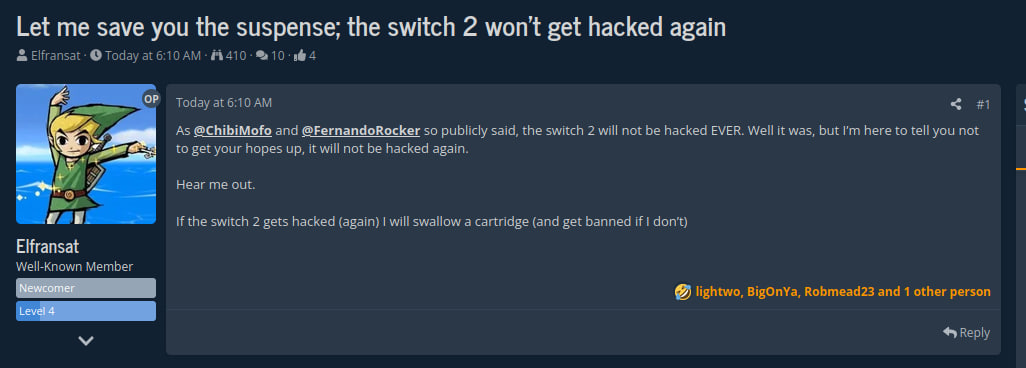
I’d imagine it’s a troll post, but in case not, worth noting, futurology only works until it doesn’t.
Or rather, it only works at normalizing a future not yet decided.
There are #consolemods still being released for decades old devices. You can never know when someone finds an entry point, even if by pure accident. And with AI accelerating things and movements for right to ownership and right to fix gaining traction, possibilities can be tested ever faster and ever less worried about legal implications, contrary pushes feeling more like death throes rather than proper pushes.
And back at the opening, Nightwish’s song Élan comes to mind. =)


I heard that SailfishOS is a good Linux mobile distro. Does anyone use it? How’s the experience?
I heard that SailfishOS is a good Linux mobile distro. Does anyone use it? How’s the experience?
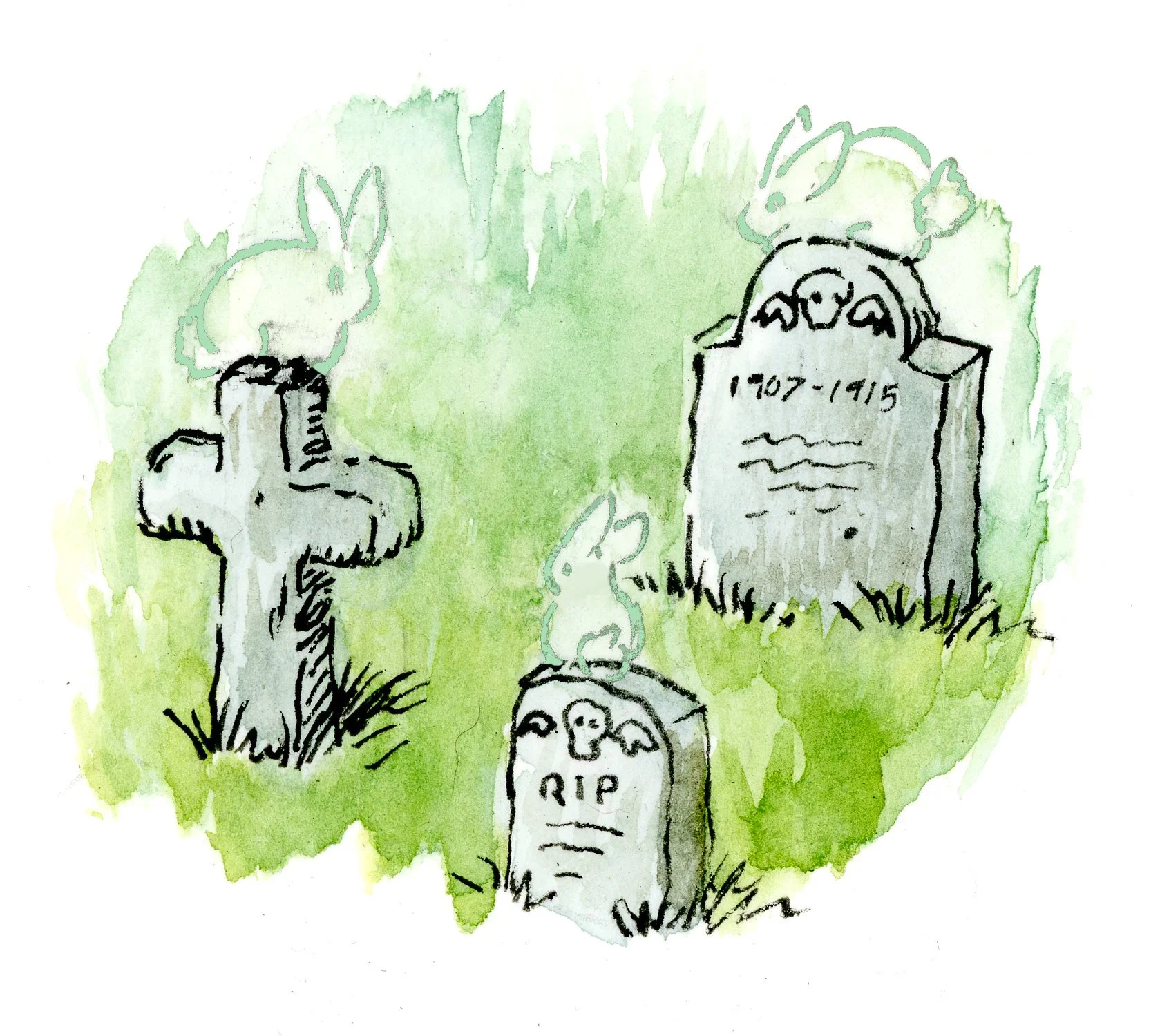
Source: The Bunny Archives
Source: The Bunny Archives


Ah! This explains why I feel nothing when I pray… it’s because of the Nephalim bloodline!
Ah! This explains why I feel nothing when I pray… it’s because of the Nephalim bloodline!


cross-posted from: programming.dev/post/59258877
I have been developing Micron, a lean, statically typed, modular systems programming language that combines Oberon’s simplicity and explicit module structure with C’s low-level capabilities and interoperability.
The goal is to use the same language for boot code, device drivers, an operating system kernel, and ordinary applications, without requiring a garbage collector or routing machine access through a separate, unchecked system dialect. Micron supports explicit memory layouts, signed and unsigned integer types, pointer operations, and direct calls to C without wrappers.
One of its central design choices is language levels. Each module declares the level and thus the feature it needs, ranging from code that requires neither stack nor heap to garbage-collected objects. A module can import only modules at the same or a lower level. For example, a kernel module declared at level 1 cannot accidentally acquire a dependency on heap allocation through an import.
Other features include generic modules, structural interfaces, and compile-time procedures. Much of what would require a preprocessor in C is expressed through typed language features.
There is a working compiler, interpreter, and IDE, along with a free textbook. The book explains both how the language works and the reasons behind its design. Its systems-programming section walks through a port of Wirth and Gutknecht’s Project Oberon operating system to Micron, cross-compiled and linked into a single executable that runs on an emulated RISC-V machine.
The examples also include ports of a Smalltalk-80 VM, Scheme 9, and the original P4 Pascal compiler. The compiler and interpreter implement the language specification; native backends and tooling are still work in progress, and the current native code generation prioritises simplicity over optimisation.
Implementation, examples, and Linux binary: github.com/rochus-keller/Micron
Textbook PDF: software.rochus-keller.ch/micron-textbook.pdf
Language specification: github.com/…/The_Micron_Programming_Language_Spec…
I’m the designer and implementer, and interested in feedback on the language design, particularly the language-level approach to making runtime dependencies explicit, and on its usefulness as an alternative to C.





Linux doesn’t deserve this
Imagine taking the lightweight, privacy-focused appeal of Linux and completely ruining it by hardwiring AI models straight into the OS. Nobody is switching from Windows for more forced AI features.
Linux doesn’t deserve this
Imagine taking the lightweight, privacy-focused appeal of Linux and completely ruining it by hardwiring AI models straight into the OS. Nobody is switching from Windows for more forced AI features.