


0
0

YouTube
Modos Paper Monitor Typing Demo
www.youtube.com


Illustration on the cover of the 1958 book Danny Dunn and the Homework Machine by Jay Williams and Raymond Abrashkin.
I recently read this book. It still holds up!
Illustration on the cover of the 1958 book Danny Dunn and the Homework Machine by Jay Williams and Raymond Abrashkin.
I recently read this book. It still holds up!


Loading… archive.ph/wip/suURa
Loading… archive.ph/wip/suURa
So im trying to write some rules for my next playthrough to force myself not to use my go to strategies. My main goal is to keep any one cash crop or other money maker from scaling up enough to take over the whole farm. I’m leaning towards 24 as a numerical limit for several things for a few reasons. Groups of 24 can be divided (into rows and columns) in many different ways, it lines up well with multiple existing mechanics, and sets a constraint that’s not too tight in the early game but still rules out things like ginger ancient fruit island or factory farmed truffle pigs. What i have so far is:
I can grow no more than 24 of any one plant at a time. This is the area of three quality sprinklers or one iridium. Im hoping this limit will make me use less desirable plants I would usually ignore. Im also going to apply this to fruit trees and to planted wild trees as a limit on a mushroom log forest. (That might seem like a lot of mushrooms but it is less than I’ve been doing.)
No more than 24 barn animals and 24 coop animals and no more than 4 of each animal in any barn or coop. A limit on expansion and something to plan my selection of animals around.
No more than 24 fish ponds and no more than 1 pond of any type of fish. This is where im worried 24 might be too high a limit but the number of fish that are that profitable to farm for roe is a lot less than 24. If there’s a reason to farm that many its the wide variety of other items they can drop like geods, seeds, pearls, etc.
No more than 24 of any consumable when I enter the mine or caverns. Farewell 900 life elixers and bombs. See you at 1:50 am. Take care of all the staircases. Im hoping that this will untrivialize the combat.
What do people think? Are there any big areas of the game im missing? Im not sure I want to limit foraging or fishing. They don’t have a game dominating strategy like farming and they don’t get way easier like the caverns with limitless healing.

A pioneering California law meant to sharply limit use of the familiar “chasing arrows” recycling symbol has been blocked by a federal judge who said it probably violates the First Amendment.
In a preliminary injunction issued earlier this month, U.S. District Judge William Hayes halted enforcement of SB 343 after food, packaging and retail groups sued, finding that key provisions were “unconstitutionally vague” and likely infringed protected commercial speech. Enforcement of the law, passed in 2021, was expected to start this fall.
The decision is a blow to environmental advocates, who had hoped to remove the familiar symbol from a huge array of plastic products, in line with a statewide study showing that only a fraction are widely collected and actually recycled. SB 343 said only goods and packaging accepted by recycling programs serving at least 60 percent of Californians and then actually sorted for recycling — not collected and thrown away — could bear the chasing arrows.
Hayes’ constitutional reasoning surprised supporters of SB 343 because similar arguments against environmental marketing regulations have historically struggled in court.
About 90 seconds into a three-minute hug with a stranger, I began to think that dying alone might not be so bad after all. I’d come to a candlelit loft in Manhattan for a “mindful singles event” called The Feels, which was designed to be the opposite of the disembodied experience of dating apps. Participants, phones tucked away, paired up and attempted a series of “somatic awareness” exercises, including staring into each other’s eyes, hugging, and holding a hand over each other’s heart.
We’d been warned that discomfort is part of the process. A facilitator had reminded us that, as long as consent and respect are involved, a little uneasiness opens the door to vulnerability. Having paid $100 for a process advertised as “better relating”—informed by Carl Jung and the Buddha and the body’s “infinite wisdom”—participants were motivated to agree. And many of us, more by circumstance than by choice, were already experts in exiting our comfort zone. We’d spent years meeting strangers, opening ourselves to judgment, scrounging for conversation topics, worrying about our outfits, gargling mouthwash in the office—but we still hadn’t found what, or whom, we wanted. We came ready to get to work.
The mere existence of The Feels, which hosts events in cities across the United States, suggests that we are living in a time of romantic plenty. In New York City, I could go to a dating event every night of the week. I could use a matchmaking service, or talk with a dating coach, or sign up for one of the many newsletters trying to bring back personal ads. Even if I didn’t live in a major city, I’d have dating apps to choose from: not only Tinder and Hinge but a zillion others—platforms for farmers, gamers, single parents, cannabis enthusiasts, and members of the gluten-free community. I have four apps in my current rotation; as I write this, one of them has 317 message threads and 455 “likes” that I need to evaluate.
And yet, despite the bounty of possibility, we are living through a great romance slump. Romance is a broad term, of course. Traditionally, it manifests in the thrill of sex, the devotion of long-term partnership, or the ritual of courtship, including the act of hope that is a first date. But all of those manifestations are becoming less common in the U.S., especially among young people.

tags: One-Punch-Man ; Dr-Bofoi ; i-got-it ; youre-so-right
tags: One-Punch-Man ; Dr-Bofoi ; i-got-it ; youre-so-right

New release for 9front. Haven’t given it a go myself but have always wanted to give a plan9 derivative a try.
New release for 9front. Haven’t given it a go myself but have always wanted to give a plan9 derivative a try.

The idea is that because an EV doesn’t have an engine/transmission, it doesn’t really need a hood. So the idea is that you simply remove the hood and making all that space “interior” space instead. This technically would reduce design complexity and allow for access while inside the vehicle, minimizing aerodynamic drag, and maximizing interior volume. Would this even be possible?

The idea is that because an EV doesn’t have an engine/transmission, it doesn’t really need a hood. So the idea is that you simply remove the hood and making all that space “interior” space instead. This technically would reduce design complexity and allow for access while inside the vehicle, minimizing aerodynamic drag, and maximizing interior volume. Would this even be possible?

discogs.com/…/8846256-Stanley-Turrentine-Sugar
Stanley Turrentine - tenor saxophone
Ron Carter - bass
Richard Landrum - congas
Billy Kaye - drums
Butch Cornell - organ
George Benson - guitar
Freddie Hubbard - trumpet
discogs.com/…/8846256-Stanley-Turrentine-Sugar
Stanley Turrentine - tenor saxophone
Ron Carter - bass
Richard Landrum - congas
Billy Kaye - drums
Butch Cornell - organ
George Benson - guitar
Freddie Hubbard - trumpet

Von Augsburg aus einen Besuch wert.
Von Augsburg aus einen Besuch wert.


foam mat roll, exactly like this, from harbor freight (or wherever).
cut it into squares or narrow strips, or micro(for easier packing).
why: save your butt. softer than sitting on rocks, gravel, or concrete.
benefit: cheap, light, effective.
cons: easy to forget (thus leave/lost risk) , often packs awkwardly.
*tip: large pieces double as shading tool eg when walking in the sun.




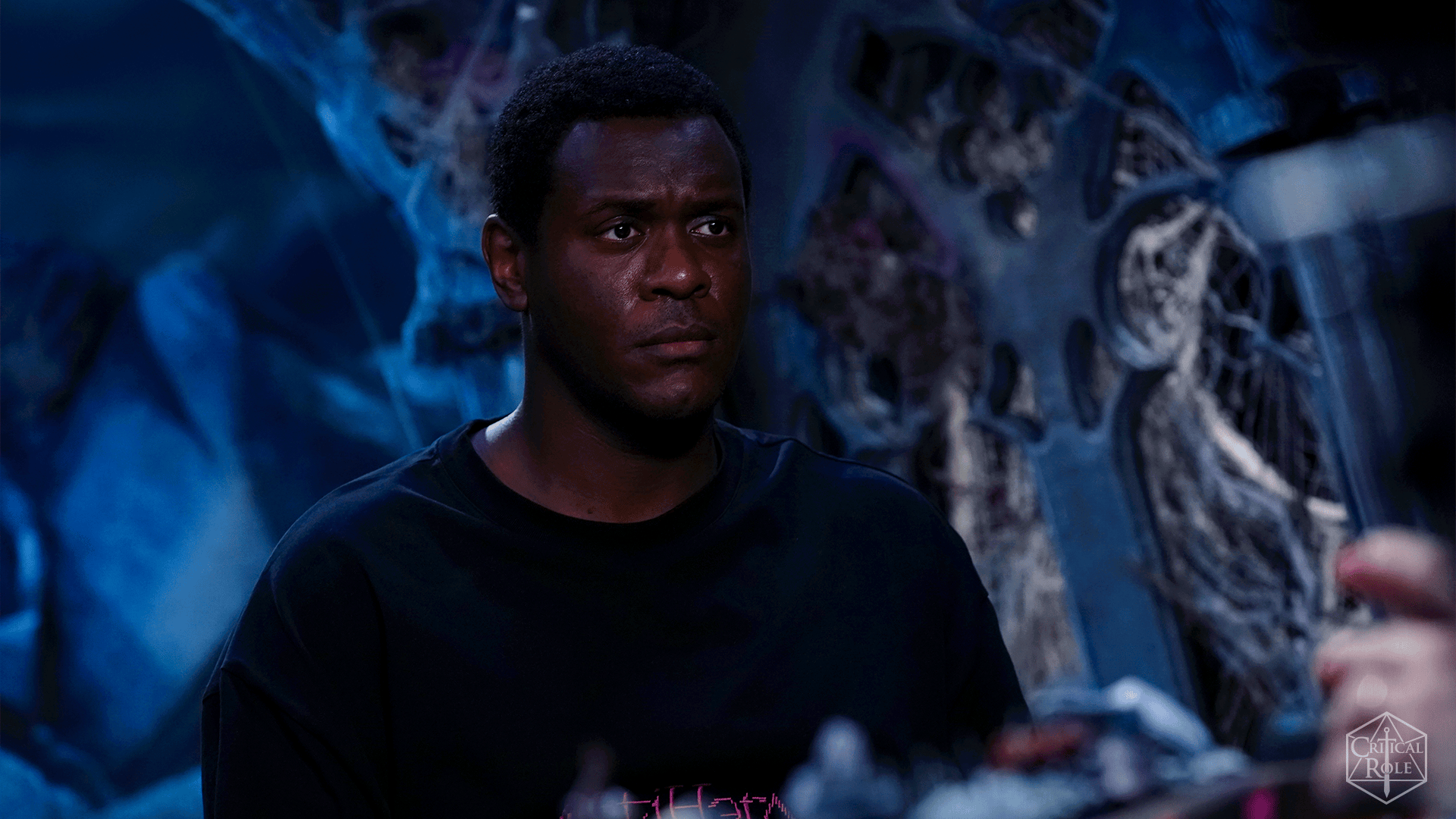
Please note that these broadcasts are only scheduled for the times listed below.
Baradun and the Dickheads return, and this time they have landed in Daggerheart! What begins as a light-hearted adventure in the Beast Feast campaign frame, filled with bizarre creatures & questionable cooking, soon reveals a much darker mystery.
Ashley Johnson and Taliesin Jaffe deep dive into their lives as the Weird Kids! This is a formal invitation to all the misfits, outcasts, and weirdos to take a seat at our table and join these former child actors as they embrace their unique upbringings and celebrate all things weird and wonderful.
All the twists and turns of an episode of Critical Role in half the time! In Critical Role Abridged, the rich tapestry of a Critical Role campaign is lovingly distilled to its most pivotal, hilarious, and poignant moments in about 60-90 minutes per episode.
It’s time to make the GM scary again! Jeremy Crawford breaks down Fear, Daggerheart’s GM-side currency: where it builds from, what it buys you at the table, and why a Fear-free game is a game with nothing on the line.
Season 3
Yet again, the Ship’s crew of cosmic explorers have discovered something they never set out to find. Their desperate attempt to get back on course has only pulled them deeper into the maze of reality, where new threats and revelations await them behind every door. Even if they somehow manage to make it back home… who will they be by the time they get there?
Follow five misfits seeking solace within the mysteries of a new region: The Sallowlands. This swathe of cracked badlands holds secrets that could lead them to salvation – or into the jaws of ancient horror.
This all-new, six-part Daggerheart mini-series will be led by Game Master Matthew Mercer as he brings players Laura Bailey, Jennifer English, Abubakar Salim, Vico Ortiz, and Zachery Renauldo through a brand new standalone adventure!
Episode 5
Get a backstage pass to Age of Umbra: Sallowlands! You’ll be right there at the table immediately after Matt says “Is it Thursday yet?”, experiencing the cast’s post-show reactions.

cross-posted from: lemmy.today/post/57659755
cross-posted from: lemmy.today/post/57659755


Missão demonstrou a capacidade técnica de interceptar e, eventualmente, desviar rochas espaciais potencialmente perigosas para a Terra
Missão demonstrou a capacidade técnica de interceptar e, eventualmente, desviar rochas espaciais potencialmente perigosas para a Terra

(Melodic) black metal from Freiburg, Germany
(Melodic) black metal from Freiburg, Germany

link to open access paper www.pnas.org/doi/10.1073/pnas.2603077123
DAS is a fiber-optic measurement technique that uses coherent Rayleigh backscattering to record strain along the fiber with high spatial and temporal resolution. The method is based on phase measurements of the Rayleigh backscattering to capture the strain field along a fiber at timescales controlled by the kilohertz laser pulse repetition rate (12). DAS has traditionally been used to study high-frequency signals (4, 13, 14). More recent work has demonstrated that it can also resolve significantly lower-frequency variations (15–17).
In the marine environment, low-frequency strain variations (0.01 to 0.1 Hz) may arise from a range of physical mechanisms, including hydrodynamic processes associated with moving objects. The displacement of water generated by moving whales and ships induces a moving hydrodynamic pressure field that extends through the water column, dynamically loading and unloading the seafloor. This varying pressure field causes the seafloor sediments to deform both vertically and laterally. When the fiber is buried in sediments, the DAS system primarily records the resulting lateral deformation of the surrounding material. Hydrodynamic pressure fluctuations produced by ocean waves have already been extensively studied (18–21). However, for more detailed characterization of pressure signals, dedicated pressure sensors are often employed. For example, Stenvold et al. (22) demonstrated that high-precision seabed pressure sensors can detect subtle pressure variations, highlighting their potential for hydrocarbon reservoir monitoring. Related studies have also explored acoustic and hydrodynamic signals generated by moving objects. Hegna (23) investigated how acoustic wavefields generated by moving vessels, recorded by towed streamers or ocean-bottom sensors, can be used to image the subsurface. Another study by Werner and Landrø (24) investigated the hydrodynamic pressure field generated by a buoy moving through the water column, while Scarpa et al. (25) used pressure sensors to measure ship wakes in Venice, Italy, and assess their impact on the lagoon.
The pressure field associated with ship-generated Kelvin wakes typically contains frequencies between 0.1 and 0.4 Hz (26–28). Buisman and Thiem (29) investigate hydrodynamic signals from ships recorded with different DAS configurations in both very shallow and deeper water settings, down to 58 m. In very shallow water, they report low-frequency signals attributed to ship wakes, including contributions from bow and stern waves within the Kelvin wake system. In deeper water, they observe even lower-frequency signals, which they describe more generally as “ship-induced water waves,” without drawing a firm conclusion on whether these arise from the Kelvin wake or from other displacement-driven processes. In this study, we present observations of ship- and whale-generated signals from a DAS installation in Svalbard, where the recorded signatures fall within the same low-frequency band as those observed in the deeper-water setting of Buisman and Thiem. Building on these earlier observations, we introduce a theoretical framework that explains the origin of these signals.
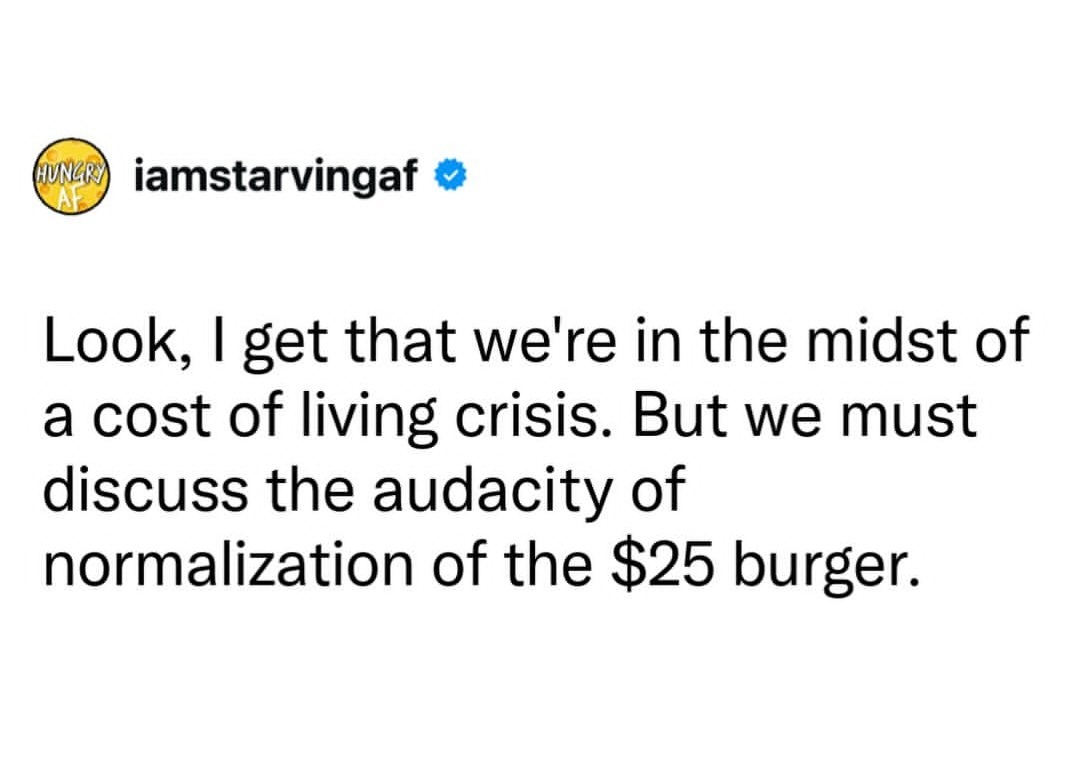
cross-posted from: reddthat.com/post/70567049
cross-posted from: reddthat.com/post/70567049
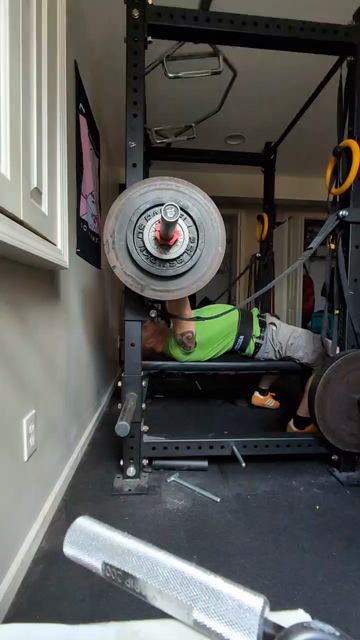
cross-posted from: lemmy.ml/post/50916806
Relatively easy single!
cross-posted from: lemmy.ml/post/50916806
Relatively easy single!
cross-posted from: lemmy.ml/post/50916806
Relatively easy single!
cross-posted from: lemmy.ml/post/50916806
Relatively easy single!
cross-posted from: lemmy.ml/post/50916806
Relatively easy single!
cross-posted from: lemmy.ml/post/50916806
Relatively easy single!

Des idées :)
Des idées :)

Bref, je suppose qu’on va voir le jura cramer à présent.
Bref, je suppose qu’on va voir le jura cramer à présent.

Pendant que Marseille investissait 550 millions d’euros dans la rénovation du Stade Vélodrome, ses piscines municipales vieillissaient et fermaient les unes après les autres. Dans cette ville tournée vers la mer, un enfant sur deux arrivait encore au collège sans savoir nager en 2018. Retour sur 40 ans de retard, de promesses et de difficultés à entretenir un service public essentiel.
Pendant que Marseille investissait 550 millions d’euros dans la rénovation du Stade Vélodrome, ses piscines municipales vieillissaient et fermaient les unes après les autres. Dans cette ville tournée vers la mer, un enfant sur deux arrivait encore au collège sans savoir nager en 2018. Retour sur 40 ans de retard, de promesses et de difficultés à entretenir un service public essentiel.


TLDR: Statists measure success based on the state, so in order to convince them that anarchism us successful we would need to stop being anarchists.
“For anarchists who do know something about anthropology, the arguments are all too familiar. A typical exchange goes something like this:
Skeptic: Well, I might take this whole anarchism idea more seriously if you could give me some reason to think it would work. Can you name me a single viable example of a society which has existed without a government?
Anarchist: Sure. There have been thousands. I could name a dozen just off the top of my head: the Bororo, the Baining, the Onondaga, the Wintu, the Ema, the Tallensi, the Vezo…
Skeptic: But those are all a bunch of primitives! I’m talking about anarchism in a modern, technological society.
Anarchist: Okay, then. There have been all sorts of successful experiments: experiments with worker’s self-management, like Mondragon; economic projects based on the idea of the gift economy, like Linux; all sorts of political organizations based on consensus and direct democracy…
Skeptic: Sure, sure, but these are small, isolated examples. I’m talking about whole societies.
Anarchist: Well, it’s not like people haven’t tried. Look at the Paris Commune, the revolution in Republican Spain…
Skeptic: Yeah, and look what happened to those guys! They all got killed!
The dice are loaded. You can’t win. Because when the skeptic says “society,” what he really means is “state,” even “nation-state.” Since no one is going to produce an example of an anarchist state—that would be a contradiction in terms—what we’re really being asked for is an example of a modern nation-state with the government somehow plucked away: a situation in which the government of Canada, to take a random example, has been overthrown, or for some reason abolished itself, and no new one has taken its place but instead all former Canadian citizens begin to organize themselves into libertarian collectives. Obviously this would never be allowed to happen. In the past, whenever it even looked like it might—here, the Paris commune and Spanish civil war are excellent examples—the politicians running pretty much every state in the vicinity have been willing to put their differences on hold until those trying to bring such a situation about had been rounded up and shot.”

Want to go on a long vacation but don’t want to pay for hotel and meals? With this one simple trick you can get those costs waived.
Once you leave Heathrow, take out your ‘i support Palestine action’ sign and walk around.
That’s a secret phrase that gets you a few months of free room and board. Someone will come by to take you to your new hotel.
Accommodations arent a 5 star hotel, but definitely better that your standard Motel6. People like it so much they stay for months.

Tous rapports avec les récents évènements un peu partout en Europe est totalement fortuit ;)
Tous rapports avec les récents évènements un peu partout en Europe est totalement fortuit ;)


Spoiler tag your answers in case others want to guess.
Long story short, I’ve been teaching myself a little bit of coding, trying to script kiddie patch openWRT’s frankly ludicrous DFS handling. I did succeed there! At least enough for my needs.
But then I was bored at work, and I have an AP that I added to extend the Wi-Fi to the back corner of the shop (cinder block walls). So I decided to tinker with it.
Pointless, but fun! And educational!
Edit: AP is an EX6120 from Netgear. Basically e waste, especially it’s stock firmware that requires an external account to configure 😵💫 I saved it from the trash. Plenty good enough for its purpose.

I have a very lovely friend who gathered us together for a night of learning how to bead. It was one of the most relaxing crafts I’ve tried, and far more forgiving than I thought it would be.
Long story short, I ordered fifty bucks worth of beading supplies the next day.
I have a very lovely friend who gathered us together for a night of learning how to bead. It was one of the most relaxing crafts I’ve tried, and far more forgiving than I thought it would be.
Long story short, I ordered fifty bucks worth of beading supplies the next day.

I kept meaning to pick up my rubber bands for all the things I need to put rubber bands around, but I kept forgetting.
Today I realized that I have string and I have buttons; therefore I can make this thing to put the things in that I would have formery put inside of rubber bands.
Does anyone know what this kind of tie is called?
Displayed is the Gregg shorthand form for taken.
Also displayed is my dog, the back of the condos where I’m considering planting wild raspberry bushes, and a Brazilian mate cup (pronounced:mah-tay). I purchased it with Brazilian yerba before I understood the differences between Argentine and Brazilian mate. Brazilian mate is a lot finer, and I prefer Argentine. I had started using metal mates because I would constantly leave the yerba leaves in the natural gourd and they would never get a chance to dry out; this would encourage bacterial growth which was a hassle to clean out, but I realized that I have since acquired TWO natural gourd mates and can alternate between them, giving them time to dry.
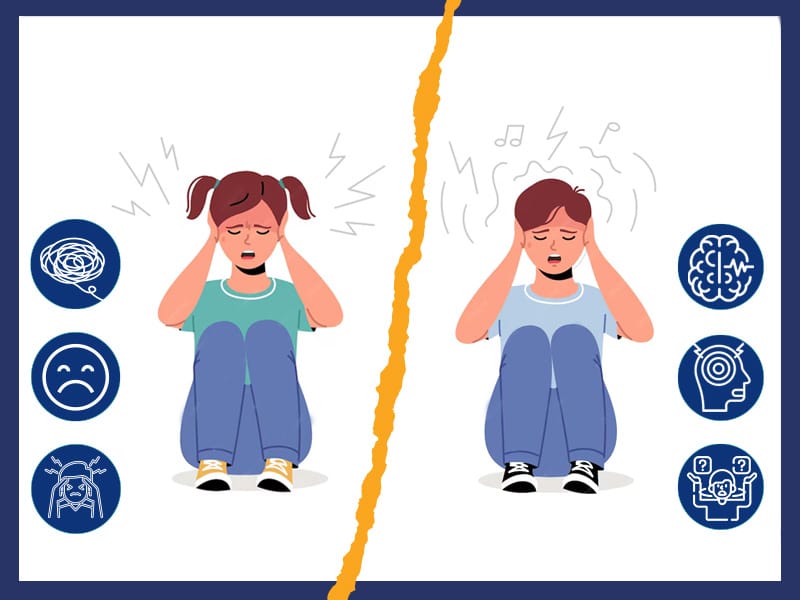
Found this article posted to another community, and thought to cross post it here.
The gist of the article is that girls suffer in silence because they don’t match the profile of boys with ADHD, but i found myself relating to it very much, even though I’m not a girl, and my parents did know pretty early.
Key Paragraph:
And like many other issues regarding mental health, hiding only makes it worse. The effort to perform as neurotypical is more common among girls and begins in early adolescence. A girl will study how other kids behave and copy it, suppressing the urge to move and turning a fear of mistakes into perfectionism that, from the outside, reads as being a strong student. The research on the cost is consistent: higher camouflaging tracks with greater anxiety, depression, and lower quality of life. By June, the reserves are gone, and the mask that is held through every class period tends to shatter the moment she feels safe, usually at home.
So i spent my childhood trying to fit in but also be myself. My parents were pretty sure i had ADD (inattentive) by first grade, because I was a boy, and i didn’t really pay attention in normal ways and never really understood why i should do what everybody else was doing in school, or even notice that it was time to do that.
But as I grew up and especially in high school, i tried my best to work super hard and try to be smart and get good grades (one of my biggest innovations was to do my homework on the bus every day before i got home from school and got distracted) but also i got in the habit of guilt tripping myself to get work done, “stop being lazy, etc.,”
This worked until it didn’t and i burn out pretty hard and got pneumonia as my body physically collapsed under the pressure of junior year. I’d say that set the tone for my life since then – try to do a good job, lose energy and fail.
My life recently has been about trying to relearn how to be productive and still be true to myself while also dealing with all the baggage from trying to force myself to achieve good grades and do the best i could.
Can anyone relate to this broadly? Have you found anything to help you understand it or overcome it?