0

Testing Markdown Lists

preview

I noticed some weird behavior with markdown lists, so I’m testing a few things.

Unordered list

  • item1
  • item2
  • item3

Single unordered list item

  • item1

Ordered list

  1. item1
  2. item2
  3. item3

Single ordered list item

  1. item1

Ordered list items inside unordered list

    1. item1
    1. item2
    1. item3

Single ordered list item inside unordered list

    1. item1

Unintended ordered list item (should say 16. Juli)

  1. Juli

Unintended ordered list items (should say 16. Juli, 10. August, 18. September (date formats))

  1. Juli
  2. August
  3. September

Unintended ordered list items in unordered list (should say 16. Juli, 10. August, 18. September (date formats))

    1. Juli
    1. August
    1. September

I noticed some weird behavior with markdown lists, so I’m testing a few things.

Unordered list

  • item1
  • item2
  • item3

Single unordered list item

  • item1

Ordered list

  1. item1
  2. item2
  3. item3

Single ordered list item

  1. item1

Ordered list items inside unordered list

    1. item1
    1. item2
    1. item3

Single ordered list item inside unordered list

    1. item1

Unintended ordered list item (should say 16. Juli)

  1. Juli

Unintended ordered list items (should say 16. Juli, 10. August, 18. September (date formats))

  1. Juli
  2. August
  3. September

Unintended ordered list items in unordered list (should say 16. Juli, 10. August, 18. September (date formats))

    1. Juli
    1. August
    1. September

0

Was letzte Informationsfreiheit

Ulrich Kelber auf bonn.social: »Kanzleramtsminister Frei hat im Interview mit der ZEIT behauptet, es gäbe Anfragen nach dem #Informationsfreiheitsgesetz, die Kosten von „gar einigen Hunderttausend Euro“ verursachen. Da er solche Behauptungen doch bestimmt nicht ohne Grund und Beispiele aufstellt, habe ich beim Bundeskanzleramt eine #IFG-Anfrage gestellt. Man möge mir bitte alle Dokumente und interne Kommunikation zu solchen Beispielen zusenden #faktencheck«

preview

bonn.social/@ulrichkelber/116928743668855173


Mastodon-Tröt und 2 Antworten. Transkript:

Ulrich Kelber (@ulrichkelber@bonn.social) Kanzleramtsminister Frei hat im Interview mit der ZEIT behauptet, es gäbe Anfragen nach dem #Informationsfreiheitsgesetz, die Kosten von „gar einigen Hunderttausend Euro“ verursachen. Da er solche Behauptungen doch bestimmt nicht ohne Grund und Beispiele aufstellt, habe ich beim Bundeskanzleramt eine #IFG-Anfrage gestellt. Man möge mir bitte alle Dokumente und interne Kommunikation zu solchen Beispielen zusenden #faktencheck
[16. Juli 2026, 08:37 · 268 × geteilt · 5 × zitiert · 427 × favorisiert]

Antwort von Dieu: kostet bestimmt 1 Million, Rechnung kommt!

Antwort von Ulrich Kelber: maximal 500€ ist mir die erwartete Nicht-Antwort allemal wert :-)

0

Found on hexbear where it was found on reddit

preview

When I was living in Austin TX I had a full beer thrown at me from a lifted truck. I was just walking, and he screamed “Get a job you homeless piece of shit”. If he was smart enough to get his truck to roll coal he would have done that too. I was pissed. Flipped him off. Full fight mode. Bro pulled into the parking lot of a nearby strip mall but sped off when he realized I was serious about fighting him. I was absolutely serious, and would have died in that parking lot if that was what God willed. Here’s the thing though, I had a car, a nice car, a brand new sports car even. I had a job, a good job, a side hustle, and I was doing drops, which means I was the plug son. I paid rent. By every metric I was not the person he was trying to target. I was just walking to the Planet K that wasn’t even a half-mile from my apartment complex. Normal shit. Walking is a revolutionary act. Because I was walking I was seen as less than, unhuman. It was a deeply radicalizing thing.

I haven’t had a car in over two years. I walk everywhere, dozens of miles a week. Gas prices should be like 11 dollars a gallon, I don’t give a fuck.

reddit.com/…/the_comments_on_any_video_involving_…

0

Behind Bars: survey reveals exploitation & violence in Chinese prisons

Behind Bars: survey reveals exploitation & violence in Chinese prisons safeguarddefenders.com
preview

cross-posted from: lemmy.sdf.org/post/56178607

Archived

Report downloads in English (pdf) and in Chinese (pdf).

This publication is a sister report to Behind Bars: A Survey on Detention Centre Conditions in China (in English, pdf), which follows the same survey, interview and case study format to look at human rights failings in the country’s detention system.

[…]

To mark Mandela Day this weekend, Safeguard Defenders is releasing a new study that reveals exploitative working conditions, political coercion and physical and psychological abuse in China’s sprawling prison system.

Behind Bars: a survey on prison conditions in China, based on a survey of 59 former prisoners, paints a grim picture with respondents describing abuses and violations of both international law and Chinese law and regulations. Its findings should be a stark reminder for foreign governments considering security agreements or extradition arrangements with Beijing that such cooperation is incompatible with fundamental human rights principles.

Mandela Day, held on 18 July (on Nelson Mandela’s birthday) honours his life’s work fighting for social justice and human rights. The day is also an important date for prisoner rights—Mandela spent 27 years as a political prisoner in South Africa during the Apartheid years, and the key UN document on the treatment of prisoners was officially renamed the Nelson Mandela Rules in 2015.

[…]

In addition to the survey, Behind Bars also draws on a longform interview with former Australian detainee Matthew Radalj, a comparative analysis of domestic and international law and a case study of a large prison in central China that has been at the heart of recent international allegations of forced labour.

“The truth is that xxx prison is not a prison with factories, but factories with a prison,” one survey respondent wrote, adding, “ In Chinese prisons, guilty and innocent are treated just like animals, with not even basic rights.”

[…]

At a time when China’s authoritarian surveillance state has been deleting sources of public data and made it more dangerous for people to share their testimony, Behind Bars shines a light on what really goes on in Chinese prisons. It is an important addition to the body of research on the widespread rights violations perpetrated on those incarcerated in the country.

With China typically sentencing around 850,000 people to prison time every year in one of their 680+ prisons, the scale of abuse is potentially massive. Estimates put the number of people serving time in China at around 2.34 million, likely making China the country with the largest number of prisoners serving time in the world.

[…]

One respondent wrote, “I was not treated like a human being at all.”

Radalj said that when he was in solitary confinement, he was Tasered “almost on a daily basis” and that he was “chained for the entire 194 days” around his leg.

[…]

The Chinese prison system heavily emphasizes ideological education and expects prisoners to produce thought reports, such as letters of repentance, statements of confession and essays outlining support and praise for the CCP.

More than three quarters of respondents said they had to write thought reports when they were in prison. Education provided for prisoners was more often propaganda in nature and focused on CCP ideological education rather than being vocational in nature and helping them develop skills so they can find work upon release.

Prisoners who refused to write thought reports or whose written works were not deemed sufficiently “politically correct” or remorseful were typically punished, for example by not being able to apply for sentence commutation, having their shopping quota cut, the cancellation or reduction of time for a family visit or phone call and even physical punishment and/or solitary confinement. One respondent said they were denied medical attention because they did not write a confession letter.

[…]

0

Mundur z paczkomatu. MON i InPost ogłosiły współpracę

nextgazetapl Mundur z paczkomatu. MON i InPost ogłosiły współpracę next.gazeta.pl
preview

Czekam na amunicjomat w każdej parafii.

Oraz: czy paczkomaty stały się właśnie zasadnym celem militarnym? 🤔

Czekam na amunicjomat w każdej parafii.

Oraz: czy paczkomaty stały się właśnie zasadnym celem militarnym? 🤔

0

Polish soldiers now able to collect uniforms from parcel lockers

Notes From Poland Polish soldiers now able to collect uniforms from parcel lockers notesfrompoland.com
preview

cross-postowane z: …nuage-libre.fr/…/polish-soldiers-now-able-to-col…

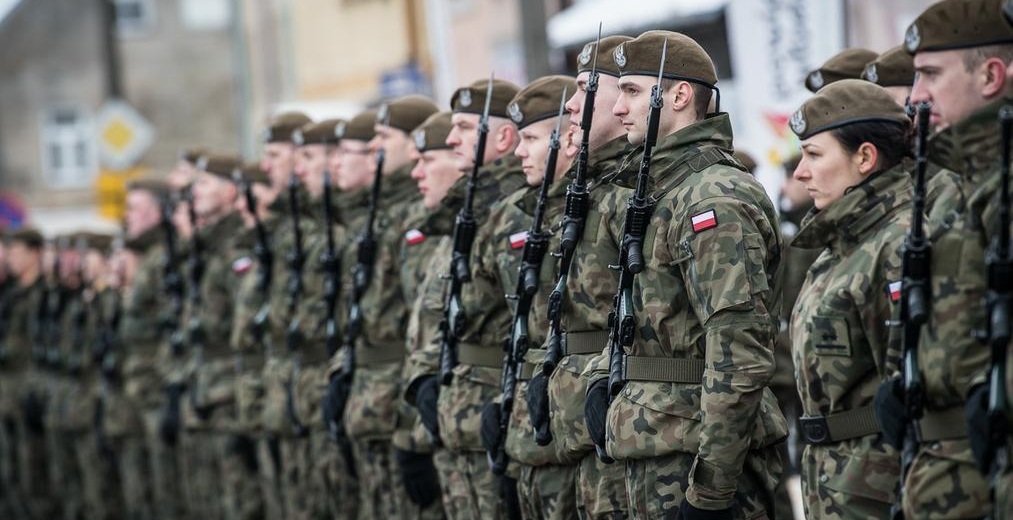
Soldiers in Poland will be able to pick up their uniforms from their nearest parcel locker rather than having to collect them from military stores under a new scheme being rolled out by the armed forces, with private logistics giant InPost responsible for deliveries.

The move is a “simple, practical change” that will make life easier for troops, said a deputy defence minister. The CEO of InPost, which is Europe’s largest operator of parcel lockers, praised the decision to make “dual use” of private infrastructure for national-security purposes.

0

Rentnerpaar (87,88) fährt in den Rostocker Stadthafen und ertrinkt

preview

Auto stürzt am Rostocker Stadthafen in Warnow: Identität der beiden Todesopfer geklärt

Neue Details zum tödlichen Autounfall am Rostocker Stadthafen: Wie die Polizei am Donnerstag (16. Juli) mitteilte, handelt es sich bei den beiden Insassen um ein Rentnerpaar. Der 88-Jährige und die 87-Jährige kämen aus Rostock.

Ihr Auto war am Mittwochnachmittag im Bereich der Haedge-Halbinsel auf Höhe eines Krans ins Wasser gestürzt und innerhalb weniger Minuten gesunken. Taucher bargen zunächst die Leiche der Frau. Als das Auto aus dem Wasser geholt wurde, entdeckten Einsatzkräfte den Mann im Fahrzeug.

Polizei schließt bisher nur Straftat aus

Wie es zu dem Unglück kommen konnte, ist noch unklar. Die Polizei hat ein Todesermittlungsverfahren eingeleitet, um zu klären, ob es gesundheitliche Probleme gegeben hat. Auch ein möglicher Suizid werde geprüft. Denkbar seien ebenso technische Mängel am Auto. Bereits ausgeschlossen werden könne eine Straftat, so ein Polizeisprecher.

0

Behind Bars: survey reveals exploitation & violence in Chinese prisons

Behind Bars: survey reveals exploitation & violence in Chinese prisons safeguarddefenders.com
preview

cross-posted from: lemmy.sdf.org/post/56178607

Archived

Report downloads in English (pdf) and in Chinese (pdf).

This publication is a sister report to Behind Bars: A Survey on Detention Centre Conditions in China (in English, pdf), which follows the same survey, interview and case study format to look at human rights failings in the country’s detention system.

[…]

To mark Mandela Day this weekend, Safeguard Defenders is releasing a new study that reveals exploitative working conditions, political coercion and physical and psychological abuse in China’s sprawling prison system.

Behind Bars: a survey on prison conditions in China, based on a survey of 59 former prisoners, paints a grim picture with respondents describing abuses and violations of both international law and Chinese law and regulations. Its findings should be a stark reminder for foreign governments considering security agreements or extradition arrangements with Beijing that such cooperation is incompatible with fundamental human rights principles.

Mandela Day, held on 18 July (on Nelson Mandela’s birthday) honours his life’s work fighting for social justice and human rights. The day is also an important date for prisoner rights—Mandela spent 27 years as a political prisoner in South Africa during the Apartheid years, and the key UN document on the treatment of prisoners was officially renamed the Nelson Mandela Rules in 2015.

[…]

In addition to the survey, Behind Bars also draws on a longform interview with former Australian detainee Matthew Radalj, a comparative analysis of domestic and international law and a case study of a large prison in central China that has been at the heart of recent international allegations of forced labour.

“The truth is that xxx prison is not a prison with factories, but factories with a prison,” one survey respondent wrote, adding, “ In Chinese prisons, guilty and innocent are treated just like animals, with not even basic rights.”

[…]

At a time when China’s authoritarian surveillance state has been deleting sources of public data and made it more dangerous for people to share their testimony, Behind Bars shines a light on what really goes on in Chinese prisons. It is an important addition to the body of research on the widespread rights violations perpetrated on those incarcerated in the country.

With China typically sentencing around 850,000 people to prison time every year in one of their 680+ prisons, the scale of abuse is potentially massive. Estimates put the number of people serving time in China at around 2.34 million, likely making China the country with the largest number of prisoners serving time in the world.

[…]

One respondent wrote, “I was not treated like a human being at all.”

Radalj said that when he was in solitary confinement, he was Tasered “almost on a daily basis” and that he was “chained for the entire 194 days” around his leg.

[…]

The Chinese prison system heavily emphasizes ideological education and expects prisoners to produce thought reports, such as letters of repentance, statements of confession and essays outlining support and praise for the CCP.

More than three quarters of respondents said they had to write thought reports when they were in prison. Education provided for prisoners was more often propaganda in nature and focused on CCP ideological education rather than being vocational in nature and helping them develop skills so they can find work upon release.

Prisoners who refused to write thought reports or whose written works were not deemed sufficiently “politically correct” or remorseful were typically punished, for example by not being able to apply for sentence commutation, having their shopping quota cut, the cancellation or reduction of time for a family visit or phone call and even physical punishment and/or solitary confinement. One respondent said they were denied medical attention because they did not write a confession letter.

[…]

cross-posted from: lemmy.sdf.org/post/56178607

Archived

Report downloads in English (pdf) and in Chinese (pdf).

This publication is a sister report to Behind Bars: A Survey on Detention Centre Conditions in China (in English, pdf), which follows the same survey, interview and case study format to look at human rights failings in the country’s detention system.

[…]

To mark Mandela Day this weekend, Safeguard Defenders is releasing a new study that reveals exploitative working conditions, political coercion and physical and psychological abuse in China’s sprawling prison system.

Behind Bars: a survey on prison conditions in China, based on a survey of 59 former prisoners, paints a grim picture with respondents describing abuses and violations of both international law and Chinese law and regulations. Its findings should be a stark reminder for foreign governments considering security agreements or extradition arrangements with Beijing that such cooperation is incompatible with fundamental human rights principles.

Mandela Day, held on 18 July (on Nelson Mandela’s birthday) honours his life’s work fighting for social justice and human rights. The day is also an important date for prisoner rights—Mandela spent 27 years as a political prisoner in South Africa during the Apartheid years, and the key UN document on the treatment of prisoners was officially renamed the Nelson Mandela Rules in 2015.

[…]

In addition to the survey, Behind Bars also draws on a longform interview with former Australian detainee Matthew Radalj, a comparative analysis of domestic and international law and a case study of a large prison in central China that has been at the heart of recent international allegations of forced labour.

“The truth is that xxx prison is not a prison with factories, but factories with a prison,” one survey respondent wrote, adding, “ In Chinese prisons, guilty and innocent are treated just like animals, with not even basic rights.”

[…]

At a time when China’s authoritarian surveillance state has been deleting sources of public data and made it more dangerous for people to share their testimony, Behind Bars shines a light on what really goes on in Chinese prisons. It is an important addition to the body of research on the widespread rights violations perpetrated on those incarcerated in the country.

With China typically sentencing around 850,000 people to prison time every year in one of their 680+ prisons, the scale of abuse is potentially massive. Estimates put the number of people serving time in China at around 2.34 million, likely making China the country with the largest number of prisoners serving time in the world.

[…]

One respondent wrote, “I was not treated like a human being at all.”

Radalj said that when he was in solitary confinement, he was Tasered “almost on a daily basis” and that he was “chained for the entire 194 days” around his leg.

[…]

The Chinese prison system heavily emphasizes ideological education and expects prisoners to produce thought reports, such as letters of repentance, statements of confession and essays outlining support and praise for the CCP.

More than three quarters of respondents said they had to write thought reports when they were in prison. Education provided for prisoners was more often propaganda in nature and focused on CCP ideological education rather than being vocational in nature and helping them develop skills so they can find work upon release.

Prisoners who refused to write thought reports or whose written works were not deemed sufficiently “politically correct” or remorseful were typically punished, for example by not being able to apply for sentence commutation, having their shopping quota cut, the cancellation or reduction of time for a family visit or phone call and even physical punishment and/or solitary confinement. One respondent said they were denied medical attention because they did not write a confession letter.

[…]

0

Is the API down for anybody else?

preview

My app (Thunder) has been having issues connecting for the past few hours, while the website has been up and running. Just wondering if anybody else is having issues.

Also not having any trouble connecting to other instances, just this one.

Edit: Seems to be back

My app (Thunder) has been having issues connecting for the past few hours, while the website has been up and running. Just wondering if anybody else is having issues.

Also not having any trouble connecting to other instances, just this one.

Edit: Seems to be back

0

USA: Skrajna prawica wprowadza gender affirming care w wojsku

Hegseth ogłosił badania żołnierzy pod kątem poziomu testosteronu tvn24.pl
preview

cross-postowane z: szmer.info/post/15146959

Sekretarz obrony USA Pete Hegseth w środę ogłosił wprowadzenie obowiązkowych corocznych badań poziomu testosteronu wśród żołnierzy w wieku 30 lat i starszych. Jak wyjaśnił, inicjatywa ta ma im “zapewnić odpowiedni poziom” tego hormonu, “niezbędny do wykonywania obowiązków najlepiej jak się da”.

Żołnierze, u których zdiagnozowano niski poziom testosteronu, będą mogli sami zdecydować w sprawie przejścia terapii hormonalnej.

0

Hegseth ogłosił badania żołnierzy pod kątem poziomu testosteronu

Hegseth ogłosił badania żołnierzy pod kątem poziomu testosteronu tvn24.pl
preview

Sekretarz obrony USA Pete Hegseth w środę ogłosił wprowadzenie obowiązkowych corocznych badań poziomu testosteronu wśród żołnierzy w wieku 30 lat i starszych. Jak wyjaśnił, inicjatywa ta ma im “zapewnić odpowiedni poziom” tego hormonu, “niezbędny do wykonywania obowiązków najlepiej jak się da”.

Żołnierze, u których zdiagnozowano niski poziom testosteronu, będą mogli sami zdecydować w sprawie przejścia terapii hormonalnej.

0

Etyka Anarchistyczna #3 Kropotkin audiobook pl

play · kolektiva.media
kolektiva.media Etyka Anarchistyczna #3 Kropotkin audiobook pl kolektiva.media
preview

cross-postowane z: szmer.info/post/15146790

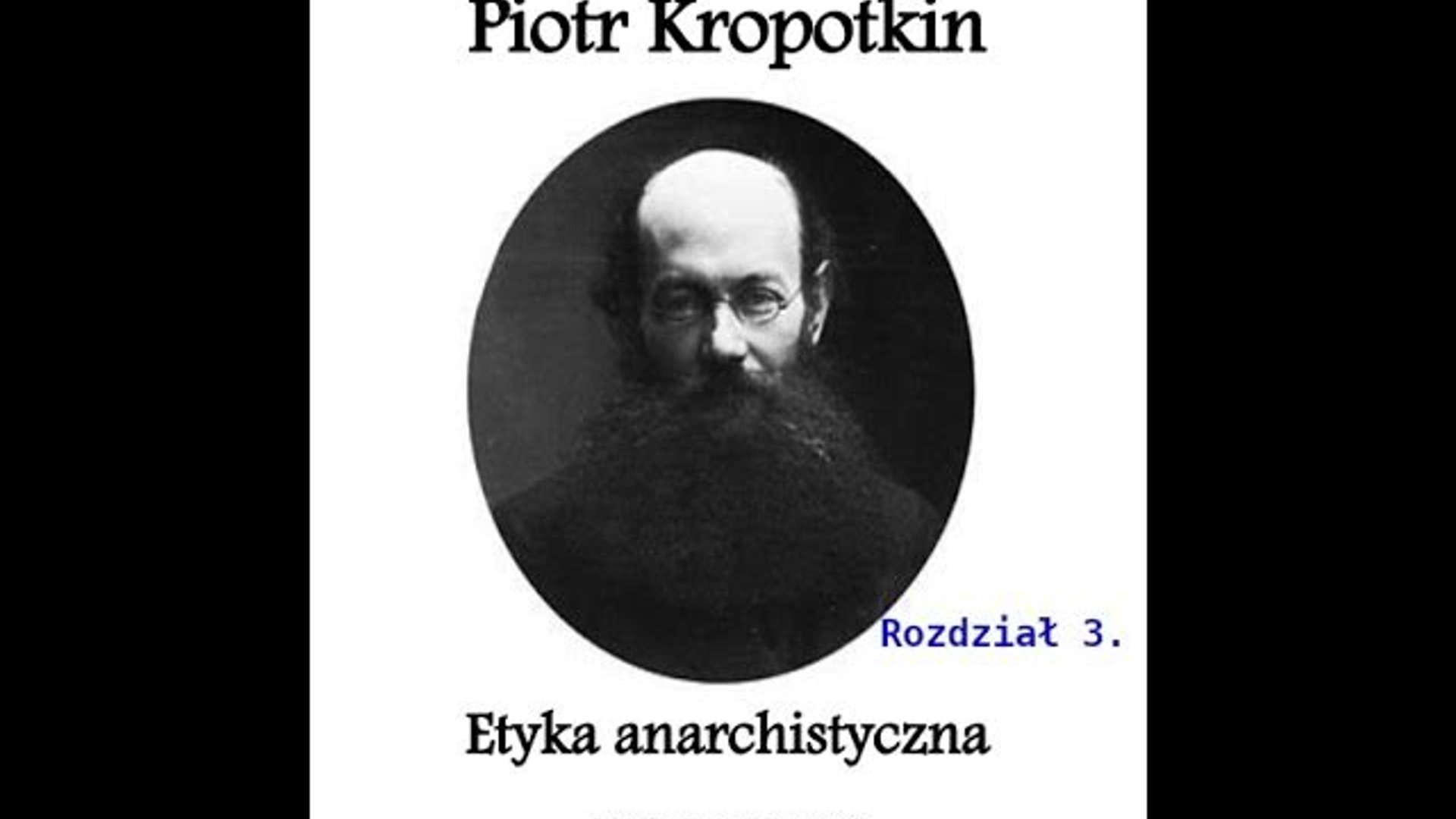
Etyka Anarchistyczna - 3. rozdział książki Piotra Kropotkina * Wielkie podziękowania dla lektorów trzech pierwszych rozdziałów. W tej chwili nie mamy nagranych kolejnych. Prosimy o kontakt, jeśli ktosia chciałaby w tym pomóc.

Zapraszamy do dzielenia się przemyśleniami w komentarzach.

Fragment: Widzieliśmy, że pochodzenie wszystkich postępków ludzkich jest wspólne (postępków świadomych, później mówić będziemy o przyzwyczajeniach, które spełnia się nieświadomie). Czyny, które uważamy za złe, i te, które oznaczamy mianem dobrych, wielkie poświęcenia i drobne łotrostwa, wszystkie wypływają z jednego i tego samego źródła . Wszystkie spełniamy po to, by zadowolić nasze przyrodzone popędy, wszystkie mają na celu przysporzenie zadowolenia lub uniknięcie przykrości.

W rozdziale poprzednim spośród wielkiej masy postępków ludzkich przytoczyliśmy przykłady, mogące służyć jako potwierdzenie powyższego twierdzenia.

Łatwo zrozumieć, że takie wyjaśnienie musiało wywołać oburzenie osób, stojących na stanowisku religijnym. Nie pozostawia ono, bowiem miejsca dla elementu nadprzyrodzonego odrzuca ideę nieśmiertelności duszy.

Jeżeli wziąć pod uwagę, że ludzie ci wyrośli wśród przesądów, że do nauki, która ich tak często oszukiwała, mieli niewielkie zaufanie, że kierowali się bardziej uczuciem, niż myślą - to zrozumiemy łatwo, dlaczego musieli odrzucić to wyjaśnienie.

Ale co mamy sądzić o dawnych i współczesnych rewolucjonistach, którzy z powyższego wyjaśnienia postępków ludzkich (teorii egoizmu, jak można by powiedzieć), śpieszyli wyciągnąć wniosek: „precz z moralnością”?

Co mamy sądzić o ludziach, którzy na podstawie tej teorii twierdzą, że wszystkie postępki ludzkie są jednakowej wartości, to jest że nie są ani dobre ani złe? A więc na przykład stawiają oni na tym samym miejscu człowieka, który ratuje tonącego z narażeniem własnego życia z postępkiem zbrodniarza, który aby zrabować zegarek, topi swą ofiarę; lub też przyrównują bohatera, który poświęciwszy całe swe życie sprawie wyzwolenia ludzkości, kończy na szubienicy, do nicponia, okradającego swych towarzyszy. Rozumowanie swe opierają na zasadzie, że wszyscy ludzie działają pod wpływem tej samej pobudki: pogoni za własnym zadowoleniem.

PT YT

Tekst dostępny na AnarchoBibliotece pl.anarchistlibraries.net/…/piotr-kropotkin-etyka…

(nie mylić z obszerną książką pt. "Etyka" tego samego autora).

#religia #moralność #anarchizm #etyka #wolność

0

Etyka Anarchistyczna #3 Kropotkin audiobook pl

play · kolektiva.media
kolektiva.media Etyka Anarchistyczna #3 Kropotkin audiobook pl kolektiva.media
preview

Etyka Anarchistyczna - 3. rozdział książki Piotra Kropotkina * Wielkie podziękowania dla lektorów trzech pierwszych rozdziałów. W tej chwili nie mamy nagranych kolejnych. Prosimy o kontakt, jeśli ktosia chciałaby w tym pomóc.

Zapraszamy do dzielenia się przemyśleniami w komentarzach.

Fragment: Widzieliśmy, że pochodzenie wszystkich postępków ludzkich jest wspólne (postępków świadomych, później mówić będziemy o przyzwyczajeniach, które spełnia się nieświadomie). Czyny, które uważamy za złe, i te, które oznaczamy mianem dobrych, wielkie poświęcenia i drobne łotrostwa, wszystkie wypływają z jednego i tego samego źródła . Wszystkie spełniamy po to, by zadowolić nasze przyrodzone popędy, wszystkie mają na celu przysporzenie zadowolenia lub uniknięcie przykrości.

W rozdziale poprzednim spośród wielkiej masy postępków ludzkich przytoczyliśmy przykłady, mogące służyć jako potwierdzenie powyższego twierdzenia.

Łatwo zrozumieć, że takie wyjaśnienie musiało wywołać oburzenie osób, stojących na stanowisku religijnym. Nie pozostawia ono, bowiem miejsca dla elementu nadprzyrodzonego odrzuca ideę nieśmiertelności duszy.

Jeżeli wziąć pod uwagę, że ludzie ci wyrośli wśród przesądów, że do nauki, która ich tak często oszukiwała, mieli niewielkie zaufanie, że kierowali się bardziej uczuciem, niż myślą - to zrozumiemy łatwo, dlaczego musieli odrzucić to wyjaśnienie.

Ale co mamy sądzić o dawnych i współczesnych rewolucjonistach, którzy z powyższego wyjaśnienia postępków ludzkich (teorii egoizmu, jak można by powiedzieć), śpieszyli wyciągnąć wniosek: „precz z moralnością”?

Co mamy sądzić o ludziach, którzy na podstawie tej teorii twierdzą, że wszystkie postępki ludzkie są jednakowej wartości, to jest że nie są ani dobre ani złe? A więc na przykład stawiają oni na tym samym miejscu człowieka, który ratuje tonącego z narażeniem własnego życia z postępkiem zbrodniarza, który aby zrabować zegarek, topi swą ofiarę; lub też przyrównują bohatera, który poświęciwszy całe swe życie sprawie wyzwolenia ludzkości, kończy na szubienicy, do nicponia, okradającego swych towarzyszy. Rozumowanie swe opierają na zasadzie, że wszyscy ludzie działają pod wpływem tej samej pobudki: pogoni za własnym zadowoleniem.

PT YT

Tekst dostępny na AnarchoBibliotece pl.anarchistlibraries.net/…/piotr-kropotkin-etyka…

(nie mylić z obszerną książką pt. "Etyka" tego samego autora).

#religia #moralność #anarchizm #etyka #wolność

0

FreeBSD Laptop Support Continues Improving With WiFi, GPU & Audio Driver Work

FreeBSD Laptop Support Continues Improving With WiFi, GPU & Audio Driver Work www.phoronix.com
preview

The FreeBSD Foundation’s Laptop Support and Usability Project, which has received more than $750k USD in funding to improve the experience of FreeBSD on laptops, is out with its newest monthly progress report. A lot continues to happen for improving the FreeBSD laptop story, which in many aspects also benefits FreeBSD on the desktop too.

The FreeBSD Foundation’s Laptop Support and Usability Project, which has received more than $750k USD in funding to improve the experience of FreeBSD on laptops, is out with its newest monthly progress report. A lot continues to happen for improving the FreeBSD laptop story, which in many aspects also benefits FreeBSD on the desktop too.

0

FreeBSD 16 Retires The Last Of Its GPL Code From Its Base System

FreeBSD 16 Retires The Last Of Its GPL Code From Its Base System www.phoronix.com
preview

As of this past week in the FreeBSD source tree for FreeBSD 16, the last of the GNU GPL licensed code from the base system has been retired.

As of this past week in the FreeBSD source tree for FreeBSD 16, the last of the GNU GPL licensed code from the base system has been retired.

0

⭐️ Oggi, Giovedì sera alle 20:30 registriamo la penultima puntata in diretta del #podcast sui generis più serio del #web:

preview

⭐️ Oggi, Giovedì sera alle 20:30 registriamo la penultima puntata in diretta del #podcast sui generis più serio del #web:

• LINKioni, uno show intelligente.

🔷 Puoi seguirci qui: https://www.linkioni.it/seguici-in-diretta/
🔹 Se vuoi farti sentire nella puntata raggiungici immantinente sul canale Telegram di LINKioni e prenota una seggiola.
🔹 Oppure cerca LINKioni su Twitch, che non sappiamo usare.

Tante care e fresche cose ❄️ a te e ai tuoi cari :)
@podcast
#linkioni #fresco #hacker #Artista

0

La France adopte sa troisième Stratégie nationale bas-carbone SNBC - 3 : une feuille de route ambitieuse pour atteindre la neutralité carbone et renforcer sa souveraineté

Ministères Transition écologique, Aménagement du Territoire, Transports, Ville et Logement La France adopte sa troisième Stratégie nationale bas-carbone : une feuille de route ambitieuse pour atteindre la neutralité carbone et renforcer sa souveraineté | Ministères Transition écologique, Aménagement du Territoire, Transports, Ville et Logement www.ecologie.gouv.fr
0

I built a minimalist arrow escape puzzle game to help unwind during short breaks. Free, no ads or sign-ups. Would love your feedback!

preview

Hi everyone,

I’m an indie creator who really enjoys clean, minimalist logic puzzles. Lately, I felt that too many web and mobile games are overcrowded with pop-ups, forced daily sign-ins, and overwhelming visual clutter.

I wanted to build something extremely simple: a game you can fire up in your browser instantly, test your spatial logic for 5 or 10 minutes, and feel that satisfying “click” when a grid clears.

So, I created this free online arrow escape game.

What it’s all about:

  • 100% Browser-based: No downloads, no account registrations needed.
  • Pure Spatial Logic: Focused entirely on path-finding and grid clearing.
  • Zero Distractions: Designed specifically for a quick, calming mental break during work or study.

I am currently trying to polish the level design and difficulty curve. I would really appreciate any feedback from fellow puzzle enthusiasts here!

Did you find the mechanics intuitive? How does the touch/click controls feel on your device? Thanks for checking it out!

0

My current EDC kit (Please give me suggestions!)

preview

This is my current setup, all contained within the crossbody bag on the left. I’ve had more or less the same stuff, in the same bag, for about three years before, but the zipper on the bag was breaking, so I replaced it. I decided that would be a good time to rethink what I’m carrying.

Currently, that is (clockwise from top left):

  • wallet
  • some spare cash, just in case
  • a microfiber cloth
  • lockpicks and a small box of lock pins (I have a practice lock that I often carry around in case I get bored)
  • bandaids
  • the bag is a Pacsafe GO Crossbody
  • glasses cleaning swabs
  • USB sticks (two with data, one with Ventoy and Linux ISOs)
  • USB C-to-C cable to charge my phone
  • a mechanical pencil
  • keys, on a chain

Now, I’m looking for suggestions as to what else to put in the bag. Its gotta be thin and flat if possible.

My ideas so far are an appropriately sized notebook and a thin pocketknife.

What do you think? Have you got any ideas/suggestions?

0

Question about federation of Modlog across instances involving a Misskey user

preview

I use Misskey forks (currently Catodon, after having migrated from Calckey) to interact with the Fediverse, especially the part encompassing the threadiverse (mostly Lemmy), because I like having a microblogging feed while being also able to interact with (and posting my own) Lemmy threads (and Catodon, specifically, implemented this interesting “Forums” feature for better interoperability with Lemmy, a feature of which I’m using right now to post this question thread).

Because I don’t have a Lemmy account anymore, and because federation isn’t always immediate between the threadiverse and what I’d call the “microbloggingverse” (encompassing Mastodon, Friendica and several other platforms, including Misskey and its forks), I developed the habit of using some non-Cloudflare Lemmy instances (including, but not limited to, lemmy.ml) as a guest to browse global Lemmy threads sorted by “New Comments”, copying its federated URL and fetching it directly from my Misskey side whenever I want to interact with a post or comment.

I also use said Lemmy instances to check my own modlog because I’m not entirely sure if I’d see anything (e.g. some DM or notification) from my side if a post/comment were to be removed or if some community/instance kicked/banned me. As far as it seems, my modlog is clean, and so is the modlog for my earlier, older Calckey account, I don’t seem to have broken any rules so far…

… but I don’t know. I recently interacted with some threads that doesn’t show up in my profile when seen from any of the Lemmy instances I use for browsing Lemmy.

If said post don’t show up, something tells me that I wouldn’t be able to see modlogs for not-properly-federated posts if a mod action were to happen.

Does this proceed? Could it be happening that I’m not seeing modlog entries for my own Misskey accounts because these entries didn’t properly federate with the instances I’m relying on to browse Lemmy? Or is this just because I’ve so far been successfully respectful towards my peers and never broke any community/instance rules (despite my own replies sometimes making my imposter syndrome scream inside me)?

0

[Sandra Erwin] Space Force awards Slingshot $69 million for AI-enabled training technology

SpaceNews Space Force awards Slingshot $69 million for AI-enabled training technology spacenews.com
preview
Article text

Sandra Erwin 4–5 minutes WASHINGTON — Slingshot Aerospace has won a $69.2 million U.S. Space Force contract to develop artificial intelligence-based training environments that will allow military operators to rehearse satellite defense missions and respond to simulated adversary actions in orbit. The 4½-year Small Business Innovation Research Phase 3 contract supports the service’s Operational Test and Training Infrastructure program, or OTTI, an effort to give Space Force units more realistic tools for testing systems and preparing personnel for increasingly complex operations in space. Slingshot said July 15 that it will provide AI-enabled environments in which Space Force operators can rehearse scenarios involving the protection and defense of U.S. space systems, compare possible responses and practice making decisions under conditions designed to resemble an actual conflict. The award reflects the Pentagon’s interest in using artificial intelligence not only to analyze large amounts of data, but also to improve how military personnel train for fast-moving operational scenarios. In the space domain, where satellites can maneuver, interfere with communications or approach other spacecraft, training systems must account for an opponent whose behavior may change during an exercise. Slingshot, based in Windsor, Colorado, specializes in satellite tracking and orbital data analytics. The company has applied those capabilities to training tools designed to prepare Space Force personnel for operations in a contested space environment. Under the contract, Slingshot said it will provide “high-fidelity, AI-enabled environments where they can rehearse protect-and-defend scenarios, evaluate courses of action, and sharpen decision-making under realistic operational conditions.” The program is built around TALOS, short for Thinking Agent for Logical Operations and Strategy. Slingshot describes TALOS as an AI-powered training and strategy agent that can act as an autonomous virtual opponent during exercises. Rather than following a predetermined script, TALOS is designed to simulate how another spacecraft could maneuver, respond to an operator’s actions or interfere with a mission. That approach is intended to make exercises less predictable and force trainees to adjust their decisions as a scenario develops. “TALOS models realistic spacecraft behaviors, generates strategic response options, processes vast amounts of complex data, and supports mission rehearsal across continuously evolving space scenarios,” the company said. The technology was initially developed through an earlier SBIR contract. The Space Force faces a particular training challenge because many potential conflict scenarios in orbit cannot be safely or routinely reproduced using actual spacecraft. Operators must prepare to identify unusual satellite movements, assess whether they pose a threat and determine how to respond without escalating a confrontation or disrupting other missions. Digital training environments can allow those events to be simulated without placing operational satellites at risk. They can also be updated as new threats, tactics and spacecraft capabilities emerge, rather than requiring trainers to build each scenario around a fixed sequence of events.

0

[Sandra Erwin] Saltzman’s farewell warning: Prepare for war in space to preserve peace

SpaceNews Saltzman’s farewell warning: Prepare for war in space to preserve peace spacenews.com
preview
Article text

Sandra Erwin 9–11 minutes WASHINGTON — Gen. Chance Saltzman in his final public address as chief of the U.S. Space Force warned that a conflict extending into orbit would expose the satellites of every nation, arguing that the best way to deter such a war is to build military forces capable of fighting and prevailing in space. “Whether we want to be in the combat zone or not, orbital mechanics will put all of our space capabilities in a space war zone,” Saltzman said July 15 at the Global Air & Space Chiefs’ Conference in London. “We will share the consequences. Therefore, we should share the responsibility for a safe, secure, and stable space domain.” The address amounted to a strategic summation of Saltzman’s nearly four years leading the military’s newest service. During his tenure, the Space Force moved beyond its early struggle to establish an identity separate from the Air Force and concentrated more explicitly on preparing for combat against China and Russia. Saltzman, who plans to retire next month after a 35-year military career, became the second chief of space operations in November 2022, when the Space Force was less than three years old. The service was still widely viewed as the organization responsible for providing communications, navigation, missile warning and other support to forces fighting on Earth. Those missions remain central to the Space Force. But Saltzman increasingly argued that they could no longer be assumed to operate without interference. China and Russia are developing systems capable of jamming, disabling or destroying satellites, while their own militaries become more dependent on spacecraft for targeting, communications and battlefield surveillance. The result has been a shift toward what the service calls space control: protecting U.S. and allied access to orbit while retaining the ability to deny an adversary the advantages provided by its own space systems. Saltzman’s “Competitive Endurance” strategy called on the service to avoid operational surprise, deny adversaries the benefit of striking first and develop counterspace capabilities that could disrupt enemy operations without creating dangerous orbital debris. The approach seeks to balance the need to achieve space superiority with the risk that widespread destruction of satellites could render parts of orbit unusable to militaries, companies and civilian agencies alike. Thoughts on deterrence In London, Saltzman said military commanders should spend less time trying to calculate what might dissuade an adversary and more time building forces capable of defeating an attack. Deterrence depends on an adversary’s perceptions, calculations and motivations, he said — factors that are difficult to measure. A military force preparing to defend against an attack can work from more concrete questions: how many weapons an adversary has, where they might be launched and what they are likely to target. Military leaders should therefore concentrate on being able to “defend, if necessary, even disrupt, degrade and destroy,” Saltzman said. “If we have the capabilities to do this, it will be seen as a combat credible force, which should create a deterrent effect,” he said. “And if it doesn’t, we will be prepared to effectively respond to the aggression.” The distinction reflects an evolution in how the Space Force talks about its role. The service emphasizes resilience — building constellations that could absorb an attack and continue operating. Under Saltzman, it also began speaking more openly about offensive and defensive operations intended to prevent enemy satellites from tracking U.S. troops, guiding missiles or passing targeting information. Saltzman’s argument is that deterrence is a consequence of military capability, not a mission that can be accomplished through declarations alone. Preparing for combat, in this view, makes an attack less attractive while preserving the ability to respond should deterrence fail. An appeal to allies Unlike forces on land, at sea or in the air, satellites regularly pass over multiple countries and operate within shared orbital regimes. A government that stays out of a terrestrial war couldn’t necessarily insulate its spacecraft from jamming, debris or other effects if the conflict expanded into space. “I believe space is the ultimate team sport because the orbits that we rely on do not adhere to national boundaries,” Saltzman said. The U.S. has expanded military space cooperation with allies as threats have grown, including sharing surveillance data, placing liaison officers inside national space commands and bringing more countries into combined exercises. Saltzman said he has never been a fan of “all-star teams” assembled from talented individuals who had little experience working together. Effective military coalitions, he said, require repeated interaction that builds trust and an understanding of how each member operates. “We are stronger as a team of nations than any one of us as individuals,” he said. In his address Saltzman acknowledged that some of the problems he spent his term trying to address might never be fixed. The Space Force has promoted itself as an alternative to traditional Pentagon acquisition, seeking to build smaller satellites, buy commercial services and field new technology more quickly than conventional weapons programs. Saltzman has pressed the service to accept more risk, abandon the pursuit of perfect systems and design its investments around the military effects it needed to produce. He introduced a 15-year force-design effort intended to define the spacecraft, personnel, infrastructure and partnerships the service would need through 2040. The plan, known as the Objective Force, was designed to give acquisition officials a clearer picture of what to buy and when, rather than producing individual programs through disconnected requirements processes. Yet in London, Saltzman cautioned against believing that any one organizational change or procurement initiative can permanently resolve the difficulty of buying weapons quickly. “I’ve come to appreciate that not all challenges must be solved,” he said. “Some challenges should simply be managed.” He placed acquisition speed alongside two other persistent obstacles to multinational space operations: connecting military systems built by different countries and sharing classified information across national boundaries. Achieving full interoperability among allied systems is worthwhile but unlikely, he said. So is eliminating classification restrictions that interfere with combined operations. Buying weapons at a pace that matches rapidly changing operational demands remains a similar struggle. “We are unlikely to solve this once and for all,” he said. The Space Force must continue improving interoperability, information sharing and procurement, said Saltzman, but senior officers also have a responsibility to give political leaders realistic expectations. Complex problems involving different countries, bureaucracies, technologies and security requirements shouldn’t be presented as susceptible to quick fixes. He called for stable funding, sustained research and development, long-term objectives and steady improvements that continue across changes in leadership. Saltzman offered a carefully worded observation about the military’s role in a divided political environment. He didn’t identify any particular controversy, but described military leaders as “the ballast in the ship.” Ballast can appear to slow a vessel as political leaders attempt to move quickly, he said. Its more important function is to provide stability when the vessel encounters a storm. “In the hyper-political environment we find ourselves, with partisan politics creating divisions between a multitude of stakeholders,” military leaders must “think long term” and act as a calming presence, Saltzman said. The remarks placed institutional restraint alongside combat readiness as part of his closing message. Military leaders, in Saltzman’s telling, must be prepared to recommend force when necessary while also resisting the pressure to offer easy answers, unrealistic timetables or politically convenient assessments. Saltzman’s nominated successor, Lt. Gen. Douglas Schiess, would become the third chief of space operations if confirmed by the Senate. He would take over a service larger, better funded and more central to Pentagon war planning than the one Saltzman inherited, but still working to field the weapons, personnel and organizational structure needed to fight in a domain long treated as a sanctuary. Military leaders, Saltzman told the audience, should use the credibility gained through experience “to provide realistic expectations, stabilize decision-making processes, strengthen our partnerships, and focus on our unique roles in deterrence.” “After 35 years of reflection,” he said, “I believe this is the best contribution that we can make to international peace and stability.”

0

Legendary Gravis Ultrasound sound card gets new open-source clone — Beavis Ultrasound remake includes complete KiCad schematics, PCB layout, sample ROM, and more

Tom's Hardware Legendary Gravis Ultrasound sound card gets new open-source clone — Beavis Ultrasound remake includes complete KiCad schematics, PCB layout, sample ROM, and more www.tomshardware.com
preview

cross-posted from: lemy.lol/post/68610854

cross-posted from: lemy.lol/post/68610854

0

Sleep - Have Spacesuit Will Travel (2026)

play · youtube.com
YouTube Have Spacesuit Will Travel (4:20 Flexi Edit) www.youtube.com
preview

Apparently this is recorded without Matt Pikes involvement.

The 2026 Sleep lineup comprises co-founding singer/bassist Al Cisneros, Melvins drummer Dale Crover and Void guitarist Bubba Dupree (no, not the haunted thrash metal Void from Lafayette, Louisiana). Their new single marks the first Sleep release since their 2018 comeback album The Sciences.

Read More: Sleep Announce Tour With New Lineup, Debut Song Without Matt Pike | loudwire.com/sleep-have-spacesuit-will-travel-202…

0

WOTD: Casio ABX-23 Twincept

preview

When I first set sights on my ABX-23 as a kid, I thought the floating “holographic” digital display was the coolest thing I’ve ever seen. 20 years (and another ABX-23) later, it’s still one of the coolest things I’ve ever seen.

When I first set sights on my ABX-23 as a kid, I thought the floating “holographic” digital display was the coolest thing I’ve ever seen. 20 years (and another ABX-23) later, it’s still one of the coolest things I’ve ever seen.