
0
0

UCL News
Ancient water source found during modern pipeline excavations
www.ucl.ac.uk


Not on this instance? Enter your own instance's domain to go straight to following c/history@lemmy.world there.


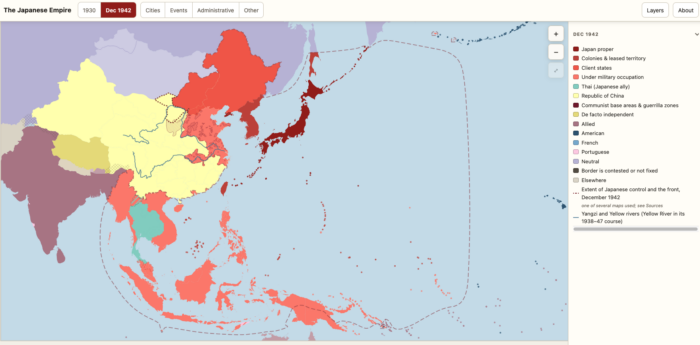
In the occupied territories of China, World War II was waged using methods that went far beyond conventional military confrontation. In the headquarters of the Japanese North China Area Army, a strategy was formulated that aimed not just to defeat enemy troops, but to totally scorch the very human environment itself.
This doctrine entered history under the name “The Three Alls Policy” (Japanese: 三光作戦 — Sankō Sakusen), which literally translates to: “Kill All, Loot All, Burn All.”
History
Prior to 1940, the Japanese command attempted to use classical counter-insurgency methods but was met with fierce resistance. Chinese guerrillas literally “dissolved” among the peasantry, receiving food, shelter, and intelligence from them. For the Imperial Army, the answer became obvious: if you cannot catch the fish, you must drain the ocean.
General Yasuji Okamura (pictured) authorized the transition to scorched-earth tactics. Officially, in Japanese documents, this was called the “Strategy of Clean-up and Destruction,” but soldiers on the ground knew it by three simple verbs:
“Kill All” (Satsu-kō): Any resident of a village in the operation zone—be it an elderly person, a woman, or an infant—was automatically equated to a guerrilla or their accomplice. Populations were often exterminated preemptively and entirely.
“Loot All” (Raku-kō): From those peasants who were not killed, absolutely everything was seized: food, livestock, clothing, and seed grain. Entire regions were condemned to man-made famine to deprive the guerrillas of any means of supply.
“Burn All” (Shō-kō): Residential houses, barns, Buddhist temples, and other structures were committed to the flames. The land outside Japanese fortifications was to be turned into a lifeless wasteland.
The Mechanics of the Void
The implementation of this policy bore little resemblance to the Nazi “death conveyor” (industrialized killing); it more closely resembled a locust raid. Japanese punitive detachments would surround villages, herd the residents into one place, and carry out mass executions—burying people alive, machine-gunning them, or locking them in barns and setting them on fire. Those who managed to flee into the forests died of cold and hunger, as their homes and food supplies had been turned to ash.
Furthermore, the “Three Alls Policy” was actively combined with the use of biological and chemical weapons. Special units (including the infamous “Unit 731” and its branches) poisoned wells with cholera and typhoid pathogens and dropped plague-infested fleas over agricultural lands to permanently establish “dead zone” status for rebellious provinces.
The Price of Silence
According to historians’ estimates, more than 2.7 million civilians were killed during the implementation of the Sankō Sakusen policy in the northern provinces of China alone. Millions more became refugees, and the economic infrastructure of entire regions was wiped off the face of the earth.
The tragedy of the “Three Alls” policy also lies in the fact that, for a long time after the war, these crimes remained in the shadows. The Tokyo Trials focused primarily on the Nanjing Massacre and crimes against Western Allies. Many officers who planned and carried out the scorched-earth tactics in China safely returned to civilian life in postwar Japan.
The Geography of Terror
The Sankō Sakusen policy was officially and purposefully applied by the Japanese mainly in Northern China (in provinces like Hebei, Shanxi, and Shandong), where the guerrilla movement was strongest. This means that the 2.7 million deaths were the result of extermination within a relatively localized territory, rather than across the entire country.


What is Iran…the 4th or 5th Vietnam War? I have lost track…
What is Iran…the 4th or 5th Vietnam War? I have lost track…
Scholars disagree on when, exactly, Rome fell. But if you watch the new video from City 3D Timelapse above, you’ll understand the lack of debate on the question of whether it fell.
Scholars disagree on when, exactly, Rome fell. But if you watch the new video from City 3D Timelapse above, you’ll understand the lack of debate on the question of whether it fell.
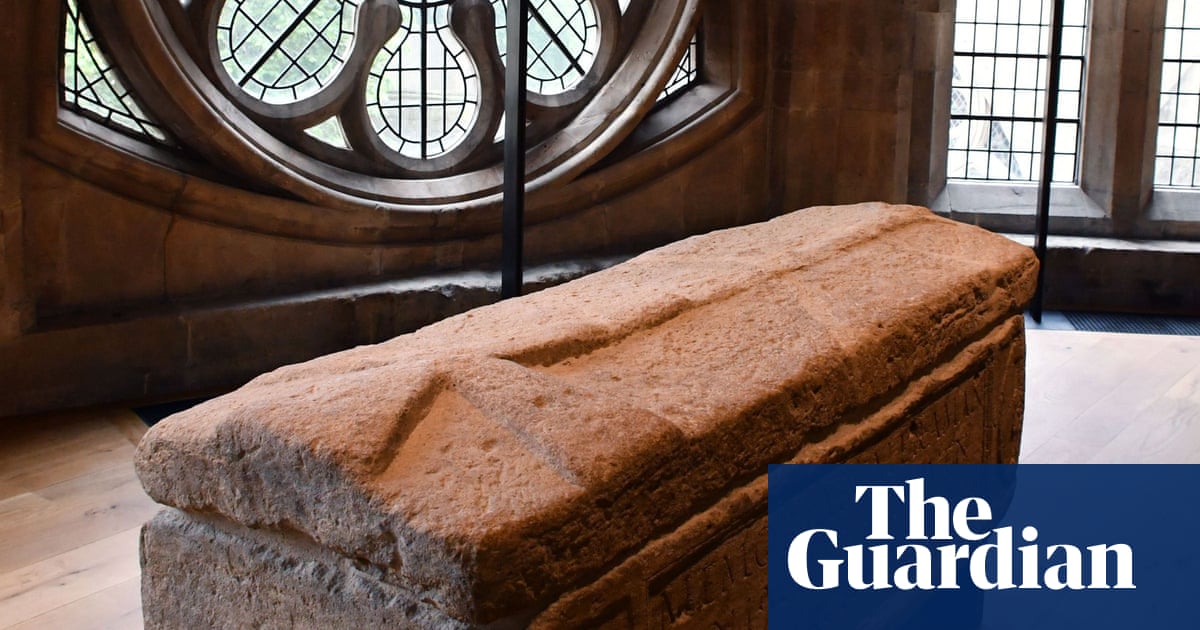



Very few articles have been written on the topic of the Holy Foreskin (known in Latin as Sanctum Praeputium), partly because in the year 1900 the Roman Catholic Church threatened to excommunicate anyone who did so.
Palazzo has been able to find at least 31 churches in Europe that claimed to have the Holy Foreskin sometime during the Middle Ages
She began to think about the foreskin of Christ, where it may be located… And behold, soon she felt with the greatest sweetness on her tongue a little piece of skin like the skin of an egg, which she swallowed. After she had swallowed it, she again felt the little skin on her tongue with sweetness as before, and again she swallowed it. And this happened about a hundred times.

I was listening to a podcast on the Slave Trade Era, the arguments and the discussions centred around the impacts of the era on the homeland of the slaves; f…
I was listening to a podcast on the Slave Trade Era, the arguments and the discussions centred around the impacts of the era on the homeland of the slaves; f…
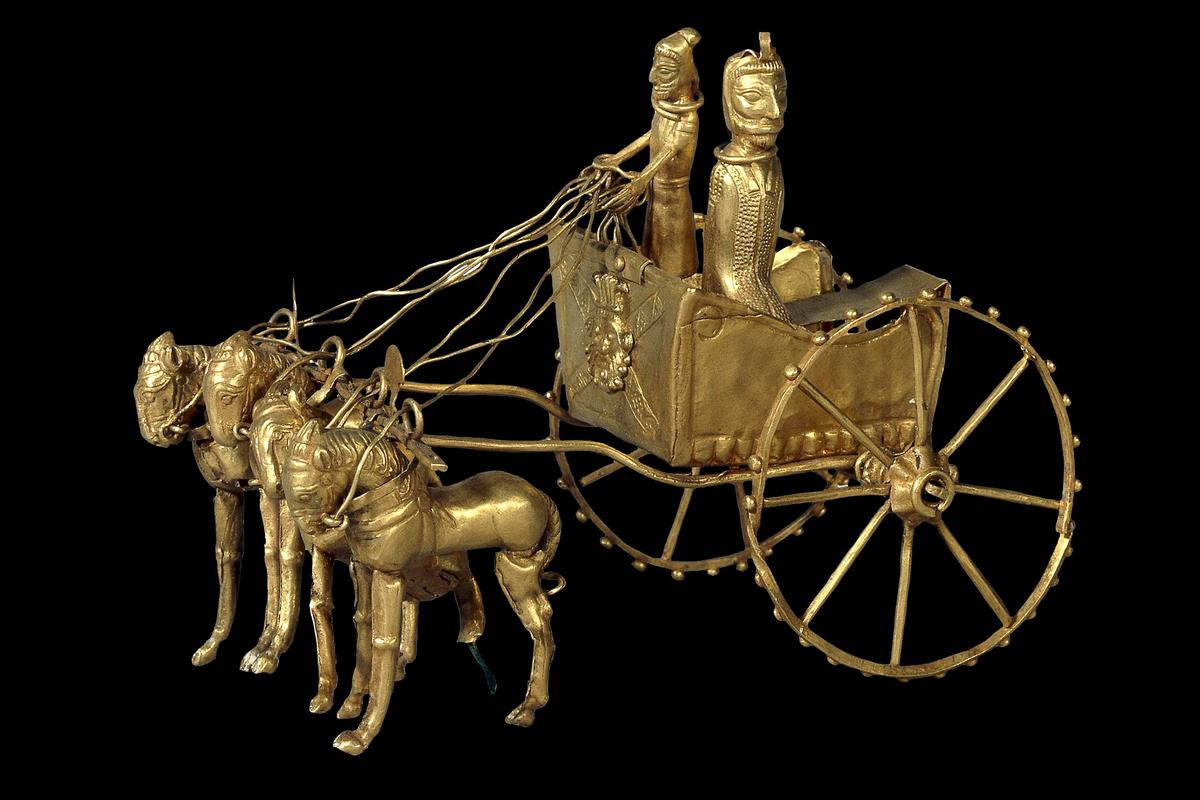
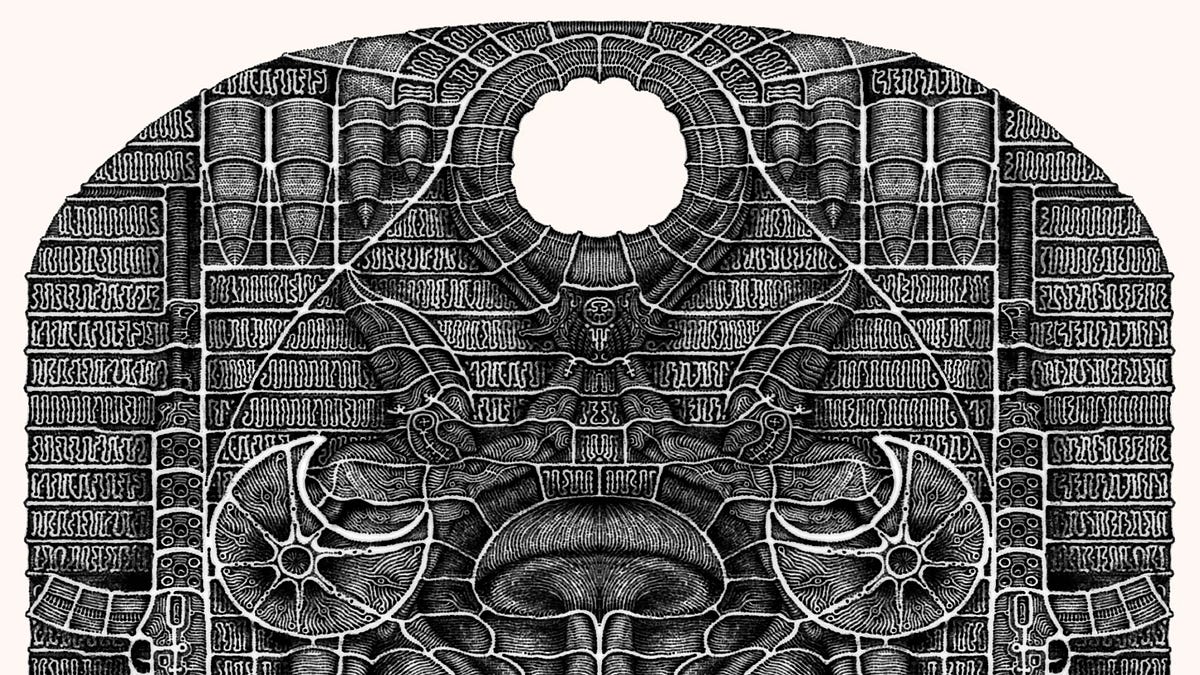



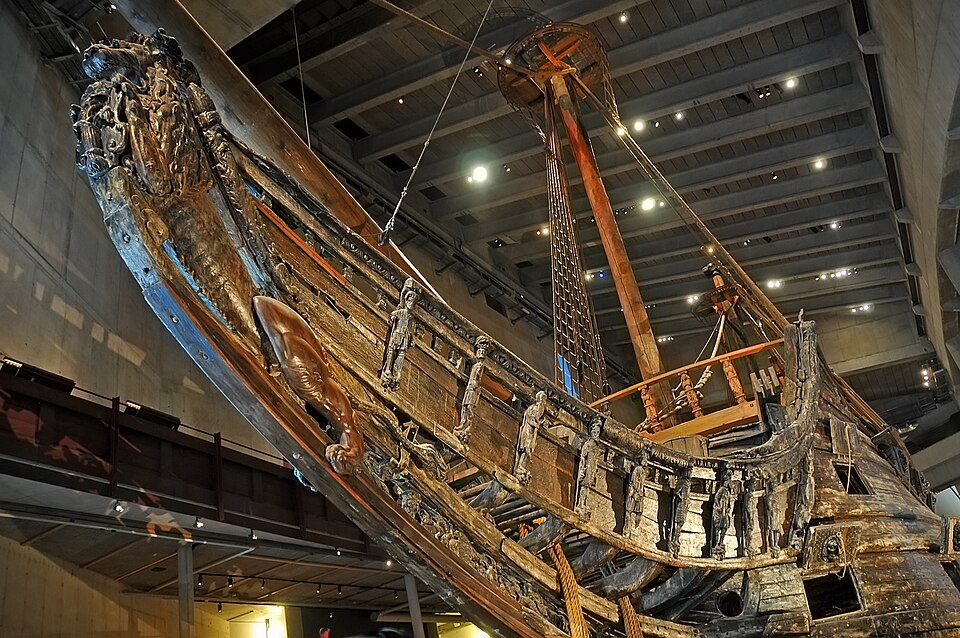
When the Swedish warship Vasa sank in Stockholm harbor in August 1628 it was basically a massive failure of naval infrastructure. King Gustav II Adolf commissioned it as a flagship but it was built far too narrow and top heavy for the amount of carved wooden propaganda attached to the hull. It rolled over and went down barely 1300 meters into its maiden voyage.
Vasa historically vital is what the local geography did to the physical hardware. In standard open ocean water wood boring shipworms will consume an oak hull within a few decades. But the Baltic Sea has restricted saltwater inflow and massive freshwater river runoff. The salinity drops too low for the mollusks to survive.
water chemistry essentially acted as a geographic preservation vault. When salvage crews raised the hull in 1961 this two tonne carved oak lion figurehead was almost entirely intact. It proves that a wrecks specific chemical environment does just as much work as human effort in deciding what historical hardware survives.

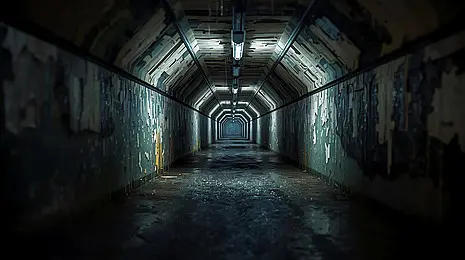
do u study Gilded Age architecture for the surface aesthetics but the subterranean infrastructure is much more telling. The ultra wealthy in late 19th century New York installed a massive underground legacy system. They dug private brick tunnels and basement rail networks connecting carriage houses directly into the mansion cellars. It was basically institutional firmware designed to erase the working staff from sight. I tracked down the original blueprints and property logs.
do u study Gilded Age architecture for the surface aesthetics but the subterranean infrastructure is much more telling. The ultra wealthy in late 19th century New York installed a massive underground legacy system. They dug private brick tunnels and basement rail networks connecting carriage houses directly into the mansion cellars. It was basically institutional firmware designed to erase the working staff from sight. I tracked down the original blueprints and property logs.


When reviewing major archaeological discoveries from the past century, what stands out is how often a single physical archive forces historians to completely redraw their working models of antiquity.
Royal Archives of Ebla (Tell Mardikh, Syria): Before excavators uncovered Royal Palace G in the 1970s, standard historiography modeled the Bronze Age Near East as a strict trade duopoly between Egypt and Mesopotamia. Finding over 1,800 intact cuneiform tablets proved an autonomous, highly organized commercial power existed across the Levant. Uluburun Shipwreck (Kaş, Turkey): Sinking around 1305 BCE with raw cargo sourced from Cyprus, Central Asia, the Baltic, Nubia, and Mycenae, this single vessel provided direct physical proof that the Late Bronze Age Mediterranean operated as an integrated, circular international market. sanxingdui (Sichuan, China The 1986 discovery of massive sacrificial pits containing colossal bronze masks broke the long-held “Yellow River hypothesis,” showing that complex urban metallurgy developed simultaneously across separate river basins.

Some excerpts:
The area has a history of strange happenings long before Aleister Crowley moved in. The parish of Boleskine was formed in the 13th Century. A Kirk and graveyard were built in the parish around this time. A succession of Ministers ran Boleskine Parish and would travel the area on horseback or on foot in all weather conditions. Minister Thomas Houston (1648–1705) was said to have had the task of hastily laying animated corpses back in their graves after a devious local wizard had raised the dead in Boleskine graveyard.
Boleskine House was built on the site of the kirk, which, according to legend, caught fire during congregation and killed everyone inside
Crowley believed the location was ideal to sequester himself to perform a series of operations known as the Sacred Magic of Abramelin the Mage, taken from a grimoire called The Book of Abramelin.
According to Crowley, in his book The Confessions of Aleister Crowley, in order to perform the operations “the first essential is a house in a more or less secluded situation. There should be a door opening to the north from the room of which you make your oratory. Outside this door, you construct a terrace covered with fine river sand. This ends in a ‘lodge’ where the spirits may congregate.”
The purpose of this ritual is to invoke one’s Guardian Angel.
It requires at least 6 months of preparation, celibacy, and abstinence from alcohol. However, it also includes the summoning of the 12 Kings and Dukes of Hell, to bind them and remove their negative influences from the magician’s life. Whilst Crowley was in the process of performing the lengthy ritual, he was called to Paris by the leader of the Golden Dawn. According to legend, he never banished the demons he had summoned, leading to strange happenings occurring in and around Boleskine House.


In the early 1920s, the US Postal Service faced a major bottleneck: airmail was fast by day, but cross-country routes stalled at sunset because pilots had no reliable navigation instruments for night flights or fog.
so to solve this, government constructed the Transcontinental Airway System a physical visual highway stretching from New York to San Francisco 50 foot concrete arrows: Poured directly into the ground and painted bright chrome yellow to point pilots along the exact flight corridor. Rotating gas beacons: Placed atop 50-foot steel skeletal towers mounted at the center of each arrow, flashing distinctive Morse codes every 10 miles.
Small concrete shacks housing automated generators and fuel supplies stood at the tail of each arrow. Pilots would fly from one flashing beacon to the next, checking the physical orientation of the arrow beneath them to stay on course. Within a decade, radio navigation and radar rendered the visual airway obsolete, leading to the decommission of the towers. However, hundreds of these massive concrete arrows remain preserved on remote hillsides and desert terrain across the American West today.
Full write-up detailing the route maps, logistics, and surviving markers: thehistoricalinsights.page/…/giant-concrete-arrow…

en.wikipedia.org/wiki/Smedley_Butler
In 1933, Butler claimed to have been approached to become involved in a controversy, the Business Plot, telling a United States congressional committee a group of wealthy American industrialists were planning a coup d’état to overthrow President Franklin D. Roosevelt. Butler also claimed the plotters of the alleged coup intended to use him, at the head of a group of veterans, to place the federal government under arrest. The individuals alleged to be involved in the coup all denied the existence of such a plot and the media ridiculed Butler’s allegations, but a final report following an investigation by a special House of Representatives committee confirmed at least some of his testimony.