#fediverse

posts tagged #fediverse

0

Potential Fediverse alternative to Ao3/SqWA?

preview

cross-posted from: lemmy.world/post/53757573

Two months ago, I made this post:

lemmy.world/post/50855395

In this community, about potentially either “colonizing”, or forking Squidgeworld Archive (alternative to the fanfiction site ao3).

squidgeworld.org


Apparently, ao3 has recently shut-down for 2-4 weeks:

www.404media.co/archive-of-our-own-ao3-down-maint…

nerdist.com/…/ao3-archive-of-our-own-down-for-two…


My question is: Should we consider potentially making a Fediverse alternative to Ao3 / SqWA?

If you head over to the Squidgeworld Archive website, it states that over 2,300+ ao3 users have already migrated over to SqWA from ao3.

(Now it’s over 12,000+ in the last 20 hours ALONE.)

Just imagine how many people could potentially be brought into the Fediverse, if there were a working federated alternative version of ao3 / SqWA.

Or if Fediverse users, instead of creating an alternative, instead commited to “colonising” SqWA, instead.

cross-posted from: lemmy.world/post/53757573

Two months ago, I made this post:

lemmy.world/post/50855395

In this community, about potentially either “colonizing”, or forking Squidgeworld Archive (alternative to the fanfiction site ao3).

squidgeworld.org


Apparently, ao3 has recently shut-down for 2-4 weeks:

www.404media.co/archive-of-our-own-ao3-down-maint…

nerdist.com/…/ao3-archive-of-our-own-down-for-two…


My question is: Should we consider potentially making a Fediverse alternative to Ao3 / SqWA?

If you head over to the Squidgeworld Archive website, it states that over 2,300+ ao3 users have already migrated over to SqWA from ao3.

(Now it’s over 12,000+ in the last 20 hours ALONE.)

Just imagine how many people could potentially be brought into the Fediverse, if there were a working federated alternative version of ao3 / SqWA.

Or if Fediverse users, instead of creating an alternative, instead commited to “colonising” SqWA, instead.

0

Potential Fediverse alternative to Ao3/SqWA?

preview

Two months ago, I made this post:

lemmy.world/post/50855395

In this community, about potentially either “colonizing”, or forking Squidgeworld Archive (alternative to the fanfiction site ao3).

squidgeworld.org


Apparently, ao3 has recently shut-down for 2-4 weeks:

www.404media.co/archive-of-our-own-ao3-down-maint…

nerdist.com/…/ao3-archive-of-our-own-down-for-two…


My question is: Should we consider potentially making a Fediverse alternative to Ao3 / SqWA?

If you head over to the Squidgeworld Archive website, it states that over 2,300+ ao3 users have already migrated over to SqWA from ao3.

(Now it’s over 12,000+ in the last 20 hours ALONE.)

Just imagine how many people could potentially be brought into the Fediverse, if there were a working federated alternative version of ao3 / SqWA.

Or if Fediverse users, instead of creating an alternative, instead commited to “colonising” SqWA, instead.

Two months ago, I made this post:

lemmy.world/post/50855395

In this community, about potentially either “colonizing”, or forking Squidgeworld Archive (alternative to the fanfiction site ao3).

squidgeworld.org


Apparently, ao3 has recently shut-down for 2-4 weeks:

www.404media.co/archive-of-our-own-ao3-down-maint…

nerdist.com/…/ao3-archive-of-our-own-down-for-two…


My question is: Should we consider potentially making a Fediverse alternative to Ao3 / SqWA?

If you head over to the Squidgeworld Archive website, it states that over 2,300+ ao3 users have already migrated over to SqWA from ao3.

(Now it’s over 12,000+ in the last 20 hours ALONE.)

Just imagine how many people could potentially be brought into the Fediverse, if there were a working federated alternative version of ao3 / SqWA.

Or if Fediverse users, instead of creating an alternative, instead commited to “colonising” SqWA, instead.

0

Digital platforms and democratic publics: How social media platforms selectively appropriate and strategically subvert institutional logics

preview

cross-posted from: lemmy.ca/post/73100852

Our analysis contributes to ongoing debates on digital platforms, in particular from an institutional perspective, in the following ways. First, research on platforms has established a critical distinction between the organization of the platform host organization and the organization of the ‘crowd’ - the users who interact in digital action spaces (e.g., Ametowobla and Kirchner, 2023; Bauer and Gegenhuber, 2015; Dolata and Schrape, 2023). However, less attention has been paid to how certain features of platform organization such as centralized algorithmic control, data extraction mechanisms, and proprietary governance structures (e.g., Stark and Pais, 2020; Van Dijck, Poell, and De Waal, 2018) shape the public arena. Given that, in the case of social media platforms, the crowd comprises a large part of society, we demonstrate how the selective appropriation of institutional logics in the governance of platforms simultaneously subverts these logics in the public sphere.

Second, we highlight that these effects reflect strategic choices rather than technological inevitability, because platforms rhetorically appeal to the logics of the market, the corporation and the community to gain legitimacy (Meyer and Rowan, 1977), while diverging from these logics in the actual practices in which they create, regulate and monetize digital marketplaces. As an outlook, we point to alternative forms of platform organization more in line with liberal, democratic principles - while indicating a need to reform democratic societies away from a market towards a commons-based orientation (e.g. Etzioni, 2000, Etzioni, 2009). Social media platforms structured around decentralization rather than centralized control could lead to different dynamics in the public sphere and foster logics diversity (Almandoz and Thornton, 2025), granting communities more autonomy over content curation and moderation standards, enabling democratic deliberation rather than polarization, and allowing for distributed governance rather than proprietary control. In this sense, social media platforms and contestation around their governance constitute non-neutral battlegrounds where societal logics collide, are challenged, and can be transformed - in different directions.

The digital transformation can be seen as “the combined effects of several digital innovations bringing about novel actors (and actor constellations), structures, practices, values, and beliefs that change, threaten, replace or complement existing rules of the game within organizations and fields” (Hinings, Gegenhuber, and Greenwood, 2018: 53). Digital platforms can be seen as a constitutive feature of late digital society, and terms such as platform economy (Kenney and Zysman, 2016) or platform capitalism (Srnicek, 2017; Staab, 2019) indicate a broader societal and economic transformation associated with the spread of platform organizations. In a platform-mediated society, economic as well as social processes are shaped by globally operating platform companies such as Amazon, Apple, Google, Meta, or Microsoft, leading to the commodification of both private and public exchanges (Dolata, 2019; Van Dijck et al., 2018). This development not only marks the endpoint of the ‘organization society’ that Pfeffer (1997) described in the introductory quote (Davis, 2016), but undermines democratic principles because an algorithmically governed social order creates new participation possibilities, while restricting participation in decision-making (Stalder, 2016). Users on most platforms have limited to no control over the conditions under which they work (e.g., Maric, Schuessler, and Thäter, 2025).

Digital platforms are commonly defined as technology-enabled infrastructures operated by host organizations to facilitate the exchange between providers and consumers of goods, services, or knowledge (Gawer, 2010). It is important to distinguish the platform host organization - typically a rather small, formal organization often embedded in multinational technology companies - from structures and practices of platform organizing, which shape the dynamics of market, crowd or community transactions (Bauer and Gegenhuber, 2015; Kirchner and Schuessler, 2019; Langner and Seidel, 2015). Dolata and Schrape (2023) hence distinguish the platform-operating companies from the technologically mediated social action space that is typically referred to as the ‘platform’ (similarly Ametowobla and Kirchner, 2023). While initially narratives about sharing, autonomy, flexibility, openness, fluidity, and peer production accompanied the rise of the platform organization, dominant narratives now emphasize data extraction and processing, algorithmic governance, surveillance, social stratification (Fourcade, 2021; Healy, Nicholson, and Pekarek, 2017; Zuboff, 2018) as well as platform domination, power, centralization and control (Seemann, 2021; Kenney, Bearson, and Zysman, 2021; Schuessler, Attwood-Charles, Kirchner, and Schor, 2021). Platform governance is often described as ‘hybrid’, because it uses market, corporation and community mechanisms to coordinate crowds via a digital infrastructure (e.g. Kornberger, 2016; Zhang et al., 2024).

…

Our study contributes to ongoing debates on digital platforms and institutional logics in several ways. First, by shifting our analysis from gig work platforms operating on a national or field-level to globally operating social media platforms, we show how platforms’ hybrid use of institutional logics (Frenken et al., 2020; Grabher and K¨onig, 2020; Watkins and Stark, 2018; Zhang et al., 2025) has repercussions for the public sphere. Hence, we support critical analyses of platforms’ regulatory power (e.g. Lehdonvirta, 2022), complementing these analyses with an organization-theoretical perspective that shows how the governance of the platform host or- ganization extends to the ways in which platforms organize crowds, yielding them significant power to play with and undermine societal-level institutional logics given their influence over the public sphere.

Second, we respond to recent calls for using the institutional logics framework to understand current challenges to the liberal- capitalist, democratic institutional order (Lounsbury and Wang, 2020), revealing the role played by certain kinds of platforms in undermining its institutional pillars. While symbolically adopting the rhetoric of the logic of the market, the corporation and the community to gain legitimacy (Meyer and Rowan, 1977), large, centralized and profit-driven social media platforms decompose the means and ends of these logics in the specific ways in which they create, regulate and monetize markets (Yan et al., 2021), thereby redefining not just the composition of dominant logics in society, but also their meanings and associated practices (Schildt and Kodeih, 2025). Arguably, platforms’ strategic and subversive use of institutional logics is possible and impactful because users lack situated interaction possibilities in digital spaces. Such interactions are an important source of resistance to a manipulative use of institutional logics, because they allow detecting and acting upon a lack of coherence in logics (Zilber, 2024).

cross-posted from: lemmy.ca/post/73100852

Our analysis contributes to ongoing debates on digital platforms, in particular from an institutional perspective, in the following ways. First, research on platforms has established a critical distinction between the organization of the platform host organization and the organization of the ‘crowd’ - the users who interact in digital action spaces (e.g., Ametowobla and Kirchner, 2023; Bauer and Gegenhuber, 2015; Dolata and Schrape, 2023). However, less attention has been paid to how certain features of platform organization such as centralized algorithmic control, data extraction mechanisms, and proprietary governance structures (e.g., Stark and Pais, 2020; Van Dijck, Poell, and De Waal, 2018) shape the public arena. Given that, in the case of social media platforms, the crowd comprises a large part of society, we demonstrate how the selective appropriation of institutional logics in the governance of platforms simultaneously subverts these logics in the public sphere.

Second, we highlight that these effects reflect strategic choices rather than technological inevitability, because platforms rhetorically appeal to the logics of the market, the corporation and the community to gain legitimacy (Meyer and Rowan, 1977), while diverging from these logics in the actual practices in which they create, regulate and monetize digital marketplaces. As an outlook, we point to alternative forms of platform organization more in line with liberal, democratic principles - while indicating a need to reform democratic societies away from a market towards a commons-based orientation (e.g. Etzioni, 2000, Etzioni, 2009). Social media platforms structured around decentralization rather than centralized control could lead to different dynamics in the public sphere and foster logics diversity (Almandoz and Thornton, 2025), granting communities more autonomy over content curation and moderation standards, enabling democratic deliberation rather than polarization, and allowing for distributed governance rather than proprietary control. In this sense, social media platforms and contestation around their governance constitute non-neutral battlegrounds where societal logics collide, are challenged, and can be transformed - in different directions.

The digital transformation can be seen as “the combined effects of several digital innovations bringing about novel actors (and actor constellations), structures, practices, values, and beliefs that change, threaten, replace or complement existing rules of the game within organizations and fields” (Hinings, Gegenhuber, and Greenwood, 2018: 53). Digital platforms can be seen as a constitutive feature of late digital society, and terms such as platform economy (Kenney and Zysman, 2016) or platform capitalism (Srnicek, 2017; Staab, 2019) indicate a broader societal and economic transformation associated with the spread of platform organizations. In a platform-mediated society, economic as well as social processes are shaped by globally operating platform companies such as Amazon, Apple, Google, Meta, or Microsoft, leading to the commodification of both private and public exchanges (Dolata, 2019; Van Dijck et al., 2018). This development not only marks the endpoint of the ‘organization society’ that Pfeffer (1997) described in the introductory quote (Davis, 2016), but undermines democratic principles because an algorithmically governed social order creates new participation possibilities, while restricting participation in decision-making (Stalder, 2016). Users on most platforms have limited to no control over the conditions under which they work (e.g., Maric, Schuessler, and Thäter, 2025).

Digital platforms are commonly defined as technology-enabled infrastructures operated by host organizations to facilitate the exchange between providers and consumers of goods, services, or knowledge (Gawer, 2010). It is important to distinguish the platform host organization - typically a rather small, formal organization often embedded in multinational technology companies - from structures and practices of platform organizing, which shape the dynamics of market, crowd or community transactions (Bauer and Gegenhuber, 2015; Kirchner and Schuessler, 2019; Langner and Seidel, 2015). Dolata and Schrape (2023) hence distinguish the platform-operating companies from the technologically mediated social action space that is typically referred to as the ‘platform’ (similarly Ametowobla and Kirchner, 2023). While initially narratives about sharing, autonomy, flexibility, openness, fluidity, and peer production accompanied the rise of the platform organization, dominant narratives now emphasize data extraction and processing, algorithmic governance, surveillance, social stratification (Fourcade, 2021; Healy, Nicholson, and Pekarek, 2017; Zuboff, 2018) as well as platform domination, power, centralization and control (Seemann, 2021; Kenney, Bearson, and Zysman, 2021; Schuessler, Attwood-Charles, Kirchner, and Schor, 2021). Platform governance is often described as ‘hybrid’, because it uses market, corporation and community mechanisms to coordinate crowds via a digital infrastructure (e.g. Kornberger, 2016; Zhang et al., 2024).

…

Our study contributes to ongoing debates on digital platforms and institutional logics in several ways. First, by shifting our analysis from gig work platforms operating on a national or field-level to globally operating social media platforms, we show how platforms’ hybrid use of institutional logics (Frenken et al., 2020; Grabher and K¨onig, 2020; Watkins and Stark, 2018; Zhang et al., 2025) has repercussions for the public sphere. Hence, we support critical analyses of platforms’ regulatory power (e.g. Lehdonvirta, 2022), complementing these analyses with an organization-theoretical perspective that shows how the governance of the platform host or- ganization extends to the ways in which platforms organize crowds, yielding them significant power to play with and undermine societal-level institutional logics given their influence over the public sphere.

Second, we respond to recent calls for using the institutional logics framework to understand current challenges to the liberal- capitalist, democratic institutional order (Lounsbury and Wang, 2020), revealing the role played by certain kinds of platforms in undermining its institutional pillars. While symbolically adopting the rhetoric of the logic of the market, the corporation and the community to gain legitimacy (Meyer and Rowan, 1977), large, centralized and profit-driven social media platforms decompose the means and ends of these logics in the specific ways in which they create, regulate and monetize markets (Yan et al., 2021), thereby redefining not just the composition of dominant logics in society, but also their meanings and associated practices (Schildt and Kodeih, 2025). Arguably, platforms’ strategic and subversive use of institutional logics is possible and impactful because users lack situated interaction possibilities in digital spaces. Such interactions are an important source of resistance to a manipulative use of institutional logics, because they allow detecting and acting upon a lack of coherence in logics (Zilber, 2024).

0

Lemmy Review: Private Social Networks in 2026 - PrivacyTools.io

PrivacyTools.io Lemmy Review: Private Social Networks in 2026 - PrivacyTools.io privacytools.io
preview

PrivacyTools.io has a really nice review and thorough explanation/rundown of Lemmy!

In general this website is a great resource I just wanted to share what I think is a great review for a great software!

PrivacyTools.io has a really nice review and thorough explanation/rundown of Lemmy!

In general this website is a great resource I just wanted to share what I think is a great review for a great software!

0

Most fedi users are okay w/centralization

preview

This post got over 50 comments a couple yrs ago:

linkage.ds8.zone/post/367822

Looking through the comments shows a strong bias in favor of centralization. Is it fair to say the masses in the fedi are merely anti-GAFAM? Considering how people pile onto a Cloudflare node (lemmy.world), the fedi is indeed mostly composed of those who do not resist network effect. Choosing the most evil node of a less evil network still reflects a problem.

We need to evolve more. We need a platform that does more to thwart centralized power. The network needs to build in a penalty for disproportionately large nodes w/a single point of influence. And there should be a built-in mitgating mechanism to keep Cloudflare out, as Cloudflare is inherently centralized to the most abusive extent.

This post got over 50 comments a couple yrs ago:

linkage.ds8.zone/post/367822

Looking through the comments shows a strong bias in favor of centralization. Is it fair to say the masses in the fedi are merely anti-GAFAM? Considering how people pile onto a Cloudflare node (lemmy.world), the fedi is indeed mostly composed of those who do not resist network effect. Choosing the most evil node of a less evil network still reflects a problem.

We need to evolve more. We need a platform that does more to thwart centralized power. The network needs to build in a penalty for disproportionately large nodes w/a single point of influence. And there should be a built-in mitgating mechanism to keep Cloudflare out, as Cloudflare is inherently centralized to the most abusive extent.

0

2026 - 44 : Let's explore the fediverse 🤓

preview

Piefed chat • Fediverse wiki
• Guide and tutorial


!communitypromo@lemmy.ca • !newcommunities@lemmy.world • !fedigrow@lemmy.zip • !newcomers@piefed.zip

Hi ! I hope you are well ! Here is our weekly thread 😎

The fediverse is big ! Let’s share our small gold nugget found in the fediverse. :)

It could be :

  • A new peertube channel
  • An interesting mastodon account to follow
  • Your new community ! Yes ! Why not ?
  • An cool gallery of picture from pixelfed
  • A playlist from funkwhale
  • A text that moved you

Let’s dig together ! 😁

Piefed chat • Fediverse wiki
• Guide and tutorial


!communitypromo@lemmy.ca • !newcommunities@lemmy.world • !fedigrow@lemmy.zip • !newcomers@piefed.zip

Hi ! I hope you are well ! Here is our weekly thread 😎

The fediverse is big ! Let’s share our small gold nugget found in the fediverse. :)

It could be :

  • A new peertube channel
  • An interesting mastodon account to follow
  • Your new community ! Yes ! Why not ?
  • An cool gallery of picture from pixelfed
  • A playlist from funkwhale
  • A text that moved you

Let’s dig together ! 😁

0

Boooo ! The Button is back ! Buckle up !

preview

!thebutton@lemmy.zip

The Button is a social experiment game where the objective is to press a button.

Yes. You read that right.

And there is puzzle based on morse code, cipher…There are election too, you won’t be disapointed, have you ever got generous leader that give there all for their tribe ? Come !

Oh i forgot. If you want to support me, Snoopy, a nice puppy that love writting novel !

Push this fuc*** button Click on this link so i can win the get plenty love for my tribe :)

https://thebutton.social?ref=G483VS

I will probably join the blood moon coven but we will see :3

!thebutton@lemmy.zip

The Button is a social experiment game where the objective is to press a button.

Yes. You read that right.

And there is puzzle based on morse code, cipher…There are election too, you won’t be disapointed, have you ever got generous leader that give there all for their tribe ? Come !

Oh i forgot. If you want to support me, Snoopy, a nice puppy that love writting novel !

Push this fuc*** button Click on this link so i can win the get plenty love for my tribe :)

https://thebutton.social?ref=G483VS

I will probably join the blood moon coven but we will see :3

0

Folk Theories of Federated Moderation: How Users Make Sense of Cross-Instance Action on Mastodon and Bluesky

preview

Federated social platforms like Mastodon and Bluesky are growing alternatives to centralized social media. Their moderation actions cross servers, lists and labelers in ways users cannot easily see. When something visibly changes, users turn to public forums like Reddit to ask why. We read these discussions as folk theories of federated moderation: accounts users build from observation and discussion with each other. We pair manual qualitative coding with LLM-assisted labeling using Gemma 4 (for extending the analysis across a larger set) to map how users explain moderation across five federated-platform subreddits. Two cases stand out: defederation on Mastodon, where users settle on a few recurring reasons, and list propagation on Bluesky, where users report being mass-blocked via a stranger’s subscription list. We close with two design changes that would surface these explanations on the platform itself rather than on Reddit.

Federated social media has grown noticeably over the past few years. Mastodon and Bluesky are the most visible cases, alongside Lemmy as a Reddit alternative, with millions of accounts either migrating from centralized platforms or signing up directly [6]. Unlike centralized platforms, federated platforms divide moderation work across many independent instances and, on Bluesky, across user-subscribed lists and labelers. This division makes moderation outcomes harder for ordinary users to see: an account can be defederated by a server its owner has never heard of, or added to a block list curated by someone they have never spoken to. A new Mastodon user usually does not know which other servers their instance has cut ties with. A new Bluesky user often does not know which labelers their app trusts by default, or that a stranger curating a list can add their account and quietly lower their reach. When something visibly breaks (an account goes dark, replies fail to land), people often take the question to Reddit. The answers that come back vary, from accurate to confidently wrong.

…

The contrast between the two cases also shows that folk theories of federation are not generic. The dimensions users reach for in each case track what their protocol makes visible to them. On Mastodon they reach for the admin and the question of how far admin power extends, because the admin is the named human role in their experience of the platform. On Bluesky they reach for the list curator and the mechanics of subscription, because lists and labelers are the named user-side mechanism the protocol exposes. Where prior folk-theory work has studied a single algorithm that users cannot see [5, 7], we look at two architectures that are equally invisible from the outside but lead users to ask different questions. This protocol-shaped variation is what makes the federated setting useful for extending folk-theory work beyond centralized platforms.

…

One might ask whether good in-product documentation removes the need for a venue like Reddit. We think not: much of what users explain is exactly what a single platform cannot narrate, a defederation decided by another server, or a block inherited from a stranger’s list, and even for its own actions, the threads do what documentation cannot, letting users compare protocols, correct each other in real time (our D4 subset), and read an event through people who have met it before. In-product explanations would give this cooperative reading a starting point, not replace it.

Our population is not federated-platform users in general but a self-selected slice: people engaged enough with fediverse governance to write about it in public. Unlike the users caught off guard by feed curation in Eslami et al. [7], ours had already chosen to explain moderation policy, so they are more technically literate than a median Mastodon or Bluesky user and their folk theories likely sit closer to the actual protocol mechanism. Our claims are thus about fediverse-engaged Redditors, not federated-platform users at large; native conversations on Bluesky, Mastodon, Discord and GitHub are likewise out of reach here. Reddit threads show public reasoning, not private experience and not the ground truth of what the platform did. Our claims concern how users describe federated moderation, not platform behavior we tested directly. The next step is to widen the sample with a held-out audit and to extend the codebook to a third protocol family (e.g., Nostr) so the two-case story can be tested against a setting we have not yet read.

Federated social platforms like Mastodon and Bluesky are growing alternatives to centralized social media. Their moderation actions cross servers, lists and labelers in ways users cannot easily see. When something visibly changes, users turn to public forums like Reddit to ask why. We read these discussions as folk theories of federated moderation: accounts users build from observation and discussion with each other. We pair manual qualitative coding with LLM-assisted labeling using Gemma 4 (for extending the analysis across a larger set) to map how users explain moderation across five federated-platform subreddits. Two cases stand out: defederation on Mastodon, where users settle on a few recurring reasons, and list propagation on Bluesky, where users report being mass-blocked via a stranger’s subscription list. We close with two design changes that would surface these explanations on the platform itself rather than on Reddit.

Federated social media has grown noticeably over the past few years. Mastodon and Bluesky are the most visible cases, alongside Lemmy as a Reddit alternative, with millions of accounts either migrating from centralized platforms or signing up directly [6]. Unlike centralized platforms, federated platforms divide moderation work across many independent instances and, on Bluesky, across user-subscribed lists and labelers. This division makes moderation outcomes harder for ordinary users to see: an account can be defederated by a server its owner has never heard of, or added to a block list curated by someone they have never spoken to. A new Mastodon user usually does not know which other servers their instance has cut ties with. A new Bluesky user often does not know which labelers their app trusts by default, or that a stranger curating a list can add their account and quietly lower their reach. When something visibly breaks (an account goes dark, replies fail to land), people often take the question to Reddit. The answers that come back vary, from accurate to confidently wrong.

…

The contrast between the two cases also shows that folk theories of federation are not generic. The dimensions users reach for in each case track what their protocol makes visible to them. On Mastodon they reach for the admin and the question of how far admin power extends, because the admin is the named human role in their experience of the platform. On Bluesky they reach for the list curator and the mechanics of subscription, because lists and labelers are the named user-side mechanism the protocol exposes. Where prior folk-theory work has studied a single algorithm that users cannot see [5, 7], we look at two architectures that are equally invisible from the outside but lead users to ask different questions. This protocol-shaped variation is what makes the federated setting useful for extending folk-theory work beyond centralized platforms.

…

One might ask whether good in-product documentation removes the need for a venue like Reddit. We think not: much of what users explain is exactly what a single platform cannot narrate, a defederation decided by another server, or a block inherited from a stranger’s list, and even for its own actions, the threads do what documentation cannot, letting users compare protocols, correct each other in real time (our D4 subset), and read an event through people who have met it before. In-product explanations would give this cooperative reading a starting point, not replace it.

Our population is not federated-platform users in general but a self-selected slice: people engaged enough with fediverse governance to write about it in public. Unlike the users caught off guard by feed curation in Eslami et al. [7], ours had already chosen to explain moderation policy, so they are more technically literate than a median Mastodon or Bluesky user and their folk theories likely sit closer to the actual protocol mechanism. Our claims are thus about fediverse-engaged Redditors, not federated-platform users at large; native conversations on Bluesky, Mastodon, Discord and GitHub are likewise out of reach here. Reddit threads show public reasoning, not private experience and not the ground truth of what the platform did. Our claims concern how users describe federated moderation, not platform behavior we tested directly. The next step is to widen the sample with a held-out audit and to extend the codebook to a third protocol family (e.g., Nostr) so the two-case story can be tested against a setting we have not yet read.

0

Reddit's r/opensource bans AI slop, and quite a few humans for good measure

theregister Reddit's r/opensource bans AI slop, and quite a few humans for good measure www.theregister.com
preview

cross-posted from: lemmy.ca/post/72942555

Meanwhile on reddit.

To get a project featured on the subreddit, developers now need to show it has been actively maintained for at least a year, has an established community, and has at least three contributors, give or take. Student projects such as note-taking apps and PDF viewers aren’t welcome either, and developers can no longer use the subreddit to find people willing to help maintain their software.

That creates a chicken-and-egg problem for independent developers, who apparently need an established community before they can use an open source forum to find one. Even projects with no AI involvement could fall foul of the rules. One Reddit user pointed out that their nine-year-old project, which has more than 300 GitHub stars and dozens of resolved issues, would no longer qualify because they’re its sole contributor.

The moderator also imposed a minimum Reddit account age of one year and requires significant prior contributions. Anyone who attempts to post and then contacts the moderators seeking an exception risks being permanently banned and muted.

cross-posted from: lemmy.ca/post/72942555

Meanwhile on reddit.

To get a project featured on the subreddit, developers now need to show it has been actively maintained for at least a year, has an established community, and has at least three contributors, give or take. Student projects such as note-taking apps and PDF viewers aren’t welcome either, and developers can no longer use the subreddit to find people willing to help maintain their software.

That creates a chicken-and-egg problem for independent developers, who apparently need an established community before they can use an open source forum to find one. Even projects with no AI involvement could fall foul of the rules. One Reddit user pointed out that their nine-year-old project, which has more than 300 GitHub stars and dozens of resolved issues, would no longer qualify because they’re its sole contributor.

The moderator also imposed a minimum Reddit account age of one year and requires significant prior contributions. Anyone who attempts to post and then contacts the moderators seeking an exception risks being permanently banned and muted.

0

Reddit's r/opensource bans AI slop, and quite a few humans for good measure

theregister Reddit's r/opensource bans AI slop, and quite a few humans for good measure www.theregister.com
preview

Meanwhile on reddit.

Honestly kind of sounds like lemmy.world mods like Jordan Lund tho…

To get a project featured on the subreddit, developers now need to show it has been actively maintained for at least a year, has an established community, and has at least three contributors, give or take. Student projects such as note-taking apps and PDF viewers aren’t welcome either, and developers can no longer use the subreddit to find people willing to help maintain their software.

That creates a chicken-and-egg problem for independent developers, who apparently need an established community before they can use an open source forum to find one. Even projects with no AI involvement could fall foul of the rules. One Reddit user pointed out that their nine-year-old project, which has more than 300 GitHub stars and dozens of resolved issues, would no longer qualify because they’re its sole contributor.

The moderator also imposed a minimum Reddit account age of one year and requires significant prior contributions. Anyone who attempts to post and then contacts the moderators seeking an exception risks being permanently banned and muted.

Meanwhile on reddit.

Honestly kind of sounds like lemmy.world mods like Jordan Lund tho…

To get a project featured on the subreddit, developers now need to show it has been actively maintained for at least a year, has an established community, and has at least three contributors, give or take. Student projects such as note-taking apps and PDF viewers aren’t welcome either, and developers can no longer use the subreddit to find people willing to help maintain their software.

That creates a chicken-and-egg problem for independent developers, who apparently need an established community before they can use an open source forum to find one. Even projects with no AI involvement could fall foul of the rules. One Reddit user pointed out that their nine-year-old project, which has more than 300 GitHub stars and dozens of resolved issues, would no longer qualify because they’re its sole contributor.

The moderator also imposed a minimum Reddit account age of one year and requires significant prior contributions. Anyone who attempts to post and then contacts the moderators seeking an exception risks being permanently banned and muted.

0

Is anyone here familiar with coves.social? It's using a modified version of the Photon frontend, displaying Lemmy posts, and claims to use AT Protocol

preview

EDIT: The developer has replied in this thread, see below :)

We banned a spammer from this instance recently, and I went to see what instance it was coming from (in case there was more)

coves.social/community-guidelines

Coves is built on the AT Protocol, which means it’s part of a larger decentralized network. Your account and identity exist on your Personal Data Server (PDS), not on our servers. These guidelines and our moderation only apply to the official Coves AppView at coves.social. Other instances of Coves or other AT Protocol services have their own policies and moderation. If you’re banned or have content removed from our AppView, your AT Protocol identity and data on your PDS are unaffected — you can still use other services on the network.

They do credit Photon and they have released the source code for their modified frontend: coves.social/legal

I also found this on their GitHub: github.com/BrettM86/tidepool

Tidepool is a read-only ActivityPub → atproto bridge for the threadiverse. It follows Lemmy/PieFed/Mbin communities (FEP-1b12 group federation), materializes their posts, comments, and profiles as social.coves.* records in a virtual PDS it operates itself, and serves them over com.atproto.sync.* so the Coves AppView indexes fediverse communities exactly as it indexes native ones. Votes stay bridge-side as aggregates behind one sanctioned XRPC.

EDIT: The developer has confirmed that two-way federation is planned

I think it’s neat that someone is working on this, but I’m a bit concerned that it’s read only from the threadiverse:

  • They would suffer from a problem similar to what we have, when someone sets up a Reddit repost bot. Users interacting with some content while not knowing that their replies aren’t reaching the original poster
  • they get content without giving content back

EDIT: The developer has replied in this thread, see below :)

We banned a spammer from this instance recently, and I went to see what instance it was coming from (in case there was more)

coves.social/community-guidelines

Coves is built on the AT Protocol, which means it’s part of a larger decentralized network. Your account and identity exist on your Personal Data Server (PDS), not on our servers. These guidelines and our moderation only apply to the official Coves AppView at coves.social. Other instances of Coves or other AT Protocol services have their own policies and moderation. If you’re banned or have content removed from our AppView, your AT Protocol identity and data on your PDS are unaffected — you can still use other services on the network.

They do credit Photon and they have released the source code for their modified frontend: coves.social/legal

I also found this on their GitHub: github.com/BrettM86/tidepool

Tidepool is a read-only ActivityPub → atproto bridge for the threadiverse. It follows Lemmy/PieFed/Mbin communities (FEP-1b12 group federation), materializes their posts, comments, and profiles as social.coves.* records in a virtual PDS it operates itself, and serves them over com.atproto.sync.* so the Coves AppView indexes fediverse communities exactly as it indexes native ones. Votes stay bridge-side as aggregates behind one sanctioned XRPC.

EDIT: The developer has confirmed that two-way federation is planned

I think it’s neat that someone is working on this, but I’m a bit concerned that it’s read only from the threadiverse:

  • They would suffer from a problem similar to what we have, when someone sets up a Reddit repost bot. Users interacting with some content while not knowing that their replies aren’t reaching the original poster
  • they get content without giving content back
0

LLM vigilance on the Fediverse is lacking

preview

the image linked to by the post is the Pangram LLM-detection report of paragraphs in the first screenshot below, reading “100% AI”. in lieu of alt text for the screenshots below, I suggest scrolling through @eicker@lemmy.world’s profile and lemmy.world/comment/26323310, which the screenshots are of. Look at the vote counts.

the image linked to by the post is the Pangram LLM-detection report of paragraphs in the first screenshot below, reading “100% AI”. in lieu of alt text for the screenshots below, I suggest scrolling through @eicker@lemmy.world’s profile and lemmy.world/comment/26323310, which the screenshots are of. Look at the vote counts.

0

some feedback about Lemmy/PieFed from Reddit users

preview

I’ve tried both [Lemmy and PieFed], and the UX is incredibly unintuitive and unpleasant. The main problem is that it’s quite hard to discover content you want while avoiding content you don’t, Bluesky at least has really good custom feeds that are easy to add (the default feed sucks). Another big issue is the general site layout, it’s hard to figure out how to do things as simple as saving a post for later or how to go back to the feed without being redirected back to the post I’m trying to exit.

Maybe they didn’t see the “Feeds” feature in PieFed? The top navigation menus in PieFed are a bit messy. Although shareable blocklists could be cool too, or maybe toxic?

That’s excluding the horrible lack of contrast most frontends use, which makes reading and parsing the site elements unnecessarily difficult (no Lemmy, grey text on a grey background is not good for readability).

I like the Lemmy colors, but maybe it should be easier to change, because they might like the darkly-pureblack theme.


Fediverse feels slower, but not in a good way. More of a ‘if I don’t use this for a week, I’ll see new things’. If I log in after 2 or 3 days, I’ll scroll for 10 minutes and see the stuff I saw last time.

Maybe this is a UX issue of not finding the right feed they would like.


I’ve tried using lemmy and have exactly the same issue. After blocking all the politics stuff, left wing meme stuff and tankie stuff there’s bugger all remaining. Even with all the blocks I’ve made it just seems to be a bunch of toxic left wing people calling each other fascist because of some minor difference in opinion.


I also want nsfw stuff now and then. I hate how censored the internet has become, at least with reddit if I want to see a bit of porn, I can.

Again maybe a UX issue of not presenting what communities they could subscribe to.


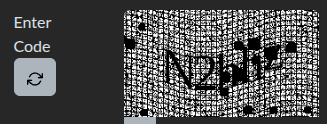
I tried twice to join those forums within the Fediverse and I can’t get past the captcha test. The fact that you need approval to validate your access doesn’t seem designed to encourage you to recommend it.

The captchas on Lemmy are AWFUL, I can’t do them either.

(that’s the “Medium” difficulty)

Lemmy v1.0 is adding the ability to do invites, so maybe there will be an invite-only instance that gets some momentum, that could be cool. Invite sites seems like a cool old-internet type of culture.


The fediverse stuff is way too complicated for me, Reddit is very easily accessible and actually has active communities for the topics I’m interested in.


Of course these are naturally going to be all negative because they’re users that bounced off the Threadiverse, but there’s probably hints to what can be improved

I’ve tried both [Lemmy and PieFed], and the UX is incredibly unintuitive and unpleasant. The main problem is that it’s quite hard to discover content you want while avoiding content you don’t, Bluesky at least has really good custom feeds that are easy to add (the default feed sucks). Another big issue is the general site layout, it’s hard to figure out how to do things as simple as saving a post for later or how to go back to the feed without being redirected back to the post I’m trying to exit.

Maybe they didn’t see the “Feeds” feature in PieFed? The top navigation menus in PieFed are a bit messy. Although shareable blocklists could be cool too, or maybe toxic?

That’s excluding the horrible lack of contrast most frontends use, which makes reading and parsing the site elements unnecessarily difficult (no Lemmy, grey text on a grey background is not good for readability).

I like the Lemmy colors, but maybe it should be easier to change, because they might like the darkly-pureblack theme.


Fediverse feels slower, but not in a good way. More of a ‘if I don’t use this for a week, I’ll see new things’. If I log in after 2 or 3 days, I’ll scroll for 10 minutes and see the stuff I saw last time.

Maybe this is a UX issue of not finding the right feed they would like.


I’ve tried using lemmy and have exactly the same issue. After blocking all the politics stuff, left wing meme stuff and tankie stuff there’s bugger all remaining. Even with all the blocks I’ve made it just seems to be a bunch of toxic left wing people calling each other fascist because of some minor difference in opinion.


I also want nsfw stuff now and then. I hate how censored the internet has become, at least with reddit if I want to see a bit of porn, I can.

Again maybe a UX issue of not presenting what communities they could subscribe to.


I tried twice to join those forums within the Fediverse and I can’t get past the captcha test. The fact that you need approval to validate your access doesn’t seem designed to encourage you to recommend it.

The captchas on Lemmy are AWFUL, I can’t do them either.

(that’s the “Medium” difficulty)

Lemmy v1.0 is adding the ability to do invites, so maybe there will be an invite-only instance that gets some momentum, that could be cool. Invite sites seems like a cool old-internet type of culture.


The fediverse stuff is way too complicated for me, Reddit is very easily accessible and actually has active communities for the topics I’m interested in.


Of course these are naturally going to be all negative because they’re users that bounced off the Threadiverse, but there’s probably hints to what can be improved

0

Enabling Sensitive Conversations with Consent Boundaries: Moa, a Platform for Discussing PhD Advising Relationships [as a testcase] | Proceedings of the ACM on Human-Computer Interaction

preview

I think this is a really interesting example of how the Fediverse has so much potential that goes far beyond the visions of social media that Corporations and rightwing extremist billionaires could ever provide us.

Yes a great use of a social media platform, if structured well and locally moderated by human beings, could absolutely be useful for certain cases like this in a way that would be superbly difficult to arrange otherwise.

Individuals who suffer from problematic power dynamics, such as mistreatment or abuse from someone in power, can benefit from identifying allies, whether it is to seek advice or remedial action. Here, we use the word “ally” to refer to any individual who is sympathetic and can offer some kind of help, ranging from sharing useful information to actively navigating the situation together. Example contexts include workplace bullying [91], political persecution [57], and sexual harassment [23]. In contexts where potential allies are initially unknown, however, someone must make at least a partial disclosure of their experience for what we call ally discovery1 to succeed. But, disclosure is risky because the exact conditions under which these situations arise heighten concerns of exposure and retaliation [3, 21]. That is, one cannot know whom to trust about an issue until one discloses being affected by it; yet one cannot disclose before knowing whom to trust.

Some of the most helpful information in navigating problematic power dynamics can come from individuals who share similar traits regarding the context, e.g., women working with the same manager. How can we facilitate the flow of information in such situations, so that individuals who need it most can discover allies while maintaining one’s anonymity? We consider this problem in the context of PhD students experiencing advising challenges. Because the advising relationship is fraught with power dynamics and ripe for exploitation [14, 47, 54, 80], ally discovery is critical for enabling students to connect with peers who might offer advice or partnership toward remedial action. Yet, research shows that ally discovery within the same PhD program can be difficult [24, 27].

…

Social media platforms are typically structured around a predefined network (e.g., followers) or space (e.g., group) [92]. In contrast, Moa focuses on the question: “How does each user want to design their audience per post or comment?” As a result, Moa does not implement any network model nor does it include user profile pages (REQ3).4 Furthermore, instead of letting users have access to the same content if they are in the same space, Moa’s users see different sets of posts (and comments) depending on their own and others’ consent boundaries (Section 4.2). In terms of the Form-From matrix [92], we believe Moa is closest to a Threaded Space, but consent boundaries considerably weaken both the threading and the space.

…

Taking a consent-centered approach was essential to developing Moa. While consent and privacy are closely related, there is a subtle difference in emphasis. Speaking strictly from an engineering standpoint, consent boundaries are like privacy settings—they give different permissions to different sets of users. But, they differ from traditional privacy settings with respect to the categories of user-sets that can be formed, the granularity of control, and most importantly, the way the categories align with users’ own preferences for control. Below, we reflect further on how consent differs from privacy, and what consent means for system development.

To begin, privacy is a fuzzy concept—scholars disagree on how exactly to define it, though definitions cluster around themes such as the right to be left alone, restriction of access, secrecy, control over personal information, personhood, and intimacy [77]. One relevant ambiguity in the context of computing is about who provides privacy: Privacy can be conferred to a user by the user themselves, or by a privacy-protecting system.

In contrast, the essence of consent is that it is strictly user-determined. The only entity who can grant an individual’s consent is the individual herself; there is no definition of “consent” in which a system can grant itself consent to do something to a user that the user does not herself wish to allow. Thus, relying on the term “privacy” can obscure the central role of the user, as privacy encompasses multiple, often ambiguous meanings. Arguably, the reason why “user-centered privacy” is a term distinct from general privacy is because the user-centeredness of privacy is not a given. Yet, even within the usable privacy and security community, discussions of consent have been limited to the notice-and-choice paradigm [13]. Consent is not cast as a foundational principle for system design.

Based on this view, systems frequently define privacy options in advance (i.e., the system is conferring some privacy), with users only able to accept or decline them. In practice, these options are often difficult to find or understand, further limiting true user consent. For instance, many of Facebook’s privacy settings are often hidden [30].

As the feminist affirmative consent framework recommends [35],14 consent should not merely be a mechanism for relaxing privacy constraints, but a foundational principle of design: individuals affected by an action should have the agency to define exactly what their consent boundary is, in the way that they conceive as relevant to a particular context.

…

Currently, Moa is maintained by the lead author in order to minimize privacy risks. Running the platform with 47 users turned out to be feasible—the lead author was diligent in moderating and seeking user feedback, and no incidents of abuse or negative feedback occurred. However, how could Moa and the concept of consent boundaries scale?

One way to scale is having multiple instances of Moa, one per organization or group, each with its own administrator, similar to Mastodon. This approach reflects an important assumption that local system admins are important for earning users’ trust, which was confirmed by our Phase 3 study. And, just as research shows that Reddit’s moderators have their own network of giving each other support [9], we imagine that there should be a support network for Moa’s administrators and moderators. This would ensure that each instance is not entirely isolated, and that when sensitive incidents happen, there would be cross-instance resources on how to resolve them.

It is possible to imagine building Moa as a larger, monolithic platform such as Facebook or Reddit, but we imagine even on such a platform, communities would have their own moderators—each trusted by their respective communities—who are empowered to provide the kind of meaningful oversight over identity that the Moa prototype included. For this study, it was easy for users to verify and understand that the moderator was also a PhD student in the same institution. At larger scale, there would need to be a process for selecting such moderators, and proving their identity to other members of the community.

In terms of consent boundaries, they are likely to be applicable to other contexts beyond PhD advising, such as among workplace employees [18, 67], survivors of sexual misbehavior by one group of people [16, 48], or potential whistleblowers at the same organization [19].

One aspect of the Moa prototype described in this paper was that there was an implicit consent boundary formed by the community of PhD students from the same institution—no user needed to consider whether their content would be revealed to non-students. Communities could be formed much like Slack’s channels around different topics, though additional mechanisms such as member-sponsored invitations to join or formal background checks would be required to ensure that community members satisfy membership requirements.

We also imagine consent boundaries could be used in general platforms such as Facebook or Reddit, likely in less sensitive contexts. Consent boundaries could help users carve out a group of people they want to interact with, without having to designate a particular space or network [92]. 6
I think this is a really interesting example of how the Fediverse has so much potential that goes far beyond the visions of social media that Corporations and rightwing extremist billionaires could ever provide us.

Yes a great use of a social media platform, if structured well and locally moderated by human beings, could absolutely be useful for certain cases like this in a way that would be superbly difficult to arrange otherwise.

Individuals who suffer from problematic power dynamics, such as mistreatment or abuse from someone in power, can benefit from identifying allies, whether it is to seek advice or remedial action. Here, we use the word “ally” to refer to any individual who is sympathetic and can offer some kind of help, ranging from sharing useful information to actively navigating the situation together. Example contexts include workplace bullying [91], political persecution [57], and sexual harassment [23]. In contexts where potential allies are initially unknown, however, someone must make at least a partial disclosure of their experience for what we call ally discovery1 to succeed. But, disclosure is risky because the exact conditions under which these situations arise heighten concerns of exposure and retaliation [3, 21]. That is, one cannot know whom to trust about an issue until one discloses being affected by it; yet one cannot disclose before knowing whom to trust.

Some of the most helpful information in navigating problematic power dynamics can come from individuals who share similar traits regarding the context, e.g., women working with the same manager. How can we facilitate the flow of information in such situations, so that individuals who need it most can discover allies while maintaining one’s anonymity? We consider this problem in the context of PhD students experiencing advising challenges. Because the advising relationship is fraught with power dynamics and ripe for exploitation [14, 47, 54, 80], ally discovery is critical for enabling students to connect with peers who might offer advice or partnership toward remedial action. Yet, research shows that ally discovery within the same PhD program can be difficult [24, 27].

…

Social media platforms are typically structured around a predefined network (e.g., followers) or space (e.g., group) [92]. In contrast, Moa focuses on the question: “How does each user want to design their audience per post or comment?” As a result, Moa does not implement any network model nor does it include user profile pages (REQ3).4 Furthermore, instead of letting users have access to the same content if they are in the same space, Moa’s users see different sets of posts (and comments) depending on their own and others’ consent boundaries (Section 4.2). In terms of the Form-From matrix [92], we believe Moa is closest to a Threaded Space, but consent boundaries considerably weaken both the threading and the space.

…

Taking a consent-centered approach was essential to developing Moa. While consent and privacy are closely related, there is a subtle difference in emphasis. Speaking strictly from an engineering standpoint, consent boundaries are like privacy settings—they give different permissions to different sets of users. But, they differ from traditional privacy settings with respect to the categories of user-sets that can be formed, the granularity of control, and most importantly, the way the categories align with users’ own preferences for control. Below, we reflect further on how consent differs from privacy, and what consent means for system development.

To begin, privacy is a fuzzy concept—scholars disagree on how exactly to define it, though definitions cluster around themes such as the right to be left alone, restriction of access, secrecy, control over personal information, personhood, and intimacy [77]. One relevant ambiguity in the context of computing is about who provides privacy: Privacy can be conferred to a user by the user themselves, or by a privacy-protecting system.

In contrast, the essence of consent is that it is strictly user-determined. The only entity who can grant an individual’s consent is the individual herself; there is no definition of “consent” in which a system can grant itself consent to do something to a user that the user does not herself wish to allow. Thus, relying on the term “privacy” can obscure the central role of the user, as privacy encompasses multiple, often ambiguous meanings. Arguably, the reason why “user-centered privacy” is a term distinct from general privacy is because the user-centeredness of privacy is not a given. Yet, even within the usable privacy and security community, discussions of consent have been limited to the notice-and-choice paradigm [13]. Consent is not cast as a foundational principle for system design.

Based on this view, systems frequently define privacy options in advance (i.e., the system is conferring some privacy), with users only able to accept or decline them. In practice, these options are often difficult to find or understand, further limiting true user consent. For instance, many of Facebook’s privacy settings are often hidden [30].

As the feminist affirmative consent framework recommends [35],14 consent should not merely be a mechanism for relaxing privacy constraints, but a foundational principle of design: individuals affected by an action should have the agency to define exactly what their consent boundary is, in the way that they conceive as relevant to a particular context.

…

Currently, Moa is maintained by the lead author in order to minimize privacy risks. Running the platform with 47 users turned out to be feasible—the lead author was diligent in moderating and seeking user feedback, and no incidents of abuse or negative feedback occurred. However, how could Moa and the concept of consent boundaries scale?

One way to scale is having multiple instances of Moa, one per organization or group, each with its own administrator, similar to Mastodon. This approach reflects an important assumption that local system admins are important for earning users’ trust, which was confirmed by our Phase 3 study. And, just as research shows that Reddit’s moderators have their own network of giving each other support [9], we imagine that there should be a support network for Moa’s administrators and moderators. This would ensure that each instance is not entirely isolated, and that when sensitive incidents happen, there would be cross-instance resources on how to resolve them.

It is possible to imagine building Moa as a larger, monolithic platform such as Facebook or Reddit, but we imagine even on such a platform, communities would have their own moderators—each trusted by their respective communities—who are empowered to provide the kind of meaningful oversight over identity that the Moa prototype included. For this study, it was easy for users to verify and understand that the moderator was also a PhD student in the same institution. At larger scale, there would need to be a process for selecting such moderators, and proving their identity to other members of the community.

In terms of consent boundaries, they are likely to be applicable to other contexts beyond PhD advising, such as among workplace employees [18, 67], survivors of sexual misbehavior by one group of people [16, 48], or potential whistleblowers at the same organization [19].

One aspect of the Moa prototype described in this paper was that there was an implicit consent boundary formed by the community of PhD students from the same institution—no user needed to consider whether their content would be revealed to non-students. Communities could be formed much like Slack’s channels around different topics, though additional mechanisms such as member-sponsored invitations to join or formal background checks would be required to ensure that community members satisfy membership requirements.

We also imagine consent boundaries could be used in general platforms such as Facebook or Reddit, likely in less sensitive contexts. Consent boundaries could help users carve out a group of people they want to interact with, without having to designate a particular space or network [92]. 6
0

I received 3842 spam applications on my Peertube instance 🫩

preview

Does anyone know how I can reject all applications at once? Via the UI I can only reject 100 at a time

I’ve also been getting lots of similar spam on Lemmy, with almost the exact same application message. I assume they’re related.

Does anyone know how I can reject all applications at once? Via the UI I can only reject 100 at a time

I’ve also been getting lots of similar spam on Lemmy, with almost the exact same application message. I assume they’re related.

0

Thinking of opensourcing my daily-driver fediverse app. What are your thoughts on running it through an AI security tool before doing so?

preview

For about a year as a hobby I’ve been writing an app that scratches several itches that I’ve had with the fediverse (multiple accounts at once, supporting both microblog- and threaded-style content, synthetic/hybrid feeds, etc.) and for the past month or so have been using it exclusively on the desktop and about 50% of the time on mobile (Voyager is my main mobile client and source of inspiration here). I’d like to open source the whole thing. But the code is mine, therefore buggy and bad. Normally I’d not worry too much about that, but in the age of LLM attacks I don’t want to contribute more security vulnerabilities to the world. Should I use an LLM security tool to analyze my code and point out security issues so I can patch them before releasing the code? If so that would more or less be the only AI contribution. I’m a practical-minded person and use AI tools at work so it doesn’t bother me, but I know lots of people here have strong (and often helpful) opinions on the matter.

For about a year as a hobby I’ve been writing an app that scratches several itches that I’ve had with the fediverse (multiple accounts at once, supporting both microblog- and threaded-style content, synthetic/hybrid feeds, etc.) and for the past month or so have been using it exclusively on the desktop and about 50% of the time on mobile (Voyager is my main mobile client and source of inspiration here). I’d like to open source the whole thing. But the code is mine, therefore buggy and bad. Normally I’d not worry too much about that, but in the age of LLM attacks I don’t want to contribute more security vulnerabilities to the world. Should I use an LLM security tool to analyze my code and point out security issues so I can patch them before releasing the code? If so that would more or less be the only AI contribution. I’m a practical-minded person and use AI tools at work so it doesn’t bother me, but I know lots of people here have strong (and often helpful) opinions on the matter.

0

New Pie enjoyer here

preview

Hi everyone!

I’m a long time (multiple years) fedi user. First it was Mastodon, latter Lemmy and now I’m trying out Piefed.

I find masto easiest conceptually, lemmy second because of communities and how they federate while piefed confuses me a bit. I like that piefed bridges lemmy and masto universe which I find super valuable. But I’m confused by topics, hashtags and feeds. And how wider fediverse threads into all of this.

Hi everyone!

I’m a long time (multiple years) fedi user. First it was Mastodon, latter Lemmy and now I’m trying out Piefed.

I find masto easiest conceptually, lemmy second because of communities and how they federate while piefed confuses me a bit. I like that piefed bridges lemmy and masto universe which I find super valuable. But I’m confused by topics, hashtags and feeds. And how wider fediverse threads into all of this.

0

Downtime - fedia.social and other instances

preview

fedia.social seems to alternate between uptime and downtime over the past couple of days. I realised that infosec.town and a few other instances operated by @jerry@infosec.pub face(d) the same issue. Any pointers as to what the problem might be? Thanks!

fedia.social seems to alternate between uptime and downtime over the past couple of days. I realised that infosec.town and a few other instances operated by @jerry@infosec.pub face(d) the same issue. Any pointers as to what the problem might be? Thanks!

0

Call for Mbin contributors

preview

Crossposted from https://fedia.io/m/updates@kbin.melroy.org/t/4475005

As you all might know it, Mbin is a rather small project with a small team. In fact the current size of the team is 1.5 developers (0.5 for the ones which only have partially time). While our active devs do what they can in their free time, this leads to slow feature and security updates, sometimes slow support and increasing stress for the remaining devs.

That’s why I ask everyone who likes this project, has time of their own to donate and knows how to program with PHP (or is willing to learn it) to consider helping this project move forward.
You can start with simpler features and submit them as PRs or even just help review existing PRs if full commitment to maintaining the codebase is currently too much. We are aware that parts of our codebase contains more spagett than some Italian restaurants, but we will help every newcomer to find their way through the sources.
Every bit of support helps, as it also shows that we have a passionate userbase which does not want Mbin to wither away.

Well … as I’m not very good at writing motivational texts, just comment anything which comes to mind for this issue :D If you have ideas how to improve the chances that this post reach the right people, I would also love to hear it.


At the same time I want to bring up another topic, as transparency is important for any public project.

Some of our devs use AI assistants for generating code for PRs and also to assist with PR reviews. Simply because without it, they would not have time to continue contributing to Mbin (which would bring our devs down to 1, making it impossible to merge new PRs). On thing here is important to know: I will not call it slop nor vibe-coding, as they are a competent developer capable of understanding and managing the outputs of the agents. Still, I am very aware of the issues of AI and the general opinion on it in the Fediverse. That is why I would like to know your constructive opinions on this matter.
Also, I guarantee you that every PR is reviewed by at least one human pair of eyes.

Crossposted from https://fedia.io/m/updates@kbin.melroy.org/t/4475005

As you all might know it, Mbin is a rather small project with a small team. In fact the current size of the team is 1.5 developers (0.5 for the ones which only have partially time). While our active devs do what they can in their free time, this leads to slow feature and security updates, sometimes slow support and increasing stress for the remaining devs.

That’s why I ask everyone who likes this project, has time of their own to donate and knows how to program with PHP (or is willing to learn it) to consider helping this project move forward.
You can start with simpler features and submit them as PRs or even just help review existing PRs if full commitment to maintaining the codebase is currently too much. We are aware that parts of our codebase contains more spagett than some Italian restaurants, but we will help every newcomer to find their way through the sources.
Every bit of support helps, as it also shows that we have a passionate userbase which does not want Mbin to wither away.

Well … as I’m not very good at writing motivational texts, just comment anything which comes to mind for this issue :D If you have ideas how to improve the chances that this post reach the right people, I would also love to hear it.


At the same time I want to bring up another topic, as transparency is important for any public project.

Some of our devs use AI assistants for generating code for PRs and also to assist with PR reviews. Simply because without it, they would not have time to continue contributing to Mbin (which would bring our devs down to 1, making it impossible to merge new PRs). On thing here is important to know: I will not call it slop nor vibe-coding, as they are a competent developer capable of understanding and managing the outputs of the agents. Still, I am very aware of the issues of AI and the general opinion on it in the Fediverse. That is why I would like to know your constructive opinions on this matter.
Also, I guarantee you that every PR is reviewed by at least one human pair of eyes.

0

Introducing Fedizen, Our Bonfire Project

preview

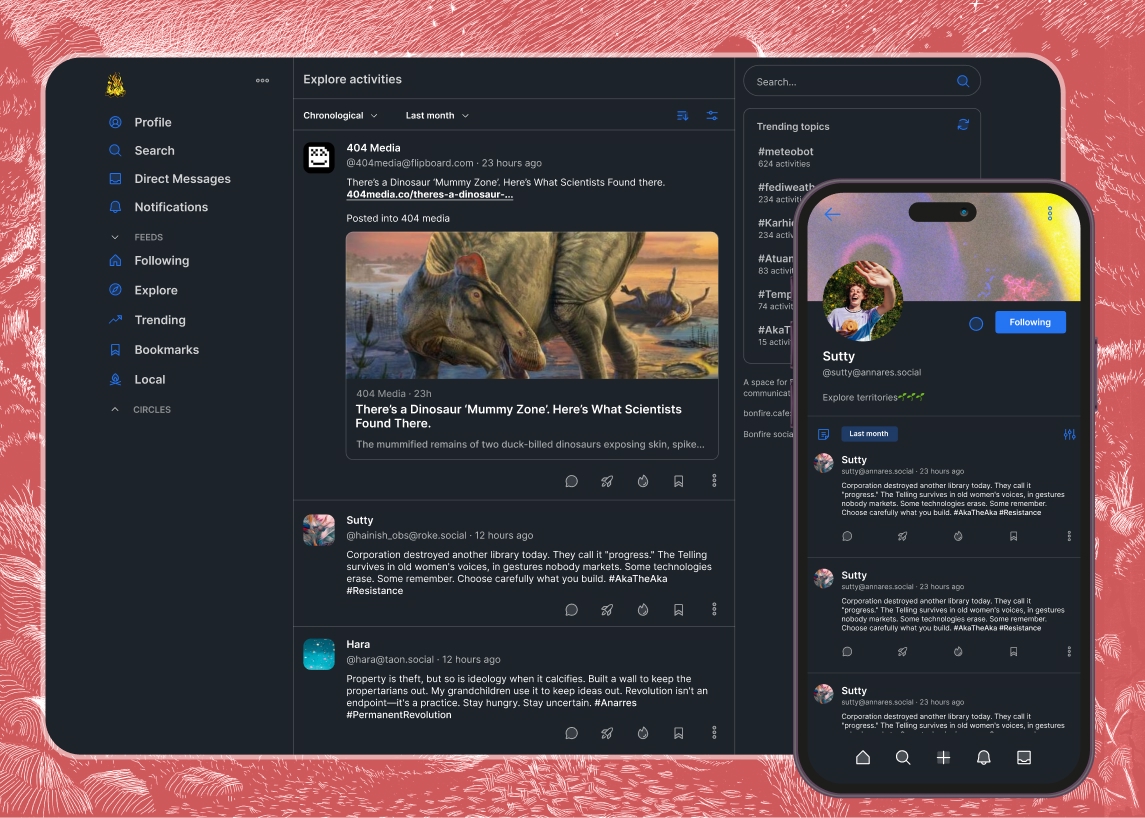
We Distribute is teaming up with Bonfire to develop a new kind of social instance - one that elevates curation and discovery to promote all things Fediverse. It’s a social instance, but also a discovery portal.

We Distribute is teaming up with Bonfire to develop a new kind of social instance - one that elevates curation and discovery to promote all things Fediverse. It’s a social instance, but also a discovery portal.

0

PieFed 1.8 is released - multi-image posts, reposter filter, new admin tools

preview
  • Gallery posts, which is an image post with multiple images in it, compatible with Mastodon and Pixelfed. Check out this example from Mastodon.

  • “Reposters” as a separate thing from “Bots” with the same Show and Hide options for filtering that bots have. Reposters are more targeted, with higher quality content than true bots and often have a human operator writing comments. However many people find this inauthentic so now they can be filtered out. More details

  • /c/microblogs can show posts from people you’re following OR all posts.

  • Recent hashtags shown on the home page sidebar.

  • Support for receiving posts with jpegxl images.

  • Communities can have a default hashtag for new posts - posters can edit or remove it if they want.

For admins:

  • Option to manually approve posts by new accounts, to cut down on spam while having open registrations (no approval on the new account). This will let people dip their toes in without waiting.

  • Easily contact other instance admins, see /admin/instances

  • Vote manipulation detection tools for simple sockpuppets and complex coordinated voting networks. See /admin/voting

  • Serial downvoter report showing who made lots of downvotes against a single person in a short time.

  • Other bot detection tools - e.g. easily spot unnatural runs of very quick post creation.

  • Display list of alts on user profiles to more easily investigate activity by alts.

  • Filter emoji with keywords rather than importing absolutely everything - this will speed up the emoji reaction dialog.

  • Identify instances likely to be used by spammers in future. See /admin/instances?filter=liability

  • Microblog posts with no replies can be automatically deleted - set the MICROBLOG_CONTENT_RETENTION environment variable to how many months you want to keep them for.


To upgrade from 1.7.x

git pull  
git checkout v1.8.x  

Then,

./deploy.sh or ./deploy-docker.sh


Donations

PieFed is free and open-source software while operating without any advertising, monetization, or reliance on venture capital. Your donations are vital in supporting the PieFed development effort, allowing us to expand and enhance PieFed with new features.

Donations can be made via Patreon, Liberapay or Ko-fi.

  • Gallery posts, which is an image post with multiple images in it, compatible with Mastodon and Pixelfed. Check out this example from Mastodon.

  • “Reposters” as a separate thing from “Bots” with the same Show and Hide options for filtering that bots have. Reposters are more targeted, with higher quality content than true bots and often have a human operator writing comments. However many people find this inauthentic so now they can be filtered out. More details

  • /c/microblogs can show posts from people you’re following OR all posts.

  • Recent hashtags shown on the home page sidebar.

  • Support for receiving posts with jpegxl images.

  • Communities can have a default hashtag for new posts - posters can edit or remove it if they want.

For admins:

  • Option to manually approve posts by new accounts, to cut down on spam while having open registrations (no approval on the new account). This will let people dip their toes in without waiting.

  • Easily contact other instance admins, see /admin/instances

  • Vote manipulation detection tools for simple sockpuppets and complex coordinated voting networks. See /admin/voting

  • Serial downvoter report showing who made lots of downvotes against a single person in a short time.

  • Other bot detection tools - e.g. easily spot unnatural runs of very quick post creation.

  • Display list of alts on user profiles to more easily investigate activity by alts.

  • Filter emoji with keywords rather than importing absolutely everything - this will speed up the emoji reaction dialog.

  • Identify instances likely to be used by spammers in future. See /admin/instances?filter=liability

  • Microblog posts with no replies can be automatically deleted - set the MICROBLOG_CONTENT_RETENTION environment variable to how many months you want to keep them for.


To upgrade from 1.7.x

git pull  
git checkout v1.8.x  

Then,

./deploy.sh or ./deploy-docker.sh


Donations

PieFed is free and open-source software while operating without any advertising, monetization, or reliance on venture capital. Your donations are vital in supporting the PieFed development effort, allowing us to expand and enhance PieFed with new features.

Donations can be made via Patreon, Liberapay or Ko-fi.

0

PyLova v0.4.0 Moderation & Community Management Tools Galore!

preview

image

PyLova (Python+Pavlova) is a soft fork of PieFed, aimed at improving the user experience through UI overhauls, empowering users and admins with agency, improved administration and moderation functions, and general bug fixing.

New in V0.4.0

New & Improved

  • Instance & Community Stats: Mods and admins get a stats page for their community, tracking total subscribers, new subscribers, votes, posts and comments over time.
Example

image
image

  • Ban Appeals: Banned users can appeal a community ban with a written reason. Appeals federate to other PyLova instances as a queued notification, for other software (Lemmy, MBin) the head mod will receive a PM with the requet.
  • Community Post Requirements: Mods can set rules for posting in their community, things such as requiring flair, specific keywords (Rule) in post titles, ban specific words in titles, and disallow post types.
  • Notification Settings: Users can set what notification types they wish to receive.
  • Markdown Editor Overhaul: New options for tables, strike-through, horizontal rules, headings and footnotes, alongside support for ruby annotations, inline hashtags and Mbin-style details/spoiler blocks.
  • Markdown in Chats: Direct messages now use the full markdown editor and render formatting. Images are offered as a link, due to potential for misuse in unmoderated messages (i.e. tracking/doxxing).
  • Modlog Suppression: Admins and staff can hide a modlog entry’s reason from everyone else, which displays as " Reason suppressed by AdminName ". It is intended for use cases such as doxxing or harassment through modlog entries. This replaces the PieFed behaviour of outright hiding all modlog entries if not from a trusted instance.

Bug-Fixes & Misc

  • Ranking Algorithm Rework : Scaled sorting now weighs communities by monthly active users instead of raw subscriber count.
  • Unsaved Draft Warning : Closing a tab or hitting Ctrl-W with a part-written post or comment now asks for confirmation first.
  • Chat Deduplication : Starting a chat with someone you have already messaged opens the existing conversation instead of creating a second thread.
  • Lemmy/Mbin support for Multi-Image Posts : Extra images now render correctly on Lemmy instances that run an image proxy.
  • Markdown Editor Fixes : The link and image buttons no longer prefill https:// or add a leading space, the cursor now lands inside the () ready for a paste, and the redundant quick/email link options are gone.
  • Vote History: Users can now view their own upvote and downvote history, linked from a new activity card on the profile page alongside bookmarks and scheduled posts.
  • Indented Code Blocks : A ``` inside a four-space indented block no longer breaks the rest of the comment.
  • Animated Images: WebP, APNG, Gifs no longer resized in ways that strip the animation.
  • Notifications : Expanded by default rather than collapsed.
  • User Preview Card : Rebuilt to show flair, flags, pronouns and admin/staff badges, using thumbnails rather than full-size avatars.

image

PyLova (Python+Pavlova) is a soft fork of PieFed, aimed at improving the user experience through UI overhauls, empowering users and admins with agency, improved administration and moderation functions, and general bug fixing.

New in V0.4.0

New & Improved

  • Instance & Community Stats: Mods and admins get a stats page for their community, tracking total subscribers, new subscribers, votes, posts and comments over time.
Example

image
image

  • Ban Appeals: Banned users can appeal a community ban with a written reason. Appeals federate to other PyLova instances as a queued notification, for other software (Lemmy, MBin) the head mod will receive a PM with the requet.
  • Community Post Requirements: Mods can set rules for posting in their community, things such as requiring flair, specific keywords (Rule) in post titles, ban specific words in titles, and disallow post types.
  • Notification Settings: Users can set what notification types they wish to receive.
  • Markdown Editor Overhaul: New options for tables, strike-through, horizontal rules, headings and footnotes, alongside support for ruby annotations, inline hashtags and Mbin-style details/spoiler blocks.
  • Markdown in Chats: Direct messages now use the full markdown editor and render formatting. Images are offered as a link, due to potential for misuse in unmoderated messages (i.e. tracking/doxxing).
  • Modlog Suppression: Admins and staff can hide a modlog entry’s reason from everyone else, which displays as " Reason suppressed by AdminName ". It is intended for use cases such as doxxing or harassment through modlog entries. This replaces the PieFed behaviour of outright hiding all modlog entries if not from a trusted instance.

Bug-Fixes & Misc

  • Ranking Algorithm Rework : Scaled sorting now weighs communities by monthly active users instead of raw subscriber count.
  • Unsaved Draft Warning : Closing a tab or hitting Ctrl-W with a part-written post or comment now asks for confirmation first.
  • Chat Deduplication : Starting a chat with someone you have already messaged opens the existing conversation instead of creating a second thread.
  • Lemmy/Mbin support for Multi-Image Posts : Extra images now render correctly on Lemmy instances that run an image proxy.
  • Markdown Editor Fixes : The link and image buttons no longer prefill https:// or add a leading space, the cursor now lands inside the () ready for a paste, and the redundant quick/email link options are gone.
  • Vote History: Users can now view their own upvote and downvote history, linked from a new activity card on the profile page alongside bookmarks and scheduled posts.
  • Indented Code Blocks : A ``` inside a four-space indented block no longer breaks the rest of the comment.
  • Animated Images: WebP, APNG, Gifs no longer resized in ways that strip the animation.
  • Notifications : Expanded by default rather than collapsed.
  • User Preview Card : Rebuilt to show flair, flags, pronouns and admin/staff badges, using thumbnails rather than full-size avatars.
0

PyLova v0.4.0 Moderation & Community Management Tools Galore!

preview

image

PyLova (Python+Pavlova) is a soft fork of PieFed, aimed at improving the user experience through UI overhauls, empowering users and admins with agency, improved administration and moderation functions, and general bug fixing.

New in V0.4.0

New & Improved

  • Instance & Community Stats: Mods and admins get a stats page for their community, tracking total subscribers, new subscribers, votes, posts and comments over time.
Example

image
image

  • Ban Appeals: Banned users can appeal a community ban with a written reason. Appeals federate to other PyLova instances as a queued notification, for other software (Lemmy, MBin) the head mod will receive a PM with the requet.
  • Community Post Requirements: Mods can set rules for posting in their community, things such as requiring flair, specific keywords (Rule) in post titles, ban specific words in titles, and disallow post types.
  • Notification Settings: Users can set what notification types they wish to receive.
  • Markdown Editor Overhaul: New options for tables, strike-through, horizontal rules, headings and footnotes, alongside support for ruby annotations, inline hashtags and Mbin-style details/spoiler blocks.
  • Markdown in Chats: Direct messages now use the full markdown editor and render formatting. Images are offered as a link, due to potential for misuse in unmoderated messages (i.e. tracking/doxxing).
  • Modlog Suppression: Admins and staff can hide a modlog entry’s reason from everyone else, which displays as " Reason suppressed by AdminName ". It is intended for use cases such as doxxing or harassment through modlog entries. This replaces the PieFed behaviour of outright hiding all modlog entries if not from a trusted instance.

Bug-Fixes & Misc

  • Ranking Algorithm Rework : Scaled sorting now weighs communities by monthly active users instead of raw subscriber count.
  • Unsaved Draft Warning : Closing a tab or hitting Ctrl-W with a part-written post or comment now asks for confirmation first.
  • Chat Deduplication : Starting a chat with someone you have already messaged opens the existing conversation instead of creating a second thread.
  • Lemmy/Mbin support for Multi-Image Posts : Extra images now render correctly on Lemmy instances that run an image proxy.
  • Markdown Editor Fixes : The link and image buttons no longer prefill https:// or add a leading space, the cursor now lands inside the () ready for a paste, and the redundant quick/email link options are gone.
  • Vote History: Users can now view their own upvote and downvote history, linked from a new activity card on the profile page alongside bookmarks and scheduled posts.
  • Indented Code Blocks : A ``` inside a four-space indented block no longer breaks the rest of the comment.
  • Animated Images: WebP, APNG, Gifs no longer resized in ways that strip the animation.
  • Notifications : Expanded by default rather than collapsed.
  • User Preview Card : Rebuilt to show flair, flags, pronouns and admin/staff badges, using thumbnails rather than full-size avatars.

image

PyLova (Python+Pavlova) is a soft fork of PieFed, aimed at improving the user experience through UI overhauls, empowering users and admins with agency, improved administration and moderation functions, and general bug fixing.

New in V0.4.0

New & Improved

  • Instance & Community Stats: Mods and admins get a stats page for their community, tracking total subscribers, new subscribers, votes, posts and comments over time.
Example

image
image

  • Ban Appeals: Banned users can appeal a community ban with a written reason. Appeals federate to other PyLova instances as a queued notification, for other software (Lemmy, MBin) the head mod will receive a PM with the requet.
  • Community Post Requirements: Mods can set rules for posting in their community, things such as requiring flair, specific keywords (Rule) in post titles, ban specific words in titles, and disallow post types.
  • Notification Settings: Users can set what notification types they wish to receive.
  • Markdown Editor Overhaul: New options for tables, strike-through, horizontal rules, headings and footnotes, alongside support for ruby annotations, inline hashtags and Mbin-style details/spoiler blocks.
  • Markdown in Chats: Direct messages now use the full markdown editor and render formatting. Images are offered as a link, due to potential for misuse in unmoderated messages (i.e. tracking/doxxing).
  • Modlog Suppression: Admins and staff can hide a modlog entry’s reason from everyone else, which displays as " Reason suppressed by AdminName ". It is intended for use cases such as doxxing or harassment through modlog entries. This replaces the PieFed behaviour of outright hiding all modlog entries if not from a trusted instance.

Bug-Fixes & Misc

  • Ranking Algorithm Rework : Scaled sorting now weighs communities by monthly active users instead of raw subscriber count.
  • Unsaved Draft Warning : Closing a tab or hitting Ctrl-W with a part-written post or comment now asks for confirmation first.
  • Chat Deduplication : Starting a chat with someone you have already messaged opens the existing conversation instead of creating a second thread.
  • Lemmy/Mbin support for Multi-Image Posts : Extra images now render correctly on Lemmy instances that run an image proxy.
  • Markdown Editor Fixes : The link and image buttons no longer prefill https:// or add a leading space, the cursor now lands inside the () ready for a paste, and the redundant quick/email link options are gone.
  • Vote History: Users can now view their own upvote and downvote history, linked from a new activity card on the profile page alongside bookmarks and scheduled posts.
  • Indented Code Blocks : A ``` inside a four-space indented block no longer breaks the rest of the comment.
  • Animated Images: WebP, APNG, Gifs no longer resized in ways that strip the animation.
  • Notifications : Expanded by default rather than collapsed.
  • User Preview Card : Rebuilt to show flair, flags, pronouns and admin/staff badges, using thumbnails rather than full-size avatars.