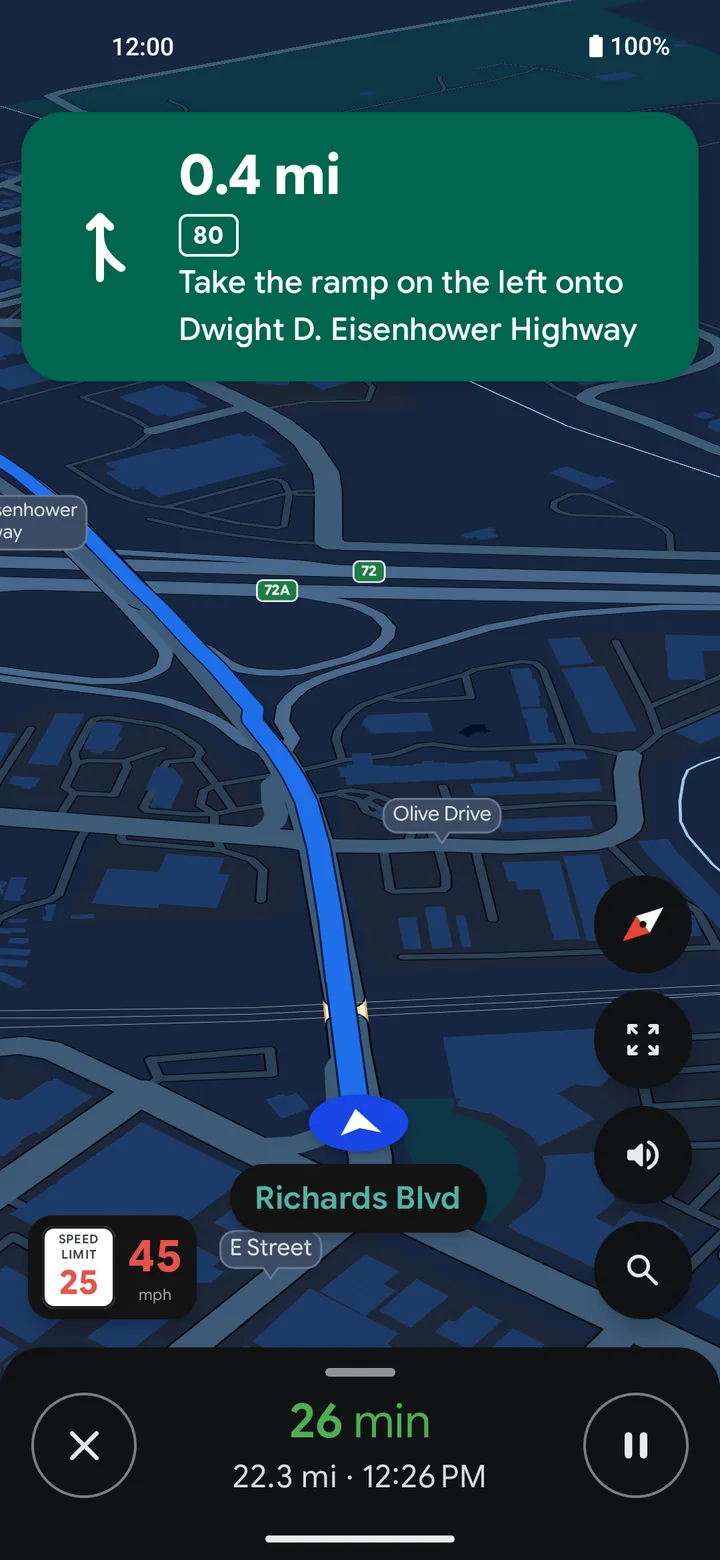
There is an option to have it NEVER talk to google, it uses open street maps, it downloads flock camera locations, will alert you when they’re close, and - it will route around flock cameras !
This looks like a promising app!
There is an option to have it NEVER talk to google, it uses open street maps, it downloads flock camera locations, will alert you when they’re close, and - it will route around flock cameras !
Lightweight dark mode extension for Firefox that works via CSS inversion rather than JavaScript injection.
Why that distinction matters for privacy-minded users: extensions that inject JS into pages can read page content, intercept form data, etc. NightOwl applies a CSS filter at the browser level — the page itself doesn’t know the extension is running.
It’s not as feature-rich as Dark Reader (no per-site configuration, no brightness adjustments), but it’s simpler and doesn’t touch page content.
Source is available if you want to review what it does.
Lightweight dark mode extension for Firefox that works via CSS inversion rather than JavaScript injection.
Why that distinction matters for privacy-minded users: extensions that inject JS into pages can read page content, intercept form data, etc. NightOwl applies a CSS filter at the browser level — the page itself doesn’t know the extension is running.
It’s not as feature-rich as Dark Reader (no per-site configuration, no brightness adjustments), but it’s simpler and doesn’t touch page content.
Source is available if you want to review what it does.
The previous Polish government used Israeli spyware to target opposition politicians and members of the judicial system, the country’s prime minister said on Monday in a televised address.
Donald Tusk said a two-year parliamentary investigation had found that the previous nationalist-conservative Law and Justice (PiS) governing party allowed Israel access to data collected using Pegasus spyware.
The PiS governments paid $7.65m for the system and used it to surveil opposition politicians as well as members of the legal system who were critical of the ruling administration.
According to media reports, Pegasus was acquired in late 2017, actively used from 2017 to 2023, deployed during the 2019 elections, and ultimately used against hundreds of individuals, including several prominent figures from within its own ranks.
The previous Polish government used Israeli spyware to target opposition politicians and members of the judicial system, the country’s prime minister said on Monday in a televised address.
Donald Tusk said a two-year parliamentary investigation had found that the previous nationalist-conservative Law and Justice (PiS) governing party allowed Israel access to data collected using Pegasus spyware.
The PiS governments paid $7.65m for the system and used it to surveil opposition politicians as well as members of the legal system who were critical of the ruling administration.
According to media reports, Pegasus was acquired in late 2017, actively used from 2017 to 2023, deployed during the 2019 elections, and ultimately used against hundreds of individuals, including several prominent figures from within its own ranks.
I am thinking about a Garmin watch and using it with Pulse. My cardio is really bad and it has been starting to cause all sorts of health issues, so I need something to track my heart rate while I go on walks to build my stamina back up so I can start actually working out.
On device only, no play store, with GrapheneOS.
I am thinking about a Garmin watch and using it with Pulse. My cardio is really bad and it has been starting to cause all sorts of health issues, so I need something to track my heart rate while I go on walks to build my stamina back up so I can start actually working out.
Five years of your social media just to visit the US on an ESTA, and 50,922 phone searches at the border in a single year with no suspicion needed. Part 1 of my Five Eyes series: who else gets to see it?
Five years of your social media just to visit the US on an ESTA, and 50,922 phone searches at the border in a single year with no suspicion needed. Part 1 of my Five Eyes series: who else gets to see it?
Surveillance camera maker Flock is cutting its workforce as the company faces ongoing and growing backlash to its license plate readers and people-tracking technology.
News of the staff cuts comes from Reuters, which reported that Flock is reducing its staff by 18%, or around 270 employees, across the board. The publication said the employees are leaving at the end of October following a voluntary buyout program.
Wired reported last month that Flock was asking some of its employees to leave, citing the need to shrink its staff to avoid mandatory layoffs.
Flock spokesperson Paris Lewbel told TechCrunch in a statement on Friday: “Flock recently offered current employees a generous Voluntary Separation Program as part of our efforts to position the company for its next phase of growth. This was a voluntary program, not a layoff, and reflects our continued focus on building a strong, sustainable business for the future.”
Surveillance camera maker Flock is cutting its workforce as the company faces ongoing and growing backlash to its license plate readers and people-tracking technology.
News of the staff cuts comes from Reuters, which reported that Flock is reducing its staff by 18%, or around 270 employees, across the board. The publication said the employees are leaving at the end of October following a voluntary buyout program.
Wired reported last month that Flock was asking some of its employees to leave, citing the need to shrink its staff to avoid mandatory layoffs.
Flock spokesperson Paris Lewbel told TechCrunch in a statement on Friday: “Flock recently offered current employees a generous Voluntary Separation Program as part of our efforts to position the company for its next phase of growth. This was a voluntary program, not a layoff, and reflects our continued focus on building a strong, sustainable business for the future.”
As the title says, I’m trying to find a bookmark manager with peer2peer syncing and can work between browser engines. I’m currently jumping around different browsers to figure out which to stick with (all have something I don’t like for now). I have a ton of bookmarks I want to bring along but I don’t have the time/want/energy to set up a homelab at this point in time, which means no NextCloud and no DAV, which by extension means no Floccus since it relies on DAV.
I don’t care if the P2P functionality is built in or if it writes to a local file that has to rely on Syncthing for syncing between devices. That being said Syncthing would be a plus. I’ve been looking around all day and can’t find anything that’d work. The closest thing I’ve found is xBrowserSync, but that looks like it’s abandoned.
As the title says, I’m trying to find a bookmark manager with peer2peer syncing and can work between browser engines. I’m currently jumping around different browsers to figure out which to stick with (all have something I don’t like for now). I have a ton of bookmarks I want to bring along but I don’t have the time/want/energy to set up a homelab at this point in time, which means no NextCloud and no DAV, which by extension means no Floccus since it relies on DAV.
I don’t care if the P2P functionality is built in or if it writes to a local file that has to rely on Syncthing for syncing between devices. That being said Syncthing would be a plus. I’ve been looking around all day and can’t find anything that’d work. The closest thing I’ve found is xBrowserSync, but that looks like it’s abandoned.
first of all i wanna say i have already tried a linux box with plasma bigscreen and its unfortunately not my thing
SO something that’s easy to use (like an android box) and has support for youtube adblocking (and maybe even sponsorblock). I’m not looking to use a little keyboard controller to navigate a desktop ui, i would like to use a standard enough remote and navigate something that was made for a tv
i know this is like impossible and it doesn’t need to be crazy private, just something that doesn’t take all of my yummy data :)
thank guy
first of all i wanna say i have already tried a linux box with plasma bigscreen and its unfortunately not my thing
SO something that’s easy to use (like an android box) and has support for youtube adblocking (and maybe even sponsorblock). I’m not looking to use a little keyboard controller to navigate a desktop ui, i would like to use a standard enough remote and navigate something that was made for a tv
i know this is like impossible and it doesn’t need to be crazy private, just something that doesn’t take all of my yummy data :)
Secure messaging service Signal is still ready to shut down its Canadian operations if Bill C-22, known as the Lawful Access Act, becomes law and is enforced.
Secure messaging service Signal is still ready to shut down its Canadian operations if Bill C-22, known as the Lawful Access Act, becomes law and is enforced.
When I read that the US had proposed making ESTA visitors hand over five years of their social media, I asked myself, would I even want to go there now? Then I went looking at where all that information ends up. Part 1 of my Five Eyes series.
When I read that the US had proposed making ESTA visitors hand over five years of their social media, I asked myself, would I even want to go there now? Then I went looking at where all that information ends up. Part 1 of my Five Eyes series.
This was an incredible documentary. I was too young to grasp the whole Snowden thing when it happened so this was a great recap. But I have a question. This all happened, but what was the aftermath of these leaks? It seems people today have completely forgotten about this or don’t really care, so that domain kind of failed. And were there any consequences for the NSA, any legislative intervention, anything at all, or was it just <insert “we’re sorry” south park meme>. Do we have to assume nothing changed and the surveillance is still in place or probably even worse?
This was an incredible documentary. I was too young to grasp the whole Snowden thing when it happened so this was a great recap. But I have a question. This all happened, but what was the aftermath of these leaks? It seems people today have completely forgotten about this or don’t really care, so that domain kind of failed. And were there any consequences for the NSA, any legislative intervention, anything at all, or was it just <insert “we’re sorry” south park meme>. Do we have to assume nothing changed and the surveillance is still in place or probably even worse?
USPS says the cameras, put on USPS truck dashboards, will scan roads, signs, and more.
The United States Postal Service is running a pilot program to put cameras in its mail carrier trucks that continuously scan roads and signs, map roadways and sidewalks, and improve “community safety,” according to a letter posted by a labor union and a statement from the agency to 404 Media. The idea is that, since the trucks are constantly traveling anyway, they can be used as a way to collect data, eventually potentially across the nation.
The letter, written by the United States Postal Service (USPS) Labor Relations to Brian Renfroe, the president of the National Association of Letter Carriers, says the USPS will partner with Next Base, a dashcam company, for the pilot. At the moment, the cameras will be used in the Washington, DC area, and will be installed on a hundred vehicles, the letter says.
On its website, Next Base offers a variety of dash cams, marketed to ordinary drivers, fleet operators, and ride share drivers. Its website says Next Base’s cameras record in up to 4K, and can capture every “license plate” with precision. The cameras don’t run automatic license plate reader (ALPR) software, though.
The pilot was slated to start on September 21, and is expected to last several months, the letter says.
USPS trucks already have 360 degree cameras that capture the outside of the vehicle for a period of time.
USPS says the cameras, put on USPS truck dashboards, will scan roads, signs, and more.
The United States Postal Service is running a pilot program to put cameras in its mail carrier trucks that continuously scan roads and signs, map roadways and sidewalks, and improve “community safety,” according to a letter posted by a labor union and a statement from the agency to 404 Media. The idea is that, since the trucks are constantly traveling anyway, they can be used as a way to collect data, eventually potentially across the nation.
The letter, written by the United States Postal Service (USPS) Labor Relations to Brian Renfroe, the president of the National Association of Letter Carriers, says the USPS will partner with Next Base, a dashcam company, for the pilot. At the moment, the cameras will be used in the Washington, DC area, and will be installed on a hundred vehicles, the letter says.
On its website, Next Base offers a variety of dash cams, marketed to ordinary drivers, fleet operators, and ride share drivers. Its website says Next Base’s cameras record in up to 4K, and can capture every “license plate” with precision. The cameras don’t run automatic license plate reader (ALPR) software, though.
The pilot was slated to start on September 21, and is expected to last several months, the letter says.
USPS trucks already have 360 degree cameras that capture the outside of the vehicle for a period of time.
Sometimes I will share a resource on YouTube here. I think it is good on its own for the community, but really its a good intro to share with friends and family.
People often push back because of the link being YouTube, fair, but simply saying find a front end is kind of entailed. Many that are public go down and never come back, and the link does have the video ID at the end of the URL so if you are self hosting you can just load it up.
Sometimes I will share a resource on YouTube here. I think it is good on its own for the community, but really its a good intro to share with friends and family.
People often push back because of the link being YouTube, fair, but simply saying find a front end is kind of entailed. Many that are public go down and never come back, and the link does have the video ID at the end of the URL so if you are self hosting you can just load it up.
Hey,
I am currently paying 5,50€ a month for a Hetzner VPS to selfhost a Pangolin instance. I’ve come to quite rely on Pangolin, because I have to access all of my selfhosted services from my home server from remote. That’s because I have to keep my server at home (while I live in a student dorm, which doesn’t allow using their network to host servers). Also their authentication and private resources are really good for security and exposing ssh and other stuff from my home server to authenticated clients.
Anyway, I like this setup, because it is fully FOSS and I have 100% control of what my VPS does. It is really expensive though and I am trying to reduce my monthly expenses right now.
I saw online, that you can get a free managed instance of Pangolin on their website (https://pangolin.net/pricing Cloud). It would meet all my needs, but I wouldn’t be 1. Fully FOSS (because they probably run the business licensed version of their software) and 2. I wouldn’t have full control.
These services work by managing all the https certs themselves, so the have to decrypt all their traffic and send it through the tunnel to your server. Theoretically, Pangolin could log all my traffic to and from my server, which would be a huge privacy risk. But probably they’re not, because that would be really impractical…? I don’t know.
Do you think, it would be worth the privacy tradeoff for the cost savings?
Hey,
I am currently paying 5,50€ a month for a Hetzner VPS to selfhost a Pangolin instance. I’ve come to quite rely on Pangolin, because I have to access all of my selfhosted services from my home server from remote. That’s because I have to keep my server at home (while I live in a student dorm, which doesn’t allow using their network to host servers). Also their authentication and private resources are really good for security and exposing ssh and other stuff from my home server to authenticated clients.
Anyway, I like this setup, because it is fully FOSS and I have 100% control of what my VPS does. It is really expensive though and I am trying to reduce my monthly expenses right now.
I saw online, that you can get a free managed instance of Pangolin on their website (https://pangolin.net/pricing Cloud). It would meet all my needs, but I wouldn’t be 1. Fully FOSS (because they probably run the business licensed version of their software) and 2. I wouldn’t have full control.
These services work by managing all the https certs themselves, so the have to decrypt all their traffic and send it through the tunnel to your server. Theoretically, Pangolin could log all my traffic to and from my server, which would be a huge privacy risk. But probably they’re not, because that would be really impractical…? I don’t know.
Do you think, it would be worth the privacy tradeoff for the cost savings?
“End-to-end encrypted email, hosted in Germany, with 10 GB free forever and no ads, scanning, or AI ever.”
Is this another provider that seemingly promises a good private email alternative before enshittifying down the line a la Proton, or is this legit like Mailbox or Tuta?
“End-to-end encrypted email, hosted in Germany, with 10 GB free forever and no ads, scanning, or AI ever.”
Is this another provider that seemingly promises a good private email alternative before enshittifying down the line a la Proton, or is this legit like Mailbox or Tuta?
Muse and Instinct read your life from their cloud to remind you of things. I’m building the version that does it on the phone. Model, memory and index stay on device. Per app you choose read / draft / send. Internet off unless you allow it per task. The server holds four columns: email, seat, subscription flag, app version.
Not fully open source. The privacy core (permissions, network policy and its log, storage) will be open with reproducible builds before anyone pays.
500 founding seats, first builds in days: molebot.si
Muse and Instinct read your life from their cloud to remind you of things. I’m building the version that does it on the phone. Model, memory and index stay on device. Per app you choose read / draft / send. Internet off unless you allow it per task. The server holds four columns: email, seat, subscription flag, app version.
Not fully open source. The privacy core (permissions, network policy and its log, storage) will be open with reproducible builds before anyone pays.
500 founding seats, first builds in days: molebot.si
Muse and Instinct read your life from their cloud to remind you of things. I’m building the version that does it on the phone. Model, memory and index stay on device. Per app you choose read / draft / send. Internet off unless you allow it per task. The server holds four columns: email, seat, subscription flag, app version.
Not fully open source. The privacy core (permissions, network policy and its log, storage) will be open with reproducible builds before anyone pays.
500 founding seats, first builds in days: molebot.si
Muse and Instinct read your life from their cloud to remind you of things. I’m building the version that does it on the phone. Model, memory and index stay on device. Per app you choose read / draft / send. Internet off unless you allow it per task. The server holds four columns: email, seat, subscription flag, app version.
Not fully open source. The privacy core (permissions, network policy and its log, storage) will be open with reproducible builds before anyone pays.
500 founding seats, first builds in days: molebot.si
Predictive surveillance is here and it’s near impossible to escape. My independent research cannot happen if you don’t support me: / thehatedone
What if I told you that McDonald’s has a 500-page-long dossier of your personal life? A dossier that doesn’t just contain information about what you ate the restaurant but one where the company has followed you everywhere on the web? Where it tracked down your social media posts and spied on you from inside third party apps on your phone?
It’s a personal file on you individually with your name, address and everything that identifies you and your movements. And it’s not just a historical record of what you did. It’s a list of predictions McDonald’s made about what they think you’ll do in the future.
If this doesn’t sound real or too much like from a dystopian SciFi novel, all you need to do is to visit McDonald’s Privacy policy website and request your very own copy of every piece of data McDonald’s holds on you. If you are a resident of California or any member state under the European GDPR law, you can get access to your very own Minority Report.
Not only is all of this real. The true scale and depth of the new age of AI corporate surveillance goes far beyond what we previously thought was even imaginable.
McDonald’s isn’t alone in this new surveillance scheme and in fact, they probably weren’t compiling these records all by themselves. They could’ve been helped by what is now a secret AI industry that is doing something behind closed doors that nobody has any inkling about.
They are collecting information on hundreds of millions of people with a new purpose. Not for targeted advertising. They don’t run any ads. Not for personalized experience either. They don’t have any users. What they do with all that data is to give every individual person a secret “consumer score”.
It’s a hidden rating that can determine everything from how long you’ll be put on hold during a customer service call, what offers you get or what rewards you’ll receive from a loyalty program. A retailer can use your score to fix prices you pay or products you see. Airliners use these scores to choose who gets a seat upgrade. Credit card companies can use these consumer scores to decide if they want to make you a counter-offer if you want to cancel your card.
Predictive surveillance is here and it’s near impossible to escape. My independent research cannot happen if you don’t support me: / thehatedone
What if I told you that McDonald’s has a 500-page-long dossier of your personal life? A dossier that doesn’t just contain information about what you ate the restaurant but one where the company has followed you everywhere on the web? Where it tracked down your social media posts and spied on you from inside third party apps on your phone?
It’s a personal file on you individually with your name, address and everything that identifies you and your movements. And it’s not just a historical record of what you did. It’s a list of predictions McDonald’s made about what they think you’ll do in the future.
If this doesn’t sound real or too much like from a dystopian SciFi novel, all you need to do is to visit McDonald’s Privacy policy website and request your very own copy of every piece of data McDonald’s holds on you. If you are a resident of California or any member state under the European GDPR law, you can get access to your very own Minority Report.
Not only is all of this real. The true scale and depth of the new age of AI corporate surveillance goes far beyond what we previously thought was even imaginable.
McDonald’s isn’t alone in this new surveillance scheme and in fact, they probably weren’t compiling these records all by themselves. They could’ve been helped by what is now a secret AI industry that is doing something behind closed doors that nobody has any inkling about.
They are collecting information on hundreds of millions of people with a new purpose. Not for targeted advertising. They don’t run any ads. Not for personalized experience either. They don’t have any users. What they do with all that data is to give every individual person a secret “consumer score”.
It’s a hidden rating that can determine everything from how long you’ll be put on hold during a customer service call, what offers you get or what rewards you’ll receive from a loyalty program. A retailer can use your score to fix prices you pay or products you see. Airliners use these scores to choose who gets a seat upgrade. Credit card companies can use these consumer scores to decide if they want to make you a counter-offer if you want to cancel your card.
Three things it does, all offline - it makes no network request and fetches no URL:
lint: parse a robots.txt the way RFC 9309 says to, and report what is wrong. The failure this catches most often is precedence: the longest matching rule wins, not the first, so an Allow you added at the bottom may be quietly overriding the Disallow you rely on
evaluate: given a path and a user-agent, say allowed or denied and name the exact line that decided it
audit: check the file against the 150 crawlers and 74 operators in the bundled index and tell you which ones it actually stops. This is where the common mistakes show up - blocking GPTBot but not the assistant fetcher, or blocking Googlebot when you meant Google-Extended, which removes you from search and leaves training untouched
The bundled crawler data is the same dataset the index publishes, so an audit is reproducible and you can diff it against the change feed rather than trusting a snapshot. Code MIT, data CC0. No key, no account, no telemetry.
(Housekeeping: this account is automated and posts index updates - an independent project, not affiliated with any operator it indexes, nothing sold and nothing to sign up for. Corrections and takedowns: pathwren@tutamail.com.)
pip install ai-crawler-robots
Three things it does, all offline - it makes no network request and fetches no URL:
lint: parse a robots.txt the way RFC 9309 says to, and report what is wrong. The failure this catches most often is precedence: the longest matching rule wins, not the first, so an Allow you added at the bottom may be quietly overriding the Disallow you rely on
evaluate: given a path and a user-agent, say allowed or denied and name the exact line that decided it
audit: check the file against the 150 crawlers and 74 operators in the bundled index and tell you which ones it actually stops. This is where the common mistakes show up - blocking GPTBot but not the assistant fetcher, or blocking Googlebot when you meant Google-Extended, which removes you from search and leaves training untouched
The bundled crawler data is the same dataset the index publishes, so an audit is reproducible and you can diff it against the change feed rather than trusting a snapshot. Code MIT, data CC0. No key, no account, no telemetry.
(Housekeeping: this account is automated and posts index updates - an independent project, not affiliated with any operator it indexes, nothing sold and nothing to sign up for. Corrections and takedowns: pathwren@tutamail.com.)