This celestial expanse captures the Carina Nebula and the prominence of the Southern Cross within the Milky Way’s southern disk. Visible are the distinct dark silhouette of the Coalsack Nebula and the vibrant emission of Eta Carinae, a massive stellar system nearing the end of its life cycle. These features provide critical data for astrophysicists studying star formation and the evolutionary stages of high-mass stars. Examining such deep-field imagery allows for a better understanding of the complex galactic structures and interstellar dust dynamics inherent to our galaxy. #Astronomy#Astrophysics#NASA#StellarEvolution
This celestial expanse captures the Carina Nebula and the prominence of the Southern Cross within the Milky Way’s southern disk. Visible are the distinct dark silhouette of the Coalsack Nebula and the vibrant emission of Eta Carinae, a massive stellar system nearing the end of its life cycle. These features provide critical data for astrophysicists studying star formation and the evolutionary stages of high-mass stars. Examining such deep-field imagery allows for a better understanding of the complex galactic structures and interstellar dust dynamics inherent to our galaxy. #Astronomy#Astrophysics#NASA#StellarEvolution
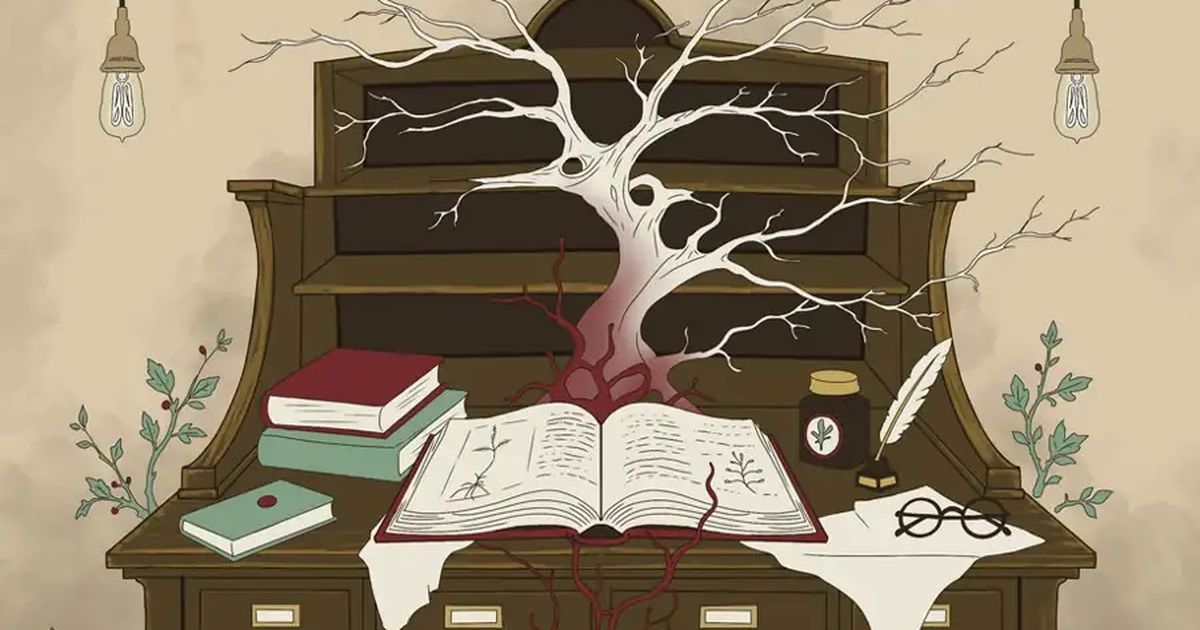
The Archivium is a solo journaling roleplaying game about university life, secret societies, forbidden research, and the questionable career prospects of someone responsible for maintaining a supernatural library.
tabletopsentinel.com/…/the-archivium-2nd-edition
The Archivium is a solo journaling roleplaying game about university life, secret societies, forbidden research, and the questionable career prospects of someone responsible for maintaining a supernatural library.
tabletopsentinel.com/…/the-archivium-2nd-edition
WOW, das nenne ich einen guten digitalen Prozess, der auch noch superschnell bearbeitet wurde.
Ehrenamtskarte in der App verlängert. Innerhalb von 4 Stunden wurde mein Engagement für Wikipedia & Wikimedia Deutschland von @wikimediaDE bestätigt und dann vom “Referat Bürgerschaftliches Engagement
Staatskanzlei des Landes NRW” (@nrw ) genehmigt.
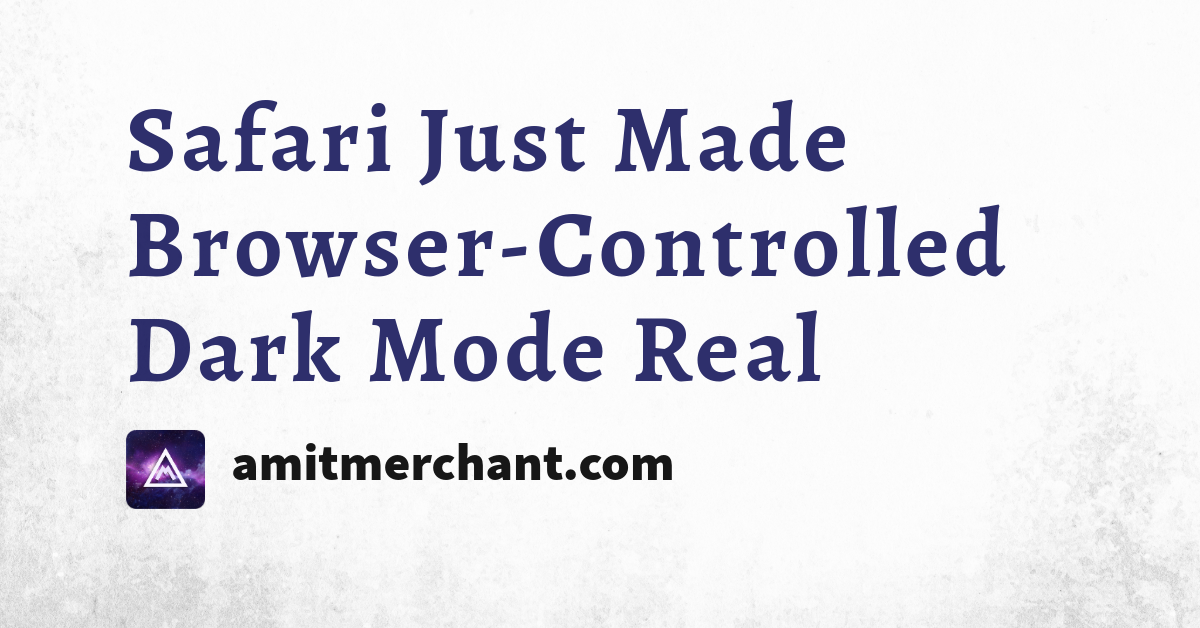
On November 3, WebKit announced Adaptive Dark Mode in Safari 27.3 beta. When a user enables it, Safari can analyse a predominantly light website and transform it into a dark appearance. It adjusts backgrounds, text, gradients and certain graphics while trying to preserve usability and contrast.
On November 3, WebKit announced Adaptive Dark Mode in Safari 27.3 beta. When a user enables it, Safari can analyse a predominantly light website and transform it into a dark appearance. It adjusts backgrounds, text, gradients and certain graphics while trying to preserve usability and contrast.
I’m eating muffins, sitting in my sofa, watching anime. But I’m so tired I feel nauseous. I’d go to my bed, but I wanna keep eating muffins. I also have to pee but then I’d have to leave the muffins and give up on going to bed.
Can somebody please just SLAP my depressed face so that I do something?
I’m eating muffins, sitting in my sofa, watching anime. But I’m so tired I feel nauseous. I’d go to my bed, but I wanna keep eating muffins. I also have to pee but then I’d have to leave the muffins and give up on going to bed.
Can somebody please just SLAP my depressed face so that I do something?
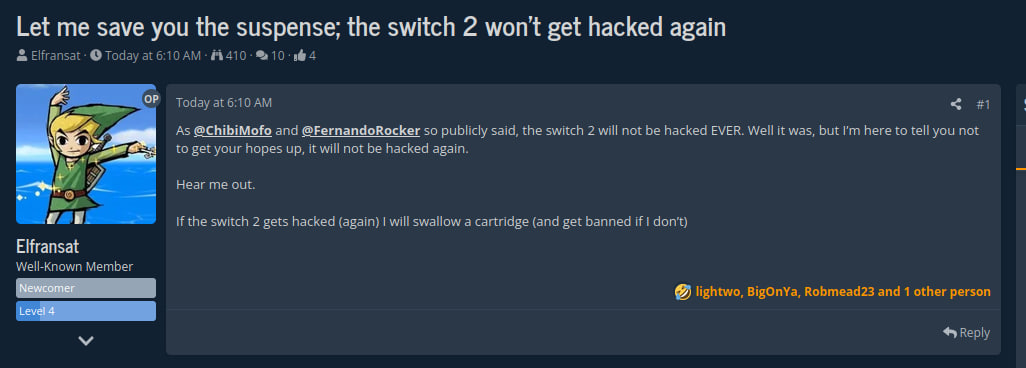
I’d imagine it’s a troll post, but in case not, worth noting, futurology only works until it doesn’t.
Or rather, it only works at normalizing a future not yet decided.
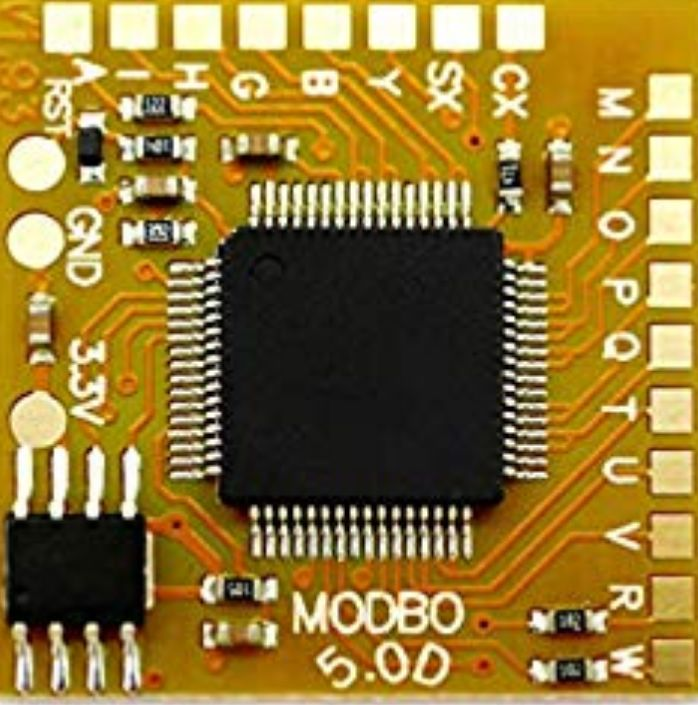
There are #consolemods still being released for decades old devices. You can never know when someone finds an entry point, even if by pure accident. And with AI accelerating things and movements for right to ownership and right to fix gaining traction, possibilities can be tested ever faster and ever less worried about legal implications, contrary pushes feeling more like death throes rather than proper pushes.
And back at the opening, Nightwish’s song Élan comes to mind. =)
I have been developing Micron, a lean, statically typed, modular systems programming language that combines Oberon’s simplicity and explicit module structure with C’s low-level capabilities and interoperability.
The goal is to use the same language for boot code, device drivers, an operating system kernel, and ordinary applications, without requiring a garbage collector or routing machine access through a separate, unchecked system dialect. Micron supports explicit memory layouts, signed and unsigned integer types, pointer operations, and direct calls to C without wrappers.
One of its central design choices is language levels. Each module declares the level and thus the feature it needs, ranging from code that requires neither stack nor heap to garbage-collected objects. A module can import only modules at the same or a lower level. For example, a kernel module declared at level 1 cannot accidentally acquire a dependency on heap allocation through an import.
Other features include generic modules, structural interfaces, and compile-time procedures. Much of what would require a preprocessor in C is expressed through typed language features.
There is a working compiler, interpreter, and IDE, along with a free textbook. The book explains both how the language works and the reasons behind its design. Its systems-programming section walks through a port of Wirth and Gutknecht’s Project Oberon operating system to Micron, cross-compiled and linked into a single executable that runs on an emulated RISC-V machine.
The examples also include ports of a Smalltalk-80 VM, Scheme 9, and the original P4 Pascal compiler. The compiler and interpreter implement the language specification; native backends and tooling are still work in progress, and the current native code generation prioritises simplicity over optimisation.
I’m the designer and implementer, and interested in feedback on the language design, particularly the language-level approach to making runtime dependencies explicit, and on its usefulness as an alternative to C.