


0
0

cross-posted from: lemmy.world/post/54189035
cross-posted from: lemmy.world/post/54189035


Astronomers have detected water vapor in the atmosphere of K2-18b, an exoplanet orbiting a red dwarf star approximately 110 light-years away. This discovery is significant as the planet resides within the habitable zone where temperatures could theoretically support liquid water. While K2-18b is more massive than Earth, the presence of atmospheric water vapor provides critical data for understanding the composition and potential habitability of distant planetary systems. This finding highlights advancements in spectroscopic analysis and brings us closer to identifying worlds similar to our own.
#space #astronomy #astrobiology
@Space@lemmy.science.social @science@beehaw.org @science@lemmy.world @space@beehaw.org @space@lemmy.world @science@newsmast.community @space@newsmast.community @space@lemmy.ml #space #science #nasa #astronomy

“Qualcuno ammazzi Dorothea” di Gaia Giovagnoli, tra spiritismo, erotismo e derive del true crime
@libri
https://www.illibraio.it/news/narrativa/qualcuno-ammazzi-dorothea-1511062/
Alternando testimonianze filtrate, ricostruzioni contraddittorie e sinistri flashback ambientati nella Romagna degli anni '80, “Qualcuno ammazzi Dorothea” di Gaia Giovagnoli racconta la storia di Dorothea D’Amico, una prostituta che sostiene di poter accogliere nel proprio corpo la coscienza di un morto

Longer article: dailysabah.com/…/merz-tells-migrants-rejecting-ho…
Longer article: dailysabah.com/…/merz-tells-migrants-rejecting-ho…

The 2021 comet Leonard C/2021 A1 is captured in this deep telescopic exposure as it traverses the outer solar system. This image highlights the distinction between a comets ion tail, pushed directly away from the sun by solar wind, and its dust tail, which follows a more curved orbital path. Highlighting the chemical composition of these celestial bodies, the green coma is a result of diatomic carbon molecules fluorescing under ultraviolet sunlight. Observations of such near-earth objects provide crucial data regarding the volatile compounds and primordial materials present since the formation of our planetary system.
#space #astronomy #astrophysics
@Space@lemmy.science.social @science@beehaw.org @science@lemmy.world @space@beehaw.org @space@lemmy.world @science@newsmast.community @space@newsmast.community @space@lemmy.ml #space #science #nasa #astronomy

In the center of this image, taken with the NASA/ESA Hubble Space Telescope, is the galaxy cluster SDSS J1038+4849, over 4.5 billion light years away — and it seems to be smiling.
NASA / Hubble
@Space@lemmy.science.social @science@beehaw.org @science@lemmy.world @space@beehaw.org @space@lemmy.world @science@newsmast.community @space@newsmast.community @space@lemmy.ml #space #science #nasa #astronomy

Danish shoemaker Ecco is shutting down its factory operations in Portugal and Vietnam in a global restructuring initiative to cut costs that will impact 2,400 jobs.
Ecco is dissolving operations at both factories as part of a global restructuring to cut costs. A warning was already on the table last year in April when the shoemaker shut down its Slovakia facility in Martin without notice to its factory workers

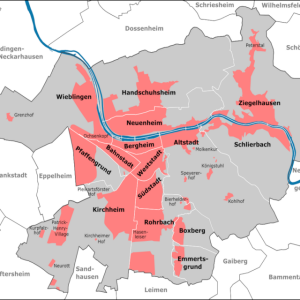
Obwohl bis dahin noch einiges an Zeit ist, beginnen wir jetzt schon mit der Vorbereitung für den 8. März 2027, denn bis dahin ist noch viel zu tun und zu planen.
Komm vorbei, bring dich ein und hilf den 8. März mitzugestalten!
📅 Wann: Dienstag 10. November 2026, ab 19 Uhr
📍 Wo: Murx, Oberbadgasse 6, 69117 Heidelberg-Altstadt
🚆 ÖPNV: Rathaus/Bergbahn, Heidelberg oder Alte Brücke, Heidelberg
♿ Barrierefreiheit: Für Menschen im Rollstuhl weitgehend barrierearm
#Murx #OFT #Planungstreffen #OffensPlanungstreffen #8März #Frauen #Freiraum @heidelberg
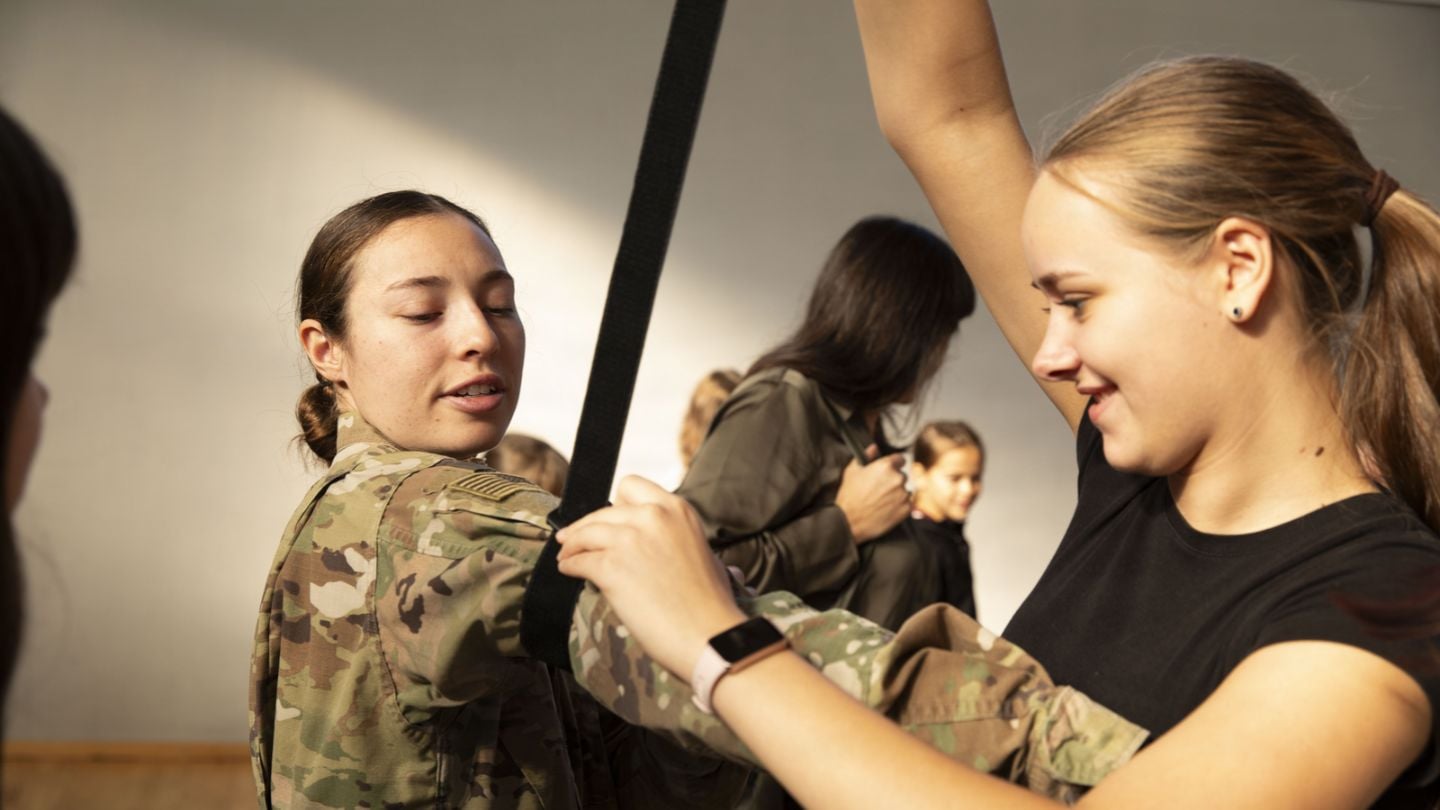

Lycées : le ministère fiche les grévistes et ordonne de ne pas payer certain·es professeur·eshumanite.fr/societe/droit-de-gDans un mail daté du 15 octobre, […]
La secrétaire générale du ministère de l’Éducation nationale ordonne aux recteurs d’académie de déclarer comme grévistes tous les professeurs n’assurant pas les cours en distanciel et de ficher les enseignants mobilisés avec leurs élèves sur les blocus.
Des pratiques parfaitement illégales

Are there projects that you would finuisng a SIM card ideal for? I am thinking weather station but there are surely loads.
I have a few lying around with data only that I would like to do something with
Are there projects that you would finuisng a SIM card ideal for? I am thinking weather station but there are surely loads.
I have a few lying around with data only that I would like to do something with



5 novembre : la jeunesse n’a rien lâché
Face au mépris du gouvernement et à la dégradation des conditions d’études, la jeunesse maintient le bras de fer. Entre blocus d’établissements, répression policière accrue, batailles sur les plateaux télévisés et convergence avec les travailleurs.
Retour complet sur une mobilisation historique avec Seydou Ba (des jeunes insoumis), Sofia Tizaoui (ex-présidente de l’USL) et Anya Amzal (MJCF).

More context: news.ycombinator.com/item?id=50418016
Twitter comment from the post: twitee.co/timo_rf/status/2119604402164256843
More context: news.ycombinator.com/item?id=50418016
Twitter comment from the post: twitee.co/timo_rf/status/2119604402164256843

En Afrique du Sud, les hommes sont invités à s’emparer de la question des violences faites aux femmes
L’Afrique du Sud est l’un des pays avec le plus haut taux de féminicides au monde. Récemment, une série de meurtres a fait craindre la présence d’un tueur en série qui visait les femmes. Mais l’enquête patine, et presque aucun de ces meurtres qui a frappé la région de Johannesburg n’'a encore été élucidé.
(I get the feeling we’re close to this bubble’s end.)
Anyways, welcome to the Stubsack, your first port of call for learning fresh Awful you’ll near-instantly regret.
Any awful.systems sub may be subsneered in this subthread, techtakes or no.
If your sneer seems higher quality than you thought, feel free to cut’n’paste it into its own post — there’s no quota for posting and the bar really isn’t that high.
The post Xitter web has spawned soo many “esoteric” right wing freaks, but there’s no appropriate sneer-space for them. I’m talking redscare-ish, reality challenged “culture critics” who write about everything but understand nothing. I’m talking about reply-guys who make the same 6 tweets about the same 3 subjects. They’re inescapable at this point, yet I don’t see them mocked (as much as they should be)
Like, there was one dude a while back who insisted that women couldn’t be surgeons because they didn’t believe in the moon or in stars? I think each and every one of these guys is uniquely fucked up and if I can’t escape them, I would love to sneer at them.
(Credit and/or blame to David Gerard for starting this.)

cross-posted from: quokk.au/c/mop/p/1304093/mark-the-vans
cross-posted from: quokk.au/c/mop/p/1304093/mark-the-vans
In this thread you can share what new coffee, equipment, techniques etc. you have tried this week.
What have you enjoyed and what didn’t you like? Have you learned anything new?
In this thread you can share what new coffee, equipment, techniques etc. you have tried this week.
What have you enjoyed and what didn’t you like? Have you learned anything new?
Idrogeno, un segnale di 4,5 miliardi d’anni fa
Misurata dalla collaborazione internazionale MeerKlass la distribuzione dell’idrogeno su grandi scale cosmologiche, cruciale per la ricerca sull’espansione dell’universo. Isabella Paola Carucci (Inaf Trieste): «È come cercare di ascoltare una conversazione sussurrata durante un concerto»
Il y a une nouvelle version de DeltaChat. En dehors des améliorations pour l’utilisateur (comme les messages épinglés) la grande nouveauté c’est que désormais le relai nine.testrun.org n’est plus le relai par défaut.
L’application choisit un relai, le plus rapide pour vous. Et encore plus fort: En tâche de fond, il vous ajoute ensuite 2 relais automatiquement.C’est excellent pour la décentralisation.


Credit: u/Makalukeke
Credit: u/Makalukeke

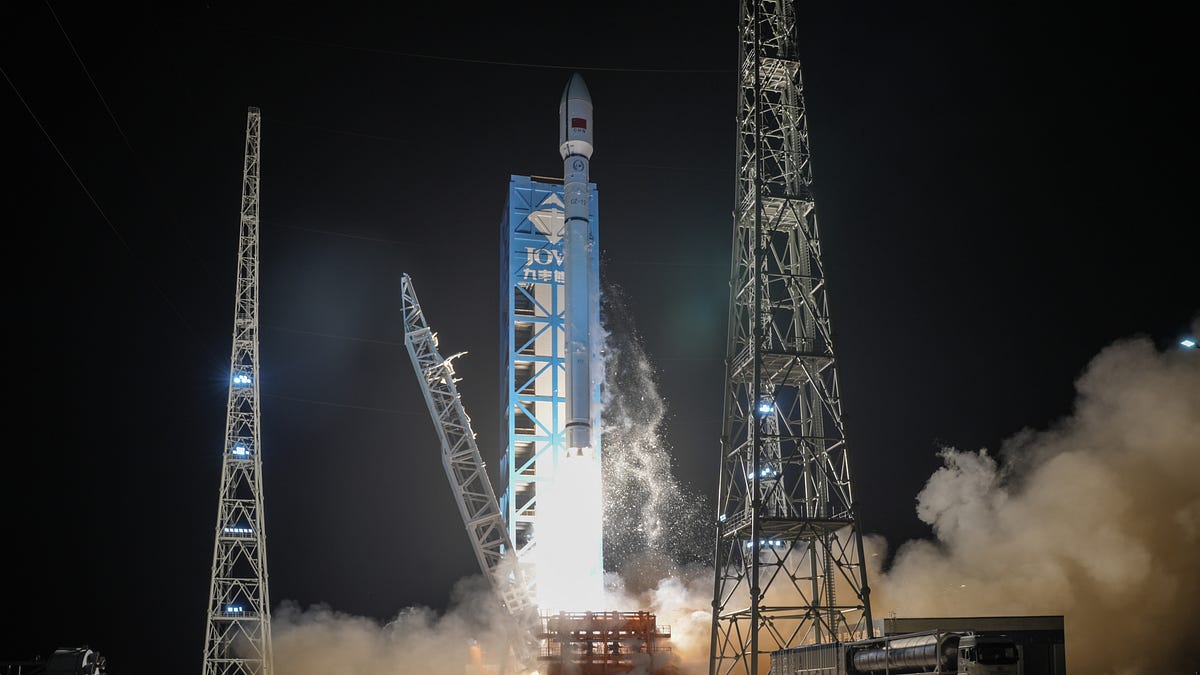
Jack Congram article: china-in-space.com/…/tenth-long-march-12-adds-to-…
NextSpaceflight page: nextspaceflight.com/launches/details/8445/
Jack Congram article: china-in-space.com/…/tenth-long-march-12-adds-to-…
NextSpaceflight page: nextspaceflight.com/launches/details/8445/
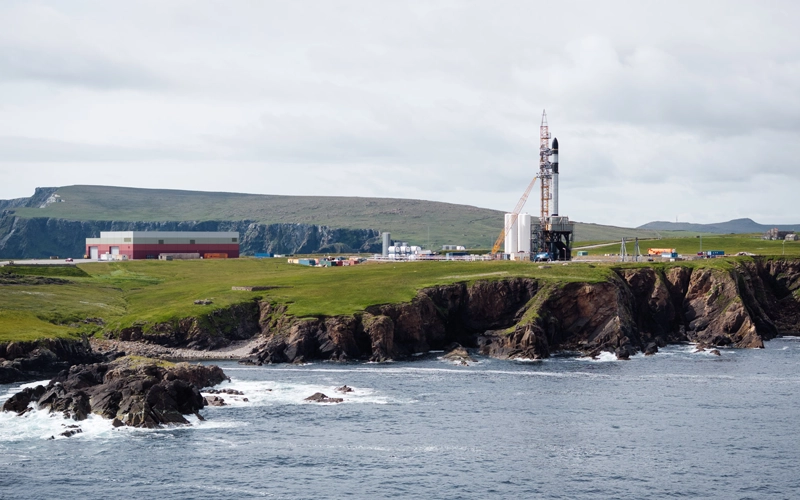
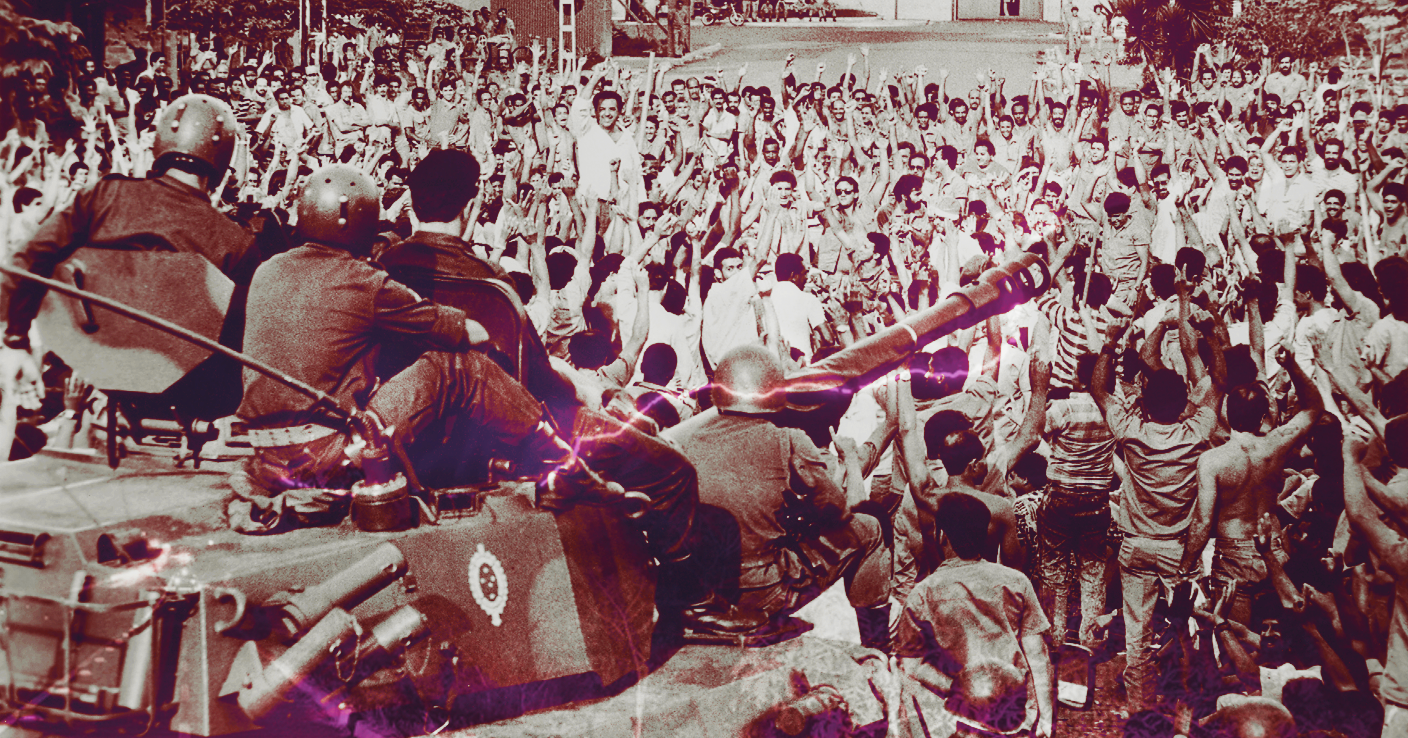
On this day in 1988, a conflict between soldiers and metallurgists on strike at Companhia Siderúrgica Nacional (CSN) in Rio de Janeiro, Brazil led to the deaths of three workers, with at least thirty-one more injured.
According to author Andrew Costa, the city of Volta Redonda was engaged in a general strike for the implementation of a six-hour shift and the reinstatement of workers dismissed in an earlier 1987 strike. Women in the local neighborhoods prevented CSN vans from picking up their husbands to work with pickets on the street, and the Residents Associations carried out barricades so that CSN busses and other transport could not run while the company was refusing to negotiate with workers.
The conflict on November 9th began when about 600 state soldiers descended on Avenida Independência, in front of CSN, throwing tear gas bombs at a crowd of workers. The crowd responded with by attacking sticks and stones. Three people were killed, and thirty-one were wounded. A monument dedicated to the victims of the violence was later partially destroyed with bombs.
In spite of this violence, workers eventually prevailed, winning their right to six-hour shifts.

Welcome to SquaredCircle’s ‘Meme Monday’!
Have you seen a great wrestling meme this week that just made you crack up? Did you watch a silly moment in a show and just need to craft a meme out of it? Well post ‘em below!
The highest voted meme shall win and be showcased in next week’s thread!
Welcome to SquaredCircle’s ‘Meme Monday’!
Have you seen a great wrestling meme this week that just made you crack up? Did you watch a silly moment in a show and just need to craft a meme out of it? Well post ‘em below!
The highest voted meme shall win and be showcased in next week’s thread!
Even before the Linux v7.4 merge window was over, there were already two pull requests of drm-misc-next material targeting for what will be Linux 7.5. This week already saw the third drm-misc-next pull request of more feature patches targeting this next kernel version.
This week’s drm-misc-next pull brings Rockchip RK3568 support to the Rockchip DRM display driver. The RK3568 is a quad-core Arm Cortex-A55 SoC with a Mali-G52 2EE GPU and a small NPU and VPU too. The RK3568 is found in some industrial/embedded PCs, some NAS devices, and single board computers. Nice seeing the continued work on improving mainline kernel support for Rockchip SoCs.
Separately there are also a number of additional display panels now supported by the mainline kernel including the DCLTek 300249 5.5", DLCTek 300248 10.5", Novetake NT37705, xiaomi-lavender, Tianma TL063FVMC43-02, Tianma TL063FVMCA01-00, Tianma TL060FVXS16-00, TXD TXDI600YANPA-43V3, AUO B101UAN01, Truly NT36850 WQHD, Novatek NT36850, Samsung AMS644VK04, Hitachi TX10D07VM0BAA, LG LH400WV3-SD04, and Mingjun MJ070BI30IA2.
AMD Ryzen AI
The AMDXDNA accelerator driver for Ryzen AI NPus meanwhile saw support added for a new 6.0 firmware release, adding NPU3 classic device support, get/set power mode handling for new AIE4 hardware, and other AIE4 enabling like suspend and resume, clock / DPM frequency / resource information queries, AIE4 command submission, and other important additions. Over the course of this year and the past few kernel versions there’s been a lot of enablement work around the AIE4 hardware that presumably is the next-gen Ryzen AI NPU to be found with the upcoming Zen 6 based client platforms launching in the new year. Hopefully with Linux 7.5 the AIE4 hardware support will be in good standing.
The full list of drm-misc-next feature patches for the week via this pull request.
Linus Torvalds just released the second weekly release candidate of Linux 7.4 with some notable bug fixes and other changes routed in past the merge window. It’s another big one in the AI era.
This week brought some adjustments to the AMD PerfOpt feature for helping Radeon iGPU performance, fixing faulty BHI mitigation selection for some kernel configurations, a big improvement for FAT32 especially with synchronous mounts, AMDGPU driver fixes for HDMI 2.2 FRL, and numerous fixes for “nasty long standing bugs” in the core memory management code. Plus the usual assortment of bug fixes as well as the seemingly never-ending flow of AI/LLM generated patches and bug reports.
Linux 7.4-rc2 Git tag
Linux creator Linus Torvalds wrote in the 7.4-rc2 announcement:
"Ok, a big -rc2 to go with the largest ever -rc1. But the diffstat looks fairly benign, and is dominated by some automated coccinelle updates that I got for the merge window but left for rc2 because I didn't want to deal with them when I was on the road (and had a hard time finding the motivation to deal with them afterwards too, to be honest).

That said, the scripted updates are largely just one- and two-liners, and they [really] are very straightforward so they "dominate" the diffstat only in the sense that they are very spread out and do add a lot of noise.

When masking that noise out from the diffstat, the shape of it changes - not spread out over thousands of files any more. But it does not look unusual: a third is drivers (gpu, networking and sound account for most of it, but there's a bit of everything), another third is networking and bpf, and the final third is "the rest" (mostly filesystems, mm, arch updates).

And yes, much of this was driven by various AI fixes. I think I'll stop repeating that, and we can just take it for granted. But this time around Alexei claims that on the bpf side at least the fixes are now coming in faster than the new reports, and that sounds lovely if true.

I think most other areas haven't reached that point yet, but it's at least a sign that we _may_ be starting to see the tide starting to turn.

Don't hold your breath, but maybe cross your fingers we'll be getting there in the not entirely distant future.

In the meantime, please keep testing,"
See our Linux 7.4 feature overview for a look at all the changes coming to this kernel aiming for a stable release around the end of December.




Say the name “Chromium” out loud in Linux circles, and you will soon see what a mob looks like. Many people don’t like how much of the web rests on one engine led by Google, and they prefer to keep it away from their systems.
Now we have Domicile, a new Rust-based Wayland compositor that uses a patched build of Chromium to draw the entire desktop as a web page.
Apps still run natively, and each Wayland window goes straight into Chromium’s rendering system and shows up inside that page as an element. A window and a website can then sit side by side and be arranged the same way.
Domicile: Overview
Domicile is not a drop-in desktop like GNOME or KDE Plasma. It leaves the bar, the window layout, and the look to a shell, and that shell itself is a web page you have to write yourself.
Native app windows and websites both sit on that page, and because CSS decides where each one goes, layouts like tiling or floating take only a few lines of styling.
You can even swap the shell without closing a single window because loading a new one resets only the state held in the shell’s own page. A single page can span every monitor, and shells are built from packages that anyone can publish on npm, whether it is a whole desktop, a bar, or a launcher.
The compositor still handles the lock screen, tray icons, notifications, and screen sharing, while the shell decides how they look. The built-in browser runs Manifest V3 Chrome extensions, but some of them behave differently than they do in Chrome.
Apps need Wayland support to run. Electron, SDL, and Qt apps start in Wayland mode, but X11-only ones will not run. Xwayland, the compatibility layer that lets X11 apps work on Wayland desktops, is something Domicile does not include.
The project is provided under the MIT license, and the Chromium files it modifies stick to Chromium’s licenses. One more thing, and this could be a dealbreaker for some of you, the project is AI-assisted.
Manganese, the element?
Not quite. Manganese is the ready-made shell that comes with Domicile, and it works as a complete tiling desktop out of the box. Its keybindings follow Sway’s on the Super key, and you get ten workspaces along with tabs, stacks, splits, floating windows, and a scratchpad.
Websites open as windows too, sitting next to native apps in the same layout, while extensions from the Chrome Web Store show up as buttons in the top bar.
It comes with a Settings app, clipboard history, launcher, screenshots tool, notifications, and a lock screen. Since every part of it is its own package, you can add a new item to the bar or replace the launcher while the rest stays as it is.
Getting started
Packages exist for Fedora, openSUSE, Debian, Ubuntu, and Arch Linux, plus an AUR package for Arch users. For NixOS, or Nix on any distro, you can use the project’s flake.
It runs only on x86_64, and the project has no ARM builds.
A monolithic package carries Manganese, the login session, the domicile command, and the React packages that shells build against. After installing, you point a config file at the shell you want, then log out and pick “Domicile” on the login screen.

Well, well, well…
Asahi Linux is the reason you can run Linux on an Apple Silicon Mac today. For years, the project put most of its own code under the MIT license so that anyone, including the BSDs, could reuse it as needed.
That is changing because Asahi Linux is tired of code laundering. They have announced that Asahi is moving all of its repositories to the GNU General Public License version 2 or later. Going forward, all Asahi Linux code will be under strong copyleft licenses only.
This is because people were taking in-development code straight out of their personal forks, publishing it without credit, or rewriting it with AI to hide its origin for “replacing the project and aggressively monetising Linux on Apple Silicon.”
What is code laundering?
Code laundering (also called license laundering) is the practice of taking someone else’s code and passing it through a process that hides where it came from, so you can use it without honoring the original license or crediting the author.
Before AI, this usually meant manually rewriting code line by line, renaming variables and stuff, and shuffling functions around until it no longer looked like the original.
LLMs made it much more easy and cheaper of course.
The MIT license only asks you to keep the original copyright notice. It doesn’t require you to share your changes or keep your version open. That’s what makes it popular, and it’s also what made things problematic for Asahi here.
Learning from history
The move has come after the Asahi team was made aware “some time ago” of multiple attempts to exploit its permissive licensing to hijack its work.
In the most extreme cases, feature code that was still under development was lifted from developers’ personal forks before it was even publicly released. The report points out that the MIT license “explicitly allows this, and has no carveouts to protect against bad faith actors.”
Asahi didn’t name anyone in the report. It also didn’t spell out how existing contributions will be relicensed or whether every past contributor agreed to it.
Asahi draws parallels with WINE’s situation two decades ago. WINE, the compatibility layer that lets you run Windows apps on Linux, was originally MIT-licensed too. But in the late 90s and early 2000s, companies took the code, built proprietary forks on top of it, and sold them commercially. So, in 2002, the WINE team relicensed to the LGPL to discourage proprietary forks and push companies to contribute upstream.
Those who do not learn from history are doomed to repeat it
Asahi has been upset lately
Asahi didn’t name anyone so we are left with guesswork on who they are targeting with this license move.
There have been at least two public forks of Asahi’s work in recent months, both tied to AI-assisted development. In case you did not know, Asahi Linux forbids AI generated code contribution.
The first is Aurora Silicon and its Vulkan driver, Borealis. Borealis is a fork of Asahi’s HoneyKrisp, the Vulkan driver for Apple GPUs. Aurora Silicon submitted a pull request to register its own Vulkan driver ID with Khronos (VK_DRIVER_ID_AURORA_BOREALIS), says the driver runs on M1 to M5 and the A18 Pro, and keeps it in its own Mesa fork rather than upstream.
The second is Gravity Linux, a Fedora-based distro for Apple Silicon. It was forked from Asahi over the disagreement about LLM use.
To be fair to Gravity, it is open source, it isn’t selling anything, and it credits its AI use openly. It even says it plans to sunset the distro once its driver work lands upstream.
It isn’t the kind of bad actor the progress report describes. But it does represent the “permissive fork that embraces AI” approach that Asahi has consistently pushed back against.
For clarification, Asahi’s progress report does not mention Aurora Silicon or Gravity Linux by name. I have provided their conflict with Asahi as context.
Why this license change matters
As far as I can tell, this is the first time a major open source project has moved to copyleft specifically because of AI-assisted code laundering. Projects have relicensed before, but usually to stop cloud providers from reselling their work as a service. This one is specifically about AI.
I wouldn’t be surprised if more hardware enablement and reverse-engineering projects follow. Making the first changes takes a lot of time and effort but they are easier to “rewrite” once someone has done the hard part.
Will the GPL actually help?
If the problem is people who already ignore the MIT license, why would they respect the GPL? After all, GPL cannot stop a determined bad actor. Nothing does, actually.
Stripping attribution from MIT code already breaks the MIT license, since keeping the copyright notice is its one real condition.
What the GPL changes is the commercial benefit. Under MIT, someone can take Asahi’s code, close it up, and sell a product, and that’s perfectly legal as long as the notice stays in.
Under the GPL, anyone who distributes a modified version has to release the source under the same license. You can’t legally build a closed, paid Apple Silicon distro on top of GPL code. And if a product’s source has to be public, the copying is easier to spot. Not everyone is happy
The move has drawn criticism, particularly from the BSD side, which was one of the main reasons Asahi chose MIT in the first place. OpenBSD’s Apple Silicon support relies on Asahi’s m1n1 bootloader.
OpenBSD developer Bryan Steele wrote on X:
"Sad to see Asahi out there burning bridges for no reason.. relicensing m1n1 and drivers under GPL2-or-later, seemingly without the consent of all prior contributors, under the guise of "defending against AI bad actors", seems entirely disingenuous and misguided."
Wrapping up
Asahi is betting that copyleft license provides a better defense in this changed world where anyone can launder code with a prompt.
It may not stop the bad actors from rewriting its code, but at least it reduces the chances of a closed commercial fork.
It would be interesting to see whether the BSD community finds a way to keep working with Asahi under the new terms.

Slax developer Tomas Matejicek has announced Slax 2026.11, a new version of the lightweight, portable Linux distribution designed to run from a USB drive. Based on Debian 13 and powered by the Linux kernel 6.12, the release features a redesigned desktop, a built-in AI assistant, Secure Boot support, and a graphical installer, all packed into a 512 MiB ISO image.
The desktop has been overhauled with Alt+Tab window previews, live taskbar thumbnails, and four virtual workspaces. Users can view all workspaces simultaneously with Alt+F3 or switch between them using Ctrl+F1 through F4.
The desktop also supports files and folders, and the taskbar includes keyboard layout switching and volume controls. Application interfaces have been adjusted for a more consistent appearance across older and newer programs.
The application launcher has been improved as well. Optional applications are marked with a download icon, letting users install and launch them from the menu. Traditional package management through APT remains available.
One of the most notable additions is the Slax AI Assistant, which allows users to troubleshoot problems, inspect their systems, and execute commands using natural-language instructions. It helps identify disk space usage, investigate system issues, and perform administrative tasks. The assistant requires an internet connection and user sign-in.
Slax 2026.11 also includes a graphical installer for Windows and Linux. Users can create bootable USB drives or install Slax alongside an existing operating system on supported configurations. Additionally, UEFI Secure Boot is now supported through a signed bootloader and kernel, eliminating the need to disable Secure Boot on compatible machines.
Another improvement concerns persistent sessions. A single USB drive can store multiple named sessions, each retaining its own applications, files, and settings. Users can select a session at startup, duplicate it using F4, or rename it with F6, as these sessions can be carried between computers.
For disk maintenance and recovery, Slax includes a graphical partition manager that supports creating, resizing, and formatting partitions. Additional utilities support LVM, LUKS encryption, and filesystems such as XFS. VirtualBox, VMware, and SPICE integration is also included for virtual machine environments.
However, users depending on Slax’s modular system should note an important change. The distribution now uses OverlayFS instead of AUFS, so the slax activate and slax deactivate commands can no longer dynamically load or unload .sb modules during a running session.
Modules can still be included before boot, while installing software through APT and preserving changes in persistent sessions remain supported.
For more information, see the announcement.
The aerynOS team has published its latest unstable stream update, introducing Linux kernel 7.2.15, which marks the final release in the 7.2 series. The team is preparing to move to version 7.3, expected to arrive in the volatile repository soon.
The update also includes Linux LTS 6.18.62, along with newer versions of several system components, including systemd 261.5, LLVM 23.1.5, and glibc 2.44 development snapshots.
On the package management side, Moss now displays help when users enter the older moss install and moss remove commands or their aliases. Boulder and Ent have also been updated to use a new versioning format for packages built from Git commits.
Desktop updates include KDE Gear 26.08.3, Hyprland 0.57.1, Dux suite 2.1 (formerly Dank Material Shell), Waybar 0.16, and Mir 2.31, accompanied by a rebuild of Miracle WM.
KWin receives a fix for crashes involving DisplayLink docking stations when running fullscreen applications. Additional upstream NVIDIA fixes address graphical glitches, flickering, and buffer allocation problems.
COSMIC Player receives missing GStreamer dependencies, restoring audio and video playback. Meanwhile, both Ghostty and Kitty have fixes for Bash shell startup integration.
Other notable package updates include GStreamer 1.28.9, Poppler 26.11, Zed 1.27, Signal Desktop 8.34, and PowerStation 0.9. The Poppler update includes printing fixes, while additional character maps required by Ghostscript have been added.
Moreover, Rsync now includes daemon service units and the rrsync restricted helper. Zulip Desktop also gets a fix for flashing when using dark mode, along with a new application theme selector.
Finally, several new packages have been added to the repositories, including the terminal-based bandwidth monitor bandwhich, the disk usage utility duf, Gitea’s official command-line client, GNU Stow, and openfortivpn.
KDE’s KeepSecret password manager and the JetBrains Mono typeface are also newly available.
For more information, see the announcement.