Oh we're tiddy posting today rule





transcription: child crying holding a gun when your a cop and your girlfriend asks you to do her doggy style


Remember the original Quest headset that Meta (then Oculus) trumpeted back in 2019? Meta seems to hope you don’t, since the company officially stopped supporting the wireless VR headset in 2023 to focus on the more popular Quests 2 and 3. However, tinkerers haven’t abandoned the hardware and recently released a new root-access exploit and bootloader that gives “developers and enthusiasts full control over Quest 1 hardware.”
The QuestStack project integrates previously known vulnerabilities in the Quest’s Android fastboot process into a privilege escalation chain that leads easily to full root access on the device. The bootloading process is now streamlined enough that it can be completed without any downloads through a web interface after connecting the headset to a PC.
With this exploit, the original Quest hardware can now be officially divorced from any reliance on Meta’s servers or services to be useful. That means enterprising Quest owners should be able to sideload apps without needing to register for a Meta Developer account and activating Developer Mode through Meta’s mobile app. It also means users should be able to go through the initial setup and login steps for a fresh Quest headset even if and when Meta decides to shut down the servers that currently support this process.
Mozilla today published their Firefox 156.0 release binaries ahead of the official Tuesday announcement.
With Firefox 156 they are promoting their built-in PDF viewer as now starting up to 45% faster. Also on the performance side is improved memory and CPU usage when Firefox is displaying large JPEG images that in turn are scaled down to fit on a web page.
There are also a number of fixes in Firefox 156 like for high-sample-rate FLAC audio in MP4 failing on some websites, fixing various platform-specific issues, and other minor adjustments.
Within the Firefox 156 nightly builds was also enabling Vulkan Video decoding for newer NVIDIA GPUs on recent versions of the NVIDIA driver, but sadly that didn’t make it for the Firefox 156 release with it still being gated to nightly builds.
This isn’t the most exciting Firefox update for Linux users in recent history, but if wanting this latest update you can grab Firefox 156 right now via ftp.mozilla.org.

Podman is no longer supporting iptables so I am trying to learn how to set up nftables in its place. It’s been a struggle to get it to work properly. I can not ping my own server after starting the nftables rules. I am using Alpine Linux v2.24.1 and nftables v1.1.6 (Commodore Bullmoose #7).
nftables has a config file with basic rules which include receiving pings:
/etc/nftables.nft
#!/usr/sbin/nft -f
# vim: set ts=4 sw=4:
# You can find examples in /usr/share/nftables/.

# Clear all prior state
flush ruleset

# Basic IPv4/IPv6 stateful firewall for server/workstation.
table inet filter {
	chain input {
		type filter hook input priority 0; policy drop;

		iifname lo accept \
		comment "Accept any localhost traffic"

		ct state { established, related } accept \
		comment "Accept traffic originated from us"

		ct state invalid drop \
		comment "Drop invalid connections"

		tcp dport 113 reject with icmpx type port-unreachable \
		comment "Reject AUTH to make it fail fast"

		# ICMPv4

		ip protocol icmp icmp type {
			echo-reply,  # type 0
			destination-unreachable,  # type 3
			echo-request,  # type 8
			time-exceeded,  # type 11
			parameter-problem,  # type 12
		} accept \
		comment "Accept ICMP"

		# ICMPv6

		icmpv6 type {
			destination-unreachable,  # type 1
			packet-too-big,  # type 2
			time-exceeded,  # type 3
			parameter-problem,  # type 4
			echo-request,  # type 128
			echo-reply,  # type 129
		} accept \
		comment "Accept basic IPv6 functionality"

		icmpv6 type {
			nd-router-solicit,  # type 133
			nd-router-advert,  # type 134
			nd-neighbor-solicit,  # type 135
			nd-neighbor-advert,  # type 136
		} ip6 hoplimit 255 accept \
		comment "Allow IPv6 SLAAC"

		icmpv6 type {
			mld-listener-query,  # type 130
			mld-listener-report,  # type 131
			mld-listener-reduction,  # type 132
			mld2-listener-report,  # type 143
		} ip6 saddr fe80::/10 accept \
		comment "Allow IPv6 multicast listener discovery on link-local"

		ip6 saddr fe80::/10 udp sport 547 udp dport 546 accept \
		comment "Accept DHCPv6 replies from IPv6 link-local addresses"
	}

	chain forward {
		type filter hook forward priority 0; policy drop;
	}

	chain output {
		type filter hook output priority 0; policy accept;
	}
}

# The state of stateful objects saved on the nftables service stop.
include "/var/lib/nftables/*.nft"

# Rules
include "/etc/nftables.d/*.nft"
I also have a small config file:
/etc/nftables.d/firewall.nft
#!/usr/sbin/nft -f

define WIREGUARD_PORT = 51820
define WIREGUARD_ADDRESS = 10.0.0.0/24
define SSH_PORT = 5025
define SSH_ADDRESSES = { $WIREGUARD_ADDRESS . $SSH_PORT, 192.168.40.204 . $SSH_PORT }
define PUBLIC_PORTS = { 5050 }

table inet filter {
	chain input {
		udp dport $WIREGUARD_PORT accept \
		comment "Accept WireGuard connections"

		ip saddr . tcp dport $SSH_ADDRESSES accept \
		comment "Accept SSH connections from known devices or WireGuard"

		tcp dport $PUBLIC_PORTS accept \
		comment "Accept public connections"
	}
}
After loading the new rules, I get the following output while listing the ruleset:
21:23 server-pi:~ $ doas nft list ruleset
table inet filter {
	chain input {
		type filter hook input priority filter; policy drop;
		iifname "lo" accept comment "Accept any localhost traffic"
		ct state { established, related } accept comment "Accept traffic originated from us"
		ct state invalid drop comment "Drop invalid connections"
		tcp dport 113 reject comment "Reject AUTH to make it fail fast"
		ip protocol icmp icmp type { echo-reply, destination-unreachable, echo-request, time-exceeded, parameter-problem } accept comment "Accept ICMP"
		icmpv6 type { destination-unreachable, packet-too-big, time-exceeded, parameter-problem, echo-request, echo-reply } accept comment "Accept basic IPv6 functionality"
		icmpv6 type { nd-router-solicit, nd-router-advert, nd-neighbor-solicit, nd-neighbor-advert } ip6 hoplimit 255 accept comment "Allow IPv6 SLAAC"
		icmpv6 type { mld-listener-query, mld-listener-report, mld-listener-done, mld2-listener-report } ip6 saddr fe80::/10 accept comment "Allow IPv6 multicast listener discovery on link-local"
		ip6 saddr fe80::/10 udp sport 547 udp dport 546 accept comment "Accept DHCPv6 replies from IPv6 link-local addresses"
		udp dport 51820 accept comment "Accept WireGuard connections"
		ip saddr . tcp dport { 10.0.0.0/24 . 5025, 192.168.40.204 . 5025 } accept comment "Accept SSH connections from known devices or WireGuard"
		tcp dport 5050 accept comment "Accept public connections"
	}

	chain forward {
		type filter hook forward priority filter; policy drop;
	}

	chain output {
		type filter hook output priority filter; policy accept;
	}
}
21:23 server-pi:~ $ doas netstat -tunlp
Active Internet connections (only servers)
Proto Recv-Q Send-Q Local Address           Foreign Address         State       PID/Program name
tcp        0      0 127.0.0.1:8000          0.0.0.0:*               LISTEN      3515/rootlessport
tcp        0      0 127.0.0.1:8080          0.0.0.0:*               LISTEN      3584/rootlessport
tcp        0      0 0.0.0.0:5025            0.0.0.0:*               LISTEN      3743/sshd: /usr/sbi
tcp6       0      0 :::5025                 :::*                    LISTEN      3743/sshd: /usr/sbi
tcp6       0      0 :::5050                 :::*                    LISTEN      3515/rootlessport
udp        0      0 0.0.0.0:51820           0.0.0.0:*                           -
udp6       0      0 :::51820                :::*                                -
21:23 server-pi:~ $
I can connect perfectly fine with SSH, WireGuard and my reverse proxy on port 5050 but if I ping the server I don’t get any response at all. Pings worked as normal when I was using iptables so I am not sure what I am doing wrong with nftables. I’ve tried to keep the rules as simple as possible to figure out what is happening but I have not been able to make any progress. Any help would be appreciated.

About a decade ago, I tried to index the web via the Dewey Decimal System. I had a site laid out similar to Google, where you could browse sites continuously starting from a given call, but the DDS is proprietary, and those people hate anyone who uses their IP without a license. You can Google everyone they’ve shutdown – places that weren’t even libraries – for using anything similar to the DDS. I reached out to the group that manages the DDS, and was taken offline before my project even started.
With all the corporate BS lately, and people looking for alternative options, I thought I’d take a search engine old school, and we’d index like Usenet. Except with an XXX.XXX.XXX format.
Problem is, now I’ve got to find categories, sub categories, and local categories. Categories for animals, chat rooms, cars, construction, wrestling, etc.
I need a brilliantly created categorical system with a TLD.MLD.LLD (top level subject domain, mid level domain, and local level domain) format.
I was going to let site owners Disney Land it, by letting them create an index.json file in the root of their site, choosing for themselves where they wanted to appear in the index. Problem is, as trends change and systems become more exact, site owners would have to update their index. Which could become cumbersome.
Further, if we divided into academic disciplines, there would be things like gaming and model construction which wouldn’t fit into those.
It would help if there were an already established categorization system, so that site owners didn’t have choice anxiety. And then, as the site grew, site owners could recategorize themselves with user feedback.
Could you guys suggest a few categorization systems (can’t be DDS), either of your own making or other sources?
I’m already looking at Usenet: www.livinginternet.com/u/uw_hier.htm
Edit: Current UX: imgur.com/a/sURm4s1

cross-posted from: lemmy.world/post/43600018
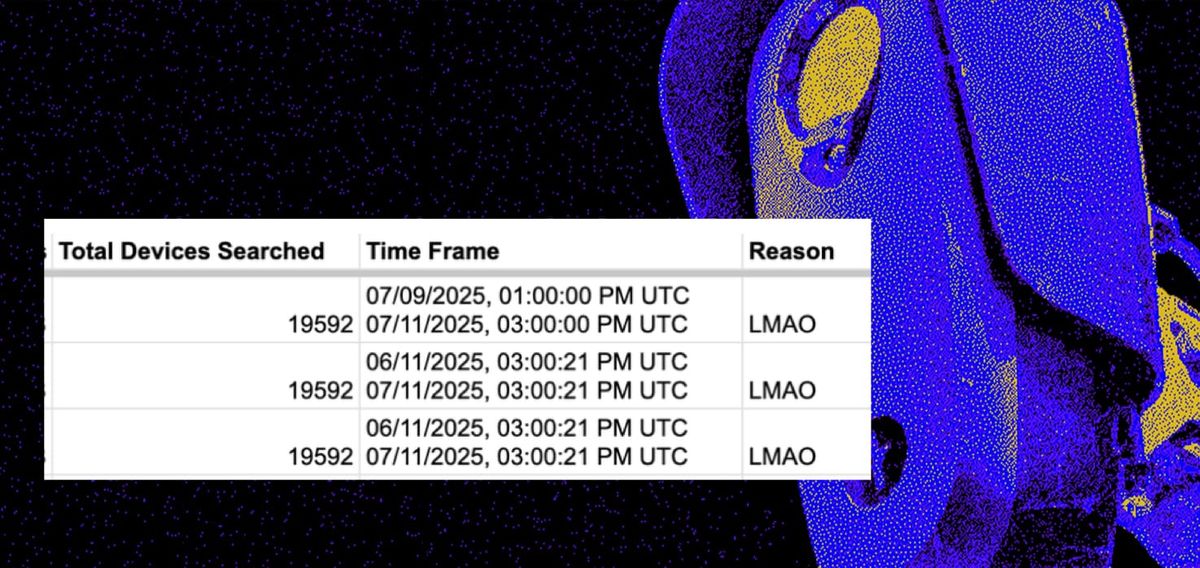
The EFF found cops writing “idiot,” “WEIRD KID,” “blah,” “leave me alone,” and button mashing in Flock’s ‘reason’ box.




We’re about to learn a painful lesson about delayed gratification in software engineering.
New data from China, 26,811 students tracked January 2023 through June 2025. Students using AI for homework saw their scores jump 20 percent. Completion time dropped nearly half. They aced the assignments.
Then exam season came. Those same students scored 20 to 40 percent worse when they couldn’t use the tool.
The homework phase is over. The exam phase is coming.
We’re doing this in software right now. Vibe coding feels incredible. Features ship fast. Nobody’s asking what happens in Month 18 when the original dev has left and nobody understands the codebase.
Commercial pilots fly with autopilot for most of every flight. They’re required to maintain manual flying proficiency regardless. If the system fails mid-air and the pilot can’t take over, people die.
Most teams using AI right now have forgotten how to fly manually. They’ve become passengers in their own systems. The autopilot flies, nobody checks instruments, and the first sign of trouble will be a breach notice or outage.
Three rules:
- Command the mission. Define architecture before prompting. Ambiguity kills in code and in flight. Delegate selectively. Offload mechanical work. Keep design and security reviews human. Verify everything. Audit before production.
- Never trust the automation without checking instruments.
- Quick wins feel good. Sustainable engineering feels boring. Boring keeps systems standing.
Organisations surviving the next two years won’t ship the fastest. They’ll be the ones who remember how to fly without the aids.
people insisting that you actually be skilled, independently of your tools, doesn’t make them Luddites. Rather, being unable to do so makes you a phony.
It’s just a proof of concept.
A complaint-driven, consensus-based forge: development is driven by real complaints, ranked by pairwise Glicko-2 comparisons, decided through quorum consensus, executed on a phase-gated kanban board — and discovered through a first-class search surface (tags, quality, maintenance health, languages).
Governance is collective by default: maintainers exist, but direction is decided by collaborators. See docs/concord-spec.md.
i’m searching for an audio player that is suitable for radio productions. the radio format has some talking and some music playing. the playlist of songs is prearranged, so normally no shuffling of music during the radio show.
so ideally the software would have one playlist window and one big button “play next” that plays the next song, and once the song is over it pauses. or maybe (but this is optional) it can be configured to play the next two songs, because two songs are also possible between the talking.
another way to describe it:
nice to have:
mixxx is quite close, but i can not find a workflow that supports the scenario above.
amarok has a stop after that song feature, but you can only set one of those stop points, i would need multiple, the idea is to setup the playlist before, but during the show, you don’t want to prepare the next song or stuff, you just want to press a key, or the big button.
maybe a bash script with mpv calls and read in between would be enough, but it would be nice if a normal person could also use it, and you don’t need to edit a bash script to create the playlist. and of course i’ve only described the happy path above, maybe it would also be nice to jump back in case you made a mistake, which would be hard with the bash script.
thanks for your input!

Been playing this on the SteamDeck and im enjoying the chill vibes from it. One of the only games in trying to 100% more shots below.


 EDIT: found a dead guy & a tree in silly place.


Today’s game is some more Halo PvP. I took some friends with me into 8v8 lobbies. We had a friend who’s never played a PvP lobby before and was confident in his skills. We weren’t sure he could but didn’t want to dampen his enthusiasm so we joined him for some matches. Kudos to him, he did pretty good. Nothing crazy but he did well for having only stuck to a private lobby before. It makes me feel a shred of pride, knowing in a way I’m partly responsible for training him to be that good.
Besides that, as always with Halo it was a blast. The round was at a stalemate the entire time and both sides barely kept up with each other to achieve a draw. We nearly got a push at the end but failed to make it in time. The entire game I got to dominate with a sniper too which was awesome.

We switched to 4v4 after that and we were dominating in that one too. We admittedly may have gotten a little too cocky though as we stopped killing the enemy team really and started chasing each other round. Like for example I stopped sniping to run from my friend with the Energy Sword who was chasing me with it. I got a few kills while running but they were less strategically planned and more so “oh shit. There’s an enemy in my way. I better kill them so I don’t get killed”. I feel like that’s what really captures the magic of Halo for me. It doesn’t just come out like a generic shooter. It has a cohesive balance of cool and moments of just fucking around with friends. It’s a blast.

Our last game that’s worth mentioning was fairly quick. I got to dominate with the sniper again in the watch tower and held that position almost all game. Our opponents were fairly skilled but they made the mistake of not watching for grenades.
I suppose our commupance though was due anytime. The next two matches after that we got absolutely destroyed by the enemy and it was as funny as it was frustrating. Still. That’s how public PvP games go I guess. I’d like to get friends together for a private PvP lobby again soon. So hopefully that’s something that will happen.




cross-posted from: hexbear.net/post/9351458
There are way better books out there

cross-posted from: …soulism.net/…/get-me-pictures-of-spider-woman



Looking for information about RDP housing, housing subsidies, application progress, and HSS status updates? Explore helpful information and stay informed about your housing journey.
hss online — check out the latest housing status information.
Finding a suitable home can be difficult for many families in South Africa, especially when household income makes it challenging to afford property through traditional financing. Government housing programmes are designed to provide support to qualifying households and help more people access safe and affordable housing.
A housing subsidy can assist eligible applicants with the cost of acquiring or improving a home, depending on the programme and the applicant’s circumstances. Understanding how these programmes work can make it easier to know where to apply, what information may be required, and how to follow up on an application.
What Is a Housing Subsidy?
A housing subsidy is government assistance intended to help qualifying households access adequate housing. Different programmes can have different requirements, application procedures, and forms of assistance.
Housing support may be available for people who meet specific income, household, citizenship, property, or other programme-related requirements. Because circumstances differ between applicants, it is important to check the requirements of the particular housing programme before submitting an application.
Who May Need Housing Assistance?
Housing assistance can be particularly important for households that cannot easily afford a home using their own income or conventional financing. Applicants may include families looking for government-supported housing as well as qualifying individuals interested in other housing assistance programmes.
The requirements are not necessarily the same for every programme. Applicants should therefore avoid assuming that qualifying for one housing programme automatically means they qualify for another.
How Housing Applications Are Processed
A housing application normally involves several stages. The relevant housing authority may collect information about the applicant and household before assessing the application against programme requirements.
Depending on the programme, applicants may need to provide personal information, identification documents, income information, and details about their household circumstances.
After an application has been submitted, processing may take time. Applicants should keep their contact information updated and retain any reference or application details they receive.
Checking Your Housing Application Status
One of the most useful steps after applying is keeping track of the application. A status can provide an indication of where an application is within the relevant process.
For example, an application may still be undergoing verification or assessment before a final decision is made. A delay does not necessarily mean that an application has been rejected.
Applicants who are unsure about a status should use the appropriate official housing channels to obtain clarification and confirm whether additional information or documents are required.
Why Applications Can Take Time
Housing applications can take longer than expected for several reasons. Authorities may need to verify applicant information, assess eligibility, process supporting documents, or manage a large number of applications.
Changes in personal circumstances can also create a need to update information. Keeping records accurate can help reduce problems caused by outdated contact details or incorrect information.
Keep Your Documents and Information Safe
Anyone applying for housing assistance should keep copies of important documents and application information. This can include identification documents, proof of income where applicable, application references, and correspondence received during the process.
Applicants should also be cautious about individuals who claim they can guarantee a house or speed up an application in exchange for money. Always verify housing-related information through appropriate government or official channels.
Understanding Different Housing Programmes
South Africa has several housing programmes aimed at different groups and circumstances. RDP and BNG housing, for example, are associated with government-supported housing for qualifying households, while other programmes may assist qualifying applicants who are able to participate in the formal property market.
Because each programme has its own rules, applicants should carefully review the requirements before applying. Understanding the differences can help households focus on the programme that matches their circumstances.
Stay Informed About Your Application
Applying for housing is an important step, but keeping informed after submitting an application is equally important. Applicants should monitor their status, keep their information updated, and respond when an authority requests additional documentation.
HSS Online Status provides information intended to help South Africans better understand housing applications, HSS status information, government housing programmes, and related topics.
For more information about government-supported housing assistance and application-related topics, visit our hss online resource and continue checking the latest information relevant to your situation.
Always good to get another data point of how much money it costs to create how much video game, and how that was accomplished.

CookTrace is a self-hosted alternative to Mealie / Tandoor / Paprika: recipes, pantry inventory, shopping lists, and a cook diary in one app. AGPL-3.0, single Docker container, native Android app.
Part of the TraceApps family: NutriTrace (nutrition), CookTrace (recipes / pantry / shopping), LiftTrace (strength / lifting).
Community contributions this release: @clifmo (email-link proxy fix), @xiaojwus (pantry sort bug report).
fast-uri, browserslist, @xmldom/xmldom, and qs bumped, closing 8 advisories (4 high, 4 moderate: host confusion / SSRF via URL normalization, unbounded memory growth, XML fragment injection, denial of service). No app behavior changes.
ghcr.io/traceapps/cooktrace:latesttraceapps/cooktrace:latestdocker compose pull && docker compose up -d
Per Rule 7 / [AIP] disclosure requirements AI was used during development as a coding assistant. Level per category:
Fathom is an all-in-one client for Jellyfin, on Linux, Windows, and Android (with experimental Android TV). It puts movies, shows, music, and Live TV in one window, with most of Jellyfin’s server-side management built in, plus optional Seerr requests and a full YouTube client. Everything plays through mpv (via media_kit), so you get direct play, hardware decoding, and real subtitle and audio track control. Free and open source (AGPL-3.0), built by one person. This is my first update post since the v0.11.0 rundown, so here’s what’s new across v0.11.1 and v0.12.0.
Feedback is very welcome: bug reports and feature requests on GitHub Issues, questions in Discussions.
Downloads is now a full offline library instead of a flat list: separate Movies, TV Shows, Recordings, and Music sections, with the same poster covers and rating badges as the regular library.
A downloaded title opens the same detail page as its library page (backdrop, cast, ratings, overview), scoped to what’s downloaded: only the episodes you have, with local-only play, mark watched, and remove that never touch the server.
Download a whole series or season in one go, picking a scope, plus a download option on every episode’s own menu.
Download music too, a single track or a whole album or artist, and it plays in the music player with the familiar album view, fully offline.
Live TV recordings can be downloaded as well, and can be found in their own Recordings section.
Fixed playback being blocked entirely by YouTube’s “confirm you’re not a bot” gate.
Fixed multi-language videos defaulting to a dubbed audio track instead of the original.
Shuffle and repeat for background audio, plus skip back to the previous track.
Live streams start in a couple of seconds instead of tens of seconds.
Change your own password from the Profile screen (current, new, confirm). Leaving the new password blank removes it, the same option the official Jellyfin clients offer.
Update checks now have a frequency setting: on or off, plus Every Launch, Daily, or Weekly.
A new build is announced with a floating banner and a native system notification on Linux and Android.
Tapping an episode row opens its page; the thumbnail or play icon plays it directly.
Background audio no longer freezes on an unplayable track, and recovers from brief network drops.
Saved radio stations are no longer left out of settings backups.
Importing YouTube subscriptions on Android no longer greys out cloud-storage files.
Settings and your Jellyfin login now persist on minimal Linux desktops where the system keyring starts cold, such as Hyprland.
In-app updates on Android work again; a build-numbering issue was rejecting newer builds as a downgrade.
A Nix flake for Linux, so you can build and run Fathom with nix build / nix run.
Platforms: Linux and Windows (self-contained downloads) and Android (APK; Android TV experimental). macOS and iOS still need Mac hardware I don’t have yet.
Repo: github.com/Fathom-Media/fathom
Latest release: github.com/Fathom-Media/fathom/releases/latest
Bugs and feature requests: github.com/Fathom-Media/fathom/issues
Docs: fathom-media.github.io/fathom
Per Rule 7 / [AIP] disclosure requirements, AI was used during development as a coding assistant. Level per category:

cross-posted from: lemmy.world/post/51620160
I love how they put a pic of “Epstein File Mark” in the article ;)

cross-posted from: sh.itjust.works/post/66277399


cross-posted from: piefed.social/…/the-new-apple-watch-will-use-micr…

Crossposted from lemmy.world/post/51201536

Mushoku Tensei III: Isekai Ittara Honki Dasu, episode 12

Mushoku Tensei: Isekai Ittara Honki Dasu 3rd Season, Mushoku Tensei: Jobless Reincarnation Season 3, เกิดชาตินี้พี่ต้องเทพ ซีซั่น 3, 無職転生 ~異世界行ったら本気だす~ 第3期
- Info - AniList - Info - Kitsu - Info - MyAnimeList - Info - Official Site (Japanese) - Social - Twitter (Japanese) - Streaming - Bilibili TV - Streaming - Crunchyroll - Streaming - Netflix - Streaming - YouTube - Streaming - iQ
Reminder: Please do not discuss plot points not yet seen or skipped in the show. Failing to follow the rules may result in a ban.
All discussions
| Episode | Link |
|---|---|
| 1 | Link |
| 2 | Link |
| 3 | Link |
| 4 | Link |
| 5 | Link |
| 6 | Link |
| 7 | Link |
| 8 | Link |
| 9 | Link |
| 10 | Link |
| 11 | Link |
| 12 | Link |
| 13 | Link |
This post was created by a bot. Message the mod team for feedback and comments. The original source code can be found on GitHub.