0

US-Medien zweifeln an Lebenslauf von neuer Trump-Sprecherin

preview

Trumps neue Pressesprecherin Katie Zacharia nennt sich »Anwältin«. Laut »Washington Post« und anderen US-Medien hat sie jedoch offenbar keine Zulassung in den USA.

Trumps neue Pressesprecherin Katie Zacharia nennt sich »Anwältin«. Laut »Washington Post« und anderen US-Medien hat sie jedoch offenbar keine Zulassung in den USA.

0

Most LAUSD campuses have few tree canopies where students play. Parents want to change that

LAist Most LAUSD campuses have few tree canopies where students play. Parents want to change that laist.com
preview

During the record-breaking heat wave in the first week of October, more than nine in 10 Los Angeles Unified schools were in areas with high or severe heat risk, up from about one in six during the first week of the school year.

During the record-breaking heat wave in the first week of October, more than nine in 10 Los Angeles Unified schools were in areas with high or severe heat risk, up from about one in six during the first week of the school year.

0

Weird Knife Wednesday: Dajo Survivor DJ00918

preview

And depending on how long I let this drag on, it might even wind up becoming a Throwback Thursday in some time zones.

Here’s the Dajo Survivor, the OG version, my example of which is certainly old enough to vote and is one of the quintessential sort of early hipster backpacker’s knives, or at least one of the first ones I became aware of. I bought this from Eastern Mountain Sports back in the day, which ought to clue you in right there. They had like six knives in the entire store, two of which were Leathermen and three of which were Swiss Army models, and the last one was this.

Dajo are, surprisingly, apparently still around, hawking a moderate selection of what appear to largely be white label OEM sorts of outdoor goods. You just know you’re bound to be in for a good time when you score a blade made from a company one of whom’s major top level product categories is apparently just “hats.” Their deliberately semi-ironic wiggly sun logo is still the same, and is as ever pushing very hard for the quirky-friendly-environmental Sedona gift shop vibe. It’s all aimed squarely at the sort of folks who are never seen wearing anything but one of their “life is good” tee shirts.

They also have a smattering of knives, of course. Some of which seem suspiciously reminiscent of articles we’ve looked at in the past. I can’t prove any relationship between the two, but sure seems mighty coincidental.

How the hell I of all people wound up with the thing is handily explained by it being one of the many, many stepping stones on my years-long snipe hunt trying to find the perfect fixed blade camp knife. This was an odyssey that wound up with me fruitlessly chasing many unicorns until ultimately arriving at the inevitable and obvious conclusion, and we all know how that turned out. I’m sure we’ll explore more of it in due course.

The Survivor, whose model designation is not marked on it anywhere, is one of those minimalist chic sort of things with a skeletonized handle and slotted blade, all vying to convince the type of person who walks around all day worrying about their weight budget that they could totally to afford to allocate some of it to this. Even so it’s 107.8 grams or 3.8 ounces all by itself — not including the sheath, of which more in a moment — which is well within the ballpark of quite a number of folding knives. Except this, of course, doesn’t fold.

It’s folding knife sized, too, at 7-3/8" (187.3mm) long with a 3-5/8" (92.07mm) blade at 0.111" (2.81mm) thick, very nearly but not quite all of which is usable because it terminates in a tiny ricasso just forward of the handle. It hasn’t got a choil. It could really use one, and would look a lot better with one, but it ain’t there. And I’m not about to go grinding one into mine because it would obviously detract from the original collector’s value. That, and I can’t be bothered.

To make up for it, there’s this notch in the spine which Dajo make a great deal of noise about being provided specifically for the purposes of striking your fire starting ferro rod with it.

What ferro rod? Well, I’m glad you asked.

You see, the Survivor is actually a kit^1^, and it’s one of those things that seeks to sweeten you on its value proposition by including a bunch of extra trinkets. The original package included a ferro rod, a tiny whistle, and a couple of feet of paracord. It may surprise you to learn that I knew exactly where my Dajo’s ferro rod was and I dutifully went and retrieved it for the purposes of this column. And it will likewise not at all surprise you that I haven’t got the foggiest idea where the hell its whistle got off to.

That’s not much of a loss. As I recall it didn’t work very well, and out in the woods you’re certain to already have any amount of dinky whistles about your person including the one on your backpack’s chest strap, on your compass, on the back of your carbiner, built into your can opener, et cetera, et cetera. I’m furthermore convinced no one in all of human history has ever starved in the woods in any situation where their ability or lack thereof to make a pathetic “fweet” noise has made the slightest difference. Rather, the primary purpose of such articles seems to be to get the fathers of the world to threaten to turn this car right back around, mister and/or miss, if their progeny doesn’t quit incessantly screeching the damn thing from the back seat.

I have a real whistle, a big plastic neon orange one strapped to my flotation vest that I use when I’m boating, with which it’s highly advisable to stick your fingers in both ears before blowing it. It’s probably audible from the moon. The one that came with this ain’t it.

The ballistic nylon sheath of course contains two little dedicated pockets, one each for the ferro rod and the whistle. Since I haven’t got the latter anymore I cast about for some other suitable survival article to put there, practically any of which you can think of would be more useful.

Ah, there we are. Some field rations will do.

The Survivor’s sheath is actually rather ghastly. It’s all Velcro panels and fold-overs, and while Dajo claim it can be worn either vertically or horizontally, you can only do the former if you really have an unrealistically thin belt. It really seems to be designed with horizontal scout carry in mind. Among its various shortcomings is the lack of a stiffening insert, instead just having a couple of panels of faux-leather stitched to the inside instead. That means that if you do scout carry it tends to develop a curvature when it’s empty that makes reinserting the knife even more of a delicate affair than it already would be. That’s because if you keep the knife even moderately sharp it’ll be prone to start slicing through the throat of its own sheath, noodle quotient or not, since it’s just bare fabric there. Retention is by way of a horrible Velcro strap that wraps around the handle and is forever in the way, as these things tend to go.

The Survivor’s handle is highly skeletonized and is comprised of a pair of G-10 slabs riveted over the tang. Dajo claim that this makes it ideal for lashing to a stick with the included cord to produce a makeshift spear, which is an activity that no sane individual has ever done; If you’re already holding a stout enough stick and a knife, the obvious and much less stupid answer is to just sharpen your stick into a point. You know, one which you won’t care if you drive it full on into a rock because you’ve failed to account for water’s refraction and therefore missed the fish you were aiming for by a full six inches.

The survivor comes from a time when nobody had heard of 7cr steel, really, and we thought all those letters and numbers in it must have made it exotic and therefore obviously good. Right? Little did we know until later that it’s basically the Chinese equivalent to 440A, an alloy that was already not terribly exciting in 2006. It’s a good fit for something like this, I suppose, being a reasonably tough and extremely corrosion resistant steel suitable for careless use and storage. You could probably jigger a way to keep a tiny sharpening stone in the Survivor’s sheath somehow, and if you did it’d give you something to do every night in camp since its edge retention is thoroughly unexciting.

The knife’s only other marking is the Dajo logo laser marked on the front.

The Inevitable Conclusion

Job number one for the Survivor is probably to press a Kydex sheath for it. Dajo seem to have come to this conclusion themselves, because that’s exactly what they’ve done with the latest version of it. I’m sure that’s very nice and all, but it lacks sufficient kitsch.

For its time this was probably a revelation as compared to what we were already used to with “survival” knives, which were those ubiquitous Rambo lookin’ things with their hollow aluminum handles for storing your matches in but nothing resembling a tang. This Dajo, then, must have seemed like a whole new dawn. It’s fresh, it’s elegant, it’s minimal. Svelte, even. And it’s all one piece so it probably won’t snap right off at the handle. Although, now that we’re on the topic you probably shouldn’t try too much batoning with it what with that big slot cut in the blade.

But then, absolutely everything interesting there is to say about the Survivor is already immediately apparent as soon as you look at it. It looks interesting, yes. That’s all it’s got. You hope owning it will make you seem interesting, too, when people see you playing around with it around the campfire.

But it won’t. You’ll have manage that part by yourself.

So hey, did I ever tell you about that time I bought this knife…?


^1^ I stole this image from Knifecenter, by the way. Apparently they managed not to lose their whistle prior to photography.

And depending on how long I let this drag on, it might even wind up becoming a Throwback Thursday in some time zones.

Here’s the Dajo Survivor, the OG version, my example of which is certainly old enough to vote and is one of the quintessential sort of early hipster backpacker’s knives, or at least one of the first ones I became aware of. I bought this from Eastern Mountain Sports back in the day, which ought to clue you in right there. They had like six knives in the entire store, two of which were Leathermen and three of which were Swiss Army models, and the last one was this.

Dajo are, surprisingly, apparently still around, hawking a moderate selection of what appear to largely be white label OEM sorts of outdoor goods. You just know you’re bound to be in for a good time when you score a blade made from a company one of whom’s major top level product categories is apparently just “hats.” Their deliberately semi-ironic wiggly sun logo is still the same, and is as ever pushing very hard for the quirky-friendly-environmental Sedona gift shop vibe. It’s all aimed squarely at the sort of folks who are never seen wearing anything but one of their “life is good” tee shirts.

They also have a smattering of knives, of course. Some of which seem suspiciously reminiscent of articles we’ve looked at in the past. I can’t prove any relationship between the two, but sure seems mighty coincidental.

How the hell I of all people wound up with the thing is handily explained by it being one of the many, many stepping stones on my years-long snipe hunt trying to find the perfect fixed blade camp knife. This was an odyssey that wound up with me fruitlessly chasing many unicorns until ultimately arriving at the inevitable and obvious conclusion, and we all know how that turned out. I’m sure we’ll explore more of it in due course.

The Survivor, whose model designation is not marked on it anywhere, is one of those minimalist chic sort of things with a skeletonized handle and slotted blade, all vying to convince the type of person who walks around all day worrying about their weight budget that they could totally to afford to allocate some of it to this. Even so it’s 107.8 grams or 3.8 ounces all by itself — not including the sheath, of which more in a moment — which is well within the ballpark of quite a number of folding knives. Except this, of course, doesn’t fold.

It’s folding knife sized, too, at 7-3/8" (187.3mm) long with a 3-5/8" (92.07mm) blade at 0.111" (2.81mm) thick, very nearly but not quite all of which is usable because it terminates in a tiny ricasso just forward of the handle. It hasn’t got a choil. It could really use one, and would look a lot better with one, but it ain’t there. And I’m not about to go grinding one into mine because it would obviously detract from the original collector’s value. That, and I can’t be bothered.

To make up for it, there’s this notch in the spine which Dajo make a great deal of noise about being provided specifically for the purposes of striking your fire starting ferro rod with it.

What ferro rod? Well, I’m glad you asked.

You see, the Survivor is actually a kit^1^, and it’s one of those things that seeks to sweeten you on its value proposition by including a bunch of extra trinkets. The original package included a ferro rod, a tiny whistle, and a couple of feet of paracord. It may surprise you to learn that I knew exactly where my Dajo’s ferro rod was and I dutifully went and retrieved it for the purposes of this column. And it will likewise not at all surprise you that I haven’t got the foggiest idea where the hell its whistle got off to.

That’s not much of a loss. As I recall it didn’t work very well, and out in the woods you’re certain to already have any amount of dinky whistles about your person including the one on your backpack’s chest strap, on your compass, on the back of your carbiner, built into your can opener, et cetera, et cetera. I’m furthermore convinced no one in all of human history has ever starved in the woods in any situation where their ability or lack thereof to make a pathetic “fweet” noise has made the slightest difference. Rather, the primary purpose of such articles seems to be to get the fathers of the world to threaten to turn this car right back around, mister and/or miss, if their progeny doesn’t quit incessantly screeching the damn thing from the back seat.

I have a real whistle, a big plastic neon orange one strapped to my flotation vest that I use when I’m boating, with which it’s highly advisable to stick your fingers in both ears before blowing it. It’s probably audible from the moon. The one that came with this ain’t it.

The ballistic nylon sheath of course contains two little dedicated pockets, one each for the ferro rod and the whistle. Since I haven’t got the latter anymore I cast about for some other suitable survival article to put there, practically any of which you can think of would be more useful.

Ah, there we are. Some field rations will do.

The Survivor’s sheath is actually rather ghastly. It’s all Velcro panels and fold-overs, and while Dajo claim it can be worn either vertically or horizontally, you can only do the former if you really have an unrealistically thin belt. It really seems to be designed with horizontal scout carry in mind. Among its various shortcomings is the lack of a stiffening insert, instead just having a couple of panels of faux-leather stitched to the inside instead. That means that if you do scout carry it tends to develop a curvature when it’s empty that makes reinserting the knife even more of a delicate affair than it already would be. That’s because if you keep the knife even moderately sharp it’ll be prone to start slicing through the throat of its own sheath, noodle quotient or not, since it’s just bare fabric there. Retention is by way of a horrible Velcro strap that wraps around the handle and is forever in the way, as these things tend to go.

The Survivor’s handle is highly skeletonized and is comprised of a pair of G-10 slabs riveted over the tang. Dajo claim that this makes it ideal for lashing to a stick with the included cord to produce a makeshift spear, which is an activity that no sane individual has ever done; If you’re already holding a stout enough stick and a knife, the obvious and much less stupid answer is to just sharpen your stick into a point. You know, one which you won’t care if you drive it full on into a rock because you’ve failed to account for water’s refraction and therefore missed the fish you were aiming for by a full six inches.

The survivor comes from a time when nobody had heard of 7cr steel, really, and we thought all those letters and numbers in it must have made it exotic and therefore obviously good. Right? Little did we know until later that it’s basically the Chinese equivalent to 440A, an alloy that was already not terribly exciting in 2006. It’s a good fit for something like this, I suppose, being a reasonably tough and extremely corrosion resistant steel suitable for careless use and storage. You could probably jigger a way to keep a tiny sharpening stone in the Survivor’s sheath somehow, and if you did it’d give you something to do every night in camp since its edge retention is thoroughly unexciting.

The knife’s only other marking is the Dajo logo laser marked on the front.

The Inevitable Conclusion

Job number one for the Survivor is probably to press a Kydex sheath for it. Dajo seem to have come to this conclusion themselves, because that’s exactly what they’ve done with the latest version of it. I’m sure that’s very nice and all, but it lacks sufficient kitsch.

For its time this was probably a revelation as compared to what we were already used to with “survival” knives, which were those ubiquitous Rambo lookin’ things with their hollow aluminum handles for storing your matches in but nothing resembling a tang. This Dajo, then, must have seemed like a whole new dawn. It’s fresh, it’s elegant, it’s minimal. Svelte, even. And it’s all one piece so it probably won’t snap right off at the handle. Although, now that we’re on the topic you probably shouldn’t try too much batoning with it what with that big slot cut in the blade.

But then, absolutely everything interesting there is to say about the Survivor is already immediately apparent as soon as you look at it. It looks interesting, yes. That’s all it’s got. You hope owning it will make you seem interesting, too, when people see you playing around with it around the campfire.

But it won’t. You’ll have manage that part by yourself.

So hey, did I ever tell you about that time I bought this knife…?


^1^ I stole this image from Knifecenter, by the way. Apparently they managed not to lose their whistle prior to photography.

0

Daily Akari is up — and the site just gained a sister puzzle: Murdoku

GridPaw Daily Akari Puzzle — New Cat-Themed Challenge Every Day | GridPaw gridpaw.com
preview

Update: Murdoku, a murder-sudoku whodunit with cat suspects, joined the lineup yesterday. The Shikaku tutorial also got fixed after Reddit feedback — it now teaches drag, not taps. Today’s daily Akari grid regenerated at midnight as always.


How Akari works:

  • Light up every white cell in the grid.
  • Tap a cell to place a bulb — it lights its row and column until a black cell blocks it.
  • No two bulbs may see each other.
  • A numbered black cell must touch exactly that many bulbs.
  • A new grid is generated every day at midnight.

Technique worth stealing from Murdoku: work from the most constrained clue first. In Akari that means numbered cells squeezed into corners — a 3 in a corner forces bulbs on two specific neighbors. In Murdoku, a statement like “Mochi was in the Library” eliminates a whole row and column at once. Same habit, different grid.

Play today’s grid: gridpaw.com/from/lemmy-daily Try Murdoku: gridpaw.com/from/lemmy-murdoku Full changelog: gridpaw.com/from/lemmy-devlog

Update: Murdoku, a murder-sudoku whodunit with cat suspects, joined the lineup yesterday. The Shikaku tutorial also got fixed after Reddit feedback — it now teaches drag, not taps. Today’s daily Akari grid regenerated at midnight as always.

How Akari works:

  • Light up every white cell in the grid.
  • Tap a cell to place a bulb — it lights its row and column until a black cell blocks it.
  • No two bulbs may see each other.
  • A numbered black cell must touch exactly that many bulbs.
  • A new grid is generated every day at midnight.

Technique worth stealing from Murdoku: work from the most constrained clue first. In Akari that means numbered cells squeezed into corners — a 3 in a corner forces bulbs on two specific neighbors. In Murdoku, a statement like “Mochi was in the Library” eliminates a whole row and column at once. Same habit, different grid.

Play today’s grid: gridpaw.com/from/lemmy-daily Try Murdoku: gridpaw.com/from/lemmy-murdoku Full changelog: gridpaw.com/from/lemmy-devlog

0

Audible's Star-Studded Take on 'Bram Stoker's Dracula' Is a Horned Up, Full-Body Experience

Gizmodo Audible's Star-Studded Take on 'Bram Stoker's Dracula' Is a Horned Up, Full-Body Experience gizmodo.com
preview

Starring Hollywood actors Jonathan Bailey, Ella Purnell, and Maggie Gyllenhaal, the Audible Original transforms the classic gothic tale into an intimate, ASMR-style theatrical performance.

www.audible.com/pd/…/B0H956N76W

Starring Hollywood actors Jonathan Bailey, Ella Purnell, and Maggie Gyllenhaal, the Audible Original transforms the classic gothic tale into an intimate, ASMR-style theatrical performance.

www.audible.com/pd/…/B0H956N76W

0

Neue Riesenasselart in Tübingen entdeckt: Wo ihre Verwandten heute noch leben

SWR Aktuell Neue Riesenasselart in Tübingen entdeckt: Wo ihre Verwandten heute noch leben www.swr.de
preview

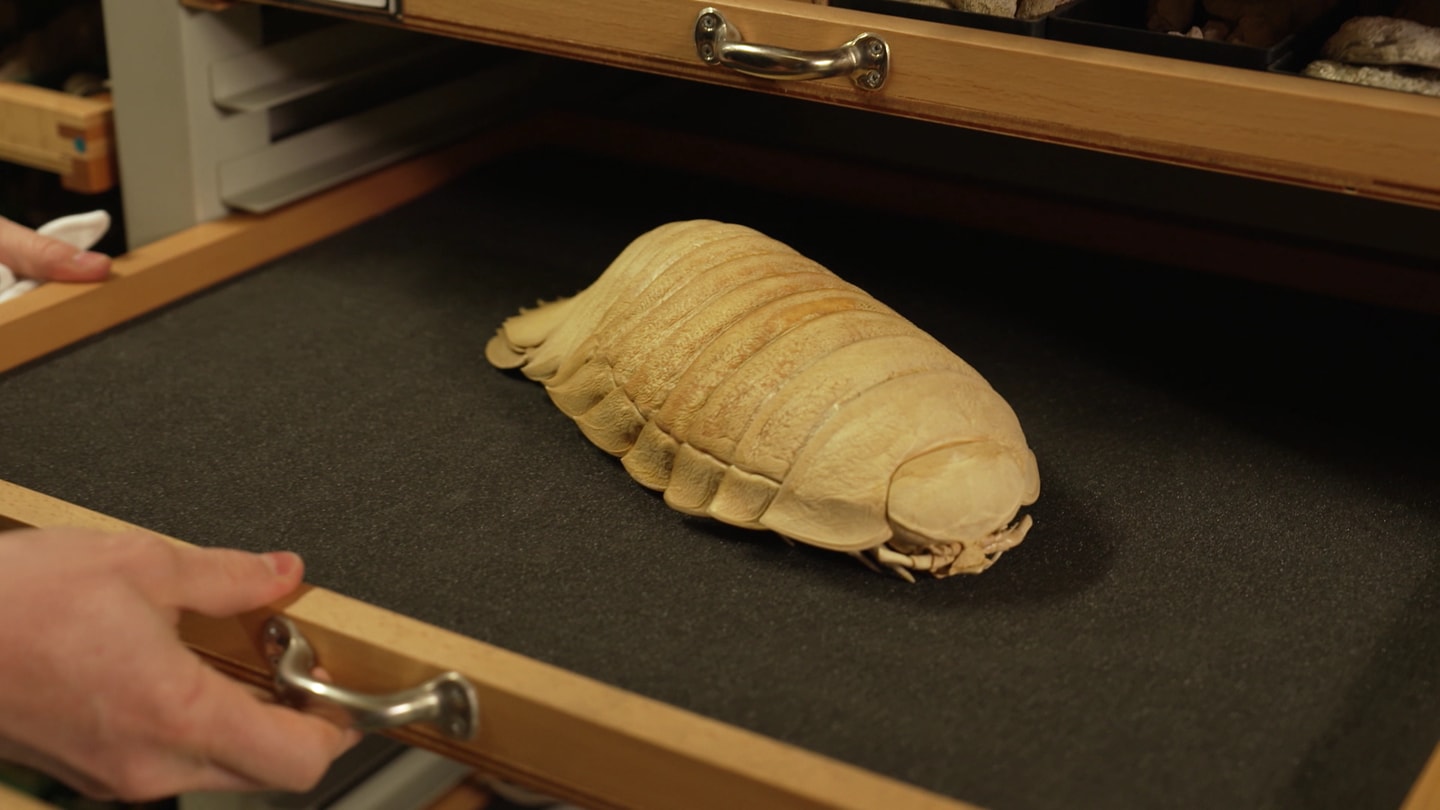
Eine Masterarbeit zeigte, dass eine Riesenassel in einem Tübinger Archiv eine bislang unentdeckte Art ist.

Eine Masterarbeit zeigte, dass eine Riesenassel in einem Tübinger Archiv eine bislang unentdeckte Art ist.

0

Instance Search Temporarily Degraded

preview

Update: sorting is restored as well.

Update: instance search is restored, though the sorting is still a little broken.

fediverse.observer, which we were using as a source for instance data, has gone down. As a result, instance search is not currently working. We are investigating alternatives and hope to have it back up soon.

0

Canada’s initial real-time rail rollout likely won’t include big banks, sources say | BetaKit

BetaKit Canada’s initial real-time rail rollout likely won’t include big banks, sources say | BetaKit betakit.com
preview

Excerpt, emphasis mine

Canada’s long-awaited instant payment system, Real-Time Rail (RTR), likely won’t include any of the country’s largest banks as participants in its first phase, BetaKit has learned.

The RTR system is meant to be an instant, always-on payment infrastructure for Canadians and their financial institutions to transfer funds. The system is under development by the national non-profit Payments Canada, which has a government-created mandate to handle the country’s payment systems. The RTR system’s rollout—the first phase of which is slated to go live in the fourth quarter of 2026— would also allow emergent financial companies to move money for customers without relying on banks or paying them a fee.

But four sources within the FinTech ecosystem that have knowledge of the rollout said none of Canada’s Big Six banks are currently scheduled to participate in its first phase, raising questions about how useful RTR will be without the banks, which settle the vast majority of the country’s payments. BetaKit is not naming the sources because they were not authorized to discuss the matter publicly.

To send and receive payments via RTR, both parties will need to be onboarded to the new system, Payments Canada confirmed to BetaKit in an email. Otherwise, institutions will have to use existing payment rails to move funds on behalf of customers.

The RTR system first began development as a payments modernization project in 2015, with a target launch of 2019. Since then, it has been fraught with delays: Payments Canada pushed back the rollout to 2022, then later rescheduled it for mid-2023, and again to 2026.

Canada is the only country in the G7 without an instant payment rail.

18

Yandex outage: data shows that instead of going dark, malicious bots went on the move

Cloudflare Blog Yandex outage: data shows that instead of going dark, malicious bots went on the move blog.cloudflare.com
preview

cross-posted from : piefed.zip/…/yandex-outage-data-shows-that-instea…

cross-posted from : piefed.zip/…/yandex-outage-data-shows-that-instea…

13

Why Koho won’t bet on prediction markets | BetaKit

BetaKit Why Koho won’t bet on prediction markets | BetaKit betakit.com
preview

Excerpts:

Canada’s newest FinTech unicorn is poised to become its newest bank. CEO Daniel Eberhard explains what comes next.

The company is nearing the end of its 5-year journey to secure a Schedule 1 banking licence, which CEO Daniel Eberhard claims will help Koho offer more competitive lending and savings rates to everyday Canadians.

“I think that we will look back on prediction markets the same way we look back on altcoins and … NFTs.”

To Eberhard, prediction markets are techwashing what amounts to gambling, which could lead to a bunch of negative downstream social effects.

0

Iran war, and Trump's "magical end to war, but only after the midterms" should be primary reason to vote Democrat in midterms. Get off your ass and vote!

preview

“Ending war” is being telegraphed as escalating war after mid terms, and magical surrender of Iran as outcome. Only reason to schedule anything after mid terms is that it would be unpopular to do it now, and expose the failure now. Not having war powers, or impeachment powers in congress is permission for Trump to destroy America/world in his dementiaed unchecked evil.

The Midterm Mandate: Can a Fractured Congress Curb the Imperial Presidency?

WASHINGTON, D.C. — As the November 3, 2026, midterm elections approach, the ongoing conflict with Iran has firmly established itself as the central pivot of American electoral politics. With the seven-month-old war driving severe domestic living costs to record thresholds, Democratic congressional candidates and anti-war strategists are framing the upcoming vote as an urgent, final structural firewall against unchecked executive military power.

The War Powers Gridlock and the Campaign for Constraint

According to platform statements from the Democratic Congressional Campaign Committee (DCCC), achieving a legislative majority is the only viable mechanism left to legally constrain the White House’s expansive war-making capabilities. This perspective has gained traction following a series of tight, party-line legislative battles. On September 24, 2026, Senate Republicans successfully blocked a bipartisan, House-passed War Powers Resolution by a narrow 49–50 vote, demonstrating the limits of the current congressional minority to force an operational withdrawal from the region.

Democratic challengers in competitive swing districts are aggressively arguing that a compliant Republican-led Congress has effectively abdicated its constitutional oversight. Critics from progressive foreign policy institutes assert that without a legislative majority capable of leveraging the power of the purse, the administration will continue to bypass statutory barriers by relying on broad Article II executive authorities. The focus of the opposition’s argument is that electing a Congress independent of the executive branch is required to halt ongoing blockades and block a potential post-election escalation.

The Logic of Escalation vs. The Reality of Resistance

The upcoming vote comes amid warnings from international security analysts regarding the strategic assumptions guiding the administration’s military campaign. Prominent anti-war commentators and progressive think tanks have sharply criticized the White House’s apparent conviction that systemic infrastructure degradation will force domestic capitulation. They argue that the presumption that striking electrical grids, transit nodes, and civilian infrastructure will compel the Iranian population and the Islamic Revolutionary Guard Corps (IRGC) to adopt a submissive posture toward Western influence represents a profound miscalculation.

Furthermore, political observers note that the White House has deliberately telegraphed an aggressive push to bring a definitive end to the conflict immediately following the midterms. Critics argue that this timeline is entirely artificial, designed to mask a massive post-election offensive that would be deeply unpopular with voters if launched before November. Because the current administration has demonstrated a categorical inability to engage in genuine diplomatic peace negotiations, its telegraphed “end to the war” is widely understood by defense analysts as a euphemism for unprecedented military escalation rather than a negotiated settlement.

The consequences of choosing this path of escalation over diplomacy carry profound risks for the global economy. Security strategists and Wall Street analysts warn that moving past the current blockade into direct, unchecked theater warfare will trigger immediate, massive spikes in energy prices. With international crude oil and distillate markets already highly sensitive to supply disruptions, such an escalation threatens to ignite a severe financial market collapse, wiping out trillions in global capital equity as the reality of a broader, uncontained conflict sets in.

Instead, regional experts point to indicators that military pressure is actively unifying local resistance. A recent report by The Wall Street Journal detailed extensive Iranian efforts to fortify sensitive infrastructure, with local authorities actively preparing the civilian population for long-duration conflict. Security strategists warn that continuing the strict naval blockade risks driving the adversary toward a corner where its only rational option is a full-scale, asymmetric retaliation designed to cripple global energy distribution corridors.

The Threat of Global Economic Realignment

The broader international risk of a continued conflict has become a key target for economic analysts evaluating the midterms. Mainstream financial monitors note that an escalation does not offer a path to clean victory; rather, it introduces a severe threat of global economic fragmentation. If prolonged hostilities disrupt primary maritime transit routes, the resulting spike in energy and logistics costs will inflict severe economic strain on key global consumer markets, while imposing heavy infrastructural repair costs on regional producers.

Foreign policy scholars warn that this dynamic could rapidly undermine the long-term structural foundations of the American economic model. Faced with a persistent, U.S.-enforced blockade that threatens domestic stability, historical global partners may face an unbearable economic tax. Analysts suggest this strain could accelerate a calculated withdrawal of international support for U.S. financial systems, pushing key economic blocks to fast-track independent, alternative trade and settlement structures to bypass the conflict zone entirely.

The Price of Unchecked Predictions: A Winter of Domestic Crisis

Ultimately, the upcoming election serves as a direct referendum on the catastrophic domestic consequences of an unchecked executive branch operating under the illusion of an imminent, “unconditional surrender” from its adversary. When a compliant Congress refuses to restrain a president who continuously promises that victory is just around the corner, the severe price of that miscalculation is passed straight to the American pocketbook.

Should the administration pursue its post-election escalation or persist with a blockade that provokes full asymmetric retaliation, the resulting shock will manifest at home as $9.00 per gallon diesel, gasoline, and home heating oil. For the millions of families across the Northeast facing an unpayable $3,600 winter heating bill, the theoretical predictions of Washington strategists will transform into a brutal humanitarian and economic crisis. A vote this November is the primary mechanism to reassert legislative oversight before these unchecked executive assumptions trigger a broader domestic collapse.

18

Germany puts Ukrainian on trial accused of blowing up Nord Stream pipelines

Germany puts Ukrainian on trial accused of blowing up Nord Stream pipelines www.bbc.com
preview

Prosecutors say Serhii Kuznetsov played a leading role in a team of saboteurs that destroyed the pipelines, accusing him of a war crime.

Prosecutors say Serhii Kuznetsov played a leading role in a team of saboteurs that destroyed the pipelines, accusing him of a war crime.