0

preview
Allways liked this series. I’m sure alot of others will too.
Allways liked this series. I’m sure alot of others will too.

Allways liked this series. I’m sure alot of others will too.
Allways liked this series. I’m sure alot of others will too.



“No young person’s access to clinically appropriate healthcare should depend on which state they live in.”
“No young person’s access to clinically appropriate healthcare should depend on which state they live in.”








Boop beep blop. I’m a bot! 01101000 01101001
Boop beep blop. I’m a bot! 01101000 01101001



Five European countries have announced a plan to send rejected asylum seekers to a processing centre in Rwanda as early as next year, drawing condemnation from rights groups who said it would leave vulnerable people at risk of abuse. The planned scheme, which is still being negotiated with Rwanda, would send people to a centre where the migrants could choose to return home, settle or go somewhere else where they had a right to stay, Kigali said on Monday.
Austria, Denmark, Germany, Greece and the Netherlands said that the plan aimed to deter more people from migrating to Europe. The European Union has worked for years to tighten migration rules, reduce the number of asylum seekers arriving and increase deportations of migrants who are not entitled to stay.


Hi, I want to start creating or uploading some content but I don’t want a goverment or corporation to see everything that I’m putting up.
What ways are there to accomplish this? One is self hosting i think, there my concerns are security(getting hacked) and then that I don’t have a laptop at the moment so i would need to host this on my main pc while i use it. Any ideas on how this could be accomplished? Im guessing that buying hosting is a no-go?


cross-posted from: news.abolish.capital/post/93301
On Monday, New York City Mayor Zohran Mamdani and Police Commissioner Jessica Tisch announced highly anticipated plans to overhaul the structure of the New York Police Department’s repressive Strategic Response Group (SRG).
In a pre-recorded video with City Council Member Chi Ossé published on Monday morning Mamdani said, “New Yorkers exercising their constitutional right to protest should not be met with the same police response as a terrorism threat. We are establishing a new, civilian-led approach that prioritizes dialogue, engagement and de-escalation.”
The announcement follows months of increasing pressure from Mamdani supporters and the broader Left to get rid of the counter-terrorism and civil unrest unit, which has been used by three different mayors to crush protest and punish dissent in the city for more than a decade.
Unfortunately, despite the Mayor’s rhetoric his proposal is nothing but a classic bait and switch operation. The proposal gets rid of the SRG in name only, replacing it with a different repressive force, and will do nothing to protect protesters from further police repression. Like a used car salesman, the mayor has lured his supporters in with a shiny promise to get rid of the SRG, but instead sold them on a stripped down plan that merely obscures the coercive power of the police while doing nothing to protect the interests or increase the power of the working class.
Although originally presented in leaked reports to Politico and other news outlets last week as a proposal to “disband” the SRG, the mayor’s plan actually does nothing of the kind. The Strategic Response Group will not be abolished, as the mayor promised, but will instead be subsumed within the NYPD’s Intelligence and Counterterrorism Bureau. In its place the NYPD will create at least two new units specifically designed to control and suppress protest: a civilian Community Dialogue and De-escalation Division (CDDD) and a new armed “Patrol Support Division (PSD)” to assist the CDDD with “crowd control.” Meanwhile, according to the New York Times, many of the SRG’s other tasks, including patrolling the Macy’s Thanksgiving Day Parade, will be performed by a police unit with yet another different name.
Despite all of the name changes and reshuffling, it’s clear that these new configurations are just a rebranded, perhaps slightly less lethal, but no less repressive version of the previous SRG. Armed police will still be deployed to deal with protests and the NYPD will still be allowed to use military grade weaponry, including dangerous long range audio devices (LRADs) capable of causing hearing loss and damage to disperse crowds. In an interview with ABC News on Monday alongside Mayor Mamdani, Tisch made this point very clearly: “nothing would change about the way that the NYPD responds to crowd control conditions.” How the NYPD will determine the difference between a crowd and a demonstration remains to be seen.
These changes echo a longstanding demand of our movements, from Black Lives Matter to the movement for Palestine. The problem is that they will do little to alter the balance of power between the working class and the state. Regardless of whether the SRG exists or not, the longstanding tactic of using the NYPD to manage and limit disruptive protest in order to weaken the ability of working people and the broader masses to use their collective power remains the same. The fact that we now have a “democratic socialist” mayor overseeing such repression changes nothing.
Indeed, although Mamdani has said that decisions about the NYPD are ultimately up to him, not police Commissioner Jessica Tisch, the training, staffing, and deployment of this new unit will be entirely under the direction and control of the Commissioner. Tisch, who has regularly expressed her support for the SRG, also seems to have played a central role in crafting the proposal, and there is little reason to believe that the NYPD as a whole will be any less repressive than in the past.
The proposed changes reflect a deeply-rooted hatred of the SRG, a racist, para-military like force, which has been used for years to stifle dissent and break up peaceful demonstrations. But they are also clearly a response to the widespread protests and criticisms of Mamdani that followed the shooting of Oscar Belgal by ICE agents in October.
This shows the importance of holding progressive leaders accountable, sticking to our demands, and prioritizing politics over pragmatism. However, they also reflect the limits of such pressure tactics. As the executive of the city that sits at the center of global capitalism, Mamdani’s ability to provide any concessions to the working class is almost entirely constrained by what capital and the state will allow, and as these proposals show, it ain’t much.
Ultimately, there can be no significant reform or abolition of the coercive powers of the state under capitalism. The power of the police can only be challenged through the mass organization of the working class as whole. As we saw after the huge Black Lives Matter uprisings of 2020, and the fightback against ICE in Minneapolis, people have the power to resist, to set the political agenda, and to win at least temporary concessions. But only if we remain organized and continue to build our power collectively. In the absence of a sustained and self-organized working class, with a clear independent political horizon, such gains can easily be undone.
The post Mamdani’s SRG Plan is a Classic Bait and Switch appeared first on Left Voice.
From Left Voice via This RSS Feed.

Mehr Infos zum Heft: www.kultboy.com/magazin/5947/
Mehr Infos zum Heft: www.kultboy.com/magazin/5947/

The Austrian authorities have taken initial steps to revoke the citizenship of a former foreign minister who moved to Russia — a country she has lauded for its “genuine freedom” — and who has repeatedly denigrated Austria while echoing Kremlin-friendly talking points. Karin Kneissl made international headlines when she danced with President Vladimir Putin of Russia at her wedding in 2018, when she was her nation’s top diplomat. Since then, she has angered many of her compatriots with regular barbs against her country of birth and its citizens. That the Austrian state would even consider the extraordinary step of revoking her citizenship reflects a national weariness about the former foreign minister. It follows a prolonged national debate over whether Ms. Kneissl retained the right to remain Austrian after — both physically and by all appearances ideologically — turning her back on her homeland.
The Austrian authorities have taken initial steps to revoke the citizenship of a former foreign minister who moved to Russia — a country she has lauded for its “genuine freedom” — and who has repeatedly denigrated Austria while echoing Kremlin-friendly talking points. Karin Kneissl made international headlines when she danced with President Vladimir Putin of Russia at her wedding in 2018, when she was her nation’s top diplomat. Since then, she has angered many of her compatriots with regular barbs against her country of birth and its citizens. That the Austrian state would even consider the extraordinary step of revoking her citizenship reflects a national weariness about the former foreign minister. It follows a prolonged national debate over whether Ms. Kneissl retained the right to remain Austrian after — both physically and by all appearances ideologically — turning her back on her homeland.
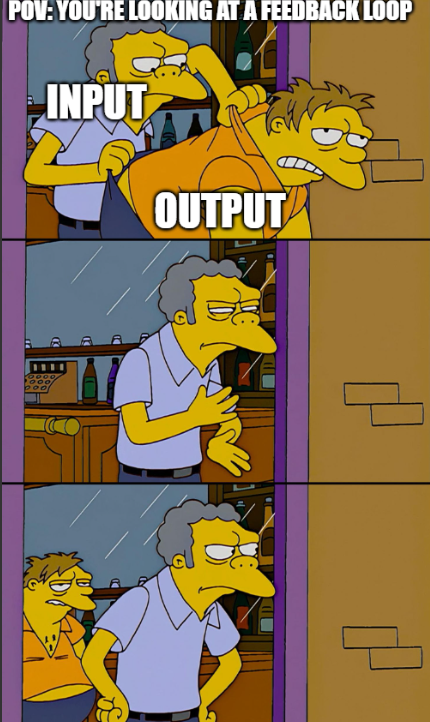
Crossposted from https://fedia.io/m/memes@r1b.it/t/4570278
Explanation: In control engineering, feedback is when you take the output of a process and put it back into the input. This is usually used to maintain a stable output (think of a self-driving car measuring its own speed and accelerating or decelerating to maintain a constant-ish speed). Meanwhile a transfer function is the relation between an input and its output.

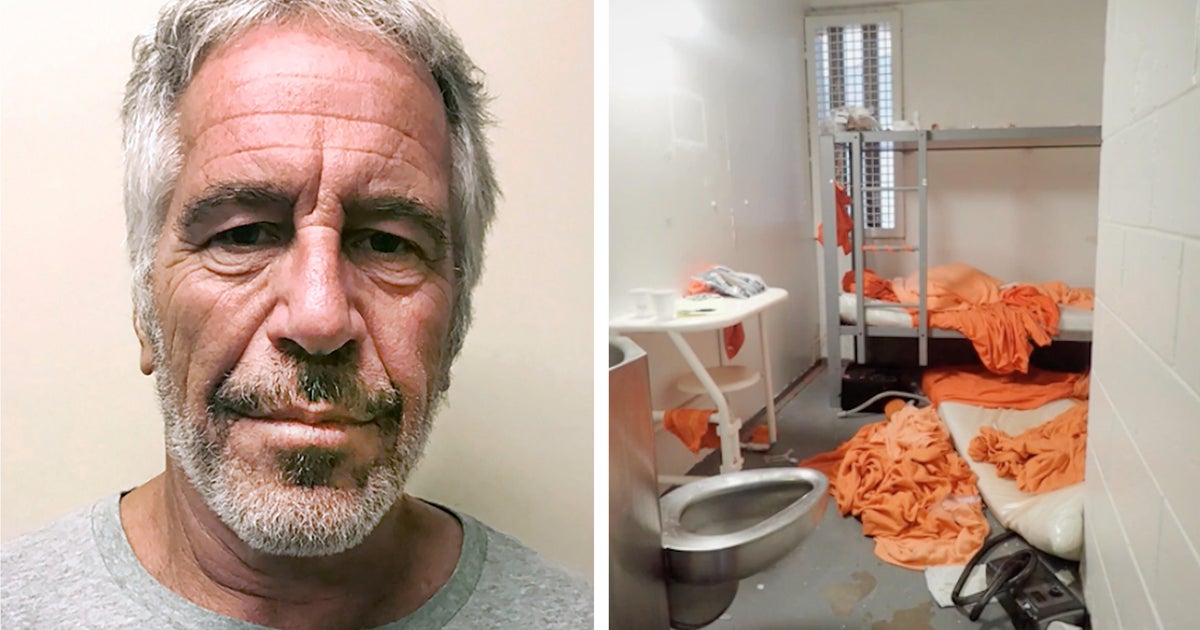
Across the political spectrum, a large chunk of Americans believe, despite a lack of evidence, that Jeffrey Epstein did not die by suicide.
Now one forensics expert, working with photos and files provided by Epstein’s brother, is weighing in to contend that this suspicion might be right.
Dr. Michael Freeman, who is editor-in-chief of the Journal of Forensic and Legal Medicine, spent months reviewing never-before-published autopsy records provided to him and CBS News by Epstein’s brother. The 2019 ruling by the the New York City Office of Chief Medical Examiner was that Epstein died by suicide. But Freeman has concluded that Epstein’s death was more likely a homicide.
Freeman — who worked with Anders Eriksson, a professor of forensic medicine at Umea University in Sweden, and Itiel Dror, a researcher specializing in identifying bias in forensic decision making — presented their findings Monday in London. Freeman said he believes that in August 2019 the world’s most notorious sex abuser was likely attacked and killed by another person.
For the first time in decades, U.S. doctors are sounding the alarm about babies coming into the world with measles.
Congenital measles happens when a pregnant woman passes the virus to her fetus in the womb. It can lead to serious complications or even be deadly for newborns.
From the start of 2025 through the end of this September, 13 congenital measles cases were reported to the U.S. Centers for Disease Control and Prevention during large measles outbreaks, according to preliminary figures published in a medical journal on Monday.
“This is a brand new phenomenon,” said Michael Osterholm, who directs the University of Minnesota’s Center for Infectious Disease Research and Policy.
State Farm Fire and Casualty Co. will pay a $45 million settlement after a state insurance department investigation found it failed to properly pay roof damage claims by Oklahoma customers.
The state’s incoming insurance commissioner, Republican Bob Sullivan, said he was still learning details on Friday but worried the settlement may take some flexibility out of any regulatory approach to State Farm under his administration.
The settlement calls for the Illinois-based insurance company, which has been the focus of hundreds of lawsuits, to let customers with wind and hail damage ask for an independent review if they had claims closed without payment from 2021 to 2025.
State Farm is Oklahoma’s top homeowners insurer, with more than 258,000 customers and $785.9 million in homeowners premiums in 2025. Its state market share in that category is more than 30%.


Europe should not follow the United States’ lead by imposing all kinds of trade restrictions on China. That is the warning from three professors in an article in the economics journal ESB. Last summer, the Dutch Scientific Council for Government Policy (WRR) argued for taking a tougher line toward China. The professors say that advice is insufficiently supported and too critical of China. They also argue that the WRR overlooks international cooperation—one of Europe’s strengths.
One of the authors is Steven Brakman, professor of international economics at the University of Groningen. He agrees with the WRR report’s main message: Europe should invest more in innovation and support its businesses so they become less dependent on foreign countries. “But we think the report misses the mark somewhat by making China into a bigger villain than necessary.”
Brakman says the economic threat from China is being overstated. For example, the WRR says China is flooding the world with products. “That’s true to some extent, but the WRR report exaggerates it.” He also questions the accusation that China manipulates its exchange rate to keep its products artificially cheap. “Yes, they influence the exchange rate, but if you look at the figures, you can see that the yuan, China’s currency, has actually risen in value. That has made Chinese products more expensive, rather than the exchange rate being manipulated and kept artificially low.”
What Brakman finds especially striking is that the WRR criticizes China for its industrial policy while also advising Europe to pursue an active industrial policy of its own. “That’s a rather strange turn in the report.”
According to Brakman, China is facing a rapidly aging population and has therefore invested heavily in innovation. Over the past twenty years, the country has tried to move beyond making only simple products and establish a leading position in key industries. He says it has succeeded.
“That’s also the message from Draghi’s report and from Wennink in the Netherlands: make it easier for startups to thrive.” China’s electric-car industry is a good example, Brakman says. China realized it would be difficult to catch up with Germany’s combustion-engine car industry, so it chose to focus on electric vehicles. The government helped companies get started, after which they competed fiercely with one another. Of the many Chinese car brands that emerged twenty years ago, only a few strong players remain.
“That’s the policy China pursued. They don’t always play fair, which is why many countries have taken the issue to the World Trade Organization.” Still, Brakman says, the policy is much like what Europe and the Netherlands now want to achieve, including through the recommendations in the Wennink report.
Brakman says the distinction between state aid and government investment is less clear-cut than the WRR suggests. China is accused of unfair competition because it subsidizes companies, but the Netherlands also wants to support startups with public money.
“Think of startups, which often struggle to get financing. In the Netherlands, we’re going to set up a national investment institution to make it easier for startups to obtain funding. If that works, you could also say it’s unfair state aid, because they wouldn’t normally get that money from the market but can get it with government help.”
“So the boundary isn’t as clear-cut as the WRR report suggests.”
— Steven Brakman, professor of international economics at the University of Groningen
According to Brakman, this raises the question of whether such government support is unfair competition or simply sensible policy to help young companies. “So the boundary isn’t as clear-cut as the WRR report suggests.”
Brakman is also critical of the proposal to impose broad import tariffs on China. He says that would put Europe on the same path as the United States, even though Europe criticizes American trade policy. “You can introduce tariffs in a very targeted way, but if you apply them broadly to China, you’ll hurt yourself too.”
Although China does compete unfairly in some products, Brakman says, European companies also benefit from inexpensive Chinese intermediate goods. These are used to make finished products, helping European companies remain competitive in both European and international markets.
At the same time, Europe needs to avoid becoming wholly dependent on China for important intermediate goods. But Brakman says the main priority should be strengthening Europe’s own competitiveness. “We need to be competitive, but that doesn’t mean we should mainly be angry at the outside world. We need to look at Europe itself in a sensible way.”
The solution Brakman favors—and “it’s not a very sexy solution”—is to restore the World Trade Organization to its former strength. “Make sure there’s a rules-based system again.”
Brakman also argues for reducing barriers to trade within Europe, such as complicated customs rules and bureaucracy. He says Europe would do better to focus on that than on broad import tariffs against China.
Closer economic cooperation with other countries could also bring Europe major benefits, Brakman says. He points to trade agreements with Canada, the Mercosur countries, and India. “That would strengthen ties with our friends around the world. It’s not easy, and Europe can be criticized on that point. The agreement with Canada still hasn’t been fully ratified. That should happen much faster.”
Europe should not follow the United States’ lead by imposing all kinds of trade restrictions on China. That is the warning from three professors in an article in the economics journal ESB.
I have been making videos, and having a lot of local AI shenanigans running on my 3080 that most claim need a 40 at least.
I am surprised no one made a Ollama type model for AI dungeon’s Voyager thing. Voice modulations don’t need even a GPU from 2010s, Image generation is quite good even on low B models. The only thing that is slow is the model generating the story but most Websites use the cheep ones I am using Qwen’s Q8 model on a I5 CPU and it takes about 10-20 min with max context. Q4-5 take like 2-3 min
Even if it’s not a Open soruce base you can make a high quality text based RPG out of that.
Edit: KoboldCpp I just needed to use slop GPT to find it google is just bad. Still a good post to keep

An air strike launched by the Sudanese Armed Forces (SAF) has killed at least 13 civilians in the Abu Qalb area of West Kordofan state, according to the Emergency Lawyers rights group. Warplanes belonging to the military government carried out the attack on the Abu Zabad locality, with the victims including women and children, “according to preliminary monitoring” the legal collective said in a social media post on Monday. Al Jazeera was unable to immediately verify the report.
An air strike launched by the Sudanese Armed Forces (SAF) has killed at least 13 civilians in the Abu Qalb area of West Kordofan state, according to the Emergency Lawyers rights group. Warplanes belonging to the military government carried out the attack on the Abu Zabad locality, with the victims including women and children, “according to preliminary monitoring” the legal collective said in a social media post on Monday. Al Jazeera was unable to immediately verify the report.

A proposed law would allow Texans to own raccoons as pets, but there would be rules for bringing one home
House Bill 1090, filed by state Rep. Joe Moody, D-El Paso, would establish a permit system allowing Texans to keep raccoons as pets, provided they meet certain requirements established by the Texas Parks and Wildlife Department.
Before bringing one home, prospective owners would need to complete a state-approved raccoon ownership course and apply for a permit through the Texas Parks and Wildlife Department.
The permit would be valid for one year, with the option to renew. Applicants would also have to pay a fee, although the legislation leaves the amount up to the Texas Parks and Wildlife Commission.
Under the proposal, pet raccoons could only be obtained from authorized wildlife rescuers or rehabilitators, federally licensed breeders, or other permitted raccoon owners, subject to state rules.
Permit holders would be required to provide appropriate veterinary care, including vaccinations for rabies and other communicable diseases as required by state rules.
Owners would also have to provide suitable shelter, food, water and enrichment for their animals.
Breeding pet raccoons would be prohibited unless the owner was separately authorized to do so by the U.S. Department of Agriculture.
The bill would also authorize game wardens and other designated state employees to inspect locations where permitted raccoons are kept. Routine inspections would generally be limited to once per year, although additional inspections could occur in response to complaints or suspected violations.
Authorities could seize raccoons from owners suspected of violating the law. Owners could also face administrative penalties of up to $1,000 to recover seizure-related costs.
HB 1090 is only a proposal and would need to pass the Texas Legislature and become law before the permit system could take effect.
If approved, the legislation would take effect Sept. 1, 2027. The Texas Parks and Wildlife Commission would then be responsible for developing rules governing permits, fees, ownership courses and animal care.

🫠
🫠
A proposed law would allow Texans to own raccoons as pets, but there would be rules for bringing one home
House Bill 1090, filed by state Rep. Joe Moody, D-El Paso, would establish a permit system allowing Texans to keep raccoons as pets, provided they meet certain requirements established by the Texas Parks and Wildlife Department.
Before bringing one home, prospective owners would need to complete a state-approved raccoon ownership course and apply for a permit through the Texas Parks and Wildlife Department.
The permit would be valid for one year, with the option to renew. Applicants would also have to pay a fee, although the legislation leaves the amount up to the Texas Parks and Wildlife Commission.
Under the proposal, pet raccoons could only be obtained from authorized wildlife rescuers or rehabilitators, federally licensed breeders, or other permitted raccoon owners, subject to state rules.
Permit holders would be required to provide appropriate veterinary care, including vaccinations for rabies and other communicable diseases as required by state rules.
Owners would also have to provide suitable shelter, food, water and enrichment for their animals.
Breeding pet raccoons would be prohibited unless the owner was separately authorized to do so by the U.S. Department of Agriculture.
The bill would also authorize game wardens and other designated state employees to inspect locations where permitted raccoons are kept. Routine inspections would generally be limited to once per year, although additional inspections could occur in response to complaints or suspected violations.
Authorities could seize raccoons from owners suspected of violating the law. Owners could also face administrative penalties of up to $1,000 to recover seizure-related costs.
HB 1090 is only a proposal and would need to pass the Texas Legislature and become law before the permit system could take effect.
If approved, the legislation would take effect Sept. 1, 2027. The Texas Parks and Wildlife Commission would then be responsible for developing rules governing permits, fees, ownership courses and animal care.

La live di sabato pomeriggio ospitata da @lorenzodm con @redflegias e @pondolo è stata un momento di confronto che è andato molto oltre le aspettative.
Oltre alle riflessioni incisive di entrambi sul futuro del Fediverso e sull’importanza della cooperazione e dei gemellaggi fra istanze, l’incontro ha offerto una vera e propria lezione approfondita di Pondolo su Chat Control 2.0 e sulla campagna portata avanti da @BoostMediaAPS insieme a @ufficiozero, Umoja e Snowfan per difendere la privacy e la libertà di comunicazione.
Un bel segnale anche nella chat della diretta, in cui, a sorpresa, si è materializzato l’ormai famoso Eddy.
Per chi non avesse potuto seguirla, vale davvero la pena recuperarla qui:
👉 https://www.youtube.com/watch?v=AogWoQ8HDhM

Hello there dear strangers,
Thank for taking the time to read my post. I would appreciate any opinions and input from anybody. I would particularly appreciate any opinions and input from somebody who has experienced what I describe.
I will begin with a little bit of context about myself first. I am 19, I work full-time in IT, and I live semi-rural in England with my parents. I have had my license since 17, but I never had any interest in owning a car, and so I never purchased a car.
Fast-forward two years, I am trying my best not to rethink the decision, but it is hard.
My friends are now scattered across the country in cities hours away. Visiting them is very difficult as a result of not owning a car. I hardly get to see some of them anymore. For reference, my nearest friend lives 18 mins away by car and 2h away by public transport. My furthest friend lives 2 hours away by car and 4.5h away by public transport. Those are both one-way, so double it for a return trip.
I would enjoy the ability to go wherever I want, whenever I want. I do so as much as I can, but it is not the same on a bicycle and with poor public transport.
I feel as though my hands are tied behind my back with a lack of freedom. I don’t yet have the money (or desire) to move out, and I spend more time at home than I would like because getting to places can be a chore.
Going shopping is easy and I can stomach getting to work by a mix of cycling and getting the train, but I feel as though my social life and indeed the fun of life is suffering at the expense of my desire to remain car-free. I put this to the test over the summer, and confirmed this.
I borrowed my father’s car when he went away for one month and my life was insurmountably better. I was able to visit friends at the click of a finger, I was able to travel to beautiful remote locations, I felt a level of freedom which I have not yet felt before in life. I finally felt like an adult and not a child. I was able to go on a date with somebody who I’ve liked for years, which I would have otherwise never been able to arrange logistically.
All of that said, this is Fuck Cars isn’t it?
Cars bother me massively. The noise, the pollution, the laziness and anti-social-ness it instills on a society, the fact that motonormativity is what is holding back having decent public transport. What bothers me the most is that I don’t like where my money will be going, to the likes of large oil companies and insurance companies. I know I am preaching to the choir, but my point is that I do not ‘want’ to buy a car.
For the above reasons, I have bitterly defended and justified my decision to be car-free, to myself and to anybody who asks. I don’t know how much longer I can hold out though, however contradictory it is to what I believe. Less people using public transport discourages investment in making it better, less people cycling discourages the investment of decent infrastructure.
My beliefs are strong, but are they strong enough to be at the expense of enjoying myself while I am young?
I know that I overthink a lot, so that is why I wanted to seek the advice of others. If you were in my shoes, what might you do? If you have been in my shoes or similar, what did you do?
I would greatly appreciate any comments, suggestions, etc. :)


🚇 Metro B, il CAF 403-404 torna al deposito di Magliana Nuova
Il convoglio CAF 403-404 è rientrato a Roma dopo la revisione generale. Prima di tornare in servizio sulla Metro B dovrà superare i collaudi tecnici. Il rientro in linea è previsto entro la fine dell’anno. Il treno resterà sulla linea in attesa dei nuovi Hitachi.

cross-posted from: lemmy.ml/post/55390541
Here and here are two websites that will do the jumbling for you if you want to try it
cross-posted from: lemmy.ml/post/55390541
Here and here are two websites that will do the jumbling for you if you want to try it


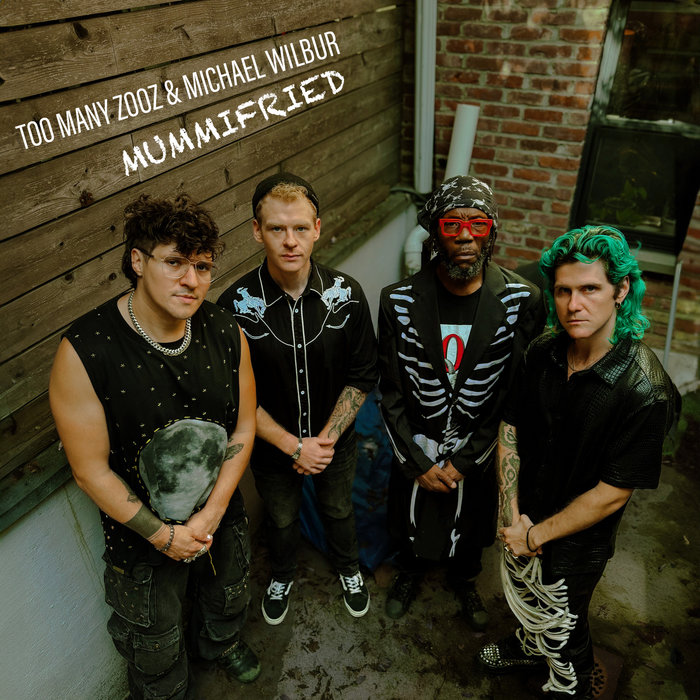
Mmm, yassssss
Mmm, yassssss