0

Ruby.social
Sebastian Cohnen (@tisba@ruby.social)
ruby.social
| Scheduled for (UTC) | 2026-08-20 13:04:45 |
|---|---|
| Scheduled for (NZST) | 2026-08-21 01:04:45 |
| Launch site | Rocket Lab LC-1A or -1B, Māhia Peninsula, New Zealand |
| Booster recovery | No |
| Launch vehicle | Electron + Curie |
| Customer | iQPS |
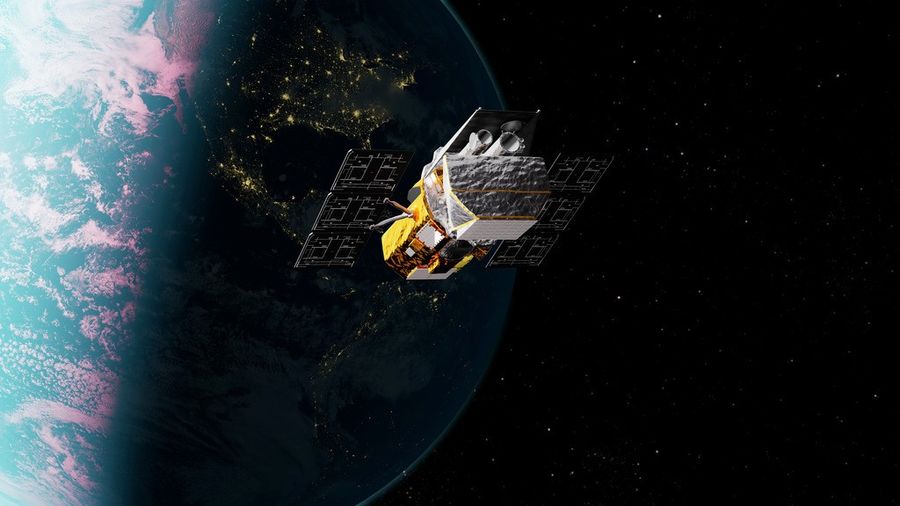
| Payload | QPS-SAR-18 (SUSANOO-II) |
| Mass | 100 kg |
| Target orbit | LEO |
| Stream | Link |
|---|---|
| Rocket Lab (official) | www.youtube.com/watch?v=wLc1C15jbgY |
| Space Affairs | www.youtube.com/watch?v=JVuP19ajLuU |
| The Launch Pad | None |
QPS-SAR-18 (SUSANOO-II)
iQPS’s satellites are small, high-performance SAR satellites that use a lightweight, large, stowable antenna to collect high resolution images of Earth, even through clouds and adverse weather conditions. Ultimately, the iQPS constellation is planned to have 36 satellites capable of monitoring specific fixed points on Earth every 10 minutes. In addition to launching on Electron, the QPS-SAR satellite will use a Rocket Lab Motorized Lightband as its separation system for deployment to space.
Previous mission: The Grain Goddess Provides
Next mission: Owl Around The World




Original video (from Xitter): video.twimg.com/…/mFOut6m6G8rFDuKf.mp4
Original video (from Xitter): video.twimg.com/…/mFOut6m6G8rFDuKf.mp4



As a resident of Lesser Carolina, it is not fun watching one of my federal representatives live post their mental breakdown in real time.
As a resident of Lesser Carolina, it is not fun watching one of my federal representatives live post their mental breakdown in real time.
cross-posted from: lemmy.sdf.org/post/57844000
For decades, the West assumed that economic growth would turn China into a more open, liberal society, much as it did Taiwan and South Korea. Instead, China’s totalitarian institutions proved remarkably resilient, surviving decades of reform and reasserting themselves under Xi Jinping.
[Op-ed by Chenggang Xu, senior research fellow at the Stanford Center on China’s Economy and Institutions at Stanford University, and the author of “Institutional Genes: Origins of China’s Institutions and Totalitarianism”.]
[…]
“Totalitarian,” it is important to note, is not a pejorative label. It describes a distinct institutional structure. If China is seen merely as a rising power, the challenge appears to be one of great-power competition, inviting accommodation and compromise. If it is viewed as a strictly authoritarian regime, the problem is one of political repression, with gradual reform offering a possible remedy. However, if China is a communist totalitarian system, then its domestic institutional structure necessarily shapes its external behavior, with profound implications for its role within the international order.
The distinction between totalitarianism and authoritarianism is not just semantic. A totalitarian party is not a political party in the conventional sense. It is an organization designed to penetrate and control the state, the bureaucracy, the economy, the media, (coercive) institutions, personnel, ideology, social organizations and even private life.
By contrast, authoritarian regimes try to monopolize political power, suppress opposition and restrict civil liberties, but might leave significant parts of society relatively autonomous. This limited pluralism can foster economic growth and an expanding middle class, which can in turn lead to liberalization and, eventually, democracy. South Korea and Taiwan are prime examples.
[…]
What accounts for the remarkable persistence of Chinese totalitarianism? The answer lies in “institutional genes”: recurring institutional elements that enable a political system to reproduce itself over time. The most important of these elements concern the distribution of power and property rights, and the prevailing social consensus that legitimizes this distribution. Because these elements sustain the larger structure of power, those who benefit from it have strong incentives to preserve and reproduce them.
[…]
The critical question is not who owns a particular asset, but who ultimately controls land, capital, labor and information. Such arrangements are reproduced through incentives, coercion, ideology and organizational power. While they can and do change, new policies or reformist declarations alone are rarely enough to dislodge them.
Taiwan offers the clearest example. It is an ethnically Chinese society with deep historical and cultural ties to mainland China, yet it became a constitutional democracy … Its continued development contributed to the emergence of civil society and growing demands for political reform.
[…]
By framing China as a normal rising power and the US as a nervous incumbent, he [Xi Jinping] seeks to focus global attention on preventing a great-power conflict, rather than on harder questions about the nature of China’s totalitarian system and what its ascendancy would mean for the world.
How democracies understand China determines how they deal with it. Misreading the nature of the regime can lead them to treat China as an ordinary great power, mistake tactical accommodation for genuine liberalization and confuse economic integration with political moderation.
[…]
China’s experience shows why the origins and resilience of political systems matter — and why even far-reaching reforms might fail to transform them. However, history is not destiny. Institutions change when the forces that reinforce them change. Although China is not condemned by its past, its future depends on whether the institutions that have defined its political order for generations finally give way to something new. **The first step is to recognize its totalitarian regime for what it is. **





Originally dating back to 8th century, it was fortified later in 15th century. This is the place where Buddha first met his original five disciples.
Originally dating back to 8th century, it was fortified later in 15th century. This is the place where Buddha first met his original five disciples.

We may have cleansed one too many aquifers…
We may have cleansed one too many aquifers…

A Bézier curve […] is a parametric curve used in computer graphics and related fields. A sequence of discrete “control points” defines a smooth, continuous curve by means of a formula. Usually the curve is intended to approximate a real-world shape that otherwise has no mathematical representation or whose representation is unknown or too complicated. The Bézier curve is named after French engineer Pierre Bézier (1910–1999), who used it in the 1960s for designing curves for the bodywork of Renault cars. Other uses include the design of computer fonts and animation.
A Bézier curve […] is a parametric curve used in computer graphics and related fields. A sequence of discrete “control points” defines a smooth, continuous curve by means of a formula. Usually the curve is intended to approximate a real-world shape that otherwise has no mathematical representation or whose representation is unknown or too complicated. The Bézier curve is named after French engineer Pierre Bézier (1910–1999), who used it in the 1960s for designing curves for the bodywork of Renault cars. Other uses include the design of computer fonts and animation.

We can’t let up! Keep growing this crucial labor defense! An injury to one is an injury to all!
We can’t let up! Keep growing this crucial labor defense! An injury to one is an injury to all!


We can’t let up! Keep growing this crucial labor defense! An injury to one is an injury to all!
We can’t let up! Keep growing this crucial labor defense! An injury to one is an injury to all!

We can’t let up….keep growing the response from labor!
We can’t let up….keep growing the response from labor!

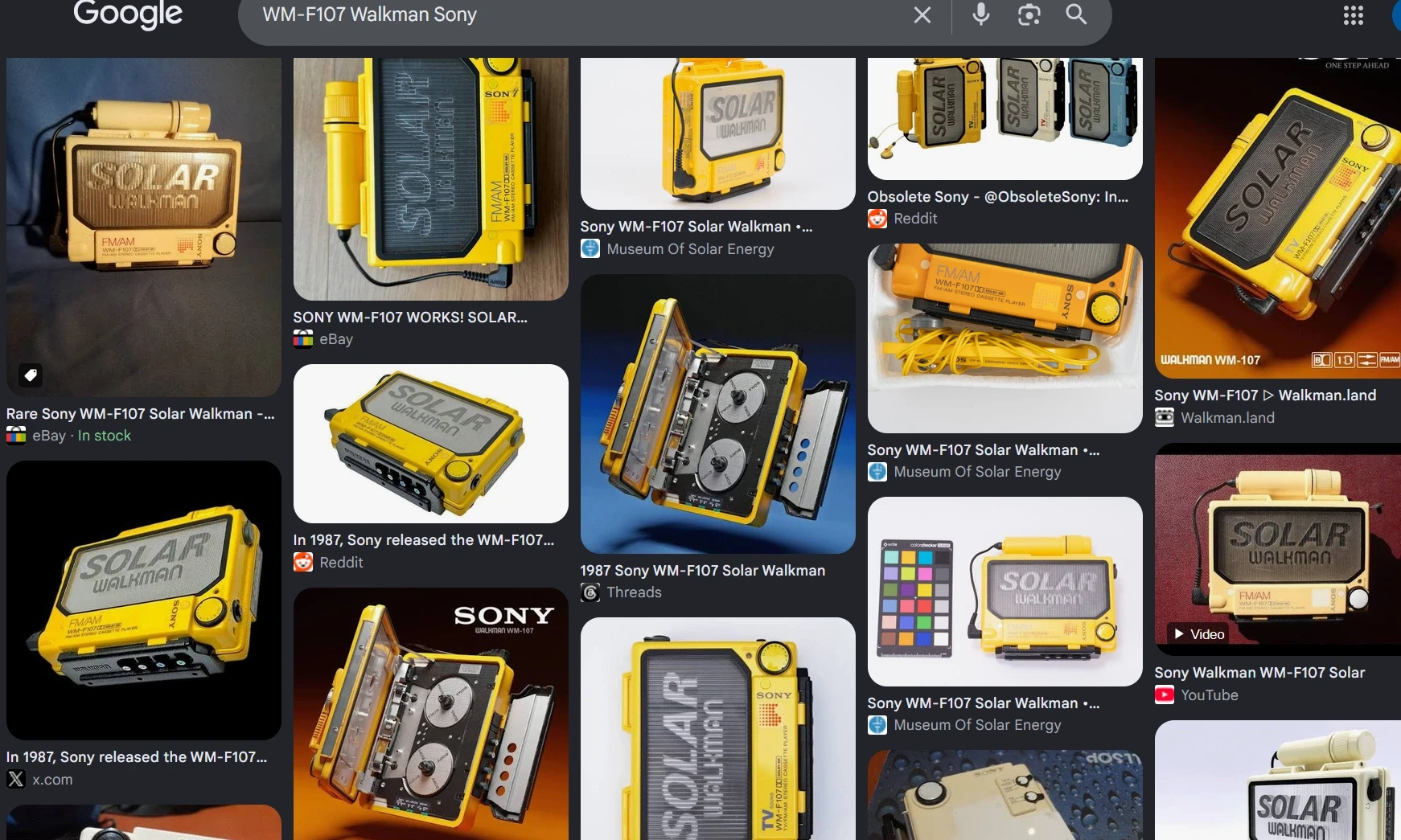
Still major internet problems over here, so I need some help figuring out what the deal was here.
Little help…?
Still major internet problems over here, so I need some help figuring out what the deal was here.
Little help…?

This would have taken so long
This would have taken so long

Quoted from the article:
There are certain requirements that e-scooters have to meet in Vancouver:
- Self-propelled (or self-propelled + human power)
- Max 500 watts motor output
- Max 40 kg (including the battery)
- Max speed of 25 km/h on level ground
- Standing platform, no seat
- No pedals
- Handlebar steering
- A bell or a horn
- Adequate brakes
- Lights during dark hours
- And of course, helmets required
On highways of 50 km/h or less, e-scooters may operate in a cycle lane or as near as practicable to the right of the roadway.
On highways over 50 km/h, e-scooters have to be in the cycle lane or another portion of the highway only if permitted by a traffic control device.
One of the most commonly broken e-scooter rules is sidewalk riding. VPD says that e-scooters are prohibited on sidewalks, crosswalks (unless specifically permitted) and in locations prohibited by municipal law.
VPD adds that e-skateboards, electric unicycles, and hoverboards are not street legal.
Ubisoft was an American company, with the name standing for Uber Software, where Uber means super in online English. The reason it’s not named Ubersoft is because Ubisoft flows-off-the-tongue better. When did Ubisoft become a French company? Thank you for your interest.
Ubisoft was an American company, with the name standing for Uber Software, where Uber means super in online English. The reason it’s not named Ubersoft is because Ubisoft flows-off-the-tongue better. When did Ubisoft become a French company? Thank you for your interest.

cross-posted from: lemmy.zip/post/69965437
[Animation] Haircut
The animation: youtu.be/jheSw_md4U4
Aria got a haircut and looks like the Grimpoteuthis (“dumbo octopus”) now!
cross-posted from: lemmy.zip/post/69965437
[Animation] Haircut
The animation: youtu.be/jheSw_md4U4
Aria got a haircut and looks like the Grimpoteuthis (“dumbo octopus”) now!
The colors and shading on the new runestones make them difficult to differentiate visually, especially with low screen brightness or night mode. I often play on low brightness at bedtime and it’s really hard to see. There needs to be more contrast between the color on the stone and the stone itself.
Stylistic comment: the new sprites for runestones and seeds look like eggs. Too perfectly round in their shape
Question to Evan: what’s your preferred way to provide beta feedback? This is my first time getting involved in beta even though I’ve been playing for 10+ years

It’s disastrous.
It’s disastrous.

I don’t remember the channel name for I’m pretty sure it was on youtube. It had a sort of horror theme, viewed from spamton’s perspective with kris on the ground and friend on top of them apparently looking away from the camera, then it’s face morphs into view and attacks spamton.
I’m going crazy looking for it because it’s so cool and I forgot to bookmark it.
Any help is appreciated
EDIT: Thanks!!! This is peak youtu.be/9EAmNV77WQU
cross-posted from: news.abolish.capital/post/72754
One of the most persistent and recycled claims in anti-communist “left” discourse is the way Black radical scholarship is selectively invoked to discredit Marxism itself.
The post Marxism wasn’t exported to the Caribbean it was proven there appeared first on MR Online.
From MR Online via This RSS Feed.
Barak Ravid
The U.S. military has quietly established a shipping corridor in and out of the Strait of Hormuz to transport millions of barrels of oil each day — a notable success even as the broader war remains at a stalemate, two U.S. officials told Axios.
The task force overseeing the Hormuz effort is being run out of the Army headquarters in Fort Bragg, North Carolina.
Under the operation, which has been underway for the last several weeks, 15–20 tankers have entered and exited the strait each night through a southern channel along the coast of Oman.
About 10 million barrels of oil a day — roughly half the pre-war volume — are being transported out of the strait and injected into the global energy market, the officials said.
The U.S.-led operation is mitigating one of the most painful aspects of the war: the disruption to oil supplies that sent crude prices soaring. While the amount of oil coming out of the strait is still below pre-war levels, it is making a discernible difference in global supplies, officials say.
The U.S. Air Force has fighter jets that protect against Iranian cruise missiles and drones.
The operation was made possible by a recent two-week U.S. Central Command military campaign that degraded Iran’s radar and maritime surveillance systems, the officials said.
Iran has diminished visibility of the traffic in the southern channel of the strait. Its monitoring is limited to a few radars it managed to reconstitute as well as “spotters” in small IRGC fast boats, U.S. officials say.
Because the Iranians are mostly “blind,” they are launching drones and cruise missiles in the general direction of where ships might be transiting.
“We have been controlling the southern lane of the Strait of Hormuz for two months now. The Islamic Revolutionary Guard Corps can be a nuisance, but they don’t control the strait. We do,” one of the U.S. officials, who has direct knowledge of the matter, said.
Some ships have been hit by the Iranian attacks, but many were stopped by the U.S. military. Earlier this week, for example, U.S. forces shot down eight Iranian drones and two cruise missiles, one of the U.S. officials said.
U.S. officials say that over the past two weeks, 15–20 tankers transited in and out of the Strait of Hormuz each night through the southern channel, keeping the exports going.
The average daily exports have been growing and are now close to 10 million barrels, U.S. officials say. On some nights over the last few weeks, they note, the amount of oil moving out of the Gulf was 15 million–20 million barrels. On one of the nights this week, more than 20 ships were slated to move in and out of the strait through the southern lane, with approximately 15 million barrels of oil potentially coming out, one of the officials said.


Czołem,
Nie wiem gdzie zadać to pytanie bo to nie Reddit. Jak coś nie ogarnąłem, to kasujcie, ale próbuję zrozumieć jak działa fediwersum.
Z tego co widzę rejestrując profil w jednej instancji mogę abonować się do communities innych instancji. Nie mogę natomiast śledzić treści które pojawiają się w lokalnym feedzie całej instancji. Mając więc profil na europe.pub, nie mogę sobie po prostu wyświetlić na odrębnym feedzie tego co się dzieje na całym szmer.info.
Tę stronę techniczną chyba rozumiem. Ale ciągle nie jestem pewien czy rozumiem polityczny aspekt tych instancji. Czy ma jakiekolwiek znaczenie z punktu widzenia polityki fediwersum, suwerenności cyfrowej, wolnego internetu i tych spraw, czy np. będę miał konto na Szmerze czy np. na europe.pub albo na feddit.org? Czy poza ekstremalnymi przypadkami naprawdę są instancje, które się nawzajem blokują ze względu na różnice polityczne? Nie śledząc na co dzień tego co się dzieje na danej instancji, jej wybór wydaje mi się dosyć arbitralny, z punktu widzenia osoby, która rejestruje się po raz pierwszy (dlatego np. na Mastodonie siedzę na defaultowym mastodon.social, bo po prostu nie ogarniam czemu miałbym wybrać inną instancją).
W dodatku, staram się wspierać finansowo projekty FOSS, z których korzystam, a w przypadku fediwersum nie wiem gdzie i kto podtrzymuje odpowiednią infrastrukturę. Wspieracie instancje, na których jesteście czy coś innego? Z góry dzięki za sugestie.

archive.today/…/iran-hormuz-oman-us-navy.html
Before the war, about 15 million barrels of crude oil a day went through the Strait of Hormuz. In July, tankers using U.S. protected routes transported around five million barrels of oil daily out of the Persian Gulf, according to analysts.
Helping the tankers get out through the southern corridor increases the supply of crude to world markets and reduces the likelihood of oil prices spiking to the heights they reached earlier in the war. Gulf oil is also bypassing the strait by being pumped in greater volumes through Middle Eastern pipelines.
To try to protect vessels on the southern corridor, Central Command uses a range of weapons that can intercept Iranian drones and missiles. Ship operators say they register any planned trips through the strait with the U.S. military, and then report possible threats or attacks as they occur. The United States uses ships, helicopters and planes to launch weapons to intercept attacks. It has helped over 1,000 ships transit the strait, according to Central Command.
The U.S. tanker protection operation has drawn attacks by Iran. At least 15 ships taking the southern routes have been hit since the start of June, injuring 16 mariners and killing two, according to a New York Times analysis of data collected by the International Maritime Organization, a part of the United Nations. Another ship was struck this week while it was sailing close to Oman, killing a crew member, the United Kingdom Maritime Trade Operations, an entity administered by Britain’s Royal Navy, said on Tuesday.
A small number of shipping operators have been willing to use the Oman route. One of those is Dynacom, a Greek company. Two of its tankers were hit on July 19, one of which was abandoned, according to the International Maritime Organization. Dynacom did not respond to requests for comment.
The United Arab Emirates’ government-owned oil giant, the Abu Dhabi National Oil Company, or ADNOC, is making considerable efforts to move oil on the southern route.
Its vessels have also been frequently struck. ADNOC said last week that 18 of its vessels had been attacked in the war, resulting in one fatality and 20 injuries to crew members.
Many large shipping companies have chosen to stay away from the strait until there is a lasting cease-fire, and traffic through the strait remains far below what it was before the war.
“It’s one of the surprising successes,” said Michelle Wiese Bockmann, a shipping analyst at Windward, a maritime analysis firm. “They have been extraordinarily effective in keeping that southern corridor operating, despite the attacks.”
Ships that navigated the strait with the assistance of Central Command, the U.S. military unit running the operation, typically turn off their transponders to avoid detection by Iran. That makes it harder for firms that track vessels to get a full picture of traffic in the strait.
Given that Iran has regularly struck ships using the southern route, the U.S. protection has not been impregnable. But Capt. Tim Hawkins, a spokesman for Central Command, said: “It doesn’t mean the defense is ineffective. As you can see in the grand scheme, more ships are moving through than before.”
But the U.S. effort, which Iran opposes, has come at a cost.
The U.S. military is deploying significant resources to get a limited amount of oil through the strait — something it did not have to do before the war, when tankers sailed freely through the waterway.
The Iranian military retains the ability to escalate its attacks on all shipping in the area, as well as on oil and gas facilities in Gulf countries. And Iran is demanding permanent control over ship traffic in the strait, something it did not have before the war.
{ “id”: 3441318401, “name”: “Blobfox”, “description”: “Blobfox (with all its variants) is a common sticker in Furry chats.”, “links”: { “lemmy”: [ “!furry@pawb.social” ] }, “path”: { “32-48”: [ [ 302, 45 ], [ 304, 45 ], [ 304, 46 ], [ 307, 46 ], [ 308, 47 ], [ 312, 47 ], [ 313, 45 ], [ 315, 45 ], [ 315, 57 ], [ 314, 59 ], [ 304, 59 ], [ 302, 57 ], [ 302, 52 ], [ 303, 51 ], [ 303, 47 ], [ 302, 47 ] ] }, “center”: { “32-48”: [ 309, 53 ] } }
{ “id”: 3441318401, “name”: “Blobfox”, “description”: “Blobfox (with all its variants) is a common sticker in Furry chats.”, “links”: { “lemmy”: [ “!furry@pawb.social” ] }, “path”: { “32-48”: [ [ 302, 45 ], [ 304, 45 ], [ 304, 46 ], [ 307, 46 ], [ 308, 47 ], [ 312, 47 ], [ 313, 45 ], [ 315, 45 ], [ 315, 57 ], [ 314, 59 ], [ 304, 59 ], [ 302, 57 ], [ 302, 52 ], [ 303, 51 ], [ 303, 47 ], [ 302, 47 ] ] }, “center”: { “32-48”: [ 309, 53 ] } }

An appellate court said the Justice Department can continue investigating QueerDoc, a telehealth service providing care to transgender people across the country.
The Ninth Circuit Court of Appeals said a lower court had wrongly blocked a subpoena from Justice Department investigators seeking records that included patient data, insurance claims, billing records, and communications with pharmaceutical companies. The subpoena was one of more than 20 similar demands for information issued to hospitals and clinics.