


0
0

Tak sobie pomyślałam, że kurczę, nigdy nie wrzucam tu rzeczy, które wrzucam na tzw stories na mediach społecznościowych głównego nurtu… I w sumie szkoda, bo czasem to fajne rzeczy. Więc teraz np dzielę się naszywką, którą sama przed chwilą wyhaftowałam – duszek z piosenki i merchu #BadOmens . Pójdzie na pastelową kurtkę naszywkową 🥰
Link do piosenki: https://youtu.be/EUe9UhcUtEI?is=qcGDe1oQBJafvgJS
@musiczka @muzykametalowa (trochę prowokacyjnie, ale Bad Omens gra metal tak ogólnie, tylko niekoniecznie w tym utworze 😈) #handmade #embroidery


cross-posted from: lemmy.world/post/50223633
cross-posted from: lemmy.world/post/50221468
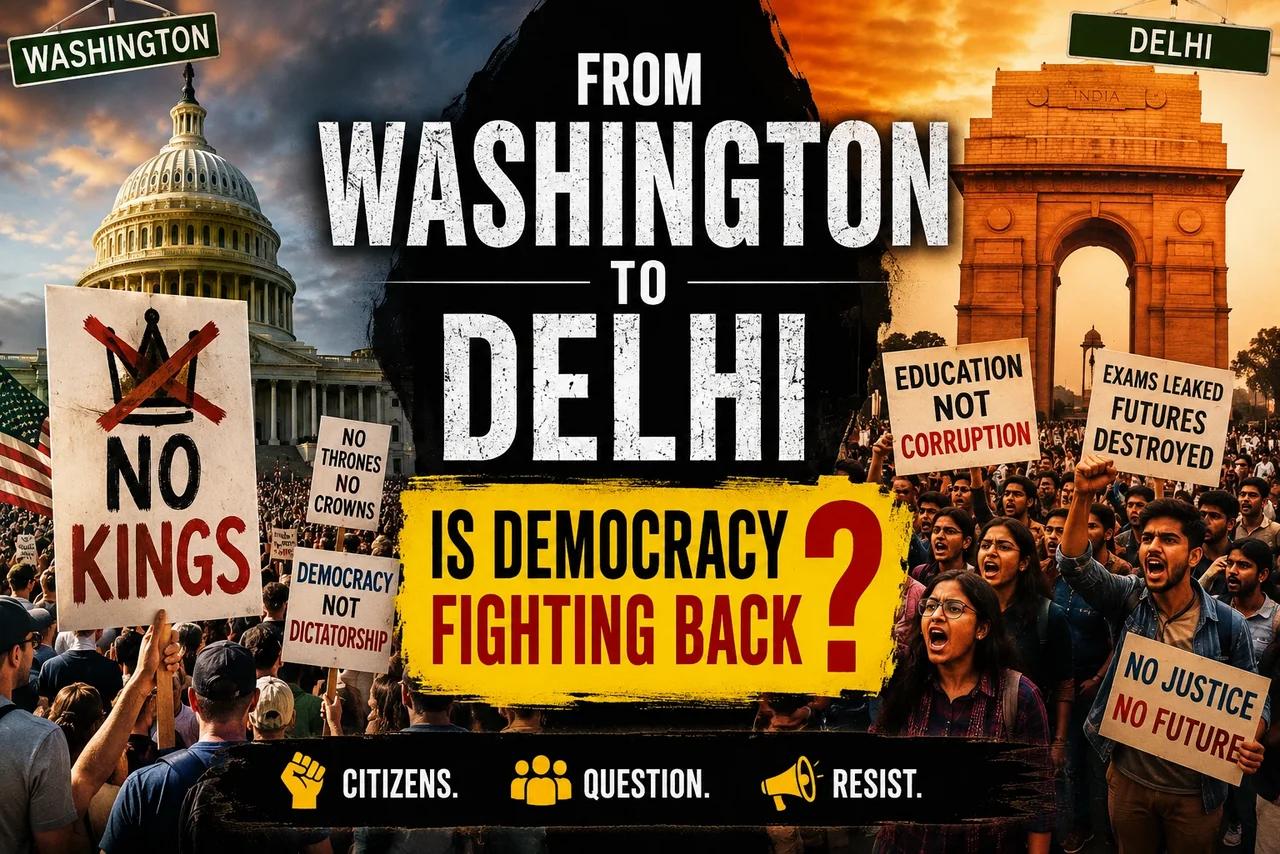
Citizens. Question. Resist. The global democratic renaissance is here. No Kings. No Crowns. ✊
In this video, I explore the core of the Kings Movement and its deep connection to the recent Delhi protests. Are we witnessing a turning point?
Click the link below to watch the full video. I would love to hear your thoughts and engage in a discussion below! 👇
(If you like the discussion, please subscribe to the channel and support our work!)"
I set out to determine which AMD processors do not contain the PSP (which actually compromises your security). Started down this rabbit hole. It’s turned into a shitshow of non-determinism.
So, wouldn’t nation states research which processors are spychips and which are not – in the interest of national security? If yes, is it just a matter of requesting the info?


In this video, I explore the core of the Kings Movement and its deep connection to the recent Delhi protests. Are we witnessing a turning point?
If you like the discussion, please subscribe to the channel and support our work
In this video, I explore the core of the Kings Movement and its deep connection to the recent Delhi protests. Are we witnessing a turning point?
If you like the discussion, please subscribe to the channel and support our work


Post by SPiNDLE (aidenr0)
Socials: Bluesky
Sauce: Sega, Sonic The Hedgehog (series)
Characters: Shadow The Hedgehog, Sonic The Hedgehog
Post by SPiNDLE (aidenr0)
Socials: Bluesky
Sauce: Sega, Sonic The Hedgehog (series)
Characters: Shadow The Hedgehog, Sonic The Hedgehog


cross-posted from: lemmy.dbzer0.com/post/73316976
cross-posted from: lemmy.dbzer0.com/post/73316976
so i used reddit for help with mostly linux and stuff, and it worked fine but i was starting to get pretty fed up by all of these chuds 😭🥀 like you post something asking like an alternative to google pay for example, and they just say “pay with cash” or “use your card” even if you say that you want to use something like google pay and not cash/card. And they also seem to downvote for no reason at all. maybe im just an idiot or have really bad arguments and opinions, but on lemmy i get upvoted even if no one has commented anything!! its like people upvote stuff cause they’re interested in it and/or want the op to find an answer!!! also MOST redditors can’t be open minded or not be jerks. lets go back to that google pay thingy, if you answer to the “use cash/card” comment with something like “i know that technically is more privacy friendly and such but i just like the convenience of using google pay, idrk why but its just how it is” and they mass downvote that shit like its the black plague and reply with some beef jerky type shii (dont remember any good examples)
THANK YOU LEMMLINGS 🥹❤️🩹




duckduckgo.com/?q=https%3A%2F%2Fwww.nytimes.com%2…
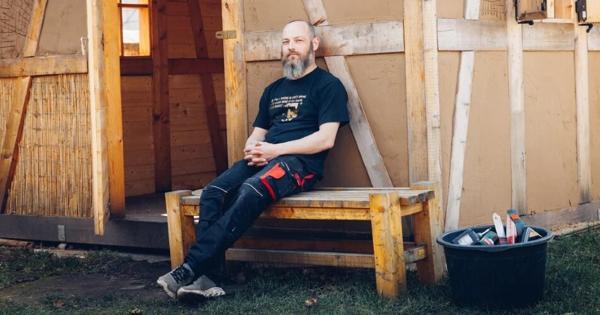
A freelance reporter has been fighting a subpoena from the Trump administration seeking to force him to reveal his sources for a New York Times article about a failed top secret mission in North Korea, according to people familiar with the matter.
In February, F.B.I. agents showed up at the New York home of the reporter, Matthew Cole, to deliver the grand jury subpoena, which was issued by prosecutors in Newport News, Va., according to the people familiar with the matter, who described the private conversations on the condition of anonymity.
The investigators are seeking his testimony about two years’ worth of information about Mr. Cole’s contacts and conversations, as they try to identify his sources for the article about the operation in North Korea, the people familiar with the matter said. It is unclear if the administration has also sought Mr. Cole’s phone and email data, as it has done in other cases.
Last fall, Mr. Cole, along with a staff reporter for The Times, Dave Philipps, revealed the details of a Navy SEAL Team 6 mission in 2019 that went awry. The article described how the SEAL members killed two or three unarmed North Koreans who appeared to have stumbled upon the mission, a classified operation to plant a secret eavesdropping device near the country’s coastline. The Times’s account, published in September, drew on interviews with two dozen people.
The article also noted that the Trump administration did not notify key members of Congress who oversee intelligence operations, before or after the mission, an omission that may have violated the law.
Mr. Cole disclosed more details of his reporting on his Substack newsletter, stating that despite learning about the mission in 2023, he waited for months before making calls to find out more given the sensitive nature of the reporting.
The Justice Department has not subpoenaed Mr. Philipps, according to people familiar with the matter. He declined to comment.
In the months since Mr. Cole’s subpoena, The Times, The Wall Street Journal and The Washington Post have faced similar subpoenas seeking information about their reporting. The news organizations have resisted, and judges have voiced skepticism about the government’s efforts, prompting the administration to back down in those cases.
However, the Justice Department has so far refused to withdraw its subpoena of Mr. Cole, despite his efforts to challenge it.
Mr. Cole is also the author of “Princes and Thieves,” a coming book about the finances and global entanglements of President Trump’s son-in-law, Jared Kushner, and “Code Over Country: The Tragedy and Corruption of SEAL Team Six,” a 2022 book about the elite Navy unit.
The Times is providing a legal defense to Mr. Cole.
I am aware that there was some dispute and I am using CoMaps since then. Today I discovered (thanks @naja@feddit.org !), that Organic Maps has routing for Public transport, a feature I miss dearly on CoMaps.
Now I wonder: Has Organic Maps a bigger, more active community of devs? Should I switch back to it? Or are both equally actively developed, only with different priorities?

I just want all of you to know that I’ve run a run a half marathon. Think I may even be obligated to do so. Was it also a trail one? Yes! Did I also not finish in the last 25%? Yeah!
Honourable mention to the guy in the rear finishing at about 4h30min. But he did it! Extra cheers to him!
I just want all of you to know that I’ve run a run a half marathon. Think I may even be obligated to do so. Was it also a trail one? Yes! Did I also not finish in the last 25%? Yeah!
Honourable mention to the guy in the rear finishing at about 4h30min. But he did it! Extra cheers to him!
Do you have any creative ideas on how to reuse old tires? I have some at the end of their life and I think that throwing them away would result in them not being recycled anyway. Any ideas for inner tubes is welcome too
Edit: Thank you everyone for the answers. For those who want a summary, the suggestions are chain stay protection, edge bumper, water insulation, rubber bands, hanger for repair, elastic fastener, fenders and finger stalls for fishing (or throw them in the fire place)

New update 1.2.12 is out!
With so much positive feedback I got busy this weekend and decided to finally tackle achievements (plus a small building tutorial). I hope you enjoy, please let me know if I broke anything in the process 💚
Next up is a content update for the store, more skins, pets and runes to come :)

For context, Sophie Cunningham is an Indiana Fever player who’s become a chud darling for making numerous transphobic comments on social media. Because of this, paid rightwing protest groups have been showing up to WNBA games trying to spew their bullshit and harass people, so it’s nice to see some pushback against it.
Also Minnesota won which is cool too.

I built idemkit after cleaning up duplicate charges one too many times.
The version everyone writes checks whether a key has been seen and replays the stored response. Two requests a millisecond apart both find nothing and both charge the card. And if the worker dies between charging and recording it, the retry charges again. Neither reproduces locally.
idemkit does it properly: an atomic claim instead of check-then-act, a lease that expires on the storage server’s clock, and a fencing token so a stalled worker can’t overwrite a good result.
from idemkit import idempotent, RedisBackend, MethodConfig

@idempotent(
    backend=RedisBackend.from_url("redis://localhost:6379"),
    config=MethodConfig(key_fields=["order_id"]),
)
async def charge(*, order_id, amount):
    return await payments.charge(order_id, amount)
One core, three ways to use it: middleware for FastAPI/Flask/Django, a queue consumer wrapper or @idempotent on any function. Backends are Redis, Postgres, Mongo, DynamoDB, or in-memory for tests.
pip install idemkit, Apache-2.0: github.com/idemkit/idemkit
If you find it useful, I’d appreciate a star. It’s new, so visibility helps a lot right now.


I don’t know who is the mod of that community, but I suspect it’s the OP of the post.
My comment was a list of problems I’ve had lately on Windoz, pointing how in my recent experience I lost more time there than on Linux for an equivalent use.
I don’t remember my exact words and now they are erased, but it went along the lines of:
I have to use Windoz for work, and lately I lost more time on it than on Linux:
I’ve had several problems with teams (audio input/output switching unintentionaly, main audio output not controlled by keys/shortcuts, freezing, not answering calls)
Copilot freezing the complete OS so that a reboot was necessary.
Unable to scroll in a Copilot thread.
Locked by Bitlocker after update.
Task scheduler losing a task after sleep.
…
So pretty much a list of actual issues I met, not exactly what I would call being an evangelist saying Linux is superior blablabla. I’ve no idea (OK, maybe I have). I simply stated facts.
Is it possible to see who the mod was? Is it a temporary ban?
It’s a shame because I precisely created this account on lemmy.zip to see all instances and communities. /shrug Funny.
Edit: sorry I forgot the post: here
And some formatting edit.


Pretty, but bitey. Any bug-lovers know what causes the striations of the eye, or if that affects vision in any way?
Pretty, but bitey. Any bug-lovers know what causes the striations of the eye, or if that affects vision in any way?

Relive the ZX Spectrum era on your Playdate with SpeccyDate, the emulator bringing classic games to this quirky handheld.
Relive the ZX Spectrum era on your Playdate with SpeccyDate, the emulator bringing classic games to this quirky handheld.

Nachdem die Frau die Männer lautstark zum Verlassen ihrer Wohnung aufgefordert hatte, griff sie einem von ihnen nach Polizeiangaben “beherzt in den Nacken”.
Nachdem die Frau die Männer lautstark zum Verlassen ihrer Wohnung aufgefordert hatte, griff sie einem von ihnen nach Polizeiangaben “beherzt in den Nacken”.

Source: Jed Henry
Source: Jed Henry
If you are thinking about harming yourself — get immediate crisis support. Connect to a crisis counselor 24/7, 365 days a year, from anywhere in the U.S via text, chat, or phone. The Trevor Project is 100% confidential and 100% free.
If you are thinking about harming yourself — get immediate crisis support. Connect to a crisis counselor 24/7, 365 days a year, from anywhere in the U.S via text, chat, or phone. The Trevor Project is 100% confidential and 100% free.
Tesseract went away due to drama with the developer.
I’m glad that Photon still works, and that I can use it for moderator stuff.
Are there any other alternative front ends that I can use?
Tesseract went away due to drama with the developer.
I’m glad that Photon still works, and that I can use it for moderator stuff.
Are there any other alternative front ends that I can use?

Posting a bit of theory from my own Anarcho-Pantherist tradition for you all today.
Capture as Governance: A Revolutionary Intercommunal Mutualist reading of American mass incarceration
Read distraction-free on Substack
A Revolutionary Intercommunal Mutualist reading of American mass incarceration
United Panther Party – U.S. | Ministry of Political Education
The United States holds roughly 1.97 million people in confinement and locks them up at about 580 per 100,000 residents, the highest rate of any independent democracy on Earth and among the highest of any nation on the planet. Only El Salvador, Cuba, and Turkmenistan cage more of their people per capita. The country carries a little over four percent of the world’s population and close to a sixth of the world’s counted prisoners. The whole apparatus runs on about 445 billion dollars a year.
Break the country into its parts and the picture sharpens. Two dozen states lock people up at rates that would top nearly every nation on Earth, and after El Salvador the nine highest incarceration rates on the planet belong to U.S. states, almost all of them in the South. The carceral core has a core, and it’s the ground Food Justice United organizes on. The growth engine has moved too. Immigration detention now drives almost all new confinement, with ICE detention up more than half in a single year, which puts the frontier of capture at the border rather than the drug corner.
It’s worth holding the country’s favorite line about itself up against that arithmetic. Land of the free, home of the brave. No nation that cages its people at this rate has any business calling itself free, and none that needs this many walls to feel safe has any business calling itself brave. By its own telling this is the freest place on Earth, and by the count it has built the most crowded prison system in the democratic world, then draped a flag over it and set the words to music. The anthem doesn’t describe a condition. It advertises one. And the advertising is paid for by the exact people the numbers just named: the freedom gets sung, and they get counted.
That’s where the numbers stand. What a Revolutionary Intercommunal Mutualist analysis asks isn’t whether the disproportion is real but what it’s for.
Dr. Huey Newton’s late theory argued that the nation-state had been overtaken by something larger: a single global order held together by the U.S. ruling class and its technologies of control, which he named reactionary intercommunalism. In that reading there aren’t really separate nations anymore so much as a network of communities administered from an imperial center. Revolutionary Intercommunalism was the answer, a world of liberated communities linked by mutual aid instead of domination. RIM inherits that map and adds the constructive economics the Panthers gestured at but didn’t finish: mutualism, the cooperative and anti-statist tradition, drawn through the Black radical tradition and Indigenous lifeways rather than borrowed whole from Proudhon.
Put mass incarceration on that map and it stops looking like a domestic policy problem. The prison isn’t the criminal legal system’s regrettable overreach. It’s one of the empire’s core instruments for managing the populations it has rendered surplus, dangerous, or in the way. Capture isn’t what the state does when governance fails. Capture is a form of governance. The cage is how the administrative center of reactionary intercommunalism handles the people it can neither fully employ nor openly kill: it holds them, moves them, rents them, and disappears them into a machine that runs on roughly 445 billion dollars a year.
There’s a familiar left explanation for all of this, and RIM treats it as half-right and therefore dangerous. The story goes like this: capitalism produces a surplus population it can’t employ, and prisons warehouse that surplus while extracting cheap labor from it. True as far as it goes. Prison labor is real, the profit is real, and the reserve-army logic is real. But if that were the whole story, the cage would fall on the poor at random, and it doesn’t. It falls along lines that class alone can’t draw.
RIM rejects class reductionism as a founding commitment, not a footnote. The carceral state is built at the intersection of forces that can’t be collapsed into one, and the doctrine reads it through four co-equal pillars: Anarcho-Pantherism and the Black radical tradition, the Black Feminisms, the anti-colonial tradition, and tribal and Indigenous traditions. Each names a dimension of capture the economic story leaves out. Together they explain the disproportion the pure political-economy account can only wave at.
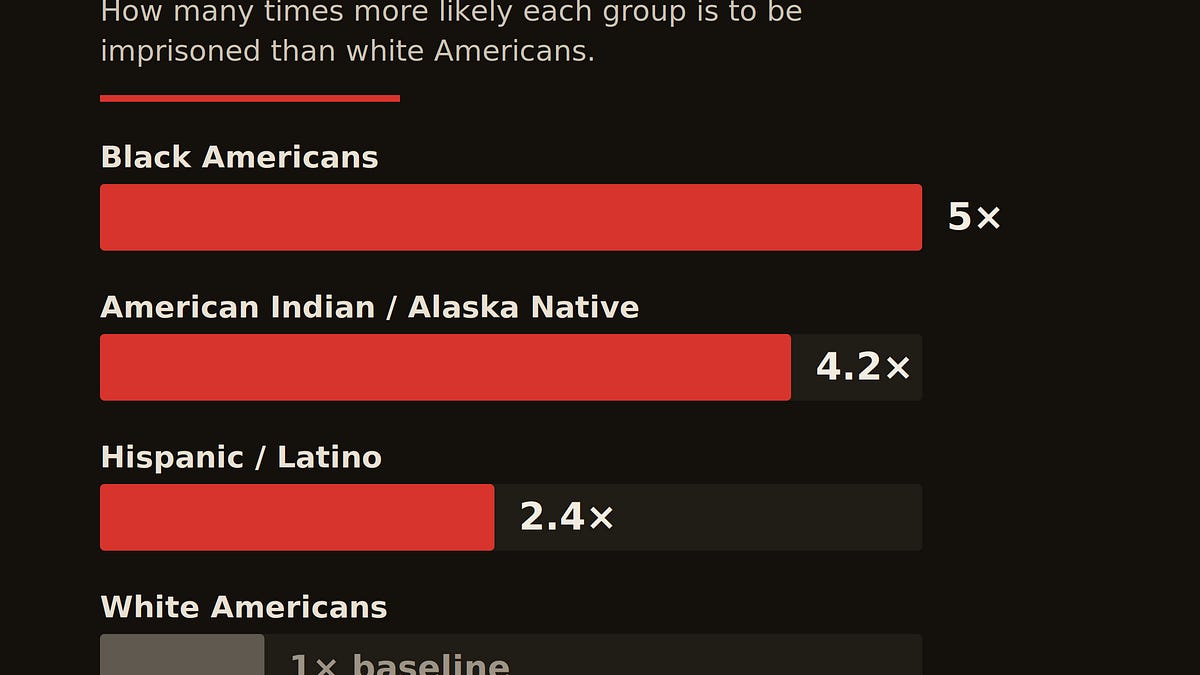
The clearest sign that this isn’t only about class is the color of the cages. Black Americans are about 13 percent of the country and roughly 37 percent of the people in its prisons and jails. Black adults are imprisoned at about five times the white rate. Among people serving life, life without parole, or sentences so long they amount to the same thing, nearly half are Black. One in 81 Black adults is in a state prison on any given day. No purely economic model produces those numbers.
The Black radical tradition supplies the through-line the numbers point at. The Thirteenth Amendment didn’t abolish slavery so much as relocate the exception, banning bondage “except as a punishment for crime.” Convict leasing filled the gap almost immediately, renting Black prisoners to the same industries that had bought Black slaves. The line runs unbroken from the plantation to the chain gang to the modern prison, and from the slave patrol to the police department that feeds it. Scholars in this tradition, Angela Davis, Ruth Wilson Gilmore, Michelle Alexander, Saidiya Hartman, have spent decades tracing it, and the shorthand they’ve handed us is exact: the prison is the afterlife of slavery. Gilmore’s definition of racism belongs here too, the production and exploitation of group-differentiated vulnerability to premature death, sanctioned by the state or permitted beside it. The cage is one of its primary engines.
The Anarcho-Panther reading adds the part liberals flinch from. The problem isn’t a broken system that better funding and better training will repair. The state’s claim to a monopoly on safety is the thing that manufactures the danger it then polices. An institution built to capture can’t be reformed into an institution that heals, any more than the slave patrol could have been sensitivity-trained into a mutual aid society. That’s why RIM’s horizon isn’t a kinder prison but the withering of the cage as a technology, replaced from below.
An analysis that stops at Black men misses half the machine and most of its cruelty. Women are among the fastest-growing groups behind bars, and Black women are imprisoned at over one and a half times the rate of white women. The Black Feminisms pillar reads the carceral state through what it does to survival itself: the woman who fights back against the man beating her and goes to prison for it, the mother whose poverty becomes a neglect charge, the survivor whose trauma becomes a drug case. Capture doesn’t just fall on the racialized poor. It criminalizes the things people do to stay alive inside conditions the same state created.
It also runs on family destruction, a form of social control the labor story can’t see. Every caged parent is a household torn open, children routed into foster systems that feed back into prisons, and the unpaid work of holding families together loaded onto the women left outside the walls. This is why RIM refuses carceral feminism, the belief that gender violence can be solved by adding police and prison cells. The state’s answer to harm against women has been to expand the very apparatus that cages their brothers, sons, and partners, and that same apparatus turns survivors themselves into defendants. Thinkers and organizers in this tradition, Beth Richie, Andrea Ritchie, Mariame Kaba, the Survived and Punished network, have shown that you can’t punish your way to safety for women, because the punishment system is itself a source of gendered violence. Safety for the most vulnerable has to be built, not sentenced.
The Panthers and the anti-colonial theorists they read, Fanon above all, described Black and colonized communities as internal colonies: territories inside the imperial state, policed like occupied ground, extracted from, and governed by force rather than consent. The carceral state is the occupying army’s logic turned inward. The war on drugs was never mainly about drugs. It was domestic counterinsurgency, a way to flood targeted neighborhoods with police, surveillance, and prison sentences under a public-health disguise. The tools move in a loop. Tactics, weapons, and training developed for imperial policing abroad come home to the reservation and the housing project, and what’s refined at home gets exported again.
Today the frontier of capture has moved to the literal border. Immigration detention is now the engine of nearly all growth in American confinement, with ICE detention rising by more than half in a single year. The racialized migrant is the newest population the empire captures to manage, held in a network of facilities that answers to no meaningful oversight. The prison and the detention center are two faces of one project: the administration of racialized populations the imperial core has decided it can neither absorb as equals nor leave alone. From an anti-colonial vantage the disproportion isn’t a scandal inside an otherwise sound republic. It’s what colonial administration looks like when the colony is domestic.
Native people are caged at rates that rival any group in the country: imprisoned at more than twice the national rate and over four times the white rate, jailed at nearly three times the white rate, held in dozens of jails scattered across Indian country under a jurisdictional maze designed in Washington. And the disproportion is the newest layer of the oldest capture on this continent. Before there were prisons here there was dispossession, the removal of nations from their land, and the two have always worked together: criminalize the people, clear the territory. The boarding school was a carceral institution in everything but name, built to confine Native children, sever them from family and language, and process them into something the settler order could use. “Kill the Indian, save the man” was a sentence in both meanings of the word.
But the Indigenous pillar in RIM isn’t only a record of harm, and this is where the analysis turns toward what comes next. Indigenous justice traditions across many nations never organized themselves around the cage at all. They oriented toward repair: restoring relationships, reintegrating the person who caused harm, making the injured whole, keeping the community intact rather than exiling its members. These aren’t theoretical alternatives waiting to be invented. They predate the prison by millennia and have survived every attempt to stamp them out. They’re proof, standing and breathing, that a people can meet harm without warehousing human beings, which is exactly what the carceral state insists is impossible.
Line the four pillars up and the disproportion resolves into a single picture. The cage manages the populations the empire has made: the descendants of the enslaved, the women criminalized for surviving, the internal colonies and the migrants at the frontier, the Indigenous nations it’s still dispossessing. Class is in there, woven through all of it, but class alone never drew these lines and never will. Capture is a mode of governance, and its targets aren’t random. They’re chosen. The disproportion isn’t the system malfunctioning. It’s the system doing precisely what it was built to do, which is why tinkering with sentencing guidelines and retraining the guards has never touched it and never will.
That’s the diagnosis. A Revolutionary Intercommunal Mutualist analysis doesn’t stop at diagnosis, because naming the machine is only worth doing if it clears the ground for building something in its place.
RIM’s strategy has a name for this, borrowed from an old labor slogan and taken seriously: rising inside the shell of the old. You don’t wait for permission to dismantle the cage, and you don’t expect the state to dismantle it for you. You build the community capacity to meet needs and harms directly, until the cage stands revealed as a choice rather than a necessity, and then as an obstacle to be removed. That’s dual power, growing the institutions of a liberated community alongside and against the ones that rule now.
The blueprint for it is the Community Infrastructure Stack, and it’s worth seeing that the whole thing is anti-carceral from the ground up. It runs in order. Food Sovereignty comes first, because a community that can feed itself has pulled the floor out from under a huge share of what gets criminalized as property and survival crime. Community Health and Harm Reduction comes next, and it’s the most direct daylight substitute for the cage there is: naloxone and overdose response in the hands of neighbors, care instead of arrest for the drug user, treating addiction and mental health crisis as health rather than as crime. This is ground Food Justice United already works, and every overdose reversed outside a jail cell is a small proof of the whole thesis. Climate Resilience follows, because a community that can hold together through disaster doesn’t have to be rescued and then policed by the state. Decolonized Technology comes after that, so the tools a community depends on aren’t the same surveillance systems that feed the cage. And the stack lands, deliberately, on Accountable Safety Systems, the fifth tier, the one that meets the carceral state head-on.
Accountable Safety Systems is where the abstract becomes concrete. It means community-based responses to harm that don’t route through capture: transformative justice and community accountability processes that address violence by changing the conditions that produce it and repairing the damage it does, rather than banishing a body to a cage and calling the matter closed. It’s the Indigenous repair tradition and the Black feminist insistence on real safety, built into working infrastructure. Nobody claims this is easy, and RIM doesn’t pretend the hardest cases have simple answers. The claim is narrower and firmer: the cage doesn’t answer them either. It only hides them. A community that has built the other four tiers has the standing and the capacity to take up the fifth, because safety turns out to be something you construct out of met needs, not something you sentence people into.
Come back to where this started. A country with a twentieth of the world’s people built the most extreme carceral apparatus in the democratic world, and it did so by narrowing, again and again, the circle of who counts as fully human and therefore worthy of freedom and safety. That narrowing is the deepest logic of the cage: some people are the public that safety protects, and others are the threat that safety is protected from. Every disproportion in the numbers is that line, drawn in flesh.
The answer isn’t a better-managed cage or a fairer line. It’s the refusal of the line itself. That refusal is the whole content of the phrase this movement organizes under, ALL Power to ALL People, said plainly so it can’t be narrowed to a chosen few. A world organized that way doesn’t need a fifth of anyone’s cages, because it doesn’t produce the surplus, the frontier, and the internal colony the cages exist to manage. Building that world, one tier of infrastructure at a time, inside the shell of this one, is the work.
ALL Power to ALL People.
Data and reporting:
Prison Policy Initiative, Mass Incarceration: The Whole Pie 2026 (national confined population near 1.97 million; rate of 580 per 100,000; roughly 445 billion dollars in annual system cost; immigration detention as the primary growth driver).
Institute for Crime and Justice Policy Research, World Prison Brief (global counted prison population above 11.5 million; comparative national rates; U.S. rate declining from a mid-2000s peak above 750 per 100,000).
The Sentencing Project, One in Five: Ending Racial Inequity in Incarceration and associated state data (Black imprisonment near five times the white rate; American Indian at 4.2 times and Latinx at 2.4 times the white rate; Black women at 1.6 times the white women’s rate).
Prison Policy Initiative, Racial and Ethnic Disparities research (Black share of population versus prison and jail population; Native prison rate of 763 versus 350 per 100,000 nationally; share of long-sentence populations).
Bureau of Justice Statistics, Prisoners in 2023, Statistical Tables (NCJ 310197, September 2025).
PolitiFact, “Webb says U.S. has 5 percent of world’s population, 25 percent of its ‘known’ prisoners” (December 2014), for the peak-era origin of the 5 percent and 25 percent figures.
Theory and tradition:
Huey P. Newton, writings and speeches on revolutionary intercommunalism.
Angela Y. Davis, Are Prisons Obsolete?
Ruth Wilson Gilmore, Golden Gulag: Prisons, Surplus, Crisis, and Opposition in Globalizing California.
Michelle Alexander, The New Jim Crow: Mass Incarceration in the Age of Colorblindness.
Saidiya Hartman, Lose Your Mother (the afterlife of slavery).
Beth E. Richie, Arrested Justice: Black Women, Violence, and America’s Prison Nation.
Andrea J. Ritchie, Invisible No More: Police Violence Against Black Women and Women of Color.
Mariame Kaba, We Do This ‘Til We Free Us, and the Survived and Punished organizing tradition.
Frantz Fanon, The Wretched of the Earth.
This is why I support car free pedestrian streets in urban and highly populated areas.
This is why I support car free pedestrian streets in urban and highly populated areas.


Southern resident orcas are one of the most critically endangered marine mammals in Canada, according to the federal government’s Species at Risk Act, and the Centre for Whale Research says there are about 74 left in British Columbia’s waters — as well as a new calf not included in their numbers. Their main food source is the declining chinook salmon, primarily located in the Salish Sea, one of the busiest shipping corridors in North America.
Southern resident orcas are one of the most critically endangered marine mammals in Canada, according to the federal government’s Species at Risk Act, and the Centre for Whale Research says there are about 74 left in British Columbia’s waters — as well as a new calf not included in their numbers. Their main food source is the declining chinook salmon, primarily located in the Salish Sea, one of the busiest shipping corridors in North America.