0

preview
Wie oft wechselt ihr…
Wie oft wechselt ihr…

Murx | Kommende Regelmäßige Veranstaltungen - 28. September bis 4. Oktober
#Murx #Heidelberg #Freiraum #Openspace #Altstadt #Veranstaltungen @heidelberg
Murx | Kommende Regelmäßige Veranstaltungen - 28. September bis 4. Oktober
#Murx #Heidelberg #Freiraum #Openspace #Altstadt #Veranstaltungen @heidelberg
Wie oft wechselt ihr…
Wie oft wechselt ihr…
In Berlin hat die Linke einen Sieg eingefahren. Reiche warnt in einem Video vor Folgen von „Antisemitismus und Enteignung“ und handelt sich eine Klage ein.
In Berlin hat die Linke einen Sieg eingefahren. Reiche warnt in einem Video vor Folgen von „Antisemitismus und Enteignung“ und handelt sich eine Klage ein.

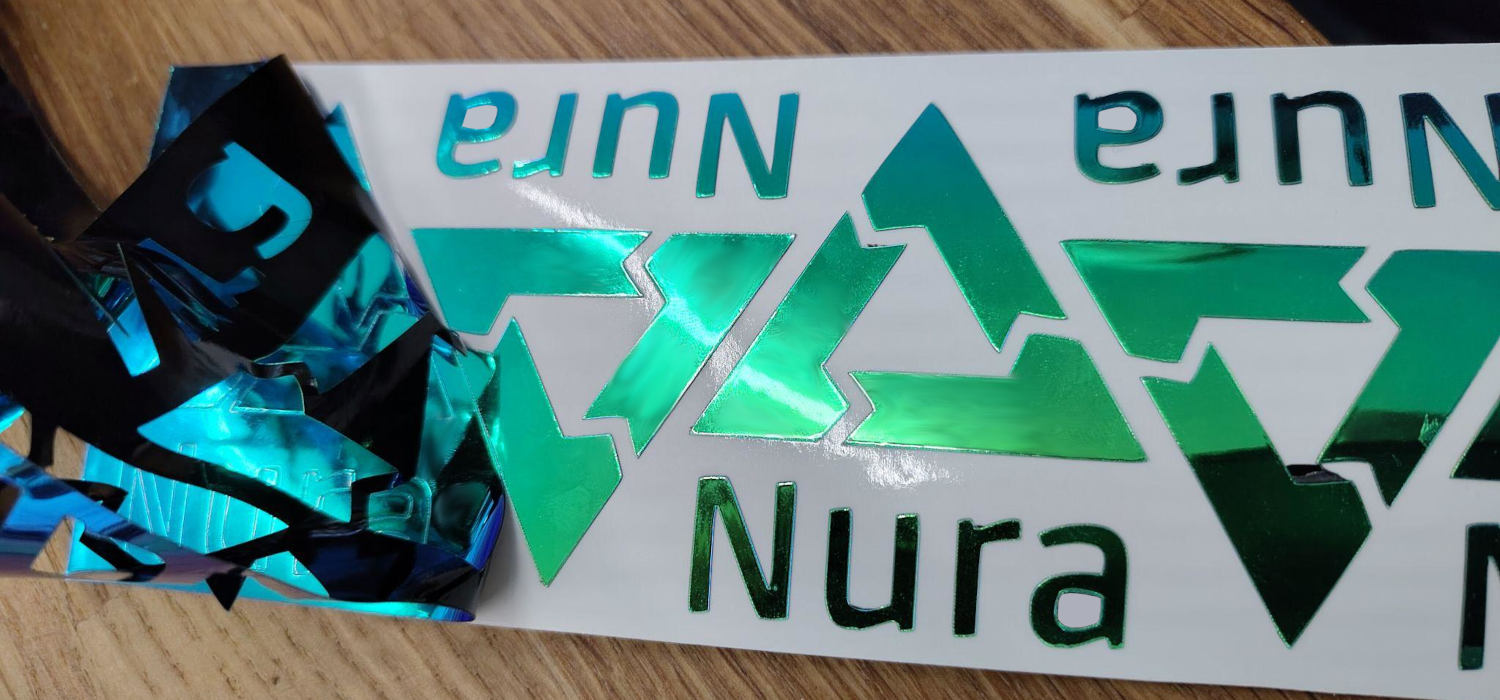
cross-posted from: lemmy.ml/post/53279635
The rationale is interesting. I’m glad they kept the logo as it’s recycling ♻️
cross-posted from: lemmy.ml/post/53279635
The rationale is interesting. I’m glad they kept the logo as it’s recycling ♻️
cross-posted from: lemmy.ml/post/53279635
The rationale is interesting. I’m glad they kept the logo as it’s recycling ♻️
cross-posted from: lemmy.ml/post/53279635
The rationale is interesting. I’m glad they kept the logo as it’s recycling ♻️
I set up a public game night for a non profit organization. The event space has a bar on one side and Pizza and snacks are available. All ages are welcome as the bar side is segregated from where the gaming area is. We posted it in some FB local groups and I found some local subreddits and discord servers. I even made an Instagram account but it flagged my flyer as spam. It’s a smallish town with about 14k people but near a much bigger college town by about 30 minutes. I’m at a loss as what to do since I’m going to give it a go this week too. We discussed having a vintage video game competition such as an old arcade game. Am I missing something or are game nights just not that popular?
I set up a public game night for a non profit organization. The event space has a bar on one side and Pizza and snacks are available. All ages are welcome as the bar side is segregated from where the gaming area is. We posted it in some FB local groups and I found some local subreddits and discord servers. I even made an Instagram account but it flagged my flyer as spam. It’s a smallish town with about 14k people but near a much bigger college town by about 30 minutes. I’m at a loss as what to do since I’m going to give it a go this week too. We discussed having a vintage video game competition such as an old arcade game. Am I missing something or are game nights just not that popular?
Fire and flames climbed the throne room walls. There, at the foot of the throne, amidst the smoke and screams, stood the Demon Lord. Clad in dark armor, broken metal adorned his helm like a twisted crown, and at his feet, bound in ropes, lay the princess. The Demon Lord bent lower, running his gauntlets through her long golden locks, gazing into her fearful eyes. Even amidst the fall of her father’s kingdom, she retained her beauty. The Demon Lord stood up, hefting the young princess onto his shoulders. He had what he came here for. Even so, he expected to see the king here. The bleeding body of the only knight protecting her was a rather disappointing foe. The whole of the castle set aflame by his armies of infernal hell beasts, and this was what was left to protect the princess? The king was strangely absent. Had he fled alone, abandoning his castle and keep? Bah, what a bigger fool than the Demon Lord originally thought. Heavy footfalls made their way out of the throne room, prize in hand. Outside, valiant soldiers and knights fought desperately to hold back the onslaught, but nothing could be done for them. It did not concern the Demon Lord; he swung his sword, and casually cleaved a knight stupid enough to try and take him on. Before long, he was mounted on his horse, riding back to the Forsaken Lands, his home and kingdom.
Two weeks have passed since the Demon Lord’s raid on the castle. He sat on a throne made of obsidian and bones. It was all very cliché, the Demon Lord felt, but appearances matter. In any case, the preparations had been complete; the king had finally returned to his castle, the princess lay bound in chains on the stairs to his throne, and the mystic was ready to connect the Demon Lord to the king. He waved his hand, the mystic waved theirs, the crystal ball glowed, and the fog cleared, showing the image of the king on his throne. Doubtless the king saw the Demon Lord’s own visage, as though he had once again come to their castle.
“King Jyr,” the Demon Lord spoke, his voice more a collection of rattles emulating human speech.
“Demon,” the king replied, a hiss in his voice.
“You know what my demands are. You know what I am capable of,” The Demon Lord began. “You bore witness to the destruction I can cause in the short period I visited. You have no knights you can spare, no soldiers to sacrifice. Give up. Cease this useless resistance.”
“We will never surrender to you! You hold no power over us,” the king spat back.
“On the contrary, I hold immense power over you.” The Demon Lord chose now to play his hand. He hefted the princess, and drew a knife, pressing it against her neck. “I have your daughter.” Her face was bruised and cut, her hair cut short and ragged. Up until merely a few hours ago, the princess had been treated fairly. The Demon Lord wished to draw the ire of the king, and so this was a necessary maneuver, and it worked.
“What have you done to my daughter, you fiend!” He could almost taste the rage pouring from the king’s face.
"You wish to have her back. Your people wish to stop fighting. I wish to conquer your lands, and the lands beyond it. Surrender. Tell me the location of the God Blade. Do this, and you shall have your daughter returned to you, your lands will suffer war no longer. We will all receive what we wish to have.
The king brooded over this. To do one, would forsake the other. It would not be a simple choice, but the Demon Lord knew what the king would choose.
“Keep her,” he decided upon. The Demon Lord could hardly believe his words, and it seemed the princess couldn’t either. He would betray his daughter to protect his land? “You will not have the sword. You will never conquer our land!”
“Very well,” the Demon Lord replied. He threw the princess away, her screams filling the chamber. “Know the weight of your decision.” The Demon Lord motioned for the mystic to shut the connection off. He stood, and walked to where the princess had been thrown. There were tears in her eyes. The Demon Lord had seen her afraid, had seen her forlorn, had seen her beaten, but he had never seen her betrayed. He brought her face close to his helm. Though there were tears there, there was something else. Hopelessness.
“You heard his words. He has forsaken you,” the Demon Lord emphasized. “He has traded you for the security of the kingdom. You have no desire to be here. Jyr will change his mind. I just need you to endure a few things in the meantime.” He walked away from her shivering bundle.
Two months passed since the first communication. The Demon Lord refrained from contacting the king, but had mages amplify the volume of her screams and pleas, such that they could be heard even as far as the castle itself. Each time she cried out, each time she begged for mercy, the Demon Lord knew that the king could hear it. Some days, he would simply leave her be, letting the imagination of the king run wild. Finally, he had decided to contact the king once again.
“King Jyr.” Same process as the last communication.
“Demon Lord!” It seems the king was in some sort of meeting.
“Surrender to me. Give up the God Blade.” The Demon Lord did not care for platitudes. He hoped the king had been tortured enough.
“We will never surrender!”
The Demon Lord was disappointed. The king had stubble on his face, bags under his eyes. If he did not suffer from the sounds of his daughter’s torture, then what did he suffer from? “Your daughter still lives, only barely. I take it you have heard her suffering?” He brought the princess into view again. This time, there was more to be said for her time spent in the Demon Lord’s company. Scars and healing bruises were outlined by fresher cuts and wounds. There was no life in her eyes anymore, no emotion. The Demon Lord could almost hear the king’s next words.
“I have,” he said. “And so has half my kingdom. My citizens cannot get any rest with you broadcasting it into the night.”
Of all things he expected, this was not one of them. He had not been taken by surprise in many centuries. “Do you not care for her? For her suffering? She is your flesh and blood, your kin, your daughter.”
“You will not have the God Blade, no matter what you sink to.” The king picked up a sword, and presumably swung it through the vision he saw, cutting the connection between them. The Demon Lord was left with nothing but to look at the poor girl, the princess with the lifeless eyes. Even so, tears again ran down her cheeks, tears that he had not seen in two months. At first, he thought he had acquired a useful bargaining card, but now he has nothing but a broken woman. If he kills her, and the king is merely acting, then the Demon Lord has lost a valuable asset. If the king is not acting, then this has been an immense waste of the Demon Lord’s time. He gazed at the princess while he pondered his next course of action.
“Do you know where the God Blade is? Tell me and all this will stop.” The Demon Lord had asked her before, but he figured that she did not know. As he guessed, the princess shook her head. Ah well. Nothing to it then.
“Servants!” He called out, as he threw her again to the floor, but with no accompanying screams. “Bring her to the top of the tower, where the best lighting is. Mystic, prepare another communication, but this time in the sky, as large as you can make it.”
Thirty minutes later, the wind was rushing past his armor. He stood there, near the princess, who was now unbound. The mystic opened the connection. He could see himself in the sky, standing atop the tower. A small number of other mystics were there as well, amplifying the power of the first. Other minions accompanied him, three of them in flight, circling like vultures. Without a word, the Demon Lord walked over to the princess, and backhanded her to the ground. She curled into a ball, whimpering from the pain.
“It will soon be over,” he spoke only to her, as he stomped on her leg, shattering her bones. Screams filled the empty air, amplified by mages again, broadcasted to the sky for all to see. “Citizens of the kingdom!” He shouted. “Behold, the consequences of the actions of your king!” His minions slowly moved in, armed with clubs and dull knives. They began kicking, punching, cutting, beating. “Watch as your precious princess dies a most brutal death alone, and wonder when the king will sacrifice you to save himself.” The Demon Lord stepped back and watched as the flying minions swooped down and started pecking her flesh off of her while she still lived, watched as the minions broke bones and stabbed skin, watched as they mercilessly tore her to pieces. Eventually, her screams stopped, but the minions continued, until her body was no longer recognizable. The Demon Lord gave them permission, and then the minions started feasting on her corpse. He descended into the tower, leaving the broadcast on. He’ll contact the king again once he’s had time to digest his consequences. In the meantime, he would have his spies search for anyone else close to the king, and work on capturing them.

150 Persönlichkeiten widersprechen in einem offenen Brief den Antisemitismus-Vorwürfen gegen die Partei
150 Persönlichkeiten widersprechen in einem offenen Brief den Antisemitismus-Vorwürfen gegen die Partei


Die Linksjugend Berlin stellt sich trotz des Wahlsiegs gegen den Kurs auf eine Regierungsübernahme, sagt Nessa Dann • Foto: Emmanuele Contini/imago
Die Linksjugend Berlin stellt sich trotz des Wahlsiegs gegen den Kurs auf eine Regierungsübernahme, sagt Nessa Dann • Foto: Emmanuele Contini/imago
I’ve been slowly building sciencefind.org without the use of AI. It has a random science article button, as well as a wide variety of science categories where you can discover different wikipedia articles about that specific category. Feedback really appreciated.
I’ve been slowly building sciencefind.org without the use of AI. It has a random science article button, as well as a wide variety of science categories where you can discover different wikipedia articles about that specific category. Feedback really appreciated.

Berliner Linke, Grüne und SPD nehmen Kurs auf Sondierungen. CDU-Politiker warnen weiter vor »Antisemitismus« und Verbindungen zur »Clankriminalität« • Foto: Sebastian Gollnow/dpa
Berliner Linke, Grüne und SPD nehmen Kurs auf Sondierungen. CDU-Politiker warnen weiter vor »Antisemitismus« und Verbindungen zur »Clankriminalität« • Foto: Sebastian Gollnow/dpa
Nejlevnější benzínky / kartičky, či jiné tipy jak ušetřit na pohonných hmotách.
díky za cokoliv
Nejlevnější benzínky / kartičky, či jiné tipy jak ušetřit na pohonných hmotách.
díky za cokoliv


cross-posted from: lemmy.world/post/52430157
cross-posted from: lemmy.world/post/52430157
I’m working here for a few years, I’d love to know what things every Norwich local has done at least once.
I’m working here for a few years, I’d love to know what things every Norwich local has done at least once.
I’m glad to announce v0.4.7 release!
Syncspirit is continuous peer-to-peer realtime syncrhonization tool. It implements BEP protocol and provides seamless interoperability with existing syncthing nodes and clients.
raw.githubusercontent.com/…/fltk-overview.gif
You can download ready-to-use binaries for Linux x86_64 (AppImage), Windows 32 bit (WindowsXP is supported), Windows 64 bit and Mac OS X (Apple silicon).
Notable changes (since previous
v0.4.5announce):
- [core, fltk] allow to use file patterns (PCRE-syntax) accept or ignore local files into cluster
- [core] add start offline option
- [fltk, win32, os x] add system tray icon
- [fltk] use menu instead of toolbar
- [core] introduce services layer (allow stop/start/restart of networking)
- [core] dns resolver actor: randomly choose ip address of resolver server
- [core, fix] more reliably connect to relays.syncthing.net
- [core, win32, bugfix] use utf8 for displaying error messages
- [core, win32, bugfix] allow to use long file paths (260+ symbols)
Syncspirt source code uses GPLv3 license.
Any feedback is welcome!
WBR, basiliscos.


cross-posted from: lemmy.ml/post/53284374
I’m glad to announce v0.4.7 release!
Syncspirit is continuous peer-to-peer realtime syncrhonization tool. It implements BEP protocol and provides seamless interoperability with existing syncthing nodes and clients.
raw.githubusercontent.com/…/fltk-overview.gif
You can download ready-to-use binaries for Linux x86_64 (AppImage), Windows 32 bit (WindowsXP is supported), Windows 64 bit and Mac OS X (Apple silicon).
Notable changes (since previous v0.4.5 announce):
Syncspirt source code uses GPLv3 license.
Any feedback is welcome!
WBR, basiliscos.


Throughout Excel’s 40-year history, you’ve only been able to put one value per cell. In this announcement, we’re excited to share how that’s changing with the release of lists, arrays in cells, and nested arrays, initially to Microsoft Excel for Windows and Mac Beta Channels.
Throughout Excel’s 40-year history, you’ve only been able to put one value per cell. In this announcement, we’re excited to share how that’s changing with the release of lists, arrays in cells, and nested arrays, initially to Microsoft Excel for Windows and Mac Beta Channels.

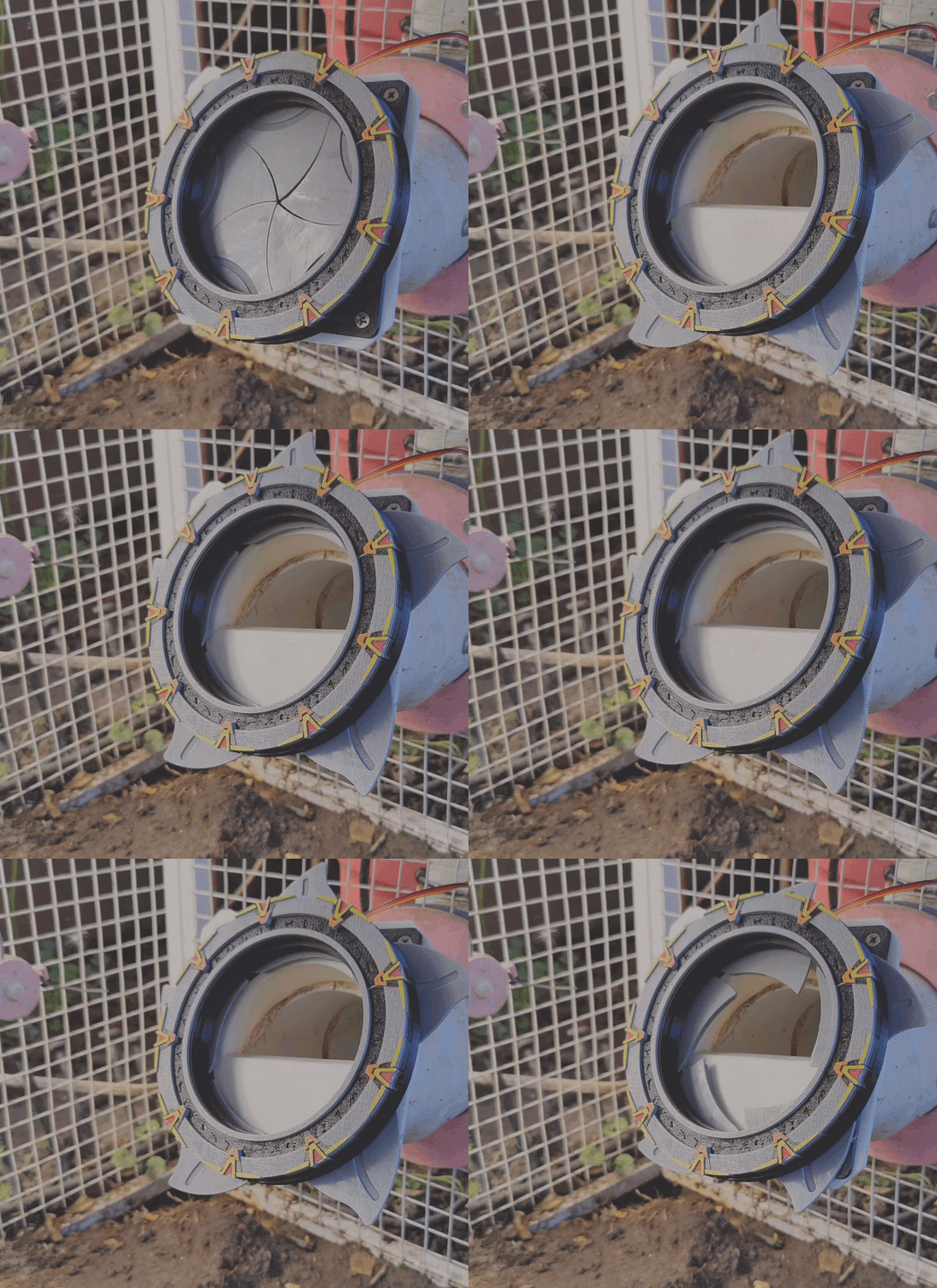
ChickenGate-1, If you need to feed the chickens, might as well have fun with it.
I dont have hope this will last more than a few months. The dirt and seeds are rough on the moving parts. I have fun building them though.
ChickenGate-1, If you need to feed the chickens, might as well have fun with it.
I dont have hope this will last more than a few months. The dirt and seeds are rough on the moving parts. I have fun building them though.
ChickenGate-1, If you need to feed the chickens, might as well have fun with it.
I dont have hope this will last more than a few months. The dirt and seeds are rough on the moving parts. I have fun building them though.
ChickenGate-1, If you need to feed the chickens, might as well have fun with it.
I dont have hope this will last more than a few months. The dirt and seeds are rough on the moving parts. I have fun building them though.


Ich war vor kurzem in einer “EDK”-Filiale (die mit dem blauen E auf gelbem Grund; Name absichtlich von mir verfälscht) und habe dort im Tiefkühlbereich in meinem Fall direkt bei den tierischen Produkten eine Überraschung erlebt:
Große, mit Gemüse gefüllte Frühlingsrollen. In den Zutaten waren bis vor einiger Zeit noch Hühnereier enthalten, nun sind sie gemäß Liste und Label vegan. Bisher war das den kleinen Röllchen vorbehalten.
Vertrieben als Handelsmarke sind sie eher günstig, mangels Wille zur Transparenz (Grrr) ist (mir) allerdings nicht klar wer sie im Auftrag produziert. Trotzdem ist es für mich ein kleiner Grund sich ein bisschen zu freuen über mehr Auswahl an derlei Essen.

Connection: Collaboration between metal and rap artists.
Connection: Collaboration between metal and rap artists.
I can’t stand Tom Brady. If he isn’t bad mouthing the bills, he’s talking about when he was playing. “When I won a superbowl…”
I can’t stand Tom Brady. If he isn’t bad mouthing the bills, he’s talking about when he was playing. “When I won a superbowl…”



The article also talks about how they’re tracking mass firings and job listings in companies, to track stability. It makes me wonder how they’ll track ghost listings too. Interesting to see them talk about their plans for their paid membership level since buying the site.
The article also talks about how they’re tracking mass firings and job listings in companies, to track stability. It makes me wonder how they’ll track ghost listings too. Interesting to see them talk about their plans for their paid membership level since buying the site.


[[[Warning! This post was written over several days and is super long and contains a lot of detail about a film/tv show, meant to be submitted elsewhere, but since it was rejected I’m posting it here as it’d feel like wasted effort otherwise. (Plus, to understand this theory, requires a certain level of knowledge of the show). So unless you’re a Doctor Who nerd who likes to nit-pick everything and has the patience to, don’t bother reading this — not having a go, but it will genuinely be a waist of your time. Thank you.]]]
{I posted this theory a week or two ago, but I wasn’t satisfied that I had covered every facet of the theory, so I worked on it a little more, and here you go.}
Given the recent re-release of the classic 1965 movie Dr Who and The Daleks, I felt it appropriate to revisit one of Doctor Who’s oldest and, sadly, often overlooked mystery: how does the Cushing Doctor fit into canon? How does a human scientist who built a Time Machine in his back garden fit into the mainstream show about an alien time traveller with a stolen Time Machine, then proceed to have almost identical adventures to the first incarnation?
Now, admittedly there is technically an official explanation for the Cushing movies as per the novelisation of The Day of the Doctor by Steven Moffat. In the book, it is explained that the films are actually movies within the Doctor Who universe (or Whoniverse) based on the Doctor’s experiences. Of course, there’s two main issues with this: one is that Cushing himself already explained the movies as a trick of the Toymaker (this was long before the 60th bear in mind). But the second issue is, all that aside, I just don’t like either of those explanations.
Fortunately, this is Doctor Who, and nothing is set in stone (no Angels Take Manhattan comments plz!!!) and even Moffat himself has said that the gaps in the story are as much a part of the franchise’s DNA that viewers should celebrate and make up their own ideas about. And since in any case the show (the flagship media of the franchise’s storytelling) has never (to my knowledge, at least) explicitly explained the Cushing Doctor, I say, let’s go for it.
Now, admittedly, the theory that I am going to present here has been made before, however it’s a theory that is itself full of holes and beyond a couple of sentences (and with no evidence) hasn’t really been explored in detail before. So rather than simply say ‘I think it’s this…’ I really tired to do my homework on this theory, and hopefully offer an alternative and much more interesting explanation as to how the Cushing Doctor fits into the mainstream canon (and I use canon in the loosest sense, given the controversial nature of the term between fans and writers)
With that settled, let’s jump into it.
So how do I believe that the Cushing Doctor is canon? He’s obviously not an alien with the ability to regenerate, so let’s try another way.
Let’s go back to the fantastic 2008 series finale Journey’s End.
As you all know (and if not, google it or watch the episode/full season) the Doctor’s severed hand, held within the TARDIS, ‘regenerated’ into a fully-formed being who was a physical copy of the 10th Doctor, but due to the interference of the human Donna, this Doctor was a part human-part time lord, a carbon copy of 10 but as a human, and without the ability to regenerate, but aging like a human instead.

{The 10th Doctor and his half-human clone in Journey’s End}
I propose that this half-human Doctor eventually aged into the Cushing Doctor, and that the Cushing Movies actually take place in the Pete’s World universe.
Now, I know what you’re thinking: yes it’s been said before, and yes, there are a lot of holes in this theory. In fact, just to show you I’m aware of the scale of the issues with this theory, here are the biggest holes in this theory: Where is Rose? Why didn’t the Doctor recognise the Daleks, or remember his past as an alien? Why is he in the 1960’s when he was left in the 2000’s? How could the Cushing Doctor have built such a complex machine as a TARDIS? How does he have a niece with no siblings? And possibly the biggest one — how is it that he just happened to have an adventure almost identical to the actual first Doctor, in any case (as in the second Doctor who serial ‘the Daleks’)? [actually, 2 identical adventures if you count Daleks invasion of Earth]
Whilst these three questions may seem like huge holes in this theory, when you look at the evidence, not only does this theory make sense, but these ‘holes’ actually have pretty simple explanations that are actually supported by evidence. To be clear, when I say ‘evidence’, I will be drawing from two main sources: the show, and the movies (or things that the movie producers/showrunners/actors have said themselves).
As we address the ‘holes’, let’s look at some basic points and associated clues that suggest and will lead to the conclusion that the Cushing Doctor is the Half-Doctor.
Point 1. Physiology.

{A comparison of the Half-Doctor and the Cushing Doctor}
Obviously the most basic thing, and therefore the first thing that should be looked at is each character’s distinct physical characteristics. If they were to look completely different, then there would be no question that this could not be the case. However, when you compare the Half-Doctor to the Cushing Doctor (as shown above) you can easily see physical similarities between the two. Both are tall and thin (almost the same heights even), with similar face shapes, similar long, pointy noses; and well-kept hair (and similar hairlines). Obviously Cushing Doc’s hairline is a little further back, but that would undoubtedly be expected with age. The Cushing Doctor does also appear to be a little thinner in the face than Half Doc, but again with age, that’s neither impossible nor uncommon.
The eyes are the only main difference. Cushing’s were blue, but there are innumerable explanations for this difference. maybe half-time lord physiology allows peripheral changes such as hair and eye colour to regenerate if enough traces of regeneration energy are present, like the 10th doctor’s partial hand regeneration on himself, or like his partial healing of river song and even Davros? Or maybe they could’ve simply changed colour with (time lord) age?
Or, Occam’s razor: it could simply be that the Cushing doctor’s human eyes later required contact lenses that were blue in colour and therefore made his eyes blue a-la Orlando bloom? [on a side note: Peter Cushing had blue eyes. Did he wear contacts or something in this photo? Because his eyes clearly aren’t blue, unless the quality just sucks that bad]. [Side note 2: I’m aware the Cushing doctor wore reading glasses in the first movie, but maybe they were just to look smart, as many of Universe One Doctor’s incarnations did maybe?]
Presuming that the minor point about the eyes could have a simple explanation like the use of contact lenses (the most simple explanation presumably) looking at the two side-by-side from a purely appearance point of view, you can imagine Cushing Doc as easily looking like what Half Doc could or would age into in 30-40 years time (or maybe longer; we’ll get to that later). And the fact that it’s clearly established in Journey’s End that half-Doc cannot regenerate means that he may just have done that.
Point 2. The personality difference.
One of the most striking things that differs between the Cushing Doctor and the Universe One Doctor is their personalities. But when you look deeper, if the Half-Doctor is the Cushing Doctor, this personality difference actually makes sense.
The Wikipedia article of the Cushing Doctor aptly describes the difference as so:
While the original version of the character shown on the TV series was depicted as an abrasive, patronising, and cantankerous extraterrestrial, the movie’s incarnation played by Cushing is… a gentle, grandfatherly figure, naturally curious, sometimes absent-minded but not afraid to fight for justice.
It is therefore clear that the Cushing Doctor cannot be the same doctor as the main Doctor. But, in Journey’s end, it is firmly established that the Half-Doctor has the ‘same thoughts, same memories’ as the main doctor (up to the point at which he emerged from the hand, that is and that’s important) so naturally the Half-doctor would have the same personality.

{The Cushing Doctor is not an angry man… but there’s still an explanation}
Now, it is established fairly quickly that the half-Doctor inherited some of Donna’s personality (his personality is therefore part human, part timelord, with the human personality seemingly more prominent at times). But even then, the Half-Doctor clearly inherited the Universe One doctor’s thoughts and memories, and as such suffers from the same abrasive nature. Naturally, it would take a significant personality change for him to undergo, to reach the Cushing Doctor’s personality. However, consider this line from the infamous Bad Wolf Bay scene of Journey’s end:
DOCTOR: (To half-doc) You were born in battle, full of blood and anger and revenge. (Turns to Rose) Remind you of someone? That’s me, when we first met. And you made me better. Now you can do the same for him.
Here is the key point: Rose is specifically tasked with making the Half-Doctor a better person. Considering the significant personality difference, it would make sense that a combination of Rose’s ‘making him better’, his human brain slowly losing his memory, and the growth of his new family (family will be discussed later in more detail) that the Half-Doctor actually could have gone through a significant personality change, going from an immature, impulsive, genocidal maniac, to an eccentric, grandfatherly figure who both needed and wanted (and subsequently did) to forget his dark past and put his family and values first. Furthermore, the fact that the Half-Doctor also assumed half of Donna’s personality means that he does not have a purely Time Lord personality (which appears to be fixed, given that every incarnation of the Universe One Doctor share fundamental personality traits) but a human one also, one that can most likely be more malleable and even more changeable than a pure Time Lord’s personality. In other words — it’s likely that, due to his human nature, the Half-Doctor was more susceptible to Rose’s ‘making better’ and other appropriate factors, and that would explain how the Cushing Doctor became so much more mellow and grandfatherly, only subconsciously willing to destroy Daleks when his family or innocent people are under threat.
Point 3. The Cushing TARDIS is not of Universe One
This is a more subtle clue, but if you look at the evidence, it actually makes sense. In the first film, the Cushing Doctor claims the following:
My little fellow scientist. We’ve been working on TARDIS for many years.
The Cushing Doctor claims he and his granddaughter Susan have been ‘working on’ TARDIS (not ‘the’ TARDIS) for ‘many years’. Moments before that, he also claimed that a component that Ian almost sat on was part of ‘My latest invention’. Note that the Cushing Doctor is claiming to have invented TARDIS, effectively. I believe this is (partly) a lie, or at the very least is a misleading statement at best: it’s either a ruse to cover up the nature of the device from the public/authorities who would like to get their hands on it, like Yvonne; or it’s misremembered on his part, the Cushing Doctor has forgotten the precise origin of his version of TARDIS (we will get into the memory thing later; just go with it for now, it’ll all pay off I promise!!!)
In a deleted scene for Journey’s End that RTD himself has stated is canon the 10th Doctor gives the Half Doctor a piece of TARDIS Coral, which he states can be used to ‘grow your own’, with the DoctorDonna offering a suggestion on how to make it grow faster (the method of growth still takes hundreds of years, but don’t worry; this ties into something later. Look, I know I keep saying that, but in the words of Pete Tyler: trust me on this). I believe that this piece of Coral you see in the deleted scene grew into the Cushing TARDIS (or that it was partly grown, and partly built by the half-doctor) and there’s one key detail that may confirm it: it’s jumbled up interior.

{Cushing Doctor’s TARDIS}
I mean, look at that: that’s nothing even remotely like any of the sleek tardis interiors you see on the show — heck, even the makeshift one from The Doctor’s Wife didn’t look that poor quality. But if you think about it, a TARDIS grown in an alternative universe (coupled with the possibility of a man and his granddaughter ‘working’ on it for many years) might just look exactly like that. Consider this: when 10 first visits Pete’s World in Rise of the Cybermen, it’s established that the two universes have different energy signatures, hence why 10’s TARDIS cannot work as it’s the wrong form of energy, and also possibly slightly different laws of Physics, as it’s established within the Whoniverse that some alternative universes function differently. As the TARDIS coral is a living, growing thing, it stands to reason that as it grows, it may ‘adapt’ or ‘evolve’ due to the different type of energy it grown on and feeds on, and different laws of Physics it obeys (sort of like how you raise a baby with a specific language). But if the Cushing TARDIS grows on different ‘food’ as it were, then it would naturally look and function differently, which points to the Cushing TARDIS being possibly grown in an alternative world — Pete’s World. It may also explain why Cushing’s TARDIS is likewise a police box on the outside: it inherited peripheral traits such as the exterior and the broken chameleon circuit, but adapted to function in the alternative universe. And perhaps by the time of the second movie, the growth process had fully matured, or the Cushing doctor had mastered modifications of it.
Point 4. The Cushing doctor’s companions align perfectly with the half-Doctor’s family
This isn’t so much a ‘clue’ per se, but it calls into mind what at first looks like a throwaway line from Journey’s End, but which actually explains what at first appears to be a glaring hole in this whole thing, and actually makes this part of the theory fits perfectly.
In the first movie, the doctor travels with his granddaughters: Barbara and Susan. It’s not inconceivable that at some point, half-doc and Rose got busy, had a kid or two, who then gave him Barbara and Susan. However, in the second movie, the doctor travels with Susan and his niece Louise.
An immediate question arises: how can half-doc have a niece? He doesn’t have any siblings! And that’s true… but Rose does.
You may not remember, but Rose ends up with a younger brother: Jackie is pregnant with him in Doomsday, and by the time of Journey’s End, he is born and called Tony. I propose that Tony is the father of Louise, and given it’s not impossible for the Doctor and Rose to have married at some point, this would therefore make Tony’s child his niece too, via marriage.

{Could Louise be the child of Rose’s brother? Absolutely}
Point 5. The Cushing Doctor doesn’t recognise the Daleks (or the events unfolding in the movie)… and that’s the way it should be (probably).
Admittedly, this one is a bit of a stretch, but I still believe it makes sense, just bear with me. Usually when people post about the Cushing-is-10.5 theory online, they just dismiss the fact that he doesn’t have memory of neither the Daleks nor the events of the 1963 serial The Daleks, of which the events of the movie mirror — or they use the classic ‘he forgot’ lazy excuse. I do believe that he forgot the Daleks, but I believe there is several juicy and horrifyingly nerdy explanations for this, which also explains one or two other things with this theory.
In the mainstream show, whenever two incarnations cross paths due to time travel (note: this is not bigeneration. However you feel about that concept, that has different rules and will not be discussed here) it’s explained that the younger incarnation cannot retain the memories of the paths crossing due to ‘timelines being out of sync’ — in other words, the timelines crossing. Examples of this phenomenon in the show include ‘The Day of The Doctor’ and Peter Capaldi’s last episode. Basically, whenever timelines cross, memories are lost.
In Journey’s End, when the half-Doctor is born, he retains all the memories of the actual Doctor’s past. However, note the following dialogue that he makes shortly after his inception:
HALF DOCTOR: Oh, that was me. My single heart. Because I’m a complicated event in time and space. Must have rippled back, converging on you.
Already, we can see something is off here: the half-doctor is described as ‘rippled back’, so this alone indicates an anomaly in his timeline due to it apparently ‘rippling’ or crossing back on itself, one that could almost certainly put his own timeline out of sync during the event and eventually lead to memory loss later. But consider also what the doctor says to Donna:
DOCTOR: You’re so unique the timelines were converging on you. Human being with a Time Lord brain
The timelines were simultaneously collectively converging. So this anomalous timeline of the Half-Doctor was converging with the timeline of the mainstream doctor, this is undoubtedly a case of their timelines converging, which wouldn’t put it out of possibility that this is an instance of the timelines being out of sync, and therefore one of the doctors should lose their memory. And since Main Universe Doctors 11 (Victory of the Daleks) 12 (the magician’s apprentice) and 13 (the battle of Ranskoor Av Kolos [side note: who tf named that episode???]) recalled the Medusa Cascade event, it therefore stands to reason that half-doctor is the one who lost his memory (eventually). However, it seems that the half-doctor had forgotten his entire past, as in the film, he did not remember the Daleks or the events unfolding. It seems that this is likely a combination of the timeline issue and his half-human aged brain being unable to recall that much information. Due to his half-human brain, he would likely not have the capacity to remember almost a thousand years of life for good, and therefore it makes sense that he would eventually forget his distant past.
Point 6: Cushing’s age is never established, and where is Rose?
This is where we begin to delve more into the speculation side of the theory and start to formulate an idea of the timeline which led from half-doc stood on that beach in 2008 to Cushing doc sat reading a comic in the 1960’s, based on the clues and logical speculation.
First of all, there are four main things up to now which, in terms of the timeline, are ambiguous at best — namely: the growth of TARDIS, the loss of the doctor’s memory, the fate of Rose, and the arrival of the Doctor and his family into the past. Admittedly, these four events are malleable in terms of the order of how they could have unfolded (for example, it isn’t clear whether the Doctor had had a child before or after arriving in the past). As such, the timeline we are going to propose is not ‘set’ rigidly and some of the events could have happened in slightly different orders to what I am going to suggest, but we will attempt to create a timeline that makes logical sense. That said, let’s look at some more clues and try to write this timeline!
Now, we know that in any case, Rose must have retained her own memory of the Medusa cascade event, but she clearly did not remind the half-doctor enough that he recalled it, pointing to her having potentially left relatively early. We also know that by the time the doctor is the elderly man living in the 1960’s, Rose is nowhere to be seen — so in the time between having children and him sat in that chair at the beginning of the first movie in this Doctor’s personal timeline, Rose must have either died or left (possibly this could have something to do with the Reality War, or possibly it could be something else entirely). Whatever the case, it doesn’t matter: at some point after giving birth, Rose is out of the picture. The other issue is the amount of time that it took to grow the tardis. Now, in the Journey’s end deleted scene, the half-doctor states that it takes thousands of years to grow. Donna says something, seemingly a way to speed up the process, though I admit I find it hard to tell what it is she is saying, so I can’t tell exactly the minimum amount of time required for the Tardis to grow. However, even assuming it is a couple of hundred of years, it’s not out of the possibility that the half-doctor could potentially live that long: though it says he ages, it doesn’t say whether he had human ageing, or time lord ageing, which can take hundreds of years. So it may be possible that the half-doctor lived long enough for the tardis to grow, then travelled back in time to collect his family from the past. Personally, I find that unlikely and I believe that the simpler explanation is that the half-doctor simply managed to rapidly speed up the growth process that it only took a few years, presumably before most of his memory had gone until he lost it completely and came to believe that he designed/built it, possibly ‘working’ on it as it finished growing. According to the script for Journey’s End, the Half-Doctor says that growing the tardis takes ‘thousands of years’ and the factor by which the DoctorDonna suggests he use to speed the process up is ‘59’. So, let’s do some math: first of all, the term ‘thousands of years’ is ambiguous, so let’s test a few values, and let’s assume that he is referring to human years. The bare minimum number that meets the criteria of ‘thousands of years’ is 2,000 years. Therefore, if the time needed to grow TARDIS is reduced by a factor of 59, this would equate to approximately 34 earth years. For 3,000, it would be appropriately 51 earth years. Now, looking at the Cushing Doctor, he appears to have a body physically of approximately anywhere between 60-80 years old. Given that the Half-Doctor had a body that was physically of about 30-35 years old at his inception, a (full) growth span of 2000 to 3000 years would make sense. But does it seem reasonable to assume that 2000-3000 is the amount of time that the Half-Doctor is referring to when he says ‘thousands of years’? Whilst it could be argued that it both is and isn’t reasonable, in any case It doesn’t actually matter. And why doesn’t it matter? Because even an incomplete tardis, whether grown or built, can physically function as a Time Machine. We know this from the 2011 episode ‘The Doctor’s Wife’ in which the Doctor constructs a rudimentary makeshift Tardis from a Tardis scrapyard (they were presumably grown parts also used in the construction) that is nowhere near complete, yet functions well enough to work. From the same episode, we also know that incomplete tardises are shoddy and, though they can travel through time, it is clearly highly volatile and temperamental time travel.

{Even incomplete TARDISes can time travel… but they break down easily}
As such, I believe it is most likely that TARDIS as you see in the movies is an immature Tardis that has only recently gained the full ability to time travel, for reasons that will become clear in the final theory timeline. The fact that TARDIS only appears to be a single room, rather than the vast complex it is within Universe One, further suggests that TARDIS is incomplete, whether grown, built, or both grown and built.
Now, watching the 1965 movie, it’s clear that both of his granddaughters are born and raised in that era — they aren’t 2010-2020 kids sent back in time and trying to fit in, they very clearly belong to that era, and were clearly born and raised then. So I believe that it’s most likely they travelled back in time before they had a child (and subsequently grandchildren) [note: it’s possible that he travelled back in time after he had a child, but it’s evident that, in any case, he had most likely travelled back in time before his granddaughters and Louise were born]. And in keeping with the assumptions made before, they likely took Tony into the past with them, hence how Louise was born, so I believe that they may have travelled back to a distant time — perhaps even as early as the 1900’s or the 1910’s. But what would compel them to do such a thing? They had Jackie and Pete there in the modern day, why would they abandon them for the past? It’s hard to say: perhaps Pete and Jackie are dead, and rose (the only guardian of Tony left) needed to escape from the grief, so she convinced the doctor to live in the past. Or, perhaps in taking Tony to see something in the past, TARDIS broke down, and the Doctor, perhaps losing his memory at an accelerated rate, couldn’t fix it/the technology needed to fix it wasn’t invented yet, so they may have had no choice. In any case, it doesn’t matter: I believe that, the Doctor, Rose, and Tony ended up living in the 1900’s/1910’s with a broken TARDIS.
Final Timeline theory
Taking everything we have discussed into account, I believe that the timeline from half-doc stood on Bad Wolf Bay to the Cushing Doctor sat reading comics goes something like this occurred:
After being dropped off in Pete’s world, the doctor managed to begin the growth of TARDIS at an accelerated rate. Once TARDIS had matured enough to be capable of time travel, He, Rose and Tony took a trip to the past, but because it was not fully matured, TARDIS broke down and they got stuck in the early 20th century — whatever the cause, they ended up stranded there. Having realised he had no way to repair it due to a lack of technology of the era they now found themselves in, the Doctor bought them the house (the one you see at the beginning of the movie) and hid TARDIS in his back garden. By now, he has lost his memory of his past fully, except possibly for scientific knowledge, and now believed himself to have been a genius but humble human scientist who built an incomplete Time Machine that he became determined to complete. He also had a child/children with Rose, who subsequently had the children Barbara and Susan (Tony simultaneously had Louise during this time). During the time following, something happened that Rose and his children were not around. Following this, the doctor and his granddaughter Susan, who inherited his intellect, worked tirelessly to repair/enhance the growth of TARDIS until it was perfectly functional again, just in time for Ian to arrive…
There we have it: I believe that we have successfully created a viable theory as to how the half-doctor developed into the Cushing Doctor. There’s just one major question that now needs to be answered.
Why did the Cushing Doctor have the (almost) exact same adventures as the main universe actual First Doctor (William Hartnell) did?
[Well, the real answer is that the films were based on them serials, so of course they share the same plot, but how do we answer in-universe and in relation to this theory?]
Personally, I think any explanation for this is apt. However, I have two personal theories. Either:

{Did the Toymaker try to torture the Half-Doctor with a face that never actually harmed him?}

{Is Time itself working some strange trick?}
Alternatively, it may be something much more simple: it may just be parallel events occurring in two different universes. After all, the first episode featuring Pete’s world revolved around a parallel event: the cybermen beginning on Pete’s world — as they had on Mondas/Telos/wherever the hell else in the main Universe — as a parallel event. Maybe the Half-Doc/Cushing Doc just happened to get caught up in the events, though I personally aren’t a big fan of the ‘coincidence’ explanation.
In any case, it doesn’t matter: it’s just how the story goes. I believe that I have expanded upon a (not that) common doctor who fan theory. It is perhaps a little too expanded, but in a 60-year-old sci-fi time travel show, there’s really no such thing as over-expanded (in fact, it could likely be expanded further. Knowing myself, I will likely think up some other aspect of this theory in one of my random moments of free time and revise this theory again. Nonetheless, thanks for reading (if you did to the end).
Let me know what you think of this theory, or your alternative theories/suggestions on this aspect of the show/movies!
[[[Warning! This post was written over several days and is super long and contains a lot of detail about a film/tv show, meant to be submitted elsewhere, but since it was rejected I’m posting it here as it’d feel like wasted effort otherwise. (Plus, to understand this theory, requires a certain level of knowledge of the show). So unless you’re a Doctor Who nerd who likes to nit-pick everything and has the patience to, don’t bother reading this — not having a go, but it will genuinely be a waist of your time. Thank you.]]]
{I posted this theory a week or two ago, but I wasn’t satisfied that I had covered every facet of the theory, so I worked on it a little more, and here you go.}
Given the recent re-release of the classic 1965 movie Dr Who and The Daleks, I felt it appropriate to revisit one of Doctor Who’s oldest and, sadly, often overlooked mystery: how does the Cushing Doctor fit into canon? How does a human scientist who built a Time Machine in his back garden fit into the mainstream show about an alien time traveller with a stolen Time Machine, then proceed to have almost identical adventures to the first incarnation?
Now, admittedly there is technically an official explanation for the Cushing movies as per the novelisation of The Day of the Doctor by Steven Moffat. In the book, it is explained that the films are actually movies within the Doctor Who universe (or Whoniverse) based on the Doctor’s experiences. Of course, there’s two main issues with this: one is that Cushing himself already explained the movies as a trick of the Toymaker (this was long before the 60th bear in mind). But the second issue is, all that aside, I just don’t like either of those explanations.
Fortunately, this is Doctor Who, and nothing is set in stone (no Angels Take Manhattan comments plz!!!) and even Moffat himself has said that the gaps in the story are as much a part of the franchise’s DNA that viewers should celebrate and make up their own ideas about. And since in any case the show (the flagship media of the franchise’s storytelling) has never (to my knowledge, at least) explicitly explained the Cushing Doctor, I say, let’s go for it.
Now, admittedly, the theory that I am going to present here has been made before, however it’s a theory that is itself full of holes and beyond a couple of sentences (and with no evidence) hasn’t really been explored in detail before. So rather than simply say ‘I think it’s this…’ I really tired to do my homework on this theory, and hopefully offer an alternative and much more interesting explanation as to how the Cushing Doctor fits into the mainstream canon (and I use canon in the loosest sense, given the controversial nature of the term between fans and writers)
With that settled, let’s jump into it.
So how do I believe that the Cushing Doctor is canon? He’s obviously not an alien with the ability to regenerate, so let’s try another way.
Let’s go back to the fantastic 2008 series finale Journey’s End.
As you all know (and if not, google it or watch the episode/full season) the Doctor’s severed hand, held within the TARDIS, ‘regenerated’ into a fully-formed being who was a physical copy of the 10th Doctor, but due to the interference of the human Donna, this Doctor was a part human-part time lord, a carbon copy of 10 but as a human, and without the ability to regenerate, but aging like a human instead.
{The 10th Doctor and his half-human clone in Journey’s End}
I propose that this half-human Doctor eventually aged into the Cushing Doctor, and that the Cushing Movies actually take place in the Pete’s World universe.
Now, I know what you’re thinking: yes it’s been said before, and yes, there are a lot of holes in this theory. In fact, just to show you I’m aware of the scale of the issues with this theory, here are the biggest holes in this theory: Where is Rose? Why didn’t the Doctor recognise the Daleks, or remember his past as an alien? Why is he in the 1960’s when he was left in the 2000’s? How could the Cushing Doctor have built such a complex machine as a TARDIS? How does he have a niece with no siblings? And possibly the biggest one — how is it that he just happened to have an adventure almost identical to the actual first Doctor, in any case (as in the second Doctor who serial ‘the Daleks’)? [actually, 2 identical adventures if you count Daleks invasion of Earth]
Whilst these three questions may seem like huge holes in this theory, when you look at the evidence, not only does this theory make sense, but these ‘holes’ actually have pretty simple explanations that are actually supported by evidence. To be clear, when I say ‘evidence’, I will be drawing from two main sources: the show, and the movies (or things that the movie producers/showrunners/actors have said themselves).
As we address the ‘holes’, let’s look at some basic points and associated clues that suggest and will lead to the conclusion that the Cushing Doctor is the Half-Doctor.
Point 1. Physiology.
{A comparison of the Half-Doctor and the Cushing Doctor}
Obviously the most basic thing, and therefore the first thing that should be looked at is each character’s distinct physical characteristics. If they were to look completely different, then there would be no question that this could not be the case. However, when you compare the Half-Doctor to the Cushing Doctor (as shown above) you can easily see physical similarities between the two. Both are tall and thin (almost the same heights even), with similar face shapes, similar long, pointy noses; and well-kept hair (and similar hairlines). Obviously Cushing Doc’s hairline is a little further back, but that would undoubtedly be expected with age. The Cushing Doctor does also appear to be a little thinner in the face than Half Doc, but again with age, that’s neither impossible nor uncommon.
The eyes are the only main difference. Cushing’s were blue, but there are innumerable explanations for this difference. maybe half-time lord physiology allows peripheral changes such as hair and eye colour to regenerate if enough traces of regeneration energy are present, like the 10th doctor’s partial hand regeneration on himself, or like his partial healing of river song and even Davros? Or maybe they could’ve simply changed colour with (time lord) age?
Or, Occam’s razor: it could simply be that the Cushing doctor’s human eyes later required contact lenses that were blue in colour and therefore made his eyes blue a-la Orlando bloom? [on a side note: Peter Cushing had blue eyes. Did he wear contacts or something in this photo? Because his eyes clearly aren’t blue, unless the quality just sucks that bad]. [Side note 2: I’m aware the Cushing doctor wore reading glasses in the first movie, but maybe they were just to look smart, as many of Universe One Doctor’s incarnations did maybe?]
Presuming that the minor point about the eyes could have a simple explanation like the use of contact lenses (the most simple explanation presumably) looking at the two side-by-side from a purely appearance point of view, you can imagine Cushing Doc as easily looking like what Half Doc could or would age into in 30-40 years time (or maybe longer; we’ll get to that later). And the fact that it’s clearly established in Journey’s End that half-Doc cannot regenerate means that he may just have done that.
Point 2. The personality difference.
One of the most striking things that differs between the Cushing Doctor and the Universe One Doctor is their personalities. But when you look deeper, if the Half-Doctor is the Cushing Doctor, this personality difference actually makes sense.
The Wikipedia article of the Cushing Doctor aptly describes the difference as so:
While the original version of the character shown on the TV series was depicted as an abrasive, patronising, and cantankerous extraterrestrial, the movie’s incarnation played by Cushing is… a gentle, grandfatherly figure, naturally curious, sometimes absent-minded but not afraid to fight for justice.
It is therefore clear that the Cushing Doctor cannot be the same doctor as the main Doctor. But, in Journey’s end, it is firmly established that the Half-Doctor has the ‘same thoughts, same memories’ as the main doctor (up to the point at which he emerged from the hand, that is and that’s important) so naturally the Half-doctor would have the same personality.
{The Cushing Doctor is not an angry man… but there’s still an explanation}
Now, it is established fairly quickly that the half-Doctor inherited some of Donna’s personality (his personality is therefore part human, part timelord, with the human personality seemingly more prominent at times). But even then, the Half-Doctor clearly inherited the Universe One doctor’s thoughts and memories, and as such suffers from the same abrasive nature. Naturally, it would take a significant personality change for him to undergo, to reach the Cushing Doctor’s personality. However, consider this line from the infamous Bad Wolf Bay scene of Journey’s end:
DOCTOR: (To half-doc) You were born in battle, full of blood and anger and revenge. (Turns to Rose) Remind you of someone? That’s me, when we first met. And you made me better. Now you can do the same for him.
Here is the key point: Rose is specifically tasked with making the Half-Doctor a better person. Considering the significant personality difference, it would make sense that a combination of Rose’s ‘making him better’, his human brain slowly losing his memory, and the growth of his new family (family will be discussed later in more detail) that the Half-Doctor actually could have gone through a significant personality change, going from an immature, impulsive, genocidal maniac, to an eccentric, grandfatherly figure who both needed and wanted (and subsequently did) to forget his dark past and put his family and values first. Furthermore, the fact that the Half-Doctor also assumed half of Donna’s personality means that he does not have a purely Time Lord personality (which appears to be fixed, given that every incarnation of the Universe One Doctor share fundamental personality traits) but a human one also, one that can most likely be more malleable and even more changeable than a pure Time Lord’s personality. In other words — it’s likely that, due to his human nature, the Half-Doctor was more susceptible to Rose’s ‘making better’ and other appropriate factors, and that would explain how the Cushing Doctor became so much more mellow and grandfatherly, only subconsciously willing to destroy Daleks when his family or innocent people are under threat.
Point 3. The Cushing TARDIS is not of Universe One
This is a more subtle clue, but if you look at the evidence, it actually makes sense. In the first film, the Cushing Doctor claims the following:
My little fellow scientist. We’ve been working on TARDIS for many years.
The Cushing Doctor claims he and his granddaughter Susan have been ‘working on’ TARDIS (not ‘the’ TARDIS) for ‘many years’. Moments before that, he also claimed that a component that Ian almost sat on was part of ‘My latest invention’. Note that the Cushing Doctor is claiming to have invented TARDIS, effectively. I believe this is (partly) a lie, or at the very least is a misleading statement at best: it’s either a ruse to cover up the nature of the device from the public/authorities who would like to get their hands on it, like Yvonne; or it’s misremembered on his part, the Cushing Doctor has forgotten the precise origin of his version of TARDIS (we will get into the memory thing later; just go with it for now, it’ll all pay off I promise!!!)
In a deleted scene for Journey’s End that RTD himself has stated is canon the 10th Doctor gives the Half Doctor a piece of TARDIS Coral, which he states can be used to ‘grow your own’, with the DoctorDonna offering a suggestion on how to make it grow faster (the method of growth still takes hundreds of years, but don’t worry; this ties into something later. Look, I know I keep saying that, but in the words of Pete Tyler: trust me on this). I believe that this piece of Coral you see in the deleted scene grew into the Cushing TARDIS (or that it was partly grown, and partly built by the half-doctor) and there’s one key detail that may confirm it: it’s jumbled up interior.
{Cushing Doctor’s TARDIS}
I mean, look at that: that’s nothing even remotely like any of the sleek tardis interiors you see on the show — heck, even the makeshift one from The Doctor’s Wife didn’t look that poor quality. But if you think about it, a TARDIS grown in an alternative universe (coupled with the possibility of a man and his granddaughter ‘working’ on it for many years) might just look exactly like that. Consider this: when 10 first visits Pete’s World in Rise of the Cybermen, it’s established that the two universes have different energy signatures, hence why 10’s TARDIS cannot work as it’s the wrong form of energy, and also possibly slightly different laws of Physics, as it’s established within the Whoniverse that some alternative universes function differently. As the TARDIS coral is a living, growing thing, it stands to reason that as it grows, it may ‘adapt’ or ‘evolve’ due to the different type of energy it grown on and feeds on, and different laws of Physics it obeys (sort of like how you raise a baby with a specific language). But if the Cushing TARDIS grows on different ‘food’ as it were, then it would naturally look and function differently, which points to the Cushing TARDIS being possibly grown in an alternative world — Pete’s World. It may also explain why Cushing’s TARDIS is likewise a police box on the outside: it inherited peripheral traits such as the exterior and the broken chameleon circuit, but adapted to function in the alternative universe. And perhaps by the time of the second movie, the growth process had fully matured, or the Cushing doctor had mastered modifications of it.
Point 4. The Cushing doctor’s companions align perfectly with the half-Doctor’s family
This isn’t so much a ‘clue’ per se, but it calls into mind what at first looks like a throwaway line from Journey’s End, but which actually explains what at first appears to be a glaring hole in this whole thing, and actually makes this part of the theory fits perfectly.
In the first movie, the doctor travels with his granddaughters: Barbara and Susan. It’s not inconceivable that at some point, half-doc and Rose got busy, had a kid or two, who then gave him Barbara and Susan. However, in the second movie, the doctor travels with Susan and his niece Louise.
An immediate question arises: how can half-doc have a niece? He doesn’t have any siblings! And that’s true… but Rose does.
You may not remember, but Rose ends up with a younger brother: Jackie is pregnant with him in Doomsday, and by the time of Journey’s End, he is born and called Tony. I propose that Tony is the father of Louise, and given it’s not impossible for the Doctor and Rose to have married at some point, this would therefore make Tony’s child his niece too, via marriage.
{Could Louise be the child of Rose’s brother? Absolutely}
Point 5. The Cushing Doctor doesn’t recognise the Daleks (or the events unfolding in the movie)… and that’s the way it should be (probably).
Admittedly, this one is a bit of a stretch, but I still believe it makes sense, just bear with me. Usually when people post about the Cushing-is-10.5 theory online, they just dismiss the fact that he doesn’t have memory of neither the Daleks nor the events of the 1963 serial The Daleks, of which the events of the movie mirror — or they use the classic ‘he forgot’ lazy excuse. I do believe that he forgot the Daleks, but I believe there is several juicy and horrifyingly nerdy explanations for this, which also explains one or two other things with this theory.
In the mainstream show, whenever two incarnations cross paths due to time travel (note: this is not bigeneration. However you feel about that concept, that has different rules and will not be discussed here) it’s explained that the younger incarnation cannot retain the memories of the paths crossing due to ‘timelines being out of sync’ — in other words, the timelines crossing. Examples of this phenomenon in the show include ‘The Day of The Doctor’ and Peter Capaldi’s last episode. Basically, whenever timelines cross, memories are lost.
In Journey’s End, when the half-Doctor is born, he retains all the memories of the actual Doctor’s past. However, note the following dialogue that he makes shortly after his inception:
HALF DOCTOR: Oh, that was me. My single heart. Because I’m a complicated event in time and space. Must have rippled back, converging on you.
Already, we can see something is off here: the half-doctor is described as ‘rippled back’, so this alone indicates an anomaly in his timeline due to it apparently ‘rippling’ or crossing back on itself, one that could almost certainly put his own timeline out of sync during the event and eventually lead to memory loss later. But consider also what the doctor says to Donna:
DOCTOR: You’re so unique the timelines were converging on you. Human being with a Time Lord brain
The timelines were simultaneously collectively converging. So this anomalous timeline of the Half-Doctor was converging with the timeline of the mainstream doctor, this is undoubtedly a case of their timelines converging, which wouldn’t put it out of possibility that this is an instance of the timelines being out of sync, and therefore one of the doctors should lose their memory. And since Main Universe Doctors 11 (Victory of the Daleks) 12 (the magician’s apprentice) and 13 (the battle of Ranskoor Av Kolos [side note: who tf named that episode???]) recalled the Medusa Cascade event, it therefore stands to reason that half-doctor is the one who lost his memory (eventually). However, it seems that the half-doctor had forgotten his entire past, as in the film, he did not remember the Daleks or the events unfolding. It seems that this is likely a combination of the timeline issue and his half-human aged brain being unable to recall that much information. Due to his half-human brain, he would likely not have the capacity to remember almost a thousand years of life for good, and therefore it makes sense that he would eventually forget his distant past.
Point 6: Cushing’s age is never established, and where is Rose?
This is where we begin to delve more into the speculation side of the theory and start to formulate an idea of the timeline which led from half-doc stood on that beach in 2008 to Cushing doc sat reading a comic in the 1960’s, based on the clues and logical speculation.
First of all, there are four main things up to now which, in terms of the timeline, are ambiguous at best — namely: the growth of TARDIS, the loss of the doctor’s memory, the fate of Rose, and the arrival of the Doctor and his family into the past. Admittedly, these four events are malleable in terms of the order of how they could have unfolded (for example, it isn’t clear whether the Doctor had had a child before or after arriving in the past). As such, the timeline we are going to propose is not ‘set’ rigidly and some of the events could have happened in slightly different orders to what I am going to suggest, but we will attempt to create a timeline that makes logical sense. That said, let’s look at some more clues and try to write this timeline!
Now, we know that in any case, Rose must have retained her own memory of the Medusa cascade event, but she clearly did not remind the half-doctor enough that he recalled it, pointing to her having potentially left relatively early. We also know that by the time the doctor is the elderly man living in the 1960’s, Rose is nowhere to be seen — so in the time between having children and him sat in that chair at the beginning of the first movie in this Doctor’s personal timeline, Rose must have either died or left (possibly this could have something to do with the Reality War, or possibly it could be something else entirely). Whatever the case, it doesn’t matter: at some point after giving birth, Rose is out of the picture. The other issue is the amount of time that it took to grow the tardis. Now, in the Journey’s end deleted scene, the half-doctor states that it takes thousands of years to grow. Donna says something, seemingly a way to speed up the process, though I admit I find it hard to tell what it is she is saying, so I can’t tell exactly the minimum amount of time required for the Tardis to grow. However, even assuming it is a couple of hundred of years, it’s not out of the possibility that the half-doctor could potentially live that long: though it says he ages, it doesn’t say whether he had human ageing, or time lord ageing, which can take hundreds of years. So it may be possible that the half-doctor lived long enough for the tardis to grow, then travelled back in time to collect his family from the past. Personally, I find that unlikely and I believe that the simpler explanation is that the half-doctor simply managed to rapidly speed up the growth process that it only took a few years, presumably before most of his memory had gone until he lost it completely and came to believe that he designed/built it, possibly ‘working’ on it as it finished growing. According to the script for Journey’s End, the Half-Doctor says that growing the tardis takes ‘thousands of years’ and the factor by which the DoctorDonna suggests he use to speed the process up is ‘59’. So, let’s do some math: first of all, the term ‘thousands of years’ is ambiguous, so let’s test a few values, and let’s assume that he is referring to human years. The bare minimum number that meets the criteria of ‘thousands of years’ is 2,000 years. Therefore, if the time needed to grow TARDIS is reduced by a factor of 59, this would equate to approximately 34 earth years. For 3,000, it would be appropriately 51 earth years. Now, looking at the Cushing Doctor, he appears to have a body physically of approximately anywhere between 60-80 years old. Given that the Half-Doctor had a body that was physically of about 30-35 years old at his inception, a (full) growth span of 2000 to 3000 years would make sense. But does it seem reasonable to assume that 2000-3000 is the amount of time that the Half-Doctor is referring to when he says ‘thousands of years’? Whilst it could be argued that it both is and isn’t reasonable, in any case It doesn’t actually matter. And why doesn’t it matter? Because even an incomplete tardis, whether grown or built, can physically function as a Time Machine. We know this from the 2011 episode ‘The Doctor’s Wife’ in which the Doctor constructs a rudimentary makeshift Tardis from a Tardis scrapyard (they were presumably grown parts also used in the construction) that is nowhere near complete, yet functions well enough to work. From the same episode, we also know that incomplete tardises are shoddy and, though they can travel through time, it is clearly highly volatile and temperamental time travel.
{Even incomplete TARDISes can time travel… but they break down easily}
As such, I believe it is most likely that TARDIS as you see in the movies is an immature Tardis that has only recently gained the full ability to time travel, for reasons that will become clear in the final theory timeline. The fact that TARDIS only appears to be a single room, rather than the vast complex it is within Universe One, further suggests that TARDIS is incomplete, whether grown, built, or both grown and built.
Now, watching the 1965 movie, it’s clear that both of his granddaughters are born and raised in that era — they aren’t 2010-2020 kids sent back in time and trying to fit in, they very clearly belong to that era, and were clearly born and raised then. So I believe that it’s most likely they travelled back in time before they had a child (and subsequently grandchildren) [note: it’s possible that he travelled back in time after he had a child, but it’s evident that, in any case, he had most likely travelled back in time before his granddaughters and Louise were born]. And in keeping with the assumptions made before, they likely took Tony into the past with them, hence how Louise was born, so I believe that they may have travelled back to a distant time — perhaps even as early as the 1900’s or the 1910’s. But what would compel them to do such a thing? They had Jackie and Pete there in the modern day, why would they abandon them for the past? It’s hard to say: perhaps Pete and Jackie are dead, and rose (the only guardian of Tony left) needed to escape from the grief, so she convinced the doctor to live in the past. Or, perhaps in taking Tony to see something in the past, TARDIS broke down, and the Doctor, perhaps losing his memory at an accelerated rate, couldn’t fix it/the technology needed to fix it wasn’t invented yet, so they may have had no choice. In any case, it doesn’t matter: I believe that, the Doctor, Rose, and Tony ended up living in the 1900’s/1910’s with a broken TARDIS.
Final Timeline theory
Taking everything we have discussed into account, I believe that the timeline from half-doc stood on Bad Wolf Bay to the Cushing Doctor sat reading comics goes something like this occurred:
After being dropped off in Pete’s world, the doctor managed to begin the growth of TARDIS at an accelerated rate. Once TARDIS had matured enough to be capable of time travel, He, Rose and Tony took a trip to the past, but because it was not fully matured, TARDIS broke down and they got stuck in the early 20th century — whatever the cause, they ended up stranded there. Having realised he had no way to repair it due to a lack of technology of the era they now found themselves in, the Doctor bought them the house (the one you see at the beginning of the movie) and hid TARDIS in his back garden. By now, he has lost his memory of his past fully, except possibly for scientific knowledge, and now believed himself to have been a genius but humble human scientist who built an incomplete Time Machine that he became determined to complete. He also had a child/children with Rose, who subsequently had the children Barbara and Susan (Tony simultaneously had Louise during this time). During the time following, something happened that Rose and his children were not around. Following this, the doctor and his granddaughter Susan, who inherited his intellect, worked tirelessly to repair/enhance the growth of TARDIS until it was perfectly functional again, just in time for Ian to arrive…
There we have it: I believe that we have successfully created a viable theory as to how the half-doctor developed into the Cushing Doctor. There’s just one major question that now needs to be answered.
Why did the Cushing Doctor have the (almost) exact same adventures as the main universe actual First Doctor (William Hartnell) did?
[Well, the real answer is that the films were based on them serials, so of course they share the same plot, but how do we answer in-universe and in relation to this theory?]
Personally, I think any explanation for this is apt. However, I have two personal theories. Either:
{Did the Toymaker try to torture the Half-Doctor with a face that never actually harmed him?}
{Is Time itself working some strange trick?}
Alternatively, it may be something much more simple: it may just be parallel events occurring in two different universes. After all, the first episode featuring Pete’s world revolved around a parallel event: the cybermen beginning on Pete’s world — as they had on Mondas/Telos/wherever the hell else in the main Universe — as a parallel event. Maybe the Half-Doc/Cushing Doc just happened to get caught up in the events, though I personally aren’t a big fan of the ‘coincidence’ explanation.
In any case, it doesn’t matter: it’s just how the story goes. I believe that I have expanded upon a (not that) common doctor who fan theory. It is perhaps a little too expanded, but in a 60-year-old sci-fi time travel show, there’s really no such thing as over-expanded (in fact, it could likely be expanded further. Knowing myself, I will likely think up some other aspect of this theory in one of my random moments of free time and revise this theory again. Nonetheless, thanks for reading (if you did to the end).
Let me know what you think of this theory, or your alternative theories/suggestions on this aspect of the show/movies!
If you are thinking about harming yourself — get immediate crisis support. Connect to a crisis counselor 24/7, 365 days a year, from anywhere in the U.S via text, chat, www.thetrevorproject.org/get-help/
If you are thinking about harming yourself — get immediate crisis support. Connect to a crisis counselor 24/7, 365 days a year, from anywhere in the U.S via text, chat, www.thetrevorproject.org/get-help/

cross-posted from: hexbear.net/post/9654289
Reminder to everyone, please use an adblocker when visiting URLs from this release
cross-posted from: hexbear.net/post/9654289
Reminder to everyone, please use an adblocker when visiting URLs from this release
Ich kann mich noch an diese Billigflugwebseiten erinnern hab die aber aus irgendeinem Grunde sehr lange nicht mehr benutzt.
Oder gibt es noch andere Möglichkeiten nach preiswerten Flügen zu suchen?
In etwas über 1 Monat muss ich aus dem EU-Ausland nach D-Land.
Sind Flüge durch die Bank teurer geworden im letzten Jahr oder so?
Danke schon mal im Voraus!
edit: Ich habe gestern als allererstes die Seiten meiner lokalen Fluggesellschaft aufgerufen, das ist mir dann aufgefallen dass gefühlt alles etwas teurer ist, daher eigentlich mein Wunsch doch mal alles genauer zu prüfen.