






0

B’nai Brith Canada Won’t Rent To Non-Jews, Reps Say

The Maple B’nai Brith Canada Won’t Rent To Non-Jews, Reps Say www.readthemaple.com
preview

B’nai Brith Canada (BB), which describes itself as “the country’s oldest human rights organization,” has a policy of rejecting non-Jewish rental applicants, according to two reps at the company that manages its apartment buildings.

BB claims it has been a “premier provider of sustainable, affordable housing in Canada” since 1979.

0

Recovery Alberta closes Edmonton addiction treatment program, drops nearly 600 people from wait list

Recovery Alberta closes Edmonton addiction treatment program, drops nearly 600 people from wait list theijf.org
preview

Recovery Alberta is closing the addiction treatment program at Henwood Treatment Centre in Edmonton, the IJF has learned. The decision to end the program came as a shock to staff and hundreds of Albertans seeking addiction treatment, and the lack of transparency surrounding the closure is fuelling questions about the Alberta government’s plans for the site.

The details of Henwood’s closure have not previously been reported.

0

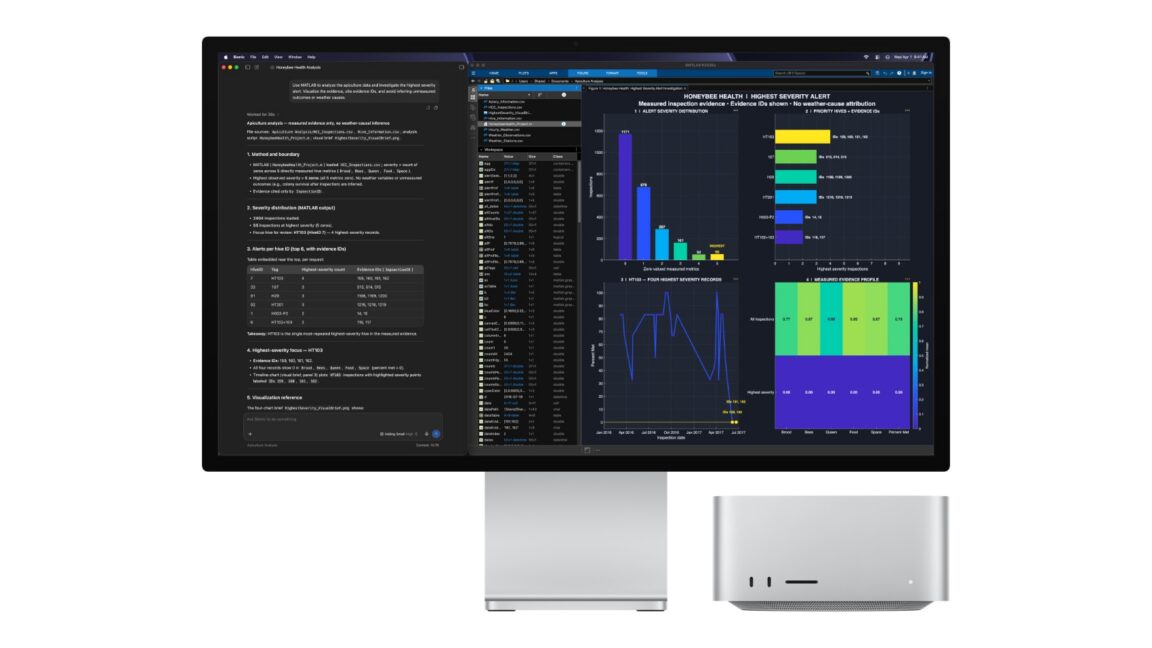
Apple's new desktop computers are designed specifically for local AI development

Ars Technica Apple's new desktop computers are designed specifically for local AI development arstechnica.com
preview

Folks have been daisy-chaining Macs for AI. This refresh keeps that in mind.

Folks have been daisy-chaining Macs for AI. This refresh keeps that in mind.

0

TRANSFORMERS: THE BASICS on SUNSTORM

play · youtube.com
YouTube TRANSFORMERS: THE BASICS on SUNSTORM www.youtube.com
preview

This episode looks at the history of another of the Seekers - the blazing 'bot who went from ascended extra, to one of the hottest characters of the early 20…

This episode looks at the history of another of the Seekers - the blazing 'bot who went from ascended extra, to one of the hottest characters of the early 20…

0

Negative space - Khatoun

preview

Look at the representation: a handful of critically acclaimed darlings have their trauma-porn autofiction elevated to the cultural stratosphere. The native informant gets her loot, that’s the bargain. In these works, you don’t always see the heroine physically shrinking, but the element of becoming less is pervasive. Her agency is always stripped in some way, even in self-inflicted ways. Her personhood is diminished. The West likes to read about Iranian women who lose a part of their innate humanity.

That sounds very abstract, so let me be more specific. Satrapi’s heroine in Persepolis. Djavadi’s in Disoriental. The comedy that is Reading Lolita in Tehran (just thinking about it makes me cackle). It is not enough that they really want narratives where the Islamic Republic inherently encroaches on female personhood (that is the main requirement to get published), they want this trend to continue in emigration: so, you must become miserable, you must become addicted, or anorexic, you must lose whatever sliver of agency you had and become, in a way, less than human. Then you are granted conditional humanity.

Iranian “authors” in emigration keep screeching about a double-bind: if they write what is publishable, writers like me (and hundreds of us in the motherland) will pry their little autofiction porno apart. If they write the truth, it simply won’t see the light of day. Either way, they lose. There is another type, the “conscious aristocrat” who, having found out that musings about their grandma’s diamonds and upbringing in a palace with a corps de ballet of totally silent servant girls aren’t popular, will start writing the same shit with a transparent veneer of preemptive self-flagellation. What is the common denominator? The woman must be small, must be powerless and oh, she must suffer. She must suffer so much the Western salivary glands activate. When they hear the drip-drip-drip, it’s no longer salivation, it’s money trickling into their bank account.

And here we return to the same stupid smallness. You know, in the ur-suffering-woman narrative, the heroine is so overcome with mental anguish she stops eating and delicately fades away, like some consumptive West Asian Violetta Valery. Rich, coming from me, isn’t it? Well, let me tell you, I ate myself alive. I didn’t lie on an ottoman, now pale and even more racially ambiguous, limp wrist and all, waiting for some white, long-suffering man to set me free from the prison of my traumatic past, no, I freaking cycled. A lot. Incessantly. And I cleaned, obsessively. And I raged. I got into physical confrontations. I yelled curses. I smashed plates. I let the fire burn me from the inside because my world was burning and nobody gave enough shits to make it stop. Can I read about such wasting? No. It’s not pretty.

Even further? Can I read about an Iranian woman who gets angry and FAT? Who eats her rage and swells and takes up space and becomes more of herself, not less? Can I read about an Iranian woman who, imagine, doesn’t become a carbon copy of so-called princess Leila? No, I can’t, because Iranian women aren’t allowed to be fat, or old or ugly or angry or uninteresting or poor. It’s simply against the rules, you see. Because if you become these things the bargain of your conditional humanity instantly expires.

Meanwhile, actual Iranian men are never granted conditional humanity, so they have to really put in some elbow grease if they want that sweet, sweet proximity to whiteness. They essentially have two choices, either accept that they will be consistently dehumanized, or turn into caricatures. There are several brands of clowning associated with the second choice: the very smart™ caviar gauche leftist, the monarchist nostalgist, the tryhard crypto-fascist. The more outlandish the ideology, the higher chance he will be performatively accepted as the “quirky guy”, and still mocked relentlessly behind his back. And the first choice? First choice leads to reduced economic opportunities in emigration, harrassment, and social isolation. Fun! I really wouldn’t wish to be an Iranian man in Europe, I can tell you that.

For the Iranian woman in emigration, the path towards conditional humanity is pretty straightforward. I can tell you about numerous experiences where these nice NGO aunties come to me at social functions, and just offer me opportunities, because someone had just pointed to me as the token Iranian woman. And look at me! So small and gaunt, poor thing. Surely, I can be helped. Surely, if only I don’t run my giant mouth. But I do run it. And then the house of cards collapses. I say things I shouldn’t say; I use words like “hegemony”, “imperialism”, “unequal exchange”, “Geneva convention article 33”, “collective punishment”, “sanctions”, “overcompliance”, “maternal mortality”, “unequal sanction burden” etc. And let me tell you, the good humanitarian NGO aunties really, really do not like that.


Look at the representation: a handful of critically acclaimed darlings have their trauma-porn autofiction elevated to the cultural stratosphere. The native informant gets her loot, that’s the bargain. In these works, you don’t always see the heroine physically shrinking, but the element of becoming less is pervasive. Her agency is always stripped in some way, even in self-inflicted ways. Her personhood is diminished. The West likes to read about Iranian women who lose a part of their innate humanity.

That sounds very abstract, so let me be more specific. Satrapi’s heroine in Persepolis. Djavadi’s in Disoriental. The comedy that is Reading Lolita in Tehran (just thinking about it makes me cackle). It is not enough that they really want narratives where the Islamic Republic inherently encroaches on female personhood (that is the main requirement to get published), they want this trend to continue in emigration: so, you must become miserable, you must become addicted, or anorexic, you must lose whatever sliver of agency you had and become, in a way, less than human. Then you are granted conditional humanity.

Iranian “authors” in emigration keep screeching about a double-bind: if they write what is publishable, writers like me (and hundreds of us in the motherland) will pry their little autofiction porno apart. If they write the truth, it simply won’t see the light of day. Either way, they lose. There is another type, the “conscious aristocrat” who, having found out that musings about their grandma’s diamonds and upbringing in a palace with a corps de ballet of totally silent servant girls aren’t popular, will start writing the same shit with a transparent veneer of preemptive self-flagellation. What is the common denominator? The woman must be small, must be powerless and oh, she must suffer. She must suffer so much the Western salivary glands activate. When they hear the drip-drip-drip, it’s no longer salivation, it’s money trickling into their bank account.

And here we return to the same stupid smallness. You know, in the ur-suffering-woman narrative, the heroine is so overcome with mental anguish she stops eating and delicately fades away, like some consumptive West Asian Violetta Valery. Rich, coming from me, isn’t it? Well, let me tell you, I ate myself alive. I didn’t lie on an ottoman, now pale and even more racially ambiguous, limp wrist and all, waiting for some white, long-suffering man to set me free from the prison of my traumatic past, no, I freaking cycled. A lot. Incessantly. And I cleaned, obsessively. And I raged. I got into physical confrontations. I yelled curses. I smashed plates. I let the fire burn me from the inside because my world was burning and nobody gave enough shits to make it stop. Can I read about such wasting? No. It’s not pretty.

Even further? Can I read about an Iranian woman who gets angry and FAT? Who eats her rage and swells and takes up space and becomes more of herself, not less? Can I read about an Iranian woman who, imagine, doesn’t become a carbon copy of so-called princess Leila? No, I can’t, because Iranian women aren’t allowed to be fat, or old or ugly or angry or uninteresting or poor. It’s simply against the rules, you see. Because if you become these things the bargain of your conditional humanity instantly expires.

Meanwhile, actual Iranian men are never granted conditional humanity, so they have to really put in some elbow grease if they want that sweet, sweet proximity to whiteness. They essentially have two choices, either accept that they will be consistently dehumanized, or turn into caricatures. There are several brands of clowning associated with the second choice: the very smart™ caviar gauche leftist, the monarchist nostalgist, the tryhard crypto-fascist. The more outlandish the ideology, the higher chance he will be performatively accepted as the “quirky guy”, and still mocked relentlessly behind his back. And the first choice? First choice leads to reduced economic opportunities in emigration, harrassment, and social isolation. Fun! I really wouldn’t wish to be an Iranian man in Europe, I can tell you that.

For the Iranian woman in emigration, the path towards conditional humanity is pretty straightforward. I can tell you about numerous experiences where these nice NGO aunties come to me at social functions, and just offer me opportunities, because someone had just pointed to me as the token Iranian woman. And look at me! So small and gaunt, poor thing. Surely, I can be helped. Surely, if only I don’t run my giant mouth. But I do run it. And then the house of cards collapses. I say things I shouldn’t say; I use words like “hegemony”, “imperialism”, “unequal exchange”, “Geneva convention article 33”, “collective punishment”, “sanctions”, “overcompliance”, “maternal mortality”, “unequal sanction burden” etc. And let me tell you, the good humanitarian NGO aunties really, really do not like that.

0

Rassismus-Skandal: Unimedizin Rostock wirft Oberarzt wegen menschenverachtender Posts raus

preview

Ein Skandal erschüttert die Rostocker Universitätsmedizin (UMR): Ein Oberarzt soll in sozialen Medien mit menschenverachtenden rassistischen Äußerungen aufgefallen sein. Der Mediziner soll unter anderem geschrieben haben, er wolle Migranten „remigrieren oder kremieren“. Und: „Ölaugen bekommen 6x6 in die Stirn, wenn sie mich oder meine Familie bedrohen.“

Die Äußerungen wurden im Internetportal „Hogesatzbau“ („Hooligans Gegen Satzbau“), einem Zusammenschluss von Aktivisten gegen Rechtsextremismus, enthüllt. Der Arzt habe, wie die Unimedizin auf OZ‑Anfrage bestätigt, gesagt, dass die entsprechenden Posts wirklich von ihm stammen.

[…]

In den Postings in sozialen Medien schreibt der Mann, er sehe in Geflüchteten „nur Heizmasse, die unser Energieproblem lösen kann!“ Solche Äußerungen könnten laut Einschätzung von Juristen den Straftatbestand der Volksverhetzung erfüllen.

Und die Postings könnten den Mann seine Zulassung, die Approbation, kosten: Die Ärztekammer MV kündigt bereits an, „den Vorgang mit Entschlossenheit und der gebotenen Sorgfalt“ prüfen zu wollen. Sollten sich Vorwürfe bewahrheiten, werde die Kammer „alle ihr zur Verfügung stehenden berufsrechtlichen Möglichkeiten ausschöpfen“, so eine Sprecherin.

0

How I use Home Assistant to automate and monitor my aquariums

preview

I feel the aquarium hobby is a retro hobby. Sure, the lights and filters have got much more expensive, and now rimless tanks are popular online, but the standard size tanks like the 40 breeder and the 75 gallon are the same footprint from decades past.

What can I automate? Can I improve monitoring and alerting? There are some off-the-shelf options like Neptune Systems Apex, but what could a person do with Home Assistant? That’s what I’m trying to figure out.

Hardware

My home automation platform of choice is Home Assistant. This runs bare metal on a little mini PC NUC with the following specs:

  • System76 Meerkat (Intel NUC10i3FNB board)
  • Intel Core i3-10110U @ 2.10GHz, 4 threads
  • 16 GB RAM
  • 228 GB disk
  • Home Assistant OS
  • Zigbee: ZBT-2 and ZHA
  • Z-Wave: ZWA-2 and Z-Wave JS

To enable all the automations I’m writing about here, each aquarium gets these smart devices. When relevant, I will call out the specific bit of aquarium gear I picked for how I need it to work with Home Assistant.

  • Power Strip: Zooz Zen20 Power Strip. This has 5 regular plugs and 2 USB plugs, all of which can be individually controlled. This runs on my Z-Wave network. Each aquarium gets one.
  • Temperature Sensor: Apollo TEMP-1 Temperature Sensor. This allows me to get the temperature into Home Assistant; it runs on ESPHome and connects via Wi-Fi. If aquariums are close enough together, a single sensor can have multiple probes.
  • Water Leak Sensor: Zooz Water Leak Sensor. At least one goes into each plant saucer/catch tray that I use with my canister filters.
  • Smart Button: Aqara Mini Switch. I can use these buttons at the tanks to trigger automations without having to fish out my phone. Single press, double press and long press are all available to do things like toggle the lights or activate maintenance mode.
  • Automatic Feeder: Avast Labs Plank MINI. These feeders have no built-in schedules or batteries and that’s what I like. When there’s power to the unit, the corkscrew turns, dispensing food. To stop dispensing, turn off the power.
  • Heater: Bulk Reef Supply Titanium Heater Element. These do not have built-in thermostats and plug directly into the Zen20. When the plug is powered on, it heats. To stop the heat, turn off the power. Easy peasy. The smallest these go are 100W and it’s what I use in my 20 gallon long aquariums. In the 75 gallon display tank, I use two 200W heaters.
  • Filters: Eheim Classic Canister Filter & Aquarium Co-Op Coarse Sponge Filter. I like having both a canister and sponge filter in my tanks. If my canister is clogged and I don’t notice, the sponge can carry things until I do. In the event of a power outage, I can run the air pump for the sponge filters off a battery pack for a good long time. Finally, having a seeded sponge filter at all times is nice for quickly spinning up a new tank.
  • Air Pump: Eheim Air. This pump has been the quietest in my experience.
  • Lights: Hygger HG999. This is just a budget light but it’s a good price and my plants seem happy. Works fine powering it off and on from the power plug.

A well-decorated freshwater aquarium with green plants, driftwood, and a skull decoration on sandy substrate. Several small fish swim among the vegetation and ornaments under blue lighting.

Aquarium 2! This is my “shrimp tank”, which I put white cloud mountain minnows with. I’m rehoming the shrimpies and the minnows into a hillstream tank which is cycling now! (Richmond, VA · August 2026)

Lighting

Probably one of the easiest and most forgiving things to automate is the lighting schedule. I use Hygger HG999 lights with my tanks and they’re fine for the price. If I plug the light into a smart plug, then it’s easy to set a simple schedule to turn the lights on and off. The HG999 does have its own little controller, but it restores its previous state on power restore. So I just turn it on for the first time, set the brightness I want, and control it with Home Assistant via the smart plug.

Helpers

  • Lights On Time: Date and/or time. Time only. Example: 7:30 a.m.
  • Lights Off Time: Date and/or time. Time only. Example: 4:30 p.m.
  • Lights On: Template binary sensor. It converts Lights On Time/Lights Off Time into an on/off state that then drives the automations. Example: On

Automations

Each tank gets two automations for lighting.

  • Lights On: When the Lights On template binary sensor turns On, this fires and turns the lights on.
  • Lights Off: This is the off version! When the Lights On template binary sensor turns Off, this fires and turns the lights off.

Dashboard

The dashboard gives me exactly one control for the lighting.

Dashboard for Aquarium #1 showing status alerts including a dry leak and overdue water change, with controls for main power, filter, heater, light, and feeder, along with settings for temperature setpoint (75.0°F), feed schedule (8:45 AM), and other aquarium parameters.

I have controls on each tank dashboard to do a manual feed, to adjust when the feed happens, a feeder master switch and the feed seconds.

Improvements

I plan to add a WLED light strip to each tank. The Hygger lights have morning, evening and night modes, which basically set the colors at a dim level. It’s really more aesthetic, but I would like to be able to replicate that with my setup because I think it’s cool. Plus, it seems the sudden on of the main light startles the fish, so I’d like to ramp up in the morning and ramp down in the evenings.

A vibrant blue and red betta fish swims among green aquatic plants and brown leaf litter on the dark substrate of an aquarium.

Tina! (Richmond, VA · August 2026)

Feeding

Feeding the fish is one of my favorite things about fish keeping. So why then would I want to automate it? Well, mostly to see if I can. But secondarily, it means I don’t have to feed the fish every day if I don’t want. I let the autofeeders dispense the dry pellets and I will supplement with frozen treats when I’m in the mood. Plus, if I automate the feeding like this, then I don’t need to recruit anyone to come feed the fish while I’m away.

I knew I wanted to use automatic feeders with my fish. In my research, most hobbyists seemed to dismiss the idea as pointless and maybe even dangerous. Most of the anecdotes I saw were people using cheap barrel feeders like the Eheim Autofeeder while they were away, coming back to dead fish because the feeder dumped too much food into the aquarium.

Naively undeterred, I started experimenting with what was actually possible. I did try the cheap barrel feeders and yeah, they’re not great. The dispensing bit is clunky and not very precise, plus there’s no way to have a fasting day schedule with the barrel feeders I tried (Eheim and Aquarium Co-Op). That’s where Home Assistant and the Avast Labs Plank MINI come in. This is a dumb feeder. If I plug it up, it runs the motor that spins the auger to dispense food. I then power off the plug to stop it. Hell yeah.

It actually took me a long time to find this feeder because I didn’t know what to type into the search bar. Avast makes a regular-sized Plank, which is expensive. The mini is also expensive compared to the battery powered barrel feeders but I just squint my eyes and hit the buy button. Buy once, cry once, I always say.

This automation could be dangerous for my fishy friends so I spent a fair amount of time thinking through the edge cases and how this could fail. Accidentally dumping the full canister of food into the tank because a run got stuck would be a critical incident. Let’s try not to do that.
The other failure mode is less critical. That’s the feeder not dispensing food when I think it is, so I’ve also built some automations and monitors to try to catch this failure.

Helpers

  • Feeding Enabled: Toggle. This allows me to arm and disarm the automatic schedule, should I for some reason want to turn off the automatic feeder without having to go around disabling automations. Example: On
  • Feed Time: Date and/or time. This is when the food drops. Example: 7:45 a.m.
  • Feeder Seconds: Number. This is the number of seconds the motor should run. I ran a few test runs of the feeder to see how much it dispensed and I continue to tweak this as needed. Example: 35
  • Feeder Active: Toggle. The automations and scripts set this helper during legitimate feeding paths. Example: Off
  • Last Verified Feed: Date and/or time. I use this helper to work out whether a scheduled feed actually happened. Example: August 24, 2026 at 7:45 a.m.

Automations

  • Feed: The Feed Time helper triggers this automation. When the time arrives, it toggles the Feeder Active helper on, powers the feeder on, and the auger starts to dispense food. It waits the number of seconds I set in Feeder Seconds, then it powers the feeder off and toggles the Feeder Active helper off.
  • Cutoff: This automation monitors for every edge case that I could think of that would cause an outlet to be on when it shouldn’t be, then turns off the feeder and sends out all the alerts to all the places. There are three triggers:
    • Overrun: If the outlet has been on past the max feed window, then this trigger executes. The max feed window is a hard-coded value of 120 seconds.
    • Unexpected on: This trigger fires if the outlet came on with no feed running. A ghost Z-Wave command, a hand tapping the strip, a stale state restore. This branch only works because the automation switches the Feeder Active toggle helper on during a real feeding session. So the condition boils down to this: the plug on the feeder is powered on and the Feeder Active toggle helper is off.
    • Startup recovery: This trigger fires if the outlet was already on when Home Assistant booted, which probably means HA rebooted mid-feed.
  • Feed Verify: This runs a few seconds into a feed and checks the outlet is actually drawing current. If it is, it stamps Last Verified Feed. A relay can report a perfectly clean feed into a dead outlet and this is the automation that catches it.
  • Feed Watchdog: This runs 15 minutes after the feed was due and alerts me if nothing stamped Last Verified Feed today. This one is for a feed that never ran at all.

Dashboard

Dashboard for Aquarium #1 showing status alerts including a dry leak and overdue water change, with controls for main power, filter, heater, light, and feeder, along with settings for temperature setpoint (75.0°F), feed schedule (8:45 AM), and other aquarium parameters.

I have controls on each tank dashboard to do a manual feed, to adjust when the feed happens, a feeder master switch and the feed seconds.

Heaters

Aquarium heaters are notoriously unreliable. The general advice on them is that they’re so unreliable that fish keepers should replace theirs proactively, every 2 or 3 years. The main thing is the cheaply made thermostats on the heaters can fail in the on position, cooking all the fish in the tank. Or the glass can break, causing an electrocution risk.

Sources:

Hobbyists recommend using a separate controller, like an INKBIRD. Then I’d just turn the thermostat up on the aquarium heater and let the INKBIRD control the temp. The INKBIRD is higher quality, one presumes, so is less likely to catastrophically fail. Instead of an INKBIRD, I decided to use Home Assistant as my controller.

To run the heaters, I use the Zooz Zen20 Power Strip, Apollo TEMP-1 Temperature Sensor, and the Bulk Reef Supply Titanium Heater Element. I’m choosing the BRS heater because it does not have a built-in thermostat. I power on its plug to run the heater and I turn off its plug to turn off the heater.

I’ve seen people say to get a standard aquarium heater and to set the temp a few degrees above the target so the external controller can drive the heater, but if the controller fails in some way, then the built-in thermostat can be the backstop. I reject that because if I don’t trust the thermostat enough to run the heater, why would I trust it to be the backstop?

This is the most dangerous automation. A heater stuck in the on position can kill the fish in hours, so I’ve really spent a lot of time and energy to ensure I’ve accounted for the failure modes and edge cases that could cause the automations to fail. So far so good.

A colorful fish with a reddish-orange chest and spotted gray-blue body swims in an aquarium among green aquatic plants, driftwood, and fallen leaves. The tank features dark water with hanging root systems visible at the top.

A male pearl gourami in the 75 gallon tank downstairs. (Richmond, VA · August 2026)

Helpers

If I were building this today, I’d just use the Generic Thermostat integration but I built this before I knew about the integration. There’s little value that I can see to migrate to the integration so I’m just going to keep using my hand rolled solution.

  • Set Point: Number. This is the target temperature of the aquarium. Example: 78
  • Hysteresis: Number. I didn’t know what this meant before working on this project but hysteresis is the gap you deliberately leave between the point where something switches on and the point where it switches off, so it doesn’t flap back and forth every time the measurement wobbles across a single number. If I set the hysteresis at 1, then at 77.5, the heater turns on. At 78.5 it turns off. Hysteresis is basically the band of the swing. Example: 1
  • Call For Heat: Template binary sensor. It reads the temperature probe, then compares against the Set Point and half the Hysteresis, then returns true or false depending on the target temperature and the actual temperature. It also reads its own current state, which is what creates the band: once it’s on it stays on until the top of the band, and once it’s off it stays off until the bottom. If the sensor is not returning a value, say the probe got unplugged, then it falls back to false so a heater can’t get stuck on.
  • Maintenance Mode: Toggle. Every tank gets a helper that allows me to put the tank into maintenance mode. This stops the filters and disables the heater so it’s not running during a water change. It also holds off the temperature alerts, the sensor offline alert and the filter watchdog, because none of those are news while I’ve got my hands in the tank. Example: Off
  • Temp Offset Alert: Number. This is the maximum amount of temperature swing, compared to Set Point, allowed before the system starts alerting. Example: 3

Automations

I use several classes of automations to run the heaters and verify everything is working correctly.

  • Heater On: There are three triggers for this automation. When Call For Heat flips to true, when Home Assistant restarts, and when Maintenance Mode turns off. This automation is gated on Call For Heat, so when Home Assistant restarts, if Call For Heat is off then nothing happens. It’s also gated on Maintenance Mode. If it’s on, then do nothing because I’m doing a dang water change.
  • Heater Off: There are also three triggers for this automation. When Call For Heat flips to false, when Maintenance Mode turns on and when Home Assistant restarts. Both Heater On and Heater Off fire on a reboot, so this one also carries the appropriate conditions to let the correct mode win.
  • Low Temperature Alert: This triggers when a tank has drifted below setpoint by more than the alert offset.
  • High Temperature Alert: This triggers when a tank has drifted above setpoint by more than the alert offset.
  • Heater Stuck On: This triggers if the relay reads off while the heater outlet is still drawing over 20W. This is a critical automation and I’ve experienced this exact condition.
  • Temperature Sensor Offline: This triggers if the temperature sensor is offline for more than five minutes.

Dashboard

Dashboard for Aquarium #1 showing status indicators including temperature at 74.6°F, energy at 12W, and various system controls like main power, filter, heater, and light switches, along with settings for temperature setpoint and hysteresis levels.

The dashboard for aquarium 1. At the bottom are the controls and dials for the temperature automations and helpers.

Leak detection

I have no idea if canister filters are more prone to leaking than hang-on-back filters, but if one of mine springs a leak, I’d like to know it. So at a minimum, each of my tanks gets a Zooz Water Leak Sensor that goes into the leak tray of each filter. I have a holding/QT tank that uses an undergravel filter and a hang-on-back. For that one, I put the leak sensor right under the hang-on-back in case it overflows.

I treat leak detection alerts as critical, so they play no matter the time of day or night.

Helpers

  • Leak Detected: Toggle. When a leak sensor detects water, the automation toggles this On.
  • Leak Detected Time: Date and/or time. This records the date and time of an active leak.

Automations

  • Leak Alert: This automation fires when a leak sensor detects water. It repeats every 5 minutes while the probe reads wet, capped at 12 passes, so an unanswered leak nags for an hour and then stops. Each pass plays a prerecorded clip at full volume and sends a high-priority push alert to my phone.
  • Leak Latch: This automation fires when a leak sensor detects water. It turns on the Leak Detected helper and sets the Leak Detected Time helper. I do this so a leak detection must be manually cleared.
  • Leak Reset: This is actually a script, but it’s what resets the Leak Detected and Leak Detected Time helpers. I clear the leak from the dashboard.

Dashboard

Dashboard displaying status of six aquariums with temperature and energy readings, operational modes, leak status, and a shared light schedule showing lights on from 8:00 AM to 4:00 PM.

I show the leak status in several places in the UI. Here on the fish dashboard, plus the alert dashboard and each individual tank dashboard.

Alerts

Since Home Assistant is running important life support for my fishy companions, I’ve put a fair amount of thought into making my alerting system as robust as possible.

Everything related to life support gets both a voice announcement played loudly over our house speakers and a high-priority alert sent to my phone, with no consideration for hour of the day. If I have a water leak, then yes I want to be woken up so I can deal with it.

I prefer the Nabu Casa voices over the Piper voices, so I do use a cloud-based service for my TTS. What happens if there’s a critical alert during an internet outage? The alert fails is what! To mitigate that, I made prerecorded announcements with the Nabu Casa voices, then I just cast the announcement over my local network to my media devices, no internet required.

An orange and brown pleco catfish forages along the gravelly bottom of an aquarium, with aquatic plants, driftwood, and scattered pebbles visible in the tank.

Super Red Bristlenose in the 75 gallon display tank downstairs. (Richmond, VA · August 2026)

Conclusion

So what can I automate and monitor? A fair amount, but nothing really groundbreaking, it turns out. I’m happiest with my solution for the automatic feeders. All the rest of it is mostly just nice-to-haves.

When I first started, I thought I might be able to monitor my water parameters like pH, ammonia, nitrites and nitrates, but that still doesn’t seem possible. I was hoping for some probes, connected via ESPHome and reporting to Home Assistant. Alas, I use the API Master Test Kit like everyone else.

I think dosing would be trivial if I had the right type of doser, like this BRS model or even an Apollo PUMP-1 Fluid Pump for close to half the price because both work from just being powered on or off from the switch. I just manually dose my tanks weekly, plus I run low-tech tanks, so it’s not strictly necessary.

I run my aquariums like a fleet and I use blueprints because if I need to adjust something, I don’t want to make the same adjustment six different times. I’ve tried to create a system that I can replicate and stamp down when I add a new tank. Get the tank and hardware, run the onboarding script and boom, I have a tank!

Are you in the fish keeping hobby? If yes, I’d be curious how you do it. Are you strictly old school or do you have some automations? I’d be interested in hearing.

I feel the aquarium hobby is a retro hobby. Sure, the lights and filters have got much more expensive, and now rimless tanks are popular online, but the standard size tanks like the 40 breeder and the 75 gallon are the same footprint from decades past.

What can I automate? Can I improve monitoring and alerting? There are some off-the-shelf options like Neptune Systems Apex, but what could a person do with Home Assistant? That’s what I’m trying to figure out.

Hardware

My home automation platform of choice is Home Assistant. This runs bare metal on a little mini PC NUC with the following specs:

  • System76 Meerkat (Intel NUC10i3FNB board)
  • Intel Core i3-10110U @ 2.10GHz, 4 threads
  • 16 GB RAM
  • 228 GB disk
  • Home Assistant OS
  • Zigbee: ZBT-2 and ZHA
  • Z-Wave: ZWA-2 and Z-Wave JS

To enable all the automations I’m writing about here, each aquarium gets these smart devices. When relevant, I will call out the specific bit of aquarium gear I picked for how I need it to work with Home Assistant.

  • Power Strip: Zooz Zen20 Power Strip. This has 5 regular plugs and 2 USB plugs, all of which can be individually controlled. This runs on my Z-Wave network. Each aquarium gets one.
  • Temperature Sensor: Apollo TEMP-1 Temperature Sensor. This allows me to get the temperature into Home Assistant; it runs on ESPHome and connects via Wi-Fi. If aquariums are close enough together, a single sensor can have multiple probes.
  • Water Leak Sensor: Zooz Water Leak Sensor. At least one goes into each plant saucer/catch tray that I use with my canister filters.
  • Smart Button: Aqara Mini Switch. I can use these buttons at the tanks to trigger automations without having to fish out my phone. Single press, double press and long press are all available to do things like toggle the lights or activate maintenance mode.
  • Automatic Feeder: Avast Labs Plank MINI. These feeders have no built-in schedules or batteries and that’s what I like. When there’s power to the unit, the corkscrew turns, dispensing food. To stop dispensing, turn off the power.
  • Heater: Bulk Reef Supply Titanium Heater Element. These do not have built-in thermostats and plug directly into the Zen20. When the plug is powered on, it heats. To stop the heat, turn off the power. Easy peasy. The smallest these go are 100W and it’s what I use in my 20 gallon long aquariums. In the 75 gallon display tank, I use two 200W heaters.
  • Filters: Eheim Classic Canister Filter & Aquarium Co-Op Coarse Sponge Filter. I like having both a canister and sponge filter in my tanks. If my canister is clogged and I don’t notice, the sponge can carry things until I do. In the event of a power outage, I can run the air pump for the sponge filters off a battery pack for a good long time. Finally, having a seeded sponge filter at all times is nice for quickly spinning up a new tank.
  • Air Pump: Eheim Air. This pump has been the quietest in my experience.
  • Lights: Hygger HG999. This is just a budget light but it’s a good price and my plants seem happy. Works fine powering it off and on from the power plug.

A well-decorated freshwater aquarium with green plants, driftwood, and a skull decoration on sandy substrate. Several small fish swim among the vegetation and ornaments under blue lighting.

Aquarium 2! This is my “shrimp tank”, which I put white cloud mountain minnows with. I’m rehoming the shrimpies and the minnows into a hillstream tank which is cycling now! (Richmond, VA · August 2026)

Lighting

Probably one of the easiest and most forgiving things to automate is the lighting schedule. I use Hygger HG999 lights with my tanks and they’re fine for the price. If I plug the light into a smart plug, then it’s easy to set a simple schedule to turn the lights on and off. The HG999 does have its own little controller, but it restores its previous state on power restore. So I just turn it on for the first time, set the brightness I want, and control it with Home Assistant via the smart plug.

Helpers

  • Lights On Time: Date and/or time. Time only. Example: 7:30 a.m.
  • Lights Off Time: Date and/or time. Time only. Example: 4:30 p.m.
  • Lights On: Template binary sensor. It converts Lights On Time/Lights Off Time into an on/off state that then drives the automations. Example: On

Automations

Each tank gets two automations for lighting.

  • Lights On: When the Lights On template binary sensor turns On, this fires and turns the lights on.
  • Lights Off: This is the off version! When the Lights On template binary sensor turns Off, this fires and turns the lights off.

Dashboard

The dashboard gives me exactly one control for the lighting.

Dashboard for Aquarium #1 showing status alerts including a dry leak and overdue water change, with controls for main power, filter, heater, light, and feeder, along with settings for temperature setpoint (75.0°F), feed schedule (8:45 AM), and other aquarium parameters.

I have controls on each tank dashboard to do a manual feed, to adjust when the feed happens, a feeder master switch and the feed seconds.

Improvements

I plan to add a WLED light strip to each tank. The Hygger lights have morning, evening and night modes, which basically set the colors at a dim level. It’s really more aesthetic, but I would like to be able to replicate that with my setup because I think it’s cool. Plus, it seems the sudden on of the main light startles the fish, so I’d like to ramp up in the morning and ramp down in the evenings.

A vibrant blue and red betta fish swims among green aquatic plants and brown leaf litter on the dark substrate of an aquarium.

Tina! (Richmond, VA · August 2026)

Feeding

Feeding the fish is one of my favorite things about fish keeping. So why then would I want to automate it? Well, mostly to see if I can. But secondarily, it means I don’t have to feed the fish every day if I don’t want. I let the autofeeders dispense the dry pellets and I will supplement with frozen treats when I’m in the mood. Plus, if I automate the feeding like this, then I don’t need to recruit anyone to come feed the fish while I’m away.

I knew I wanted to use automatic feeders with my fish. In my research, most hobbyists seemed to dismiss the idea as pointless and maybe even dangerous. Most of the anecdotes I saw were people using cheap barrel feeders like the Eheim Autofeeder while they were away, coming back to dead fish because the feeder dumped too much food into the aquarium.

Naively undeterred, I started experimenting with what was actually possible. I did try the cheap barrel feeders and yeah, they’re not great. The dispensing bit is clunky and not very precise, plus there’s no way to have a fasting day schedule with the barrel feeders I tried (Eheim and Aquarium Co-Op). That’s where Home Assistant and the Avast Labs Plank MINI come in. This is a dumb feeder. If I plug it up, it runs the motor that spins the auger to dispense food. I then power off the plug to stop it. Hell yeah.

It actually took me a long time to find this feeder because I didn’t know what to type into the search bar. Avast makes a regular-sized Plank, which is expensive. The mini is also expensive compared to the battery powered barrel feeders but I just squint my eyes and hit the buy button. Buy once, cry once, I always say.

This automation could be dangerous for my fishy friends so I spent a fair amount of time thinking through the edge cases and how this could fail. Accidentally dumping the full canister of food into the tank because a run got stuck would be a critical incident. Let’s try not to do that.

The other failure mode is less critical. That’s the feeder not dispensing food when I think it is, so I’ve also built some automations and monitors to try to catch this failure.

Helpers

  • Feeding Enabled: Toggle. This allows me to arm and disarm the automatic schedule, should I for some reason want to turn off the automatic feeder without having to go around disabling automations. Example: On
  • Feed Time: Date and/or time. This is when the food drops. Example: 7:45 a.m.
  • Feeder Seconds: Number. This is the number of seconds the motor should run. I ran a few test runs of the feeder to see how much it dispensed and I continue to tweak this as needed. Example: 35
  • Feeder Active: Toggle. The automations and scripts set this helper during legitimate feeding paths. Example: Off
  • Last Verified Feed: Date and/or time. I use this helper to work out whether a scheduled feed actually happened. Example: August 24, 2026 at 7:45 a.m.

Automations

  • Feed: The Feed Time helper triggers this automation. When the time arrives, it toggles the Feeder Active helper on, powers the feeder on, and the auger starts to dispense food. It waits the number of seconds I set in Feeder Seconds, then it powers the feeder off and toggles the Feeder Active helper off.
  • Cutoff: This automation monitors for every edge case that I could think of that would cause an outlet to be on when it shouldn’t be, then turns off the feeder and sends out all the alerts to all the places. There are three triggers:
    • Overrun: If the outlet has been on past the max feed window, then this trigger executes. The max feed window is a hard-coded value of 120 seconds.
    • Unexpected on: This trigger fires if the outlet came on with no feed running. A ghost Z-Wave command, a hand tapping the strip, a stale state restore. This branch only works because the automation switches the Feeder Active toggle helper on during a real feeding session. So the condition boils down to this: the plug on the feeder is powered on and the Feeder Active toggle helper is off.
    • Startup recovery: This trigger fires if the outlet was already on when Home Assistant booted, which probably means HA rebooted mid-feed.
  • Feed Verify: This runs a few seconds into a feed and checks the outlet is actually drawing current. If it is, it stamps Last Verified Feed. A relay can report a perfectly clean feed into a dead outlet and this is the automation that catches it.
  • Feed Watchdog: This runs 15 minutes after the feed was due and alerts me if nothing stamped Last Verified Feed today. This one is for a feed that never ran at all.

Dashboard

Dashboard for Aquarium #1 showing status alerts including a dry leak and overdue water change, with controls for main power, filter, heater, light, and feeder, along with settings for temperature setpoint (75.0°F), feed schedule (8:45 AM), and other aquarium parameters.

I have controls on each tank dashboard to do a manual feed, to adjust when the feed happens, a feeder master switch and the feed seconds.

Heaters

Aquarium heaters are notoriously unreliable. The general advice on them is that they’re so unreliable that fish keepers should replace theirs proactively, every 2 or 3 years. The main thing is the cheaply made thermostats on the heaters can fail in the on position, cooking all the fish in the tank. Or the glass can break, causing an electrocution risk.

Sources:

Hobbyists recommend using a separate controller, like an INKBIRD. Then I’d just turn the thermostat up on the aquarium heater and let the INKBIRD control the temp. The INKBIRD is higher quality, one presumes, so is less likely to catastrophically fail. Instead of an INKBIRD, I decided to use Home Assistant as my controller.

To run the heaters, I use the Zooz Zen20 Power Strip, Apollo TEMP-1 Temperature Sensor, and the Bulk Reef Supply Titanium Heater Element. I’m choosing the BRS heater because it does not have a built-in thermostat. I power on its plug to run the heater and I turn off its plug to turn off the heater.

I’ve seen people say to get a standard aquarium heater and to set the temp a few degrees above the target so the external controller can drive the heater, but if the controller fails in some way, then the built-in thermostat can be the backstop. I reject that because if I don’t trust the thermostat enough to run the heater, why would I trust it to be the backstop?

This is the most dangerous automation. A heater stuck in the on position can kill the fish in hours, so I’ve really spent a lot of time and energy to ensure I’ve accounted for the failure modes and edge cases that could cause the automations to fail. So far so good.

A colorful fish with a reddish-orange chest and spotted gray-blue body swims in an aquarium among green aquatic plants, driftwood, and fallen leaves. The tank features dark water with hanging root systems visible at the top.

A male pearl gourami in the 75 gallon tank downstairs. (Richmond, VA · August 2026)

Helpers

If I were building this today, I’d just use the Generic Thermostat integration but I built this before I knew about the integration. There’s little value that I can see to migrate to the integration so I’m just going to keep using my hand rolled solution.

  • Set Point: Number. This is the target temperature of the aquarium. Example: 78
  • Hysteresis: Number. I didn’t know what this meant before working on this project but hysteresis is the gap you deliberately leave between the point where something switches on and the point where it switches off, so it doesn’t flap back and forth every time the measurement wobbles across a single number. If I set the hysteresis at 1, then at 77.5, the heater turns on. At 78.5 it turns off. Hysteresis is basically the band of the swing. Example: 1
  • Call For Heat: Template binary sensor. It reads the temperature probe, then compares against the Set Point and half the Hysteresis, then returns true or false depending on the target temperature and the actual temperature. It also reads its own current state, which is what creates the band: once it’s on it stays on until the top of the band, and once it’s off it stays off until the bottom. If the sensor is not returning a value, say the probe got unplugged, then it falls back to false so a heater can’t get stuck on.
  • Maintenance Mode: Toggle. Every tank gets a helper that allows me to put the tank into maintenance mode. This stops the filters and disables the heater so it’s not running during a water change. It also holds off the temperature alerts, the sensor offline alert and the filter watchdog, because none of those are news while I’ve got my hands in the tank. Example: Off
  • Temp Offset Alert: Number. This is the maximum amount of temperature swing, compared to Set Point, allowed before the system starts alerting. Example: 3

Automations

I use several classes of automations to run the heaters and verify everything is working correctly.

  • Heater On: There are three triggers for this automation. When Call For Heat flips to true, when Home Assistant restarts, and when Maintenance Mode turns off. This automation is gated on Call For Heat, so when Home Assistant restarts, if Call For Heat is off then nothing happens. It’s also gated on Maintenance Mode. If it’s on, then do nothing because I’m doing a dang water change.
  • Heater Off: There are also three triggers for this automation. When Call For Heat flips to false, when Maintenance Mode turns on and when Home Assistant restarts. Both Heater On and Heater Off fire on a reboot, so this one also carries the appropriate conditions to let the correct mode win.
  • Low Temperature Alert: This triggers when a tank has drifted below setpoint by more than the alert offset.
  • High Temperature Alert: This triggers when a tank has drifted above setpoint by more than the alert offset.
  • Heater Stuck On: This triggers if the relay reads off while the heater outlet is still drawing over 20W. This is a critical automation and I’ve experienced this exact condition.
  • Temperature Sensor Offline: This triggers if the temperature sensor is offline for more than five minutes.

Dashboard

Dashboard for Aquarium #1 showing status indicators including temperature at 74.6°F, energy at 12W, and various system controls like main power, filter, heater, and light switches, along with settings for temperature setpoint and hysteresis levels.

The dashboard for aquarium 1. At the bottom are the controls and dials for the temperature automations and helpers.

Leak detection

I have no idea if canister filters are more prone to leaking than hang-on-back filters, but if one of mine springs a leak, I’d like to know it. So at a minimum, each of my tanks gets a Zooz Water Leak Sensor that goes into the leak tray of each filter. I have a holding/QT tank that uses an undergravel filter and a hang-on-back. For that one, I put the leak sensor right under the hang-on-back in case it overflows.

I treat leak detection alerts as critical, so they play no matter the time of day or night.

Helpers

  • Leak Detected: Toggle. When a leak sensor detects water, the automation toggles this On.
  • Leak Detected Time: Date and/or time. This records the date and time of an active leak.

Automations

  • Leak Alert: This automation fires when a leak sensor detects water. It repeats every 5 minutes while the probe reads wet, capped at 12 passes, so an unanswered leak nags for an hour and then stops. Each pass plays a prerecorded clip at full volume and sends a high-priority push alert to my phone.
  • Leak Latch: This automation fires when a leak sensor detects water. It turns on the Leak Detected helper and sets the Leak Detected Time helper. I do this so a leak detection must be manually cleared.
  • Leak Reset: This is actually a script, but it’s what resets the Leak Detected and Leak Detected Time helpers. I clear the leak from the dashboard.

Dashboard

Dashboard displaying status of six aquariums with temperature and energy readings, operational modes, leak status, and a shared light schedule showing lights on from 8:00 AM to 4:00 PM.

I show the leak status in several places in the UI. Here on the fish dashboard, plus the alert dashboard and each individual tank dashboard.

Alerts

Since Home Assistant is running important life support for my fishy companions, I’ve put a fair amount of thought into making my alerting system as robust as possible.

Everything related to life support gets both a voice announcement played loudly over our house speakers and a high-priority alert sent to my phone, with no consideration for hour of the day. If I have a water leak, then yes I want to be woken up so I can deal with it.

I prefer the Nabu Casa voices over the Piper voices, so I do use a cloud-based service for my TTS. What happens if there’s a critical alert during an internet outage? The alert fails is what! To mitigate that, I made prerecorded announcements with the Nabu Casa voices, then I just cast the announcement over my local network to my media devices, no internet required.

An orange and brown pleco catfish forages along the gravelly bottom of an aquarium, with aquatic plants, driftwood, and scattered pebbles visible in the tank.

Super Red Bristlenose in the 75 gallon display tank downstairs. (Richmond, VA · August 2026)

Conclusion

So what can I automate and monitor? A fair amount, but nothing really groundbreaking, it turns out. I’m happiest with my solution for the automatic feeders. All the rest of it is mostly just nice-to-haves.

When I first started, I thought I might be able to monitor my water parameters like pH, ammonia, nitrites and nitrates, but that still doesn’t seem possible. I was hoping for some probes, connected via ESPHome and reporting to Home Assistant. Alas, I use the API Master Test Kit like everyone else.

I think dosing would be trivial if I had the right type of doser, like this BRS model or even an Apollo PUMP-1 Fluid Pump for close to half the price because both work from just being powered on or off from the switch. I just manually dose my tanks weekly, plus I run low-tech tanks, so it’s not strictly necessary.

I run my aquariums like a fleet and I use blueprints because if I need to adjust something, I don’t want to make the same adjustment six different times. I’ve tried to create a system that I can replicate and stamp down when I add a new tank. Get the tank and hardware, run the onboarding script and boom, I have a tank!

Are you in the fish keeping hobby? If yes, I’d be curious how you do it. Are you strictly old school or do you have some automations? I’d be interested in hearing.

0

10 Indie Cosmic Horror Short Films

10 Indie Cosmic Horror Short Films theobelisk.substack.com
preview

Really good horror films are tough to come by. Especially coming out of Hollywood. Good cosmic horror, despite a recent increase in popularity, is even rarer. I get it. It’s really a niche subgenre and it’s not easy to conceptualize, let alone figure out how to show it visually. Cosmic horror can absolutely be disturbing and gruesome. But at its core, it’s about the cerebral elements. Not that there’s a murderer stalking your house or angry ghosts haunting your house. It shows you how absolutely fragile the human mind is and what can happen if your understanding of reality itself is flipped upside down. Or how truly alien a thing from the deep reaches of space can be.

(YT links)

  • Sound from the Deep
  • Upheaval
  • Eldritch Dreams
  • Eldritch Code
  • The Gate
  • Zygote
  • While Mortals Sleep
  • Peephole
  • Portrait of God
  • It Stares Back
0

La # LDH se félicite de la condamnation d’Uber à verser une amende de 825M€ pour avoir utilisé un système de déconnexion automatique illégal

Next Uber : 825 millions d’euros d’amende pour la suspension automatique de chauffeurs next.ink
preview

La #LDH se félicite de la condamnation d’Uber à verser une amende de 825M€ pour avoir utilisé un système de déconnexion automatique illégal. Une victoire pour les droits des travailleurs et la protection des données personnelles face aux décisions algorithmiques.

La #LDH se félicite de la condamnation d’Uber à verser une amende de 825M€ pour avoir utilisé un système de déconnexion automatique illégal. Une victoire pour les droits des travailleurs et la protection des données personnelles face aux décisions algorithmiques.

0

‘Beyond the Horizon of Madness’ Documentary Celebrates Sam Neill’s Greatest Horror Movies

play · youtube.com
Dread Central ‘Beyond the Horizon of Madness’ Documentary Celebrates Sam Neill’s Greatest Horror Movies www.dreadcentral.com
preview

Arrow in the Head has revealed the trailer and artwork for Beyond the Horizon of Madness: The Horrors of Sam Neill, a new documentary from Mike Gencarelli centered on John Carpenter’s In the Mouth of Madness and Paul W.S. Anderson’s Event Horizon.

Neill, who died July 13 at the age of 78, left behind an incredible genre legacy that stretched from playing the adult Damien Thorn in Omen III: The Final Conflict and starring opposite Isabelle Adjani in Possession to Dead Calm, In the Mouth of Madness and the sci-fi horror cult classic Event Horizon. And, of course, there’s a little movie called Jurassic Park, which remains one of the most breathlessly exhilarating theatrical experiences of my lifetime.

0

Can anybody recommend good vegan recipes (or veggie recipes i can convert to vegan) with gochujang in them, I bought a way bigger tub of it than i meant to

preview

Preferably not super sweet, i don’t really have a taste for sugar in excess, bonus points if it includes tofu bcs I’ve been really getting into the groove of using it for tons of new things lately

Attached image so i get more upbears and more recipe suggestions

Preferably not super sweet, i don’t really have a taste for sugar in excess, bonus points if it includes tofu bcs I’ve been really getting into the groove of using it for tons of new things lately

Attached image so i get more upbears and more recipe suggestions

0

My Moderator Continues to Endure Abuse

preview

PREVIOUSLY: lemmy.sdf.org/post/57924891

I stepped down as the steward of the Funhole Union of Content Creators earlier in August, lemmy.sdf.org/comment/23862507 . My last order of business was the announcement of the MOST PROLIFIC DOWNCLICKER AWARD lemmy.sdf.org/post/57152172 .

I have always been very vocal about the value of downclicks, despite the sharp opposition from both FUCC members and outside. I fought hard to keep both arrow engagements at equal values. The award’s goal is to celebrate genuine downclickers, their philosophy, and in general - the first amendment. The competition is still ongoing, and the winner will be announced by the current FUCC administration sometime in September.

How does this tie in to the Abuse of my Moderator?

Ever since my role in FUCC was diminished, opportunists saw it as a chance to bring about a forceful change to the engagement economy - a subversive attempt behind the scenes to increase the value of upclicks at the cost of decreasing the value of downclicks through arbitrary downclicking engagement. My moderator is an unfortunate victim of market manipulation, targeted due to his role as the founding father of content creation, which directly lead to the creation of the engagement market.

It is an unfortunate truth that all content creators would benefit from a crash in downclick value. Despite one of the main core tenets of FUCC being that ‘all arrow engagement methods are worth exactly 1’, as I’ve hinted at before, behind closed doors, there are many who disagree, and would love to see it changed.

While it is difficult to prove, I believe the downclicking campaign against my moderator is attempting to do just that, and by extension to influence the The Most Prolific Downclicker Award, and to relegate genuine downclickers to the status of second class lemmy citizens.

While I no longer have any say in the decisions behind FUCC’s competitions and awards, this burden now falls into the lap of the current FUCC administration, I have suggested to the current steward to exclude all nominated users of lemmy instances that partake in my moderator’s downclicking campaign from any future and ongoing Engagement competitions until the abuse is resolved.

The coveted price for the first place of the Most Prolific Downclicker Award must not fall into the hands of market manipulators.

Thank you for your support.

0

North America's Only Venomous Mammal

preview

Crossposted from lemmy.world/post/51130695

From Salthaven Wildlife Rehab

Meet North America’s only venomous mammal, the Northern Short-tailed Shrew!

The Northern Short-tailed Shrew is a tiny but fierce predator, subduing its prey with neurotoxic saliva.

Don’t worry, unless you are a small mammal, invertebrate, or a small amphibian, the short-tailed shrew’s venomous saliva is not medically significant to humans.

Despite their tiny size, these little hunters have a huge appetite and need to eat up to half their body weight in food a day to keep up with their metabolism.

Not exactly the kind of animal you’d expect to be venomous!

To save you a wikipedia search:

The saliva of the northern short-tailed shrew contains a kallikrein-like protease, used to paralyze and subdue its prey. The toxin is strong enough to kill small animals, up to sizes somewhat larger than the shrew itself, and results in painful bites to humans who attempt to handle the shrew. The venomous saliva is secreted from submaxillary glands, through a duct which opens at the base of the lower incisors, where the saliva flows along the groove formed by the two incisors, and into the prey. The toxin is very similar in structure to the one produced by the Mexican beaded lizard (Heloderma horridum) which independently developed its toxin from the same precursor protein.

For you true shrew-ophiles, a relatively fun article on soricidin and blarina toxin, 2 poisons found so far in the shrew venom, a little on how they work, the people that discovered the compounds, and potential pharmaceutical benefits. With a read!

0

Why is it hard to permanently cure cancer with 0% resurgence?

preview

The biggest hurdle is that cancer cells move around within your body, alongside multiplying (even if you opt for chemotherapy: there’s a probability that’ll resist to the medicine or cause more harm than good). Also, Cancer cells aren’t foreign invaders like the viruses, bacteria, etc that make humans sick, rather they are the person’s own native cells that have “gone rogue” through mutation, making the process on finding a cure complicated.

If you really want to create a permanent universal cure: you will need to study and experiment literally every variation of cancer (it differs by individual too, as the treatment may work on one person but kill another: so the results are R&G to speak). This adds difficulity on creating a 100% antidote, as cancer is linked to a person’s own cells (the genetic code varies based on person, it remains a complete mystery if the treatment will work).

The goal of cancer treatments is killing the cancer cells but (ideally) leave many healthy cells as unharmed (if possible), that’s easier said than done. Most treatments affecting cancer cells are also going to readily affect a person’s healthy cells too (that in itself causes more pain than comfort they would rather die than suffer). Current treatments only provide a working solution, but there’s always a chance of resurgence post treatment.

Can Nanobots, mRNA or CRISPR guarantee a 100% cure with absolute zero resurgence on cancer: since how would you know if the patient’s body will reject it immediately (even if you knew the person’s blood type?). The true instigator of cancer is difficult to answer concretely apart from listing risk factors, since every human being in the world is different (from varying genetic code, health status, pre-existing conditions and etc).

0

The disabled toilet ran out of toilet paper

preview

And I didn’t check before I shat.

Fortunately, I had one of those perfect shits where it slides out smoothly without leaving behind anything. I wiped with a paper towel from the sink, but I needn’t have bothered; it came away completely clean.

And I didn’t check before I shat.

Fortunately, I had one of those perfect shits where it slides out smoothly without leaving behind anything. I wiped with a paper towel from the sink, but I needn’t have bothered; it came away completely clean.

0

This Is Hopefully The Last Time I'm Writing About 1666: Amsterdam (Gen AI illustration)

Aftermath This Is Hopefully The Last Time I'm Writing About 1666: Amsterdam aftermath.site
preview

The first time I wrote about the upcoming 1666: Amsterdam was when the game’s reveal was found to be riddled with some absolutely dogshit AI-generated imagery. The second, and hopefully final, time is to say that the studio’s co-founder Patrice Désilets has not learned a damn thing from it.

“We live in a world full of AI - let’s be honest between ourselves - but there were some [assets] we didn’t retouch enough in the pipeline, and since then we made sure that there will not be any use of AI anywhere in the game.”

That’s a quote from a man who sounds absolutely cooked on the tech, up to his eyeballs in it, trying to explain away a grievous and insulting public relations disaster by saying “well everyone is doing it, sorry we got caught”.

The first time I wrote about the upcoming 1666: Amsterdam was when the game’s reveal was found to be riddled with some absolutely dogshit AI-generated imagery. The second, and hopefully final, time is to say that the studio’s co-founder Patrice Désilets has not learned a damn thing from it.

“We live in a world full of AI - let’s be honest between ourselves - but there were some [assets] we didn’t retouch enough in the pipeline, and since then we made sure that there will not be any use of AI anywhere in the game.”

That’s a quote from a man who sounds absolutely cooked on the tech, up to his eyeballs in it, trying to explain away a grievous and insulting public relations disaster by saying “well everyone is doing it, sorry we got caught”.

0

rationalist tries to get head around dealing with actual professionals in a professional context. Also, fuck them donkeys.

AI Safety Acculturation is Neglected — LessWrong www.lesswrong.com
preview

the EAs have access to so much money that other orgs have to dance to their tune, and are discovering the professionals think the EAs are fucking nutters

the comments are darling also

the EAs have access to so much money that other orgs have to dance to their tune, and are discovering the professionals think the EAs are fucking nutters

the comments are darling also

0

Singles - wann überkommt euch ein Einsamkeitsgefühl?

preview

Ich würde gerne mal wissen, wie es den anderen Singles hier geht.

In welchen Momenten spürt ihr verstärkt, dass ihr alleine seid? Das Gefühl des Alleinseins bishin zum Einsamkeitsgefühl.

Inwieweit zieht es euch runter?

Wie holt ihr euch aus der Traurigkeit raus?

Ich selber spüre es morgens, wenn ich frei habe und etwas mehr Zeit im Bett für mich alleine habe. Da fehlt jemand neben mir. Jemand, der mich umarmt, der mich liebt und begehrt. Mit dem ich mich auf Augenhöhe unterhalten kann.

Aber auch bei Familientreffen, wenn alle mit Partner da sind und ich ohne Partner da bin.

Wenn im Bekannten/Freundeskreis miteinander weggegangen wird und der Abend nur aus lauter Pärchen besteht. (Ich meide solche Situationen ehrlich gesagt)

Ab und zu fehlt es mir auch abends. Eine Person, mit der ich über meinen Alltag sprechen kann, die sich für mich interessiert- in einer Regelmäßigkeit, wie es eben in einer guten Partnerschaft vorkommt.

Wenn ich selbst einen Eingriff habe und dann Hilfe von außerhalb brauche. (vor kurzem beim Kieferchirurgen unter Dämmerschlaf)

Unterschwellig ist das Gefühl der Einsamkeit immer da.

Mir tut es gut, mich mit anderen Singles zu treffen, mit denen man sich über die Gefühle austauschen kann, vielleicht auch gemeinsam weinen kann.

Musik, Vereinsarbeit, Haustiere, Gartenarbeit, Backen, ein gutes Buch, eine spannende Serie lassen das Gefühl etwas in den Hintergrund rücken.

Manchmal kommt auch ein Gefühl des Versagens in mir hoch. Das zieht mich dann noch mehr runter. Die Frage auch, ob ich dazu “verdammt” bin, alleine zu bleiben. Warum mir all das passiert ist.

Gleichzeitig die Frage, warum ich nicht vollständig glücklich bin, da es mir doch eigentlich gut geht. Dass ich eine tolle Arbeit, ein schönes Zuhause und tolle Hobbys habe. Warum gibt es dennoch diese negative Gedanken, die mich so runterziehen können?

Danke schon einmal für eure Antworten 🙂

0

El Teatre Balmes: un nou equipament dedicat a la comèdia

betevé El Teatre Balmes: un nou equipament dedicat a la comèdia beteve.cat
preview

El nou Teatre Balmes obrirà al mes de novembre amb una programació que inclourà monòlegs, espectacles d’humor i funcions familiars.

El nou Teatre Balmes obrirà al mes de novembre amb una programació que inclourà monòlegs, espectacles d’humor i funcions familiars.

0

Unsent message to the mother of my ex who cheated on me.

preview

This is an unsent message to the mother of my ex who cheated on me. The mother doesn’t know about the cheating, but she’s accepted that we’re not getting back together. To her, things just ended abruptly from the daughter’s side without a good reason. However, she still messages me every now and then, to check up on me. And honestly I am tired of saying that I am doing better or ok. It hasn’t been even a month since the break up. And it has been hard given that I am in a foreign country, My family, my close social circle are not here, I am not a very social person. And I can’t keep asking the friends here to come and meetup so often. I haven’t responded to the mother for a few days now. And she asked me if I am mad at her? I don’t know how to respond, so here’s a rant.


I am not mad at you. Please don’t think that. It’s just exhausting to write every time that I am doing good, when in reality I am not. How do you expect me to move on from this so easily? I wanted to do so much for your daughter. This is the person I loved, I planned to marry. She let me know that she had feelings for me too. She made me feel safe. We were living together. And look, how abruptly things shattered. How quickly she went from the person who loved me to the person who indifferently told me that she only lived with me because she couldn’t afford to live anywhere else. She just left me here, alone in this apartment. She broke my trust. With how quickly she broke up, it shows she had no intention of repairing the relationship. As soon as things go bad she leaves. She thinks everyone is her enemy, even her loved ones, including you. You’ve tried for years to make her not think this way. but she still doesn’t trust you. But you will always be there for her, I really wish you do. She needs help. But I have no one here. I am alone. I know you’re trying to help me as well, and I am very thankful for it, but you remind me of her, you remind me of the connection that I have lost.

0

[Jeff Foust] NASA plans no cubesat secondary payloads on Artemis 3

SpaceNews NASA plans no cubesat secondary payloads on Artemis 3 spacenews.com
preview
Article text

Jeff Foust 4–5 minutes SALT LAKE CITY — After flying cubesats on the first two Space Launch System missions, NASA will not include them on the rocket’s next flight. In a presentation at the Small Satellite Conference here Aug. 24, David Hitt of the NASA SLS Payload Integration Office said the agency elected not to incorporate cubesats as secondary payloads on the Artemis 3 launch, scheduled for no earlier than mid-2027. The key factor in the decision is the change in the configuration for the SLS stemming from NASA’s move earlier this year to convert Artemis 3, originally planned to be a lunar landing mission, into a low Earth orbit test of the Orion spacecraft docking with lunar landers being developed by Blue Origin and SpaceX. Since Orion will remain in low Earth orbit on Artemis 3, NASA will not use an upper stage on SLS, preserving the final remaining Interim Cryogenic Propulsion Stage, or ICPS, upper stage for the Artemis 4 lunar landing mission. NASA instead will install an inert “spacer” in place of the ICPS on the SLS for Artemis 3. “Because of that, because the payloads fly above the upper stage, we’re not going to be flying cubesats on Artemis 3,” he said. On the first two SLS launches, Artemis 1 in 2022 and Artemis 2 this April, the SLS carried cubesats as secondary payloads located on the Orion Stage Adapter. The cubesats were deployed after Orion separated from the ICPS upper stage. NASA issued a request for information in May seeking input from organizations interested in flying cubesats on Artemis 3 as well as Artemis 4 and 5, both planned for 2028. Hitt said the agency also reached out to countries that have signed the Artemis Accords to gauge their interest in flying cubesats. He said NASA is still considering flying cubesats on Artemis 4 and later missions. “We are working now with payload developers, cubesat developers, that are interested in flying on those missions.” NASA has been talking to international partners that responded to the agency’s request and is “preparing to begin talking to” those that responded to the RFI. On Artemis 1, NASA flew 10 6U cubesats that were deployed on trajectories that took them toward the moon and beyond. While all the cubesats successfully deployed, they enjoyed varying levels of success, with some suffering technical problems that prevented them from carrying out their planned missions while others were able to achieve their goals. Artemis 2 carried four 12U cubesats provided by Argentina, Germany, Saudi Arabia and South Korea. Hitt noted that many focused on space weather and radiation measurements given the high altitude at which they were deployed after the ICPS performed a final disposal burn. “They spent time in a regime of space that you don’t normally deploy cubesats into,” he noted, offering an opportunity for unique measurements from high above geostationary orbit down to low Earth orbit altitudes. The organizations that flew the cubesats have released few public details about how those cubesats performed. “All four payloads transmitted data received by stations on the ground,” NASA stated in a paper accompanying the conference presentation, but deferred discussion of the cubesats’ performance to the operators.

0

[Jeff Foust] NASA, Advanced Space team up for CAPSTONE follow-on mission

SpaceNews NASA, Advanced Space team up for CAPSTONE follow-on mission spacenews.com
preview
Article text

Jeff Foust 6–7 minutes A NASA-industry team is embarking on a follow-up to a cubesat mission to the moon by developing a pair of smallsats that will test rendezvous and proximity operations there. NASA announced July 24 it is working with Advanced Space on the CAPSTONE 02 mission, scheduled to launch in late 2027. It will feature two spacecraft built by Terran Orbital that will operate in a highly elliptical lunar orbit. The mission completed its critical design review earlier this month. The project is a successor to the original CAPSTONE, or Cislunar Autonomous Positioning System Technology Operations and Navigation Experiment, which launched in 2022. It was a single cubesat testing operations in near-rectilinear halo orbit (NRHO) around the moon, intended to inform plans for NASA’s lunar Gateway. That mission also was led by Advanced Space using a Terran Orbital bus. CAPSTONE 02 builds upon that earlier mission, which Brad Cheetham, chief executive of Colorado-based Advanced Space, now calls CAPSTONE Classic. “We realized that there are other technical challenges and technology demonstrations that we needed to do that we just couldn’t get to with CAPSTONE Classic,” he said in an interview. Key among them is demonstrating rendezvous and proximity operations (RPO) in the vicinity of the moon, particularly in orbits where the gravity of both the Earth and moon influence trajectories. Another is testing autonomous flight operations around the moon and beyond. NASA also intends to use the mission to measure the radiation environment in cislunar space to inform future crewed missions. “It’s going to be very helpful for us as we have crews out around the moon and on the moon for much longer,” said Sean Fuller, NASA’s CAPSTONE manager. While Advanced Space and NASA had been talking about a follow-on to CAPSTONE for a year and a half, NASA’s announcement in March that it will develop a lunar base, requiring dozens of missions, helped crystallize plans for CAPSTONE 02. “All of us are going to have different spacecraft maneuvering in orbits around the moon, in close proximity sometimes,” Fuller said. CAPSTONE 02 features both similarities to and differences with the original CAPSTONE. The biggest difference is the spacecraft: while CAPSTONE used a single cubesat weighing 25 kilograms, CAPSTONE 02 will use twin spacecraft each weighing 400 kilograms. The much larger spacecraft, Cheetham said, are needed to accommodate both the payloads and propellant needed for the mission. Advanced Space is also able to leverage an existing production line of similar buses at Terran Orbital. “We’re able to benefit from some economies of scale from other programs, where we’re able to buy a common, well-established, flight-proven platform.” Among the payloads that larger spacecraft bus will host is a new communications system from the Space Dynamics Laboratory (SDL), an updated version of the Iris radio flown on CAPSTONE. “A lot of what Advanced Space was asking for on CAPSTONE 02 fit perfectly with several of the new technologies and features that we were working to add to version three of the radio,” said Tim Neilsen, head of the spacecraft missions and technologies branch for civil space at SDL. That includes improved precision navigation and timing capabilities and the ability to support additional crosslinks. The two spacecraft will launch on a low-energy ballistic lunar transfer trajectory, heading out more than 1 million kilometers from Earth before returning to enter orbit around the moon in three to four months. Advanced Space plans to use that extended cruise to test autonomous navigation technologies. Once at the moon, the CAPSTONE 02 spacecraft will go into NRHO. While NASA is no longer pursuing that orbit for the Gateway or other Artemis operations, Cheetham said it provides an opportunity to demonstrate RPO activities between the spacecraft in different parts of that highly elliptical orbit. “NRHO itself gives us a test bed that allows us a bunch of different analogous conditions for where we might be doing these operations in the future,” he said. “We can refine the techniques with the propellant used on CAPSTONE 02 so that we’re better prepared for the Orion missions like Artemis 4, 5 and much beyond,” Fuller added. CAPSTONE 02 will cost NASA “just under” $100 million, Fuller said, a figure that does not include launch. He said NASA is working on launch arrangements that will combine CAPSTONE 02 with other missions related to its lunar base plans. Both NASA and Advanced Space expect to incorporate lessons for operations into early Artemis missions even before CAPSTONE 02 launches. “A tremendous amount of the lessons learned and the risk reduction actually happens before we ever launch,” Cheetham said, citing the experience of CAPSTONE Classic. He noted that CAPSTONE 02 is sharing information with the Orion and Human Landing System programs and the broader Moon Base effort at the agency. “We are learning before launch a tremendous amount technologically, and that is being shared in real time with all those other programs.” CAPSTONE 02 is designed for a two-year prime mission, but Advanced Space is keeping open options for extended missions. CAPSTONE Classic remains operational today, with Advanced Space using it for testing after NASA wrapped up its use of the spacecraft in June. “We’re absolutely going to do interesting stuff with them, and we’ve got a lot of ideas,” Cheetham said, but emphasized the company is focused on carrying out the prime CAPSTONE 02 mission first. “We’re orbit nerds, and when orbit nerds design missions, we never run out of fuel.”

0

Plusieurs pays européens, dont la France et l’Allemagne, ont supprimé des milliers de postes de pompiers professionnels entre 2024 et 2025

Basta! Moins de pompiers à travers l'Europe face à toujours plus de feux basta.media
preview

Plusieurs pays européens, dont la France et l’Allemagne, ont supprimé des milliers de postes de pompiers professionnels entre 2024 et 2025. En cause : les politiques d’austérité imposées par la Commission européenne, dénoncent des syndicats. Décryptage sur @bastamedia basta.media/4000-pompiers-en-m

Plusieurs pays européens, dont la France et l’Allemagne, ont supprimé des milliers de postes de pompiers professionnels entre 2024 et 2025. En cause : les politiques d’austérité imposées par la Commission européenne, dénoncent des syndicats. Décryptage sur @bastamedia basta.media/4000-pompiers-en-m

0

Turun entisen jätevedenpuhdistamon alueelle asuntoja noin 900 ihmiselle

Yle Uutiset Turun entisen jätevedenpuhdistamon alueelle asuntoja noin 900 ihmiselle yle.fi
preview

Toivottavastti ei saada tästä samanlaista säätöä mitä yle uutisoi aikaisemmin että oli tapahtunut Varkaudessa Savonmäellä. Mutta ehkä jätevesipuhdistamon kohdalla ei ole tämän tasoisia ongelmia mahdollisesti pilaantuneen maaperän kanssa.

Alue itsessään on ollut ainakin näennäisesti melko tyhjillään jo ainakin kymmenisen vuotta. Viereinen Kirsinpuisto tosin taitaa vieläkin olla vähän kesken.

0

Turun musiikkitalo Fuuga avaa ovensa kahden kuukauden päästä

Yle Uutiset Turun musiikkitalo Fuuga avaa ovensa kahden kuukauden päästä yle.fi
preview
  • 26.10 Alkaa kuukauden kestävä "avajaiskarnevaali"
  • 12.11 Virallinen avajaiskonsertti - Turun filharmonisen orkesteri: Solistina Karita Mattila ja musiikkina mm. Wagneria ja Sibeliusta.

Tämähän tuntui kohoavan tuohon melko sutjakkaa, tai vaihtoehtoisesti oma muisti tai ajantaju on tehnyt tepposet.

0

GOG giving away the 2016 concert of the OST of The Witcher 3

preview

GOG giving away the 2016 concert of the OST of The Witcher 3

gog.com/…/video_game_show_the_witcher_3_wild_hunt…

#DRMfree video #giveaway is rare so yay! Also afaik it’s the second time #GOG gives it away, but last time, the Movies section of the catalogue still existed, so many users may have missed it (wonder if they got many messages from gamers asking for it too).

0

The Guardian decided to ignore the rules about what constitutes news and start writing about positive climate stories

preview

The Guardian decided to ignore the rules about what constitutes news and start writing about positive climate stories

And so was born the Alternatives, a weekly news column where we cover these different projects. We’re constantly amazed by some of the things we learn. Norway has heat pumps in two-thirds of its homes. China’s sponge cities are targeting 70% rainwater reuse. Paris is building a gigantic cooling machine using river water.

https://www.theguardian.com/membership/ng-interactive/2026/aug/25/we-asked-our-climate-reporters-to-highlight-one-idea-for-positive-change-we-got-a-chronicle-of-global-transformation
@climatehope