0

Salmon Bay FC advances to National Final after semifinal win

My Ballard Salmon Bay FC advances to National Final after semifinal win www.myballard.com
preview

Salmon Bay FC defeated Minnesota Aurora in a penalty shootout to reach the USL W League National Final.

Salmon Bay FC defeated Minnesota Aurora in a penalty shootout to reach the USL W League National Final.

0

Ballard FC put on a show at home, Beating Snohomish United 4-0 en route to Fourth Straight Northwest Division Championship

Ballard FC Ballard FC put on a show at home, Beating Snohomish United 4-0 en route to Fourth Straight Northwest Division Championship - Ballard FC www.goballardfc.com
preview

Ballard FC won their fourth straight NW Division Championship on Sunday with a 4-0 win over Snohomish United at Interbay Stadium.

Ballard FC won their fourth straight NW Division Championship on Sunday with a 4-0 win over Snohomish United at Interbay Stadium.

0

Apollo Outbids Castlelake in EasyJet Takeover Fight

AirlineGeeks.com | Apollo Outbids Castlelake in EasyJet Takeover Fight | AirlineGeeks.com airlinegeeks.com
preview

Perhaps anticipating some concern from customers, EasyJet said in a statement that it will continue to operate as normal if it is ultimately acquired by Apollo.

“Apollo attaches great importance to the strength of the EasyJet brand and intends that it will remain in use following the completion of the transaction,” the carrier said. “Apollo plans to keep the current brand license agreement between EasyJet and EasyGroup Ltd in place without any changes.”

0

Here's a potential climate change solution I have in mind

preview

Setup — Solar-Azolla-Duck System

  1. Site prep: Dig shallow trenches (6–12" deep) in parallel rows under planned panel rows. Line with clay or pond liner. Grade slightly so water flows trench-to-trench toward a settling basin at the low end.

  2. Solar canopy: Mount panels on A-frame/overhead racking above the trenches, ~40% coverage for shade without killing plant growth elsewhere. Add gutters/channels on panel edges feeding rainwater into trench inlets.

  3. Fill & inoculate: Fill trenches with water. Seed with Azolla (get local stock — pond supply, extension office, or aquaculture supplier). Let it establish full mat coverage before introducing ducks (1–2 weeks).

  4. Fencing: Perimeter fence trenches to keep ducks contained but able to access water edges for grazing.

  5. Stock ducks: Add Khaki Campbells once Azolla mat is established. Start light (don’t overstock before mat can regrow) — increase flock size as mat production stabilizes.

  6. Settling basin: Build a simple sump/basin at the trench outflow — concrete or lined pit, deep enough to let solids settle. Add a drawdown valve or pump port for pulling out compost solids and overflow water.

  7. Optional Gambusia: Add Eastern mosquitofish (Gambusia holbrooki) to the settling basin for backup mosquito control. Free from local mosquito control offices in most FL counties.

  8. Water testing kit: Get ammonia, dissolved oxygen, and pH test kits. Test weekly at minimum.

Operation loop:

  • Ducks graze Azolla + get 60% commercial feed
  • Manure drains into trench water → feeds Azolla growth
  • Azolla mat regrows, blocks mosquito larvae, keeps filtering water
  • Excess Azolla + drift debris flows to settling basin
  • Basin solids → compost; overflow water → fertigate crop beds
  • Surplus Azolla (whatever ducks don’t eat) → harvest, dry or sell fresh as feed

Weekly maintenance:

  • Check ammonia/DO levels
  • Harvest surplus Azolla
  • Collect eggs
  • Pump/rake settling basin as needed
  • Visual check on mat coverage (thin spots = mosquito risk + reduced N-fixation)

Scale-up flag: pilot on a small section (1/4 to 1/2 acre) before committing all 10 acres. Confirms manure-load/Azolla-regrowth balance before you’re managing it across the whole site.

0

Updated the design idea to be lifted off the ground at a slight angle

preview

Using thin steel efficiently, this keeps the panels above the plants and dirt so it doesn’t get blocked or dirty. This would also be a bit more resistant to high wind because it can pass below the panels rather than getting trapped by the panel touching the ground. The slight angle ensures that water/dirt slides off more easily than a flat roof, and so the panels get maximum exposure facing in the direction of the sun either South or North depending on hemisphere.

Posted originally in lemmy.world/c/SolarAzolla

0

'Inline' weekly layout?

preview

I started planner journalling with the Bullet Journal method but fell off using it because there was so much wasted space with how my life is planned/organised. My days just aren’t that busy and most weeks there’s at most about 5 recurring events or tasks per day (most are just 1-2 entries)

Nowadays I’ve been using a digital calendar which is great for yearly and monthly planning but only OK for weekly and almost useless for day to day, especially for tasks and especially because I have worsening memory impairment and need the repetition of writing out a daily log.

So I want to still have weekly spreads that I can refer to when doing the morning journalling, setting out my tasks for the day but I don’t want to have to turn on my PC (phone screen is too small for me) every morning to refer to the calendar. Enter the weekly spread.

But I also don’t like how a spread can leave a lot of white space. I just want my weekly spread to start off where the Sunday daily log ended (starting my weeks on Mondays) assuming there’s enough room for at least one whole week day (I don’t mind a little left over white space).

So essentially the week spread becomes inline with the daily logs. I’ve looked around the net but just finding mostly AI slop and nothing that’s inline or minimalist :/

Would love some suggestions, thanks! :)

0

[ App Store Update ] Mlem for Lemmy 2.5

preview

Features

  • You can now translate comments! In the context menu, tap “more” and then “translate”.
  • You can now log in to canvas.fediverse.events using Mlem
  • Added an “Open in Mlem” action when sharing a link from another app
  • Improved PieFed support:
    • Polls
    • New comments count
    • Filter comment search by instance
    • "Controversial" comment sort
    • Enable/disable notifications for individual posts and comments
    • Instance block list
    • Modlog. Comments in the PieFed modlog appear empty - this is an issue on the PieFed backend: codeberg.org/rimu/pyfedi/issues/1795
    • Added support for navigating to PieFed …/post/<id>/comment/<id> comment links
  • New customization options:
    • Image Viewer controls (Settings -> Media & Links -> Image Viewer)
    • Context menus for users, posts, communities, and instances. Tap “more…” in a context menu and then “customize” at the bottom of the sheet that opens.
    • Swipe actions for users, communities, and instances (Settings → Users/Instances/Communities → Swipe Actions)
    • Error toast timeout (Settings → Advanced → Developer)
    • More options for post/comment swipe actions
    • Added “Taller collapsed comments” setting (Settings → Comments)
  • Quality of life:
    • Made it easier to swipe back to the previous page without accidentally triggering a swipe action instead
    • A toast is now shown when “hide read” is toggled
    • A warning is now shown if you refresh the feed twice in quick succession with “hide read” on
    • A warning is now shown when opening an instance running an unsupported version
    • Image blur state now persists between feed, post, and reply sheet
    • Community and user descriptions now have link footers
  • Look and feel:
    • The title of the votes list is now much smaller
    • Community name is now shown in the navigation bar of the expanded post view
    • Compact comments now use a static set of readouts, the same as compact posts
    • Collapsed comments now indicate vote/save status
  • Organized settings:
    • Moved “Show Account Age” from “General” to “Users” settings
    • Moved avatar settings from General to Media & Links
    • Combined “Advanced” and “Developer” settings
    • Renamed “divider” setting for “mod mail action grouping” setting to "combined"
    • Renamed “tappable links” to "tap-friendly links"
    • Simplified the “Notification Badge” setting, in preparation for supporting Lemmy 1.0
  • Images can now be uploaded directly from the private message editor
  • You can now “select text” from community and user descriptions
  • The Instance search now includes much smaller instances
  • The available sort types in “Search” now match what your instance supports
  • Added a “Details” action to posts, which shows all the information returned by the API for that post

Bug Fixes

  • Blocking a community now properly hides the community from feed
  • Fix missing “edit” and “block community” actions for posts
  • Sending messages from external instance admin list no longer causes an error
  • Fixed gaps appearing between certain link posts in feed
  • The send message button no longer creates duplicate messages if tapped while a message is sending
  • Fixed not being able to remove a note from a user on PieFed
  • When creating a post, fixed some links failing to attach
  • Fix comment text being cut off on some devices
  • Fixed .avif images being displayed as links
  • The subscription list now sorts communities with the same name alphabetically by instance
  • Fixed the subscription list sorting communities with capitalized first letters incorrectly
  • Fixed rendering issues in interaction bar settings
  • Navigating to a removed comment from modlog no longer removes the comment content from the modlog entry
  • Fixed links to posts or comments on very small instances not opening in-app
  • Fix swipe actions sometimes getting stuck
  • Fixed unblock action being incorrectly labelled as "block…"
  • Mlem will now prompt for authentication if the token is missing from the Keychain (this can happen when you switch phones)
  • Search now correctly refreshes when switching search tabs
  • The save icon in tile posts is now filled in
  • The paste button in Search now resolves !community@instance and @user@instance handles
  • Fixed pinch-to-zoom breaking if device rotates
  • Fixed certain actions (e.g. upvote and downvote) being enabled in guest mode
  • Fixed too many parent comments sometimes being shown when viewing a comment
  • Fixed comments sometimes appearing in the wrong place in the comment tree
  • Fixed some cases of “More replies” showing where it shouldn’t
  • Fixed “Uploading…” text having no background in post/comment editor
  • Fixed text editor being cut off when comment editor opened
  • Fixed buttons in image viewer having poor contrast on light-colored images
  • Fixed comments not expanding when tapped if “Tap to Collapse” was off
  • Fixed occasional 404 error spam
  • Fixed not_a_mod_or_admin error when opening Inbox
  • Fixed too many parents being shown when viewing a comment
  • Fixed “My instance” label being incorrect in share sheet instance picker
  • Updated some corner radii in Settings to better match iOS 26
  • The favorites list is now ordered alphabetically, rather than randomly
  • Fixed cake day icon sometimes showing on the wrong day
  • Improved Markdown editor performance on long posts/comments
  • Fixed comment header not being correctly sized
  • The outdated feed popup in the inbox is now dismissed on refresh
  • Fixed editing display name

Compatibility Notes

  • The minimum PieFed version has been raised from 1.0.0 to 1.3.0
  • Mlem 2.5 is the last version that will support iOS 18. Bugs exclusive to iOS 18 may not be patched, and future releases will require iOS 26 or later.
0

WordPress 7.0.1 Now Available, Fixes 31 Bugs

The Repository WordPress 7.0.1 Now Available, Fixes 31 Bugs www.therepository.email
preview

The first maintenance release for 7.0 fixes admin reskin issues, a CSS sanitization bug, and block editor regressions ahead of the 7.1 release.

The first maintenance release for 7.0 fixes admin reskin issues, a CSS sanitization bug, and block editor regressions ahead of the 7.1 release.

0

[DCSS] Crawl's bait-and-switch boss

preview

(DCSS = Dungeon Crawl Stone Soup)

It started as a goofy suicide performed by Edmund the dumbass who turned my ice beast into a fucking dragon.

And then suddenly the dragon is against ME and Blorkula appears out of nowhere with a wand of charming. Imagine a more epic appearance.

On an unrelated note, now I have two wands.

0

Monster Hunter Dos doesn't like you (and that's okay)

preview

Monster Hunter Dos is the JP-exclusive sequel to Capcom’s 2004 debut title Monster Hunter. The franchise had a niche set of fans, enough to keep it going, that is until 4 Ultimate and eventually Monster Hunter World propelled it into mainstream status. But as a veteran of the series who started with 3U, I wanted to take a look back on the PS2 iterations of Monster Hunter.

Monster Hunter Dos has you acting the role of a small-town hero, who arrives in the humble village of Jumbo. The chief is thankful for your services and sends you on simple gathering missions to get your bearings in the nearby jungle. The first thing any long-time Monster Hunter fan will notice about Dos is exactly the creatures they didn’t notice before. Small monsters are highly aggressive, able to stagger you constantly, and deal large amounts of damage quickly. A single hit from a crab under the sand will take a third to half your health bar, wasting precious healing potions.

At all turns, Dos rejects convenience in favor of hard work. Gathering spots are not marked, leaving you as the hunter to gauge whether a small plant is decoration or a valuable commodity. No automated farming means every single resource you gather is due to you pressing the circle button on a gathering point during a quest. It’s brutal. You start with no money, no armor, and only a Sword & Shield. Quests cost money, armor costs even more money, and don’t even think about upgrade costs. Need mega potions? Not if it’s cold season, you’ll need to wait roughly 5 hours for Warm season to gather honey again. Seasons introduce variety, but also lock off quests, zones, and specific materials to gather. In order to change seasons immediately, you need to pay more than 8x the cost of the simple gathering quest you start with.

But here’s where it changes.

You learn. You grow. With every hunt you understand how to manage the attacks of small monsters. You learn the rotation of the seasons, understanding when to gather what resources. You accept this inconvenience not because it’s inherently fun, but because the lows can make the highs all that much sweeter. Perhaps you go online, learning the strengths of working in a group. Fellow hunters lift you up, helping guide and hone your abilities.

And with you, Jumbo grows in kind. The village expands, paying you back for the favors you performed for its residents. The once-small village becomes something more, a thriving community and a home away from home.

0

Federal Monitor, Neil Barofsky, Undertook an Investigation of United Auto Workers Connected to Gaza Cease-Fire Demand

The American Prospect A House of Labor Divided - The American Prospect prospect.org
preview

The United Auto Workers union’s late-2023 Gaza cease-fire resolution condemning both Hamas’s October 7th massacre and Israel’s subsequent war on Gaza, for which the union demanded a cease-fire, initiated the ancillary but very real conflict currently imperiling the union’s leadership: that between president Shawn Fain and federal monitor Neil Barofsky.

A New York–based attorney with the firm of Jenner & Block, Barofsky served as the special inspector general overseeing the federal bailouts following the financial collapse of 2008, during which time he tangled with Treasury Secretary Timothy Geithner over the government’s unwillingness to assist homeowners with foreclosures even as it was tending to the needs of big banks. He was also hired by Credit Suisse to oversee its investigation into its own history of assistance to Nazi Germany.

Barofsky was in Switzerland working the Credit Suisse case when he learned of the UAW’s resolution. He almost immediately put in a call to Fain, which he began by noting that he was not calling in his capacity as the union’s monitor. To Fain’s astonishment, he said he was calling about the resolution, and that he happened right then to be with Barack Obama’s former special envoy on antisemitism, who could provide another perspective on issues that the resolution raised. (Barofsky added that he didn’t ask for any particular action to be taken, and apologized if it was perceived otherwise.)

At least, that’s how Barofsky characterized the call when he spoke to the union’s international executive board (IEB) on the second day of its February 2024 meeting. Fain said he remembered the call differently: “The first thing you said to me was that you were calling me because you had concerns about my comments and they could be, you knew what I meant, but my comments could be misconstrued as being antisemitic. That’s what you said to me. And when I started explaining to you what I meant by my comment, then your comment was, well, I guess it is antisemitic.” Fain concluded, “For anybody to ever fucking say I’m antisemitic, brother, I’ll fight your ass in front of this building in a heartbeat.”

Barofsky denied calling Fain antisemitic and added that he had “no reason to think that.” But pressed by Fain to reveal more about their phone call, Barofsky told the IEB that “I shared the anecdote about the fact that my kids have been harassed since October 7th with antisemitic language. And, yes, it described that protest with people holding UAW signs chanting hateful comments.”

The whole issue was before the board because Barofsky had passed along a letter to the IEB that he’d received from the Anti-Defamation League, claiming that a resolution on Israel and Palestine from a UAW local of New York–based public defenders was antisemitic. Ben Dictor, the UAW’s attorney, had responded with a letter to Barofsky noting that the UAW had a history of resolutions and actions that many, including UAW members, had found offensive, such as calling for U.S. divestment from apartheid South Africa—and he certainly could have added such UAW efforts as providing crucial support for both the 1963 March on Washington and the 1969 Vietnam Moratorium.

Barofsky insisted he wasn’t demanding that the UAW do something about the letter; he said he had forwarded it because “we took it very seriously, in part because who it was that was making the allegation: the Anti-Defamation League … it is an important civil rights organization in this country.” He added, “Just because I described the allegation as serious, of course, doesn’t mean that I agree with it.” (In recent years, previous ADL leaders such as Abe Foxman have criticized the organization for becoming a mouthpiece for Israel’s right-wing nationalist government; a number of longtime ADL employees have quit for that reason.)

Fain’s response—the gist of which was “I couldn’t give a damn what the ADL says”—underlined his belief that Barofsky’s interventions were about union policies with which he disagreed, and coming as they did from a federal monitor with the power to investigate and recommend prosecution of UAW officials for criminal offenses, was a boundary-crossing extension of the monitor’s mission and power.

JUST ONE WEEK AFTER THE IEB MEETING, Barofsky began an investigation of Fain’s staff for its role in curtailing Secretary-Treasurer Margaret Mock’s responsibilities and instilling fear into some of the union’s officials and staff. In a report issued in July of 2024, he wrote that Mock’s reassignments “risk diluting the role of the Secretary-Treasurer as a potential independent check on actions that pertain to financial approvals and oversight of expenditures.” In a subsequent report, he wrote that “the Monitor’s investigation found that Mock consistently and strictly applied Union policy, guided by a commitment to accountability in the wake of the UAW’s past financial scandals. Her removal was not the result of dereliction of duty or dishonesty, but rather a consequence of her refusal to grant exceptions to the strict policy restrictions governing the expenditure of Union resources, including to those within Fain’s inner circle.”

The crucial intervention that Mock had made was to delay authorization for the production of picket signs at the outset of the Stand Up Strike, in the belief that there were usable signs in many a local’s basement, even if such signs weren’t emblazoned with the message specific to this strike. For the first week of the strike, accordingly, pickets marched without signs.

The remedy available to Fain was to have the IEB reverse these denials at the February 2024 meeting. The board duly reversed them, and members expressed incredulity that such questions even had to come before them.

Barofsky has the power to recommend that the Justice Department start an investigation of the UAW, something that Donald Trump’s administration would dearly love to do. To forestall that threat, the UAW agreed last December to give back to Mock and Vice President Rich Boyer the authority they had lost over particular departments of the union, and Chris Brooks announced he was resigning as Fain’s chief of staff.

0

Logging in on desktop: questions

preview

So I’m on my account and have no issues whilst logged in, but when I want to log in on desktop, I can’t change my password in case I forgot it. I use Voyager on mobile, which doesn’t let me change my password either ( @aeharding@vger.social ?).

I can’t add an email address either, since on Voyager that doesn’t seem possible. What do I do?

0

cotemplate

preview

Was haltet ihr von dieser Position unseres Templates (ergänzt um die Wuppertaler Schwebebahn)

Es scheint mir, dass das Template von uns recht groß ist aber naja, dafür sind wir von feddit.org ja bekannt :D

Wenn wer das Template von uns editieren will, der kann mich per DM anschreiben dann gebe ich die Login Daten weiter.

0

Mimicry - When Animals Copy Other Animals

preview

In the late 1840s, a British naturalist named Henry Walter Bates set out on an 11-year expedition into the Amazon jungle. When he returned to England in 1859, he had a collection of over 14,000 rare and new species of insects, never before discovered by science.

At the time, many other naturalists were doing the same thing. What set him apart was that he also studied and observed their behavior and went in-depth into their relationships and how they interacted with one another. For Bates, this was a way to understand each species’ different roles within an ecosystem.

At one point in his expedition, he noticed that the “Ithomiini” butterfly - a slow-flying and extremely abundant species - was hardly ever hunted by predators. “Oh, maybe they taste terrible!” he thought and decided to gather specimens to examine them more closely.

He soon discovered that there was another type of butterfly species living amongst the Ithomiinis that he caught. They were of two different families, yet their body shape, wings, and appearance were nearly identical. This newfound discovery left him puzzled, yet he observed that this was a common occurrence throughout the Amazon Rainforest. What’s more, it was not exclusive to butterflies, but hundreds of different insects and animals replicated this behavior.

Of the two families, he found that the Ithomiini was ignored by predators, while the lookalike was regularly targeted - despite it being the faster of the two. Bates concluded that the lookalike had evolved to mimic the Ithomiini to confuse predators, essentially allowing them to hide in plain sight.

This phenomenon is now known as Batesian mimicry, where a weaker or disadvantaged species would mimic the appearance of a stronger species to increase its chances of survival.

Batesian mimicry is a natural and unconscious evolutionary process. If an animal changes itself consciously, then it is no longer Mimicry. It can include appearance, sounds and even behaviors, and there are endless examples across the insect and animal world.

Batesian mimicry is also different from camouflage, where an animal actively hides to blend in with his environment. In Mimicry, species want or mean to be detected, and the goal is to confuse predators. The size of the “model” population is also crucial - when there are more of the models, it is easier for the mimics to imitate.

In a nutshell, Mimicry, as a phenomenon, is an incredibly complex, nuanced, and exciting field of natural science. Over the years, more types of mimicry have been observed and recognized, such as Mullerian mimicry, Defensive mimicry, and even aggressive mimicry - all with their unique criteria.

Mimicry is considered significant proof of Darwin’s Theory of Evolution. In fact, he included Batesian mimicry in his then-controversial book. Batesian mimicry allows us to witness first-hand the effects and outcomes of natural selection. It offers a deeper understanding of evolution, which can help us ponder how it applies to our human species.

0

Stuttering, jittering, rubber banding [RESOLVED]

preview

Original post: Is it just my shitty internet connection or have the servers been extremely laggy lately? Toggling server location between Automatic and North America doesn’t seem to make any difference. It’s not all the time, but it’s gotten to about two or three times per raid where my character can’t move due to significant rubber banding for a good 10 to 15 seconds.

Resolved: Switched from wifi to ethernet, and it’s been smooth sailing ever since.

0

Dialectical Materialism - Crash Course

preview

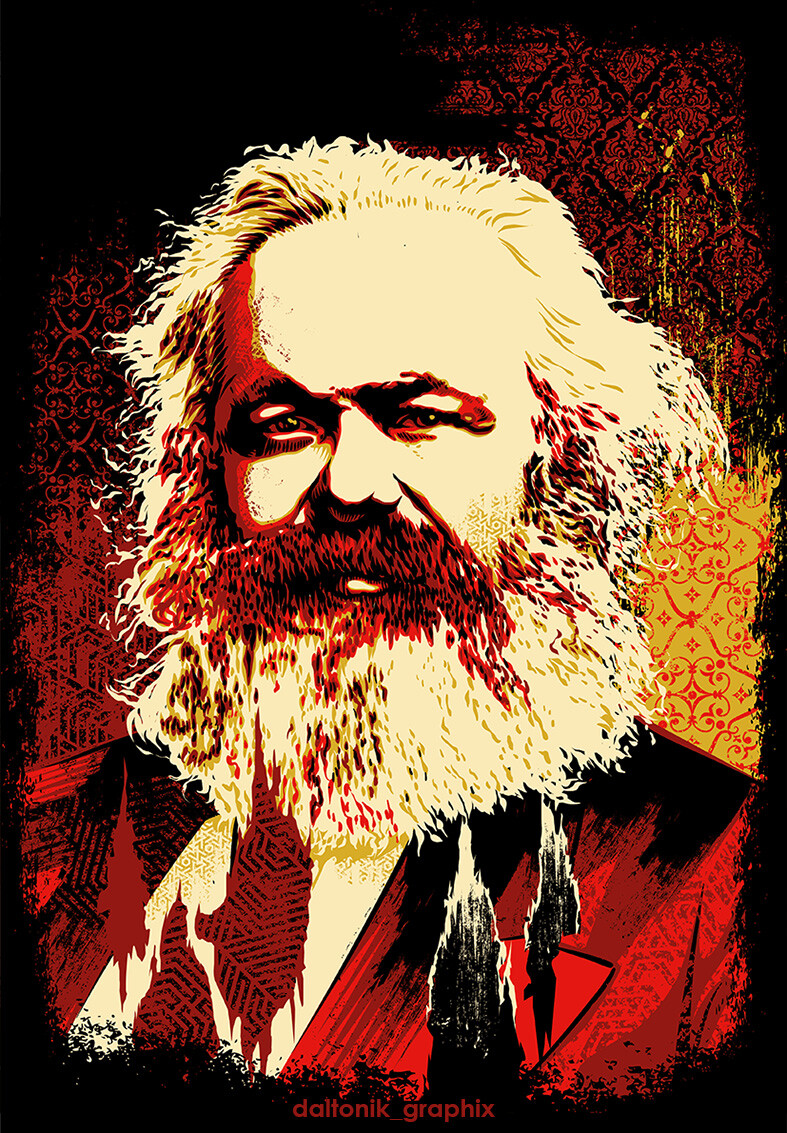
Thumbnail is Marx’s manuscript for The German Ideology. Summary below is a compilation of my notes I wrote when reading Materialism and the Dialectical Method by Maurice Cornforth, along with general knowledge from reading various Marxist authors.

Often times, Marxists use the term “material conditions,” and “dialectics.” What does this mean? Why do Marxists care so much about material conditions? The answer is that Marxists seek materialist explanations for observed processes as opposed to idealist, and do so dialectically, as opposed to metaphysically. In other words, Marxists apply dialectical analysis to find materialist explanations for phenomena. Dialectical materialism is the world outlook of the proletariat as a class, and serves as the most vital ideological tool for overthrowing capitalism.

In order to understand dialectical materialism, we need to understand its component parts, materialism and dialectics, and their historical predecessors, idealism and metaphysics.


Idealism

Idealism is, in short, to put ideas prior to matter. Idealism has been used by feudal lords to justify their position above the serfs, forming the ideological basis for feudalism. The 3 major assertions of idealism are as follows:

  1. Idealism asserts that the material world is dependent on the spiritual

  2. Idealism asserts that spirit, or mind, or idea, can and does exist in separation from matter. (The most extreme form of this assertion is subjective idealism, which asserts that matter does not exist at all but is pure illusion.)

  3. Idealism asserts that there exists a realm of the mysterious and unknowable, “above,” or “beyond,” or “behind” what can be ascertained and known by perception, experience, and science.


Early Materialism

Common idealist arguments are appealing to a supernatural “human nature,” or “good vs. evil” explanations for processes. Materialism arose over time, as people grew to understand the world more deeply, and especially as a tool to overthrow the feudal aristocracy that justified its existence via the church. In other words, materialism rose to help the bourgeoisie. The 3 basic teachings of materialism as counterposed to idealism are:

  1. Materialism teaches that the world is by its very nature material, that everything which exists comes into being on the basis of material causes, arises and develops in accordance with the laws of motion of matter.

  2. Materialism teaches that matter is objective reality existing outside and independent of the mind; and that far from the mental existing in separation from the material, everything mental or spiritual is a product of material processes.

  3. Materialism teaches that the world and its laws are fully knowable, and that while much may not be known there is nothing which is by nature unknowable.


Shortcomings of Metaphysical Materialism

The type of materialism that overthrew the feudal lords was still underdeveloped, and metaphysical. The bourgeoisie needed an explanation for why the feudal lords were illegitimate, but still needed to support their own static, permanent rule. This was called mechanistic materialism, for the bourgeois scientists saw the world as a grand machine repeating simple motions forever. Mechanistic materialism, therefore, makes certain dogmatic assumptions:

  1. That the world consists of permanent and stable things or particles, with definite, fixed properties;

  2. That the particles of matter are by nature inert and no change ever happens except by the action of some external cause;

  3. That all motion, all change can be reduced to the mechanical interaction of the separate particles of matter;

  4. That each particle has its own fixed nature independent of everything else, and that the relationships between separate things are merely external relationships.


Moving from Metaphysics to Dialectics

This, of course, has proven false. History did not end with the dissolution of the USSR, despite what modern mechanistic materialists claim. Mechanistic materialism relies on metaphysics, seeing everything as a static abstraction, devoid of its context. It has no explanation for how new qualities emerge, and ultimately fell to idealism to explain the “first mover,” ie “God.” Dialectical materialism holds instead:

  1. The world is not a complex of things but of processes;

  2. That matter is inseperable from motion;

  3. That the motion of matter comprehends an infinite diversity of forms which arise one from another and pass into one another;

  4. That things exist not as separate individual units but in essential relation and interconnection.


Dialectical Materialism

This became remarkable for the proletariat, as it sees nothing as static, and therefore marks the eventual downfall of the bourgeoisie. Putting it all together, we get the following:

  1. Dialectical materialism understands the world, not as a complex of ready-made things, but as a complex of processes, in which all things go through an uninterrupted change of coming into being and passing away.

In other words, when analyzing events and contextualizing them, we must always viee them as a struggle between the rising and the falling, the old and the new, for example the concentration of capital in markets and the rise in socialize labor.

  1. Dialectical materialism considers that matter is always in motion, that motion is the mode of existence of matter, so that there can no more be matter without motion than motion without matter. Motion does not have to be impressed upon matter by some outside force, but above all it is necessary to look for the inner impulses of development, the self-motion, inherent in all processes.

In other words, all movement is a result of contradiction. Your foot presses on the Earth, and the Earth presses back on you.

  1. Dialectical materialism understands the motion of matter as comprehending all changes and processes in the universe, from mere changes of place right to thinking. It recognizes, therefore, the infinite diversity of the forms of motion of matter from the simple to the complex, from the lower to the higher.

In other words, dialectical materialism recognizes that development exists as a change of quantity into quality. Addition or subtraction gives way to qualitative change. A balloon is filled with air, until at a given point it pops due to pressure buildup. Water goes from liquid to gas at its boiling point, and back into liquid when cooling down to said point.

  1. Dialectical materialism considers that, in the manifold processes taking place in the universe, things come into being, change and pass out of being, not as separate individual units, but in essential relation and interconnection, so that they cannot be understood each separately and by itself but only in their relation and interconnection.

In other words, everything is connected, and must be analyzed in context to truly understand it. A worker isn’t just an individual, but instead part of a social class of many workers. Wages are not something invented brand new every time, but instead are set by societal standards, controlled by the ruling capitalist class.


Conclusion

Karl Marx created dialectical materialism by turning Hegel’s idealist dialectic into a materialist one. Then, he applied it to the progression of society, creating historical materialism. By analyzing social structures and progress as a dialectical process based in materialism, we can learn from history and analyze where it’s going. This is scientific socialism in progress. Human thought is shaped by our social experience, forming class consciousness and ideology. How we produce and distribute determines our ways of thinking.

Socialism and communism also have their own contradictions as well, and just because we progress on to socialism does not mean we cannot fall back to capitalism. The dialectical materialist world outlook understands that nothing is static, and there is always new contradiction and new movement from that.

If you keep these in mind, you can do your own dialectical materialist analysis. Always seek explanations based on the material, not the ideal, and always do so by contextualizing the processes, analyzing their contradictions, the unity and struggle of opposing tendencies. Quantitative changes lead to qualitative development, and progresses as a result of the conflict or struggle of opposite tendencies. There’s much more to dialectical materialism, but this should help serve as a simple overview!


Thumbnail is Marx’s manuscript for The German Ideology. Summary below is a compilation of my notes I wrote when reading Materialism and the Dialectical Method by Maurice Cornforth, along with general knowledge from reading various Marxist authors.

Often times, Marxists use the term “material conditions,” and “dialectics.” What does this mean? Why do Marxists care so much about material conditions? The answer is that Marxists seek materialist explanations for observed processes as opposed to idealist, and do so dialectically, as opposed to metaphysically. In other words, Marxists apply dialectical analysis to find materialist explanations for phenomena. Dialectical materialism is the world outlook of the proletariat as a class, and serves as the most vital ideological tool for overthrowing capitalism.

In order to understand dialectical materialism, we need to understand its component parts, materialism and dialectics, and their historical predecessors, idealism and metaphysics.


Idealism

Idealism is, in short, to put ideas prior to matter. Idealism has been used by feudal lords to justify their position above the serfs, forming the ideological basis for feudalism. The 3 major assertions of idealism are as follows:

  1. Idealism asserts that the material world is dependent on the spiritual

  2. Idealism asserts that spirit, or mind, or idea, can and does exist in separation from matter. (The most extreme form of this assertion is subjective idealism, which asserts that matter does not exist at all but is pure illusion.)

  3. Idealism asserts that there exists a realm of the mysterious and unknowable, “above,” or “beyond,” or “behind” what can be ascertained and known by perception, experience, and science.


Early Materialism

Common idealist arguments are appealing to a supernatural “human nature,” or “good vs. evil” explanations for processes. Materialism arose over time, as people grew to understand the world more deeply, and especially as a tool to overthrow the feudal aristocracy that justified its existence via the church. In other words, materialism rose to help the bourgeoisie. The 3 basic teachings of materialism as counterposed to idealism are:

  1. Materialism teaches that the world is by its very nature material, that everything which exists comes into being on the basis of material causes, arises and develops in accordance with the laws of motion of matter.

  2. Materialism teaches that matter is objective reality existing outside and independent of the mind; and that far from the mental existing in separation from the material, everything mental or spiritual is a product of material processes.

  3. Materialism teaches that the world and its laws are fully knowable, and that while much may not be known there is nothing which is by nature unknowable.


Shortcomings of Metaphysical Materialism

The type of materialism that overthrew the feudal lords was still underdeveloped, and metaphysical. The bourgeoisie needed an explanation for why the feudal lords were illegitimate, but still needed to support their own static, permanent rule. This was called mechanistic materialism, for the bourgeois scientists saw the world as a grand machine repeating simple motions forever. Mechanistic materialism, therefore, makes certain dogmatic assumptions:

  1. That the world consists of permanent and stable things or particles, with definite, fixed properties;

  2. That the particles of matter are by nature inert and no change ever happens except by the action of some external cause;

  3. That all motion, all change can be reduced to the mechanical interaction of the separate particles of matter;

  4. That each particle has its own fixed nature independent of everything else, and that the relationships between separate things are merely external relationships.


Moving from Metaphysics to Dialectics

This, of course, has proven false. History did not end with the dissolution of the USSR, despite what modern mechanistic materialists claim. Mechanistic materialism relies on metaphysics, seeing everything as a static abstraction, devoid of its context. It has no explanation for how new qualities emerge, and ultimately fell to idealism to explain the “first mover,” ie “God.” Dialectical materialism holds instead:

  1. The world is not a complex of things but of processes;

  2. That matter is inseperable from motion;

  3. That the motion of matter comprehends an infinite diversity of forms which arise one from another and pass into one another;

  4. That things exist not as separate individual units but in essential relation and interconnection.


Dialectical Materialism

This became remarkable for the proletariat, as it sees nothing as static, and therefore marks the eventual downfall of the bourgeoisie. Putting it all together, we get the following:

  1. Dialectical materialism understands the world, not as a complex of ready-made things, but as a complex of processes, in which all things go through an uninterrupted change of coming into being and passing away.

In other words, when analyzing events and contextualizing them, we must always viee them as a struggle between the rising and the falling, the old and the new, for example the concentration of capital in markets and the rise in socialize labor.

  1. Dialectical materialism considers that matter is always in motion, that motion is the mode of existence of matter, so that there can no more be matter without motion than motion without matter. Motion does not have to be impressed upon matter by some outside force, but above all it is necessary to look for the inner impulses of development, the self-motion, inherent in all processes.

In other words, all movement is a result of contradiction. Your foot presses on the Earth, and the Earth presses back on you.

  1. Dialectical materialism understands the motion of matter as comprehending all changes and processes in the universe, from mere changes of place right to thinking. It recognizes, therefore, the infinite diversity of the forms of motion of matter from the simple to the complex, from the lower to the higher.

In other words, dialectical materialism recognizes that development exists as a change of quantity into quality. Addition or subtraction gives way to qualitative change. A balloon is filled with air, until at a given point it pops due to pressure buildup. Water goes from liquid to gas at its boiling point, and back into liquid when cooling down to said point.

  1. Dialectical materialism considers that, in the manifold processes taking place in the universe, things come into being, change and pass out of being, not as separate individual units, but in essential relation and interconnection, so that they cannot be understood each separately and by itself but only in their relation and interconnection.

In other words, everything is connected, and must be analyzed in context to truly understand it. A worker isn’t just an individual, but instead part of a social class of many workers. Wages are not something invented brand new every time, but instead are set by societal standards, controlled by the ruling capitalist class.


Conclusion

Karl Marx created dialectical materialism by turning Hegel’s idealist dialectic into a materialist one. Then, he applied it to the progression of society, creating historical materialism. By analyzing social structures and progress as a dialectical process based in materialism, we can learn from history and analyze where it’s going. This is scientific socialism in progress. Human thought is shaped by our social experience, forming class consciousness and ideology. How we produce and distribute determines our ways of thinking.

Socialism and communism also have their own contradictions as well, and just because we progress on to socialism does not mean we cannot fall back to capitalism. The dialectical materialist world outlook understands that nothing is static, and there is always new contradiction and new movement from that.

If you keep these in mind, you can do your own dialectical materialist analysis. Always seek explanations based on the material, not the ideal, and always do so by contextualizing the processes, analyzing their contradictions, the unity and struggle of opposing tendencies. Quantitative changes lead to qualitative development, and progresses as a result of the conflict or struggle of opposite tendencies. There’s much more to dialectical materialism, but this should help serve as a simple overview!

0

Recommendations for balancing HA Corvette Job

preview

I’m giving lancer a shot at my table and eying the HA Corvette Job as a one shot to demo the system, my only concern is encounter balancing, given I’ve never played before. I’m likely to be playing with 4 (though it’s a one shot so odds are good someone will try and sneak in/out on the day of) and I’d like to keep it at LL0 for first timers to keep things simple, but that feels low on the tier one (LL0-4) recommendation of the mission, especially for new players.

Any insight, or general advice for a first time lancer gm is appreciated!

The one shot in question