0

Looking for Volunteer Moderators for !economics!

preview

Hello !economics community!

The current moderation team for !economics has been inactive for a while, so the admin team has stepped in temporarily to help keep the queue clear and find new volunteer moderators from the community.

Interested in Moderating !economics?

If you enjoy this community and would like to help keep it welcoming, spam-free, and well-maintained:

  • Reply in the comments below or send a Direct Message to @ieh.
  • Let us know if you have any prior moderation experience (not required!) and what you’d like to see for the community.

(Note: If any of the previous moderators return in the future, they are always welcome to reach out to the admin team as well!)

Requirements and notes:

  • Reports do not get sent for moderators without a lemmy.world account, so if you have an account on a different instance, you’d need to create one here and check it daily for reports (takes a few seconds at most)
  • Most communities get reports infrequently, often once per week or less. Although sometimes more. Checking daily is important
  • Moderate fairly according to the community rules. Everyone has to make subjective calls, but try to be objective
  • Enforce the Lemmy.World ToS

If you have any questions, would like to volunteer, please reply below!

Hello !economics community!

The current moderation team for !economics has been inactive for a while, so the admin team has stepped in temporarily to help keep the queue clear and find new volunteer moderators from the community.

Interested in Moderating !economics?

If you enjoy this community and would like to help keep it welcoming, spam-free, and well-maintained:

  • Reply in the comments below or send a Direct Message to @ieh.
  • Let us know if you have any prior moderation experience (not required!) and what you’d like to see for the community.

(Note: If any of the previous moderators return in the future, they are always welcome to reach out to the admin team as well!)

Requirements and notes:

  • Reports do not get sent for moderators without a lemmy.world account, so if you have an account on a different instance, you’d need to create one here and check it daily for reports (takes a few seconds at most)
  • Most communities get reports infrequently, often once per week or less. Although sometimes more. Checking daily is important
  • Moderate fairly according to the community rules. Everyone has to make subjective calls, but try to be objective
  • Enforce the Lemmy.World ToS

If you have any questions, would like to volunteer, please reply below!

0

US inflation rises further in October

preview

US inflation increased further in October, reinforcing expectations that the Federal Reserve could continue raising interest rates into early 2027.

The Personal Consumption Expenditures Price Index rose 0.3% last month after ‌an unrevised 0.5% gain in September, the Commerce Department’s Bureau of Economic Analysis said on Wednesday. Economists polled by Reuters had forecast PCE inflation climbing 0.3%. In the 12 months through October, PCE inflation increased 3.8% after advancing 3.6% in September.

0

Tech sell-off resumes as euphoria from Jensen Huang’s Nvidia return subsides

the Guardian Tech sell-off resumes as euphoria from Jensen Huang’s Nvidia return subsides www.theguardian.com
preview

Sell-off signals investors are bracing for further volatility in key AI sector driving economic growth worldwide

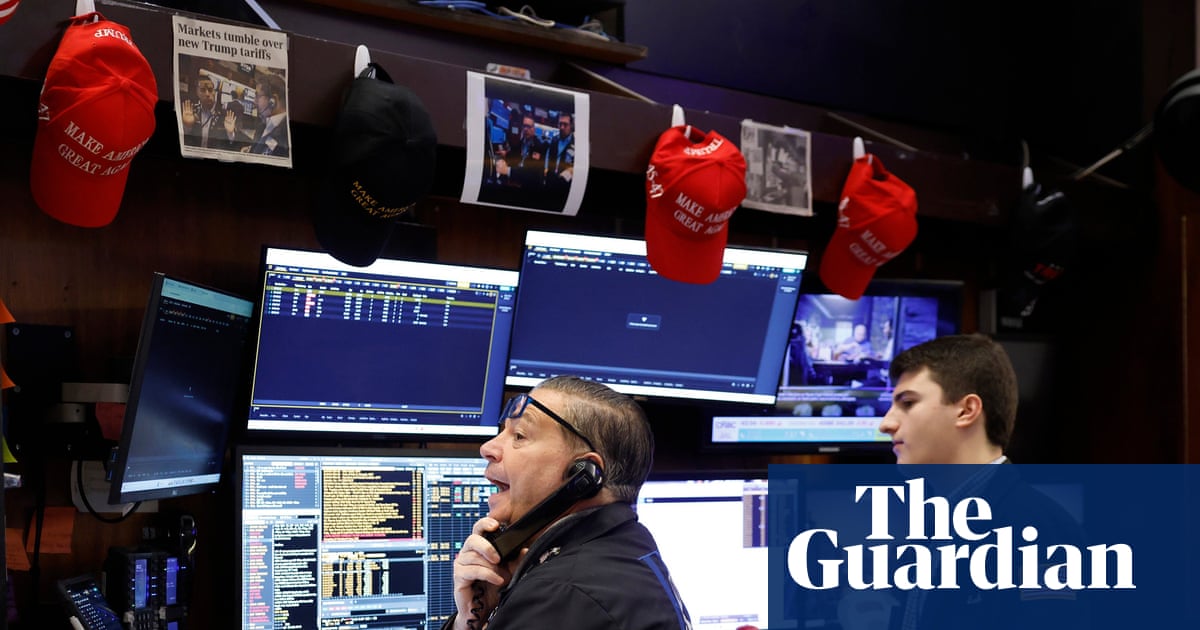
Technology shares led a market retreat Tuesday as caution returned after Jensen Huang’s extraordinary return to Nvidia days after he was forced to resign, with investors bracing for further volatility in a key sector driving economic growth worldwide.

A day after Huang’s reinstatement as CEO drove Nvidia shares up more than 30%, adding more than $900bn to the firm’s market value, the euphoria dissipated as its stock lost almost 6% by Tuesday’s close.

Anthropic also slumped, giving up about 6.5% to $81.90, below its $83 price for last week’s IPO.

0

Fed's Williams says inflation still too high, signals more rate hikes possible

preview

New York Federal Reserve President John Williams said on Monday that persistently high ​inflation continues to point the US central bank toward tighter monetary policy, while stressing that the pace of future interest-rate increases will depend ‌on incoming economic data.

“We must take actions over time that will ensure that we get inflation back to our 2% goal in a timely manner and on a sustained basis,” Williams said in remarks at an event held by the University of Mount Saint Vincent in New York. “There is still work to do to get that done.”

Williams said inflation is “too high.” He noted ​that he will continue to assess incoming data to decide what action the central bank should take at its December 8-9 policy meeting.

0

NASDAQ erases all 2026 gains as AI sell-off dampens Anthropic’s second day of trading

the Guardian Nasdaq erases all 2026 gains as AI sell-off dampens Anthropic’s second day of trading www.theguardian.com
preview

The Nasdaq lost trillions in value, with the AI startup’s IPO failing to buoy it as investors question huge sums being poured into AI buildout

The Nasdaq lost trillions in value, with the AI startup’s IPO failing to buoy it as investors question huge sums being poured into AI buildout

0

Indeed & Glassdoor’s 2027 U.S. Hiring and Worklife Trends Report

Indeed Hiring Lab Indeed & Glassdoor’s 2027 U.S. Hiring and Worklife Trends Report - Indeed Hiring Lab hiringlab.indeed.com
preview

cross-posted from: feddit.online/…/indeed-glassdoors-2027-u-s-hiring…

Methodology.

6 Trends shaping 2027:

  • An inflection year. Pent-up frustration means a hiring rebound could quickly turn into a turnover wave. The unhappy employee who stayed put in 2026 may be the first to leave in 2027.

  • Local markets are moving first. Job postings sit 12% to 15% above pre-pandemic levels in Dallas, Austin and Houston, but roughly 30% below in Seattle and San Francisco. Competition for talent will heat up locally first.

  • Gen Z is growing up, and moving into management. Gen Z makes up nearly a quarter of the labor force and will likely outnumber Baby Boomers in management next year. They’re optimistic but restless, and while 58% want a mentor, only 25% have one.

  • AI isn’t taking jobs, but is creating skeptics. AI’s impact so far is broad but shallow as adoption steadily increases and more jobs – particularly outside of tech – are touched by the technology. But workers are skeptical: Only 45% of AI mentions in Glassdoor reviews are positive, down from 81% in 2019.

  • The bottom rung of the career ladder is moving higher. Senior-level postings are up 19% since January 2025, while entry-level postings have fallen. More than half of 2025 college graduates were underemployed a year after graduating.

  • Costs are up, satisfaction is down. Advertised wages are growing 2.5% a year while prices rise 3.7%, and employers’ health insurance costs are up 25% in four years. Worker ratings of pay and benefits are the lowest since 2017.

0

Fed Governor Waller sees December hike likely, opens door to possible half-point increase

CNBC Fed Governor Waller sees December hike likely, opens door to possible half-point increase www.cnbc.com
preview

Federal Reserve Governor Christopher Waller said Tuesday the central bank needs to follow through on expectations for additional interest rate hikes or risk its credibility, even suggesting that a larger-than-usual half-percentage-point increase could be warranted in December.

Speaking in London, the policymaker said he “is leaning toward” a rate increase in December even if the October inflation data comes in softer than expected — and would support “more robust action” if readings come in higher than forecast.

0

Why are there no jobs programs anymore?

preview

Throughout history there are lots of examples where the government has guaranteed a job for anyone willing to work, who wasn’t able to get employment through the normal market based channels.

That disappeared and is never even considered as an option, why not?

In this article there are about 1M NEETs in the UK, which costs about £125bn to maintain.

The market hasn’t found a way to provide profitable employment for them, but wouldn’t it still be better for a government to provide jobs with a 1:1 or 0.8:1 return to costs ratio, compared to leaving them unemployed? Or jobs with intangible benefits like social care or cleaning streets etc etc.

It seems like there is a big benefit from just creating and offering jobs to anyone that wants to work, why is it never considered?

0

The US economy added 165,000 jobs in October and the unemployment rate fell

preview

Job growth surpassed expectations in October, new data showed Friday, with the US economy adding 165,000 jobs.

The unemployment rate fell to 4.1% from 4.2%, according to Bureau of Labor Statistics data.

Job growth in the previous two months was stronger than initially reported, with a total of 84,000 jobs added: August was revised upwards by 53,000 to 186,000; and September gains totaled 60,000, up from 29,000.

0

Nasdaq sees worst day in 18 months as investors bet on AI slowdown after Democrats’ election triumph

the Guardian Nasdaq sees worst day in 19 months as investors bet on AI slowdown after Democrats’ election triumph www.theguardian.com
preview

The Nasdaq share index had its worst day in 18 months after slumping 5.5% on Thursday amid growing signs that the artificial intelligence industry will face tougher regulation because of the midterm election results.

As Wall Street sustained widespread losses, the Nasdaq composite tumbled into “correction territory” – more than 10% below its recent record high – with more than $2tn shaved off its value by the end of trading Thursday. The tech-heavy index had its biggest one-day fall since Donald Trump announced his “liberation day” tariffs on US trading partners in April 2025.

Worries over massive AI spending gripped the New York stock market and rippled out to other bourses worldwide as investors anticipated tougher scrutiny of datacentre expansion plans.

0

Wall Street ends higher after Democrats win Congress; data center stocks tumble

preview

Wall Street closed sharply higher on Wednesday as Democrats’ sweeping midterm election victory eased political uncertainty and boosted risk appetite, though data center shares fell on fears of tighter AI regulation.

Democrats seized control of both the Senate and House of Representatives, scoring wins ‌in Republican strongholds for the first time in generations in a voter backlash against Donald Trump.

0

Welcome to the Mordor Economy

Instagram Age of Collapse on Instagram: "Welcome to the Mordor Economy, where ever more energy, extraction and environmental destruction are required just to keep the economic machine running. ⠀ Inspired by the work of systems thinker @natehagens, this brilliant comic by @bruce_mahalski draws a disturbing parallel between our growth-dependent economy and the industrial wasteland of Mordor in The Lord of the Rings. ⠀ Just as Sauron's armies depended on exploiting Middle-earth's resources, and Saruman cut down the forests of Isengard to fuel his war machine, our economy increasingly consumes the natural world to sustain its own expansion. ⠀ Hagens explains this through Energy Return on Investment (EROI), the amount of energy obtained relative to the energy required to produce it. ⠀ Historically, abundant fossil fuels delivered enormous energy surpluses. But as easily accessible resources are depleted, extracting, processing and delivering energy can require increasingly large investments of energy and materials. ⠀ As EROI declines, more of society's energy must be reinvested simply to obtain the next supply, leaving less available for hospitals, schools, infrastructure and improving human wellbeing. ⠀ Hagens warns that this creates a vicious cycle: an economy increasingly devoted to powering itself, while mounting ecological damage demands still more resources for remediation. ⠀ GDP may continue growing even as the net benefits to society diminish. More economic activity does not necessarily mean better lives. ⠀ Meanwhile, the living world pays the price through habitat destruction, pollution, resource depletion and climate breakdown. ⠀ Perhaps it's time to stop feeding the machine and form our own fellowship, building an economy that serves life rather than destroying it. ⠀ The goal must be a good life for everyone within planetary boundaries, not endless growth on a finite planet. ⠀ Artwork: @brucemahalski Inspired by: @natehagens" www.instagram.com
preview

Welcome to the Mordor Economy, where ever more energy, extraction and environmental destruction are required just to keep the economic machine running.
⠀
Inspired by the work of systems thinker @natehagens, this brilliant comic by @bruce_mahalski draws a disturbing parallel between our growth-dependent economy and the industrial wasteland of Mordor in The Lord of the Rings.
⠀
Just as Sauron’s armies depended on exploiting Middle-earth’s resources, and Saruman cut down the forests of Isengard to fuel his war machine, our economy increasingly consumes the natural world to sustain its own expansion.
⠀
Hagens explains this through Energy Return on Investment (EROI), the amount of energy obtained relative to the energy required to produce it.
⠀
Historically, abundant fossil fuels delivered enormous energy surpluses. But as easily accessible resources are depleted, extracting, processing and delivering energy can require increasingly large investments of energy and materials.
⠀
As EROI declines, more of society’s energy must be reinvested simply to obtain the next supply, leaving less available for hospitals, schools, infrastructure and improving human wellbeing.
⠀
Hagens warns that this creates a vicious cycle: an economy increasingly devoted to powering itself, while mounting ecological damage demands still more resources for remediation.
⠀
GDP may continue growing even as the net benefits to society diminish. More economic activity does not necessarily mean better lives.
⠀
Meanwhile, the living world pays the price through habitat destruction, pollution, resource depletion and climate breakdown.
⠀
Perhaps it’s time to stop feeding the machine and form our own fellowship, building an economy that serves life rather than destroying it.
⠀
The goal must be a good life for everyone within planetary boundaries, not endless growth on a finite planet.
⠀
Artwork: @brucemahalski
Inspired by: @natehagens

0

It's a 'socialist' bank — and North Dakota Republicans love it

CNBC It's a 'socialist' bank — and North Dakota Republicans love it www.cnbc.com
preview

Democratic socialist candidates have held up North Dakota’s state-owned bank as a model to emulate.

Democratic socialist candidates have held up North Dakota’s state-owned bank as a model to emulate.

0

Anti-Fascist Economics with Isabella Weber

play · youtube.com
YouTube Anti-Fascist Economics with Isabella Weber www.youtube.com
preview

Many things contribute to the rise of fascism, but often overlooked is the role of economics. Today I’m joined by economist and professor Isabella Weber to discuss how we can rebuild our democracy, starting with an overtly anti-fascist economic system.

Many things contribute to the rise of fascism, but often overlooked is the role of economics. Today I’m joined by economist and professor Isabella Weber to discuss how we can rebuild our democracy, starting with an overtly anti-fascist economic system.

0

How Canada is Decoupling From the US

How Canada is Decoupling From the US www.apricitas.io
preview

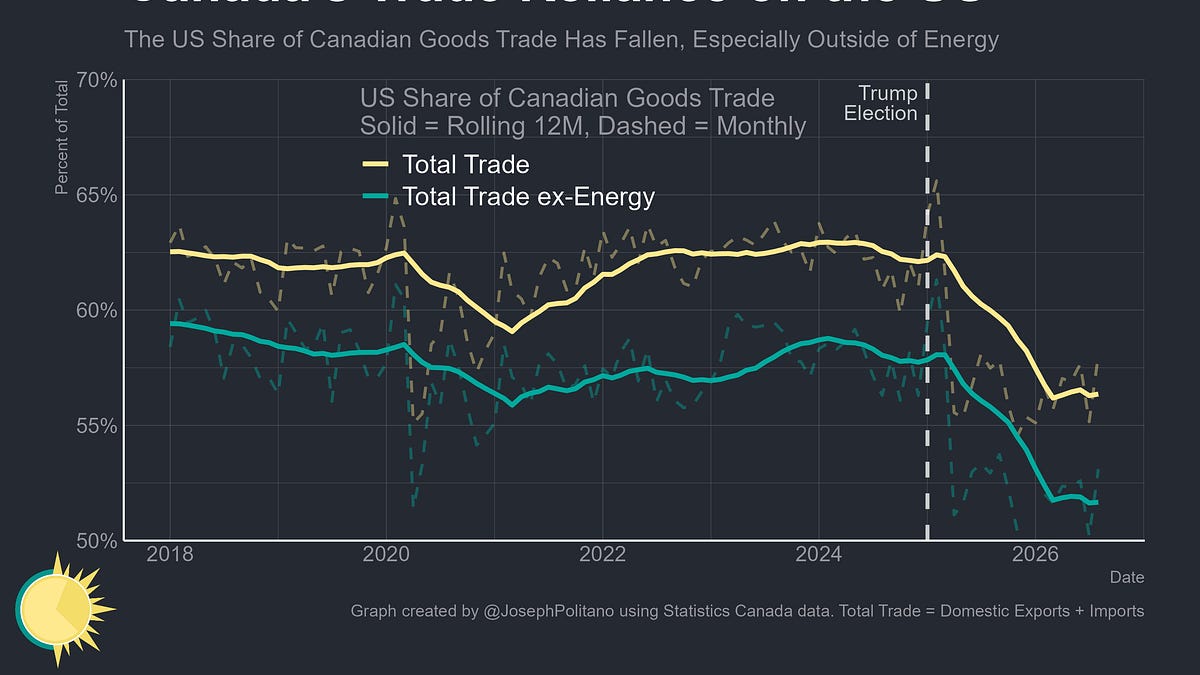
In Response to Trump’s Tariffs, Canada Has Successfully Boosted non-US Trade to Record Highs—But it Remains Deeply Tied to America

In Response to Trump’s Tariffs, Canada Has Successfully Boosted non-US Trade to Record Highs—But it Remains Deeply Tied to America

0

Wall Street is Coming for Your Burger

preview

They came for your department stores, your newspapers, your hospitals. Now—hold onto your sesame seed bun—they’re coming for your burger. The drive for fatter profits means higher prices, lower quality, tougher conditions for workers, and sometimes the blowup of the business itself.

They came for your department stores, your newspapers, your hospitals. Now—hold onto your sesame seed bun—they’re coming for your burger. The drive for fatter profits means higher prices, lower quality, tougher conditions for workers, and sometimes the blowup of the business itself.

0

No signs of AI payoff outside the tech sector

No Signs of AI Payoff Outside the Tech Sector | The Daily Spark www.apollo.com
preview

Despite massive investments and widespread hype around artificial intelligence, the technology has delivered zero financial payoff to corporate America outside of tech.

Revenue per worker is rising for the Mag 7 but is flat for the S&P 493. Profit margins are rising for the Mag 7 but are flat for the S&P 493.

And there are still no signs of AI boosting productivity growth. With no impact on the bottom line, mainstream corporate America is pulling back and starting to view token spending not as a source of growth but as a cost center that weighs on margins.

0

Profits are privatized; losses are socialized.

preview

Profits are privatized; losses are socialized.

https://www.youtube.com/watch?v=VbowBTJWKBo

@economics

#economics #business #government #politics #PSA

Profits are privatized; losses are socialized.

https://www.youtube.com/watch?v=VbowBTJWKBo

@economics

#economics #business #government #politics #PSA

0

Is this the beginning of the end for Neoliberalism?

play · youtube.com
YouTube Is this the beginning of the end for neoliberalism? youtu.be
preview

Is France showing us that neoliberalism is beginning to fail? As protests against austerity grow, financial markets are demanding spending cuts while ordinary people are demanding better public services and greater economic security. I argue that this conflict could determine the future of European politics and economics.

Is France showing us that neoliberalism is beginning to fail? As protests against austerity grow, financial markets are demanding spending cuts while ordinary people are demanding better public services and greater economic security. I argue that this conflict could determine the future of European politics and economics.

0

Consumer apprehension grows as US retailers adopt AI-assisted pricing tools

preview

U.S. consumers aren’t just frustrated with high prices. They’re angry and confused about the increasingly high-tech ways that restaurant chains and major retailers are setting those prices.

Digital price tags are rapidly replacing paper ones in grocery aisles. Artificial intelligence tools help businesses decide what to charge by predicting how customers might respond. Terms like “dynamic pricing” and “surveillance pricing” are stirring anxiety on social media, where users wonder if different people are getting different prices for the same product.

Americans have grown accustomed to changing prices when booking flights, hotel rooms and rides, but the prospect of everyday spending shaped by algorithms they don’t understand and personal data they may not realize they’re sharing has touched a nerve.

0

What is Neoliberalism and why does it still dominate our econimies

play · youtube.com
YouTube What is neoliberalism and why does it still dominate our economies? youtu.be
preview

Neoliberalism has dominated economic and political thinking for more than 45 years. But what does it actually mean, who benefits from it, and why have successive governments accepted its ideas?

Neoliberalism has dominated economic and political thinking for more than 45 years. But what does it actually mean, who benefits from it, and why have successive governments accepted its ideas?

0

Wholesale inflation jumped last month by most in four years as gas prices soared

The Independent Wholesale inflation jumped last month by most in four years as gas prices soared www.independent.co.uk
preview

Wholesale inflation rose more quickly than expected last month on a big jump in fuel costs, a sign that stubbornly rising prices remain an economic challenge for consumers and a political problem for Republicans in the midterm elections

Wholesale inflation rose more quickly than expected last month on a big jump in fuel costs, a sign that stubbornly rising prices remain an economic challenge for consumers and a political problem for Republicans in the midterm elections.

The Labor Department’s producer price index — which captures inflation before it reaches consumers — soared 6.3% in September from a year ago, up from 5.6% in August and the biggest increase since December 2022, the government said Thursday.

On a monthly basis, wholesale prices increased 1.3% from August to September, the largest since March 2022, after a 0.5% increase the previous month.

0

Tech market sell-off deepens amid fears over US inflation and AI debt

the Guardian Tech market sell-off deepens amid fears over US inflation and AI debt www.theguardian.com
preview

Chip makers and tech investors such as Samsung and SoftBank plunge as potential interest rate hikes spook markets

An accelerating sell-off of AI-linked shares has hit global markets, as fears over rising inflation and future interest rate hikes spooked traders already wary of the heavily indebted sector.

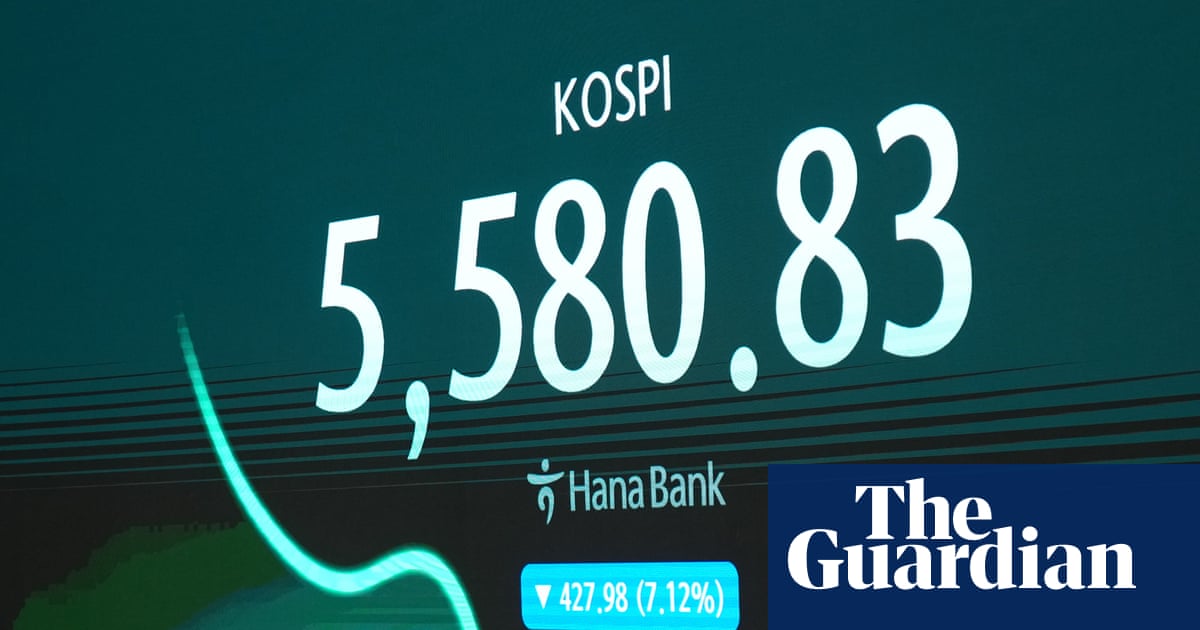
South Korea’s benchmark Kospi 200 index, which is heavily skewed towards the companies that make memory chips, fell more than 8% overnight to a six-month closing low, triggering circuit breakers that brought trading to a halt at various points.

Some of those semiconductor stocks, such as SK Hynix and Samsung Electronics, plunged nearly 11% and 9.5%, respectively. The index closed at a six-month low, down 8.1%.

0

Threat of AI share crash puts world financial stability at risk, says IMF

the Guardian Threat of AI share crash puts world financial stability at risk, says IMF www.theguardian.com
preview

High valuations and debt put sector in danger, while fund also warns on government borrowing and cyber-attacks

The threat of an AI share price crash rippling out across global markets is putting world financial stability at risk, the International Monetary fund has warned.

In its twice-yearly Global Financial Stability Report, the IMF highlighted the sky-high valuations for AI companies along with their increasing debt pile as one reason that risks in the system are “elevated”.

“The consequences of an AI correction could be global,” it warned. Aside from the US, Asian markets would be most exposed, and the UK and euro area potentially more insulated – though investors with US holdings would be hit.

0

After a Decade of Growth, Global Call Center Employment Is Shrinking

Revelio Labs Call Center Employment Is Shrinking for the First Time www.reveliolabs.com
preview

For more than a decade, call centers were one of the most reliable ways into formal office work in middle- and lower-income countries. That route is now shrinking. Revelio Labs’ global headcount data shows call center employment is 5.3% below its December 2023 peak. Of the 70 quarter-end readings since 2009, headcount fell from a year earlier only eight times, and all eight have come in the last eight quarters.

For more than a decade, call centers were one of the most reliable ways into formal office work in middle- and lower-income countries. That route is now shrinking. Revelio Labs’ global headcount data shows call center employment is 5.3% below its December 2023 peak. Of the 70 quarter-end readings since 2009, headcount fell from a year earlier only eight times, and all eight have come in the last eight quarters.

0

Trump's executive order on dyed diesel will offer little relief, farmers and truckers say

preview

Farmers, truckers and economists say a move to cut taxes on diesel will provide little relief from record-high fuel prices that have soared since the U.S. attacked Iran months ago.

Industry groups said they appreciate President Donald Trump’s executive order expanding the use of a diesel now reserved for off-road work, but farmers already have access to the fuel and many have already wrapped up harvest. Truckers will struggle to navigate differing state rules.

“In the context of diesel prices that are over two dollars more than they were last year, it just doesn’t come close to closing that wound,” said Matt Perdue, president of the North Dakota Farmers Union.

0

August Employment Situation Summary | BLS

preview

Another month of poor job growth; headline number is +29,000. But again significant downward revisions to prior months:

The change in total nonfarm payroll employment for July was revised down by 31,000, from +21,000 to -10,000, and the change for August was revised down by 29,000, from +162,000 to +133,000. With these revisions, employment in July and August combined is 60,000 lower than previously reported.

0

US adds disappointing 29,000 jobs and unemployment ticks up to 4.2% in September

preview

U.S. employers added a disappointing 29,000 jobs and the unemployment rate ticked up last month, the government reported Friday, a month before voters go to the polls in pivotal midterm elections at a time of discontent over the high cost of living and the state of the economy.

Hiring dropped from a revised 133,000 in August, the Labor Department reported. The unemployment rate rose to a still-low 4.2% from 4.1% in August,

Economists had expected September payrolls to come in at 90,000.

0

Why We’re Still Living in Milton Friedman’s Neoliberal World

play · youtube.com
YouTube Why We’re Still Living in Milton Friedman’s Neoliberal World www.youtube.com
preview

More than 20 years after his death, we’re still living in the neoliberal world Milton Friedman made.

The arc of neoliberalism begins in 1947, gathers steam in the 1970s, and reaches its zenith in the 1990s before breaking into a million pieces and forever out of the control of its progenitors. The story of Milton Friedman rises and falls along with it, and it’s a complicated one of ego, ambition and academic notoriety; a confluence of factors and foibles that came to define the modern economic age.

This is the story of Milton Friedman, one of the principal architects of the modern world.

Read the full article here:

https://www.currentaffairs.org/news/were-living-in-the-world-that-milton-friedman-made

0

US Federal Reserve raises interest rates for the first time since 2023

the Guardian US Federal Reserve raises interest rates for the first time since 2023 www.theguardian.com
preview

The US Federal Reserve voted to raise interest rates on Wednesday for the first time since 2023 as the central bank continues to fight to tamp down inflation.

The Fed’s open market committee voted unanimously to raise its benchmark interest rate by a quarter-percentage point to a range of 3.75% to 4%. This is the first time the Fed has raised rates since July 2023 and potentially sets Kevin Warsh, the current Fed chair, on a collision course with Donald Trump.

“The plain fact is that inflation is too high and has been for too long,” Warsh said on Wednesday. “This summer’s inflation readings do not tell me that underlying trends have meaningfully improved.”

0

Mortgage rates climb: Average rate on 30-year home loan hits highest level in months

preview

Mortgage rates rose for the third week in a row, pushing the average long-term U.S. home loan rate to its highest level in over 14 months.

The benchmark 30-year fixed rate mortgage rose to 6.76% from 6.71% last week, mortgage buyer Freddie Mac said Thursday. One year ago, the average rate was 6.35%.

Higher mortgage rates can add hundreds of dollars a month in costs for borrowers, limiting homebuyers’ purchasing power. As rates rise, that can also lead prospective home shoppers to delay buying a home, one reason U.S. home sales remain largely stagnant again this year.

The average rate is now the highest it’s been since June 26, 2025, when it was at 6.77%.

0

Producer Price Index News Release - 2026 M08 Results

preview

Pretty brutal numbers; and not just food & energy: core at 4.7% for the 12 months!

The Producer Price Index for final demand moved up 0.4 percent in August, seasonally adjusted, the U.S. Bureau of Labor Statistics reported today. Final demand prices rose 0.1 percent in July and decreased 0.1 percent in June. (See table A.) On an unadjusted basis, the index for final demand increased 5.4 percent for the 12 months ended in August.

In August, the index for final demand goods advanced 1.1 percent, and prices for final demand services increased 0.1 percent.

The index for final demand less foods, energy, and trade services rose 0.3 percent in August after moving up 0.4 percent in July. For the 12 months ended in August, prices for final demand less foods, energy, and trade services advanced 4.7 percent.

0

Private equity faces existential crisis in US as unsold companies pile up

the Guardian Private equity faces existential crisis in US as unsold companies pile up www.theguardian.com
preview

Private equity firms and the companies they own employ over 13 million, from startups to rural hospitals and large retailers, but experts’ concerns of collapse are growing

Private equity firms and the companies they own employ over 13 million, from startups to rural hospitals and large retailers, but experts’ concerns of collapse are growing

0

Rising Treasury yields could rattle US stocks as earnings season ends

preview

U.S. stock investors are warily watching the rise in Treasury yields as a stumbling block for Wall Street’s record-setting rally, with particular trouble seen if ​the benchmark 10-year yield jumps abruptly toward 5%.

Higher bond yields pose a number of obstacles for stock performance. These obstacles include stiffer investment competition and pressure on equity valuations, ‌as well as higher borrowing costs, which can eventually stymie economic growth.

0

Global bond rout deepens as Japan yield hits key threshold

preview

Japan’s benchmark 10-year bond yield struck the key 3% barrier for the first time since 1996 on Tuesday, amid a deepening global debt selloff as traders fret about oil-driven inflation, monetary tightening and worsening fiscal conditions.

With ‌the Middle East crisis stoking price pressures globally, yields have been spiking from Tokyo and Sydney to New York and London as investors anticipate the need for central banks to raise interest rates.

The bond market is also under pressure from a deluge of issuance as hyperscalers aggressively raise money to fund the AI boom, in an environment where the U.S. debt load has passed $40 trillion and Japan’s ministries are likely to request a record amount in an initial budget for next fiscal year. Yields rise when bond prices fall.

0

YSK how money is created

preview

cross-posted from: lemmy.world/post/50413218

YSK this because the high amount of public debt, which has been getting a lot of attention in the US, is actually by design.

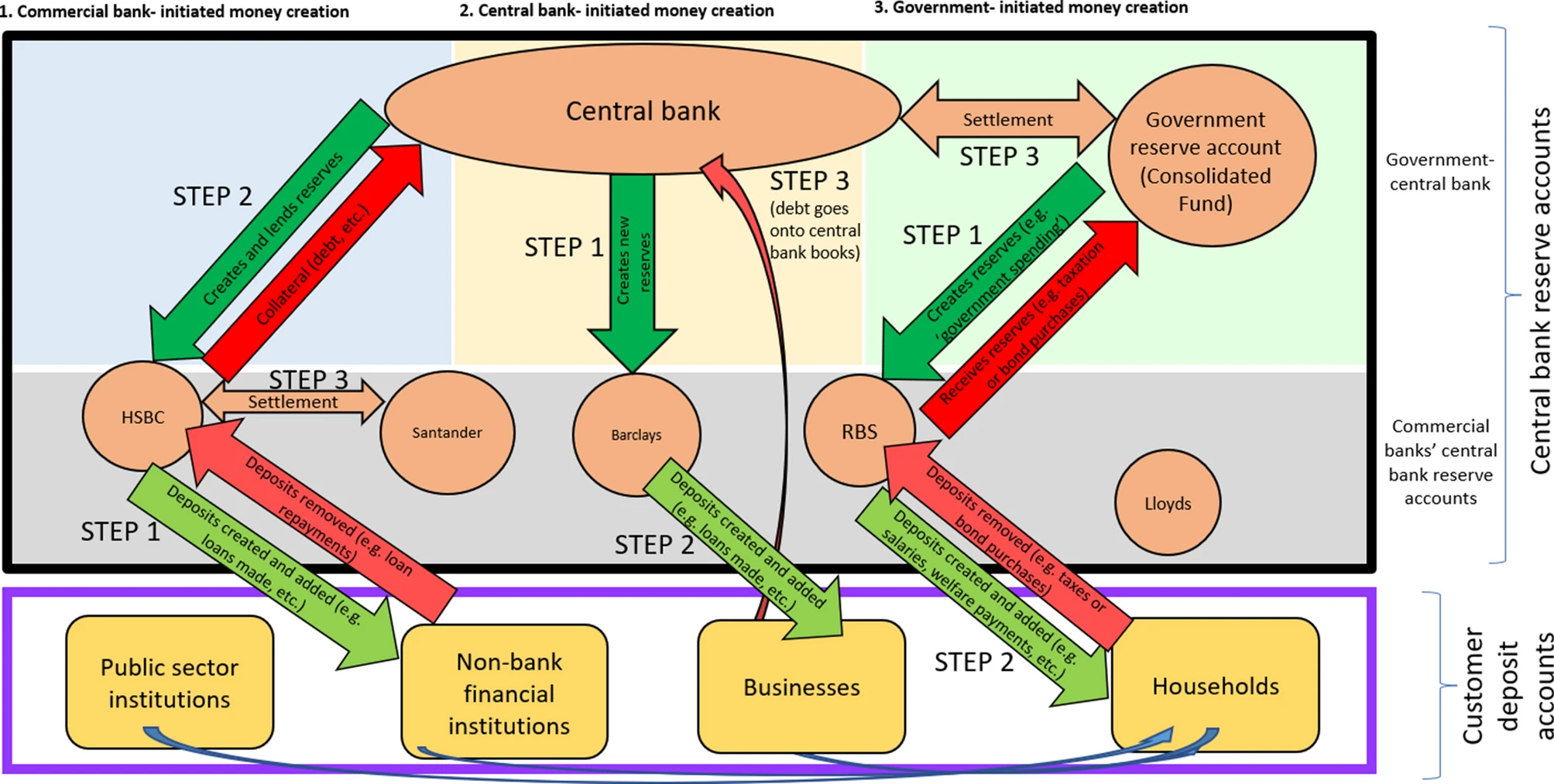
In our double-entry bookkeeping system, money is created via bank lending and government spending, adding to the economy, and is destroyed via loan repayments and taxes, subtracting from the economy.

Central banks create a wealth pump mechanism into assets through money printing, which erodes consumer purchasing power, driven by deficit spending, which creates money for the private sector.

Profits are privatized; losses are socialized.

0

US unexpectedly lost 23,000 jobs in July as slump in growth continues

the Guardian US unexpectedly lost 23,000 jobs in July as slump in growth continues www.theguardian.com
preview

Estimates for previous two months were revised down sharply but unemployment rate held steady at 4.1%

US employers unexpectedly lost 23,000 jobs in July and gains for the previous two months were revised down sharply by a combined 103,000 jobs, painting a weaker picture of the labor market than past data indicated.

The unemployment rate, however, held steady at 4.1%. Economists had projected an unchanged unemployment rate and 83,000 new jobs for the month.

The latest data from the Bureau of Labor Statistics illustrates the continued summer slump in job growth amid ongoing conflict in the Middle East. Pressure has been mounting within the US Federal Reserve to raise interest rates to combat persistently high inflation, but July’s job report and its latest revisions may cool those expectations at the central bank’s next meeting.

0

Stock market turmoil sheds stark light on the opaque AI economy

the Guardian Stock market turmoil sheds stark light on the opaque AI economy www.theguardian.com
preview

Investors scramble to make sense of a shock Chinese challenge to the dominance of western chipmakers

Even for the rollercoaster world of AI, last week was particularly volatile as investors scrambled to keep up with developments that threatened the dominance of the largest western chipmakers.

It began with a double whammy. On Monday, the Chinese memory chipmaker CXMT floated on the Shanghai stock market, soaring by 466% in value to 3.3tn yuan (£365bn).

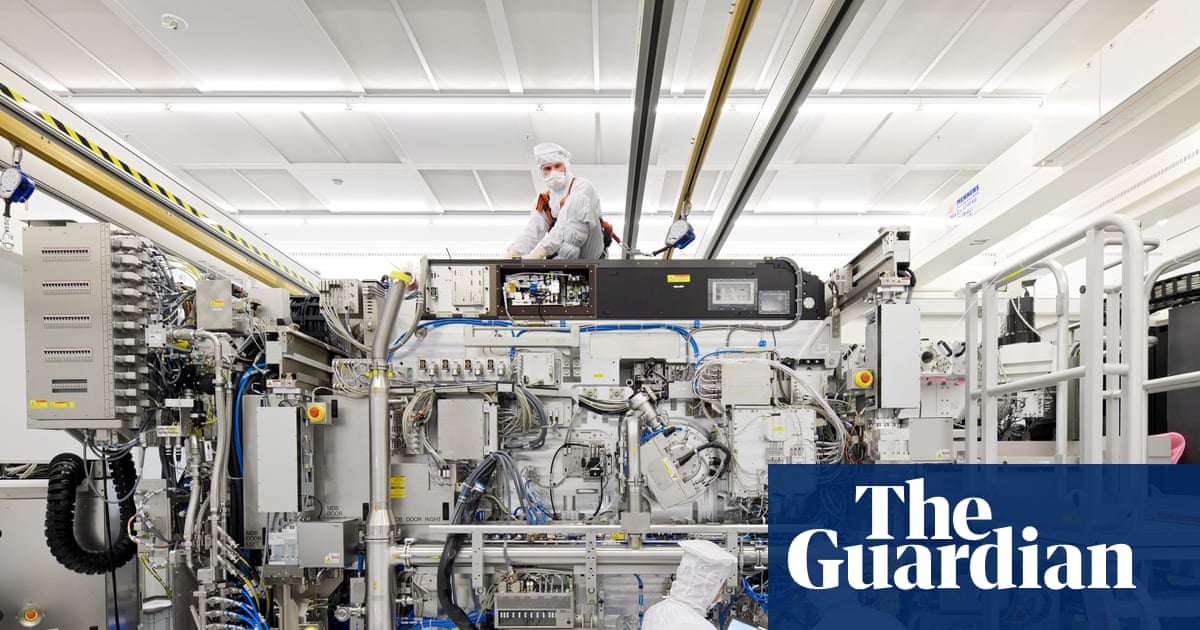
That same day, it was reported that China had developed its own tools to carry out deep-ultraviolet lithography, a technique essential to the computer chip supply chain over which the Dutch company ASML had held a monopoly.

0

Oil prices jump, while the Dow drops more than 1,100 as sinking AI stocks drag Wall Street lower

preview

Oil prices got back to jumping on Wednesday, while sinking technology stocks dragged Wall Street lower amid uncertainty about what the Federal Reserve will do to get high inflation under control.

The S&P 500 fell 1.5% after swinging sharply between gains and losses in the last hour of trading. The Dow Jones Industrial Average dropped 1,153 points, or 2.2%, and the Nasdaq composite slumped 1.7% to fall 9.8% below its record set last month.

The action was more decisive in the oil market, where the price of Brent crude leaped 7.3% to settle at $88.09 per barrel after fighting resumed in the war with Iran and raised worries about the global flow of oil.

0

AI sell-off intensifies as investors ditch chip stocks

the Guardian South Korean stock market at three-month low as AI sell-off intensifies www.theguardian.com
preview

Samsung and SK Hynix fall by more than 10% amid renewed fears over AI spending and Chinese competition

The sell-off in AI stocks has intensified, driving South Korea’s stock market down to its lowest level in three months.

Investors continued to ditch chip stocks on Tuesday, amid rising concerns about the huge amount of borrowing among AI companies to fund their datacentre expansion plans.

The South Korean semiconductor companies SK Hynix and Samsung Electronics fell by more than 10%, dragging the country’s Kospi share index down by 11.5% to its lowest point since mid-April.

Analysts attributed the sell-off to renewed worries over AI investment spending, and competition from cheaper Chinese companies, after a report by the Information that China has begun mass production of homegrown deep ultraviolet (DUV) chip-making tools.