The warning has prompted concerns among critics that financial and political pressures to revitalize nuclear power as an answer to booming AI-driven energy demand are increasing risks of accidents.
The NRC performed an inspection at Palisades in July over concerns about safety awareness. It followed an incident last year in which a worker fell into the reactor cavity, ingested some water, and was sent off-site for medical attention. The individual was decontaminated by radiation protection personnel but had 300 counts per minute detected in their hair, according to an incident report.
In a second incident in August, a bundle of nuclear fuel rods tilted over during a refueling operation, delaying what was anticipated to be the first reopening of a shuttered nuclear reactor in the US.
Mental health practitioners have identified the sycophantic personas of LLMs — the fact that they are essentially algorithmic “yes-men” who adopt and endorse the worldviews of users — as a crucial mechanism by which chatbots embolden and extend our beliefs. However, some psychiatrists and philosophers interested in AI-human relationships suspect that AI psychosis may just be the most visible example of a much broader phenomenon: the subtle reshaping of ordinary human belief by conversational AI.
At the same time, Osler warns that we need to be keenly aware that we are talking about technologies that are not public goods — they are owned and operated by private companies driven by financial agendas — and should remain critical of the technologies that we have while also asking questions about what those technologies could become.
“The idea that we won’t create beautiful things with this technology is belligerent, and the idea that we won’t create dangerous things with this technology is naïve,” Osler said. “What we do with these things is what we have always done: the full roster of amazing to terrible.”
Our sense of what is real is shaped by social feedback. Increasingly, that feedback is coming from privately owned AI chatbots. Ultimately, these companies get to decide what personas their LLMs assume, how agreeable they are, what they remember, and how closely they mimic the characteristics of human-to-human interaction. In an even stranger, and perhaps more worrying, sense, they will increasingly have to decide whose reality is the “real” reality.
This year has seen the resolution of major suits against tech giants Alphabet and Meta, both of which were found liable for serious lawbreaking. Yet the penalties imposed on the corporations are laughably inadequate to restrain their power.
When the government first filed major antitrust lawsuits targeting Big Tech back in 2020, many people were optimistic that the long-standing practice of public legal action against monopolistic companies could rein in these economy-dominating corporations.
But as these pages have covered, this “techlash” has come to little. Antitrust law has conformed to its castrated character of recent decades, with the state unable to bring itself to seriously restrain, let alone break up, the giant companies even after they were ruled to be full monopolies just months before.
Recently, when it comes to enforcing the law against the tech giants, new lows have been reached.
Node.js has just released fixes for 10 security vulnerabilities that could put node-powered applications at risk and is urging everyone to update their systems.
Node.js has just released fixes for 10 security vulnerabilities that could put node-powered applications at risk and is urging everyone to update their systems.
I’ve been with Mint for over a decade at this point, and I had a T-Mobile 5G gateway in the van, so I’m posting as someone who’s used both services.
Were I still in the van, I’d jump on this, as I’m on the $15/month Mint plan, and T-Mobile 5G internet was $50/month. The former is the lowest tier (6GB), and the latter was lucky to hit 200Mbps but never went out in a storm.
Good prices on prepaid mean a chunk of change all at once, but it’s so nice not to have a monthly phone bill.
Anyway, not an ad, just figured this could save someone some money.
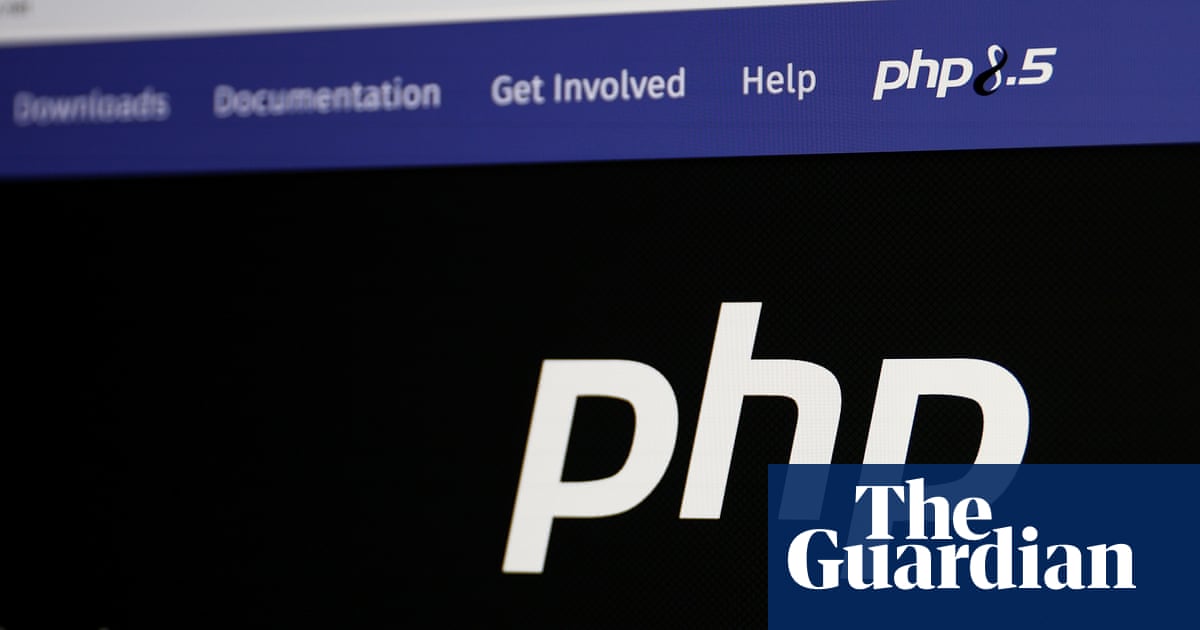
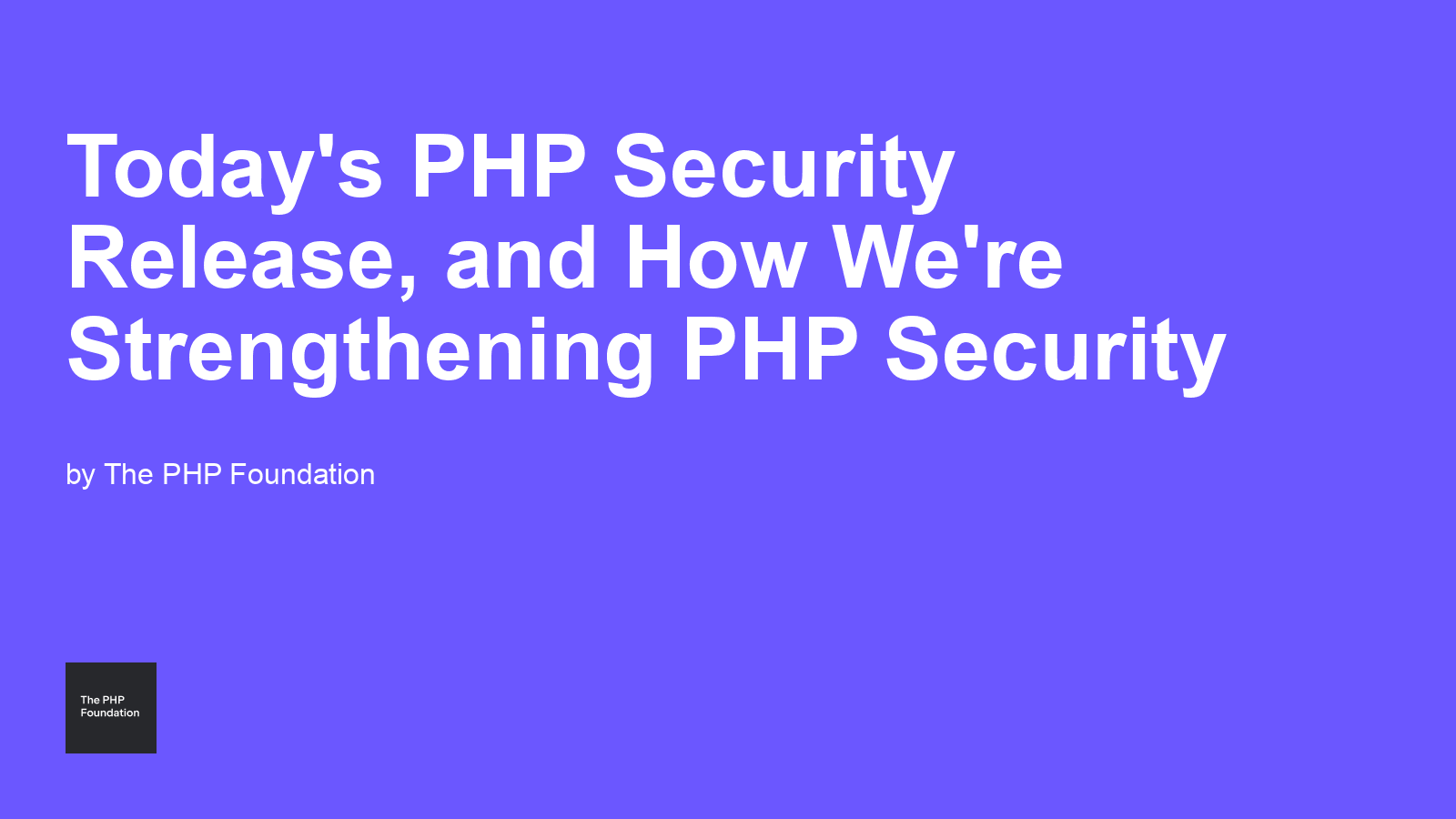
On Tuesday, the world found out about two massive security vulnerabilities in PHP, a programming language that is used by roughly 70 percent of websites. The flaw was discovered by cybersecurity researchers using a frontier model from OpenAI. If they exploited it, attackers could gain full control of servers, stealing or copying anything inside or simply taking sites offline.
On Tuesday, the world found out about two massive security vulnerabilities in PHP, a programming language that is used by roughly 70 percent of websites. The flaw was discovered by cybersecurity researchers using a frontier model from OpenAI. If they exploited it, attackers could gain full control of servers, stealing or copying anything inside or simply taking sites offline.
I’ve been thinking about how much control people actually need over screen time.
There are plenty of tools that can limit when a device can be used, block certain websites, restrict applications, or provide reports about usage. On paper, having more control sounds better.
But I wonder if there is a point where too many controls make the system harder to manage rather than more useful.
For example, a simple daily time limit might be enough for one situation, while another might benefit more from scheduled access, application restrictions, or website filtering.
There’s also a difference between knowing how a device is being used and trying to control every aspect of that usage.
I’m curious what people think:
If you could keep only three screen-time or device-management controls, which three would you choose—and why?
The AI aggregator leaked nearly 23TB of user data, or 17.6 million files, our researchers discovered. The information includes exactly what you’d expect: AI prompts, the machine’s replies, images, videos, and various corporate documents.
The AI aggregator leaked nearly 23TB of user data, or 17.6 million files, our researchers discovered. The information includes exactly what you’d expect: AI prompts, the machine’s replies, images, videos, and various corporate documents.
Impacted Versions: GitLab CE/EE: all versions from 7.0 before 18.11.13, 19.0 before 19.0.10, 19.1 before 19.1.9, 19.2 before 19.2.9, 19.3 before 19.3.6, 19.4 before 19.4.3, and 19.5 before 19.5.1
—docs.gitlab.com/…/patch-release-gitlab-19-5-1-rel…
Impacted Versions: GitLab CE/EE: all versions from 7.0 before 18.11.13, 19.0 before 19.0.10, 19.1 before 19.1.9, 19.2 before 19.2.9, 19.3 before 19.3.6, 19.4 before 19.4.3, and 19.5 before 19.5.1
—docs.gitlab.com/…/patch-release-gitlab-19-5-1-rel…
Remote computer management sounds simple until you actually have to manage several devices.
Being able to connect to a computer remotely is useful, but I think the more important question is what you can actually do once you’re connected.
For example, useful controls might include:
Seeing whether a device is being used
Managing applications
Restricting certain websites
Setting usage schedules
Reviewing activity when something goes wrong
Applying changes without physically accessing the device
At the same time, there is a trade-off. The more control an administrator gets, the more important privacy, transparency, and sensible permissions become.
For people who have actually used remote-management or monitoring software, which feature made the biggest practical difference for you?
And which feature sounded useful on paper but turned out not to matter much in real use?
Before you share the Netflix documentary “AI Gone Rogue” with family or friends to help them understand why the AI industry freaked out so badly that leaders called for a slowdown, take note: Clem Delangue, co-founder and CEO of the AI platform Hugging Face, says the film isn’t accurate. He appears in it because it’s supposed to be about the famed attack on his company by rogue OpenAI agents.
“Super disappointing, as they went for maximum anthropomorphism of the technology and full doomer mode,” Delangue wrote in a post on X. “I spent more than two hours with them trying to correct all their mistakes and ground this in reality, explaining that agents are technological systems, not aliens. But it looks like the drive to scare people for maximum views was too strong.”
Officials said they wanted to search the phone of Samuel Tunick, a Stop Cop City activist, for child abuse material. It was actually because he was suspected of “terrorist activities.”
Officials said they wanted to search the phone of Samuel Tunick, a Stop Cop City activist, for child abuse material. It was actually because he was suspected of “terrorist activities.”
Three of the founders of AI hosting company CoreWeave — Brannin McBee, Michael Intrator, and Brian Venturo — just announced yet another planned sale of CoreWeave stock, totalling over a billion dollars’ stock sales for each since the company went public. This means that whatever happens with CoreWeave and the AI bubble … they’ve got theirs.
Three of the founders of AI hosting company CoreWeave — Brannin McBee, Michael Intrator, and Brian Venturo — just announced yet another planned sale of CoreWeave stock, totalling over a billion dollars’ stock sales for each since the company went public. This means that whatever happens with CoreWeave and the AI bubble … they’ve got theirs.
Artificial-intelligence systems such as large language models (LLMs) can exhibit behaviour that seems strikingly intelligent. This has led many people, including some experts, to wonder whether these systems could have some form of consciousness — the capacity for subjective experience. However, we think that existing AI systems are not conscious, and that, along current trajectories of development, they are not likely to become conscious. Greater clarity about whether AI could become consciousness will be crucial as society grapples with the challenges posed by this increasingly powerful technology.
Artificial-intelligence systems such as large language models (LLMs) can exhibit behaviour that seems strikingly intelligent. This has led many people, including some experts, to wonder whether these systems could have some form of consciousness — the capacity for subjective experience. However, we think that existing AI systems are not conscious, and that, along current trajectories of development, they are not likely to become conscious. Greater clarity about whether AI could become consciousness will be crucial as society grapples with the challenges posed by this increasingly powerful technology.
Oct 20 (Reuters) - Anthropic’s net loss widened sharply to $80.7 billion in the first half of this year, in large part due to a rise in the fair value of bonds convertible into shares of the AI startup, according to a draft prospectus for a planned initial public offering that was reviewed by Reuters.
The San Francisco-based company is expected to go public in November and some investors are now weighing a lower valuation of around $1.5 trillion following its latest financial disclosures, Reuters reported last week.
Its first-half loss, widening from a loss of $13 billion a year earlier, included a $72 billion accounting charge reflecting an increase in the estimated value of bonds that could eventually convert into Anthropic shares, rather than cash costs tied to its operations, the document said.
The disclosures underscore the hefty costs of the AI race even as investors give greater scrutiny to whether the vast sums being poured into chips and data centers will generate sufficient returns.
Computer monitoring software can do much more today than simply record what someone does on a computer.
Depending on the software, administrators can monitor activity, review screenshots, restrict websites and applications, set time limits, and sometimes manage devices remotely.
But I’m curious where people draw the line.
For a parent, website filtering and screen-time controls might be the most useful features. For a business, activity visibility, application restrictions, scheduling, and centralized management may matter more.
At the same time, more monitoring isn’t necessarily better. There’s a legitimate privacy question around how much information should be collected, who can access it, and how clearly users are told about the monitoring.
If you were choosing computer monitoring software today, which features would you consider essential, and which would you consider unnecessary or too intrusive?