

0

preview
First album name: He Slaps With The Power Of Wizard, Kicks With The Power Of Thunder
First album name: He Slaps With The Power Of Wizard, Kicks With The Power Of Thunder

No one can resist his charms
No one can resist his charms

For years, the Samarsky family lived in the embattled, occupied Oleshky alongside neighbors no one wished to have — Russian soldiers.
Serhii Samarsky, his wife Olha Liutikova, and their son Vladyslav remained in the town after Russian forces occupied it during the early stages of its full-scale invasion until October 2026…
For years, the Samarsky family lived in the embattled, occupied Oleshky alongside neighbors no one wished to have — Russian soldiers.
Serhii Samarsky, his wife Olha Liutikova, and their son Vladyslav remained in the town after Russian forces occupied it during the early stages of its full-scale invasion until October 2026…

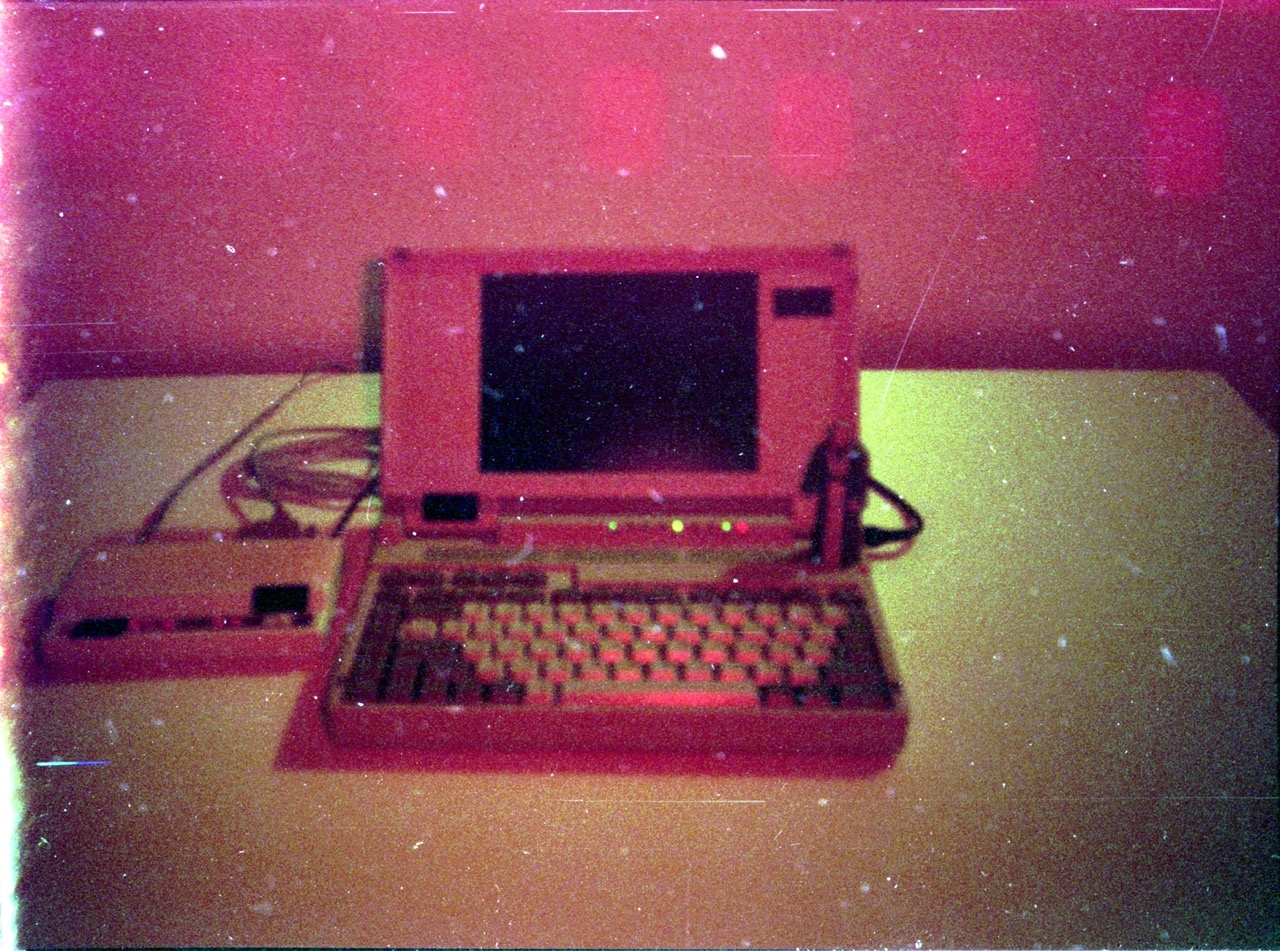
got into keeping a 25-year-old PC as a second machine - CRT for the glow, a proper mechanical keyboard, coffee within reach. it’s the sweet spot for me: hardware that still works but has a soul. what’s your current daily-driver retro setup?
got into keeping a 25-year-old PC as a second machine - CRT for the glow, a proper mechanical keyboard, coffee within reach. it’s the sweet spot for me: hardware that still works but has a soul. what’s your current daily-driver retro setup?

First album name: He Slaps With The Power Of Wizard, Kicks With The Power Of Thunder
First album name: He Slaps With The Power Of Wizard, Kicks With The Power Of Thunder

Use this thread for general daily football discussion.
This thread can also be used to discuss Transfer rumours and to post Tier 4 sources.
Use this thread for general daily football discussion.
This thread can also be used to discuss Transfer rumours and to post Tier 4 sources.
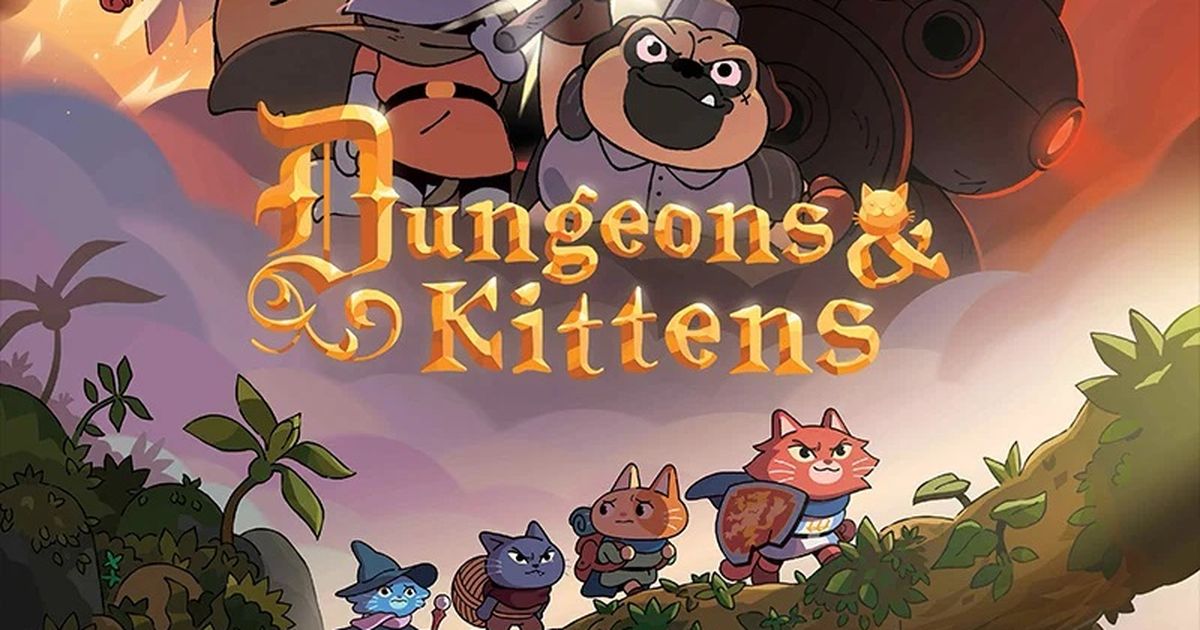
Dungeons & Kittens gets its first official trailer as the tabletop RPG heads to the BBC. The 12-episode animated adventure sends four kittens into a world of stray dogs, human ruins and “meowgic”. The BBC premiere date hasn’t been announced as of yet but is expected to be screened early in 2027. tabletopsentinel.com/…/dungeons-kittens-gets-its-…
Dungeons & Kittens gets its first official trailer as the tabletop RPG heads to the BBC. The 12-episode animated adventure sends four kittens into a world of stray dogs, human ruins and “meowgic”. The BBC premiere date hasn’t been announced as of yet but is expected to be screened early in 2027. tabletopsentinel.com/…/dungeons-kittens-gets-its-…


My need for this kind of thing has dissolved but I retain access to the direct reporting straight from the source Equifax online.
Are CK and BW redundant and just airing my laundry to more sources needlessly at this point?
My need for this kind of thing has dissolved but I retain access to the direct reporting straight from the source Equifax online.
Are CK and BW redundant and just airing my laundry to more sources needlessly at this point?

I gotta admit, with every new trailer I’m more excited for this show. I’m really curious if it’ll end up being good. Streaming on Prime, November 25.
I gotta admit, with every new trailer I’m more excited for this show. I’m really curious if it’ll end up being good. Streaming on Prime, November 25.
[From GPUS email]
A grassroots revolution just broke through in Hawaii and it is reshaping what is possible for our movement nationwide.
Pāʻele Kiakona didn’t just run; he shattered the status quo and won Hawaii House District 14! Kiakona was raised in Lahaina taro patches and majored in environmental studies. He became a leader in the Lahaina Strong initiative after the 2023 wildfire, camping on Kāʻanapali Beach for almost six months, taking a stand for long-term housing for displaced fire survivors. Pāʻele Kiakona’s election victory demonstrates that when you show up for your community, your community will show up for you

[From GPUS email]
A grassroots revolution just broke through in Hawaii and it is reshaping what is possible for our movement nationwide.
Pāʻele Kiakona didn’t just run; he shattered the status quo and won Hawaii House District 14! Kiakona was raised in Lahaina taro patches and majored in environmental studies. He became a leader in the Lahaina Strong initiative after the 2023 wildfire, camping on Kāʻanapali Beach for almost six months, taking a stand for long-term housing for displaced fire survivors. Pāʻele Kiakona’s election victory demonstrates that when you show up for your community, your community will show up for you
@giornalismo
articolo21.org/2026/11/premio-…
Alla giornalista e scrittrice Asmae Dachan il primo
@giornalismo
articolo21.org/2026/11/premio-…
Alla giornalista e scrittrice Asmae Dachan il primo
Today has been especially bad, and was inspired sadly by about 6 straight posts of only negativity here.
I want to say that being negative towards something is not a bad thing, it’s very valid to critique things. However, a community becomes toxic when the majority of it’s content is negative.
Gaming is an obvious one. It’s very obvious all around the internet that gaming communities are negative generally, and Lemmy certainly takes the cake. In the case of GTA 6 coming out this month we can (and have) had multiple stories about Rockstar’s unethical practices, the pricing, ownership, and to be clear I agree with all of it. However, there is also valid positive things that people want to discuss but are immediately downvoted to hell, or have comments brigaded on with responses like “Don’t you know about X, Y, or Z??”
I’ve been in comment threads where people have told me that they are afraid to post here because of the responses they might get. Now this is absolutely true everywhere, and we will often respond “You just have to tune them out” but the scales are shifting to the majority of responses are negative.
New users will not simply block/tune out the majority of commenters. New users will see that a community is toxic and turn around and go back to where they felt it was better.
This is the root of my frustration - that Lemmy is no longer a geeky place where people can talk about Star Trek and Linux - but that it’s becoming a toxic place where if you aren’t talking about why Star Trek and Linux are the only good things on the planet that it should be called out over and over.
Worse is that the scales a tipping to simply being “If it is popular, it is not good” which is a huge red flag for toxic community. To be clear it does not mean that if something is popular that it must be good, but instead we are falling for the same trap that is on corporate social media.
Anger and toxicity are fun, they are dopamine hits. So when there’s a huge post about <<popular thing>> and everyone dogpiles, everyone has that dopamine hit and it spreads, and it makes people want to dogpile more. Unfortunately I think this has left individual posts, and this is now driving a large part of our comment sections, that people feel included when they are all dogpiling on a popular thing. It’s addictive.
It’s incessant and exhausting being here some days.
Some examples to think on:
I think that sums it all up, I wish people could just enjoy things here without having the majority of comments be about why they shouldn’t enjoy it. I think this attitude has already lost of a good chunk of users who could be adding to the fediverse, instead now back on corporate social media.
It’s anecdotal but I’ve shown the fediverse to 3 other people who are trekkie nerds like me. They gave up in less than a week not because the fediverse was complicated, but because they felt like they weren’t wanted here.
Be the positive change, be encouraging. Don’t belittle for someone for liking a popular thing if you like something more obscure, instead post about obscure thing and why you like it and share it! Inform users of things like Rowlings insane shit-headery, but don’t demean them for still enjoying the books. If you don’t like sports that’s cool, but let them cheer on their team.
Thanks for listening. I’m going to have a pumpkin spice latte now.
Today has been especially bad, and was inspired sadly by about 6 straight posts of only negativity here.
I want to say that being negative towards something is not a bad thing, it’s very valid to critique things. However, a community becomes toxic when the majority of it’s content is negative.
Gaming is an obvious one. It’s very obvious all around the internet that gaming communities are negative generally, and Lemmy certainly takes the cake. In the case of GTA 6 coming out this month we can (and have) had multiple stories about Rockstar’s unethical practices, the pricing, ownership, and to be clear I agree with all of it. However, there is also valid positive things that people want to discuss but are immediately downvoted to hell, or have comments brigaded on with responses like “Don’t you know about X, Y, or Z??”
I’ve been in comment threads where people have told me that they are afraid to post here because of the responses they might get. Now this is absolutely true everywhere, and we will often respond “You just have to tune them out” but the scales are shifting to the majority of responses are negative.
New users will not simply block/tune out the majority of commenters. New users will see that a community is toxic and turn around and go back to where they felt it was better.
This is the root of my frustration - that Lemmy is no longer a geeky place where people can talk about Star Trek and Linux - but that it’s becoming a toxic place where if you aren’t talking about why Star Trek and Linux are the only good things on the planet that it should be called out over and over.
Worse is that the scales a tipping to simply being “If it is popular, it is not good” which is a huge red flag for toxic community. To be clear it does not mean that if something is popular that it must be good, but instead we are falling for the same trap that is on corporate social media.
Anger and toxicity are fun, they are dopamine hits. So when there’s a huge post about <<popular thing>> and everyone dogpiles, everyone has that dopamine hit and it spreads, and it makes people want to dogpile more. Unfortunately I think this has left individual posts, and this is now driving a large part of our comment sections, that people feel included when they are all dogpiling on a popular thing. It’s addictive.
It’s incessant and exhausting being here some days.
Some examples to think on:
I think that sums it all up, I wish people could just enjoy things here without having the majority of comments be about why they shouldn’t enjoy it. I think this attitude has already lost of a good chunk of users who could be adding to the fediverse, instead now back on corporate social media.
It’s anecdotal but I’ve shown the fediverse to 3 other people who are trekkie nerds like me. They gave up in less than a week not because the fediverse was complicated, but because they felt like they weren’t wanted here.
Be the positive change, be encouraging. Don’t belittle for someone for liking a popular thing if you like something more obscure, instead post about obscure thing and why you like it and share it! Inform users of things like Rowlings insane shit-headery, but don’t demean them for still enjoying the books. If you don’t like sports that’s cool, but let them cheer on their team.
Thanks for listening. I’m going to have a pumpkin spice latte now.

I think part of the problem is all the cars we have convinced ourselves we have to carry tho…
I think part of the problem is all the cars we have convinced ourselves we have to carry tho…

@giornalismo
articolo21.org/2026/11/morti-s…
Marco Bazzoni ricorda, uno per uno, i lavoratori e le lavoratrici che hanno perso la vita nel 2026. Dietro ogni nome una storia, una famiglia,
@giornalismo
articolo21.org/2026/11/morti-s…
Marco Bazzoni ricorda, uno per uno, i lavoratori e le lavoratrici che hanno perso la vita nel 2026. Dietro ogni nome una storia, una famiglia,
GENEVA (AP) — People may have been getting high off cannabis earlier than previously thought — at least 2,800 years ago, a new study suggests.
Archaeologists who led a dig at a monumental tomb in Siberia said they turned up evidence of the earliest known use of cannabis for psychoactive purposes.
The findings point to cannabis consumption at least 300 years earlier than previously known use in neighboring China.
Ancient drug use has long intrigued scholars. The Greek historian Herodotus wrote about inhabitants of Central Asia smoking cannabis around 440 B.C., and recent archaeologists have found the seeds in tombs across its highlands.
The team from Germany, Russia, Sweden and Switzerland said analysis of hair in the royal tomb where cannabis seeds turned up sheds new light on the plant’s role in ancient societies.
GENEVA (AP) — People may have been getting high off cannabis earlier than previously thought — at least 2,800 years ago, a new study suggests.
Archaeologists who led a dig at a monumental tomb in Siberia said they turned up evidence of the earliest known use of cannabis for psychoactive purposes.
The findings point to cannabis consumption at least 300 years earlier than previously known use in neighboring China.
Ancient drug use has long intrigued scholars. The Greek historian Herodotus wrote about inhabitants of Central Asia smoking cannabis around 440 B.C., and recent archaeologists have found the seeds in tombs across its highlands.
The team from Germany, Russia, Sweden and Switzerland said analysis of hair in the royal tomb where cannabis seeds turned up sheds new light on the plant’s role in ancient societies.




cross-posted from: thelemmy.club/post/58638834
Disclaimer: if you’re nothing like the people I’m describing, please don’t take it personally. Otherwise enjoy the rant
Anime fans: Come on casual fans. All we’ve done is share a space to talk about anime. And yet you still don’t like us, how can you not like us?
Me:… Ok, I’ll tell you
You’re the worst community I’ve known. You constantly berate Japanese writers & animators for not meeting your standards. They pull crunch hours to meet demands at the cost of their lives and this is how you repay them? And to add insult to injury, you don’t respect their traditions whenever you visit their country.
And you guys are such gatekeepers, you get offended whenever someone either watches something mainstream or something niche. And what really bugs me, is that you use the term “mid” as an insult, expecting it to mean offensively bad or such. Yeah, I’ve seen some shows I would consider “mid”, but I can use the term appropriately, since I have some level of tolerance towards those shows. I’m not getting upset and making rants on “how mid anime is ruining the industry” or “they’re not as good as how a visionary like Hayao Miyazaki would make it”. He isn’t, he’s an anti-social asshole who’s impossible to please. And that’s why you respect him so much, he’s you. GOD YOU’RE PRETENTIOUS.
And you delude yourself into thinking tsuderes or “muscle girls” are peak waifus, even though they’re emotionally obnoxious. Like, I doubt you’ll last night with girls like that.
And what really bugs me, is how you treat anime like it’s superior to anything from the west; like “how MHA is superior to Marvel or DC” or “Death Note is a better downfall story than Wolf of Wall Street”. Well what argument can you make? I can make an argument on how Zootopia is superior to BNA. If you can make an argument against it, be my guest.
BTW, learning Japanese just to watch anime without subtitles is redundant, so you might as well watch it dubbed. OH WAIT, you won’t watch anime dubbed, “because it’s the wrong way to watch anime”. Well who the hell gives you the right to say that? The majority of you guys are from English speaking countries. Which isn’t bringing up the fact on how often you harass both English and Japanese actors on social media. How’s that cringe Twitter post that you’re using to farm for likes. But I’ll forgive all of it, ALL OF IF, IF.YOU.WEREN’T.SUCH.HACKS. That’s the worst part about you guys. You guys are nothing less than a bunch of snobbish, hypocritical, pathetic HACKS.
Well that’s it, sayo fucking nara
cross-posted from: thelemmy.club/post/58638834
Disclaimer: if you’re nothing like the people I’m describing, please don’t take it personally. Otherwise enjoy the rant
Anime fans: Come on casual fans. All we’ve done is share a space to talk about anime. And yet you still don’t like us, how can you not like us?
Me:… Ok, I’ll tell you
You’re the worst community I’ve known. You constantly berate Japanese writers & animators for not meeting your standards. They pull crunch hours to meet demands at the cost of their lives and this is how you repay them? And to add insult to injury, you don’t respect their traditions whenever you visit their country.
And you guys are such gatekeepers, you get offended whenever someone either watches something mainstream or something niche. And what really bugs me, is that you use the term “mid” as an insult, expecting it to mean offensively bad or such. Yeah, I’ve seen some shows I would consider “mid”, but I can use the term appropriately, since I have some level of tolerance towards those shows. I’m not getting upset and making rants on “how mid anime is ruining the industry” or “they’re not as good as how a visionary like Hayao Miyazaki would make it”. He isn’t, he’s an anti-social asshole who’s impossible to please. And that’s why you respect him so much, he’s you. GOD YOU’RE PRETENTIOUS.
And you delude yourself into thinking tsuderes or “muscle girls” are peak waifus, even though they’re emotionally obnoxious. Like, I doubt you’ll last night with girls like that.
And what really bugs me, is how you treat anime like it’s superior to anything from the west; like “how MHA is superior to Marvel or DC” or “Death Note is a better downfall story than Wolf of Wall Street”. Well what argument can you make? I can make an argument on how Zootopia is superior to BNA. If you can make an argument against it, be my guest.
BTW, learning Japanese just to watch anime without subtitles is redundant, so you might as well watch it dubbed. OH WAIT, you won’t watch anime dubbed, “because it’s the wrong way to watch anime”. Well who the hell gives you the right to say that? The majority of you guys are from English speaking countries. Which isn’t bringing up the fact on how often you harass both English and Japanese actors on social media. How’s that cringe Twitter post that you’re using to farm for likes. But I’ll forgive all of it, ALL OF IF, IF.YOU.WEREN’T.SUCH.HACKS. That’s the worst part about you guys. You guys are nothing less than a bunch of snobbish, hypocritical, pathetic HACKS.
Well that’s it, sayo fucking nara

cross-posted from: lemmy.world/post/54214551
An old project I never see anyone talking about anymore. This is the entire web series cut together in a movie (good luck finding the entire original series). Why hasn’t anyone heard of this or seen this? well it was on yahoo movies if that answers some questions. Tossed it on the internet archive just so nobody would lose it.
cross-posted from: lemmy.world/post/54214551
An old project I never see anyone talking about anymore. This is the entire web series cut together in a movie (good luck finding the entire original series). Why hasn’t anyone heard of this or seen this? well it was on yahoo movies if that answers some questions. Tossed it on the internet archive just so nobody would lose it.
I wanted a San Francisco postcard to send home, so I built one. The fog, the water and the reflections are all SVG filters, and this is how.
I wanted a San Francisco postcard to send home, so I built one. The fog, the water and the reflections are all SVG filters, and this is how.


I’m super excited! Got my signed bookplates and bookmarks from one of my favorite authors pirateaba!
Woo! The book is my soap opera I swear.
I’m super excited! Got my signed bookplates and bookmarks from one of my favorite authors pirateaba!
Woo! The book is my soap opera I swear.

Hackers are actively exploiting a recently discovered critical vulnerability that allows them to log in to privileged accounts on many Linux systems, multiple researchers are reporting.
The vulnerability, tracked under the name *sshole, arises from the interaction between OpenSSH and a code library known as musl. Linux systems that use both of these packages and meet certain other requirements can be hacked to give unauthenticated access to high-privilege accounts in a matter of seconds. *sshole became publicly known last Thursday and quickly stoked concerns it could lead to widespread compromise of Linux machines. Four days later, the prediction shows signs of becoming real. Attackers conducting “mature intrusions”
Security firm Greynoise said Monday that honeypots it maintains in Southeast Asia have come under attack by a group it’s tracking as GT10. The group conducted “mature intrusions” into the systems, which Greynoise uses to detect attempted or successful attacks in real time. Greynoise subsequently gained access to a GT10 server that revealed potential other victims and some of the tools used in the campaign. A backdoor the group is using in the attacks contains Chinese language comments and appears to be generated with the use of AI.
Greynoise said that GT10 is also installing the Python3 release on machines that don’t already have it because the package is required to run the hacker’s backdoor, which is tracked under the name TAC Agent. TAC Agent supports a wide range of functions, including shell commands, system reconnaissance, and persistence. OpenSSH has released a fix that prevents attacks from working.
Researchers at security firm watchTowr said Friday that they, too, were seeing exploitation activity, which was related to botnets and cryptocurrency. Security firm Previdian has also reported similar activity. It said its company’s sensors have seen 20 exploitation attempts from 13 unique attacker IP addresses geolocated to nine countries.
The vulnerability, tracked as CVE-2026-123158, resides in OpenSSH, when it runs alongside musl, a Linux alternative to the widely used libc code library. Further, OpenSSH must not use PAM (pluggable authentication modules), a framework that handles user authentication and account access checks. Additionally, SSH configurations must (1) have at least one account that’s accessible using a password that is hashed using the SHA256 or SHA512 function and (2) also be set to use passwordless accounts by way of specifying a “*” in the password field in the /etc/shadow file. Passwordless configurations are standard for certain types of accounts.
Exploits are triggered when an attacker enters passwords with more than 256 characters for a passwordless account. This step occurs when the OpenSSH server hashes the supplied password and checks it against the hash stored in /etc/shadow. The oversized password produces an error that causes musl’s password hashing function to return “*”. The attacks exploit the “misinterpretation of whether a string is intended to be a password hash,” Red Hat said.
Despite the multiple conditions necessary, CVE-2026-123158 poses a serious threat to a large base of machines, most notably those running Alpine, a lightweight distribution of Linux. The ease of exploitation allows hackers to direct malicious commands to any of the millions of SSH servers exposed to the Internet and identify potentially vulnerable ones in seconds. Anyone using OpenSSH should install the update promptly. Those using musl should investigate further.
Hackers are actively exploiting a recently discovered critical vulnerability that allows them to log in to privileged accounts on many Linux systems, multiple researchers are reporting.
The vulnerability, tracked under the name *sshole, arises from the interaction between OpenSSH and a code library known as musl. Linux systems that use both of these packages and meet certain other requirements can be hacked to give unauthenticated access to high-privilege accounts in a matter of seconds. *sshole became publicly known last Thursday and quickly stoked concerns it could lead to widespread compromise of Linux machines. Four days later, the prediction shows signs of becoming real. Attackers conducting “mature intrusions”
Security firm Greynoise said Monday that honeypots it maintains in Southeast Asia have come under attack by a group it’s tracking as GT10. The group conducted “mature intrusions” into the systems, which Greynoise uses to detect attempted or successful attacks in real time. Greynoise subsequently gained access to a GT10 server that revealed potential other victims and some of the tools used in the campaign. A backdoor the group is using in the attacks contains Chinese language comments and appears to be generated with the use of AI.
Greynoise said that GT10 is also installing the Python3 release on machines that don’t already have it because the package is required to run the hacker’s backdoor, which is tracked under the name TAC Agent. TAC Agent supports a wide range of functions, including shell commands, system reconnaissance, and persistence. OpenSSH has released a fix that prevents attacks from working.
Researchers at security firm watchTowr said Friday that they, too, were seeing exploitation activity, which was related to botnets and cryptocurrency. Security firm Previdian has also reported similar activity. It said its company’s sensors have seen 20 exploitation attempts from 13 unique attacker IP addresses geolocated to nine countries.
The vulnerability, tracked as CVE-2026-123158, resides in OpenSSH, when it runs alongside musl, a Linux alternative to the widely used libc code library. Further, OpenSSH must not use PAM (pluggable authentication modules), a framework that handles user authentication and account access checks. Additionally, SSH configurations must (1) have at least one account that’s accessible using a password that is hashed using the SHA256 or SHA512 function and (2) also be set to use passwordless accounts by way of specifying a “*” in the password field in the /etc/shadow file. Passwordless configurations are standard for certain types of accounts.
Exploits are triggered when an attacker enters passwords with more than 256 characters for a passwordless account. This step occurs when the OpenSSH server hashes the supplied password and checks it against the hash stored in /etc/shadow. The oversized password produces an error that causes musl’s password hashing function to return “*”. The attacks exploit the “misinterpretation of whether a string is intended to be a password hash,” Red Hat said.
Despite the multiple conditions necessary, CVE-2026-123158 poses a serious threat to a large base of machines, most notably those running Alpine, a lightweight distribution of Linux. The ease of exploitation allows hackers to direct malicious commands to any of the millions of SSH servers exposed to the Internet and identify potentially vulnerable ones in seconds. Anyone using OpenSSH should install the update promptly. Those using musl should investigate further.

cross-posted to: nfl@reddit.com
cross-posted to: nfl@reddit.com



Summary
The office suite market is large, profitable and growing, and this attracts new entrants: low-cost clones, open-core products and, more recently, suites built largely with artificial intelligence. Most of them compete on price and on native support for OOXML, a format whose evolution remains in practice under Microsoft’s control.
When features can be reproduced cheaply, what distinguishes a suite is who governs the document format and the software, and therefore who controls the content. This is the question of digital sovereignty, and its outcome will depend partly on political decisions, and partly on software features.
The 1980s and 1990s
The office suite sector emerged in the 1980s and developed in the 1990s, when Microsoft Office established itself as the leading product, with a market share of over 90% according to Microsoft unofficial statements at their events.
Some may remember the main competitors: Lotus SmartSuite, WordPerfect Office and StarOffice, the ancestor of OpenOffice and LibreOffice. Fewer will recall Anywhere Office, Ability Office, Pro PC Suite 2001 and ThinkFree Office. Ability Office still exists, and ThinkFree Office is now called Hancom Office.
By the end of the century Microsoft Office dominated the sector, while all other products had a barely noticeable market share or had disappeared altogether.
The sector has always been lucrative: the products meet a universal need, while development and sales costs are low relative to volumes, so margins are potentially extremely high. For this reason all the major software vendors tried to enter the market, and the first clones emerged, competing solely on price.
Market presence, however, was just one of the factors contributing to success. Other factors were bundling with the Windows operating system, lock-in through document formats and pricing.
The two decades between 2000 and 2020
Sun Microsystems, which had acquired StarOffice, released its source code in 2000, and OpenOffice.org 1.0 followed in 2002: the first FOSS suite to reach a mass audience. Version 1.0 offered only a glimpse of the suite’s potential, and version 1.1 was usable but still limited. Only version 2.0, released in 2005, made OpenOffice a genuine competitor to the market leader.
For several years the rivalry between the proprietary suite and the FOSS suite played out on two fronts: large migration projects and document formats.
At the time, migrations seemed to signal an irreversible trend, but this proved an illusion. Microsoft deployed all its commercial muscles and started to talk to politicians. Since 2012, the company has been one of the biggest spenders on lobbying in Brussels (based on data from Corporate Europe Observatory and Lobby Facts).
The battle over file formats was most prominent between 2006, when ODF was standardised by ISO/IEC, and 2008, when the proprietary OOXML format was standardised through a process we have already described in a previous blog post and will not revisit here.
In 2010, following Oracle’s acquisition of Sun, the community created The Document Foundation and LibreOffice. In 2011, Oracle was effectively forced to donate the OpenOffice.org source code to the Apache Software Foundation in order to honour a contract – due to expire in 2014 – that IBM had signed with Sun Microsystems, and which allowed it to use the OpenOffice.org source code whilst disregarding the open-source licence.
The format battle then faded into the background, as IBM decided to abandon the ODF advocacy project at OASIS to use the money to fund the development of Apache OpenOffice and fight the growth of LibreOffice. It resurfaced in 2024 with the concept of digital sovereignty and the announcement of several large scale migrations to open source software, such as the German province of Schleswig-Holstein and the Austrian Army.
Between 2010 and 2020 the sector also evolved with the arrival of cloud-based suites, which started a new battle for market share between Microsoft and Google. Given the sector’s renewed growth, a new generation of clones emerged: programs that are almost always limited in functionality, copy the market leader and compete on licence cost.
Some of these clones, in order to disguise their commercial operation, release a basic version under an open-source licence, often modified so as to prevent forking. Such a licence no longer meets the Open Source Definition, and the product is in practice freeware, while the full-featured version is sold separately (the “open core” model).
Naturally, these programs support the OOXML format natively, because they aim at a low-cost replacement, not at migration, that is, a paradigm shift that would give users full control over the software and its content.
By digital sovereignty we mean the ability of a user or institution to control its documents and software: to open documents with any implementation, to fork the code, and to choose where data is hosted and who operates the service.
OOXML is formally an ISO standard, but its reference implementation remain with Microsoft. As long as this is the case, Microsoft retains control over the content: the user saves money, but sacrifices digital sovereignty.
The current situation
The reason for the renewed interest in the office suite market lies in the size of the market itself, which is worth tens of billions of dollars and therefore whets the appetite of software companies. Even a 1% market share is worth a very significant sum, sufficient to justify the investment.
As a reference point, we use public data from the “Office Productivity Software Market Report 2026” by Business Research Company, a US-based market analysis firm. The office productivity software market reached $50.73 billion in 2025 and is expected to grow to $81.83 billion by 2030, at a CAGR (compound annual growth rate) of 10.1%.
We add some figures relating to Microsoft and Google.
Microsoft 365 Commercial generated $102 billion in fiscal year 2026, an increase of 16%. Paid licences for Microsoft 365 Copilot exceeded 30 million by the end of June 2026, which on analyst estimates is about 6 to 7% of the paid commercial user base.
Google Workspace is estimated to have over 3 billion users and over 11 million paying customers. The user figure includes free Gmail accounts, so it is not comparable to Microsoft’s paid subscriptions. Technographic data from 6sense, another US-based market research firm, attributes 50.34% of the office productivity category to Google Workspace and 45.46% to Microsoft 365 (figures are based on corporate domains). Measured in corporate licences and revenue, Microsoft is clearly in the lead.
According to 6sense, 64% of organisations use both suites. This figure is only indicative, but it points to an increasingly widespread overlap between office suites, which is not limited to Microsoft 365 and Google Workspace. For LibreOffice, based on hands-on experience with large organizations, we estimate that 50% of users also use another office suite, depending on their needs.
We are therefore talking about a market of enormous economic value, and these figures refer almost exclusively to licences, not to the ecosystem. If we include value added consultancy services, which are a necessary component of every implementation in public bodies and companies, the total is likely to be significantly higher.
Analysts do not provide precise data on this, so we rely on a rough estimate based on experience: value-added services are worth about 25% of the value of licences. On the analysts’ forecast, the 2030 market would then be worth about $102 billion ($81.83 billion plus 25%). One percentage point of market share is therefore worth $1 billion a year to a commercial vendor.
This figure does not accrue to free software, but it explains the incentive for new entrants. It also explains the emergence of a new type of office suite: so-called “clones” developed largely with artificial intelligence. At present we remain extremely cautious about the use of artificial intelligence in software development, but we recognise that views differ, and we are monitoring the evolution of these applications closely.
The strategic consequence does not depend on that debate: if the cost of reproducing a feature set collapses, features stop being the main barrier to entry. What remains is the governance of the format and of the code, the strength of the community, and the long-term maintenance of the software.
A glimpse into the future of office suites
Over the last twenty years we have read contradictory forecasts: the total disappearance of the sector, or only of the desktop suite, and the opposite, a strong growth driven by announcements of new operating systems, software paradigms or hardware platforms.
One thing is certain: the office suite market has gone through periods of slight contraction, probably normal fluctuations, but overall it has grown, and in our opinion it will continue growing for the foreseeable future.
Today, the installed base consists of around 2 billion desktop and laptop computers, based on active devices reported by manufacturers, plus devices that nobody counts because they are second- or third-hand, found mainly in poorer countries that are overlooked by technology usage statistics.
The integration of AI assistants into the suites adds a further dimension. With more than 30 million paid Copilot seats, Microsoft has shown that there is a market for it.
Overall, this is an extremely interesting potential market, where there is room for all types of office suites, desktop and cloud-based, and for all development strategies. On the other hand, success is not just related to number of users as there are market dynamics which depend on political decisions that go beyond the value of the software itself.
However, the location where documents are processed – whether locally or in a provider’s cloud – and the ability of artificial intelligence tools to read and write in open formats remain issues linked to the question of sovereignty. We have already expressed our views on these matters in several blog posts: nothing should interfere with the user’s right to decide on their own content.
LibreOffice will continue to be a key player. Downloads and donations grew substantially in 2026 (as of 31 October, downloads +26% and donations +44 in term of numbers), which reflects a steady improvement in the quality of the software and in the reputation of the project.
The practical conclusion is that LibreOffice and ODF compete on a different axis from the clones: not feature parity at a lower price, but open governance of the format and of the code.
Summary
The office suite market is large, profitable and growing, and this attracts new entrants: low-cost clones, open-core products and, more recently, suites built largely with artificial intelligence. Most of them compete on price and on native support for OOXML, a format whose evolution remains in practice under Microsoft’s control.
When features can be reproduced cheaply, what distinguishes a suite is who governs the document format and the software, and therefore who controls the content. This is the question of digital sovereignty, and its outcome will depend partly on political decisions, and partly on software features.
The 1980s and 1990s
The office suite sector emerged in the 1980s and developed in the 1990s, when Microsoft Office established itself as the leading product, with a market share of over 90% according to Microsoft unofficial statements at their events.
Some may remember the main competitors: Lotus SmartSuite, WordPerfect Office and StarOffice, the ancestor of OpenOffice and LibreOffice. Fewer will recall Anywhere Office, Ability Office, Pro PC Suite 2001 and ThinkFree Office. Ability Office still exists, and ThinkFree Office is now called Hancom Office.
By the end of the century Microsoft Office dominated the sector, while all other products had a barely noticeable market share or had disappeared altogether.
The sector has always been lucrative: the products meet a universal need, while development and sales costs are low relative to volumes, so margins are potentially extremely high. For this reason all the major software vendors tried to enter the market, and the first clones emerged, competing solely on price.
Market presence, however, was just one of the factors contributing to success. Other factors were bundling with the Windows operating system, lock-in through document formats and pricing.
The two decades between 2000 and 2020
Sun Microsystems, which had acquired StarOffice, released its source code in 2000, and OpenOffice.org 1.0 followed in 2002: the first FOSS suite to reach a mass audience. Version 1.0 offered only a glimpse of the suite’s potential, and version 1.1 was usable but still limited. Only version 2.0, released in 2005, made OpenOffice a genuine competitor to the market leader.
For several years the rivalry between the proprietary suite and the FOSS suite played out on two fronts: large migration projects and document formats.
At the time, migrations seemed to signal an irreversible trend, but this proved an illusion. Microsoft deployed all its commercial muscles and started to talk to politicians. Since 2012, the company has been one of the biggest spenders on lobbying in Brussels (based on data from Corporate Europe Observatory and Lobby Facts).
The battle over file formats was most prominent between 2006, when ODF was standardised by ISO/IEC, and 2008, when the proprietary OOXML format was standardised through a process we have already described in a previous blog post and will not revisit here.
In 2010, following Oracle’s acquisition of Sun, the community created The Document Foundation and LibreOffice. In 2011, Oracle was effectively forced to donate the OpenOffice.org source code to the Apache Software Foundation in order to honour a contract – due to expire in 2014 – that IBM had signed with Sun Microsystems, and which allowed it to use the OpenOffice.org source code whilst disregarding the open-source licence.
The format battle then faded into the background, as IBM decided to abandon the ODF advocacy project at OASIS to use the money to fund the development of Apache OpenOffice and fight the growth of LibreOffice. It resurfaced in 2024 with the concept of digital sovereignty and the announcement of several large scale migrations to open source software, such as the German province of Schleswig-Holstein and the Austrian Army.
Between 2010 and 2020 the sector also evolved with the arrival of cloud-based suites, which started a new battle for market share between Microsoft and Google. Given the sector’s renewed growth, a new generation of clones emerged: programs that are almost always limited in functionality, copy the market leader and compete on licence cost.
Some of these clones, in order to disguise their commercial operation, release a basic version under an open-source licence, often modified so as to prevent forking. Such a licence no longer meets the Open Source Definition, and the product is in practice freeware, while the full-featured version is sold separately (the “open core” model).
Naturally, these programs support the OOXML format natively, because they aim at a low-cost replacement, not at migration, that is, a paradigm shift that would give users full control over the software and its content.
By digital sovereignty we mean the ability of a user or institution to control its documents and software: to open documents with any implementation, to fork the code, and to choose where data is hosted and who operates the service.
OOXML is formally an ISO standard, but its reference implementation remain with Microsoft. As long as this is the case, Microsoft retains control over the content: the user saves money, but sacrifices digital sovereignty.
The current situation
The reason for the renewed interest in the office suite market lies in the size of the market itself, which is worth tens of billions of dollars and therefore whets the appetite of software companies. Even a 1% market share is worth a very significant sum, sufficient to justify the investment.
As a reference point, we use public data from the “Office Productivity Software Market Report 2026” by Business Research Company, a US-based market analysis firm. The office productivity software market reached $50.73 billion in 2025 and is expected to grow to $81.83 billion by 2030, at a CAGR (compound annual growth rate) of 10.1%.
We add some figures relating to Microsoft and Google.
Microsoft 365 Commercial generated $102 billion in fiscal year 2026, an increase of 16%. Paid licences for Microsoft 365 Copilot exceeded 30 million by the end of June 2026, which on analyst estimates is about 6 to 7% of the paid commercial user base.
Google Workspace is estimated to have over 3 billion users and over 11 million paying customers. The user figure includes free Gmail accounts, so it is not comparable to Microsoft’s paid subscriptions. Technographic data from 6sense, another US-based market research firm, attributes 50.34% of the office productivity category to Google Workspace and 45.46% to Microsoft 365 (figures are based on corporate domains). Measured in corporate licences and revenue, Microsoft is clearly in the lead.
According to 6sense, 64% of organisations use both suites. This figure is only indicative, but it points to an increasingly widespread overlap between office suites, which is not limited to Microsoft 365 and Google Workspace. For LibreOffice, based on hands-on experience with large organizations, we estimate that 50% of users also use another office suite, depending on their needs.
We are therefore talking about a market of enormous economic value, and these figures refer almost exclusively to licences, not to the ecosystem. If we include value added consultancy services, which are a necessary component of every implementation in public bodies and companies, the total is likely to be significantly higher.
Analysts do not provide precise data on this, so we rely on a rough estimate based on experience: value-added services are worth about 25% of the value of licences. On the analysts’ forecast, the 2030 market would then be worth about $102 billion ($81.83 billion plus 25%). One percentage point of market share is therefore worth $1 billion a year to a commercial vendor.
This figure does not accrue to free software, but it explains the incentive for new entrants. It also explains the emergence of a new type of office suite: so-called “clones” developed largely with artificial intelligence. At present we remain extremely cautious about the use of artificial intelligence in software development, but we recognise that views differ, and we are monitoring the evolution of these applications closely.
The strategic consequence does not depend on that debate: if the cost of reproducing a feature set collapses, features stop being the main barrier to entry. What remains is the governance of the format and of the code, the strength of the community, and the long-term maintenance of the software.
A glimpse into the future of office suites
Over the last twenty years we have read contradictory forecasts: the total disappearance of the sector, or only of the desktop suite, and the opposite, a strong growth driven by announcements of new operating systems, software paradigms or hardware platforms.
One thing is certain: the office suite market has gone through periods of slight contraction, probably normal fluctuations, but overall it has grown, and in our opinion it will continue growing for the foreseeable future.
Today, the installed base consists of around 2 billion desktop and laptop computers, based on active devices reported by manufacturers, plus devices that nobody counts because they are second- or third-hand, found mainly in poorer countries that are overlooked by technology usage statistics.
The integration of AI assistants into the suites adds a further dimension. With more than 30 million paid Copilot seats, Microsoft has shown that there is a market for it.
Overall, this is an extremely interesting potential market, where there is room for all types of office suites, desktop and cloud-based, and for all development strategies. On the other hand, success is not just related to number of users as there are market dynamics which depend on political decisions that go beyond the value of the software itself.
However, the location where documents are processed – whether locally or in a provider’s cloud – and the ability of artificial intelligence tools to read and write in open formats remain issues linked to the question of sovereignty. We have already expressed our views on these matters in several blog posts: nothing should interfere with the user’s right to decide on their own content.
LibreOffice will continue to be a key player. Downloads and donations grew substantially in 2026 (as of 31 October, downloads +26% and donations +44 in term of numbers), which reflects a steady improvement in the quality of the software and in the reputation of the project.
The practical conclusion is that LibreOffice and ODF compete on a different axis from the clones: not feature parity at a lower price, but open governance of the format and of the code.

Just a little article about a odd (but fun) emulation project. Supratim Sanyal has got 18 Nintendo Game & Watch games, including Donkey Kong and Oil Panic, running on a ZX Spectrum 48K.
The Spectrum emulates the chip inside the handhelds, so it’s running the original game code while drawing those familiar LCD segments on a TV. My favorite bit of it is that Sanyal also made a new Game & Watch-style maze game called Munchy, which you can try without supplying any Nintendo ROMs!
Just a little article about a odd (but fun) emulation project. Supratim Sanyal has got 18 Nintendo Game & Watch games, including Donkey Kong and Oil Panic, running on a ZX Spectrum 48K.
The Spectrum emulates the chip inside the handhelds, so it’s running the original game code while drawing those familiar LCD segments on a TV. My favorite bit of it is that Sanyal also made a new Game & Watch-style maze game called Munchy, which you can try without supplying any Nintendo ROMs!
Popular weight loss drugs including Ozempic and Wegovy will carry a new warning about a possible rare side effect that can sometimes lead to permanent vision loss, U.S. health regulators announced Monday.
The Food and Drug Administration said the risk will be added to the labeling of all GLP-1 drugs, the blockbuster medications used to treat obesity, diabetes and several other medical conditions. The class includes a dozen injectable or pill-based drugs, including widely used brands like Zepbound and Mounjaro.
The eye condition, known as non-arteritic anterior ischemic optic neuropathy, can cause significant vision loss. The problem, which has been reported with all GLP-1 drugs, is caused by decreased blood flow to the optic nerve, although the underlying cause isn’t understood, the FDA said.
Popular weight loss drugs including Ozempic and Wegovy will carry a new warning about a possible rare side effect that can sometimes lead to permanent vision loss, U.S. health regulators announced Monday.
The Food and Drug Administration said the risk will be added to the labeling of all GLP-1 drugs, the blockbuster medications used to treat obesity, diabetes and several other medical conditions. The class includes a dozen injectable or pill-based drugs, including widely used brands like Zepbound and Mounjaro.
The eye condition, known as non-arteritic anterior ischemic optic neuropathy, can cause significant vision loss. The problem, which has been reported with all GLP-1 drugs, is caused by decreased blood flow to the optic nerve, although the underlying cause isn’t understood, the FDA said.
Hackers are actively exploiting a recently discovered critical vulnerability that allows them to log in to privileged accounts on many Linux systems, multiple researchers are reporting.
The vulnerability, tracked under the name *sshole, arises from the interaction between OpenSSH and a code library known as musl. Linux systems that use both of these packages and meet certain other requirements can be hacked to give unauthenticated access to high-privilege accounts in a matter of seconds. *sshole became publicly known last Thursday and quickly stoked concerns it could lead to widespread compromise of Linux machines. Four days later, the prediction shows signs of becoming real. Attackers conducting “mature intrusions”
Security firm Greynoise said Monday that honeypots it maintains in Southeast Asia have come under attack by a group it’s tracking as GT10. The group conducted “mature intrusions” into the systems, which Greynoise uses to detect attempted or successful attacks in real time. Greynoise subsequently gained access to a GT10 server that revealed potential other victims and some of the tools used in the campaign. A backdoor the group is using in the attacks contains Chinese language comments and appears to be generated with the use of AI.
Greynoise said that GT10 is also installing the Python3 release on machines that don’t already have it because the package is required to run the hacker’s backdoor, which is tracked under the name TAC Agent. TAC Agent supports a wide range of functions, including shell commands, system reconnaissance, and persistence. OpenSSH has released a fix that prevents attacks from working.
Researchers at security firm watchTowr said Friday that they, too, were seeing exploitation activity, which was related to botnets and cryptocurrency. Security firm Previdian has also reported similar activity. It said its company’s sensors have seen 20 exploitation attempts from 13 unique attacker IP addresses geolocated to nine countries.
The vulnerability, tracked as CVE-2026-123158, resides in OpenSSH, when it runs alongside musl, a Linux alternative to the widely used libc code library. Further, OpenSSH must not use PAM (pluggable authentication modules), a framework that handles user authentication and account access checks. Additionally, SSH configurations must (1) have at least one account that’s accessible using a password that is hashed using the SHA256 or SHA512 function and (2) also be set to use passwordless accounts by way of specifying a “*” in the password field in the /etc/shadow file. Passwordless configurations are standard for certain types of accounts.
Exploits are triggered when an attacker enters passwords with more than 256 characters for a passwordless account. This step occurs when the OpenSSH server hashes the supplied password and checks it against the hash stored in /etc/shadow. The oversized password produces an error that causes musl’s password hashing function to return “*”. The attacks exploit the “misinterpretation of whether a string is intended to be a password hash,” Red Hat said.
Despite the multiple conditions necessary, CVE-2026-123158 poses a serious threat to a large base of machines, most notably those running Alpine, a lightweight distribution of Linux. The ease of exploitation allows hackers to direct malicious commands to any of the millions of SSH servers exposed to the Internet and identify potentially vulnerable ones in seconds. Anyone using OpenSSH should install the update promptly. Those using musl should investigate further.
Hackers are actively exploiting a recently discovered critical vulnerability that allows them to log in to privileged accounts on many Linux systems, multiple researchers are reporting.
The vulnerability, tracked under the name *sshole, arises from the interaction between OpenSSH and a code library known as musl. Linux systems that use both of these packages and meet certain other requirements can be hacked to give unauthenticated access to high-privilege accounts in a matter of seconds. *sshole became publicly known last Thursday and quickly stoked concerns it could lead to widespread compromise of Linux machines. Four days later, the prediction shows signs of becoming real. Attackers conducting “mature intrusions”
Security firm Greynoise said Monday that honeypots it maintains in Southeast Asia have come under attack by a group it’s tracking as GT10. The group conducted “mature intrusions” into the systems, which Greynoise uses to detect attempted or successful attacks in real time. Greynoise subsequently gained access to a GT10 server that revealed potential other victims and some of the tools used in the campaign. A backdoor the group is using in the attacks contains Chinese language comments and appears to be generated with the use of AI.
Greynoise said that GT10 is also installing the Python3 release on machines that don’t already have it because the package is required to run the hacker’s backdoor, which is tracked under the name TAC Agent. TAC Agent supports a wide range of functions, including shell commands, system reconnaissance, and persistence. OpenSSH has released a fix that prevents attacks from working.
Researchers at security firm watchTowr said Friday that they, too, were seeing exploitation activity, which was related to botnets and cryptocurrency. Security firm Previdian has also reported similar activity. It said its company’s sensors have seen 20 exploitation attempts from 13 unique attacker IP addresses geolocated to nine countries.
The vulnerability, tracked as CVE-2026-123158, resides in OpenSSH, when it runs alongside musl, a Linux alternative to the widely used libc code library. Further, OpenSSH must not use PAM (pluggable authentication modules), a framework that handles user authentication and account access checks. Additionally, SSH configurations must (1) have at least one account that’s accessible using a password that is hashed using the SHA256 or SHA512 function and (2) also be set to use passwordless accounts by way of specifying a “*” in the password field in the /etc/shadow file. Passwordless configurations are standard for certain types of accounts.
Exploits are triggered when an attacker enters passwords with more than 256 characters for a passwordless account. This step occurs when the OpenSSH server hashes the supplied password and checks it against the hash stored in /etc/shadow. The oversized password produces an error that causes musl’s password hashing function to return “*”. The attacks exploit the “misinterpretation of whether a string is intended to be a password hash,” Red Hat said.
Despite the multiple conditions necessary, CVE-2026-123158 poses a serious threat to a large base of machines, most notably those running Alpine, a lightweight distribution of Linux. The ease of exploitation allows hackers to direct malicious commands to any of the millions of SSH servers exposed to the Internet and identify potentially vulnerable ones in seconds. Anyone using OpenSSH should install the update promptly. Those using musl should investigate further.

I would argue sometimes we all need a Mr. Resetti in our lives to lovingly chastise us when we fall off track on something important to break the stasis or resignation that otherwise prevails
But it has to be solution-oriented and if they are aware or you make them aware of concrete obstacles to that above your means or abiliity to surmount, they need to be willing to help you bridge that gap in whatever way is necessary and that can be agreed on as a predicate for you commiting to overcoming it with their assistance and executive producer credit
I would argue sometimes we all need a Mr. Resetti in our lives to lovingly chastise us when we fall off track on something important to break the stasis or resignation that otherwise prevails
But it has to be solution-oriented and if they are aware or you make them aware of concrete obstacles to that above your means or abiliity to surmount, they need to be willing to help you bridge that gap in whatever way is necessary and that can be agreed on as a predicate for you commiting to overcoming it with their assistance and executive producer credit

Mehr Infos zum Heft: www.kultboy.com/magazin/6309/
Mehr Infos zum Heft: www.kultboy.com/magazin/6309/


📹 Nuovi treni Hitachi, quali sono i prossimi passaggi per la Metro B?
Dopo il superamento delle prove statiche, i nuovi treni Hitachi della Metro B devono affrontare i test dinamici sotto la supervisione di ANSFISA. Nel video facciamo il punto sulle verifiche ancora necessarie e sui tempi che separano i convogli dall’entrata in servizio.
📹 Nuovi treni Hitachi, quali sono i prossimi passaggi per la Metro B?
Dopo il superamento delle prove statiche, i nuovi treni Hitachi della Metro B devono affrontare i test dinamici sotto la supervisione di ANSFISA. Nel video facciamo il punto sulle verifiche ancora necessarie e sui tempi che separano i convogli dall’entrata in servizio.
York University in Toronto has confirmed that a threat actor breached its systems and accessed personal information submitted through online forms.
York University in Toronto has confirmed that a threat actor breached its systems and accessed personal information submitted through online forms.