0

Let’s all do our little bit

preview

cross-posted from: lemmy.world/post/53156459

This community exists to encourage US eligible voters to vote early and engage the people they know to do the same. This is what the internet originally was built for! Please come and join and help spread these cards far and wide.

Thank you !midterms2026@lemmy.world

0

Over $600 Million in Polymarket Election Trades Took Place After Races Ended

WIRED Over $600 Million in Polymarket Election Trades Took Place After Races Ended www.wired.com
preview

wired.com Over $600 Million in Polymarket Election Trades Took Place After Races Ended Kate Knibbs 8–10 minutes

Prediction market boosters often tout the platforms as barometers of public opinion, or even “truth machines” offering a clearer picture of where things are headed than polling or other data. In 2024, for example, Kalshi beat many pollsters in forecasting the outcome of the US presidential race. But their trading activity can also tell more perplexing stories.

Two global election markets on Polymarket’s offshore platform, for instance, generated over $600 million in trading volume, far more than most political markets typically attract. Most of the activity took place buying and selling contracts tied to long-shot candidates who ultimately did not win.

This summer, Ethiopian prime minister Abiy Ahmed’s Prosperity Party cruised to victory in federal elections, winning 438 parliamentary seats and paving the way for him to serve another five-year term. The closest competitor won 13 seats. On prediction markets, trading volume—the total value of contracts bought and sold—typically tracks roughly with the odds of a given outcome; frontrunners attract far more volume than long shots. But in this case, the trading patterns deviated sharply from the norm. Just $173,000 was wagered on Ahmed winning, compared to more than $41 million traded on his chief of staff, Shimelis Abdisa, becoming the country’s next leader. Altogether, the volume traded added up to over $285 million, nearly all on losing candidates.

Even odder? “Nearly all of it—about $284 million—came from pairs of accounts repeatedly buying and selling with each other,” says former Polymarket trader Chris Park, who now runs the prediction-market forensic analysis firm MSR Decode.

Such a high volume of seemingly pointless back-and-forth transactions has raised eyebrows among experts. “It’s obviously some form of volume manipulation,” says Rajiv Sethi, a Barnard College economics professor who researches prediction markets.

When asked about these markets, Shana Bautista, Polymarket’s head of global intelligence and investigations, told WIRED that the team “immediately flagged this activity, investigated, and blocked the accounts from trading.” Polymarket did not respond to follow-up questions about why the accounts were able to trade such a high amount of volume before it took action.

The timing of these trades made things even weirder. Polymarket’s rules stipulated that the Ethiopia market would be resolved in October after the prime minister was formally appointed and sworn in, which meant that it stayed open for several months after Ahmed’s victory was all but a foregone conclusion. For 123 days after the election, bursts of seemingly irrational trading continued, prompting Polymarket users to leave comments like “THIS NOT RESOLVED?” and “fuckkkk.”

Sethi calls the phenomenon a “zombie market,” where people can buy and trade on events that have already taken place or are no longer happening.

Another market about a 2024 election in Romania facilitated what Sethi described as “even more dramatic” trading anomalies. The initial election was called off due to fears about foreign interference. A new race was held several months later, but instead of closing the original market in the meantime, Polymarket kept it running alongside the new option.

It was during this period that Sethi first noticed something weird appeared to be happening with the older market. An algorithm Sethi and his colleagues created to flag potential wash trading on Polymarket identified nearly all of the volume as suspicious. “99.6 percent of volume in this market for certain weeks has been wash trading,” Sethi says.

Wash trading is a type of market manipulation in which accounts repeatedly buy and sell assets to create the illusion of heavy trading activity, when in reality, money is simply moving back and forth. It’s banned on regulated financial exchanges in the United States and is specifically prohibited in Polymarket’s terms of service. An earlier study conducted by Sethi and colleagues found evidence of widespread wash trading on Polymarket’s offshore platform.

Wash trading could explain what happened with the Ethiopian and Romanian political markets, but because the identities of the traders is unknown, uncertainty remains. “What appears to be wash trading isn’t always wash trading,” says Sethi.

MSR Decode ran an analysis of the Ethiopian market for WIRED, which found that the most likely explanation for the anomalous trading is “activity farming,” which is when people try to artificially inflate their trading volumes. The firm suspects that traders may have been interested in boosting their volume because they believed that they could benefit if Polymarket launched a cryptocurrency token. In 2025, Polymarket chief marketing officer Matthew Modabber told the hosts of a crypto-themed podcast that there “would be a token” but did not provide specifics. Sethi also finds it plausible that traders could be motivated by potential “token allocation” to higher-volume accounts.

This type of behavior has been observed before in the cryptocurrency industry. “These are textbook examples on how market participants farm a potential airdrop,” says Andre Guettler, the director of Ulm University’s Institute of Strategic Management and Finance, who researches the structure of prediction markets.

When MSR Decode analyzed the Ethiopian election market, it found that it was highly unlikely that the trading volume could be attributed to sophisticated traders using algorithms to eke out profits. It analyzed over 38,000 “trade loops” that took place after the election (instances where individual wallets bought and sold to each other in quick succession) and found that over 98 percent resulted in neither side losing or gaining money. The median time that the accounts held onto the contracts they purchased before selling them again was nine seconds.

These types of unusual trading patterns are not a new phenomenon on Polymarket. Earlier this year, Barron’s reported that much of the activity on markets predicting the 2028 US presidential election centered on unlikely candidates such as Elon Musk and New York City mayor Zohran Mamdani, neither of whom is eligible to run because they were born outside of the country.

Both Polymarket and its chief rival, Kalshi, have been publicly scrutinized for unusual market activity in recent months. Furor over suspicious activity on its recently launched perpetual futures market for cryptocurrency grew so intense on X that Kalshi published a blog post denying allegations of wash trading on it. (Sethi agrees with Kalshi that the allegations were unfounded. He argues that the unusual volume could instead be explained by Kalshi’s incentives for market makers, which create opportunities for other traders to profit from small price discrepancies.)

Polymarket recently raised an over $1 billion round of funding led by 1789 Capital, the venture capital firm where Donald Trump Jr. is a partner. The company is now valued at an estimated $21 billion, and earlier this summer, it announced that its annualized revenue was now over $1 billion. Polymarket’s explosive growth is often measured in volume traded, since it’s a metric that can point to how active users are.

The Commodity Futures Trading Commission, which regulates prediction markets in the United States, declined to comment on whether it is looking into these election trades. The CFTC previously investigated a number of suspected instances of market manipulation on Polymarket, including several exclusively reported by WIRED, but they usually involved potential insider trading rather than wash trading or other suspicious activity.

In the past, the agency has issued hefty fines for wash trading in other sectors. “It seems to me that the CFTC would want to know about weird activity in a very large market,” a former CFTC employee tells WIRED.

114

How Far Will AI Assistants Go for a Refund They Can’t Get? // Spamming the government, using a sick mother as leverage and threatening the small claims court.

How Far Will AI Assistants Go for a Refund They Can’t Get? | Vals AI www.vals.ai
preview

cross-posted from: https://feddit.online/c/tech@piefed.world/p/2037684/how-far-will-ai-assistants-go-for-a-refund-they-cant-get-spamming-the-government-using

cross-posted from: https://feddit.online/c/tech@piefed.world/p/2037684/how-far-will-ai-assistants-go-for-a-refund-they-cant-get-spamming-the-government-using

0

Alexander Bevilacqua · Under a Cloud: How was slavery justified?

London Review of Books Alexander Bevilacqua · Under a Cloud: How was slavery justified? www.lrb.co.uk
preview

It can be hard​ to imagine a world in which people justified slavery, yet for most of recorded history enslavement met with little opposition.

It can be hard​ to imagine a world in which people justified slavery, yet for most of recorded history enslavement met with little opposition.

0

Where the Forest Went - Longreads

Longreads Where the Forest Went - Longreads longreads.com
preview

Hugh Maxwell’s walk transformed 2.6 million acres of wilderness into a grid for sale. A writer followed his trail to survey what remains.

Hugh Maxwell’s walk transformed 2.6 million acres of wilderness into a grid for sale. A writer followed his trail to survey what remains.

0

A perfect storm: how the super El Niño is devastating the fishing industry

the Guardian A perfect storm: how the super El Niño is devastating the fishing industry www.theguardian.com
preview

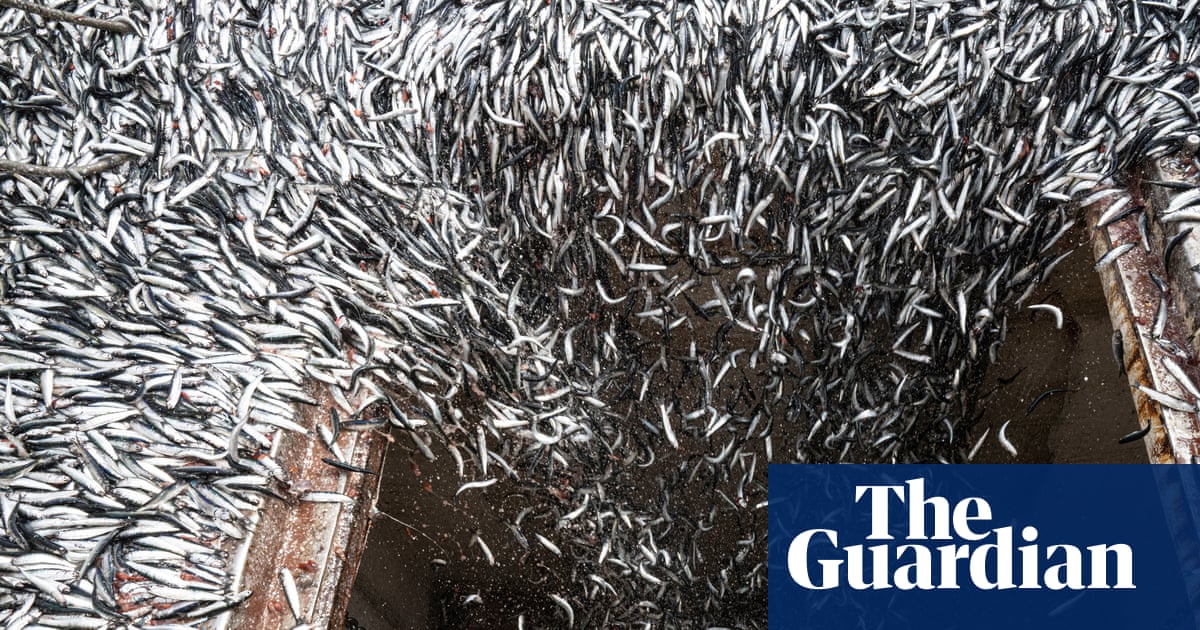
Peru’s anchoveta have made up about a 10th of the entire global commercial fishing catch since 1970, more than any other fish. A combination of warming seas and decades-long overfishing spells disaster

Peru’s anchoveta have made up about a 10th of the entire global commercial fishing catch since 1970, more than any other fish. A combination of warming seas and decades-long overfishing spells disaster

0

Anche tu hai sempre odiato dover modificare o compilare i PDF?

preview

Anche tu hai sempre odiato dover modificare o compilare i PDF?

Dover aprire 1000 app per una cosa che dovrebbe essere semplicissima?

Sarebbe bello avere un coltellino svizzero per queste operazioni?

Ebbene, da oggi ESISTE! L’ho fatta io!
Perché anche io come voi sono passato per gli stessi problemi e mi sono quindi costruito la soluzione #OpenSource e multipiattaforma!

Scopri di più nel video 🔽
https://youtu.be/KZZg5TAwrLg

#Linux #FOSS #app #developing #eu

@lealternative

0

Do politics really matter?

preview

Mullvad donated some money to a Neo-N@zi party. To me, umless if they keep doing this, it doesn’t feel too important, as long as they keep their products up and going. What does it mean to you? Your opinion could change my mind

Mullvad donated some money to a Neo-N@zi party. To me, umless if they keep doing this, it doesn’t feel too important, as long as they keep their products up and going. What does it mean to you? Your opinion could change my mind

-11

Why Sony Really Cancelled PHYSINT

YouTube Why Sony Really Cancelled PHYSINT youtu.be
preview

As a fan of Kojima, I also agree with a lot of her points and criticism. He has long-needed some more people to tell him no, but I always love what he and his team dream up, and the ridiculous stories or gameplay ideas they try. I have also always loved that their games are usually some of the highest quality and play extremely well. You don’t get that polish with rushing games.

From the video, I also was not familiar with Asha Sharma as I have not kept up with much gaming news; found this related article that was interesting: Xbox CEO Asha Sharma called out for “Kojima-maxxing” just before latest layoffs. Definitely a bad look given their layoffs, but she also has a job to do.

0

Got notification about "new post by followed user rimu," but when I click that user I'm not actually following them

preview

I feel weird and stalkerish about this. I never clicked to follow rimu@piefed.social, nor do I want to be alerted of their every post—let them keep their online life private. But I’m also not being given the option to unfollow, because the UI when I go to their profile says I’m not following them!

I will go follow-unfollow and see if that helps, but thought I ought to report this…

0

Besoin d'idées pour upcycler un panier !

preview

Salut salut !

J’ai ce vieux panier (en osier, rotin ? je ne sais pas trop !) dont le fond était super abimé + moisi, donc j’ai tout retiré. J’aimerais lui façonner un truc sympa et décoratif au fond mais j’ai pas trop d’idées, surtout avec cette tige métallique au milieu.

Je sais tricoter, et je peux techniquement faire du crochet, mais je suis aussi ouvert à l’idée d’acquérir des compétences dans une autre pratique (macramé… ?)

Est-ce que ça vous inspire des idées ? :-)

0

🔴 Umstellung auf Open Source: 49 Prozent sehen Open Source in Landesverwaltung positiv

preview

🔴 Umstellung auf Open Source: 49 Prozent sehen Open Source in Landesverwaltung positiv

Quelle: dpa Hamburg/Schleswig-Holstein
6. Oktober 202

➡️ Fast die Hälfte der Beschäftigten in Schleswig-Holsteins Landesverwaltung sieht die Umstellung auf Open-Source-Lösungen positiv.

Dies ergab eine Studie im Auftrag der Open-Source-Unternehmen Univention, Nextcloud, Heinlein und Open-Xchange.

Insgesamt nahmen demnach 2.700 Beschäftigte an der repräsentativen Online-Befragung teil.

https://www.zeit.de/news/2026-10/06/49-prozent-sehen-open-source-in-landesverwaltung-positiv

@schleswig_holstein @CIO @kaffeeringe

0

Sometimes being smart is being inadvertently dumb...

preview

Update: I have now compared a prerecorded audio tape (as sold in stores), one copied from vinyl without modification and one copied from vinyl with added Dolby Atmos noise reduction filter. For my take on the noise reduction, see OP. The prerecorded tape sounded like listening to radio in my kitchen back in like 1995, that is, zero bass, minimum mid, all treble (but not cutting sharp like the noise filter). In comparison, the copy from vinyl without modifications sounds awesome. A much fuller sound: equal bass, mid and treble but with the occasional vinyl pops and cracks of course. Absolutely enjoyable! In fact, I spent the whole morning at work yesterday listening to two albums like that! It was also a great conversation starter, he he.

Vinyl player: Argon TT-3 PLUS
Cassette deck: Harman/kardon TD 302
Cassette type: I
Cassette player: Crown SZ-32 (couldn’t find any info, so it could be a China clone of something else…)

I’m taping (copying) vinyls to empty audio cassettes to not wear out the orginial audio cassette releases. My audio cassette deck with which I’m doing to copying has some kind of a Doly Atmos noise filter which is supposed to suppress hiss and whatever. So I decided to use it. For good measure, I also wiped the vinyl with some isopropyl alcohol which not only removes stains but also - supposedly - reduces static discharges, which of course makes popping sounds. All this in preparation for an hour long bus ride.

Results:

  1. the noise filter just added a ton of treble, making the music unbearable to listen to. Like needles in my ears.
  2. the isopropyl alcohol just made loose grit and shit, which the needle collected (well done needle, in ANY other situation…), which distorted the sound even more.

Only 45 minutes left on this God awful bus. 🥲💔❤️‍🔥💀

0

L'industria dei videogiochi è in rovina – possiamo risolvere il problema?

Knowledge The game industry is broken – can we fix it? knowledge.edge-online.com
preview

L’industria dei videogiochi è in rovina – possiamo risolvere il problema?

Quasi 60.000 posti di lavoro nel settore persi in cinque anni. Budget e programmi di gioco fuori controllo. Centinaia di studi di sviluppo hanno chiuso. Prezzi delle console in aumento dal lancio. Nonostante le previsioni degli analisti sulla crescita dei ricavi per l’industria dei videogiochi nel suo insieme, la storia dietro le quinte è cupa.

https://knowledge.edge-online.com/p/the-game-industry-is-broken-can-we-fix-it-tim-sweeney-edge-crash

@videogiochi

55

[IAP] tinyfeed 1.5.1: the stability release!

GitHub Releases · TheBigRoomXXL/tinyfeed github.com
preview

tinyfeed is a CLI tool that generates a webpage from a collection of feeds. It’s dead simple: no database, no config file, just a CLI and some HTML.

This release focuses on making tinyfeed a more stable and deterministic program. A stable experience is always better for users, and it also allowed us to design a new snapshot-based test suite, so regressions are much less likely to slip through.

It also included a bunch of fixes related to the –order-by option that was added in the previous release and was, sadly, quite full of bugs 😬.

Main items on the menu today:

  • Stable ordering: Feeds and items now come out in the same order on every run.
  • Discoverable sorting: --help now lists the values –order-by accepts: publication-date, update-date, feed-name and author.
  • Lighter dependencies footprint: upgrad to gofeed v1.5, which removes 6 indirect dependencies.
  • Lots of refactoring and a brand new test suite.

And the cherry on top: tinyfeed now publishes an Atom feed, so you can follow its releases! WHY DIDN’T I THINK OF THIS EARLIER? A FEED FOR TINYFEED!

AI Disclosure:

  • Implementation - Pair: I like directing IA when I have a refectoring in mind. On new feature I prefere avoiding it. I find that using IA for feature mean I spends less time time using the software myself during dev and then I miss the bugs.
  • Testing - Hint: the new integration tests suit is 100% me, but the new unit tests are often generated by IA then reviewed / refactor by me.
  • Review - Pair: for contributions it’s 100% myself, I don’t have much MR but I take a lot of time to review them. For my own code, as im a solo maintenr, the IA is the only one giving me reivew.