14

Walkthrough for Self-Hosted Headscale on "Free-Tier" Cloud VM (GCI) [AIP]

preview

AI Disclosure:

  • Implementation - Hint. Syntax was reviewed and polished by AI.
  • Testing - Assisted. AI was used to troubleshoot whenever I got stuck
  • Documentation - Generated

I spent the last three months slowly tinkering with Headscale and trying to get it to run on one of Google’s “free-tier” cloud instances, while also learning about GCI’s strange setup. During that time I used Claude Sonnet to keep track of my progress and help me troubleshoot whenever I got stuck. I finally got it going and before I closed the project, I asked Claude to document my work along with all pertinent information and create and admin cheatsheet, just in case I forget. I liked the output, so I asked the LLM to sanitize my data and recreate my project as a step-by-step walktrhough in a single HTML page.

PROVIDED AS-IS!!! Do not copy and paste code blindly. Use this as a walkthough/guide and NOT as a recipe book. You WILL need to correct code.

EDIT: It looks like for this document, Claude also took it upon itself to further clean my configs, scripts, etc., and add a lot of comments to make it all easier to understand. I DO NOT work this cleanly. It looks correct though.

27

EFF Criticizes US Government's Use of AI For Evaluating Senior Health Insurance Requests

EFF Criticizes US Government's Use of AI For Evaluating Senior Health Insurance Requests - Slashdot yro.slashdot.org
preview

“When we need medical care, we expect decisions about our treatment to be made by our doctors, not a tech company’s algorithm,” writes the EFF newsletter EFFector. But in January America’s federal government launched a program called WISeR that uses AI to evaluate authorization requests for certain procedures from America’s federal health insurance program for seniors, Medicare. EFF sued for records and discovered “additional issues” with the program that they say "could jeopardize Medicare beneficiaries’…

“When we need medical care, we expect decisions about our treatment to be made by our doctors, not a tech company’s algorithm,” writes the EFF newsletter EFFector. But in January America’s federal government launched a program called WISeR that uses AI to evaluate authorization requests for certain procedures from America’s federal health insurance program for seniors, Medicare. EFF sued for records and discovered “additional issues” with the program that they say "could jeopardize Medicare beneficiaries’…

13

Brave removes tracking metadata from Instagram and Facebook photos

preview

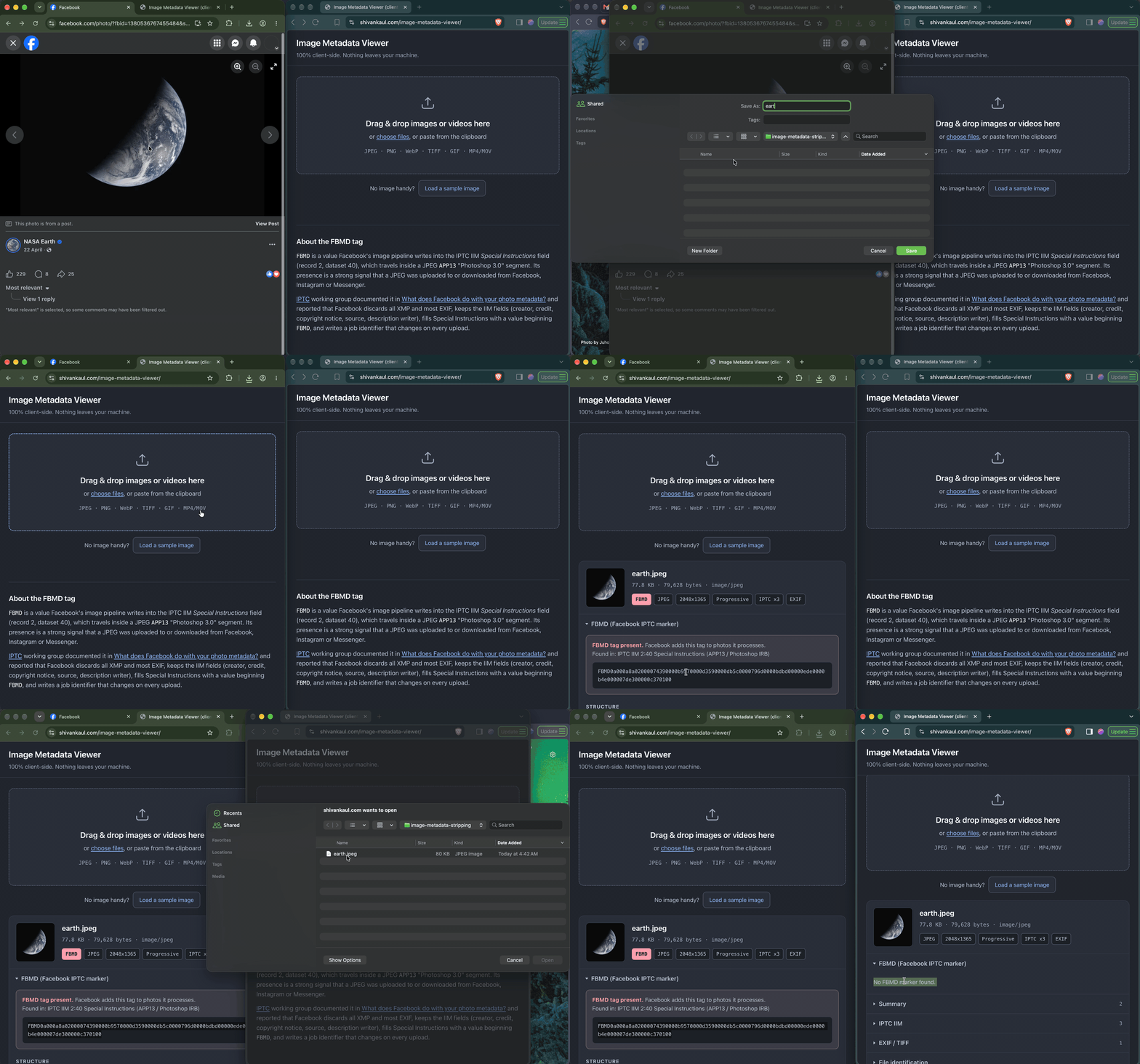
How Brave removes the identifier Brave removes the FBMD identifier at two points:

When you save an image, Brave removes the identifier before the download finishes. This protects you even if you upload the image later with another browser or app. When you upload an image to a website, Brave uploads a clean copy. The original file on your computer stays as it is. Brave’s metadata stripper is written in C++ with no extra libraries, so it stays small and fast. You can follow the work on GitHub.

33

What I'm playing 🐸🪐 RUBATO | Funny frog game

preview

Hop to it!

Rubato is a smug frog and the star of RUBATO, this self-titled game, which is a humorous 2D collectathon platformer… and also some other stuff. I’ll get to the “other stuff” later.

The game quickly establishes its sense of humour and visual style, starting off with a disastrous game of pool at an office floating in space. A guy hits the cue ball so hard that it blows up the Earth and bounces to the other planets of the solar system and smashes them, too. Now you, as Rubato (the frog), are helping collect the planet bits scattered all over and restoring them.

(I’m going to use “RUBATO” in all caps to refer to the game itself, and “Rubato” with just an uppercase R to refer to the player character.)

Putting the planets back together

The gameplay of RUBATO is mainly focused on being a 2D platforming collectathon. You explore all over the sprawling levels for “planet bits”, this game’s main collectible item. Collecting enough bits lets you restore a planet. As a collectathon, RUBATO is thankfully not overburdened with pointless stuff to collect: it’s only “balls” used as currency and “planet bits” as the main objective.

Rubato about to collect a planet bit

The game’s signature gameplay feature is Rubato’s tongue, which you use often in physics-based scenarios, like swinging, pulling boxes, and throwing stuff. It’s a necessary part of traversing levels, solving puzzles, and fighting bosses. And like an old-school Source engine game, there’s even prop flying!

You prop fly by holding an object while jumping up, then landing on the object and jumping off of it again.

This game loves its 2D physics. After defeating just the first boss, you get a rocket launcher as a reward, and of course, you can rocket jump. Over the course of the game, you encounter more physics-related gimmicks, like using a vacuum cleaner to suck up debris.

As I hinted at earlier, RUBATO has “other stuff” piled on top of the 2D collectathon. The game is packed with surprises, like regular, sudden changes in gameplay. It usually does this as a joke, but these changes are also sometimes used to accentuate major story moments. I count over a dozen of these diversions, including racing, building a boat with physics props, and abducting cows.

Rubato in a flying saucer, picking up a cow with the spacecraft’s beam

Overall, RUBATO is not a difficult game. Rubato’s max health starts at an ample 5 in a game where enemies aren’t that numerous or aggressive. You can upgrade this up to 13, which is ridiculously generous. With that much health, the only thing that can threaten him is the postgame challenge level, Mystery Toilet X, which is a long gauntlet packed with enemies and hazards. The game also offers accessibility options, like invincibility.

A.A.A. Gaming (Always Absolutely Amusing)

RUBATO is the first game in a long while that I’ve found funny enough to make me smile and laugh like an idiot. It has a very silly, childish, and irreverent sense of humour that runs deep in the game’s DNA, rather than only being funny because the dialogue has jokes in it. This starts right at that first cutscene with the Earth blowing up.

Visual and sound humour both play a big part in the game. There are often jarring clashes in visual style, where the game’s cartoony pixel art is mixed with wacky 3D renders or full-motion video. Background music and sound effects sometimes sound unexpectedly unfitting or corny. These style changes also end up building a transition to major plot points later on.

A Minecraft-style blocky arm being used to destroy blocks

There are also little incidental gags hidden everywhere for you to find, like funny background details and interactive gags. I appreciate the developer’s willingness to spend time adding these little jokes just to acknowledge when you do or notice something unusual. For example, clicking on Rubato plays a punch sound effect and does nothing else, and the game lets you press movement keys during a loading screen.

Also, to customize Rubato’s look, there are lots of goofy costumes. (I didn’t know how to fit this point into the article.)

The real RUBATO (no spoilers)

The lighthearted tone and goofy premise of RUBATO uncovers plot points that build into a more serious story with several twists. What the game’s story is really about is gradually revealed through dialogue and cutscenes. Plenty of these revelations make you rethink the silly things you saw early in the game, so with hindsight, I realize now that a lot of major plot stuff did get foreshadowed right from the start but I just didn’t notice the first time.

In defiance to 2D platformer conventions, RUBATO puts serious effort in its cutscenes to tell its story. In my experience, if a 2D platformer has cutscenes, it’s mainly dialogue boxes with a few little square portraits per character. Most cutscenes in RUBATO instead use large, expressive character sprites, acted out on the game scene with a great sense of comedic timing.

Those abrupt art style changes I mentioned earlier also get into some of the cutscenes to emphasize especially important plot moments. They mix animation mediums, dropping the game’s usual sprite work for fully animated 2D, N64-style 3D, more experimental styles, and even a bit of full-motion video. Near the end of the game, the climax of the story delivers a big twist (and the loudest statement of what RUBATO is really about) with a surprisingly lengthy chain of interactive cutscenes that whip around and mix up all of these mediums for great dramatic effect.

This was only part 1 of the Director’s Cut

The developer, dconn, announced a set of major updates as a Director’s Cut, meant to address their own issues with the game. So far, the first part of it is out as version 1.2, and that’s what I played. It apparently focused on improving the early parts of the game and clarifying the story, with the next update focusing on the late game.

Even in this form with only half of the Director’s Cut released, I enjoyed RUBATO a lot. The release of the second half would be a good opportunity to collect the planet bits again, maybe next time with hard mode on.

“Planeted the Bit, Baby!” One of the many on-screen messages when you pick up a planet bit.

34

Meta's Muse AI now has an Apple Watch app, which you shouldn't install

AppleInsider Muse AI now available on Apple Watch, but don't bother with it appleinsider.com
preview

cross-posted from: lemmy.world/post/54245199

Meta always up to no good, even in quality!

cross-posted from: lemmy.world/post/54245199

Meta always up to no good, even in quality!

0

Autofahrer attackierte Radfahrer: 14 Monate Haft

preview

Irrwitzige Argumentation des Verteidigers in dem Video zu sehen. Sinngemäß: Es sei eine Provokation wenn man mit dem Rad fährt und nicht ständig Platz macht.

Irrwitzige Argumentation des Verteidigers in dem Video zu sehen. Sinngemäß: Es sei eine Provokation wenn man mit dem Rad fährt und nicht ständig Platz macht.

20

EPP tabled 248 omnibus amendments weakening privacy, noyb finds

preview

cross-posted from: feddit.uk/post/58574807

This article was published in October 2026, but I haven’t seen anything about this in the last few weeks since it was published.

It is quite ironic given the statement on their homepage:

Every day, renewing the trust of the European citizens is the driving inspiration for the EPP’s activities.

The EPP are by far the largest party in the EU, and are quite a lot bigger than the party closest in to them in terms of size, and they currently in the most governments in the EU either in coalition or leading.

LIST OF EPP REPRESENTATION IN EACH COUNTRY


Navy-suited MEPs snip a privacy umbrella as noyb finds EPP tabled 248 amendments weakening the GDPR


EPP tabled 248 omnibus amendments weakening privacy, noyb finds

Axel Voss scored -67 and the 17 lowest scores all belong to EPP MEPs. Only 23 MEPs scored positive, so what will Parliament take into talks with the Council?

Austrian privacy group noyb today published a ranking of Members of the European Parliament based on more than 1,000 amendments they tabled to the GDPR and ePrivacy parts of the Digital Omnibus, the EU package that would rewrite core privacy rules. According to noyb, the European People’s Party (EPP) is “clearly the worst for privacy protections,” with 248 amendments graded as lowering protections against 24 graded as raising them, for a group score of -224. Only three political groups, the Greens/EFA, the Socialists and Democrats (S&D) and the Left, finished with a positive score.

In Short

A privacy group read every change that EU lawmakers have proposed to Europe’s main privacy law and marked each one as better, worse or neutral for people’s privacy. It found that the largest group in the European Parliament, the centre-right EPP, proposed far more changes that would weaken protections than any other group, while the Greens, Socialists and Left proposed more changes that would strengthen them. The Parliament has not voted yet, but its position will decide how much of the current rules on tracking, advertising and AI survives the final negotiation with EU governments.

What noyb published

The ranking sits on a new website, gdpr-omnibus.eu, operated by NOYB - European Center for Digital Rights, the Vienna-based non-profit chaired by Max Schrems. noyb distributed it to journalists in a media update sent on October 12, 2026 at 11:22, under the subject line “Ranking: Who in the EU Parliament wants to limit privacy rights?” The website carries a copyright line for 2026 and navigation by country, by political group and through a set of “special rankings.”

According to noyb, it “analysed more than 1,000 amendments that Members of Parliament (MEPs) have tabled for the GDPR and ePrivacy Directive.” The organisation says it “sorted and graded more than 1,000 amendments for more/less privacy and also simplification,” and that the website offers “a comprehensive grading of every single MEP who has made amendments, searchable by political group and country.”

The reason given is access. According to noyb, it is “almost impossible” for citizens and journalists to find out what individual MEPs are doing on the file. Amendments in the European Parliament are tabled in committee documents running to hundreds of pages, and no official tool aggregates them by direction of travel.

Max Schrems framed the exercise in political terms. “Almost every parliamentarian claims to ‘uphold’ people’s rights, but many do the exact opposite. We bring their intentions to the surface and show who is working on behalf of the people - and who is working on behalf of big tech under the cover of alleged ‘simplification’,” he said, according to the media update.

noyb is not a neutral observer of this file. It has opposed the Commission’s proposal since before its publication, and PPC Land reported in November 2025 that Schrems accused the Commission of “secretly trying to overrun everyone else in Brussels.” The organisation says it has filed around 800 cases against companies including Google, Apple, Facebook and Amazon, and is funded by more than 5,000 supporting members. The ranking is noyb’s own assessment of each amendment, and the grades below are its grades.

How the score works

EPP tabled 248 omnibus amendments weakening privacy, noyb finds

Axel Voss scored -67 and the 17 lowest scores all belong to EPP MEPs. Only 23 MEPs scored positive, so what will Parliament take into talks with the Council?

Austrian privacy group noyb today published a ranking of Members of the European Parliament based on more than 1,000 amendments they tabled to the GDPR and ePrivacy parts of the Digital Omnibus, the EU package that would rewrite core privacy rules. According to noyb, the European People’s Party (EPP) is “clearly the worst for privacy protections,” with 248 amendments graded as lowering protections against 24 graded as raising them, for a group score of -224. Only three political groups, the Greens/EFA, the Socialists and Democrats (S&D) and the Left, finished with a positive score. Add PPC Land to Preferred Sources In Short

A privacy group read every change that EU lawmakers have proposed to Europe’s main privacy law and marked each one as better, worse or neutral for people’s privacy. It found that the largest group in the European Parliament, the centre-right EPP, proposed far more changes that would weaken protections than any other group, while the Greens, Socialists and Left proposed more changes that would strengthen them. The Parliament has not voted yet, but its position will decide how much of the current rules on tracking, advertising and AI survives the final negotiation with EU governments. What noyb published

The ranking sits on a new website, gdpr-omnibus.eu, operated by NOYB - European Center for Digital Rights, the Vienna-based non-profit chaired by Max Schrems. noyb distributed it to journalists in a media update sent on October 12, 2026 at 11:22, under the subject line “Ranking: Who in the EU Parliament wants to limit privacy rights?” The website carries a copyright line for 2026 and navigation by country, by political group and through a set of “special rankings.”

According to noyb, it “analysed more than 1,000 amendments that Members of Parliament (MEPs) have tabled for the GDPR and ePrivacy Directive.” The organisation says it “sorted and graded more than 1,000 amendments for more/less privacy and also simplification,” and that the website offers “a comprehensive grading of every single MEP who has made amendments, searchable by political group and country.”

The reason given is access. According to noyb, it is “almost impossible” for citizens and journalists to find out what individual MEPs are doing on the file. Amendments in the European Parliament are tabled in committee documents running to hundreds of pages, and no official tool aggregates them by direction of travel.

Max Schrems framed the exercise in political terms. “Almost every parliamentarian claims to ‘uphold’ people’s rights, but many do the exact opposite. We bring their intentions to the surface and show who is working on behalf of the people - and who is working on behalf of big tech under the cover of alleged ‘simplification’,” he said, according to the media update.

noyb is not a neutral observer of this file. It has opposed the Commission’s proposal since before its publication, and PPC Land reported in November 2025 that Schrems accused the Commission of “secretly trying to overrun everyone else in Brussels.” The organisation says it has filed around 800 cases against companies including Google, Apple, Facebook and Amazon, and is funded by more than 5,000 supporting members. The ranking is noyb’s own assessment of each amendment, and the grades below are its grades. How the score works

The arithmetic is simple. According to the methodology note in the media update, “the ranking counts the number of positive amendments and subtracts negative amendments,” producing an overall positive or negative score. Amendments that noyb considered “unclear or neutral are not counted.”

One limitation is stated plainly by noyb itself: “The relevance of each Amendments (big or small change) is not taken into account.” An amendment that would remove online advertising from the scope of the GDPR counts the same as one that tweaks a deadline. A legislator who tables a single far-reaching change and many minor protective ones could therefore score positive, and the reverse is also possible. The media update says further detail is available on the website, but the captured page does not reproduce it.

Each entry on the site shows three bars. A green bar counts amendments noyb graded as lowering protection, a grey bar counts amendments it graded as neutral or unclear, and an orange bar counts amendments graded as increasing protection. The final score is the orange figure minus the green one. For the Greens/EFA, for example, 25 positive amendments minus 8 negative ones gives +17, with 47 neutral amendments shown but excluded.

Group scores

The group table on gdpr-omnibus.eu is headed “Privacy score by group” and described as “aggregate sentiment of amendments by political group.” The figures, as published by noyb, are:

  • Greens/European Free Alliance: 8 negative, 47 neutral, 25 positive, score +17
  • Progressive Alliance of Socialists and Democrats: 25 negative, 105 neutral, 37 positive, score +12
  • The Left (GUE/NGL): 12 negative, 57 neutral, 24 positive, score +12
  • Europe of Sovereign Nations: 3 negative, 7 neutral, 3 positive, score 0
  • Renew Europe: 30 negative, 58 neutral, 30 positive, score 0
  • Non-attached Members: 12 negative, 32 neutral, 7 positive, score -5
  • Patriots for Europe: 49 negative, 44 neutral, 24 positive, score -25
  • European Conservatives and Reformists (ECR): 89 negative, 71 neutral, 25 positive, score -64
  • European People’s Party (Christian Democrats): 248 negative, 100 neutral, 24 positive, score -224

Added together, the nine rows contain 1,196 graded amendments: 476 negative, 199 positive and 521 neutral or unclear. That total is consistent with noyb’s “more than 1,000.” It is a PPC Land calculation from the published rows, however, and noyb does not say whether an amendment co-signed by MEPs from two groups appears in both rows. On these figures, amendments graded as lowering protection outnumber those graded as raising it by more than two to one, and the EPP alone accounts for 248 of the 476 negative ones, or 52%.

The neutral column is large. Some 44% of all graded amendments landed there, which means the scores rest on the 675 amendments noyb was prepared to classify.

According to noyb, “almost all MEPs have made amendments that go in both directions, but the tendency is clear.” The media update says the EPP’s negative amendments include “the limitation of the scope of privacy protections and the proposal of far-reaching exceptions for high-risk AI.” It describes the ECR as having “performed poorly overall” and says the Patriots “achieved a better score, but it was still negative.”

Schrems drew a comparison across the spectrum. “Overall, the European People’s Party is clearly the worst for privacy protections and a gift to US big tech. When it comes to privacy rights, even the far-right is more ‘centre’ than the conservatives. The S&D, the Greens and the Left are the only groups that overall defend privacy rights,” he said, according to noyb.

Continue Reading Here from “The individual rankings” : -

ppc.land/epp-tabled-248-omnibus-amendments-weaken…

12

[Episode] Magic Knight Rayearth (2026) - Episode 7 discussion

preview

Magic Knight Rayearth (2026), episode 7

banner image

Alternative Names

Magical Knight Rayearth New Project


Additional Links

- Info - AniList - Info - Kitsu - Info - MyAnimeList - Info - Official Site (Japanese) - Social - TikTok (Japanese) - Social - Twitter (Japanese) - Streaming - Crunchyroll - Streaming - YouTube


Reminder: Please do not discuss plot points not yet seen or skipped in the show. Failing to follow the rules may result in a ban.


All discussions

Episode Link
1 Link
2 Link
3 Link
4 Link
5 Link
6 Link
7 Link

This post was created by a bot. Message the mod team for feedback and comments. The original source code can be found on GitHub.

34

No Parking, No Standing? Florida Court Rules on Standing in Driver’s License Privacy Case

preview

A Florida parking invoice has sparked a much bigger legal battle over personal privacy. After a parking company allegedly used license plate information to retrieve a driver’s name and home address from state motor vehicle records, a federal judge ruled that the resulting privacy claim could proceed. The case challenges the idea that individuals must suffer financial loss or other visible damage before they can enforce their privacy rights, raising important questions about surveillance, statutory protect…

A Florida parking invoice has sparked a much bigger legal battle over personal privacy. After a parking company allegedly used license plate information to retrieve a driver’s name and home address from state motor vehicle records, a federal judge ruled that the resulting privacy claim could proceed. The case challenges the idea that individuals must suffer financial loss or other visible damage before they can enforce their privacy rights, raising important questions about surveillance, statutory protect…

-19

Cloudflare Open Sources Kitesurf: Their Web Browser For AI Agents - Phoronix

Cloudflare Open Sources Kitesurf: Their Web Browser For AI Agents www.phoronix.com
preview

Kitesurf is now open-source under an Apache 2.0 license for this web browser built for agents. Kitesurf is built atop Cloudflare Workers and can parse HTML, handle CSS, and execute JavaScript all without a browser contianer.

Kitesurf is now open-source under an Apache 2.0 license for this web browser built for agents. Kitesurf is built atop Cloudflare Workers and can parse HTML, handle CSS, and execute JavaScript all without a browser contianer.

11

[Episode] Sasaki and Peeps Season 2 • Sasaki to Pii-chan Season 2 - Episode 7 discussion

preview

Sasaki to Pii-chan Season 2, episode 7

banner image

Alternative Names

SasaPii 2, Sasaki to Pii-chan 2nd Season, ささピー 2, 佐々木とピーちゃん 第2期


Additional Links

- Info - AniList - Info - Kitsu - Info - MyAnimeList - Info - Official Site (Japanese) - Social - Twitter (Japanese) - Streaming - Bilibili TV - Streaming - Crunchyroll


Reminder: Please do not discuss plot points not yet seen or skipped in the show. Failing to follow the rules may result in a ban.


All discussions

Episode Link
1 Link
2 Link
3 Link
4 Link
5 Link
6 Link
7 Link

This post was created by a bot. Message the mod team for feedback and comments. The original source code can be found on GitHub.

32

TVs, Refrigerators, and Garbage Trucks – How Big Tech Spies On Us

Josh Griffiths TVs, Refrigerators, and Garbage Trucks – How Big Tech Spies On Us joshgriffiths.site
preview

The number of ways big tech and world governments spy on us is astounding. I go over all the ways modern tech spies on us, including the surprising ways you may not know about, how governments enable this, how hackers are loving this. I talk about why this is a problem, and what we can do about it.

I was inspired by Gamer’s Nexus’ video about finding cameras and mics in TVs spying on people. It was surprisingly easy to put this list together, and rather depressing.

28

Opinions on Opnsense dec850 as router

preview

I asked this question about a week ago on homelab and didn’t get very much input, so I hope I can get more help here.

I have been looking at replacing my L3 switch at the gateway of my network & the OPNsense DEC850 seems to have all the features I want, mainly, vlans, 10 GB wan, multiple 2.5 GB lan, & open firmware. Does anyone have experience with this router/ are there better routers out there that do similar setups? I have experience with Cisco hardware and am willing to learn new syntax so I am not too worried about the CLI, but I heard that opnsense’s docs are a bit thin.

29

Anyone know of a FOSS type kids messenger?

preview

cross-posted from: lemmy.today/post/63107763

I’m looking for something like Snikket or Prosody, but kids-oriented. I DON’T want my <10 daughter using Meta Messenger Kids! I’ll tell my friends to setup for their kids, too. I’d have no access to anything, so it’s secure (mom and dad not snooping per se), but the downside is minimal parental controls. Though, no one to really add either.

I’ll host or pay for it, IDC. It doesn’t seem like there is much out there either.

JusTalk seemed nice when I found out but apparently China owned and so no more secure. I/we need better options!

-26

[AIP] VpsPilot: managing my Linux VPS from my phone over SSH (feedback welcome)

preview

I used to be chained to my laptop all day just to manage my self-hosted servers or fix minor issues, and I hated waiting until I got back home to handle things. I wanted the freedom to manage my infrastructure from anywhere straight from my phone without trusting third-party cloud relays.

​I built VPSPilot as a native Kotlin Android SSH client for my own daily workflow. A few things I focused on:

  • Zero Proxies / Direct Connection: No middleman servers or cloud accounts—your phone talks directly to your own hosts over standard SSH.

  • ​Hardware Key Isolation: SSH private keys are locked inside Android’s hardware-backed Keystore/TEE chip so they aren’t exposed or handed over to anyone else.

  • ​Task Automation & Secret Handling: Automates my routine sysadmin tasks and custom workflows so I don’t have to keep typing repetitive commands on a phone keyboard, while keeping secrets from being typed raw into the console.

​AI Disclosure: Built by me as a solo project for my own daily server management workflow. I drove the core architecture, handled all testing, and managed the device/Keystore implementation, while using an AI assistant for syntax help, debugging routine exceptions, and cleaning up documentation.

-16

what software fits this?

preview

well is there something like this or similar but self hostable:

1: it is not the heaviest thing on the world

2: it works similar to a forum, Mailing list, or BBS

3: it uses text like this for example:

user: whatever

<other info about the message/post>

<the message/post>

4: it is easy or medium to get running

5: Can use Tor

-17

Two new God of War projects are on the way!

preview

The first is a remake of the original Greek trilogy, officially announced after years of rumours and speculation. https://blog.playstation.com/2026/02/12/god-of-war-greek-trilogy-remake-in-development-god-of-war-sons-of-sparta-out-now/

#GodOfWar #Kratos #PlayStation #PS5 #Gaming

Original post

The first is a remake of the original Greek trilogy, officially announced after years of rumours and speculation. https://blog.playstation.com/2026/02/12/god-of-war-greek-trilogy-remake-in-development-god-of-war-sons-of-sparta-out-now/

#GodOfWar #Kratos #PlayStation #PS5 #Gaming

Original post

22

Have you listened to bad English dubs of games that are originally developed in Japanese?

preview

If you’ve listened to the original Japanese audio first then done a second playthrough with English dub: why do English VA struggle to pronounce character names that begin or end with ryu or ryo? Also depending on the title, they choose the worst VA giving off terrible performances (that sometimes don’t match the character profile), in some cases an anime game turns into Disney when it receives an English dub.

I mean, have you listened to crap English dubs of games that originally recorded the dub in Japanese upon development? You can tell via lip sync and pragmatic speech as the dialog was catered more for Japanese on games that are created in Japan, why isn’t English voice acting the same as anime since it often gives off a different vibe (as in them trying to sound like they’re in Nickelodeon or Cartoon Network).

28

Tracking Every Turn: California Drivers Challenge Axon’s ALPR Practices

The National Law Review Tracking Every Turn: California Drivers Challenge Axon’s ALPR Practices natlawreview.com
preview

Two California drivers have filed a class action against Axon Enterprise, alleging that the company’s automated license plate reader (ALPR) network tracks and stores California residents’ movements without the privacy disclosures state law requires. The complaint states that Axon’s fixed and police-vehicle cameras capture license plates, locations, timestamps, and vehicle characteristics, and then combines this information with other camera feeds and makes it searchable through its Evidence and Fusus softwa…

Two California drivers have filed a class action against Axon Enterprise, alleging that the company’s automated license plate reader (ALPR) network tracks and stores California residents’ movements without the privacy disclosures state law requires. The complaint states that Axon’s fixed and police-vehicle cameras capture license plates, locations, timestamps, and vehicle characteristics, and then combines this information with other camera feeds and makes it searchable through its Evidence and Fusus softwa…

-4

Want to build your own roguelike game?

preview

#FreeCodeCamp just released a FREE 10-hour Godot 4 course covering everything from combat and procedural levels to bosses, loot, shops, and game exports.
#Godot #GameDev #IndieGameDev #FreeCodeCamp #learntocode
https://www.freecodecamp.org/news/godot-4-roguelike-course-build-a-complete-top-down-action-game/

Posted on Normals.me · View the original post

100

UK Government 'looking seriously' at banning under-16s from Vinted and eBay

Vinted and eBay could be included in under-16 social media ban, minister says www.bbc.com
preview

The move was due to fears that messaging functions on the platforms allowed strangers to groom children, according to the newspaper. It suggested similar reselling platforms, Depop and Facebook Marketplace, would also be included in the list of banned sites.

I don’t even know what to say to this LOL.

0

Secrets (2026, dir Ravi Bharwani)

play · youtube.com
YouTube Secrets | Official Trailer | Netflix www.youtube.com
preview

A single mother’s dream of a better life with her daughter is threatened when someone from her past resurfaces, revealing a dark secret.

www.themoviedb.org/movie/1616675-secrets

A single mother’s dream of a better life with her daughter is threatened when someone from her past resurfaces, revealing a dark secret.

www.themoviedb.org/movie/1616675-secrets