








0
0

NBC News
Good News: ‘Spectrum Sailing’ camp promotes confidence and community
www.nbcnews.com


The is the Jinhao 59 with an EF nib, in the “wine red limited edition”, all included (shipping, duties, etc.), it cost me 8,19€ to get it. It is fully made of plastic, except for the trim ring, clip and section plug that are made of steel. The whole pen weighs 17,2g with a full converter, it is ever so slightly top heavy, likely due to the clip. It is 118mm long closed, 148mm posted, roughly 13mm in diameter and the section is around 11,5mm where I hold it. The converter sits deeper than in the Elite 95S, closer to a Sailor 21, the mouth is ø3,4. It is not particularly small compared to non pocket pens, but given the fact that I don’t care for the pocket aspect, I can’t speak for its usefulness as such.


Size comparison with (left to right) the Hero 1079, Waterman Expert and Jinhao 20


The nib feels the same as the ones in the Jinhao 10 and 20, it’s just physically larger: it is rather smooth, especially for its size, well tuned, 3-4/10 wetness (great ink efficiency), but the feed is great at keeping up with fast paced writing and even sketching, doesn’t have any directional variation, it is not sensitive to paper texture. It writes slightly thinner than a Pilot F, or Jinhao hooded nib from the 911 and 85. Unfortunately, the nib is not an inlaid one, the section is just cut to look like the Elite 95S’ inlaid one, and it looks like it was originally designed for a different nib, but as if plans changed somewhere along the way, especially on the feed side.

The feed seems captive inside the section as the section plug seems glued, so I would recommend sticking to safe inks to increase the pen’s lifespan, as well as regular flushes. After a little over 4 weeks of use (and roughly 5,5 converters worth of ink) the section and blind cap have developed microscratches from the friction fit cap sliding on and off, nothing obvious, but something to keep in mind for longevity.
Overall, it is a perfectly serviceable pen, it works perfectly fine out of the box, has no glaring issues (at least with the black colorways), and still looks pretty good under normal lighting. My issues is that Jinhao has better pens for the price (like the 88 or 95), both in terms of quality and durability. Still not a bad purchase.
The is the Jinhao 59 with an EF nib, in the “wine red limited edition”, all included (shipping, duties, etc.), it cost me 8,19€ to get it. It is fully made of plastic, except for the trim ring, clip and section plug that are made of steel. The whole pen weighs 17,2g with a full converter, it is ever so slightly top heavy, likely due to the clip. It is 118mm long closed, 148mm posted, roughly 13mm in diameter and the section is around 11,5mm where I hold it. The converter sits deeper than in the Elite 95S, closer to a Sailor 21, the mouth is ø3,4. It is not particularly small compared to non pocket pens, but given the fact that I don’t care for the pocket aspect, I can’t speak for its usefulness as such.
Size comparison with (left to right) the Hero 1079, Waterman Expert and Jinhao 20
The nib feels the same as the ones in the Jinhao 10 and 20, it’s just physically larger: it is rather smooth, especially for its size, well tuned, 3-4/10 wetness (great ink efficiency), but the feed is great at keeping up with fast paced writing and even sketching, doesn’t have any directional variation, it is not sensitive to paper texture. It writes slightly thinner than a Pilot F, or Jinhao hooded nib from the 911 and 85. Unfortunately, the nib is not an inlaid one, the section is just cut to look like the Elite 95S’ inlaid one, and it looks like it was originally designed for a different nib, but as if plans changed somewhere along the way, especially on the feed side.
The feed seems captive inside the section as the section plug seems glued, so I would recommend sticking to safe inks to increase the pen’s lifespan, as well as regular flushes. After a little over 4 weeks of use (and roughly 5,5 converters worth of ink) the section and blind cap have developed microscratches from the friction fit cap sliding on and off, nothing obvious, but something to keep in mind for longevity.
Overall, it is a perfectly serviceable pen, it works perfectly fine out of the box, has no glaring issues (at least with the black colorways), and still looks pretty good under normal lighting. My issues is that Jinhao has better pens for the price (like the 88 or 95), both in terms of quality and durability. Still not a bad purchase.




I use compact mode.
Cleared cache.
This does not appear on all posts, or even on all posts by bot. This was just the first one I found.
Anyone else seeing this issue?
I use compact mode.
Cleared cache.
This does not appear on all posts, or even on all posts by bot. This was just the first one I found.
Anyone else seeing this issue?


Found on imgur. Original creator is realMitschel
(open in new tab to zoom in)
Found on imgur. Original creator is realMitschel
(open in new tab to zoom in)

Vols descobrir tots els carrers guarnits de les festes de Gràcia? En aquesta pàgina trobaràs una galeria de fotos amb les 23 propostes de les comissions.
Vols descobrir tots els carrers guarnits de les festes de Gràcia? En aquesta pàgina trobaràs una galeria de fotos amb les 23 propostes de les comissions.


YT video
YT video
Eine Schlafmaske am besten nicht aus Plastik, gepolstert gegen Lichteinfall in die Augen und am besten mit einem abschirmenden Teil bei der Nase.
Ich habe selber mal eine gefunden die ganz gut ist.
Eine Schlafmaske am besten nicht aus Plastik, gepolstert gegen Lichteinfall in die Augen und am besten mit einem abschirmenden Teil bei der Nase.
Ich habe selber mal eine gefunden die ganz gut ist.
Hilbert imagines a hypothetical hotel with rooms numbered 1, 2, 3, and so on. The hotel is full and new guest arrives wanting a room. I can not move any guest. So i say to new guest wait 1 sec a new room must become available as Infinite guests one must leaving at any time.
is this good answer?
Hilbert imagines a hypothetical hotel with rooms numbered 1, 2, 3, and so on. The hotel is full and new guest arrives wanting a room. I can not move any guest. So i say to new guest wait 1 sec a new room must become available as Infinite guests one must leaving at any time.
is this good answer?

I started needlefelting during covid with no idea what I was doing, breaking every one of my needles along the way.
Here’s a guide for anyone who wants to get into it. It’s one of the most low-barrier crafts, in my opinion, with barely any cost ($10-$20) to get started.
I started needlefelting during covid with no idea what I was doing, breaking every one of my needles along the way.
Here’s a guide for anyone who wants to get into it. It’s one of the most low-barrier crafts, in my opinion, with barely any cost ($10-$20) to get started.

cross-posted from: piefed.blahaj.zone/c/…/absolutely
Absolutely
cross-posted from: piefed.blahaj.zone/c/…/absolutely
Absolutely

Influencers are always filming so I’m sure there’s a lot more evidence out there!
Influencers are always filming so I’m sure there’s a lot more evidence out there!

Campaigning for the electorate vote only is an interesting strategy, I wonder how well it will work?
Campaigning for the electorate vote only is an interesting strategy, I wonder how well it will work?

The investing strategy behind President Trump’s 21,000 trades Alex Nicoll 11–14 minutes Trump made 21,000 trades last year. Here’s one way you can trade like the president.
By Alex Nicoll
You’re currently following this author! Want to unfollow? Unsubscribe via the link in your email.
Donald Trump figurine on the trading floor of the stock exchange. A Donald Trump figurine on the trading floor. TIMOTHY A. CLARY / AFP via Getty Images
Trading like President Donald Trump might be as easy as buying a customized index fund.
Trump made 21,000 trades in 2025, a volume higher than any other president, and likely any other politician. He generated more than $2 billion in income (including $1 billion in cryptocurrency income).
The Trump Organization has said that Trump’s trading is automated. Investors and financial advisors say Trump could be part of a growing group of investors using direct-indexing strategies to capture the returns of an index while also reducing their tax bill.
Direct indexing grew to $864 billion in assets as of the end of 2024, according to Cerulli Associates, more than double its size in 2020, as technology has made it cheaper to run these strategies for everyday investors.
Alex Michalka, vice president of investment research at Wealthfront, which credits itself with coining the term “direct indexing” in 2012 and oversees $99 billion in client assets, said that one medium-sized direct indexing account on the platform made over 4,500 distinct trades in large-cap companies in 2025 in order to increase tax savings.
Trump’s disclosures showed eight distinct accounts, most of which trade equities. If they all traded evenly, that would be more than 2,500 trades per account. Democratic lawmakers, including Elizabeth Warren, are now asking for information about who manages the president’s accounts.
A Trump Organization spokesperson wrote that the latest request from Democratic lawmakers is “just another baseless political stunt,” and pointed to reporting by other outlets showing the president’s accounts are managed by independent third-party managers.
Trump and his circle don’t have the ability to influence the investments, the spokesperson said, in order “to avoid even the appearance of a conflict of interest.”
We spoke to experts to learn more about direct indexing and which investors should investigate or avoid the strategy. What’s direct indexing
Direct indexing is an evolution of index investing, the way the vast majority of investors access the market. Instead of buying a single ETF that tracks an index, investors own the underlying stocks directly, allowing them to trade individual names while still roughly mimicking the index performance.
The key to the strategy is “dispersion,” Michalka said, effectively the difference between individual stock returns and an index’s overall performance.
Markets generally go up, but that performance is not uniform.
“Even if the market as a whole is up, there are going to be some stocks that are down,” he said.
ETFs bundle those gains and losses together, but by trading the individual stocks, an investor can claim the losses against their capital gains in the fund or from other sources. (They’re also able to claim $3,000 against their W-2 or other wage income if losses exceed gains in a given year).
Those written-off taxes are then deferred until the investor liquidates the portfolio, allowing them to reinvest those additional savings in the meantime.
This strategy used to be available only to the rich, said Gabriel Shahin, a financial advisor who founded the advisory firm Falcon Wealth Planning.“We wouldn’t even look at it unless we were managing at least $5 million for them,” Shahin said, citing high management costs, the costs of individual trades, and the lack of fractional shares as reasons the strategy was restricted.
Over the past five or so years, direct indexing has grown substantially, he said, as more seamless financial plumbing, free trades, and technology that can automate much, or all, of the strategy, means that it’s in reach for regular investors. Prices for some products have come down in line with the most popular ETFs, with Wealthfront’s S&P 500 direct-indexing product carrying the same fee as State Street’s SPY ETF. Other products are more expensive but offer intraday trading and rebalancing.
Fractional shares that can trade down to six or seven decimal points also lower the cost of the strategy. It’s customizable, allowing investors to adjust their index holdings based on their environmental, social, or governance preferences, such as excluding oil and gas investments, or to avoid positions they already own a lot of, like a tech employee who gets a sizable percentage of their income in their company’s equity.
The investing strategy is growing rapidly, and in recent years has become almost table stakes. Shahin said he uses it with many of his clients. Who it’s for
Trump is “the perfect candidate for direct indexing,” Shahin said. He’s in the top tax bracket, has lots to save on his taxes, and, as a real estate investor, has capital gains to write off and a need for liquidity.
While the strategy appears to be working for a growing number of investors, it’s “not a free lunch,” said Michalka of Wealthfront.
Fees from some providers can be much higher than many ETFs. There’s also the specter of tracking errors, or the dispersion between a product’s return and the index it tracks as a result of the tax saving, Michalka said.
Michalka said that his firm’s analysis shows a small, roughly 1%, tracking error on their own products, though that can be higher in volatile years, like 2020, or if the portfolio is customized away from the index.
“You might read about this and say it’s great for me, but you need to analyze your situation,” said Shahin.
Factors that make it worth considering:
Enough capital gains income that’s worth writing off, especially if you are a tech worker paid with shares of the company you work for or a real estate investor like Trump. If you have a long time horizon for your investments, it gives you time to reinvest the deferred taxes. The ability to continually contribute money to the account. The investment has a diminishing tax benefit over time without fresh capital. If you want to modify investments to avoid certain companies for ESG, religious-exemption, or diversification reasons.
Factors that may give you pause:
Investors who expect their tax rate to rise. Deferring taxes is more valuable if you expect to pay a lower rate when you eventually sell, such as in retirement. If you expect your rate to be higher, the strategy may be less worthwhile. You’re investing a smaller amount of money. The tracking errors will likely be higher because of the constraints of fractional shares. You’re saving for a down payment or other big purchase in the short term. Any tax savings are not worth the risk of putting money that you will soon need into the risky equity market. If it’s too busy or complicated for you, you might prefer to buy an index: “$SPY and chill,” Shahin said. Not all providers are equal. There’s the cost, but non-institutional providers’ trades could be less prioritized or may be more costly, which can increase tracking errors. Be careful about leveraged direct-indexing products, or long/short portfolios, that follow similar strategies but increase the leverage and therefore, the risk.

cross-posted from: lemmy.sdf.org/post/57662436
“When evil-doing comes like falling rain, nobody calls out ‘stop!’ When crimes begin to pile up they become invisible.”
German playwright Bertolt Brecht’s observation on the political apathy that engulfed Germany in the 1930s resonates with 21st century survivors of the Chinese state’s war against Uyghurs in its northwestern heartland, known by exiles as East Turkestan.
Germany’s slide into fascism brought book burnings and arrests of “undesirables.” It lead step by step to antisemitism, concentration camps, torture, and death. That brutal history echoes today in Beijing’s campaign against the Turkic peoples of its western regions – and in the silence of a deaf world. Only those who have experienced the terror first-hand and survived to tell the tale can hope to describe its full horrors.
Kalbinur Sidik (formerly Romanized as Qelbinur Sidik) is one such rare eyewitness to what many nations have termed a genocide. Her ordeal as a teacher inside the camps drove her to the brink of collapse. She escaped in 2019 ostensibly for medical treatment, hoping to reunite with her daughter in the Netherlands and seek asylum. Speaking out became her path to healing.
She told The Diplomat that “silence is not an option.” The faces of captives in her class have haunted her to this day. Since leaving, her mission has been to give voice to their silent cries.
[…]
Her memoir, “Heart Full of Light” – a title reflecting the meaning of her name, Kalbinur – is full of horror and sadness but also memory, dignity and resistance. It is a cry against erasure and a wake-up call to a world that has not been listening.
[…]
Every inch of the compound was monitored. If someone moved, a screen flashed red and zoomed in. “It was impossible not to compare them to animals in cages,” Sidik wrote of her students. “There was nowhere to hide. For them, or for me.”
The specter of organ harvesting hung over everything. Healthy young prisoners disappeared. Across Xinjiang authorities collected biodata from everyone aged 16-65. Mandatory DNA tests, bloods, iris scans, voice and gait recordings filled vast data banks, many believed for organ matching. Research later identified Saudis and Gulf Arabs traveling to eastern China for halal organs.
“Alive we were worthless, dead, and cut up, our organs were worth a ransom,” Sidik wrote.
[…]

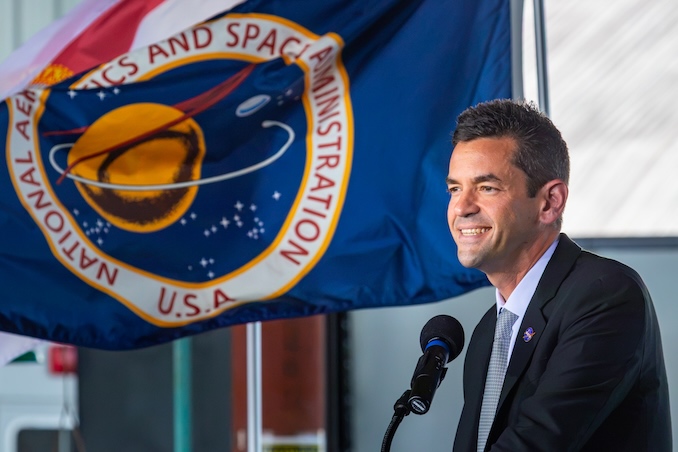

Jeff Foust 7–8 minutes WASHINGTON — NASA plans to award three more lunar missions this year through a commercial services program, including an orbiter that would replace the Lunar Reconnaissance Orbiter. In earnings calls this week, executives with Firefly Aerospace and Intuitive Machines, the two companies that have landed spacecraft on the moon through NASA’s Commercial Lunar Payload Services, or CLPS, program, said they expect NASA to award three more task orders through that program by the end of the year. Two of the upcoming CLPS task orders will be lander missions, which have accounted for nearly all the missions under the program since the agency issued the first task orders in 2019. The companies did not discuss specifics of those missions. The third, though, would be an “orbiter imaging service,” said Jason Kim, chief executive of Firefly Aerospace, during his company’s Aug. 12 earnings call. Steve Altemus, chief executive of Intuitive Machines, mentioned in an Aug. 14 earnings call a task order expected later this summer or in early fall for “the orbiter surveyor to map the moon in replacement of the Lunar Reconnaissance Orbiter.” NASA developed LRO two decades ago during an earlier effort to return humans to the moon, the Vision for Space Exploration. Launched in 2009, LRO features a high-resolution camera and other instruments for studying the moon. The spacecraft continues to function well and operates under an extended mission running through 2028. The spacecraft is aging, though, and scientists have for years pushed to fly a replacement to continue lunar science and support future lander missions. “Plans for a next-generation long-lived integrated orbiter with modern instruments that can replace the highly productive LRO (launched in 2009) are long overdue,” a 2022 report by the Lunar Exploration Analysis Group noted. NASA has not disclosed plans to develop a successor to LRO, either through the CLPS program or other approaches. The agency provides few details about upcoming CLPS task orders or those being competed, and once it awards a task order, it does not release a source selection statement. A timeline of CLPS missions on the NASA website does not include several recent awards and lacks updated dates for others. Both companies are well-positioned to pursue a lunar orbiter imaging mission. Firefly announced in 2025 its intent to develop a commercial lunar imaging service, called Ocula, using cameras mounted on the company’s Elytra spacecraft that will accompany future Blue Ghost lander missions. Intuitive Machines has a NASA contract to manage the operations of the high-resolution camera on LRO, as well as another NASA-developed camera, ShadowCam, on South Korea’s Danuri lunar orbiter. The companies also have backlogs of four CLPS lander missions each. That includes missions awarded in June through a CLPS task order called CS-8 that also included two landers for a third company, Astrobotic (now Voyager Lunar Systems). The four landers awarded under the task order will carry an identical suite of instruments. Both companies said the CS-8 task order is intended to demonstrate the ability to rapidly produce a standardized lander model. “The primary goal of this mission is to demonstrate repeatable access to the lunar surface on an accelerated timeline, executing the mission in half the time of our first landing,” Kim said. “NASA’s contract represents a near build-to-print lander design to enable faster production cycles and template our successful Blue Ghost into a production line vehicle.” “The whole idea here is no longer building bespoke landers for each individual mission, but how do you get the production rate up,” Altemus said, noting the company’s proposal for the CS-8 task order included a 26-month schedule to build the lander. Firefly Aerospace and Intuitive Machines have been expanding production facilities for their landers. Altemus said his company has added 75,000 square feet of production space at its Houston headquarters that will be used to build both landers and its constellation of five lunar data relay satellites. Kim said Firefly has more than quadrupled cleanroom space for lander and spacecraft production. “That gives us a really good position and extra capacity to take on more, so we see the CS-8 win in the second quarter as just the beginning.” Preparing for CLPS 2.0 Altemus said he expects a final task order under the original CLPS contract, called CP-32, to be awarded early next year. NASA will then shift to a new contract, CLPS 2.0, with proposals due to NASA at the end of June. Both companies said they are bidding on the contract, which will have a maximum value of $10 billion over 10 years, with an option for a five-year extension that would increase the maximum value by $5 billion. Both are preparing to offer larger landers as part of CLPS 2.0. While most of Intuitive Machines’ missions have used its Nova-C lander, with a payload capacity of about 100 kilograms, the company won a task order in March for a mission designated IM-6 using its larger Nova-D lander, which can deliver about 500 kilograms. Altemus said the company is considering building a second Nova-D lander in parallel with the lander for IM-6 without a contract yet for it. “We’re looking at building two in a row, or two in parallel is a better way to put it, in our facilities here, anticipating an award for a second Nova-D in the same time frame, which is 2029.” The companies are looking at even larger landers to support NASA’s anticipated needs for its lunar base. Altemus said the company was looking at a revised three-engine configuration for Nova-D that would allow it to deliver up to 1 metric ton to the surface. “NASA is calling for landers that can carry two to five metric tons to the surface,” he said, which would require upgrades to the engine. “That’s what we’re doing in coming up with that roadmap of where those technologies need to be matured to get to the heavier and heavier cargo, which will be an essential piece of CLPS 2.0.” Kim said Firefly also has plans to increase the performance of its Blue Ghost landers. “We’re really excited about taking our success from Blue Ghost Mission 1 and subsequent missions and applying it and extending it to a larger lander to take even more mass, even more volume, to the moon, so that we can be part of the infrastructure builds of the moon base.” He said details of the company’s larger landers remain confidential, but he described a “modular” approach that can be scaled up to payloads weighing several metric tons. “We have a design that takes a lot of the common components that we successfully landed on the moon with, but scales it in terms of size, volume and mass so we can take that moon base infrastructure cargo reliably,” he said. “We’re talking a multi-ton capability.”
Jeff Foust 7–8 minutes WASHINGTON — NASA plans to award three more lunar missions this year through a commercial services program, including an orbiter that would replace the Lunar Reconnaissance Orbiter. In earnings calls this week, executives with Firefly Aerospace and Intuitive Machines, the two companies that have landed spacecraft on the moon through NASA’s Commercial Lunar Payload Services, or CLPS, program, said they expect NASA to award three more task orders through that program by the end of the year. Two of the upcoming CLPS task orders will be lander missions, which have accounted for nearly all the missions under the program since the agency issued the first task orders in 2019. The companies did not discuss specifics of those missions. The third, though, would be an “orbiter imaging service,” said Jason Kim, chief executive of Firefly Aerospace, during his company’s Aug. 12 earnings call. Steve Altemus, chief executive of Intuitive Machines, mentioned in an Aug. 14 earnings call a task order expected later this summer or in early fall for “the orbiter surveyor to map the moon in replacement of the Lunar Reconnaissance Orbiter.” NASA developed LRO two decades ago during an earlier effort to return humans to the moon, the Vision for Space Exploration. Launched in 2009, LRO features a high-resolution camera and other instruments for studying the moon. The spacecraft continues to function well and operates under an extended mission running through 2028. The spacecraft is aging, though, and scientists have for years pushed to fly a replacement to continue lunar science and support future lander missions. “Plans for a next-generation long-lived integrated orbiter with modern instruments that can replace the highly productive LRO (launched in 2009) are long overdue,” a 2022 report by the Lunar Exploration Analysis Group noted. NASA has not disclosed plans to develop a successor to LRO, either through the CLPS program or other approaches. The agency provides few details about upcoming CLPS task orders or those being competed, and once it awards a task order, it does not release a source selection statement. A timeline of CLPS missions on the NASA website does not include several recent awards and lacks updated dates for others. Both companies are well-positioned to pursue a lunar orbiter imaging mission. Firefly announced in 2025 its intent to develop a commercial lunar imaging service, called Ocula, using cameras mounted on the company’s Elytra spacecraft that will accompany future Blue Ghost lander missions. Intuitive Machines has a NASA contract to manage the operations of the high-resolution camera on LRO, as well as another NASA-developed camera, ShadowCam, on South Korea’s Danuri lunar orbiter. The companies also have backlogs of four CLPS lander missions each. That includes missions awarded in June through a CLPS task order called CS-8 that also included two landers for a third company, Astrobotic (now Voyager Lunar Systems). The four landers awarded under the task order will carry an identical suite of instruments. Both companies said the CS-8 task order is intended to demonstrate the ability to rapidly produce a standardized lander model. “The primary goal of this mission is to demonstrate repeatable access to the lunar surface on an accelerated timeline, executing the mission in half the time of our first landing,” Kim said. “NASA’s contract represents a near build-to-print lander design to enable faster production cycles and template our successful Blue Ghost into a production line vehicle.” “The whole idea here is no longer building bespoke landers for each individual mission, but how do you get the production rate up,” Altemus said, noting the company’s proposal for the CS-8 task order included a 26-month schedule to build the lander. Firefly Aerospace and Intuitive Machines have been expanding production facilities for their landers. Altemus said his company has added 75,000 square feet of production space at its Houston headquarters that will be used to build both landers and its constellation of five lunar data relay satellites. Kim said Firefly has more than quadrupled cleanroom space for lander and spacecraft production. “That gives us a really good position and extra capacity to take on more, so we see the CS-8 win in the second quarter as just the beginning.” Preparing for CLPS 2.0 Altemus said he expects a final task order under the original CLPS contract, called CP-32, to be awarded early next year. NASA will then shift to a new contract, CLPS 2.0, with proposals due to NASA at the end of June. Both companies said they are bidding on the contract, which will have a maximum value of $10 billion over 10 years, with an option for a five-year extension that would increase the maximum value by $5 billion. Both are preparing to offer larger landers as part of CLPS 2.0. While most of Intuitive Machines’ missions have used its Nova-C lander, with a payload capacity of about 100 kilograms, the company won a task order in March for a mission designated IM-6 using its larger Nova-D lander, which can deliver about 500 kilograms. Altemus said the company is considering building a second Nova-D lander in parallel with the lander for IM-6 without a contract yet for it. “We’re looking at building two in a row, or two in parallel is a better way to put it, in our facilities here, anticipating an award for a second Nova-D in the same time frame, which is 2029.” The companies are looking at even larger landers to support NASA’s anticipated needs for its lunar base. Altemus said the company was looking at a revised three-engine configuration for Nova-D that would allow it to deliver up to 1 metric ton to the surface. “NASA is calling for landers that can carry two to five metric tons to the surface,” he said, which would require upgrades to the engine. “That’s what we’re doing in coming up with that roadmap of where those technologies need to be matured to get to the heavier and heavier cargo, which will be an essential piece of CLPS 2.0.” Kim said Firefly also has plans to increase the performance of its Blue Ghost landers. “We’re really excited about taking our success from Blue Ghost Mission 1 and subsequent missions and applying it and extending it to a larger lander to take even more mass, even more volume, to the moon, so that we can be part of the infrastructure builds of the moon base.” He said details of the company’s larger landers remain confidential, but he described a “modular” approach that can be scaled up to payloads weighing several metric tons. “We have a design that takes a lot of the common components that we successfully landed on the moon with, but scales it in terms of size, volume and mass so we can take that moon base infrastructure cargo reliably,” he said. “We’re talking a multi-ton capability.”

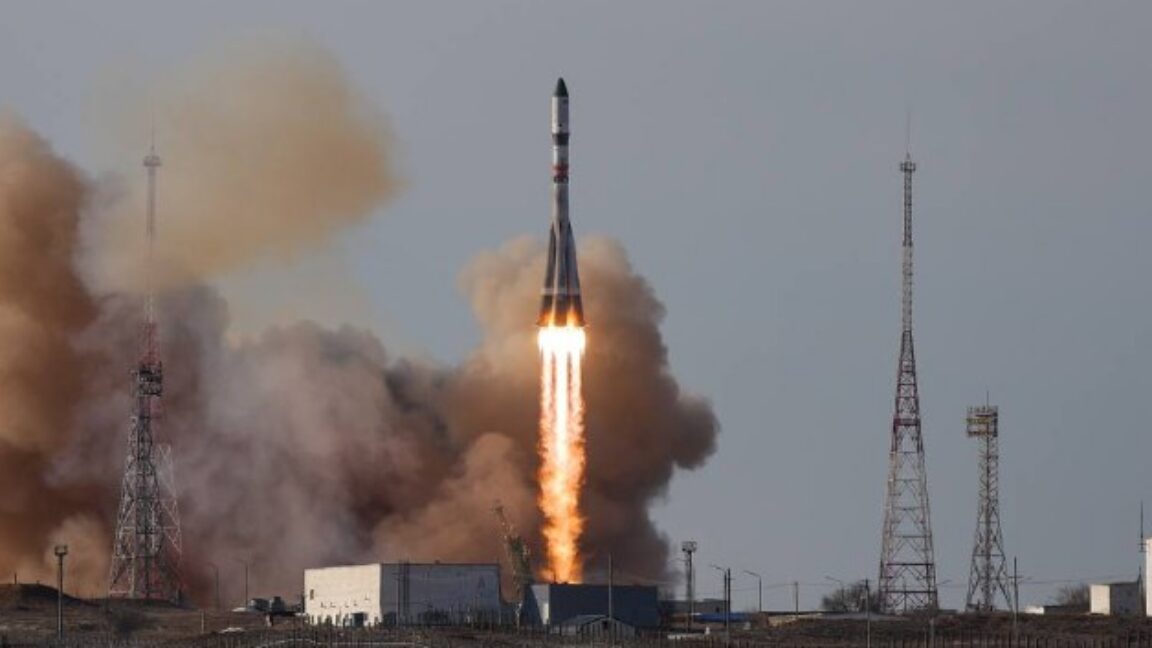


Bernie Sanders is rumored to be announcing Medicare 4 Bees in 2028.
As honey bee colonies face mounting threats, veterinarians are becoming increasingly important to hive health. But high costs, limited training, and a shortage of bee specialists are slowing efforts to expand this emerging field. (Photo by David Cappaert, Bugwood.org)
[2026-08-14] Entomology Today — Veterinary medicine has always included insects, but only recently have veterinarians started actually treating insects. The earliest documented case of treating diseases vectored by insects dates back to 1890. Researchers at the U.S. Department of Agriculture at the time established that cattle fever was caused by ticks and could be managed by suppressing tick populations. Since then, the field of veterinary entomology has focused similarly on pest management and reducing the disease burden on domesticated animals.
Recently, however, pollinator populations have declined sharply in many parts of the world, resulting in the need for immediate intervention. These declines have been driven by a wide variety of factors including parasites, pathogens, and habitat loss. While managed pollinators like honey bees haven’t seen the same levels of population decline, they have been experiencing dramatic increases in colony loss rates. Increased colony loss rates are caused by a variety of stressors interacting with each other that reduce overall hive health. As these stressors accumulate, researchers are scrambling for solutions that either directly target bee parasites and pathogens or more broadly increase hive health.
The role of veterinarians comes into play when discussing managed pollinator populations. In 2017, the U.S. Food and Drug Administration (FDA) began mandating that antibiotics for bees must be prescribed by a veterinarian rather than purchased over the counter. This legislative change made it so, at least on paper, veterinarians would be much more involved in the health of honey bee hives. The change is called a veterinary feed directive (VFD) and was made due to the food products that come from honey bees. The VFD was introduced at a time when many were concerned about mounting antibiotic resistance in livestock. However, in practice there exist many barriers to veterinary care.
Barriers to Honey Bee Veterinary Care
One key barrier is cost. Consulting a veterinarian can cost hundreds of dollars on top of the charges associated with any pharmaceuticals that are prescribed. In many areas, these costs are comparable to simply replacing a hive, making veterinary care a less attractive option for many beekeepers.
Another key barrier to veterinary care is simply lack of access. Approximately 300 veterinarians are registered as members of the Honey Bee Veterinary Consortium. This consortium serves as the leading national organization for honey bee health information and diagnostic resources. For context, approximately 75,000 companion animal veterinarians currently practice in the United States.
A third barrier to usage of honey bee veterinarians is a perceived lack of knowledge and expertise. Many beekeepers are aware that bee medicine is often not well covered in veterinary curricula. A new study published in June further looks at the challenges facing veterinarians interested in practicing with bees. They find that the largest barriers to veterinarians are “lack of knowledge, education, skills, and training.” Veterinary schools are working to include more course work relating to bees. Additionally groups like the Honey Bee Veterinary Consortium work to offer education and resources to those who have already graduated.
A final barrier to veterinarians is a shortage of available treatment options. Currently only three antibiotics are approved for use in honey bee colonies. The lack of legally approved antibiotics likely comes from limited consultation between beekeepers and veterinarians. Because there is a lack of bee veterinary service usage, companies do not have incentives to develop and approve products for usage in honey bee hives.
Pioneering a Novel Relationship Between Insects and Veterinarians
Managing honey bees with medical intervention is a unique connection between entomology and veterinary medicine. Honey bees are currently the only invertebrates that are routinely offered this level of support at all. Honey bees are in many ways pioneering a beneficial relationship between insects and veterinarians. However, pioneering a path does not come without difficulty.
Overall the state of bee veterinarians is caught in a difficult cycle. Veterinary schools often devote limited time to bee medicine because they don’t expect many graduates to use those skills, as beekeepers rarely seek veterinary care. At the same time beekeepers avoid consulting veterinarians because they believe veterinarians lack the extensive hands-on experience that beekeepers themselves possess. Breaking this cycle will not be easy, but it is becoming increasingly important as the number of threats facing honey bees continues to grow. From Varroa mites to pesticide use to habitat destruction, our bees need new and advanced treatments for the diseases that threaten their health.
To effectively break this cycle, we need buy-in across the board. First and foremost, we need researchers to develop and test treatments for honey bees. For scientists to develop these treatments, they need both funding and access to laboratory spaces. Entomologists, veterinarians, and beekeepers need to band together to advocate for federal funding.
This can be achieved by writing or calling your representative directly or by joining existing campaigns like those run by Environment America. You can also offer your support to organizations that independently fund this research. Some such groups are Project Apis m. and the Eastern Apiculture Society. Finally, you can also participate in and support groups like the Entomological Society of America that go to Capitol Hill and advocate for funding and support for entomology broadly.
Veterinary students and veterinarians can also help by choosing to learn more about honey bees and hive health. This can be done by completing the National Veterinary Accreditation Program’s module on honey bee health or by joining the Honey Bee Veterinary Consortium (HBVC). Veterinary students can join or start chapters of HBVC on their campuses or sign up for elective beekeeping courses as they are offered.
Finally, beekeepers can form active relationships with their local veterinarians. These relationships are essential if they need to establish a veterinarian-client-patient relationship (VCPR) prior to obtaining any prescriptions. These relationships can also be helpful to both parties, as beekeepers can share their vast practical experience while veterinarians share their clinical education.
Further Reading
“Bee Vet,” Bee Culture Magazine, August 1, 2025
“Breaking into Beehive Medicine,” American Veterinary Medical Association, August 28, 2024
“Conquering Cattle Tick Fever,” U.S. Department of Agriculture, Agricultural Research Service, October 18, 2023
Continuing Education, Honey Bee Veterinary Consortium
Honey Bee Research Grants, Eastern Apicultural Society
“Honey, Call the Bee Vet!,” The New York Times, August 3, 2026
“Highlights of Veterinary Entomology, 2022,” by Caleb B. Hubbard, Journal of Medical Entomology, February 2024
“New FDA Rules Affect Beekeeper Access to Antibiotics,” UA Bee Blog, University of Arkansas Cooperative Extension, January 9, 2017
“Partner with Us,” Project Apis m
“Reversing Pollinator Decline Is Key to Feeding the Future,” U.S. Department of Agriculture, June 24, 2016
“Tell Your U.S. Senators: Don’t Cut Funding for the Bee Lab,” Environment America
“The Role of Veterinarians in Honey Bee Health,” National Veterinary Accreditation Program
U.S. Veterinarian Numbers, American Veterinary Medical Association
Using Medically Important Antimicrobials in Bees – Questions and Answers, U.S. Food and Drug Administration, January 4, 2024
Claire Green recently graduated from Mississippi State University with a degree in biochemistry with a concentration in entomology. Through the Truman Scholars Summer Institute, she spent June and July interning with the Entomological Society of America science policy team. A Truman Scholar, Udall Scholar, and Rhodes Scholar Finalist, Claire has a special interest in bee medicine, having worked on several research projects exploring nature-based solutions for pollinator health. This month, Claire begins veterinary school at Cornell University, where she aspires to build a career bridging the gap between insect science, animal medicine, and public policy. Email: cgreeen04@gmail.com.

No weekend is complete without a dose of duckies.
No weekend is complete without a dose of duckies.
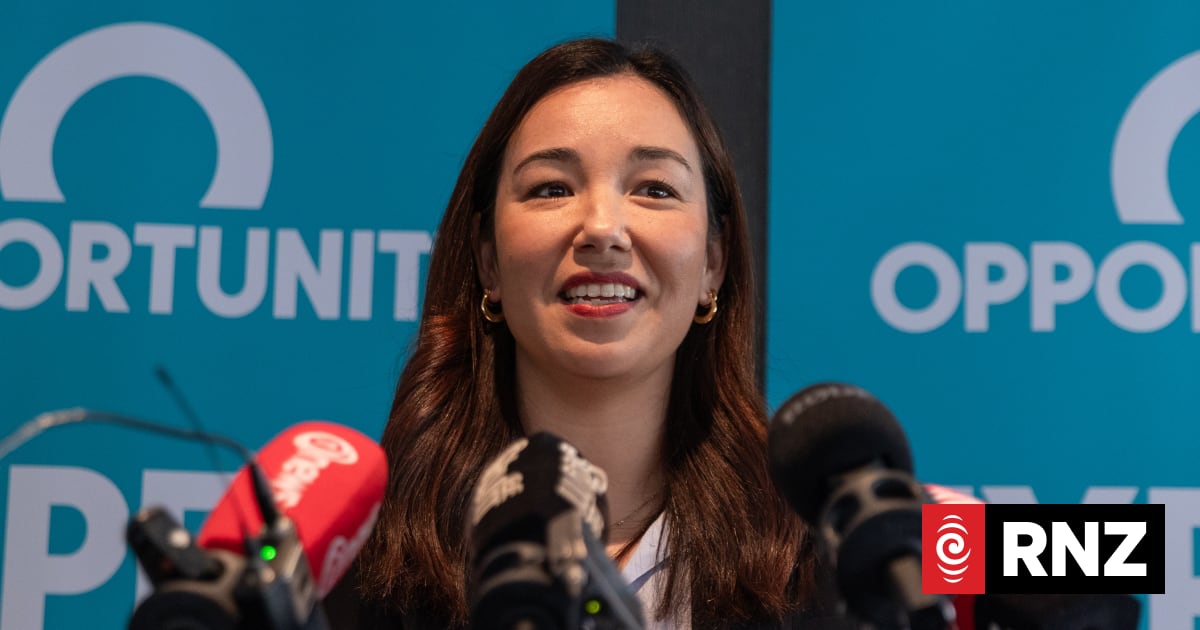
My selected quotes:
The Opportunity Party is vowing to “clean up politics” by regulating lobbying and reforming political donations.
It would look to cap political donations and establish an independent anti-corruption body to centralise and coordinate action against corruption.
The underlying principle of the policy was simple, she said.
"New Zealanders should be confident that political decisions are made in their interests, not because somebody has the biggest cheque book or the best access to a minister.
In order to regulate lobbying, the party would introduce a Political Influence and Lobbying Bill that would create a one-year cooling-off period, “closing the revolving door” between ministers, senior staff and officials, and lobbying roles.
It would also create a mandatory, public and searchable lobbying register, with quarterly disclosure of who lobbied which office-holders, as well as a statutory code of conduct for lobbyists and foreign lobbying safeguards.
The party’s proposal would introduce a $30,000 cap per donor per party per electoral cycle, limit donations to registered voters, lower the public disclosure threshold to $1000 and apply advertising spending limits across the full three-year electoral cycle for parties and candidates.
The party would also establish an anti-corruption body with “investigative, prevention, and education functions, integrating and co-ordinating existing anti-corruption responsibilities”.

I was trying to install eos on my fairphone, but I can’t get past this screen. Anyone know what I have to do differently?
I was trying to install eos on my fairphone, but I can’t get past this screen. Anyone know what I have to do differently?

Guaranty Building (1896) (my photo)
Guaranty Building (1896) (my photo)
cross-posted from: feddit.nu/post/22122225
The International 2026
Streams
Twitch: Main Channel | Stream #2 | Stream #3 | Stream #4
Twitch: Main Channel | Stream #2 | Stream #3 | Stream #4
Twitch: Main Channel | Stream #2 | Stream #3 | Stream #4
Twitch: Main Channel | Stream #2 | Stream #3 | Stream #4
YouTube |
DotaTV:
Auto-spectate command:
dota_spectator_auto_spectate_games 19719Coverage
Schedule
ID | Team | vs. | Team | Result | Cntdown (SGT) | PDT | EDT | GMT | CEST | AEST | Format :–|:–:|:–:|:–:|:–:|:–: | :–: | :–: | :–: | :–: | :–: | :–: | :–: | :–: | :–: | :–: | :–: D1 | Falcons | vs | Vici Gaming | >!0:0!< | 10:00 | 19:00 | 22:00 | 2:00 | 4:00 | 12:00 | Bo3 D2 | Aurora | vs | BoomBoys | >!0:0!< | 11:00 | 20:00 | 23:00 | 3:00 | 5:00 | 13:00 | Bo3 D3 | Team Spirit | vs | Resilience | >!0:0!< | 13:00 | 22:00 | 1:00 | 5:00 | 7:00 | 15:00 | Bo3 D4 | Iron Wing | vs | GamerLegion | >!0:0!< | 14:00 | 23:00 | 2:00 | 6:00 | 8:00 | 16:00 | Bo3 D5 | LGD Gaming | vs | Yandex | >!0:0!< | 16:00 | 1:00 | 4:00 | 8:00 | 10:00 | 18:00 | Bo3
Countdown times are in SGT. All times are subject to change based on the length of matches and delays.)

There’s still time to get your nominations in for Transgender Victoria’s (TGV) annual celebration of trans, gender-diverse and non-binary people, the 2026 Trans Visibility Awards.
There’s still time to get your nominations in for Transgender Victoria’s (TGV) annual celebration of trans, gender-diverse and non-binary people, the 2026 Trans Visibility Awards.


They are breaking their own rules by making things up and sending their goons to harrass with false allegations of rape.

They are breaking their own rules by making things up and sending their goons to harrass with false allegations of rape.
You are a wiener!
thehateaiclub was GOAT
RIP
up with the real ones
down with the turdz
You are a wiener!
thehateaiclub was GOAT
RIP
up with the real ones
down with the turdz
Possible source material for a Gaslight-era Cthulhu campaign. A free e-book from Project Gutenberg from 1823 called “Sketches in Bedlam: or Characteristic traits of insanity, as displayed in the cases of one hundred and forty patients of both sexes, now, or recently, confined in New Bethlem.”
The descriptions of the individual patients are quite sad, but the parts about how Bethlem Hospital (better known as Bedlam) worked in the 19th century might be useful for anyone running a Lovecraftian game in that era.

Not my video.
Not my video.

Cross posted from sh.itjust.works/post/65157881
“If 70% of AI revenues are these two companies, there is no AI industry.”
Writer of Where’s Your Ed At and the host of the Better Offline podcast Ed Zitron joins The Tech Report’s Isaac Pound to talk about the state of the AI industry as it’s revealed that over two thirds of hyperscaler AI revenue is coming from two companies.

Artist: Darr1O | pixiv | twitter | newgrounds | artstation | danbooru
Full quality: .png 2 MB (2342 × 3470)
Artist: Darr1O | pixiv | twitter | newgrounds | artstation | danbooru
Full quality: .png 2 MB (2342 × 3470)