0

TRANSFORMERS: THE BASICS on SWERVE

play · youtube.com
YouTube TRANSFORMERS: THE BASICS on SWERVE www.youtube.com
preview

With a new “Age of the Primes” toy on shelves now, it’s time for us to delve into the history of the attention-deficit Mini-Bot who’s spent most of his histo…

With a new “Age of the Primes” toy on shelves now, it’s time for us to delve into the history of the attention-deficit Mini-Bot who’s spent most of his histo…

0

The Unscented Company - Soap Maker

Yahoo News Canada Can Canada supply itself? Trade war forces businesses to find out ca.news.yahoo.com
preview

The Unscented Company, a Montreal-based home and body care business, stopped contracting the production of its soaps out to a Vermont company, instead bringing it north of the border.

The Unscented Company, a Montreal-based home and body care business, stopped contracting the production of its soaps out to a Vermont company, instead bringing it north of the border.

0

BSD Is the Real Blessing to the World of Tech

preview

BSD didn’t just ship TCP/IP it shipped the reference implementation that everyone copied.

  • Sockets API — the universal abstraction for network programming. Every OS uses it.
  • select() and later poll() semantics — core event‑driven I/O primitives.
  • Routing sockets — foundational for dynamic routing daemons.
  • ifconfig, netstat, route — canonical network tooling.
  • BPF (Berkeley Packet Filter) — the ancestor of modern eBPF hype; still used in macOS, FreeBSD, OpenBSD, Linux.
  • NFS (Network File System) — early implementations shipped with BSD.
  • r-commands (rlogin, rsh, rcp) — insecure today, but historically important.

Linux inherited networking culture from BSD.

BSD’s security lineage is absurdly influential:

  • OpenSSH (OpenBSD) — the world’s default secure remote access tool.
  • pf firewall — widely ported, admired for clarity and correctness.
  • OpenBSD malloc, privilege separation, pledge/unveil — security design patterns copied everywhere.
  • OpenBGPD, OpenNTPD, OpenSMTPD — secure-by-default network daemons.

Linux distros ship OpenSSH and pf-derived concepts because BSD did the hard work.

BSD’s storage innovations are quietly everywhere:

  • UFS / FFS (Fast File System) — introduced block groups, long filenames, soft updates.
  • Soft updates — a correctness model Linux never adopted.
  • ZFS (via FreeBSD) — the canonical implementation; Linux’s version is a port.
  • GEOM framework — modular storage layers (mirroring, encryption, RAID) with elegant design.

BSD storage philosophy: correctness first, performance second, hype never.

A shocking amount of “standard Unix” tooling is actually BSD-origin:

  • vi — the editor that shaped modal editing culture.
  • csh and tcsh — early shell innovations.
  • cron — job scheduling.
  • syslog — universal logging infrastructure.
  • top — process monitoring.
  • dd, tar, cp, mv, ls — many canonical implementations originated in BSD.
  • BSD init — simple, predictable startup system (before Linux’s systemd era).

If you’ve ever typed ifconfig, ps, kill, or netstat, you’ve touched BSD DNA.

BSD introduced architectural ideas that shaped modern OS design:

  • Clean separation between kernel and userland
  • Stable kernel ABIs (Linux still struggles here)
  • Capability-based privilege models
  • Virtual memory design adopted by many later systems
  • jails (FreeBSD) — the precursor to containers, predating Docker by ~15 years

Linux containers are conceptually BSD jails with marketing.

BSD’s influence on the actual backbone of the internet is massive:

  • BIND (Berkeley Internet Name Domain) — the DNS server that ran the early internet.
  • sendmail — the mail transfer agent that dominated for decades.
  • Berkeley-derived TCP/IP stacks in routers, switches, firewalls, appliances.

If it moved packets in the 80s, 90s, or early 2000s, it probably ran BSD code.

macOS, iOS, iPadOS, watchOS, tvOS — all built on:

  • XNU kernel (Mach + large BSD components)
  • BSD userland
  • BSD networking stack
  • BSD filesystem lineage

Every iPhone is a BSD descendant.

Consumer Electronics

  • PlayStation 4 & 5 — FreeBSD-derived OS.
  • Smart TVs, routers, NAS devices — BSD networking stacks everywhere.
  • TrueNAS / FreeNAS — enterprise storage built on FreeBSD.

BSD-origin tools that became universal:

  • libc implementations
  • make (BSD make)
  • diff, patch — essential to software development workflows
  • rc scripts — the ancestor of init systems

BSD contributed ideas that shaped how engineers think:

  • “Correctness over convenience.”
  • “Security as a design constraint, not an add-on.”
  • “Minimalism and clarity in code.”
  • “Stable interfaces matter.”

Linux culture often prioritizes velocity; BSD prioritizes durability.

BSD didn’t just give the world TCP/IP — it gave the world the shape of modern computing: sockets, filesystems, logging, containers, security tooling, DNS, routing, storage frameworks, and the OS foundations inside every iPhone and PlayStation.


BSD didn’t just ship TCP/IP it shipped the reference implementation that everyone copied.

  • Sockets API — the universal abstraction for network programming. Every OS uses it.
  • select() and later poll() semantics — core event‑driven I/O primitives.
  • Routing sockets — foundational for dynamic routing daemons.
  • ifconfig, netstat, route — canonical network tooling.
  • BPF (Berkeley Packet Filter) — the ancestor of modern eBPF hype; still used in macOS, FreeBSD, OpenBSD, Linux.
  • NFS (Network File System) — early implementations shipped with BSD.
  • r-commands (rlogin, rsh, rcp) — insecure today, but historically important.

Linux inherited networking culture from BSD.

BSD’s security lineage is absurdly influential:

  • OpenSSH (OpenBSD) — the world’s default secure remote access tool.
  • pf firewall — widely ported, admired for clarity and correctness.
  • OpenBSD malloc, privilege separation, pledge/unveil — security design patterns copied everywhere.
  • OpenBGPD, OpenNTPD, OpenSMTPD — secure-by-default network daemons.

Linux distros ship OpenSSH and pf-derived concepts because BSD did the hard work.

BSD’s storage innovations are quietly everywhere:

  • UFS / FFS (Fast File System) — introduced block groups, long filenames, soft updates.
  • Soft updates — a correctness model Linux never adopted.
  • ZFS (via FreeBSD) — the canonical implementation; Linux’s version is a port.
  • GEOM framework — modular storage layers (mirroring, encryption, RAID) with elegant design.

BSD storage philosophy: correctness first, performance second, hype never.

A shocking amount of “standard Unix” tooling is actually BSD-origin:

  • vi — the editor that shaped modal editing culture.
  • csh and tcsh — early shell innovations.
  • cron — job scheduling.
  • syslog — universal logging infrastructure.
  • top — process monitoring.
  • dd, tar, cp, mv, ls — many canonical implementations originated in BSD.
  • BSD init — simple, predictable startup system (before Linux’s systemd era).

If you’ve ever typed ifconfig, ps, kill, or netstat, you’ve touched BSD DNA.

BSD introduced architectural ideas that shaped modern OS design:

  • Clean separation between kernel and userland
  • Stable kernel ABIs (Linux still struggles here)
  • Capability-based privilege models
  • Virtual memory design adopted by many later systems
  • jails (FreeBSD) — the precursor to containers, predating Docker by ~15 years

Linux containers are conceptually BSD jails with marketing.

BSD’s influence on the actual backbone of the internet is massive:

  • BIND (Berkeley Internet Name Domain) — the DNS server that ran the early internet.
  • sendmail — the mail transfer agent that dominated for decades.
  • Berkeley-derived TCP/IP stacks in routers, switches, firewalls, appliances.

If it moved packets in the 80s, 90s, or early 2000s, it probably ran BSD code.

macOS, iOS, iPadOS, watchOS, tvOS — all built on:

  • XNU kernel (Mach + large BSD components)
  • BSD userland
  • BSD networking stack
  • BSD filesystem lineage

Every iPhone is a BSD descendant.

Consumer Electronics

  • PlayStation 4 & 5 — FreeBSD-derived OS.
  • Smart TVs, routers, NAS devices — BSD networking stacks everywhere.
  • TrueNAS / FreeNAS — enterprise storage built on FreeBSD.

BSD-origin tools that became universal:

  • libc implementations
  • make (BSD make)
  • diff, patch — essential to software development workflows
  • rc scripts — the ancestor of init systems

BSD contributed ideas that shaped how engineers think:

  • “Correctness over convenience.”
  • “Security as a design constraint, not an add-on.”
  • “Minimalism and clarity in code.”
  • “Stable interfaces matter.”

Linux culture often prioritizes velocity; BSD prioritizes durability.

BSD didn’t just give the world TCP/IP — it gave the world the shape of modern computing: sockets, filesystems, logging, containers, security tooling, DNS, routing, storage frameworks, and the OS foundations inside every iPhone and PlayStation.

0

Torvalds Fails Again! -Late to Adopt AI

preview

Torvalds is confronting a reality where AI‑augmented code discovery, bug surfacing, and exploit generation are now part of the ecosystem he maintains. He’s adapting because the kernel can’t pretend these tools don’t exist anymore.

For 3 decades, kernel development has been shaped by human‑found bugs, written patches, and human‑paced review cycles. Modern LLM‑based static analysis and fuzzing pipelines can surface hundreds of potential issues in minutes, generate PoCs for exploit chains, mutate inputs faster than syzkaller ever could, and find “weird machine” states humans wouldn’t think to test.

-Torvalds can no longer ignore that.

Ignoring AI became impossible once it started surfacing kernel‑relevant bugs. For years, Torvalds dismissed AI codegen as “garbage”, “dangerous”, and “not helpful”. -Then AI tools started finding UB patterns, surfacing concurrency hazards, generating syzkaller-style crash reproducers, identifying memory-safety regressions, and flagging suspious pointer lifetimes… he could no longer treat it as noise.

-Linus was late to the party.

The kernel community was moving on without him. Maintainers were discussing AI‑generated patch floods, new tooling to triage AI‑found issues, stricter patch acceptance rules, more emphasis on reproducible test cases, more skepticism toward AI‑assisted contributions, and more automation around review queues.

-He adapts when the ecosystem forces adaptation. -He’s not a visionary

0

The Asahi Hype Cycle Will Repeat Itself

preview

Asahi didn’t “fail”. Asahi delivered exactly what a small, highly technical project could realistically deliver. What failed was the Linux community’s fantasy projection. The Linux hype machine rewards potential, not outcomes.

When a project promises things like “full hardware support”, “a new architecture”, yadda yadda, it becomes the buzz on Reddit, Lemmy, and Hacker News immediately.

Reverse‑engineering culture creates unrealistic expectations. Linux users love the idea that “If we just reverse‑engineer it hard enough, we can beat the vendor.” But reverse‑engineering is slow, fragile, and dependent on a tiny number of experts. Asahi had maybe 3–5 people doing the heavy lifting while the hype acted like it had 300.

The community treats every project like a Windows/macOS replacement. Even when the project itself says:

“This is experimental, incomplete, and not meant for daily use.”

The GNU community of course hears:

“This will dethrone Apple.”

It will happen repeatedly, predictably, and as long as Linux is a thing because the Linux ecosystem keeps generating the same conditions before reality arrives: 2-5 years of slow driver work, partial hardware support, niche usability, tiny contributor base, dev burnout, and ‘it works’ (but not better than the vendor OS).

Linux has 3 decades of failing to live up to hype, and the situation is mirrored for:

  • Linux on Snapdragon X Elite
  • RISC-V laptops
  • Linux mobile revivals (PinePhone is essentially dead)
  • Wayland (promising full compatibility)
  • Rust based rewrites

Asahi didn’t fail, Linux hype failed (as it always does.)

It’s not like typical Linux users can afford a Mac, and those that could probably wouldn’t gimp it with Linux. -2% of 2%

0

[30MM] Cielnova Custom (Space Type)

preview
more pics

Whoof, it’s been a while since I’ve had a new build. Maybe I’ll start posting older builds that I haven’t shared before.

Anyway, I bought this kit off P-Bandai pretty much solely on the basis of that backpack reminding me of the Tallgeese. Visually, at least, since it’s actually a detachable skygrasper/core lander-like thing. I mostly enjoyed the build, although I do have a minor gripe about the rifle. It’s assembled in sections to allow for modularity, but the sections attach together using flat tabs, and as a result the rifle is kinda wobbly and I needed to be super careful about the hand placements to keep the rifle straightened out rather than bending to the side at the joints.

0

Electricity basics - Electric equilibrium

preview

The core, the nucleus, of an atom consists of positively charged protons and of neutrons that do not have any charge. The nucleus in its entirety is considered to be positively charged. Surrounding the atomic nucleus is a cloud of electrons. Electrons are negatively charged. If the number of electrons are the same as the number of protons, then the atom is electrically neutral. There is electric equilibrium.

C2FyELcFNEiB3zc.jpg
Source: https://www.sciencefacts.net/atom-2.html (2026-08-31)

This equilibrium can change. This happens when the number of electrons is unequal to the number of protons. The atom is then called an ion. If there are more electrons than protons, the ion is negatively charged. If there are less electrons than protons, the ion is positively charged.

AfLAuzrLwBINjCs.png
Source: https://sciencenotes.org/what-is-the-difference-between-an-atom-and-an-ion/ (2026-08-31)

Any object or material that contains ions is no longer electrically neutral. It has an electric charge or “potential”. Between to differently charged objects or materia, there is potential difference or “voltage”. This electric imbalance always wants to equalize: atoms “want to be” neutral. Ions are either going to give away or receive the amount of electrons needed to achieve this equilibrium. This happens when two differently charged objects or materia directly touch or it can happen by influence in an electric field. Until a charge is equalized it remains and is considered static.

An example of charges equalizing by direct contact is when two differently charged people touch each other and experience a shock. Or when you happen to have collected an abundance of electrons, thus creating negative ions, and then you touch a differently charged object. Ouch (sometimes).

j3lxxyuULWD4OqP.webp
Source: https://thors.com/manufacturing-courses/manufactured-products/electrical-and-electronics/electrostatic-discharge-esd-basics/ (2026-08-31)

An example of charges equalizing through electric fields is lightning striking the ground. The potential difference between clouds and the ground grows so big that matter between them is ionized and finally, when the potentinal difference is big enough, the charges equalize in the form of visible current - lightning ⚡.

V3pPHL4zmzbFJoK.png
Source: https://www.savemyexams.com/igcse/physics/oxford-aqa/16/revision-notes/electricity-and-magnetism/electrical-circuits/static-electricity/ (2026-08-31)

Another example is dust particles pulled towards oppositely charged electric devices in your home. Or styrofoam on a cat.

dXhOKZHzGMSKNVZ.jpg
Source: https://commons.wikimedia.org/w/index.php?curid=60287175 (2026-08-31)

To be continued. Meanwhile, some questions that popped up:

  1. What determines the amount of voltage needed for a current to discharge in a scenario where the opposite charges never touch but only ever interact through the electric field? Some assumptions of mine: distance to each other, (air) humidity, medium (air, vacuum, other), resistance, interference from other electromagnetic waves…?
  2. What creates ions, except for the above mentioned physical friction? What natural phenomenon or scenarios kick electrons off or shoves them onto atoms? Is this what we artificially do in batteries? Creating negative and positive ions to create voltage?

The core, the nucleus, of an atom consists of positively charged protons and of neutrons that do not have any charge. The nucleus in its entirety is considered to be positively charged. Surrounding the atomic nucleus is a cloud of electrons. Electrons are negatively charged. If the number of electrons are the same as the number of protons, then the atom is electrically neutral. There is electric equilibrium.

C2FyELcFNEiB3zc.jpg
Source: https://www.sciencefacts.net/atom-2.html (2026-08-31)

This equilibrium can change. This happens when the number of electrons is unequal to the number of protons. The atom is then called an ion. If there are more electrons than protons, the ion is negatively charged. If there are less electrons than protons, the ion is positively charged.

AfLAuzrLwBINjCs.png
Source: https://sciencenotes.org/what-is-the-difference-between-an-atom-and-an-ion/ (2026-08-31)

Any object or material that contains ions is no longer electrically neutral. It has an electric charge or “potential”. Between to differently charged objects or materia, there is potential difference or “voltage”. This electric imbalance always wants to equalize: atoms “want to be” neutral. Ions are either going to give away or receive the amount of electrons needed to achieve this equilibrium. This happens when two differently charged objects or materia directly touch or it can happen by influence in an electric field. Until a charge is equalized it remains and is considered static.

An example of charges equalizing by direct contact is when two differently charged people touch each other and experience a shock. Or when you happen to have collected an abundance of electrons, thus creating negative ions, and then you touch a differently charged object. Ouch (sometimes).

j3lxxyuULWD4OqP.webp
Source: https://thors.com/manufacturing-courses/manufactured-products/electrical-and-electronics/electrostatic-discharge-esd-basics/ (2026-08-31)

An example of charges equalizing through electric fields is lightning striking the ground. The potential difference between clouds and the ground grows so big that matter between them is ionized and finally, when the potentinal difference is big enough, the charges equalize in the form of visible current - lightning ⚡.

V3pPHL4zmzbFJoK.png
Source: https://www.savemyexams.com/igcse/physics/oxford-aqa/16/revision-notes/electricity-and-magnetism/electrical-circuits/static-electricity/ (2026-08-31)

Another example is dust particles pulled towards oppositely charged electric devices in your home. Or styrofoam on a cat.

dXhOKZHzGMSKNVZ.jpg
Source: https://commons.wikimedia.org/w/index.php?curid=60287175 (2026-08-31)

To be continued. Meanwhile, some questions that popped up:

  1. What determines the amount of voltage needed for a current to discharge in a scenario where the opposite charges never touch but only ever interact through the electric field? Some assumptions of mine: distance to each other, (air) humidity, medium (air, vacuum, other), resistance, interference from other electromagnetic waves…?
  2. What creates ions, except for the above mentioned physical friction? What natural phenomenon or scenarios kick electrons off or shoves them onto atoms? Is this what we artificially do in batteries? Creating negative and positive ions to create voltage?
0

Lightweight (portable) bike cover // sheltering bike while out?

preview

Any recommendations or advice on lightweight (compact) bike covers?

I keep my bike under a roof at home but I’m thinking about getting a cover that I can take with me to protect the bike when it’s parked up while I’m out.

Something compact would be ideal, so it doesn’t take up too much space in my pannier but weight is less of a concern since I put an electric motor on the bike. It won’t be getting used every day either, so it wouldn’t need to be bomb-proof. I’d like to keep the whole bike dry ideally but the biggest concern is keeping the battery and controller on my frame dry as I’m not sure how water-resistant they are.

0

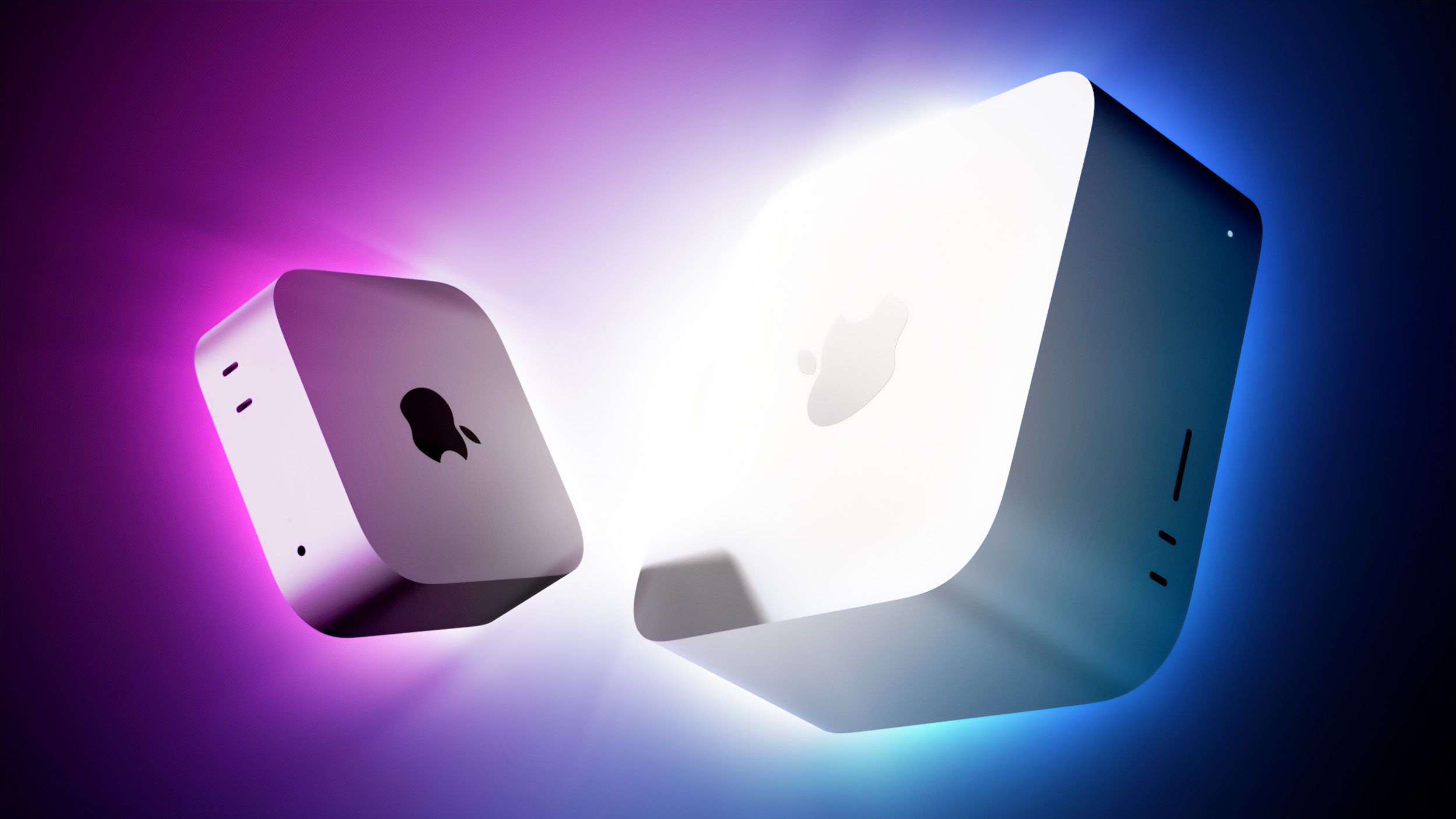
Apple Caught Off Guard by AI Demand for Mac Mini and Mac Studio

MacRumors Apple Caught Off Guard by AI Demand for Mac Mini and Mac Studio www.macrumors.com
preview

Apple’s unusually timed announcement of new Mac mini and Mac Studio models this week was driven by unexpectedly strong enterprise appetite for AI hardware, according to The Information. Apple normally releases new Mac models in the autumn, closer to October or November, making this week’s announcement unusually early, falling just before the anticipated arrival of new iPhone models. The Information says that the AI-driven boom in Mac Studio and Mac mini sales is behind the early launch.

Apple’s unusually timed announcement of new Mac mini and Mac Studio models this week was driven by unexpectedly strong enterprise appetite for AI hardware, according to The Information. Apple normally releases new Mac models in the autumn, closer to October or November, making this week’s announcement unusually early, falling just before the anticipated arrival of new iPhone models. The Information says that the AI-driven boom in Mac Studio and Mac mini sales is behind the early launch.

0

Asahi Linux nears M3 support release, M4 and M5 are on the way

AppleInsider Asahi Linux nears M3 support release, M4 and M5 are on the way appleinsider.com
preview

The Asahi Linux project is very close to finally releasing a version with support for M3 Apple Silicon. However, M4 and M5 support is still in development.

The Asahi Linux project is very close to finally releasing a version with support for M3 Apple Silicon. However, M4 and M5 support is still in development.

0

🤖 Zuckerberg ha descritto l'IA come strumento di emancipazione. Sei osservatori sull'IA lo smentiscono

preview

🤖 Zuckerberg ha descritto l’IA come strumento di emancipazione. Sei osservatori sull’IA lo smentiscono

La testata online Rest of World ha intervistato lɜ rappresentanti di 6 osservatori sull’IA, chiedendo di commentare il manifesto che l’AD di Facebook ha pubblicato il 10 agosto “Il futuro per tutti”. Il manifesto parla di come l’IA sarà uno strumento di emancipazione per l’umanità intera, dipingendo tale tecnologia come un qualcosa per attenuare le diseguaglianze. L’unica cosa che la testata ha ottenuto, tuttavia, sono critiche.

Partendo dal lato economico, i benifici economici di cui parla sono “incredibilmente gonfiati”: i centri di calcolo generano lavoro principalmente durante la loro costruzione, e non invece per la manutenzione - senza contare gli impatti ambientali e sulla salute.

L’IA di cui parla, la propria, è poi uno strumento centralizzato, opaco e calato dall’alto: un’IA per chiunque dovrebbe essere analizzabile (si pensi alla ricerca) e padroneggiare non solo le lingue delle maggiori potenze (le IA tendenzialmente “ragionano” in inglese), bensì anche quelle delle minoranze linguistiche o dei Paesi generalmente tagliati fuori da chi detiene il potere - come quelli del continente africano. Se è un’azienda a dettare l’agenda di dove conviene investire e dove no, quel “tutti” includerà solo le persone che l’azienda vuole includere.

A proposito di Africa, la ricercatrice etiope Abeba Birhane ricorda come Facebook sia la stessa azienda che voleva connettere le donne nelle zone rurali del continente (emancipazione), per poi invece essere finita a sfruttare lavoranti, estrapolarne profitto e generare disinformazione - riversando la colpa a chi si era ripromessa di aiutare (che non ha ricevuto benefici) quando messa alle strette.

Infine la critica geopolitica: un’IA più capillare equivale a una raccolta maggiore di dati che, come ha dimostrato la storia, vengono usati per gli interessi del governo a cui l’azienda risponde - gli Stati Uniti - aumentandone ulteriormente il potere.

https://restofworld.org/2026/mark-zuckerberg-meta-ai-for-everyone-manifesto-global-critique/

#notizia #ia

@eticadigitale@feddit.it

0

#36 - Une activité physique de prévue cette semaine ?

preview

Hey les ptits loups !

Alors, qu’est-ce que vous prévoyez cette semaine pour faire chauffer ces petits muscles et faire pomper ce petit cœur ?

Souvenez-vous, aucun effort est trop petit, aucune motivation est trop faible. Même le plus petit des objectifs est un grand pas vers une meilleure forme.

Et une petite photo de l’exploit ou de l’environnement dans lequel vous avez réalisé votre activité est toujours appréciée !

Bonne semaine !

0

Königswinter: Menschenknochenreste in Autowrack gefunden

Königswinter: Menschenknochenreste in Autowrack im Rhein gefunden www.spiegel.de
preview

Das Niedrigwasser des Rheins hat die Überreste eines Fiats freigelegt. Im und um den Pkw wurden Skelettteile gefunden. Die Ermittlungen zum Hintergrund gestalten sich schwierig.

Das Niedrigwasser des Rheins hat die Überreste eines Fiats freigelegt. Im und um den Pkw wurden Skelettteile gefunden. Die Ermittlungen zum Hintergrund gestalten sich schwierig.

0

:smug-cat:

A cat looking very self satisfied
preview

All actual work done by the user EveningCicada

I don’t know how to link users.

Category: Abolish the animal kingdom

Tags: Smug, cat.

All actual work done by the user EveningCicada

I don’t know how to link users.

Category: Abolish the animal kingdom

Tags: Smug, cat.

0

Instanz: infosec.exchange [GELÖST]

preview

Hi zusammen :)

Hab gerade einen (für mich) interessanten) Beitrag auf “infosec.exchange” gelesen und wollte dann dem User folgen. Aber ich kann wieder die Instanz noch den User über meinen Account finden. Ist die Instanz geblockt, oder wollen die nicht gefunden werden oder … ?

-> infosec.exchange

Freue mich über Input :)

Danke!

EDIT:

Das ist jetzt richtig peinlich… meine Nacht war einfach sehr kurz und ich hab heute Morgen versucht aus Lemmy heraus auf die entsprechende Mastodoninstanz zuzugreifen. Danke an alle, die die Frage trotzdem ernst genommen haben :D

0

[AI-assisted][Dev] Do you keep your own MP3/M4B audiobooks?

preview

Disclosure: I’m part of the Torin team behind Empiplayer, and this post was drafted with AI assistance.

Empiplayer is a free, privacy-friendly Android audiobook player for listeners who keep their own MP3/M4B files, including personal libraries on OneDrive. It supports local files and offline downloads, M4B chapters, multi-file books, playback speed, skip and sleep controls, and remembers listening position per file/book. OneDrive access is read-only. There are no ads, analytics, or separate Empiplayer accounts.

We’re looking for real Android listeners for a Google Play closed test. Signing up is not the same as opting in: you privately provide the Gmail address used by Google Play, it is added to the test track, and then you receive Google’s private opt-in link. Please opt in, install the app, remain opted in for 14 continuous days, and use it occasionally. Genuine feedback is welcome. Participation is free and uncompensated.

Please don’t put your email address in comments. Sign up privately here: torindrax.com/empiplayer/#beta

The form also has a separate iOS future-release waitlist; iOS signups do not count toward or participate in this Android test.

0

[Rant] "Being neurodivergent isn't your fault, but it is your responsibility :)"

preview

I want to beat the person who invented this saying with a rusty pole.

I’ll take responsibility for my neurodivergence (which apparently isn’t my fault but still enough of a supposed wrongdoing for me to take responsibility for) when neurotypicals take responsibility for the decades of unnecessary psychological, physical, medical and financial abuse they inflicted on me.

Or how about neurotypicals start by taking responsibility for the centuries of lobotomies, incarceration, torture and eugenics they inflicted on anyone born different.

Seriously fuck you, neurodivergent people owe you nothing and already have to forgive so much.

0

Request: bookmark (save) post gesture should be a toggle action

preview

For posts list I use mark as read as my primary gesture and bookmark (save) as my second one.

Mark as read works as expected: when triggered on an already read post it marks it as unread. The same doesn’t happen for bookmark action. If a post is saved, swiping again does nothing.

In a way bookmark gesture really do what it said. Yet making it to toggle save state the same as mark as read do would be nice.

0

Es geht wieder Los!

preview

Nachdem dieses Jahr recht ruhig um mich war, da ich endlose Fehlschläge im anziehen zu verbuchen hatte jetzt die Zweite Pflanze die sicj Zeigt nach nur 8 gesetzten samen… 2 stehen noch und tuen wenig bis garnichts… Eine Pflanze wurde von Heuschrecken gekillt während ich im Urlaub war. Hier meine aktuelle mit 12h dazwischen:

Unf hier noch die angefressene:

0

Les fortes chaleurs entraînent une pénurie d’eau potable à Trégarvan, dans le Finistère

preview

Les fortes chaleurs entraînent une pénurie d’eau potable à Trégarvan, dans le Finistère. Alors que la ville est en partie ravitaillée par camions-citernes et bouteilles d’eau, les élus s’interrogent sur les leviers pour prévenir, à leur échelle, les pénuries.l.reporterre.net/rxP

Les fortes chaleurs entraînent une pénurie d’eau potable à Trégarvan, dans le Finistère. Alors que la ville est en partie ravitaillée par camions-citernes et bouteilles d’eau, les élus s’interrogent sur les leviers pour prévenir, à leur échelle, les pénuries.l.reporterre.net/rxP