0

preview
Dressings (salad and medical) belong in the dresser.
Dressings (salad and medical) belong in the dresser.
Dressings (salad and medical) belong in the dresser.
Dressings (salad and medical) belong in the dresser.



(Sheat13) (2026)
Image description: From a dramatic low-angle perspective, an immense ruined fantasy fortress rises from a rugged mountainside with towering spires, shattered parapets, weathered buttresses, and vast arched openings carved into dark stone walls. The central structure ascends in multiple tiers toward the sky, with jagged pinnacles and partially collapsed upper sections creating an uneven silhouette against the clouds. Patches of grass, moss, and sparse vegetation cling to the stonework and the surrounding slopes, reclaiming portions of the abandoned architecture. Above the fortress, dense storm clouds swirl across a blue-gray sky, leaving only a few bright openings for daylight.
A colossal dark-fantasy fortress rises in jagged, ruinous towers, its immense stone walls crowded with broken spires, narrow arches, crumbling battlements, and skeletal architectural details. Viewed from a low angle, the castle dominates the frame, looming against a turbulent sky and extending beyond the upper edge. A massive weathered rampart cuts diagonally across the lower-left foreground, its deep, shadowed openings and fractured masonry emphasizing the structure’s scale. The ancient black-gray stone is rough, damp-looking, and streaked with moss, soot, and decay; scattered remnants of pale stone and faint rust-colored marks add subtle contrast. To the right, isolated ruined turrets and remnants of the outer walls recede into the distance. Heavy teal-gray storm clouds fill the background, with cold, diffuse light grazing the highest edges and leaving the lower fortress in dense shadow. Cinematic wide shot, low-angle perspective, broad landscape framing, dramatic atmospheric depth, desaturated blue-green palette, intricate Gothic architecture, dark medieval fantasy concept art, photorealistic textures, ominous and desolate mood, a sense of immense age and abandonment.
The texture is pronounced, with visible brushstrokes and traces of paint that imitate the painting process using layered tones. Loose, energetic brushstrokes create a sense of movement and action. A sense of depth is achieved through varying densities of brushstrokes. The painting style resembles abstract realism and impressionism. Soft shadows and highlights reflect every detail and give the scene volume.
Steps: 8, CFG scale: 1, Sampler: Euler, Seed: 2404337415, engine: ComfyUI

(umina) (2026)
Image description: A girl reclining in a futuristic white-and-grey pod chair while holding a steaming white mug in both gloved hands and looking off-screen to her left with a smile. She has white hair, pointed elf ears, purple eyes, a white headband with criss-cross patterns, a white five-petaled flower accessory attached to her hair, and a black-and-white floating halo above her head. Her attire consists of a heavy yellow winter parka with a plush white fur collar, dark cuffs, and yellow-and-black gloves. The background features a deep blue starry sky with a glowing green aurora borealis.
, , masterpiece, best quality, very aesthetic, newest, score_7 himari \(winter\) \(blue archive\), 1girl, solo, braid, short hair, blush, open mouth, smile, two-tone gloves, yellow jacket, black hairband, halo, aurora, chair, cup, mug, spacesuit, holding, holding cup, sitting, from side, profile, star \(sky\), night, outdoors, sky, starry sky, steam, <lora:loah_66_style_anima_uma_v1:1.0> <lora:eimi_himari_(winter)_(blue_archive)_anima_uma_v1:1.0>
Negative prompt: worst quality, low quality, score_1, score_2, score_3, blurry, jpeg artifacts, sepia, low quality, worst quality, blurry, bad anatomy, extra limbs, deformed, watermark, text, signature, bareness, artifacts, hands, copyrights name, jpeg_artifacts, scan_artifacts, bad hands, missing fingers, extra digit, fewer digits, artistic error, ye-pop, deviantart, logo, patreon logo, blurry, 4 toes,
Steps: 35, CFG scale: 4, Sampler: Euler beta, Seed: 1091346709025387, Model: anima_baseV10, width: 1024, height: 1536, Version: ComfyUI, Model hash: BD43B7CFFE, Clip skip: 1

Amazing resource for CRT specs, manuals, and mods.
Amazing resource for CRT specs, manuals, and mods.

If you get this stupid in-your-face nagware banner in your desktop browser every 30 seconds, add these lines to your uBlock Origin filters:
! 2026-11-11 Hide the Reddit App nagware banner
www.reddit.com##.configured-xpromo-bottom-sheet.configured-xpromo.rpl-bottom-sheet

! 2026-11-11 Remove scroll-lock classes dynamically
www.reddit.com##+js(rc, rpl-scroll-lock|scroll-is-blocked, html, stay)
www.reddit.com##+js(rc, rpl-scroll-lock|scroll-is-blocked, body, stay)

! 2026-11-11 Force scroll bars back
www.reddit.com#$#html, body, shreddit-app { overflow-y: scroll !important; -webkit-overflow-scrolling: touch !important; touch-action: pan-y !important; overscroll-behavior: auto !important; }
Reddit’s enshittification is proceeding apace…


Netflix’s live-action Catan film reportedly finds its directors in the Nee brothers. The Lost City directors Aaron and Adam Nee are reportedly set to write and direct the board-game adaptation. The film has no announced release window, and its plot is still under wraps. tabletopsentinel.com/…/netflixs-live-action-catan…
Netflix’s live-action Catan film reportedly finds its directors in the Nee brothers. The Lost City directors Aaron and Adam Nee are reportedly set to write and direct the board-game adaptation. The film has no announced release window, and its plot is still under wraps. tabletopsentinel.com/…/netflixs-live-action-catan…
Updated today to v1.88.1 (357), tried to edit a comment I made earlier but the app just crashes on me.
Edit: I can edit the post though.
Updated today to v1.88.1 (357), tried to edit a comment I made earlier but the app just crashes on me.
Edit: I can edit the post though.





cross-posted from: lemmy.world/post/54277761
sorry if this is the wrong place to post this.
Recently i switched to steam os on my pc, installed battle net and everything went smoothly. I played in beta and i dont have issue but when i play on live my ping would shoot to 1000 to 4000. and it only smooth on the first 10 minutes or so. I dont know what else i should do so any help is appreciated.
things i tried
restarting.
Im using starlink so i tried to relocate the dish.
turning off firewall in my asus modem
turning off firewall in my pc
turning on and off qos
turning on and off ipv6
changing poton
I tried several ping checker and in my browser everything seem normal
[NS2] About the console’s battery…
Not directly related to #consolemods, but since the #NS2 is likely seeing far more action going forward, thought it was worth a post:
The console is a battery drain.
If you have a Switch 2 (or plan to), and also have either a charging hub you use more or less frequently, or a device that is also used more or less frequently and that has an unused USB/OTG port, it may be wise to keep the console plugged to it when you’re not carrying it around.
Also worth noting the dock doesn’t get energized by a weak (“standard”) USB/OTG energy output, like that of a notebook or Raspberry Pi. (I tried "<.<)
At the very least it must be a Switch 1 / Switch Lite’s charger to feed the dock, or keep the NS2 being charged directly on the USB port. At least with a second OTG port on top, you can keep the console docked while charging from it though.
Hopefully, however, now that the console has a homebrew enabler, someone figures out a way to optimize its battery consumption.
Still, hope this post helps someone. =)


Worn down by her job, Emma discovers she can control her dreams.
Worn down by her job, Emma discovers she can control her dreams.



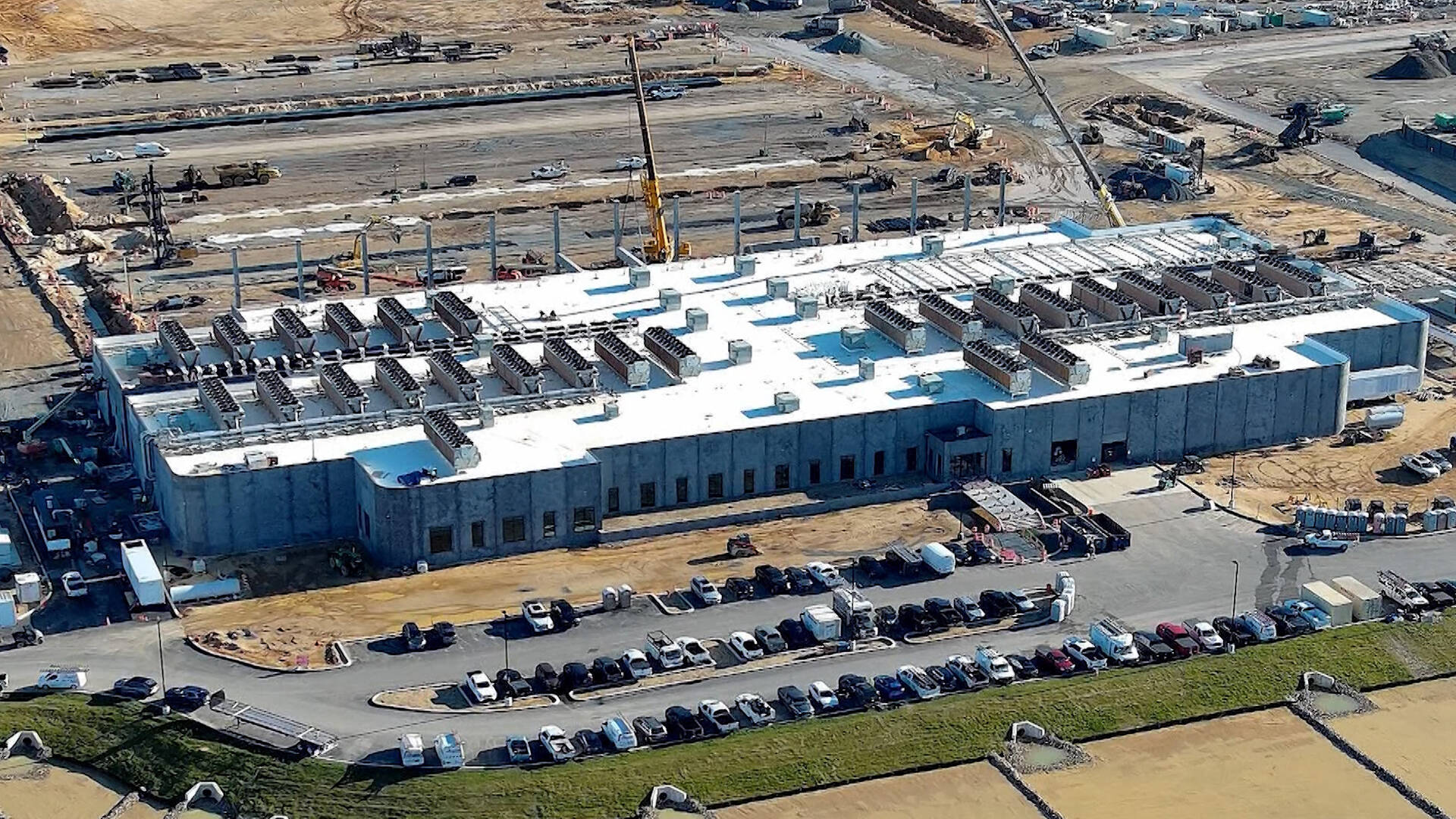
amny.com/…/senior-pedestrian-struck-driver-chinat…
Run the plates on the car.
The driver has:
amny.com/…/senior-pedestrian-struck-driver-chinat…
Run the plates on the car.
The driver has:


The Supernova Remnant CTA 1 represents the expanding gaseous remains of a massive star that ended its life cycle in a violent explosion approximately 10,000 years ago. Located in the constellation Cepheus, this nebula is primarily characterized by its shell-like structure and the presence of a central pulsar, PSR J0007+7303. This pulsar is a rapidly rotating neutron star that emits high-energy gamma radiation, providing critical data for astrophysicists studying the evolution of stellar remnants and the mechanics of particle acceleration in space. Observing these structures allows researchers to analyze the chemical enrichment of the interstellar medium through the dispersal of heavy elements.
#space #astronomy #astrophysics
@Space@lemmy.science.social @science@beehaw.org @science@lemmy.world @space@beehaw.org @space@lemmy.world @science@newsmast.community @space@newsmast.community @space@lemmy.ml #space #science #nasa #astronomy

When Relic parted ways with Sega, it was essential they kept hold of Company of Heroes. “Without it we would have been a dead studio,” says the CEO
When Relic parted ways with Sega, it was essential they kept hold of Company of Heroes. “Without it we would have been a dead studio,” says the CEO
so I create a combined sink from two audio devices, my HDMI (DP actually) monitor with OK speakers and the analog stereo audio out, which got a subwoofer attached, without satellites. pactl load-module module-combine-sink, this works swimmingly, sound is awesome, I can set exact audio levels for each output, no notes.
problem is, I’m listening to an internet audio stream via Rhythmbox (tried mp3s off a network share, same deal) and when there’s heavy CPU activity, the sound slows down, goes oooOOooOooOOoo like if you remember audio tapes from the olden days that got stretched/deformed. this only happens with the combined sink, if it’s just HDMI audio, no issues.
used to happen infrequently, only when launching games or android studio doing compiling but nowadays with every other site having some cloudflare/anubis-like CPU torture, it’s getting really tired, really fast.
tried looking at htop, pw-top, following the journal but nothing of substance is observable; possibly because this lasts for a second or so and those tools ain’t exactly real-time.

maybe the issue is the devices being 48 KHz whilst the stream is 44.1 and there’s some resampling happening? tried looking at pipewire/wireplumber documentation but that stuff is way above my head; “quantums”, wtf?!
so is there some priority I can elevate or something so that this audio stack doesn’t get compromised? I don’t wanna give up the setup nor Rhythmbox.
Fedora, Plasma, Wayland, i5-4670, RX 580.
so I create a combined sink from two audio devices, my HDMI (DP actually) monitor with OK speakers and the analog stereo audio out, which got a subwoofer attached, without satellites. pactl load-module module-combine-sink, this works swimmingly, sound is awesome, I can set exact audio levels for each output, no notes.
problem is, I’m listening to an internet audio stream via Rhythmbox (tried mp3s off a network share, same deal) and when there’s heavy CPU activity, the sound slows down, goes oooOOooOooOOoo like if you remember audio tapes from the olden days that got stretched/deformed. this only happens with the combined sink, if it’s just HDMI audio, no issues.
used to happen infrequently, only when launching games or android studio doing compiling but nowadays with every other site having some cloudflare/anubis-like CPU torture, it’s getting really tired, really fast.
tried looking at htop, pw-top, following the journal but nothing of substance is observable; possibly because this lasts for a second or so and those tools ain’t exactly real-time.
maybe the issue is the devices being 48 KHz whilst the stream is 44.1 and there’s some resampling happening? tried looking at pipewire/wireplumber documentation but that stuff is way above my head; “quantums”, wtf?!
so is there some priority I can elevate or something so that this audio stack doesn’t get compromised? I don’t wanna give up the setup nor Rhythmbox.
Fedora, Plasma, Wayland, i5-4670, RX 580.

I had enough time to properly clean up two of the three cast iron skillets. I was able to identify that the 8 inch skillet was a wagner ware skillet. When I was seasoning the bottom of the pan a tiny little W and some other characters of the logo started to appear.
As for the griddle it cleaned up alright however the logo is practically rusted off and I can’t really identify it. There’s a lot of pitting rust on the cooking surface and I have been having trouble getting it take seasoning, I think I might have polished it to much that there is no ridges for it to stick to. The only areas that seem to be taking the seasoning are the rust pits. I will keep trying.

I suspect the logo was here

Size or model number?

Bottom profile of the griddle

Pits on the cooking surface.
As for the 8 inch skillet it cooks good. I seasoned it 3 times and it’s doing just fine. Here’s a photo of the logo coming through.

Oh and for the lead testing they all tested negative. I will update this post when I get the other one in good working order.
I had enough time to properly clean up two of the three cast iron skillets. I was able to identify that the 8 inch skillet was a wagner ware skillet. When I was seasoning the bottom of the pan a tiny little W and some other characters of the logo started to appear.
As for the griddle it cleaned up alright however the logo is practically rusted off and I can’t really identify it. There’s a lot of pitting rust on the cooking surface and I have been having trouble getting it take seasoning, I think I might have polished it to much that there is no ridges for it to stick to. The only areas that seem to be taking the seasoning are the rust pits. I will keep trying.
I suspect the logo was here
Size or model number?
Bottom profile of the griddle
Pits on the cooking surface.
As for the 8 inch skillet it cooks good. I seasoned it 3 times and it’s doing just fine. Here’s a photo of the logo coming through.
Oh and for the lead testing they all tested negative. I will update this post when I get the other one in good working order.

The new chief of staff’s hardline views haven’t changed, despite Trump’s stated openness to bipartisan negotiations.
The new chief of staff’s hardline views haven’t changed, despite Trump’s stated openness to bipartisan negotiations.
cross-posted from: lemmy.sdf.org/post/61679599
Here is a brief article by the study authors: How China’s Transnational Repression has Silently Taken Root in Japan’s Society
China’s transnational repression (often referred to as TNR) has attracted increasing international attention in recent years, particularly following revelations about Chinese overseas police stations operating all the way from Viña del Mar, Chile, to Rome, Italy.
[…]
However, while direct intimidation and surveillance have received considerable attention, subtler forms of repression remain largely overlooked.
Japan presents a particularly interesting case. Despite its geographical proximity to China, extensive economic relations, and large Chinese diaspora, the country has received comparatively little attention regarding the less visible forms of transnational repression. Japan’s democratic institutions and society reinforce the public assumption that individuals can safely express their political views, protected by academic freedom, the constitution, strong freedom of speech, and formal protection mechanisms. Only a few institutions, such as Human Rights Watch, have raised concerns over the issue.
[…]
A new report, “Mapping CCP Transnational Repression in Japan: From Self-Censorship to Institutional Pressure” (pdf), published by Sinopsis, a non-profit association in scholarly collaboration with the Department of Sinology at Charles University in Prague, Czech Republic, goes further in challenging these assumptions about the absence of TNR in Japan.
[…]
[Based on interviews with academics, journalists, students], the study identified three main mechanisms through which repression from Chinese individuals and institutions is experienced by critics in Japan:
- direct intimidation,
- institutional pressure, and
- self-censorship.
The findings suggest that TNR does not require direct intervention. It can operate through existing social relationships, institutional incentives, and the fear of possible consequences.
[…]
Direct harassment and spam calll
Reports of harassment frequently involve phone calls that interviewees suspected were linked to the Chinese embassy, an experience described by several participants [such as university professors and journalists […] Such calls are not confined to Chinese nationals living in Japan, but also reach non-Chinese journalists reporting on sensitive issues and academics.
For Chinese nationals, the harassment often extends to family members remaining in China, creating additional pressure through familial connections. A particularly illustrative account comes from a Professor who reported that a student of hers from Inner Mongolia had been told that police officers contacted the student’s parents in China, pressuring the student to discontinue their research.
[…]
Surveillance and monitoring
Accounts of in-person surveillance describe a form of coercive pressure that leaves activists and members of ethnic minorities in Japan with the sense that they are being watched even outside China […] Chinese man in Japan approached the man’s daughter at her school and asked her to telephone her father, then used the call to press the community member to work as an informant for the Chinese government.
[…]
Academic institutions
Academics of Chinese, Japanese, and other nationalities […] attributed setbacks in career advancement to networks of influence they associated with the CCP [Chinese Communist Party] … [A] Professor at a national university, reported that her pre-nomination to a senior post within the institution was withdrawn; while she cannot establish causation, she attributes this primarily to her research on Chinese affairs. Another Professor similarly described being professionally marginalised when her profile was removed from the university’s Chinese studies website. Neither account can be independently corroborated, but both are consistent with a dynamic in which institutions distance themselves pre-emptively from politically sensitive scholarship.
[…]
[There are also] pressures on students in the classroom, which they observed to vary with the surrounding community. One Professor [said that] mainland Chinese students in the social sciences tend to be more critical of the CCP than those in STEM fields, while short-term exchange students are typically more vocal in supporting official Chinese positions than full-time international students.
[…]
Organising academic events emerged as a further site of difficulty. One Professor reported obstacles in inviting activists and researchers, while another Professor described professional isolation after organising Hong Kong–related events.
[…]
Chinese student associations
Chinese Student Associations (CSAs) occupy a central place in participants’ accounts of what we characterise as institutional complicity. Interviewees repeatedly described these associations as intermediaries between students and actors they understood to be linked to the Chinese state,
[…]
As one Chinese student said,
"the spy web of Chinese students in other Japanese Universities is deeply rooted and has strong influences. The Chinese embassy has connections with some of the students’ associations.”
[…]
[The report suggests that CSAs are experienced as part of a layered oversight structure resembling what is known as “long-distance authoritarian governance.”
[…]
Self-censorship
Self-censorship recurs across the interviews with Chinese dissidents, academics, and students in Japan, including among students with no connection to political activity. These accounts illustrate how repression may operate indirectly, shaping behaviour through anticipated consequences rather than direct threats. […]
The perceived presence of CCP-linked entities and individuals affects how Chinese students relate to fellow nationals and how they express themselves inside and outside the classroom.
[…]
[A Chinese student who] lived in Japan for five years [said that] he remains careful about whom he speaks to and avoids political discussion, preferring economic subjects. He acknowledged not feeling entirely safe in conversation, at times even with close friends, and said he refrains from voicing criticism even when he holds strong views.
[…]
[Several other Chinese students living in Japan say that they] avoid specific topics and limits her contact with other Chinese students [and they are] holding back their thoughts when conversing with Chinese citizens and even with “buddies,” avoiding revealing personal opinions.
[…]
Information gathering, mistrust, and the anticipation of surveillance
[There are] recurring patterns of information gathering directed at activists, academics, and diaspora communities in Japan [resembling] what scholars’ term “soft surveillance,” in which the collection of information operates less through overt coercion than through the uncertainty and psychological pressure it generates.
One Japanese professor described encounters with ”Chinese nationals asking her about her connection with Chinese research and activists,” including an occasion on which someone sought background information about a German journalist. She interpreted these approaches as purposeful and coordinated.
[…]
One [Hong Kong] activist recalled that acquaintances - former colleagues and friends from Hong Kong—travelled to Japan specifically to meet her every four to five months from 2023 onwards.
She did not regard these as isolated visits but as part of a pattern in which people from varied backgrounds approached her seeking similar information.
[Study participants] reported hearing of comparable cases among Taiwanese and Tibetan communities in Japan and among Hong Kong contacts in the United Kingdom and the United States.
[The Chinese student] believes some former members to be compromised, citing their appearances in pro-CCP media at the same time as they sought contact with the Hong Kong community in Japan.
She further noted that, while other activists’ families were subject to interrogation, the families of these individuals were not, which she read as evidence of coordination with the authorities.
[…]
[Chinese students in Japan] also raised concerns about digital infiltration. Alongside the WeChat monitoring described [in the study], several reported threatening online behaviour. One Hong Kong activist reported receiving messages from numerous accounts that he judged to be inauthentic. He described Hong Kong activist communities in Japan as living with a persistent fear of infiltration, which in his account generates internal disputes, exclusions, and in some cases the collapse of democratic initiatives.
[…]

Still Fall Morning on the Saltmarsh
Mark’s Cove, Wareham, Massachusetts, United States
This is an alternative crop for a photo I posted last week: https://pixelfed.social/p/tcgoetz/1021038886434494556 Which version do you prefer?
Critiques welcome. Thank you for taking the time to look at my photo.
Date and time: 2026-10-25 08:49:43
Location: https://www.openstreetmap.org/?mlat=41.736397425&mlon=-70.7309741833333#map=17%2F41.736397425%2F-70.7309741833333
Camera: Fuji X-H2
Lens: Fuji 16-55mm F2.8 II
Exposure: 1/160s @ f/11
Focal length: 16mm
35mm equivalent focal length: 24mm
ISO: 160
Flash: no
Tripod: no
#Photography #AmateurPhotography #MyPhoto #PhotoOfTheDay @photography@lemmy.world #FallFoliage #Clouds #Fall #LandscapePhotography #Morning #Ocean #SeaWednesday #MeerMittwoch #Reflection #Saltmarsh #WaterOnWednesday #Weather #FujiFilm #FujiXSeries #FujiPhotography #BuzzardsBay #Massachusetts #PhotoCritique































 TBL 8 -
 BUF 3
 NYR 3 -
 CGY 1
 PHI 2 -
 EDM 3
 NSH 4 -
 ANA 2
 PIT 3 -
 SJS 2